Click here for Yosui Inoue’s History!
🎧 Listen to This Article
These narrations provide a convenient audio overview of the article’s main points.
They are recommended for readers who would like to understand the appeal of Yosui Inoue’s Kori no Sekai and the overall flow of the article before reading it.
🎵 English Narration
An English audio introduction to the content of this article.
🎶 Japanese Narration
A Japanese audio introduction to the content of this article.
Listening first will make it easier to understand the appeal of Kori no Sekai and the main points of the article.
Before Introducing This Album
The Complete Album: Kori no Sekai!
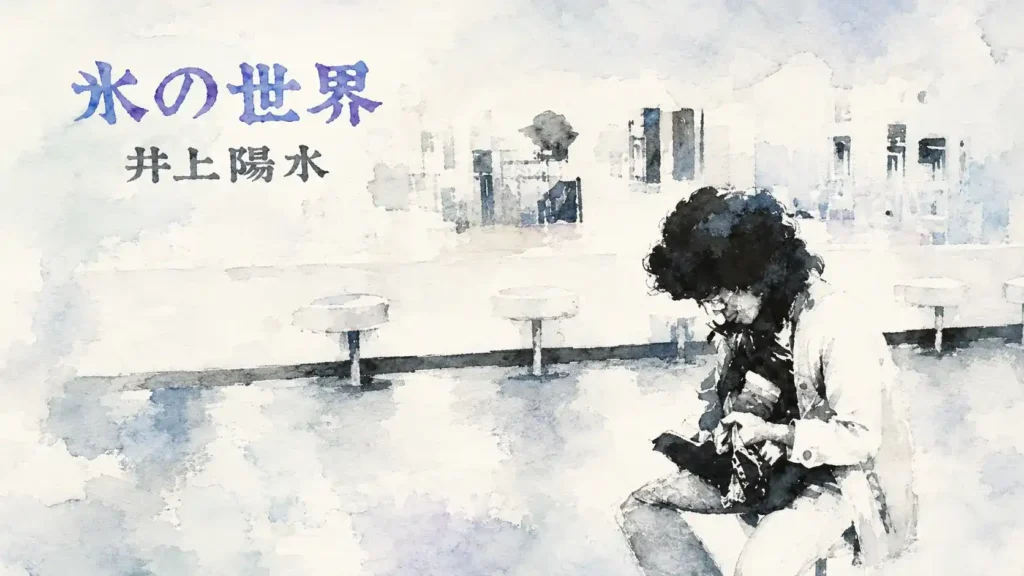
Click the image above to open the complete album playlist on YouTube. Whether you once played this album until the record nearly wore out, as I did, or you are hearing it for the first time, I hope you will enjoy it from beginning to end.
The playlist introduced here appears under Yosui Inoue’s official, verified artist account and is the YouTube album playlist for Kori no Sekai. The album was released on December 1, 1973.
Today, one year and five months after the previous installment, I am introducing Yosui Inoue’s Kori no Sekai as the second entry in my “Superb Albums You Will Never Regret Hearing!” series.
(The first entry was Eiichi Ohtaki’s A Long Vacation.)
As I have said passionately many times on this blog, only a very small number of albums are works that I can recommend with complete confidence. A collection of good songs is not enough. Above all else, I place the highest priority on the quality and completeness of the album as a whole.
When I thought of the summit of Japanese popular music, this was the album that immediately came to mind alongside Eiichi Ohtaki’s A Long Vacation.
It became the first album in Japanese music history to sell one million copies, a landmark achievement, and it remains an absolute masterpiece that gave me one of the greatest shocks of my entire life.
Yosui Inoue’s Album Kori no Sekai
Kori no Sekai symbolizes Japanese folk rock in the 1970s and, beyond that, the dawn of what came to be called “New Music” in Japan. Its multilayered concept can be understood through the following elements.
A Razor-Sharp Concept That Captured the Spirit of Its Time
As the title Kori no Sekai, or “World of Ice,” suggests, the entire album is permeated by the loneliness hidden beneath Japan’s period of rapid economic growth, a cold gaze directed at society, and an icy atmosphere that seems to obstruct one’s view. The album depicts a kind of “unreality made real”: cynical in tone, yet powerful enough to shake the listener’s sense of human nature.
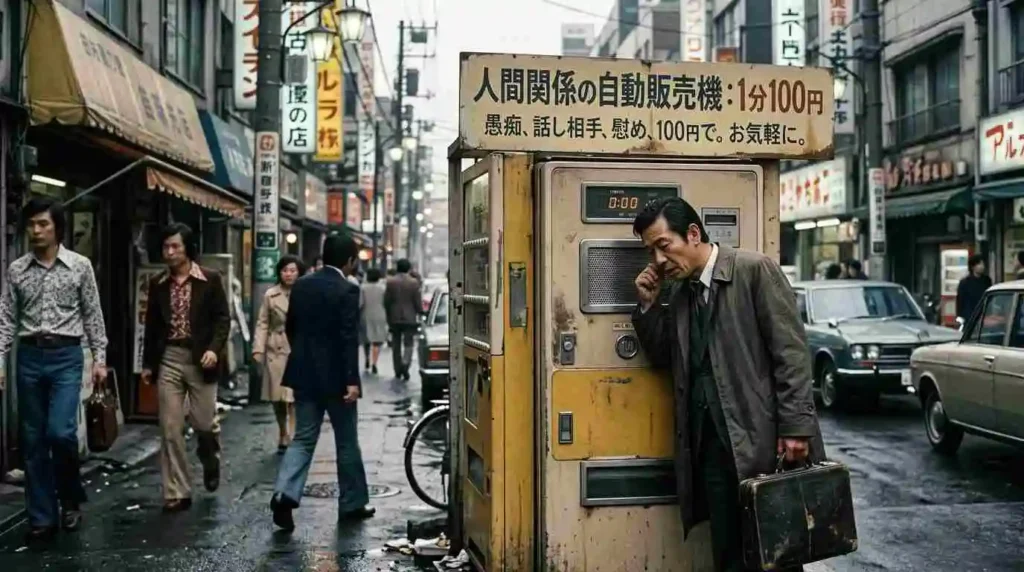
Through his singular command of language, Inoue transforms the darkness and boredom inside the minds of city dwellers into a surreal and introspective soundtrack, creating an intense sense of reality and tension for the listener.
Cutting-Edge Sound Forged Through London Recording Sessions
The album’s greatest musical talking point is its recording in London, England. With first-rate musicians of the period and superb arrangements by Katsu Hoshi and others, the album completely broke through the confines of Japan’s earlier, inward-looking style of acoustic folk music.
Funk, rock, jazz, and meticulously crafted strings blend beautifully, creating a rich, sharply defined soundscape that stands comfortably beside contemporary Western music.
The funky cutting guitar heard in the title track and the lyrical strings of “Kokoro Moyo,” in particular, possess a crystalline beauty created by the union of Japan’s delicate emotional sensibility and the tight groove of leading international musicians.
An Astonishing “Total Album” Whose Power Emerges Only in Sequence
It goes without saying that every individual song on Kori no Sekai is of exceptionally high quality, but the flow of the album as a whole is also constructed with extraordinary precision. Light and shadow, movement and stillness are arranged in perfect balance, creating a three-dimensional story that can never be experienced by selecting only one’s favorite tracks.
Coldness, loneliness, love, everyday life, self-loathing, and finely honed humor are all contained within a single vessel through carefully calculated rises and falls. This flawless construction elevates the album beyond a mere collection of songs and brings it to the highest level of “total art.”
Through beautiful melodies, incisive words, and meticulously crafted sound, Kori no Sekai is a perfectly designed masterpiece that continues to stir the listener’s memory. Its universal appeal has not faded with the passing of time.
I can still vividly remember the shock I felt when I first encountered this sound in my emotionally sensitive mid-teens.
I was utterly overwhelmed by its advanced sonic character, which leapt effortlessly beyond the conventional boundaries of folk music. Each song possesses a fiercely individual identity, yet the album unifies them all within one complete world. It is nothing less than a miraculous work in the history of Japanese music.
From “Akazu no Fumikiri” to “Kaerenai Futari”: How “Hajimari” Reveals the Album’s Greatness
Any discussion of the album’s flawless construction must include “Hajimari,” a brief piece of only about forty-one seconds placed as the second track on Side A.
Please play the complete album playlist at the beginning of this article and listen closely to the opening sequence.
The first track, “Akazu no Fumikiri,” opens with a cutting rhythm that evokes the shrill warning of a railway crossing and intensifies a sense of urban unease and agitation. The album does not then plunge directly into the quiet night of the third track, “Kaerenai Futari.” Between the two, “Hajimari” has been placed with remarkable subtlety.
After the clamor of “Akazu no Fumikiri,” the album takes a single brief breath. Inoue’s voice and acoustic guitar gently set the air in motion, creating a cushion that allows the coldness and sorrow of “Kaerenai Futari,” which begins immediately afterward, to rise with such natural dramatic force that it can send a shiver down the spine.
“Kaerenai Futari” is such an overwhelming masterpiece that I ranked it number one even when judging it as a standalone song. Heard within the sequence of this album, however, it emerges as a major scene with even deeper narrative meaning. This is the moment when the listener realizes, “Now I understand,” and discovers the true magic created by an album’s running order.
The placement of this single breath called “Hajimari” contains some of the clearest evidence that Kori no Sekai is an outstanding total album.
Links to In-Depth Commentary on Every Track
Below are links to articles in which I have explored the appeal of each song as deeply as possible.
Click the title of a song that interests you or one you already love, and enter its own distinctive world.
Side A
Track 1: “Akazu no Fumikiri” — A thrilling opening that hurls the anxiety of the city at the listener through its exposed, urgent rhythm.
Track 2: “Hajimari” — A beautiful forty-one-second breath created to heighten the power of the masterpiece that follows.
Track 3: “Kaerenai Futari” — The ultimate ballad, portraying the aching distance between two people as they dissolve into the stillness of night.
Track 4: “Chie-chan” — A classic whose gently sorrowful acoustic sound awakens memories of the distant past.
Track 5: “Kori no Sekai” — A radical title track that spits out society’s absurdities on the sharpened edge of its words.
Track 6: “Shiroi Ichinichi” — A song in which every unnecessary sound has been stripped away, allowing the power of Inoue’s voice to resonate through a world of profound stillness.
Track 7: “Jiko Ken’o” — Inoue at his most characteristic, observing the unvarnished inner life of human beings with cold, cynical clarity.
Side B
Track 1: “Kokoro Moyo” — A defining masterpiece whose melancholy melody and letter-like words sink deeply into the heart.
Track 2: “Machiboke” — A song that wraps the sweetness and emptiness of waiting for someone in dry humor without becoming overly serious.
Track 3: “Sakura Sangatsu Sanpomichi” — A striking accent that reveals madness beneath the gentleness of spring and carries an elusive theatrical atmosphere.
Track 4: “Fun” — A hidden gem whose sophisticated pop sense and rhythmic wit reveal a side of Inoue that extends beyond serious lyricism.
Track 5: “Koharu Obasan” — A melody that captures an ordinary moment and then unfolds with psychedelic, dramatic force.
Track 6: “Oyasumi” — A lullaby that gently enfolds the album’s final stretch while holding profound loneliness and absolute tranquility at the same time.
Conclusion: The True Value of a Complete Album
Throughout this article, I have explored the three-dimensional appeal of Kori no Sekai while linking to commentary on each individual song.
Today’s digital environment, which allows us to hear any favorite song instantly and individually, is undeniably convenient and wonderful.
Yet by looking once again at the complete running order and experiencing the uninterrupted drama of the playlist at the beginning of this article, we can clearly understand why people of our generation became so passionately absorbed in the album as a single artistic vessel.
The subtle contrasts between songs, the skillful sequencing that moves the listener’s emotions, the sharpness of the words, and the beautiful breath of “Hajimari,” created solely to intensify the great song that follows—all of these elements fit together perfectly.
Only then does Kori no Sekai reveal its true worth as a total album that transcends a mere collection of great songs and seems to command an entire era.
The sharp, cold impact that pierced my heart when I was fifteen and emotionally sensitive still resounds within me today, more than fifty years later, without having faded at all.
This concludes my complete track-by-track introduction to Yosui Inoue’s Kori no Sekai, the second installment in the “Superb Albums You Will Never Regret Hearing!” series.
Alongside the thirty-one song articles and concluding feature already published in my “My Personal Top 30: Yosui Inoue” series, please use the links to your favorite songs whenever you wish to enter their rich and distinctive worlds.
Listening freely to one song at a time is enjoyable, but this work also contains the unfathomable appeal of a total album—a quality that becomes visible only when the songs are heard in their intended order. I hope you will once again experience the pleasure of the complete world flowing continuously from beginning to end.


音楽ファン同士の交流・リクエストはこちら / Connect & Request Songs Here