
◆Click here for Yosui Inoue’s History!
- 🎧 Enjoy This Article in Audio
- No. 17 is “Sakura Sangatsu Sanpomichi” (The Cherry Blossom March Stroll Path)
- First, Please Listen to the Song on YouTube
- The Chemical Reaction Between Kunio Nagatani’s Poetry and Yosui Inoue’s Melody
- The Three Stages of Escalating “March Madness”
- The Sense of Anomaly Brought by Kunio Nagatani’s Poetry on “Ice World”
- In Conclusion
🎧 Enjoy This Article in Audio
You can quickly grasp the main points of this article through narration.
Recommended for those who want to catch the vibe of the music and the flow of the article before reading.
🎶 English Narration
An English audio introduction to the contents of this article.
⌛ Duration: Approx. 4 mins
🎵 Japanese Narration
A Japanese audio introduction to the contents of this article.
⌛ Duration: Approx. 4 mins
* Listening to the audio before reading helps you better understand the world of the music and the main points of the article.
No. 17 is “Sakura Sangatsu Sanpomichi” (The Cherry Blossom March Stroll Path)
The March wind carries a strange coexistence of winter’s lingering chill and a peculiar languor brought on by the lukewarm sunlight. Placed as the third track on the B-side of the historic 1973 masterpiece album “Ice World,” which became Japan’s first-ever million-selling album, “Sakura Sangatsu Sanpomichi” is a song that translates that exact ambiguity of a changing season directly into a soundscape.
Contrary to the title, which evokes a peaceful folk song, what flows from the grooves of the record is an air of distorted passion and unsettling madness. I know of no other pop song that depicts the beauty and terror of full-blown cherry blossoms—a flower so uniquely significant to the Japanese psyche—in such a raw, yet chillingly detached manner.
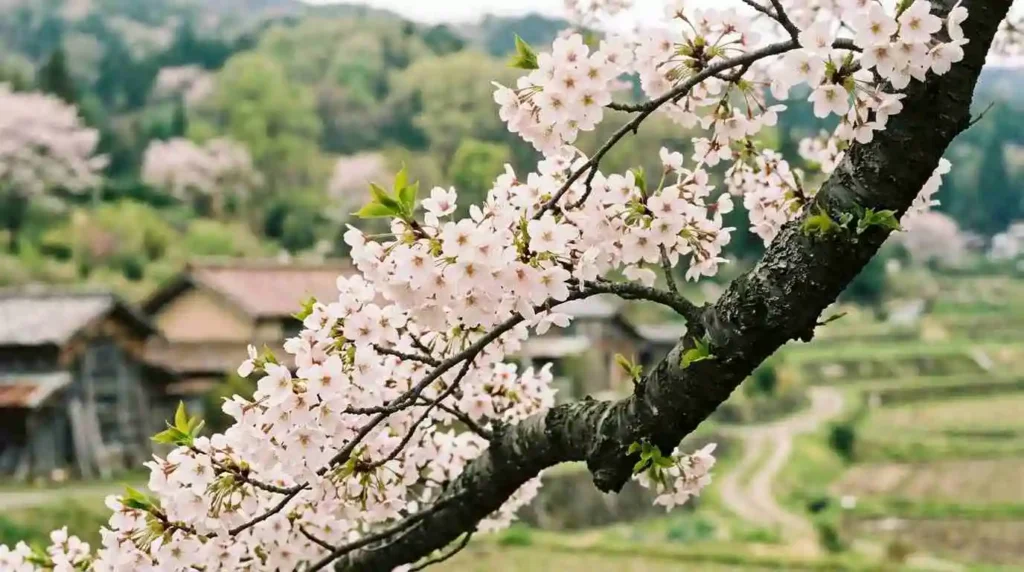
In this article, I would like to delve into the unique brilliance of this track and unravel the boundary between life and death that is masterfully hidden beneath the radiant scenery of spring, exploring it from my own perspective.
The Essence of the Lyrics (Poetic Overview)
Even though the two of us should be free to go anywhere,
the town we wish to visit has no flowers; only the wind blows, and people pass away.
You seek out flowers, swept up in the wind, yet you still strive to live.
The cherry blossoms of March are so beautiful they turn mad, where both love and life scatter into nothingness.
First, Please Listen to the Song on YouTube
This is the studio-recorded version. Please click the image below.
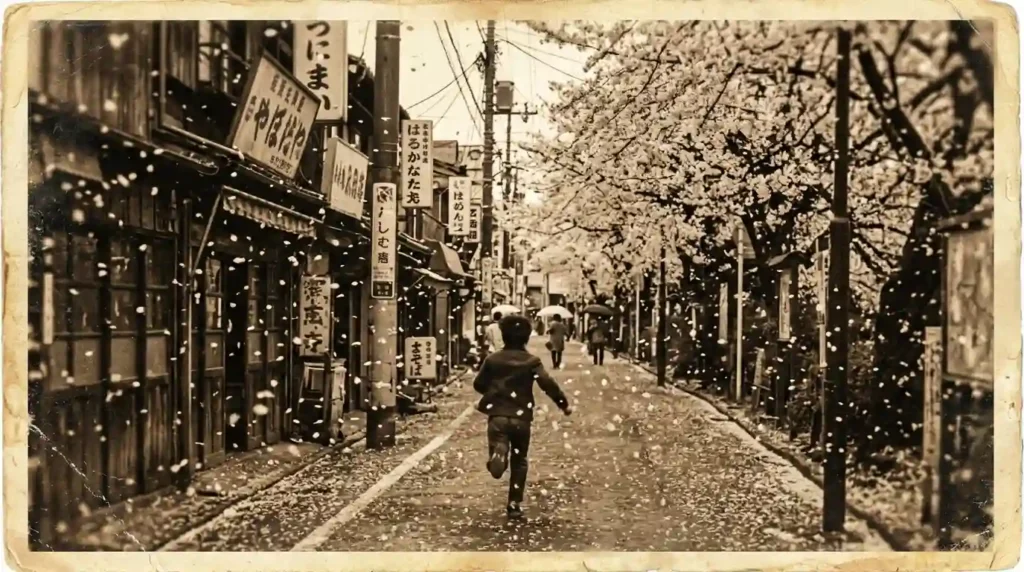
Credits
Yosui Inoue - "Sakura Sangatsu Sanpomichi"
Lyrics: Kunio Nagatani / Composition: Yosui Inoue / Arrangement: Katashi Mashi
From the 1973 album "Ice World."
Two-Line Review
An unconventional folk track that subverts the spring brightness of cherry blossoms and March into an omen of love, life, madness, and death.
While beginning like a casual stroll toward a riverbank, the peak of the season itself starts to tremble with unease.
This is the live performance version. Please click the image below.
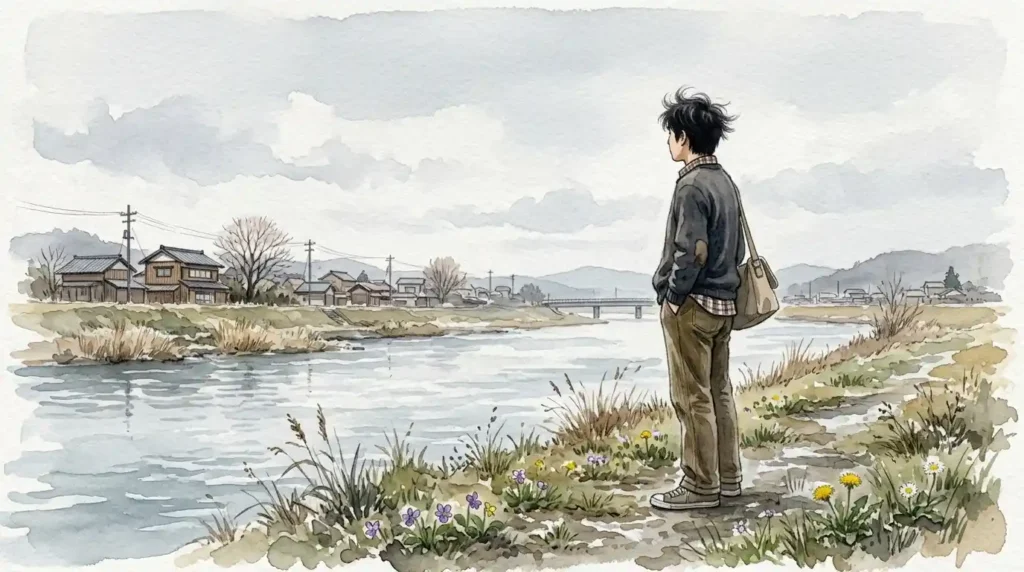
Credits
Yosui Inoue - "Sakura Sangatsu Sanpomichi" (Live Version)
Lyrics: Kunio Nagatani / Composition: Yosui Inoue
From the live album "Ice World Tour 2014 Live the Best," released on September 10, 2014.
Two-Line Review
Retaining the eerie cheerfulness of the album version, Yosui’s live vocals and deliberate pacing push the hidden darkness of the March blossoms further to the forefront.
Defying the gentle phrase "stroll path," themes of love, life, death, and madness unravel rapidly within the spring landscape.
(*Note: The vast majority of audio sources for Yosui Inoue available on the internet are not official digital releases. Therefore, out of respect for copyright policies, this blog utilizes custom-made images linked to external platforms instead of direct video embedding.)
The Chemical Reaction Between Kunio Nagatani’s Poetry and Yosui Inoue’s Melody
The Union of Graphic Sharpness and Waves of Passion
The absolute defining feature of this song lies in the fact that the lyrics were not penned by Yosui himself, but rather by Kunio Nagatani, famously known as a core creative mind behind Fujio Pro and a prominent manga and gekiga writer.
The words woven by Nagatani break away from the typical self-contained, introspective lyricism found in traditional folk music, carrying an avant-garde, brittle texture instead. The sheer power of this song comes from how those elegant, yet inherently absurd arrangements of the Japanese language are gradually warped by Yosui’s distinct, shimmering vocal delivery and his madness-tinged melodic progression.
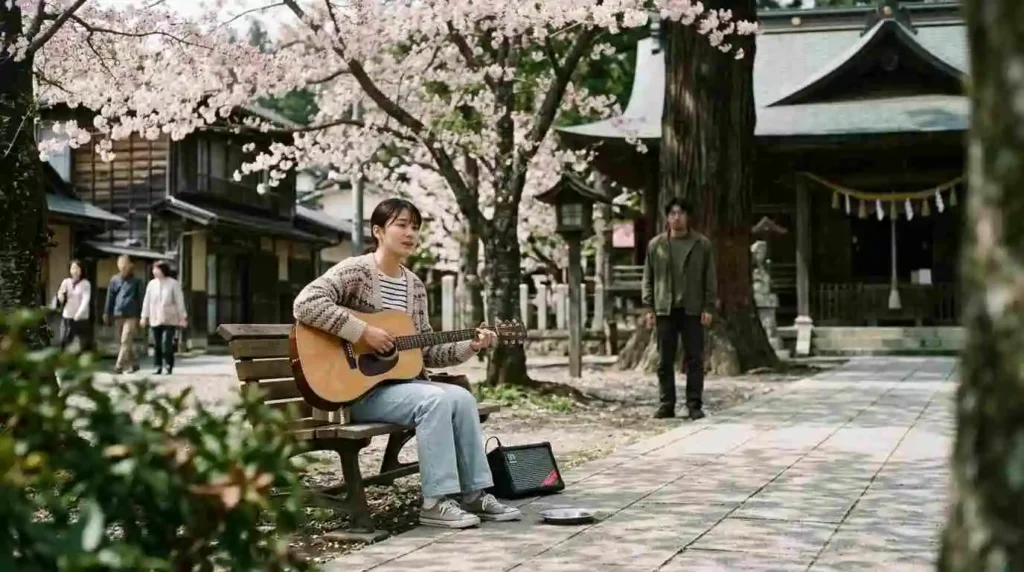
This masterful sense of distance and the resulting chemical reaction elevate the track from a simple, lovely spring folk song into the realm of a breathtaking psychological thriller.
What Lurks Within the Core Phrase: “A Land with a River”
The yearning for “a land with a river,” repeated at the very start of the lyrics, feels like it signifies something much deeper than a simple desire for a scenic, rustic landscape. Since ancient times in Japanese literature, rivers and shorelines have repeatedly served as symbols for the boundary between this world and the next—the dividing line between life and death.
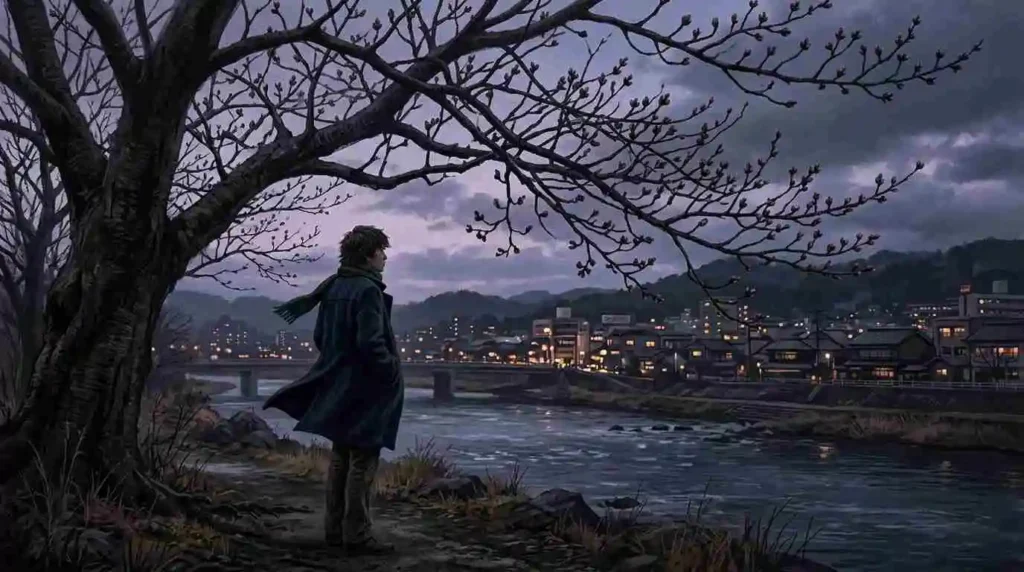
In a narrative where a town has no flowers, where the wind scatters everything, and where things ultimately drift toward a definitive absence, the protagonist’s obsessive search for a water’s edge stands out. Beyond a simple escape from everyday noise, it hints at a chilling, subconscious destination toward the ultimate彼岸 (the other shore) as either a final collapse or a form of salvation.
The Three Stages of Escalating “March Madness”
Stage One: Visual Frenzy and Obsession with “You”
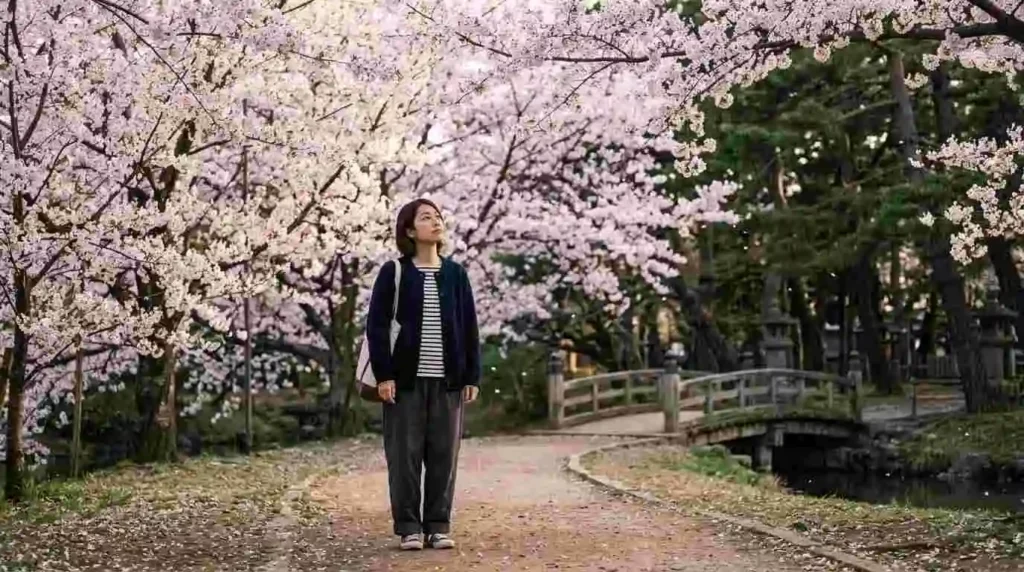
This song is structured so that the protagonist’s mental state grows increasingly unhinged with each repeating verse. The opening verse presents the striking image of “you turning into a petal,” alongside the inception of a “crazed love.”
_20260527-1-1024x572.webp)
At this point, the description still fits within the boundaries of conventional romanticism, capturing a sense of vertigo brought on by a lover’s beauty under the bright spring light.
However, set against a claustrophobic town where no flowers bloom anywhere, the protagonist’s vow to “walk looking only at you” already betrays a somewhat obsessive fixated gaze.
Stage Two: Auditory Madness and the Erosion of Self
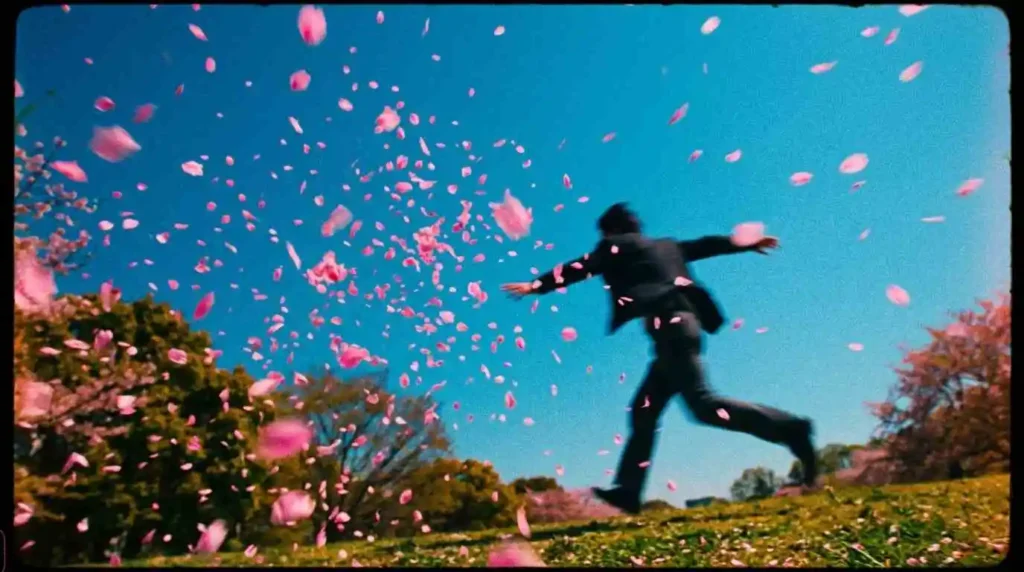
Entering the second verse, the imagery shifts from the visual to an auditory and tactile assault on the senses. Venturing into the town reveals a dynamic void where everything is “dancing in the wind,” prompting the protagonist to utter a deeper impulse: “I will chase only you and become the wind.” He longs to shed his physical form entirely.
_文字は-2-1024x572.webp)
The turning point here is that the source of the madness shifts from the relationship itself—the crazed love—into the transformation of my own mind.
Whirled along by the fierce March wind, the protagonist’s sanity is steadily eroded from within. This loss of control aligns perfectly with Katashi Mashi’s soaring, turbulent string arrangement, leaving the listener with a deep, unsettling heartbeat.
Stage Three: The Casual Infiltration of Death
In the final stage, the third verse, the track ultimately crosses the line, thrusting a stark scene of ruin directly before our eyes.
The town landscape, previously described as lacking flowers or swirling with wind, suddenly transitions into the cold, jarring reality that “people die.” What lay concealed beneath the beautiful title of a stroll path is the cold chill of death, magnified precisely because it arrives in spring—a season otherwise overflowing with life. It reveals a world of profound, quiet madness where mortality casually dissolves into the ordinary routine.
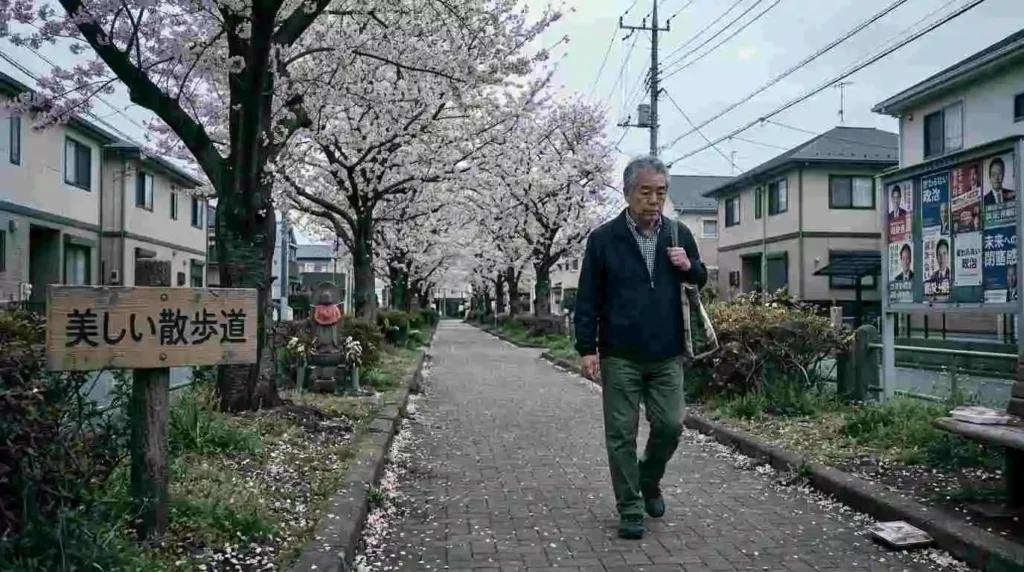
There is a well-known literary motif that dead bodies are buried beneath cherry blossoms in full bloom. Similarly, the “March when crazy cherry blossoms scatter” in this song possesses an alluring gravity where life flips at its absolute peak, sucked into the void of death.
Amidst that madness, the protagonist’s murmur, “Now I will live only thinking of you,” no longer comes across as pure romance; instead, it echoes as a tragic prayer where the grasp on life and the terror of death form two sides of the same coin.

The Sense of Anomaly Brought by Kunio Nagatani’s Poetry on “Ice World”
Here, we must reflect once more on the presence of the lyricist, Kunio Nagatani. As a key mind at Fujio Pro with deep ties to the manga and gekiga worlds, the lines he constructed are entirely detached from Yosui’s typical introspective sentimentality or the gentle prose of conventional folk singers, maintaining an avant-garde, dry nonsense and a theater-of-the-absurd framework.
Following the brilliant, melancholy sequence of “Kokoro Moyo” and “Machiboke” that opens the B-side, “Sakura Sangatsu Sanpomichi” abruptly slips in as the third track. The impact of this placement is absolute. Just as the listener settles into a comfortable wave of sentimentality, the song suddenly confronts them with a earthy rhythmic chant and theatrical, menacing phrases.
This brilliant subversion is precisely what prevents the million-selling masterpiece “Ice World” from being a mere collection of radio hits, serving as the definitive piece that anchors the entire album with a multi-layered, intricate artistic depth.
In Conclusion
“Sakura Sangatsu Sanpomichi” is a piece of music far too intense, and far too beautiful, to be processed as a casual soundtrack for a mild spring afternoon.
Upon the sharp canvas provided by Kunio Nagatani, Yosui splashes his twisted melodies, while Katashi Mashi shapes it into a dynamic, grand soundscape. Through this three-part architecture, we are pulled back toward that daydream-like boundary every time the March wind blows, even half a century later.
The radiant beauty of blooming cherry blossoms, and the line between life and death waiting right on the reverse side. Whenever those lazy, piercing vocals hit my ears, I find myself observing the brilliant structure of the track with a detached, mature eye—yet remaining thoroughly, beautifully captivated by the quiet madness implicit in the season of spring.

音楽ファン同士の交流・リクエストはこちら / Connect & Request Songs Here