
◆Click here for Yosui Inoue’s History!
🎧 Enjoy This Article in Audio
You can quickly grasp the main points of this article through narration.
Recommended for those who want to catch the vibe of the music and the flow of the article before reading.
🎶 English Narration
An English audio introduction to the contents of this article.
⌛ Duration: Approx. 3.5 mins
🎵 Japanese Narration
A Japanese audio introduction to the contents of this article.
⌛ Duration: Approx. 3.5 mins
* Listening to the audio before reading helps you better understand the world of the music and the main points of the article.
No. 23: “Oyasumi” (Good Night)
Listening to the music of Yosui Inoue can sometimes feel like standing in a quiet place far, far away. The song I have chosen for number 23, “Oyasumi”, is a masterpiece that holds exactly that kind of deep silence.
When this song suddenly reaches your ears during a quiet moment, it brings a feeling that is a little sad but at the same time deeply comforting. I am sure I am not the only one who feels this strange, beautiful sensation.
What flows through this track is not just the simple sadness of a breakup or a feeling of melancholy. It is a calm sense of resignation that appears in a place where everything has quietly ended, and nothing more can be done.
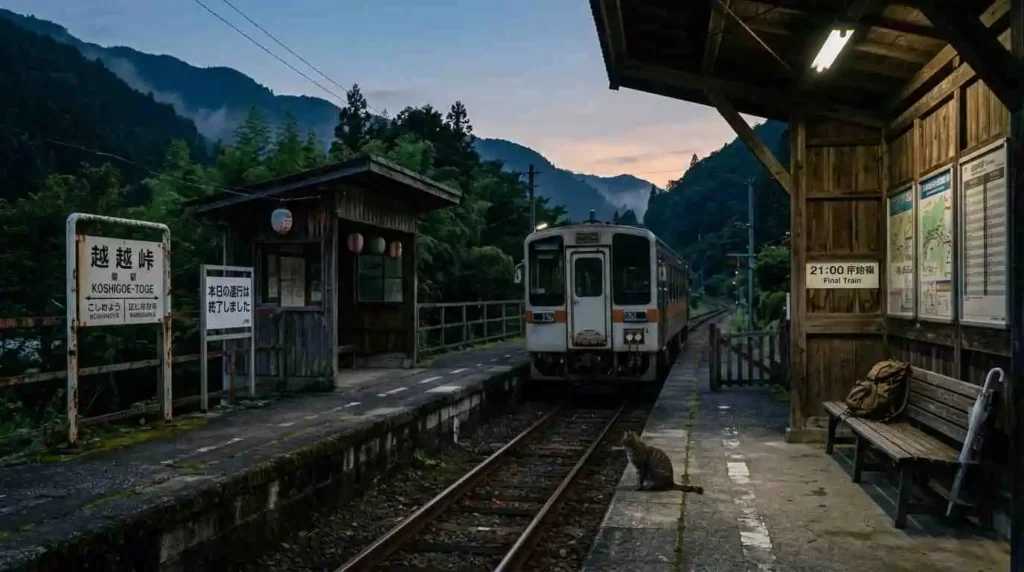
Even though this is one of his very early works, it draws me in completely every single time I listen to it, because it balances such a deep silence with a peaceful sense of rest.
In this article, I would like to use my own words to look closely into the quiet world that this song creates.
The Essence of the Lyrics: A Deep Translation
Everything was supposed to have ended completely, yet my heart alone remains trapped in the past.
Even though everyone says it is over, the feelings I have for you will never disappear.
Even the times we spent crying and laughing together look like a beautiful illusion now.
That is why I want to sink deeply into the quietness, just like falling into a peaceful sleep.
First, Please Listen to the Track on YouTube
(Please note: To protect copyright, the videos are not embedded directly. Instead, they are provided as external links attached to original images. Thank you for your understanding.)
Please click on the image below.
_20260-1024x572.webp)
"Oyasumi"
Lyrics & Composition: Yosui Inoue / Arrangement: Katsuru Hoshi
This video features the original studio recording from Yosui's younger days, set against a nostalgic and beautiful slideshow. The gentle plucking of the acoustic guitar combined with the delicate strings emphasizes the profound stillness of the night.
_20260-1-1024x572.webp)
"Oyasumi" (From the Koori no Sekai Tour 2014)
Lyrics & Composition: Yosui Inoue
This video captures a precious live performance from the 2014 "氷の世界" (Koori no Sekai) anniversary tour. Yosui's vocals, having gained incredible depth and presence with age, resonate beautifully within an acoustic arrangement. It offers an entirely different atmosphere and lingering echo compared to the original studio version.
How Does One Live in a World Where Everything Has Ended?
The Cold Fact That Everything Is Over
When listening to “Oyasumi”, I often feel a strange stillness, as if I have been left all alone in the quiet night after a massive storm has finally passed by.
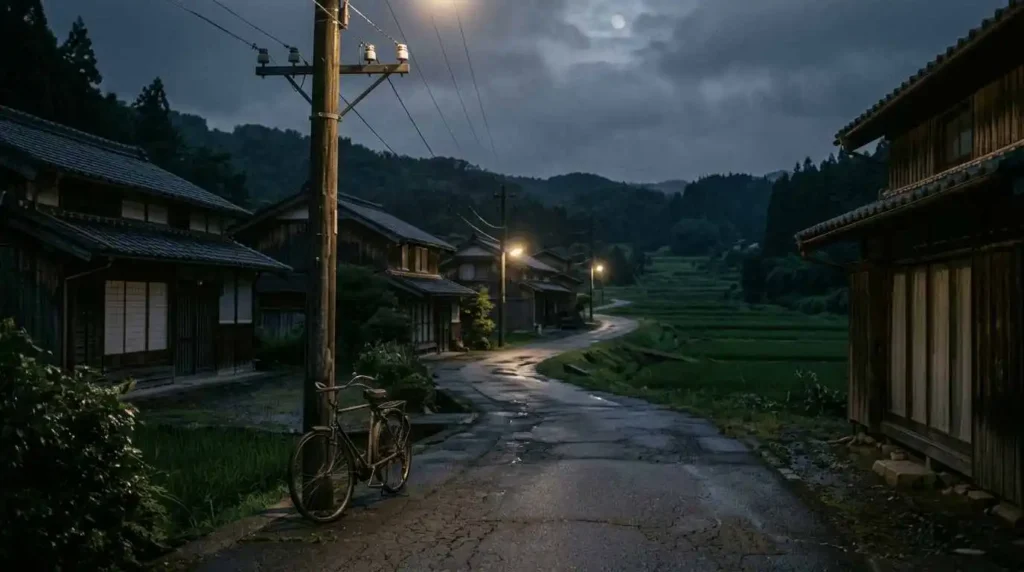
There are countless breakup songs and tracks filled with nostalgia in the world, but the atmosphere of this song is completely unique. There are no raw, messy emotions or painful regrets left here. There is only the cold fact that “everything has ended,” sitting quietly in the room.
Why This Track Differs from a Normal Lullaby
The title of the song means “Good Night,” and the closing lines describe wrapping a body in a warm blanket. At first glance, it looks like a peaceful lullaby to listen to at the end of a long day, and many people enjoy it exactly that way.
However, I always sense a slightly cold undertone beneath the surface. When Yosui sings the phrase “Let’s fall into a deep sleep,” it does not feel like a healthy night’s rest to prepare for tomorrow.
Instead, it sounds like a quiet refusal to participate in the real world anymore, a desire to retreat entirely into one’s own shell. This underlying sense of isolation, hidden right beneath the sweet melody, is likely what makes the listener’s heart feel slightly unsettled.
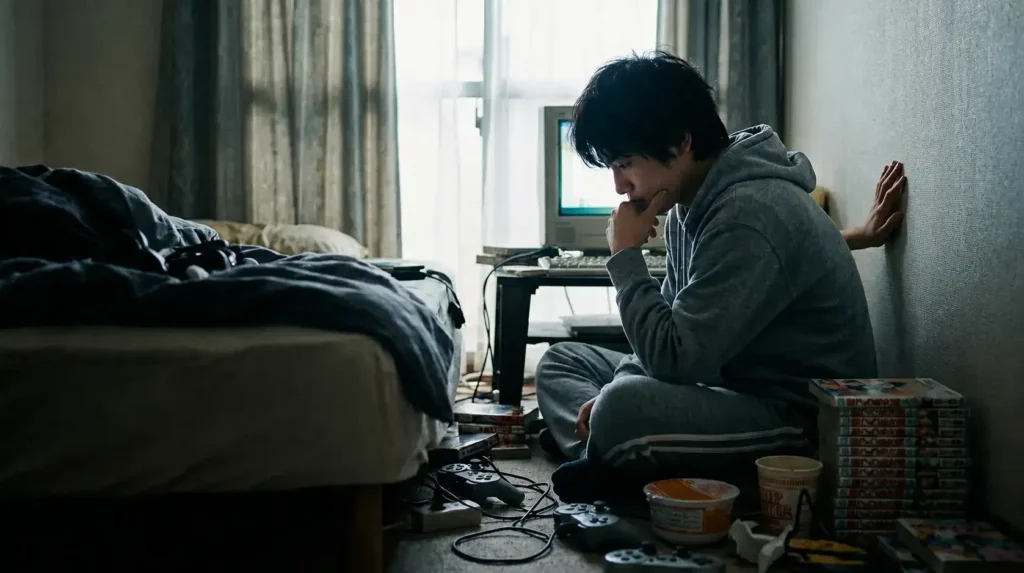
Stepping Back from the Busyness of Daily Life
Our daily lives are constantly filled with things to do, from endless work tasks to the complex dynamics of human relationships. We live under the non-stop pressure of always figuring out what our next step should be.
Yet, the direction Yosui offers in this song is completely opposite to that constant pressure to move forward. He gently sings of a peaceful state of mind that arrives precisely because all connections have been broken and the relationship has fallen apart entirely.
Three Ways the Heart Finds Peace within the Lyrics
- Quietly accepting the reality that cannot be changed.
- Wrapping oneself in a warm blanket to hide away from the cold outside world.
- And taking a moment to silently look back on days that will never return, keeping them safely inside your own mind.
The true brilliance of this song lies in how the words “everything is already over” sound like a source of comfort rather than a cry of despair.
For us humans, the most painful state is often when things drag on without a clear conclusion. The exact moment we accept that something is finished completely, we can finally fall into a deep, uninterrupted sleep. Yosui takes this natural movement of the human heart and raises it into a beautiful piece of art using incredibly simple words.
_文字-1024x572.webp)
A Beautifully Layered Soundscape of the Night
The Simple and Uncluttered Arrangement by Katsuru Hoshi
I truly believe the arrangement by Katsuru Hoshi is one of the finest achievements in Yosui’s early musical career.
The acoustic guitar right at the beginning drops like steady rain late at night, instantly pulling the listener into a deeply personal, quiet world.
Instead of relying on heavy drums or bass lines to build up excitement, the arrangement supports Yosui’s vocals with subtle but steady strings. This instrumental backing grounds the entire track in a very sophisticated calm.
The sound of these strings does not exist simply to make the song feel sadder. It feels like the dark night itself, gently holding a tired heart.
Comparing the Original Record with the 2014 Live Recording
When you listen to the original studio recording, Yosui’s voice is remarkably youthful, with a sharp tension in the high notes that delivers the sadness directly to your heart.
On the other hand, turning to the 2014 live version reveals a performance grounded in the easy, relaxed wisdom that comes with age.
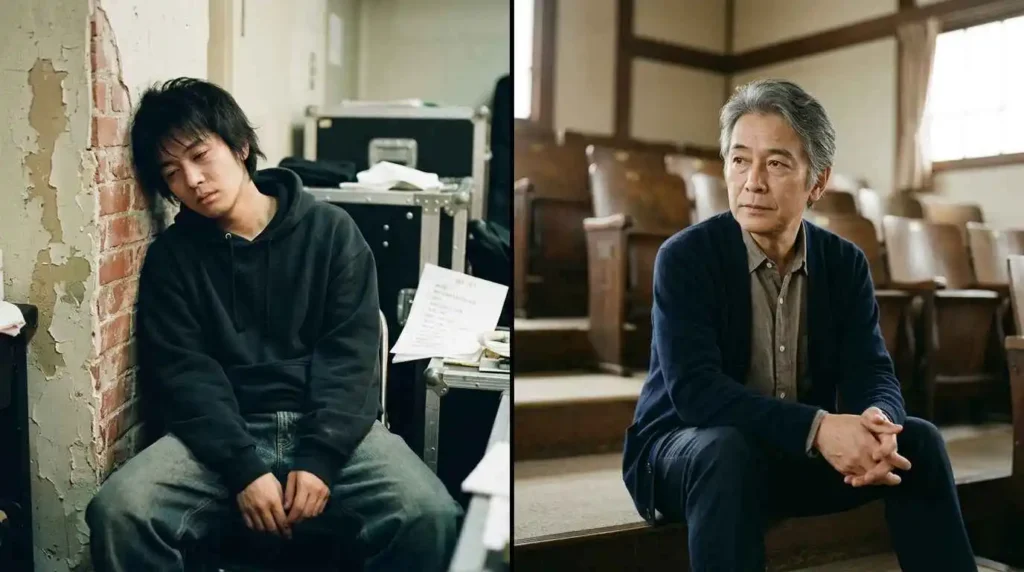
You can clearly feel the profound transformation from a young man trying to hide away from his wounds to a mature narrator who has seen the quiet conclusion of many stories over the years.
The Meaning Wrapped in the Imagery of the String Game
The opening reference to the traditional string game, “Ayatori”, is a brilliant piece of writing. The game requires two people to carefully share a loop of string back and forth between their fingers to build intricate shapes.
In other words, it serves as a beautiful metaphor for a close human relationship, which can only exist when two people act in perfect alignment.

The Broken Connection and the Internal Landscape
- The snapped string: A shared connection that can no longer be repaired.
- A solitary affection: Holding onto feelings entirely inside your own mind when the other person is gone.
- A world of illusions: Searching for the image of a loved one within memories, even though nothing remains in reality.
Holding onto a connection entirely within your own thoughts long after the string has snapped might look like a lonely habit from the outside.
As I have introduced previously on this blog, the folk group Fukinoto once released a song called “Virginia Slim” , where they described a fading relationship with the lyrics, “It’s easier to just tear apart the tangled strings.” While their song captures the raw, bitter pain of actively forcing a tangled connection to break, Yosui’s “Oyasumi” portrays a state of mind that has already moved far past even that level of energy—depicting an even deeper sense of quiet resignation.
Yosui does not try to hide that loneliness; he openly sings the words “within the illusions.” It reveals a deeply vulnerable side of human nature: knowing that the world you are looking at is merely a memory, yet clinging to it because it is the only place left where your heart can find safety.
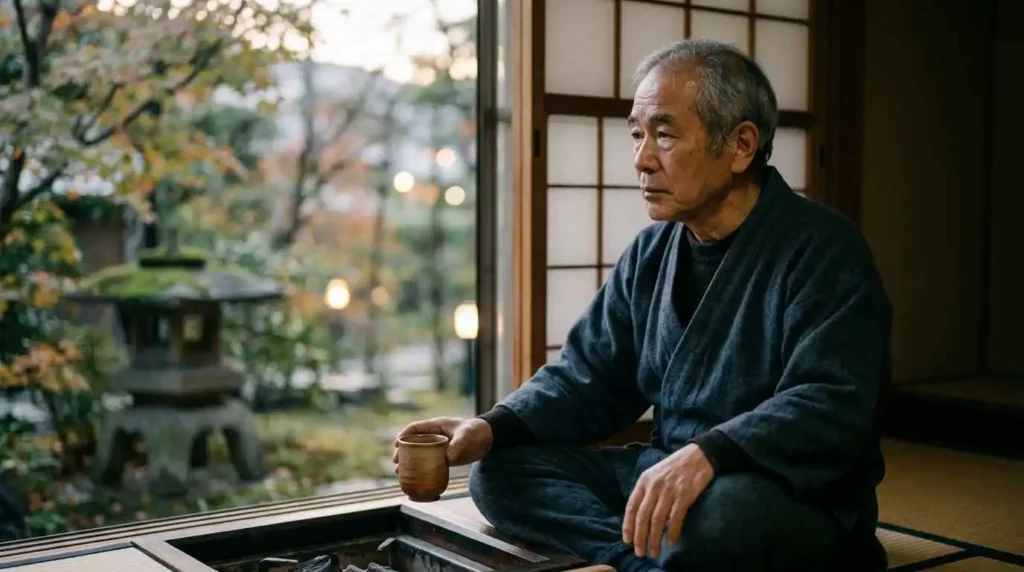
The Lasting Impression of Yosui’s Early Work
Standing Out from a Raw, Intense Era
When this song was released in the early 1970s, the Japanese folk scene was dominated by gritty, raw tracks that focused heavily on everyday hardships or intense social commentary. Most singers threw their real-world frustrations and raw energy directly into their music.
Amidst that intense environment, the atmosphere of Yosui’s early work was entirely unique. While he wrote about familiar themes like love and separation, he stripped away all the messy, heavy details of daily life from his songs.
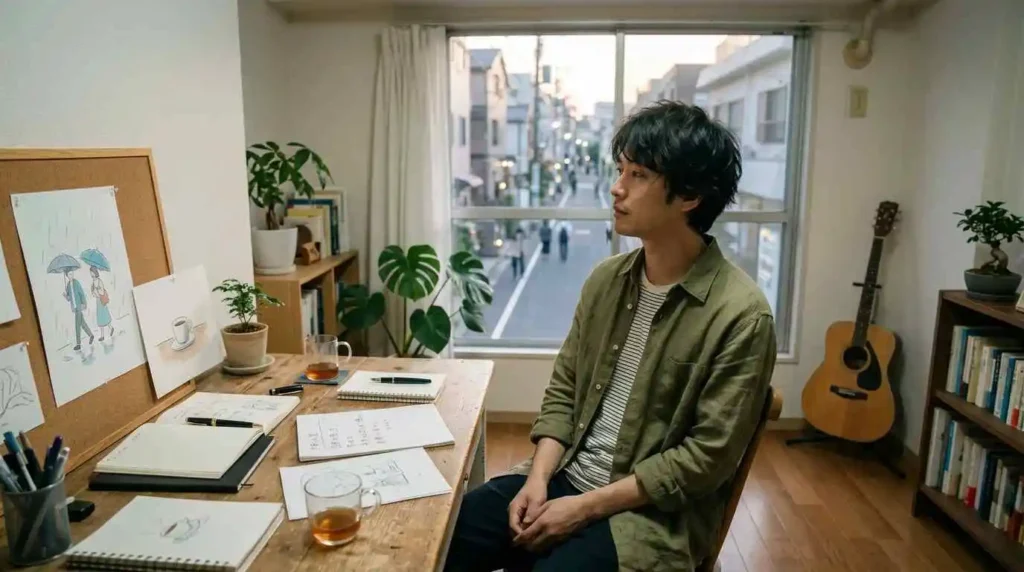
In “Oyasumi”, there are no descriptions of the room, nor any detailed explanations of why the lovers parted ways. By removing those specific elements, he leaves behind an elegant, universal poem of quiet emotion.
The True Destination of “Let’s Fall into a Deep Sleep”
Let us consider a different perspective regarding the phrase “Let’s fall into a deep sleep” that repeats through the latter half of the track. It is easy to assume these words are a monologue spoken by a wounded narrator retreating into isolation.
However, if we imagine these words are actually directed toward the loved one standing right in front of him, the entire song takes on a completely different warmth. It becomes an expression of ultimate kindness, saying, “Let us stop hurting each other and finally find peace,” rather than a desperate plea to make her stay.

It represents a gentle conclusion to a relationship that can no longer function, choosing to stop the struggle for the sake of both parties. Instead of uttering a single word of anger or blame toward the person who is leaving, he simply wishes for her absolute comfort, offering a gentle gaze that says, “Wrap yourself in a warm blanket and rest peacefully.”
The faint warmth that lingers at the very end of this track comes from this quiet, mature kindness flowing beneath the lyrics, ensuring it never feels like a purely cold or empty space.
Very few artists can capture such a clean, elegant conclusion with this level of calm restraint. The fact that he was looking so deeply into the core of human loneliness and affection at the very start of his career is precisely why this track retains its power to move us across generations.
In Conclusion
“Oyasumi” shows us a quiet way to rest, suggesting that it is perfectly fine to stop struggling to stay positive and simply let go for a while. This is not a hollow escape from reality, but rather a completely natural way for the heart to protect itself, or to watch over someone we care about when things become too heavy.

Whether listening to the pristine acoustic picking of the original recording or the rich, deep live performance, the track remains unchanged, gently wrapping our quiet moments and our deepest affections like a warm blanket in the night.

音楽ファン同士の交流・リクエストはこちら / Connect & Request Songs Here