🌐 English|🌐 日本語
Explore the Musical Life of Ryūun Nagai Here!
- 🎧 Listen to This Article
- No. 5: “Omoi” by Ryūun Nagai
- Listen to the Official YouTube Audio
- Why Can Love Be So Painful?
- A Woman Knitting and a Breeze Through the Window
- Long Nights and Insects Drawn to the Light
- Wishing to Become the Tiny Letters of a Letter
- What Remains in the Repeated Longing?
- What “Omoi” Reveals About the Young Ryūun Nagai
- Final Thoughts — Turning Inexpressible Love into Song
🎧 Listen to This Article
Explore the emotions and poetic imagery of “Omoi,” Ryūun Nagai’s debut single, through audio narration.
Listen before reading to discover the song’s central themes and get an overview of the article.
🎵 English Narration
An English-language exploration of the song’s emotions, imagery, and meaning.
🎶 Japanese Narration
Listen to a Japanese-language introduction to the song and its lyrical themes.
Listening first will help you appreciate the protagonist’s emotional journey and the key ideas explored in the article.
No. 5: “Omoi” by Ryūun Nagai
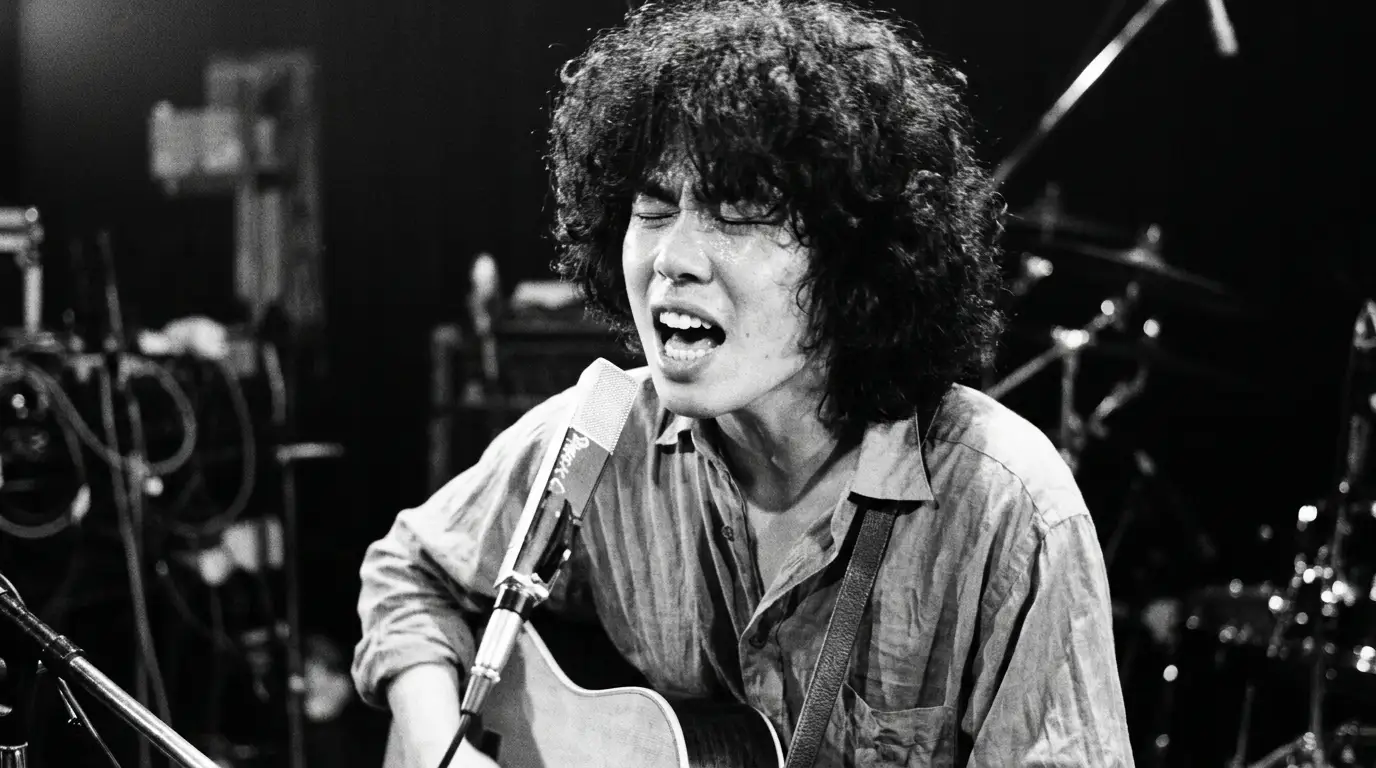
“Omoi” (“Feelings”) was released on March 25, 1978, as Ryūun Nagai’s debut single. It was also included on his first album, Ryūun First, released on May 25 of the same year. At just 20 years old, Nagai introduced himself to the music world as a singer-songwriter with this deeply personal composition.
Reliable figures documenting the single’s original sales or chart performance have not been confirmed. In 1979, Nagai released “Michishirube Nai Tabi,” which would become one of his signature songs. Looking back at his musical journey, “Omoi” stands as an important starting point for understanding the artist he would become.
The song portrays a young man struggling with his feelings for someone he loves. He wonders how he might escape his emotional suffering and what kind of song could possibly communicate what is in his heart. Yet the nature of their relationship, and the source of his anguish, remain unexplained.
Instead of telling a conventional love story, the lyrics move through a series of intimate images: a woman knitting, a breeze entering through a window, insects gathering around a light, and the tiny letters of a handwritten message. Ordinary details become a means of expressing emotions that words alone cannot fully convey. This approach is one of the song’s defining qualities.
A Poetic Interpretation
How can I find my way out of this aching heart?
What song could ever tell you how deeply I care?
I wish I could become the breeze that enters your room as you drift to sleep.
Through endless nights, even the smallest unfamiliar creatures begin to seem precious.
If words cannot hold my love, let me become a letter that finds its way into your heart.
💡 You might also like: View the original Japanese lyrics (External site)
If the lyrics are available only in Japanese, you can use your browser’s translation feature or an AI translation tool to understand their general meaning.
Listen to the Official YouTube Audio
Ryūun Nagai — “Omoi”
Audio source: YouTube, “Ryūun Nagai - Topic”
Original releases: Debut single “Omoi” (1978) / Album Ryūun First (1978)
About the Song
Nagai's debut song explores emotional suffering and the difficulty of expressing love.
Through everyday scenes and dreamlike imagery, it portrays a longing to reach someone beyond the limits of ordinary words.
Why Can Love Be So Painful?
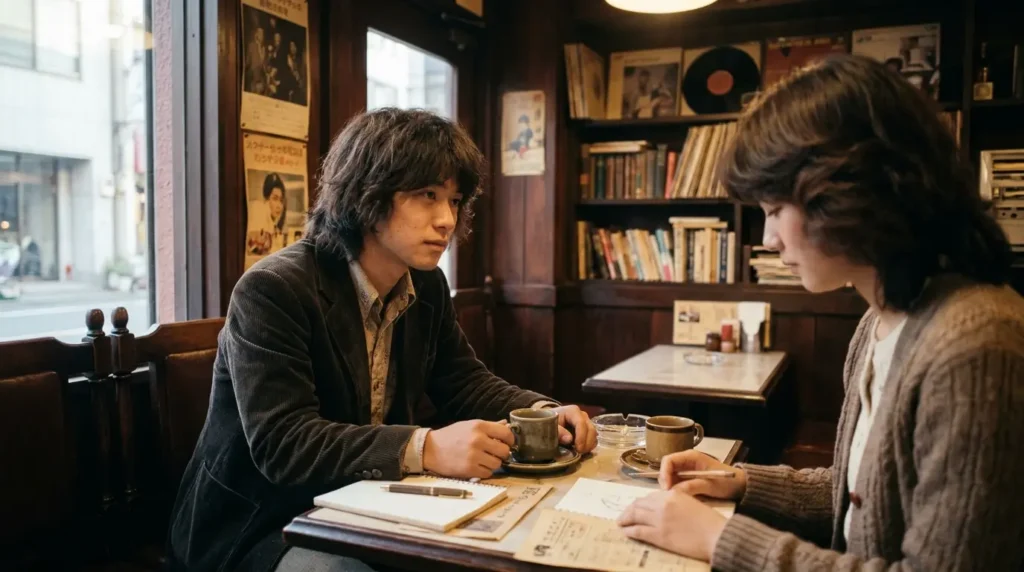
Rather than celebrating the happiness of being in love, “Omoi” begins with its protagonist searching for a way out of his suffering. Loving someone does not necessarily bring peace of mind. Sometimes, the more deeply we care, the more vulnerable we become to uncertainty and doubt.
Yet the song never tells us whether the young man is experiencing unrequited love or is already in a relationship. We learn almost nothing about the woman’s feelings or any events that may have occurred between them.
The Power of Leaving the Circumstances Unspoken
Many love songs explain emotional pain through a particular event: a first meeting, a misunderstanding, or a separation. “Omoi,” however, is less concerned with the circumstances that produced its protagonist’s distress.
Instead, we encounter a young man already caught in the middle of an emotional struggle. We may wonder what brought him to this point, but his desire to escape his suffering is unmistakable.
There is no need to interpret the song as a specific story of heartbreak. By leaving the circumstances undefined, Nagai allows listeners to recognize a wider range of emotional experiences within its words.
Why Does He Turn to Song?
The protagonist wonders what he could sing to make his feelings understood. What makes this question interesting is that he does not simply search for the right words to confess his love. He turns instead to the expressive possibilities of music.
In ordinary conversation, meaning depends largely on language. A song adds melody, rhythm, and the subtle variations of the human voice. Even familiar words can carry different emotional weight when sung. Perhaps the young man hopes that music can communicate something ordinary speech cannot.
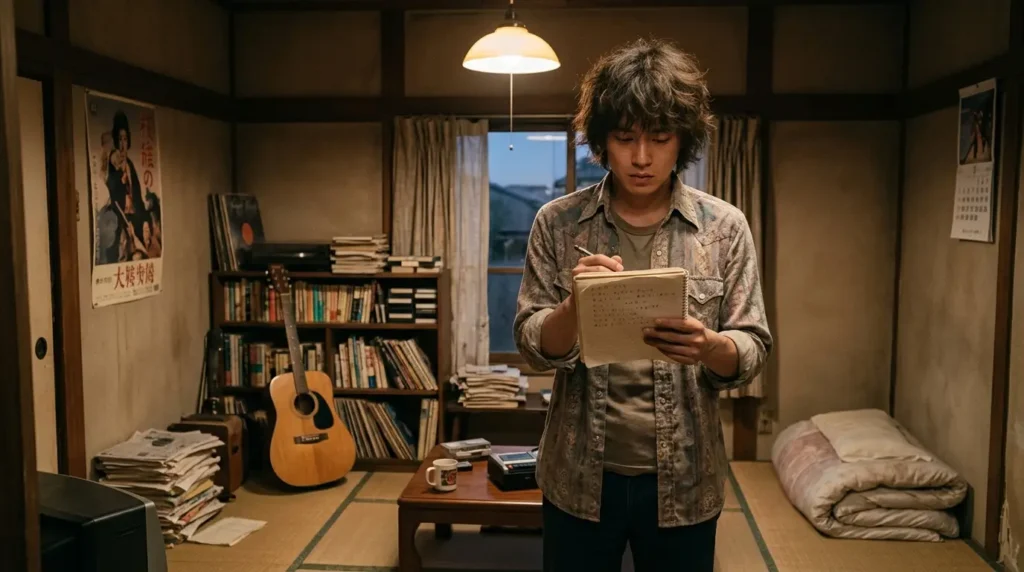
Of course, expressing a feeling through music offers no guarantee that another person will understand it. The fact that the protagonist frames his thoughts as a question suggests that he recognizes this uncertainty. The depth of an emotion and the ability to communicate it are two very different things.
A Woman Knitting and a Breeze Through the Window
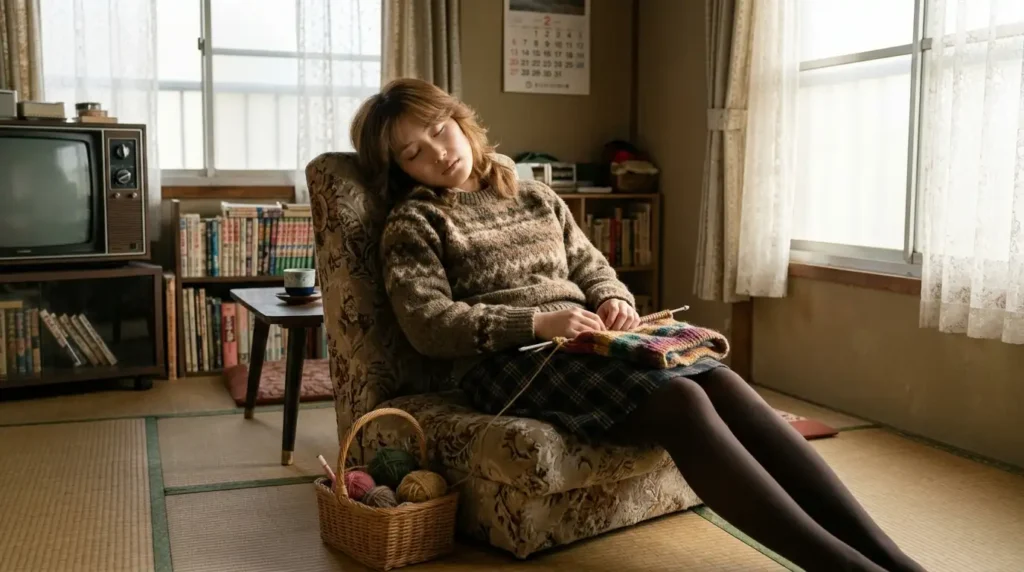
After the opening expressions of anguish, the lyrics shift to the quiet interior of a room. A woman rests her knitting on her lap and begins to doze. Nothing dramatic happens, and no conversation takes place.
The simple detail of her knitting makes the scene feel remarkably intimate. Perhaps she has just finished working with her hands and is beginning to feel sleepy. It is an ordinary moment, yet one that gives the listener a vivid sense of her presence.
Becoming Invisible to Be Near Her
The young man wishes he could become a breeze and enter the woman’s room. Rather than visiting her directly or calling her name, he imagines transforming into something that exists beyond the limitations of the human body.
A breeze can pass through an open window and move gently around someone without asking permission or waiting for a response. What the protagonist seems to seek is a kind of closeness that ordinary human relationships cannot easily provide.
Still, this fantasy should not be taken as evidence that the woman has rejected him. The lyrics never establish the nature of their relationship. The image of the breeze is better understood as a desire to become a natural, almost invisible presence in the life of someone he loves.
From an Ordinary Room into the World of Dreams
The image of a woman knitting belongs to everyday reality. The wish to become a breeze and enter her dreams belongs to fantasy. Nagai brings these two worlds together within a single scene.
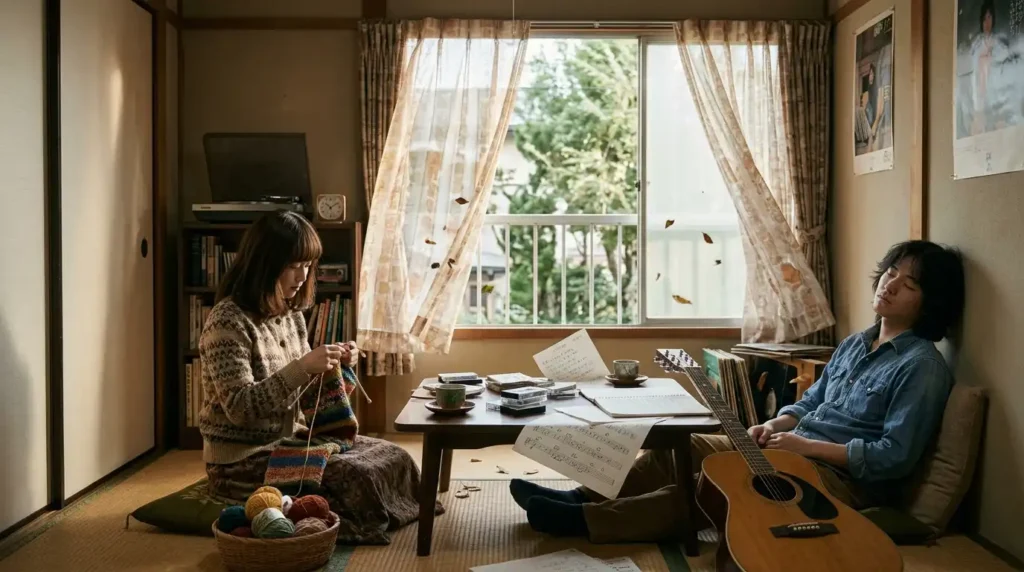
Because the passage begins with such a familiar domestic detail, the impossible transformation feels surprisingly natural. The protagonist’s imagination grows out of a recognizable scene, revealing Nagai’s ability to turn an ordinary observation into poetic expression.
Long Nights and Insects Drawn to the Light
Later in the song, the passage of many days is suggested. As the protagonist endures one long night after another, his attention turns to insects gathering around a light.
Insects are hardly the most conventional subjects for a love song. Yet in “Omoi,” these tiny creatures become the focus of a revealing emotional change: the young man finds himself feeling unexpectedly tender toward them.
How Love Changes the Way We See the World
The insects themselves have done nothing unusual. What has changed is the protagonist’s perception of them. Something he might once have ignored now inspires an unfamiliar sense of affection.
Falling in love can alter the way we experience our surroundings. A familiar street may suddenly seem brighter, or an insignificant moment may remain in our memory. Romantic feelings can influence not only how we regard another person but also how we respond to the world around us.
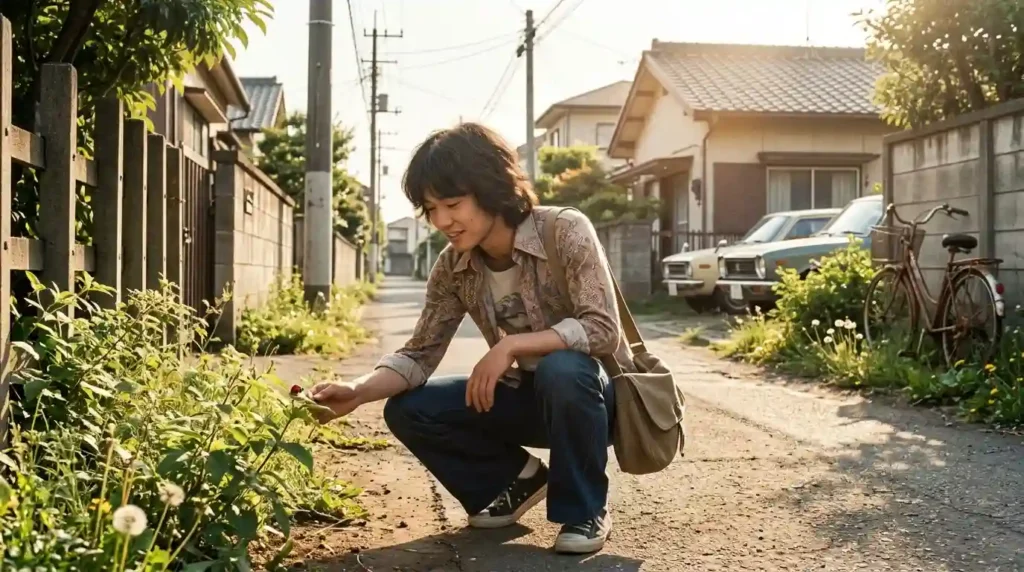
The protagonist himself seems puzzled by this unexpected tenderness. Rather than explaining the change through logic, the lyrics allow his bewilderment to remain. That uncertainty makes the moment particularly affecting.
When Pain and Tenderness Exist Together
At the beginning of the song, the young man searches for a way to escape his emotional pain. Yet during the nighttime scene, he discovers a gentle feeling toward small, unfamiliar living creatures.
Love can cause distress while also making us more sensitive to the lives around us. “Omoi” captures these seemingly contradictory effects within a single composition. The insects reveal that the protagonist’s inner world contains more than suffering alone.
Wishing to Become the Tiny Letters of a Letter
As the song approaches its final section, the protagonist laments how few words seem capable of expressing love. His heart contains more feelings than language can adequately describe. This frustration leads to another concrete image: a handwritten letter.
Yet he does not merely wish to write a letter and send it. He imagines becoming one of the tiny characters written on the page.
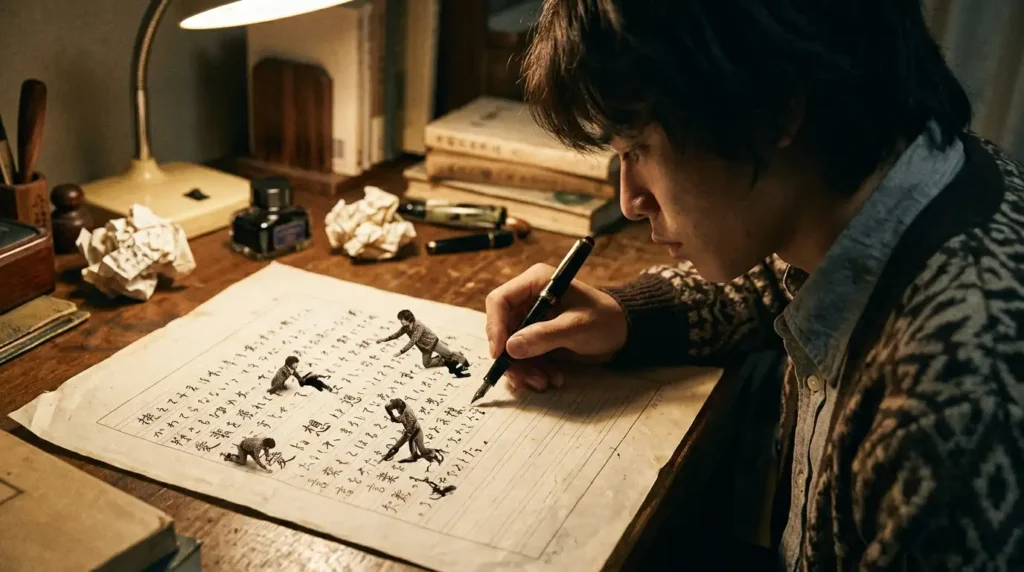
The Breeze and the Written Word: Two Different Metaphors
Earlier, the breeze represented an invisible presence capable of entering the woman’s room. Written characters, by contrast, have a visible form and can remain in someone’s possession.
Although these images have different qualities, they share one essential idea: the protagonist wishes to transform himself into something other than his ordinary human form. He imagines entering her dreams as a breeze and reaching her heart as written words. Through imagination, he attempts to cross a distance that reality will not allow him to overcome.
This seems to express more than simple hesitation about confessing his feelings. It suggests a desire for a connection so profound that ordinary conversation would never be enough.
Why a Handwritten Letter Matters
In 1978, handwritten letters were a familiar way of communicating personal feelings. Choosing the paper, considering the words, and sending the finished message all required time and attention.
Yet the song is not primarily concerned with the communication methods of its era. What matters is the imaginative leap from an ordinary letter to the fantasy of becoming a written character capable of entering another person’s heart.
What Remains in the Repeated Longing?
Near the end of “Omoi,” the protagonist repeatedly expresses his desire to become part of the woman’s heart. There is no indication that their relationship has progressed, nor does she offer any response.
The repetition suggests that his longing is not a passing emotion but something deeply rooted within him. At the same time, it leaves the impression that his wish remains unfulfilled.
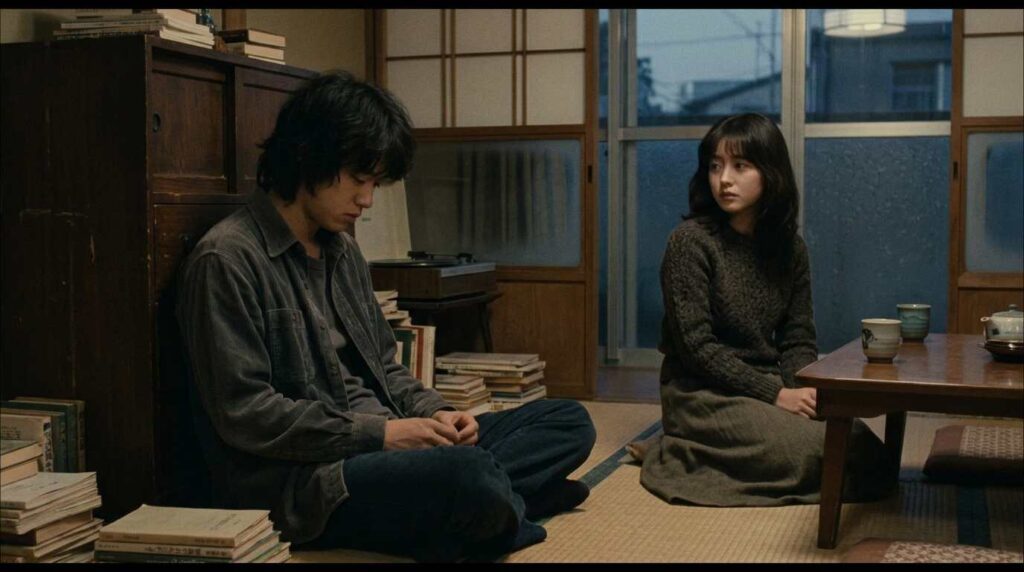
A Love Song Without a Conventional Ending
Romantic stories often reach a conclusion through a confession that is either accepted or rejected. “Omoi” offers no such resolution. The song ends while the protagonist is still holding on to his desire.
It would be misleading to interpret this ending as definite evidence of heartbreak. The lyrics reveal what the young man wants, but not whether the woman eventually understands or accepts his feelings. That question is left to the listener.
By refusing to provide a clear outcome, the song places its emphasis not on romantic success or failure, but on the longing that continues within the protagonist.
What “Omoi” Reveals About the Young Ryūun Nagai
Nagai’s debut album, Ryūun First, contains 12 tracks, including “Omoi,” “Yagate Kuru Haru ni,” “Ano Koro,” and “Karaburi no Ichinichi.” It remains an important record for understanding the beginnings of his songwriting career.
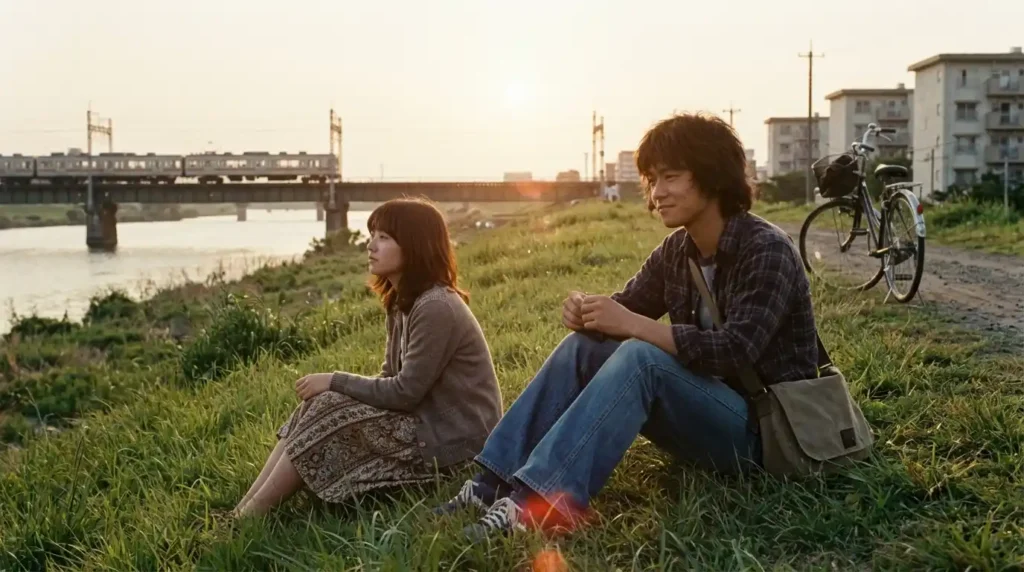
The previously featured song, “Karaburi no Ichinichi”, portrays a young man walking through the city in search of work. “Omoi,” by contrast, focuses on the inner life of someone struggling with romantic feelings.
Different Subjects, the Same Compassionate Perspective
Although the two songs explore different subjects, both portray individuals confronting circumstances they cannot easily control. “Karaburi no Ichinichi” examines the difficulties of finding one’s place in society, while “Omoi” explores the emotional complexity of loving another person.
Both compositions also use familiar scenes to reveal the inner lives of their characters. Rather than relying on dramatic events, Nagai draws emotional meaning from small details of everyday experience. This sensitivity was already evident in his earliest recordings.
No reliable firsthand account has been confirmed explaining the specific personal experiences that inspired “Omoi.” It is therefore more appropriate to interpret the emotions as those of the song’s protagonist rather than automatically treating them as autobiographical statements by Nagai himself.
Final Thoughts — Turning Inexpressible Love into Song
“Omoi” is not a song that celebrates romantic happiness with grand declarations. Its protagonist is troubled by his own feelings and continues to question how he might communicate them to the person he loves.
Yet the lyrics reveal emotional movements that cannot be explained by suffering alone. The fantasy of becoming a breeze, the unexpected tenderness toward insects, and the wish to reach another person’s heart as written words all show how love can transform both sensitivity and imagination.
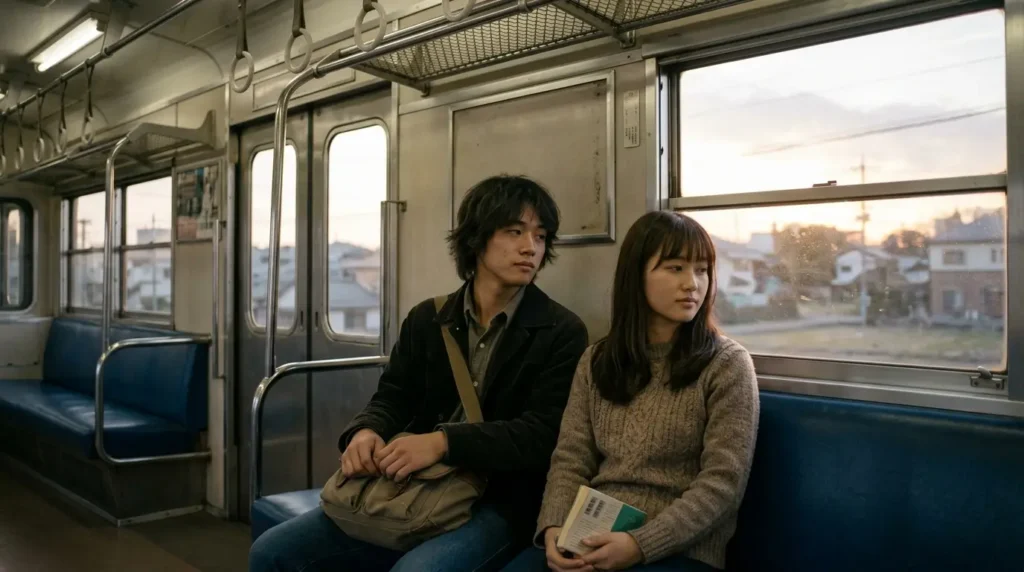
Released in 1978, when Ryūun Nagai was only 20, this debut song does not attempt to portray the fulfillment of romance. Instead, it explores the subtle emotional changes that arise when someone becomes deeply attached to another person.
The enduring appeal of “Omoi” lies in its refusal to offer a simple answer to the mysteries of love. By imagining himself transformed into a breeze or the tiny letters of a handwritten message, the protagonist searches for a way to express what ordinary language cannot contain. In that imaginative longing, we can recognize the delicate vision of love that the young Ryūun Nagai brought to his very first recording.

音楽ファン同士の交流・リクエストはこちら / Connect & Request Songs Here