🌐 English|🌐 日本語
Explore the Musical Life of Ryūun Nagai Here!
- 🎧 Listen to This Article
- No. 6 is “Karaburi no Ichinichi” by Ryūun Nagai.
- First, Listen to the Official YouTube Audio
- Searching for a Direction in a Crowded City
- A Bitter Crosswind and the Voice of Self-Criticism
- A Clown’s Smile and the Loss of Trust
- The Wish Carried by a Fallen Leaf
- A Day That Ends at a Bridge Railing
- The Subject Ryūun Nagai Chose at Age 20
- In Closing — Why an Unrewarded Day Deserves a Song
🎧 Listen to This Article
Discover the key themes of this article through English and Japanese narration.
Before reading, explore the loneliness, emotional struggles, and powerful imagery in Ryūun Nagai’s “Karaburi no Ichinichi” (A Day of Missed Chances).
🎵 English Narration
Listen to an English narration highlighting the main themes of this article.
🎶 Japanese Narration
Listen to a Japanese narration covering the main themes of this article.
Listening before reading can help you appreciate the emotional depth of “Karaburi no Ichinichi” and follow the article’s analysis more easily.
No. 6 is “Karaburi no Ichinichi” by Ryūun Nagai.
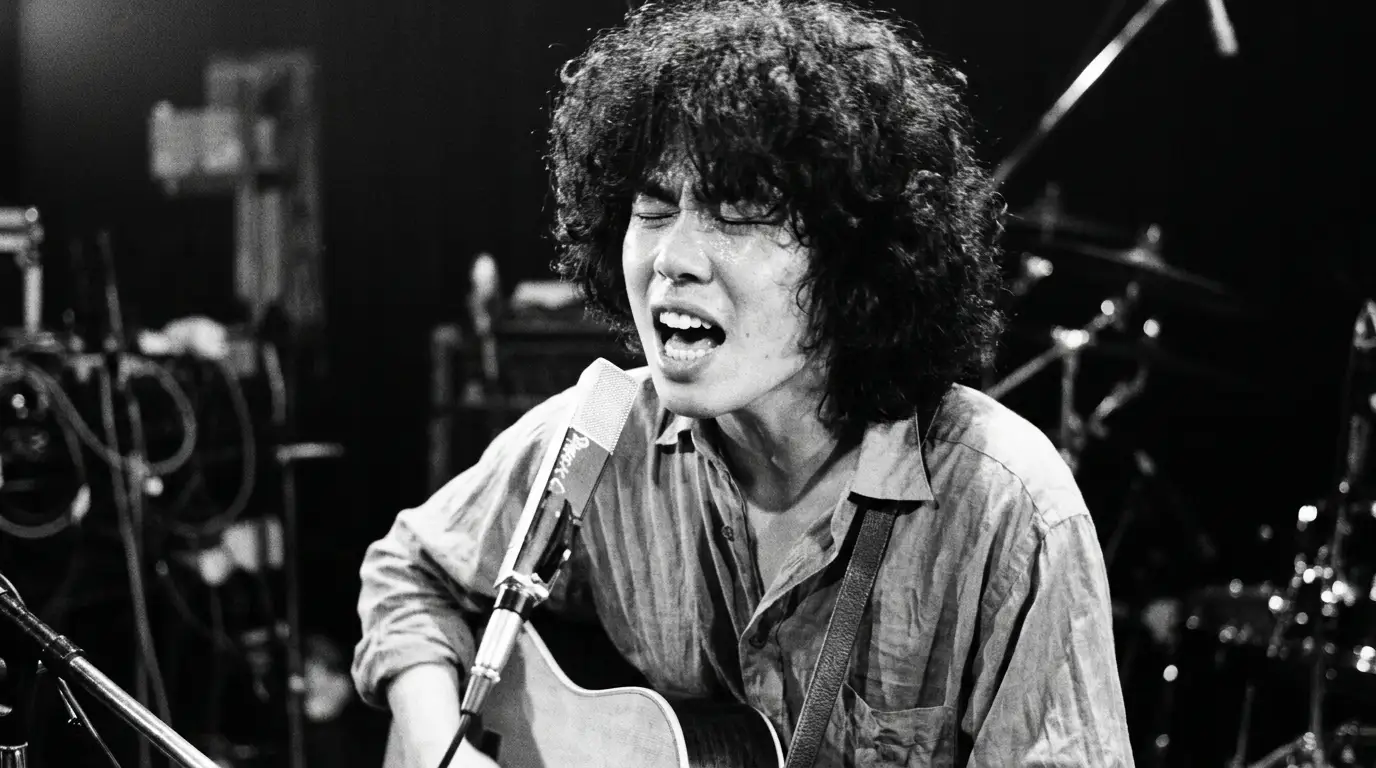
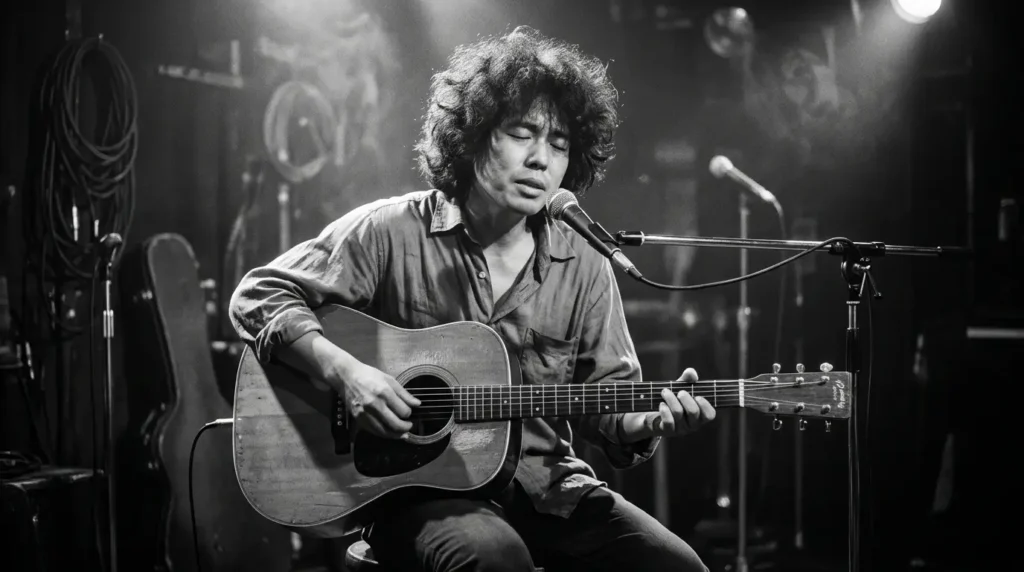
“Karaburi no Ichinichi” (A Day of Missed Chances) was released on March 25, 1978, as the B-side of Ryūun Nagai’s debut single, “Omoi.” It was also included as the seventh track on his debut album, Ryūun First, released on May 25 of the same year. Nagai was just 20 years old when he introduced this song at the beginning of his recording career.
Reliable figures documenting the song’s individual sales or contemporary reception are not readily available. However, Nagai gained wider recognition the following year with “Michishirube Nai Tabi,” which became one of his signature songs. “Karaburi no Ichinichi” belongs to the period before that recognition had been established.
The title might suggest a mildly self-deprecating reflection on a day when nothing went according to plan. Yet the song tells a far more painful story: that of a young man wandering through the city in search of work.
Surrounded by crowds, the protagonist struggles to find a direction for his life. Past disappointments in human relationships have also left him emotionally exhausted. Busy streets, a harsh crosswind, a clown, a fallen leaf, and a bridge railing become the images through which his troubled state of mind emerges.
An Interpretive Paraphrase
I keep walking the streets in search of work,
yet another day passes without the answer I hoped for.
Tired of trusting others, even my cheerful disguise feels hollow.
The wind lashes against me, as though condemning the person I have become.
If only I could drift like a fallen leaf upon the river,
I would leave this fruitless day behind with a sigh against the bridge railing.
First, Listen to the Official YouTube Audio
Ryūun Nagai – “Karaburi no Ichinichi”
Audio source: YouTube, “Ryūun Nagai - Topic”
Original releases: “Omoi” (1978 single, B-side) / Ryūun First (1978 album)
About the Song
An early Ryūun Nagai composition portraying the struggles of a young man searching for work in the city.
Against a backdrop of crowded streets and bitter winds, the song explores broken trust and anxiety about the future.
Searching for a Direction in a Crowded City
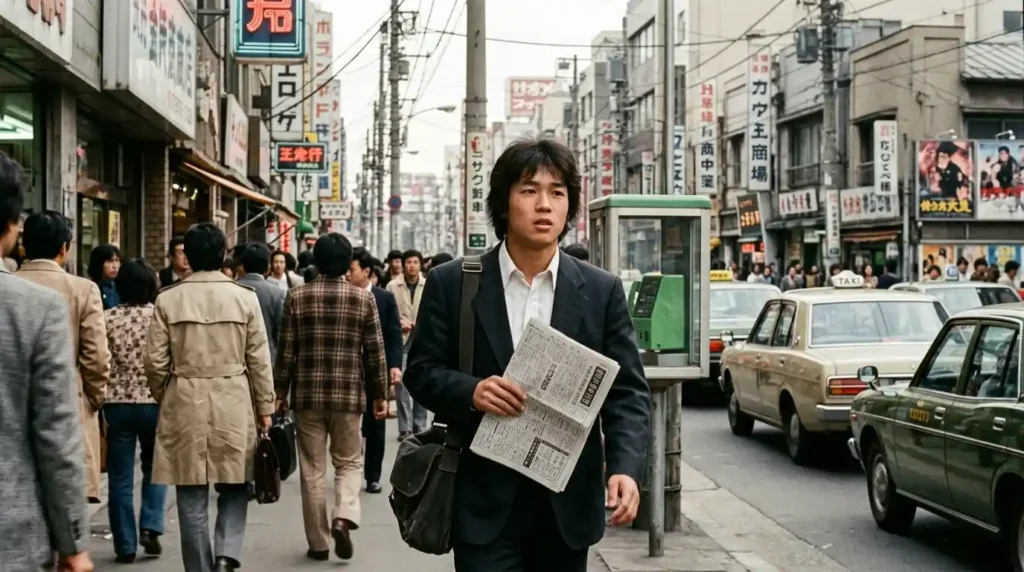
The story opens on a bustling city street. With a newspaper in hand, the protagonist walks from place to place looking for employment. Although surrounded by people, he seems unable to find somewhere he belongs.
A crowded street does not necessarily offer human connection. When everyone else appears to be heading toward a destination, someone without a clear path can feel even more isolated. The contrast between the city’s activity and the young man’s circumstances establishes the song’s emotional setting from the beginning.
What the Stray Dog Metaphor Reveals
The lyrics compare the young man’s restless search for work to the movements of a stray dog. The image suggests a creature wandering the streets without a secure place to call home.
Looking for employment is an attempt to establish a stable foundation for life. When those efforts fail to produce results, financial anxiety may be accompanied by doubts about one’s abilities and personal worth.
The song does not explain why the protagonist has been unable to find a job. Nevertheless, the severity of the stray dog comparison conveys his frustration at being unable to establish a place for himself in society.
A Newspaper and Everyday Life in 1978
When the song was released in 1978, newspapers and printed job advertisements were important sources of employment information. Searching online and submitting an application instantly, as people can today, was not an option.
The image of a young man carrying a newspaper through the streets reflects the everyday circumstances of that period. Although the song cannot be definitively described as a commentary on a particular employment issue, the detail gives the story a convincing sense of its time.
A Bitter Crosswind and the Voice of Self-Criticism
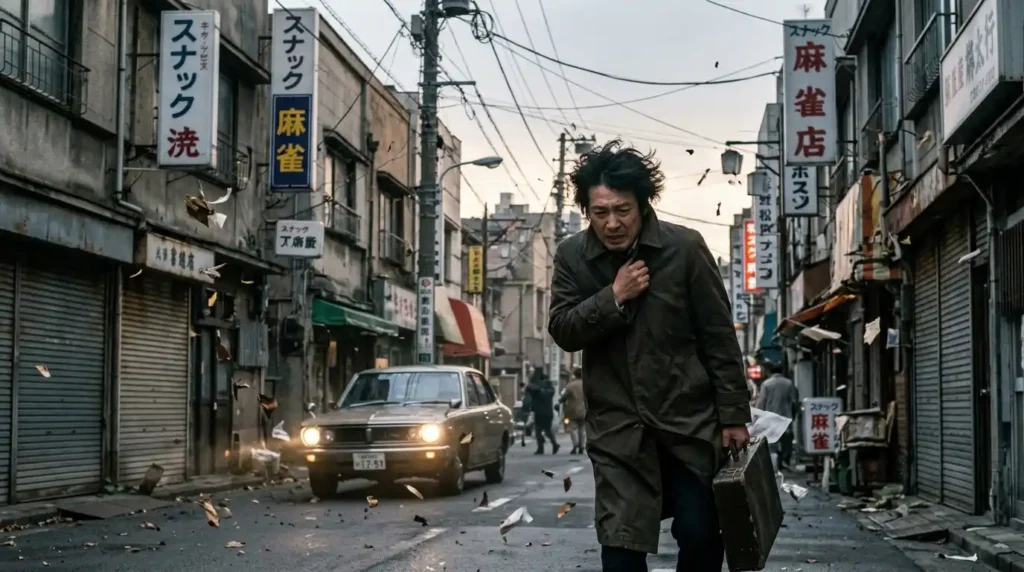
As the protagonist walks through the city, a strong wind strikes him from the side. The wind is portrayed almost as a person criticizing the way he lives. By giving a natural force a human voice, the song connects the surrounding landscape with his inner turmoil.
Is the Wind Speaking for Society?
The wind can be interpreted as a symbol of society’s indifference. For a young man who searches for work without success, the entire city may seem to be rejecting him.
Yet the voice might also represent his own self-criticism. Repeated disappointments can strengthen feelings of inadequacy, even when nobody is openly condemning us.
Is he hearing society’s judgment, or is he confronting his own disappointment? The image is compelling precisely because it allows both interpretations. An invisible emotional burden becomes something physically tangible through the force of the wind.
Why the Wind Returns
The wind reappears toward the end of the song. At first, its harshness seems directed at a young man struggling to find work. Later, after the listener has learned about his damaged trust and emotional exhaustion, the same image carries greater weight.
As the story develops, our understanding of the protagonist changes. The recurring wind becomes a narrative device that reveals how the meaning of an image can deepen without changing its outward form.
A Clown’s Smile and the Loss of Trust
In the middle of the song, a contradiction emerges between the protagonist’s outward appearance and his inner feelings. Walking with his head lowered has become a habit, yet he continues to behave cheerfully in front of others.
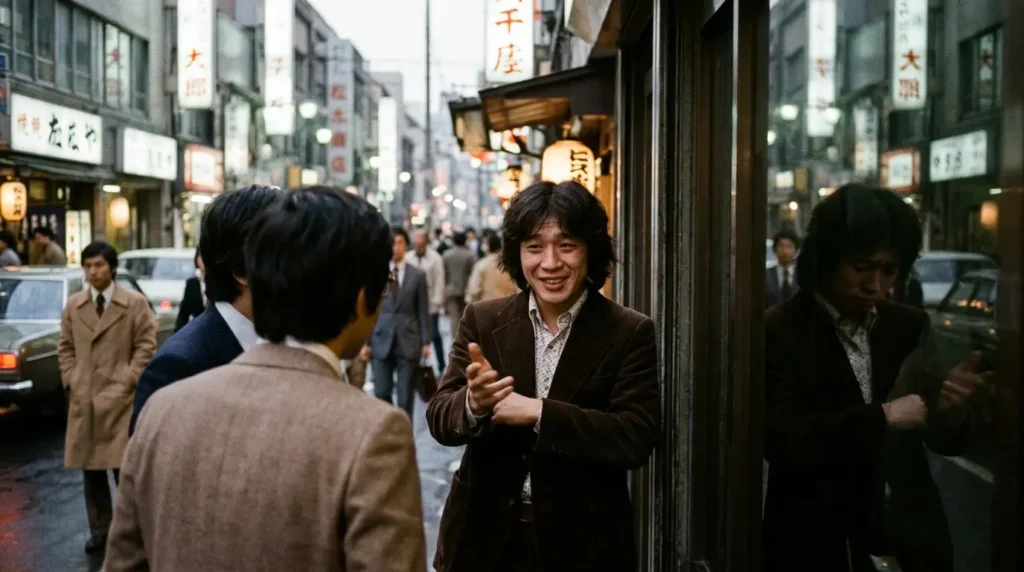
A clown exists to entertain people. But a clown’s smile does not necessarily reflect genuine happiness. The young man carries his distress privately while presenting a different face to the world.
The Burden of Pretending to Be Cheerful
Perhaps he does not want to reveal his vulnerability. Perhaps he is reluctant to let others see how discouraged he has become. The song leaves his precise reasons open to interpretation.
What stands out is the description of walking with his head lowered. This is no longer a temporary reaction to disappointment; it has become an ingrained habit. His prolonged distress appears to have affected not only his thoughts but also the way he carries himself.
Nevertheless, he performs the role of a cheerful person in public. Concealing sadness behind a lively manner suggests something more complicated than simple bravado.
The Desire to Trust and the Fear of Being Hurt
The protagonist also carries a profound distrust of other people. Repeated experiences of betrayal seem to have exhausted his willingness to believe in anyone. The lyrics do not identify those responsible or explain the events that led to his disillusionment.
Eventually, he wonders how much easier life might be if he could live entirely on his own. Rather than expressing a confident preference for solitude, this wish appears to arise from a desire to avoid further emotional injury.
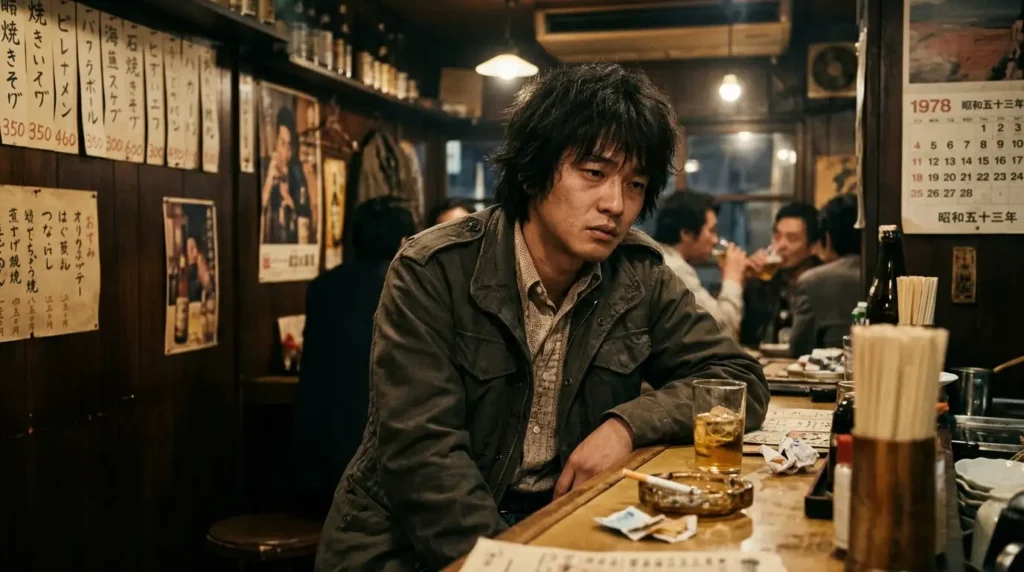
The pain of losing trust in others can also reveal that trust once existed. Betrayal hurts precisely because something meaningful was expected from another person. This contradiction gives the protagonist’s words a depth that goes beyond a simple complaint about society.
The Wish Carried by a Fallen Leaf
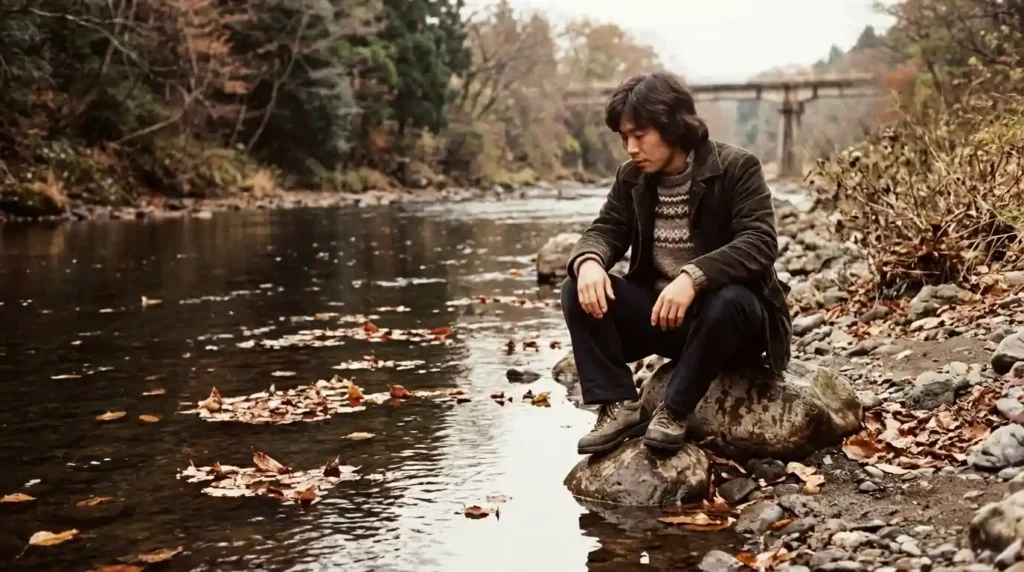
Later in the song, a fallen leaf appears floating on a river. The protagonist wishes he could surrender himself to the current in the same way. After spending the day searching for work, he seems weary of having to pursue anything at all.
Not Freedom, but Relief from Having to Choose
Allowing oneself to go with the flow can sometimes suggest freedom. Yet a fallen leaf floating on a river cannot choose its destination. It simply travels wherever the water carries it.
The image therefore suggests less a hopeful vision of the future than a longing to escape the burden of making decisions and pursuing results. Rather than actively changing his life, the young man may simply wish for temporary relief from his suffering.
There is a revealing contrast between the stray dog at the beginning and the fallen leaf near the end. The dog moves through the streets on its own legs, while the leaf is carried by the current. These two images suggest a shift from determined activity toward a desire to surrender control.
A Day That Ends at a Bridge Railing
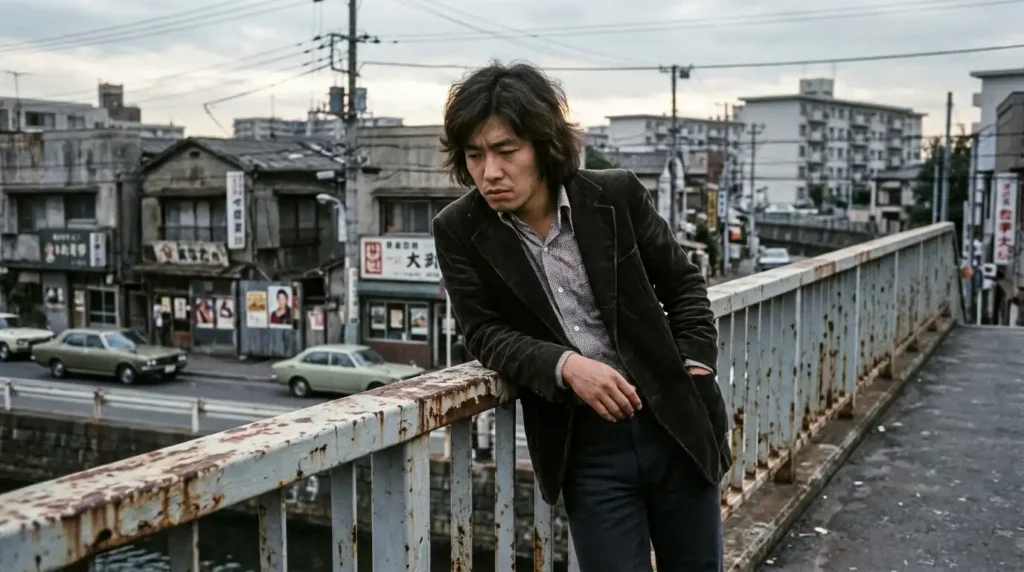
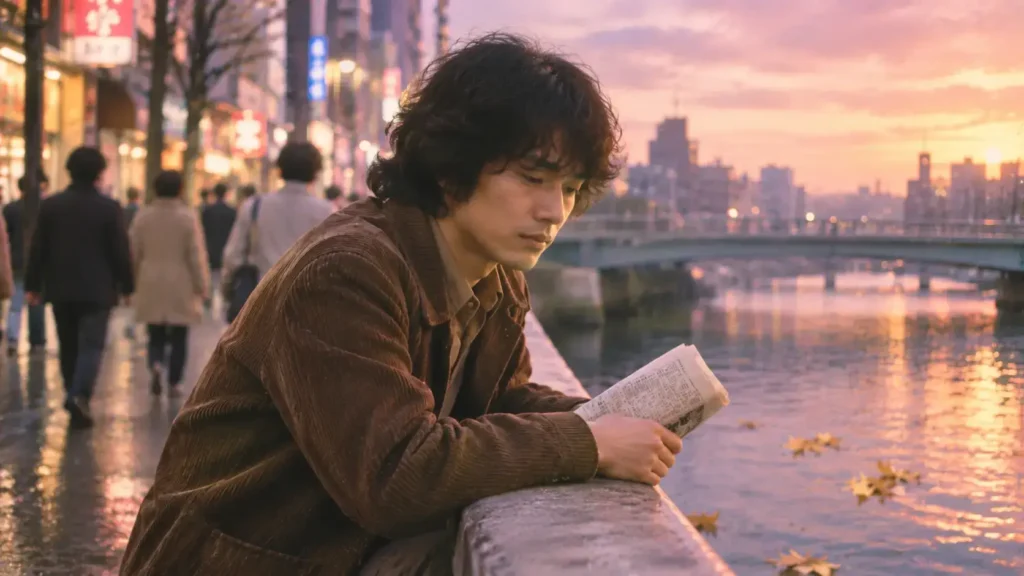
At the song’s conclusion, the protagonist leans against a bridge railing and sighs. There is no news of a successful job application and no reconciliation with the people who have hurt him. The story ends without resolving his difficulties.
Why Does the Story End on a Bridge?
A bridge connects one side of a river to the other. Yet the protagonist stops there. After walking through the city in search of somewhere to go, he finally comes to a standstill. The contrast is striking.
There is no verified statement from the songwriter establishing the bridge as a deliberate symbol of a turning point in life. Even so, the progression from restless movement through the streets to stillness at the railing vividly conveys the protagonist’s exhaustion.
An Ending Without Easy Reassurance
The song offers no encouraging message to its protagonist at the end. It does not promise that tomorrow will bring better fortune. Instead, it allows an unsuccessful day to remain unsuccessful.
In everyday life, effort does not always produce immediate results. Even when someone wants to recover from disappointment, emotional wounds may take time to heal. The song gains credibility by refusing to romanticize that reality.
The young man leaning against the railing is no extraordinary hero. He is an ordinary person who feels defeated, distrusts others, and questions himself. Nagai portrays his vulnerability without treating it as a moral failing.
The Subject Ryūun Nagai Chose at Age 20
Ryūun Nagai was only 20 when “Karaburi no Ichinichi” was released. It is remarkable that an artist of that age chose to portray the uncertainty of someone searching for employment and the emotional consequences of losing trust in others.
However, the protagonist should not automatically be identified with Nagai himself. Whether the story grew out of personal experience or observations of people around him remains unclear, as reliable accounts of the song’s creation have not been established.
What deserves attention is that, even at the beginning of his career, Nagai was interested not only in love and youthful hopes but also in people struggling to find their place in society. His choice of subject reveals an aspect of his early artistry that may be overlooked when attention is focused exclusively on his better-known songs.
A Voice That Makes the Story Feel Real
Although the lyrics contain harsh sentiments, Nagai does not deliver them as an uninterrupted outburst of anger. His singing has the quality of someone reflecting on difficult circumstances, making the protagonist’s feelings seem personal and recognizable.
Rather than celebrating success, the song examines a day in which nothing has been achieved. Nor does it exaggerate the protagonist’s suffering merely for dramatic effect. Its distinctive character comes from the relationship between ordinary scenes and the emotions they evoke.
Nagai’s 1978 debut album, Ryūun First, includes songs such as “Omoi,” “Yagate Kuru Haru ni,” and “Ano Koro.” Among these early works, “Karaburi no Ichinichi” stands out as a particularly bitter story about searching for employment and losing faith in other people.
In Closing — Why an Unrewarded Day Deserves a Song
“Karaburi no Ichinichi” portrays a young man struggling to find his place in society. Instead of celebrating achievement, it follows the passing hours of a day that brings him no reward.
The song never insists that hard work must lead to success or that every failure carries a hidden purpose. Its value lies in the way it acknowledges life’s difficulties without turning them into an easy lesson.
Recorded by a 20-year-old Ryūun Nagai and released on the B-side of his debut single, the song may have received less attention than his later signature works. Nevertheless, it deserves recognition as an important part of his early musical development.
“Karaburi no Ichinichi” is not a song that mocks those who struggle. It is a song about someone who has endured another day, even when life has offered him little in return.

音楽ファン同士の交流・リクエストはこちら / Connect & Request Songs Here