
Bryan Ferry’s Musical Journey: Explore His History Here!
- 🎧 Listen to This Article
- No. 3 in My Personal miniBest7 Is “Jealous Guy”
- First, Enjoy the Official Music Video on YouTube
- Why Do We Hurt the People We Love?
- John Lennon’s Deeply Personal Confession
- December 1980: A Tragedy That Inspired a Tribute
- How Bryan Ferry Transformed the Character of “Jealous Guy”
- Why I Chose It for No. 3: A Beautiful Melody and Human Imperfection
- Final Thoughts: The Difference Between Loving and Trusting
🎧 Listen to This Article
Enjoy a narrated summary of the key points from this article.
Before reading, listen to discover the emotional appeal of “Jealous Guy” and get a feel for the story behind the song.
🎵 English Narration
Listen to an English-language summary of this article.
🎶 Japanese Narration
Listen to a Japanese-language summary of this article.
Listening first will help you appreciate the jealousy and regret expressed in “Jealous Guy,” along with the distinctive beauty of Bryan Ferry’s performance.
No. 3 in My Personal miniBest7 Is “Jealous Guy”
1981: A Tribute to John Lennon Becomes a UK No. 1 Hit
My choice for No. 3 is “Jealous Guy.”
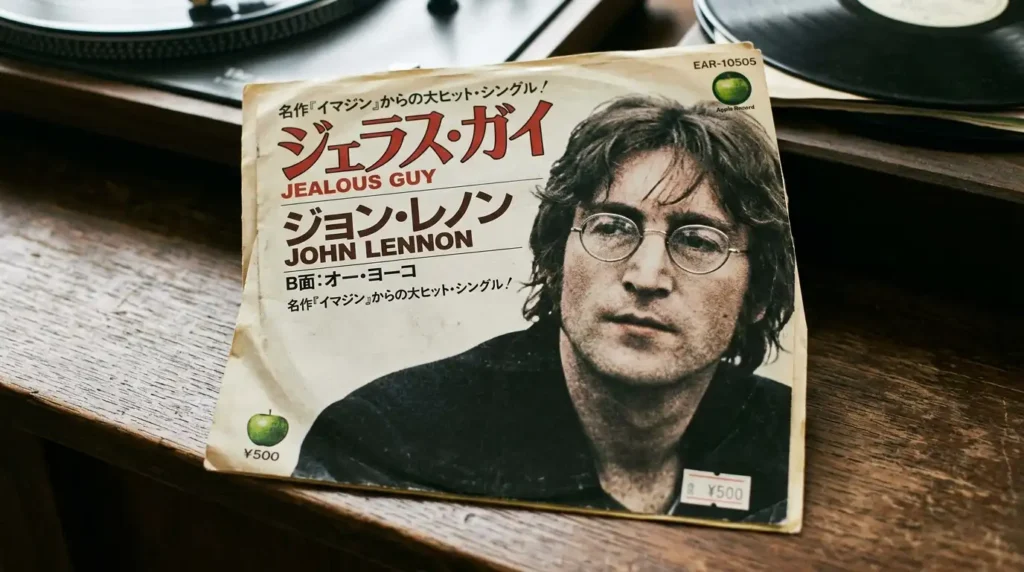
In February 1981, Roxy Music released the song as a single in tribute to John Lennon, who had died the previous December. It spent two consecutive weeks at No. 1 on the UK Singles Chart that March, becoming the band’s only UK chart-topping single.
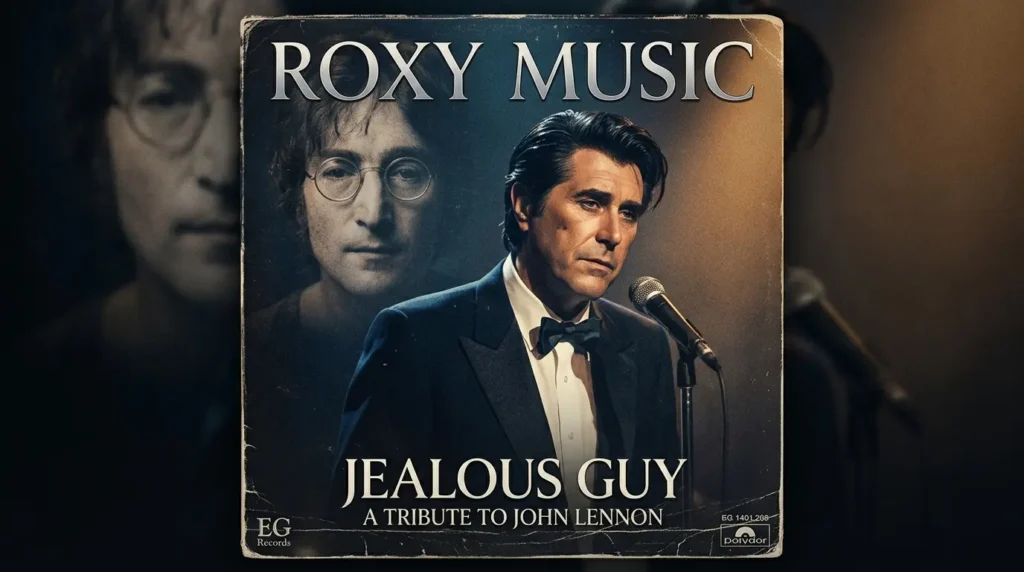
The recording was originally released as a standalone single rather than appearing on a Roxy Music studio album. It was later included on compilations such as the 1986 collection Street Life: 20 Great Hits.
The original song was written and recorded by John Lennon for his 1971 album Imagine. It tells the story of a man who has hurt the woman he loves, acknowledges his jealousy and asks for forgiveness.
Above all, I chose this recording because of Bryan Ferry’s voice. What sounds like an intensely personal, unguarded confession in Lennon’s hands becomes a sophisticated, melancholy ballad through Ferry’s interpretation.
How can someone sing so beautifully about the painful contradiction of loving a person and yet doubting them? However many times I listen, this performance still moves me.
My Interpretation of the Lyrics
Whenever memories of the past return, my heart trembles at the thought of losing you.
I love you, yet my jealousy and suspicion have hurt you and brought you to tears.
More than anything, I want to cherish you, but I cannot seem to overcome my own weakness.
I'm sorry. You have done nothing wrong. I'm simply too afraid of losing your love.
The more deeply I love you, the more frightened I become. That's the kind of foolish man I am.
First, Enjoy the Official Music Video on YouTube
Video Credits
🎬 Official Music Video | Roxy Music – Jealous Guy
Artist: Roxy Music
Lead Vocals: Bryan Ferry
Written by: John Lennon
Single Released: 1981
YouTube Upload: April 24, 2010
Source: Official Roxy Music YouTube Channel

About This Performance
Released by Roxy Music in 1981 as a tribute to John Lennon following his death in 1980, this moving cover became a UK No. 1 single.
Bryan Ferry's wistful vocals and the band's elegant arrangement give Lennon's deeply personal song a distinctive new character.
Why Do We Hurt the People We Love?
Jealousy Begins with the Fear of Losing Love
The title “Jealous Guy” might suggest a possessive man who wants to control his partner. Yet a closer reading of the lyrics reveals someone who is less concerned with accusing his lover than with struggling against his own emotions.
What frightens him is not the discovery of an actual betrayal. It is the uncertainty that one day he may no longer be loved, even though he has no clear reason to believe it.
A passing glance or an ordinary gesture begins to seem suspicious. Things he would normally overlook suddenly become possible signs that something is wrong.
To me, this is what makes jealousy such a troublesome emotion. The harder someone tries to reassure himself about another person’s feelings, the more closely he examines every little action. Instead of finding comfort, he becomes increasingly uneasy.
He appears to doubt his lover, but perhaps the deeper problem is that he cannot believe himself worthy of being loved. I hear that insecurity running through the song.
Why an Apology Is Not Always Enough
Throughout the song, the narrator repeatedly apologizes for hurting his lover. He understands that his behavior has brought her to tears.
But there is an important distinction between saying that he never intended to cause pain and acknowledging that he actually caused it. Even without malicious intentions, an accusation can leave a lasting wound on the person who receives it.
Feeling Remorse Is Not the Same as Changing
The narrator clearly regrets what he has done. Yet we cannot know whether he will control his emotions when a similar situation arises again.
An apology addresses something that has already happened. Rebuilding trust, however, depends on what follows. Simply wanting to cherish someone is not always enough.
It is possible to apologize sincerely and still find it terribly difficult not to repeat the same mistake.
That is why I hear something more complicated in this song than a touching romantic confession. It also reveals how difficult human relationships can be.
John Lennon’s Deeply Personal Confession
Another Side of the Album Imagine
Released in 1971, Imagine contains songs exploring society, human relationships and personal convictions from several different perspectives, including its celebrated title track with its vision of peace.
“Jealous Guy,” however, turns inward. Rather than making a statement to the wider world, Lennon examines his own shortcomings as they emerge within an intimate relationship.
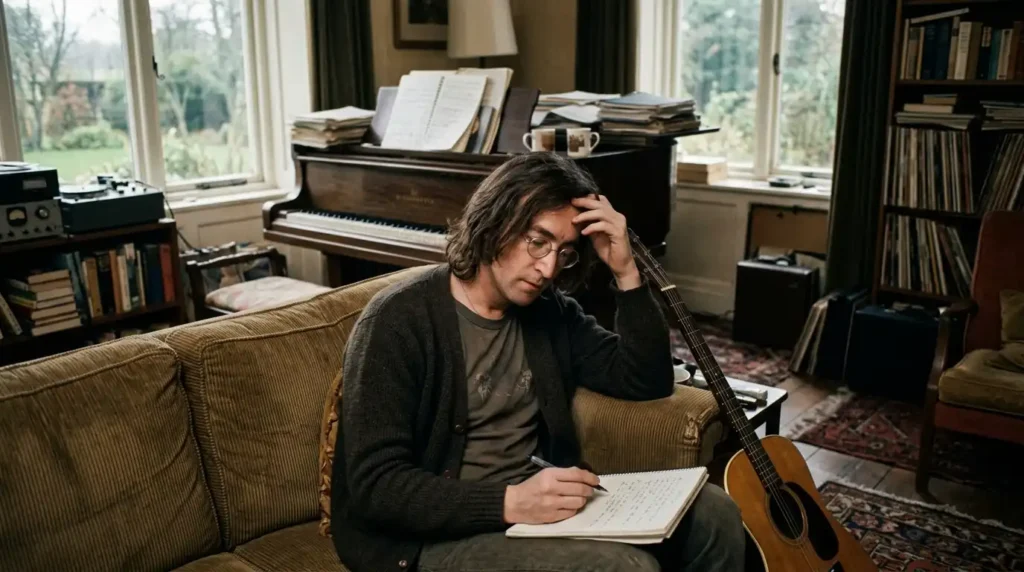
During his Beatles years, Lennon often projected an image of sharp wit, defiance and outspoken conviction. In this song, however, he makes little attempt to conceal his imperfections.
I find that contrast fascinating. Even someone with an extraordinary ability to inspire millions can become confused, vulnerable and painfully ordinary in a close personal relationship.
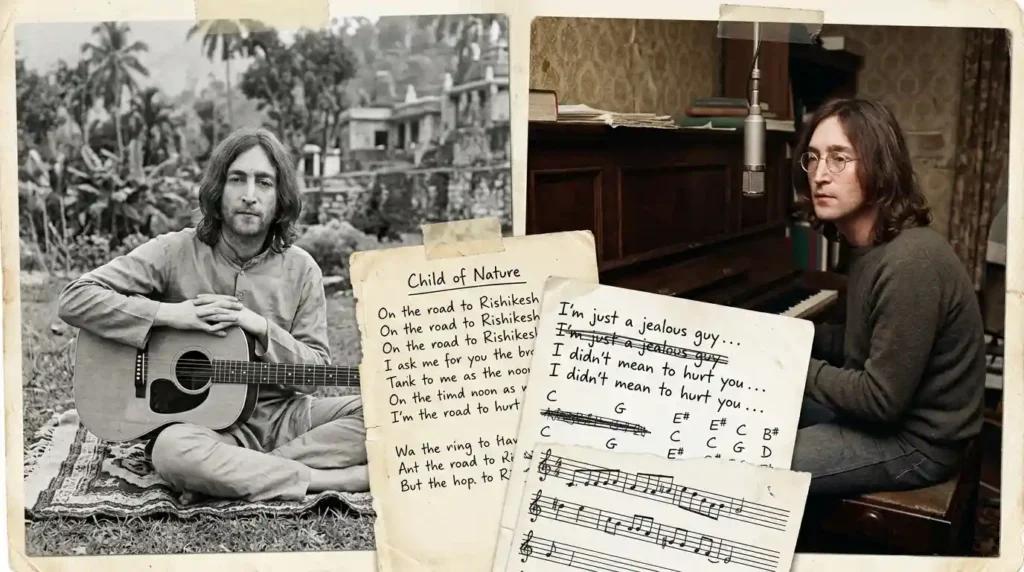
The Song Began as “Child of Nature” in 1968
There is another intriguing story behind the creation of “Jealous Guy.”
Its origins can be traced to “Child of Nature,” a song Lennon wrote during his stay in India in 1968. Inspired by the natural world, it was recorded in demo form during the Beatles era.
Lennon liked the melody, but apparently remained dissatisfied with the original lyrics. Later, with input from Yoko Ono, he substantially rewrote the words.
In this way, a song inspired by nature became “Jealous Guy,” a confession of romantic insecurity, jealousy and regret.
The same melody can tell an entirely different story when its words change. Knowing how this song evolved gives me a renewed appreciation of Lennon’s flexibility as a songwriter.
December 1980: A Tragedy That Inspired a Tribute
A Special Performance in Dortmund
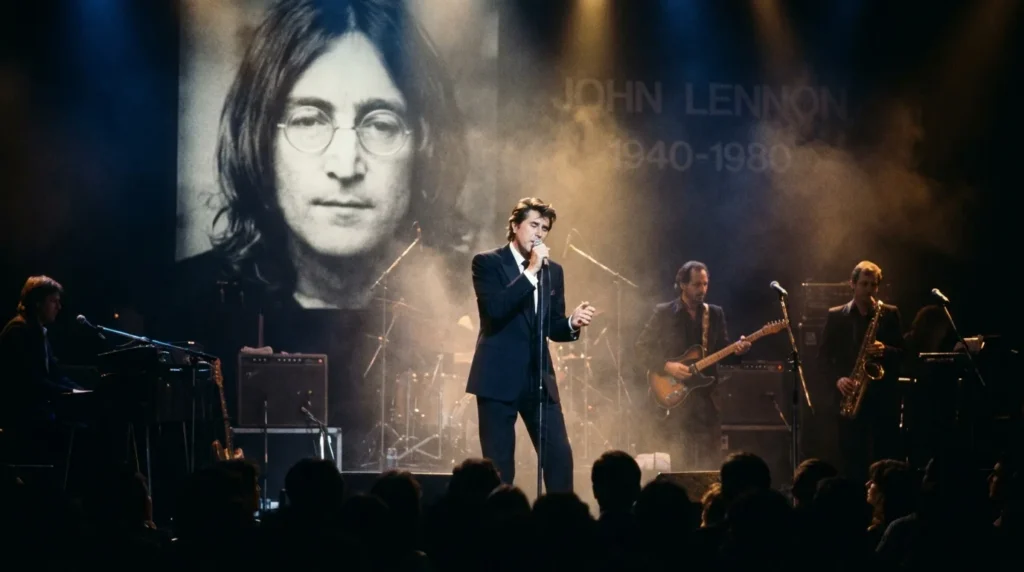
On December 8, 1980, John Lennon was shot and killed in New York at the age of 40. His death sent shock waves through the music world.
Roxy Music were performing in Europe at the time. Following Lennon’s death, the band played “Jealous Guy” at a concert in Dortmund, Germany, on December 20, 1980.
Bryan Ferry later recalled the occasion in an interview. The tribute performance had been so warmly received that, after returning to London, the band recorded the song at guitarist Phil Manzanera’s studio.
In other words, the cover did not begin as a carefully planned attempt to produce a chart hit. It grew out of a live performance intended to honor a fellow musician who had died.
An Unexpected Choice for a Tribute
What interests me most is the choice of “Jealous Guy” itself.
The song is not about death, bereavement or the end of life. Instead, it explores something intensely private and familiar: jealousy within a romantic relationship.
Yet perhaps there was no need to choose a song carrying a grand social message in order to honor Lennon.
Even a great musician had doubts, insecurities and personal flaws. Remembering that human side of an artist can be a meaningful form of tribute in its own right.

Rather than completely reinventing Lennon’s composition, Ferry and his bandmates brought their own musical identity to it, revealing qualities that listeners might not have noticed before.
A song first performed under the extraordinary circumstances of a tribute eventually became one of Roxy Music’s defining hits. It is one of those remarkable stories that make music history so compelling.
How Bryan Ferry Transformed the Character of “Jealous Guy”
Lennon’s Directness and Ferry’s Distinctive Phrasing
Listening to Lennon’s original recording alongside Roxy Music’s version, I am struck by how differently the same melody can come across.
There is an unguarded honesty in Lennon’s voice. His admission of personal failings sounds almost like a confession drawn directly from his own experience.
Ferry, by contrast, softens the edges of the words and guides the melody through his unmistakable phrasing. Rather than sustaining every note in a straightforward manner, he allows the ends of phrases to waver slightly, occasionally approaching a whisper.
It is this subtle vocal delivery that I particularly enjoy. Instead of insisting on an emotional response, Ferry lets small changes in his voice invite the listener to imagine what lies beneath the words.
A Rich Arrangement Built Around the Piano
Roxy Music’s recording is distinguished by the gentle sound of the piano. Against a relaxed tempo, the guitar and keyboards gradually add texture, supporting the song without overwhelming it.
I particularly enjoy the balance between the instruments. Their individual sounds remain clear, while Ferry’s voice occupies a natural position at the center. The accompaniment is rewarding to listen to in its own right, yet it never distracts from the melody.
This is quite different from the experimental sound associated with Roxy Music in the early 1970s. Instead of relying on unusual textures or dramatic musical surprises, the arrangement concentrates on presenting the composition with care and elegance.
The Whistling Near the End Adds Another Dimension
One of my favorite moments comes near the end, when Ferry begins to whistle.
As the whistled melody takes over, the performance acquires a warmth and familiarity quite different from the vocal passages. There is a hint of loneliness in the sound, but it never feels oppressively sad.
Whistling carries no words. Perhaps that is why it allows listeners to create their own images and associations.
To me, it almost sounds like a man sitting alone, remembering what happened after his apology has been spoken.

That whistled passage is one of the defining features of Ferry’s interpretation of “Jealous Guy.” Its melody stays with me long after the recording has ended.
Why I Chose It for No. 3: A Beautiful Melody and Human Imperfection
How It Differs from “Smoke Gets in Your Eyes”
My previous choice, No. 4, was “Smoke Gets in Your Eyes,” another cover performed by Bryan Ferry.
Yet the two songs portray very different kinds of men.
In “Smoke Gets in Your Eyes,” the narrator struggles with the pain of lost love and the way that sorrow appears to others. In “Jealous Guy,” the man is tormented by the realization that his own behavior has hurt someone he still loves.
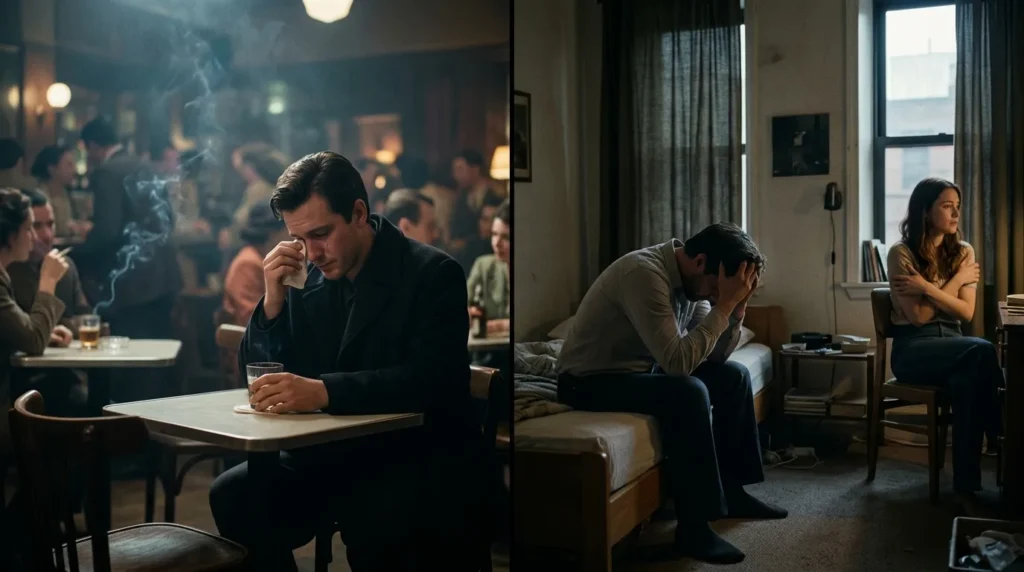
The former tells the story of a love that has already ended. The latter explores the fear that love may be lost.
For me, that distinction matters. I can certainly sympathize with the sadness of heartbreak, but I find something even more compelling in the complicated emotions of someone who causes pain within a relationship that has not yet ended.
More Than Just a Beautiful Song
Even without paying close attention to the lyrics, “Jealous Guy” is a wonderfully appealing ballad. Ferry’s singing and the band’s performance suit my musical tastes exceptionally well.
Yet the narrator’s behavior is hardly admirable. He allows his insecurity to spill over onto his lover, ultimately reducing her to tears.
Even so, I cannot bring myself to condemn him completely. When people lose confidence in themselves, they may begin to suspect things they would ordinarily never question.
My decision to place this song at No. 3 is therefore not based on its musical qualities alone. Beneath the surface of an accessible, beautifully performed ballad lies a question that offers no easy answer.
A lovely melody can carry a portrait of the less attractive side of human nature. I believe that combination is what makes this song so memorable.
Final Thoughts: The Difference Between Loving and Trusting
“Jealous Guy” began as a deeply personal confession by John Lennon and found a new audience through Roxy Music’s interpretation after his death.
For me, it is also a recording that reminds me just how distinctive Bryan Ferry is as a singer. His unusual phrasing, the carefully balanced arrangement and that memorable whistled passage combine to create something I never tire of hearing.
And when the music ends, I find myself reflecting on one particular thought.
Loving someone deeply does not necessarily mean being able to trust them completely. Sometimes, the stronger our fear of losing someone becomes, the more likely we are to question their feelings.
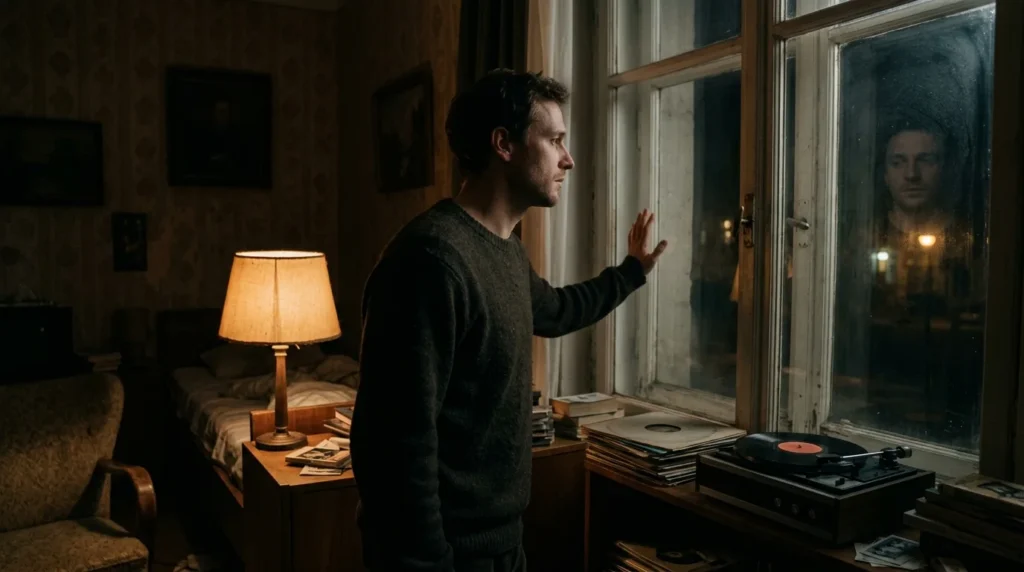
But no matter how insecure we feel, that does not give us the right to direct our fears at another person. We need both the courage to acknowledge our own weaknesses and the willingness to respect the person we love.
Loving someone and trusting them may seem like the same thing, but they are not.
“Jealous Guy” is a song that brings that distinction home to me. There is something bittersweet about it, yet it remains one of those remarkable recordings I want to hear again and again.

音楽ファン同士の交流・リクエストはこちら / Connect & Request Songs Here