
The 25-Year History of LOVE PSYCHEDELICO!
- 🎧 Enjoy This Article in Audio
- Introducing Delico’s 7th Best Song: “Mind Across The Universe”!
- Introduction
- Background and Era
- Lyrics: A “Voyage of the Mind”
- Sound Architecture and Vocal Expression
- A Unique Linguistic Approach
- Voices of the Fans and Live Memories
- Album Track Relationships and Listening Dynamics
- Physical Sensations and Psychological Resonance
- Conclusion
🎧 Enjoy This Article in Audio
You can quickly grasp the main points of this article through narration.
Recommended for those who want to catch the vibe of the music and the flow of the article before reading.
🎶 English Narration
An English audio introduction to the contents of this article.
⌛ Duration: Approx. 2 mins
🎵 Japanese Narration
A Japanese audio introduction to the contents of this article.
⌛ Duration: Approx. 2 mins
Listening to the audio before reading helps you better understand the world of the music and the main points of the article.
Introducing Delico’s 7th Best Song: “Mind Across The Universe”!
Coming in at Number 7 is… “Mind Across The Universe”.
“Mind Across The Universe” is the second track on their third album, “LOVE PSYCHEDELICO III,” released by Victor Entertainment on February 25, 2004. The song has a total runtime of approximately six minutes.
Currently, the official music video can be viewed on their official YouTube channel and Apple Music. In 2008, it was also included in the compilation album “This Is Love Psychedelico,” which was released for the US market. However, please note that this compilation serves as a greatest hits collection summarizing their representative tracks, rather than a brand-new original studio album.
Lyrical Translation (Interpretation)
Even in the night where darkness falls and the light seems to fade,
You are still looking up at the sky, trying to break the chains of fate.
Love falling like rain, days of tears, and a rainbow beyond the mist.
Though bruised and broken, I just want to be alive—
That single cry is the only thing that pierces through this quiet world.
💡 You Might Also Like: Click here for the official original lyrics (Opens an external site)
If the lyrics are displayed only in Japanese, you can use your browser’s translation feature or an AI translation tool to understand the general meaning.
🎥 First, as usual, please enjoy the official video on YouTube.
🎬 Official Video Credits (Official Audio)
LOVE PSYCHEDELICO - Mind Across The Universe (Official Video)
Performed by LOVE PSYCHEDELICO
Written by Kumi, Naoki
Produced by LOVE PSYCHEDELICO
℗ 2004 Victor Entertainment, Inc.
Album: "LOVE PSYCHEDELICO Ⅲ" (Released 2004.2.25)
📖 Two-Line Commentary
🎵 🎵 A track whose crystal-clear arpeggios and expansive rhythm create a grand scale reminiscent of the "universe" just as the title suggests. It features a unique blend of floating sensations and driving speed, making it an absolute standout track when performed live.
Introduction
The true charm of LOVE PSYCHEDELICO lies in their lyrical universe, which seamlessly transitions between English and Japanese, paired with arrangements that modernize the texture of classic rock. Mind Across The Universe is a song that perfectly demonstrates these qualities.

Background and Era
The Music Scene of the Early 2000s
When “LOVE PSYCHEDELICO III” debuted in 2004, the Japanese music scene was undergoing a major diversification. The golden era of the Komuro Family had settled down, and powerhouse artists like Hikaru Utada and Ken Hirai were shaping new pop trends. Meanwhile, legendary bands like Mr. Children and Spitz maintained steady, unbreakable popularity, while a new generation of rock bands such as BUMP OF CHICKEN and ASIAN KUNG-FU GENERATION was rapidly rising to prominence.
Amidst this climate, LOVE PSYCHEDELICO carved out a completely unique niche. They combined English and Japanese lyrics with absolute freedom, delivering a distinctive “Western rock vibe” while staying deeply connected to the core context of Japanese rock music. “Mind Across The Universe” was a song that clearly defined this signature approach.
Western Orientation and Differentiation
Back then, simply “sounding like Western music” was often considered the ultimate cool, but Delico’s style went far beyond mere imitation. For instance, while the pronunciation of the English lyrics sounds completely natural—as if imported directly from overseas rock scenes—the Japanese phrases woven between them provide listeners with a grounded sense of reality.
This dual-layered structure was a rare approach among Japanese rock bands of the same era, forming a solid foundation for them to be highly praised both at home and abroad.

Lyrics: A “Voyage of the Mind”
A Structure Alternating Between Reality and Abstraction
By alternating short English phrases with fragments of Japanese, the lyrics take the listener on a journey back and forth between earthly reality and the distant expanse of the cosmos. The Japanese segments provide a concrete emotional anchor, while the English lines paint an abstract, limitless space. This contrast actively expands the listener’s consciousness toward far-off horizons while keeping them aware of their current reality.
Core Phrases and Historical Context
The song opens with lines like “I don’t cry” and “mind your step,” establishing an inner posture alongside a realistic awareness of one’s surroundings.
In the midsection, lines like “Night is falling down” and “Soon there would be no light” portray the external environment, shifting the perspective to a much higher vantage point.
As the track nears its conclusion, the phrases “Day across the universe” and “Mind across the universe” repeat with intense focus, culminating in the sharp, piercing delivery of “I wanna be alive.”
In 2004, an era shadowed by global instability following 9/11 and the ongoing Iraq War, this raw, unembellished conclusion resonated deeply. It transcended simple, private emotions, transforming into a universal anthem for the fundamental human desire to live.

Sound Architecture and Vocal Expression
The Grounded Stability of the Rhythm
The rhythmic foundation of this song relies on a straight, un-syncoapated beat, with the bass supporting the tension using the absolute minimum number of notes required. By blending sustained tones with descending phrases, it gives the entire track a grounded, centered weight. This masterful restraint in the rhythm section allows the depth of the guitars to stand out beautifully.
The Role of the Guitar
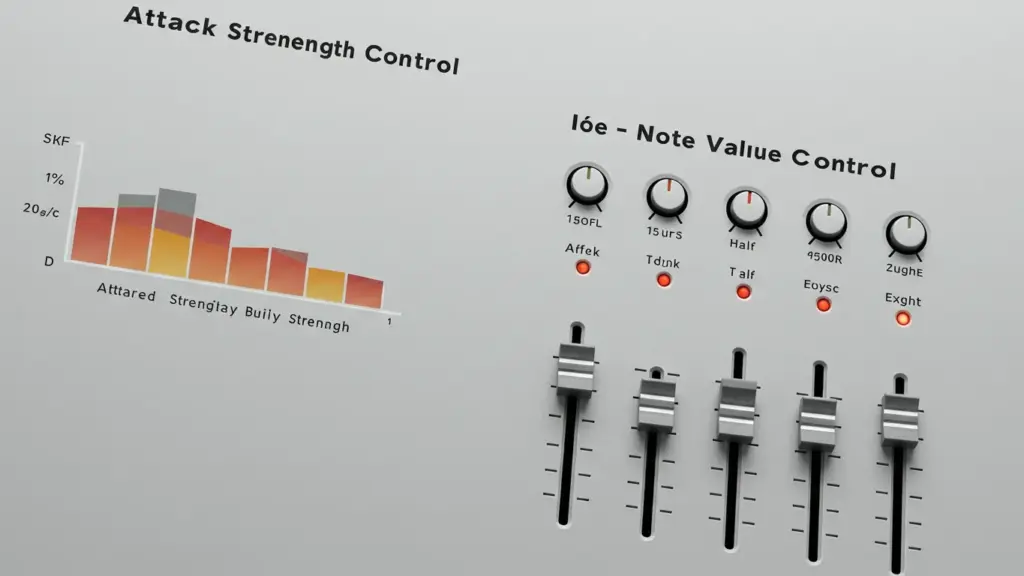
NAOKI’s guitar work opens with a quiet, shimmering arpeggio that sets the atmospheric stage before the vocals enter. In the choruses and midsection, it shifts into driving strumming patterns, expanding the soundscape step by step. This expansive feeling is achieved not through heavy reverb, but through meticulous control of picking dynamics and note duration. It is this precise craftsmanship that makes the depth feel so natural to the listener’s ears.
The Expressive Power of the Vocals
Rather than simply blending into the instrumental backdrop, KUMI’s voice serves to breathe human warmth into the musical space. Her long, sustained vowels add a gentle fluidity to the melody, while the crisp consonants of the short English phrases act as sharp rhythmic accents. Throughout the repeating lines, subtle variations in her breathing build up, delivering a truly “living voice” to the listener. This human breathing pattern adds a sense of comfort that keeps the track’s overall tension beautifully sustained.
A Unique Linguistic Approach
The Allure of Code-Switching
In linguistics, the practice of switching back and forth between English and Japanese is known as “code-switching.”
In Delico’s case, this technique is never a superficial decoration; it forms the core structural foundation of the song itself, making the linguistic shift the very heart of their expression. By letting Japanese represent everyday reality and English represent the abstract distance, the listener is treated to an extraordinary sensation of experiencing “the ground beneath their feet and the cosmos” at the exact same time.
The Difference for International Listeners
While Japanese listeners can appreciate the English phrases purely as musical textures without needing to translate them, international listeners experience the Japanese parts as pure tonal color rather than semantic meaning. In other words, for both audiences, the unfamiliar language actually enhances the overall musical effect. This beautiful bidirectional appeal is precisely why Delico's music translates so brilliantly to an international stage.

Voices of the Fans and Live Memories
Testimonies from the Concert Experience
Looking back at concert reports and fan testimonies from that era, the moments when this song was performed live are frequently described as times when “the entire venue held its breath.” Instead of singing along, the audience would fall completely silent, taking in the performance until the final “I wanna be alive” was delivered, unleashing a massive wave of applause—a powerful live dynamic documented in numerous accounts.

Album Track Relationships and Listening Dynamics
Contrasts Within the Album
Listening to this track immediately following the driving momentum of “Everybody Needs Somebody” reveals exactly how “Mind Across The Universe” serves to dramatically widen the album’s horizon.
The subsequent transitions into high-energy tracks like “Move On” and “My Last Fight,” followed later by “All Over Love,” shine with an even greater brilliance precisely because they follow the vast, quiet space carved out by this masterpiece.

Comparison with Later Works
While the 2013 single “Beautiful World” represents a sense of open, outward liberation, “Mind Across The Universe” captures a profound, inward determination. Seeing these two emotional extremes originate from the exact same band highlights the astonishing artistic range that LOVE PSYCHEDELICO possesses.
Physical Sensations and Psychological Resonance
A Rhythm in Sync with Movement
The straight, unhurried rhythm of “Mind Across The Universe” makes it an exceptional companion for walking or commuting. When listened to while moving, your footsteps naturally sync with the steady beat, creating a powerful sensation as if the music itself is supporting your internal journey. This seamless integration transforms a routine daily activity into a deeply immersive, physical experience.

The Reality of the Listener Experience
Gathering feedback from longtime fans reveals beautiful personal accounts, such as “listening to this song on the train makes the scenery outside the window look infinitely wider,” or “listening to it on the way home from a long day helps my breathing settle naturally through the fatigue.” While these experiences are deeply personal, they offer fascinating proof of the profound psychological and physical impact this music carries.
Conclusion
With its meticulously balanced English-Japanese lyrical structure and remarkably restrained instrumentation, “Mind Across The Universe” crafts an incredibly compelling, tense six-minute journey. It created an unforgettable sense of quiet unity during live shows and earned its well-deserved international recognition on their US compilation album. Deeply intertwined with the historical context of its era, its timeless message continues to reach the hearts of listeners today without losing an ounce of its original power.
By stepping away from flashy performance techniques, repeating minimal words, and using spatial arrangement to create vast sonic depth, this track’s design remains completely timeless, continuing to deliver a quiet resolve and an endless horizon to everyone who listens.

音楽ファン同士の交流・リクエストはこちら / Connect & Request Songs Here