- 🎧 Listen to This Article
- Prologue — 1982, Discovering Avalon in the Company Dormitory
- From Art Student to Roxy Music — Bryan Ferry’s Starting Point
- The 1970s — From Experimentation to Sophistication
- 1982 — Avalon as a Point of Arrival
- After Avalon — Continuing as a Solo Artist
- Epilogue — Bryan Ferry, Seen More Clearly After More Than 40 Years
🎧 Listen to This Article
Get a quick overview of this article through narration.
Before reading, listen to the story of Bryan Ferry and Roxy Music, including my first encounter with Avalon.
🎶 English Narration
Listen to an English narration introducing the story and key themes of this article.
🎵 Japanese Narration
Listen to a Japanese narration introducing the story and key themes of this article.
Listening first will give you a clearer sense of Bryan Ferry’s musical world and the journey that leads to Avalon.
Prologue — 1982, Discovering Avalon in the Company Dormitory
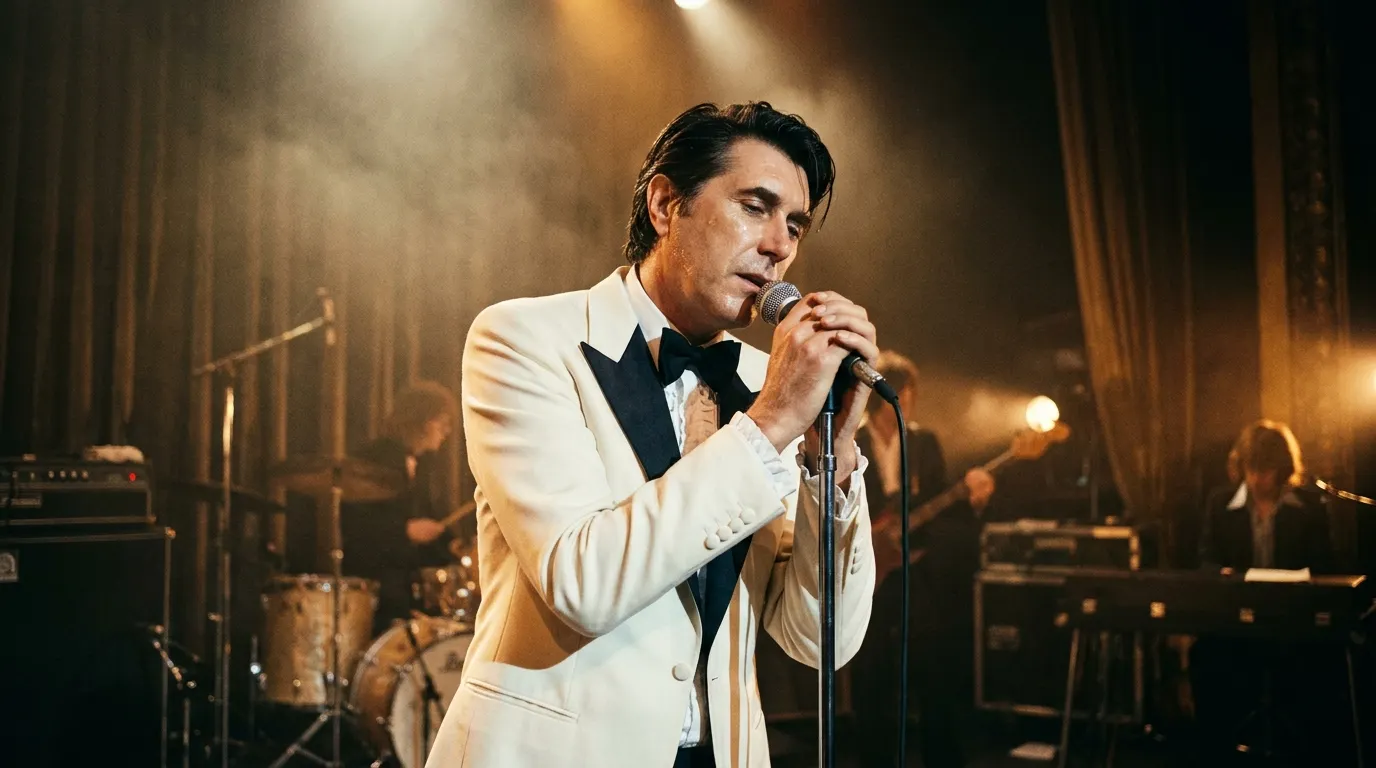
It was in 1982 that I first discovered Bryan Ferry and Roxy Music.
At the time, I was living in a company dormitory. A colleague one year my junior moved in, and by coincidence, his room was right next to mine.
As we got to know each other, I discovered that he also loved Western music, and naturally we began talking about music whenever we met. One day, he introduced me to an album.
It was Avalon by Roxy Music.
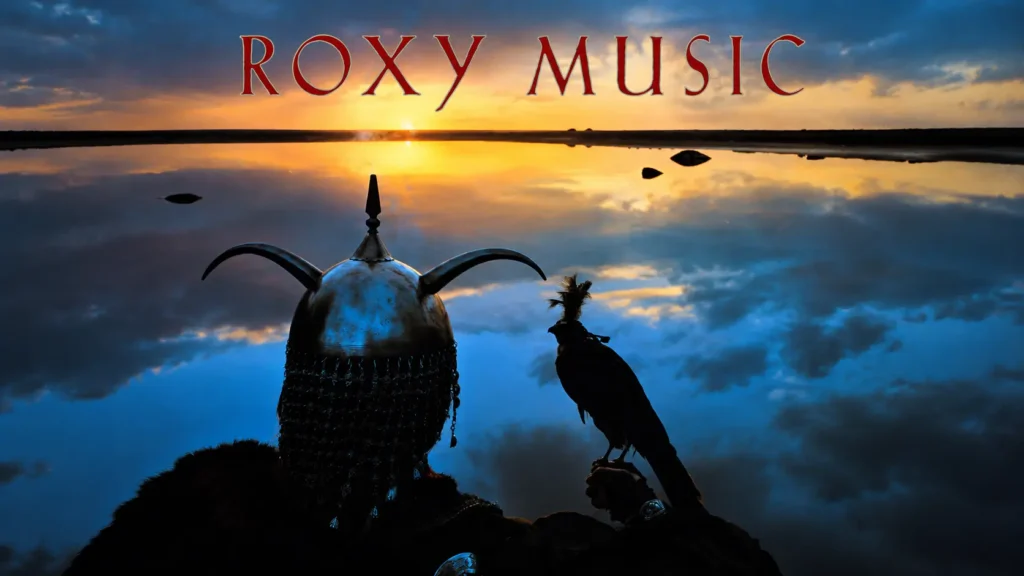
That was my first encounter with Bryan Ferry.
I later discovered that this younger colleague was not only my junior at work, but had also attended the same university after me. We happened to end up in neighboring rooms in a company dormitory, and through our shared interest in Western music, he introduced me to a single album. More than forty years later, that album is still with me.
Perhaps encounters with music often begin through coincidences like that.
Danceable, Urban, and Somehow Androgynous
When I first heard Avalon, I sensed something different from the rock music I had listened to before.
It was danceable without being loud. Urban and sophisticated, yet with a certain languor drifting through it. And Bryan Ferry himself seemed to combine masculine sensuality with an androgynous beauty.
I also sensed something in Bryan Ferry that reminded me of David Bowie. I do not mean that their music sounded alike. It was their strong awareness of fashion, the way they carried themselves on stage, and their ability to turn their very presence into part of the artistic expression. That, I think, was where I sensed something they had in common.
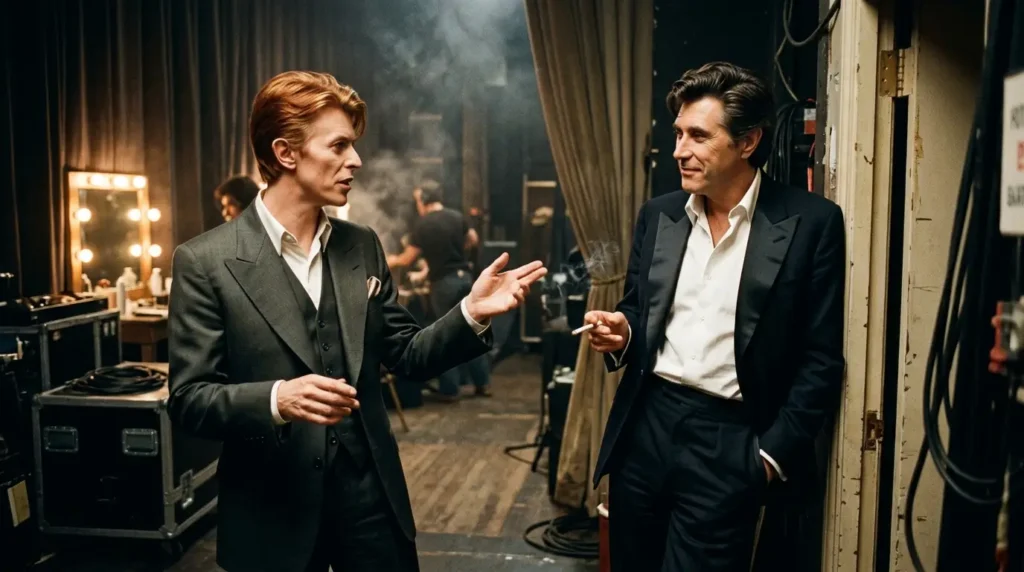
But the Roxy Music I first encountered was the band as they existed in 1982, after years of transformation.
Looking back through their history, I found a band that had changed far more boldly than I had ever imagined.
From Art Student to Roxy Music — Bryan Ferry’s Starting Point
Bryan Ferry was born in 1945 in Washington, in northeast England.
Studying Fine Art at Newcastle University
Bryan Ferry studied Fine Art at Newcastle University. That experience would later play an important role in shaping Roxy Music.
It was not simply about making music. Fashion, photography, album covers, and stage presentation all became part of a single world. The sense of turning “Bryan Ferry” himself — his clothes, his posture, even his distinctive voice — into a form of artistic expression surely had something to do with his background in art.
1971 — The Formation of Roxy Music
Roxy Music was formed in London in 1971. Beginning with Bryan Ferry and bassist Graham Simpson, the lineup came to include Andy Mackay, Brian Eno, Phil Manzanera, and Paul Thompson. The following year, they released their debut album, Roxy Music.
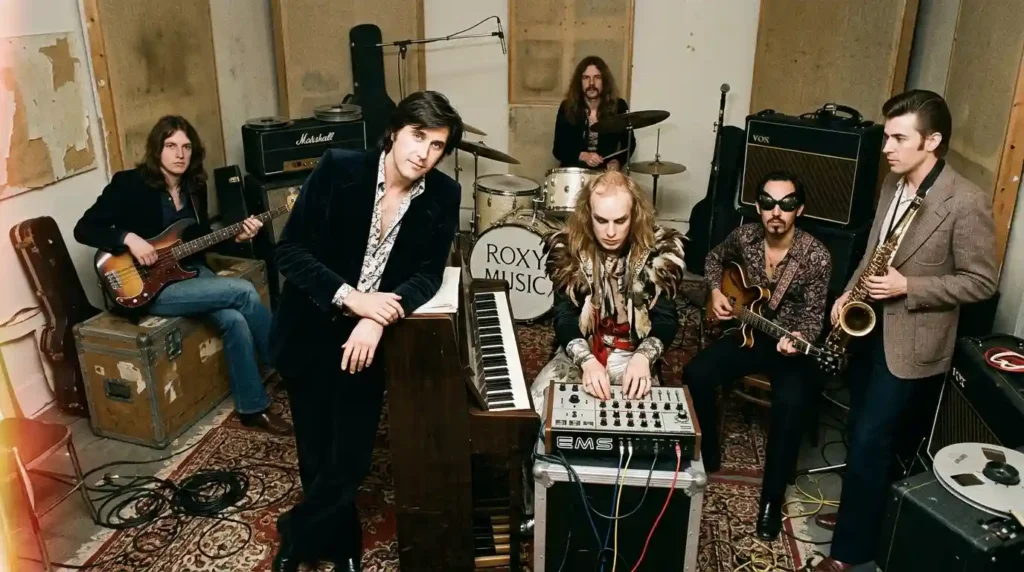
Listening back to Roxy Music from this period, however, I hear a band quite different from the one I first discovered through Avalon.
Art rock, glam rock, electronic sounds, experimentation. The atmosphere can shift in the middle of a song, and when I work backward from the smooth sound of 1982, there are moments when it hardly seems like the same band.
A Band That Brought Music and Fashion Together
What made Roxy Music distinctive was not just their sound. Costumes, album covers, photography, and stage presentation were all treated as parts of the work itself. Their determination to create a complete world by bringing music and visual style together must have seemed remarkably adventurous at the time.
The 1970s — From Experimentation to Sophistication
Following their 1972 debut, Roxy Music released For Your Pleasure and Stranded in 1973, Country Life in 1974, and Siren in 1975.
Brian Eno Leaves — But the Changes Continue
One figure who cannot be overlooked when discussing early Roxy Music is Brian Eno. Using electronic sounds, tape manipulation, and other techniques, he played a major role in the band’s experimental side.
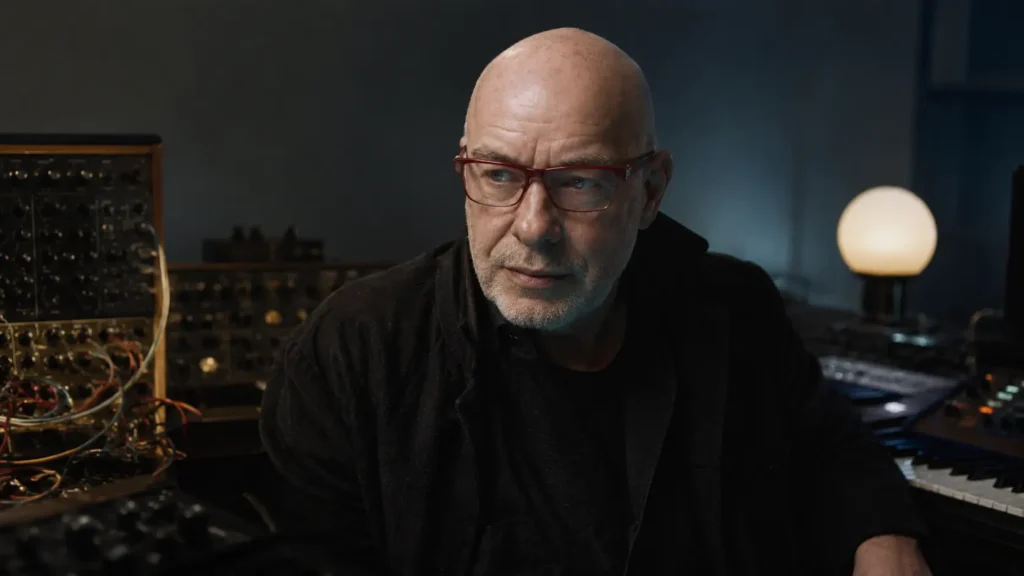
Eno left the group in 1973 after For Your Pleasure. Even so, Roxy Music continued with Stranded, Country Life, and Siren, retaining some of the unpredictability of their early years while gradually moving toward a more polished sound centered increasingly on Bryan Ferry.
1973 — A Solo Career Begins in Parallel
As early as 1973, Bryan Ferry released his first solo album, These Foolish Things. It came only a year after Roxy Music’s debut.
In other words, from a very early stage in his career, Ferry was expressing himself in two parallel settings: Roxy Music and his solo work. That is why I have chosen to call this series “Bryan Ferry” rather than “Roxy Music.” For me, the distinction between the names matters less than Bryan Ferry’s voice and the world he creates.
An Identity That Remains Even in Cover Songs
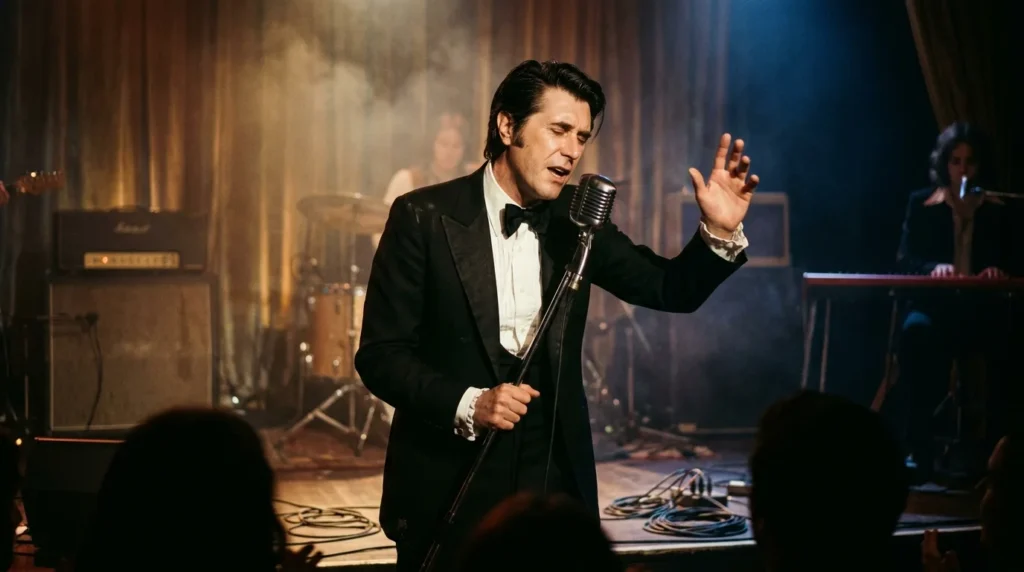
Ferry has also embraced cover songs throughout his solo career, interpreting a wide range of material from rock and pop to standards.
But he does not simply reproduce the originals. There is a slightly smoky quality to his voice, a languor, a sensuality, and a way of singing without revealing every emotion outright. Even when the song was written by someone else, it somehow becomes unmistakably “a Bryan Ferry song.” That is one of his greatest strengths as a vocalist.
A Four-Year Hiatus — And a New Roxy Music
Following the release of Siren in 1975, Roxy Music entered a hiatus of roughly four years. Ferry continued his solo career during that time, and in 1979 Roxy Music returned with Manifesto.
Moving Toward Rhythm and Groove
The reunited Roxy Music did not simply recreate the experimental sound of their early years. Rhythm and groove became increasingly important, and their music grew smoother. In 1980 they released Flesh + Blood. By this point, they had clearly become a very different band from the one that made its debut in 1972.
“Danceable Without Being Loud”
The “danceable” quality I have always associated with Bryan Ferry’s music is probably deeply connected to Roxy Music from this period onward.
You can surrender yourself to the rhythm, yet the music somehow remains cool and composed. Behind the glamour there is loneliness, and within its urban sophistication I sense a faint touch of decadence. To me, it sounds like music playing as a late-night party is beginning to wind down.

1982 — Avalon as a Point of Arrival
In 1982, Roxy Music released their eighth studio album, Avalon. It would ultimately become their final studio album.
For me, it was also the album through which I discovered both Roxy Music and Bryan Ferry.
A Sound Far Removed from Their Early Years
When I trace Roxy Music from their early work through to Avalon, I am struck by just how dramatic the transformation was.
The sharp edges, sudden shifts, and electronic experimentation of their debut years had moved into the background. In their place came space, atmosphere, and restraint. The guitar and saxophone never assert themselves more than necessary, and although the rhythm is clearly defined, the music never tries to overwhelm through sheer density of sound.
If early Roxy Music created something new by colliding different sounds with one another, Avalon sounds to me like music in which even the decision about what not to play had been carefully considered.
I Still Think It Is an Exceptionally Complete Album
I still believe that Avalon is an exceptionally complete album.
It is not simply a matter of the quality of each individual song. A single atmosphere is sustained from beginning to end, and even as one track gives way to the next, the world of the album never breaks. That sense of unity when I listen to it as a whole is one of the main reasons I consider it so complete.
The “Space” Between the Sounds
Listening again more than forty years later, I think one reason I remain drawn to Avalon is the “space” between its sounds.
Rather than filling every moment, the music places only the sounds it needs. Each individual element can be heard clearly, and you can almost feel the air moving between them.

Ten years had passed since their 1972 debut. Roxy Music had not begun by making music like Avalon. It was only after years of change that they arrived at this quiet, sophisticated sound.
After Avalon — Continuing as a Solo Artist
After the release of Avalon, Roxy Music ceased regular activity in 1983. Bryan Ferry, however, continued making music.
1985’s Boys and Girls — And Beyond
In 1985, Ferry released the solo album Boys and Girls. It was followed over the years by albums including Bête Noire, Taxi, Mamouna, Frantic, Dylanesque, Olympia, and Avonmore.
Roxy Music, meanwhile, later returned to live performance, and in 2019 the band was inducted into the Rock & Roll Hall of Fame.
For Me, It All Began with Avalon
Before beginning this series, there is one thing I want to make clear.
I have never listened closely to Bryan Ferry’s entire career from beginning to end. The Roxy Music period around Avalon is what I know best, and from there I gradually began exploring the music that came before and after it, along with Ferry’s solo work.

So the “My Personal miniBest 7” that begins next is not a ranking based on a comprehensive assessment of everything Bryan Ferry and Roxy Music have recorded. I simply choose the songs I have heard, grown to love, and still want to hear today. That is what “My Personal Best” means on this blog.
Epilogue — Bryan Ferry, Seen More Clearly After More Than 40 Years
When I was introduced to Avalon in 1982, I knew nothing about how Roxy Music had begun or how dramatically their music had changed over the years.
Looking back over that history now, I realize that the music I encountered first had emerged only after the band’s experimental beginnings, Bryan Ferry’s parallel solo career, a hiatus, and a return with a new direction.
The Bryan Ferry Who Has Stayed with Me
And yet, more than forty years later, my first impression has hardly changed.
Danceable. Urban. Slightly decadent. And somehow androgynous.

He never seems to lay every emotion bare. Instead, he keeps a certain distance, leaving sensuality and loneliness somewhere beneath the surface. That presence, as much as the music itself, is what Bryan Ferry means to me.
And Now, “My Personal miniBest 7”
The seven songs I have chosen include recordings released under the Roxy Music name as well as songs released under Bryan Ferry’s own name.
For me, that boundary is not particularly important. What matters is Bryan Ferry’s voice and the distinctive world that grows out of it.
More than forty years have passed since I first encountered Avalon in 1982. From the songs I have discovered along the way, I have chosen seven that I still love today.
So which songs made the list?
Next time, I will begin “My Personal miniBest 7: Bryan Ferry.” We start with No. 7.

音楽ファン同士の交流・リクエストはこちら / Connect & Request Songs Here