
- 🎧 Listen to This Article
- April 24: Celebrating Barbra Streisand’s Birthday
- Today’s Featured Song: “Woman in Love” — Barbra Streisand
- When I First Heard This Song
- The Story Behind “Woman in Love” — A Collaboration with the Bee Gees
- The Melody and Voice That Reveal a Woman’s Heart
- Listening to “Woman in Love” Again, All These Years Later
🎧 Listen to This Article
Discover the highlights of this article through a short audio narration.
Before reading, listen to explore the beauty of Barbra Streisand’s “Woman in Love” and the memories behind this timeless song.
🎵 Japanese Narration
Listen to a Japanese-language narration of this article.
🎶 English Narration
Listen to an English-language narration of this article.
Listening first will help you appreciate the emotions behind “Woman in Love” and the personal memories shared in this article.
April 24: Celebrating Barbra Streisand’s Birthday
Singer, Actress, and Director — An American Entertainment Icon
Born on April 24, 1942, in Brooklyn, New York, Barbra Streisand is one of America’s most celebrated entertainers. Alongside her remarkable achievements as a recording artist, she has built an extraordinary career as an actress and film director.
Streisand first attracted attention on stage in the early 1960s. Her performance in the 1968 film Funny Girl earned her the Academy Award for Best Actress. She went on to establish herself as a major presence in Hollywood with films such as The Way We Were (1973) and A Star Is Born (1976).
What makes Streisand exceptional is not simply the power of her voice. It is her ability to communicate the most delicate emotions, combined with a distinctive presence that draws listeners into every performance. Her singing has captivated audiences across generations.
Today’s Featured Song: “Woman in Love” — Barbra Streisand
First, Let’s Listen to the Official Recording
Official Audio Credits:
Woman in Love (Official Audio) · Barbra Streisand
℗ 1980 Columbia Records, a division of Sony Music Entertainment
About the Song:
Released in 1980 as the lead single from the album Guilty, "Woman in Love" was written by Barry and Robin Gibb of the Bee Gees. This sweeping love ballad became one of Streisand's signature songs.
When I First Heard This Song
| My Age | Elementary School | Junior High | High School | University | 20s | 30s | 40s | 50s | 60+ |
| Release Year | 1980 | ||||||||
| When I First Heard It | ● |
A Song I Heard in My Small Apartment in Setagaya
I believe I first heard this song during my university years, when I was living in a small apartment in Setagaya, Tokyo.
Was it on the radio or television? I honestly cannot remember. What I do recall is how naturally the melody appealed to me from the very first listen.
It was not the kind of song that struck me with an overwhelming impact. Instead, I was drawn to its gentle melody and the effortless beauty of Streisand’s voice. Although the lyrics express the intense feelings of a woman in love, the music itself seemed remarkably graceful and serene.
Why Did I Go to See “The Way We Were” Alone?
I already knew Barbra Streisand’s name at the time, although I would not say I had any particular interest in her.
Yet there is one curious memory that has stayed with me all these years.
I remember traveling to Takadanobaba, a neighborhood in Tokyo, to see The Way We Were, the romantic drama starring Streisand and Robert Redford. And for some reason, I went to the cinema alone.
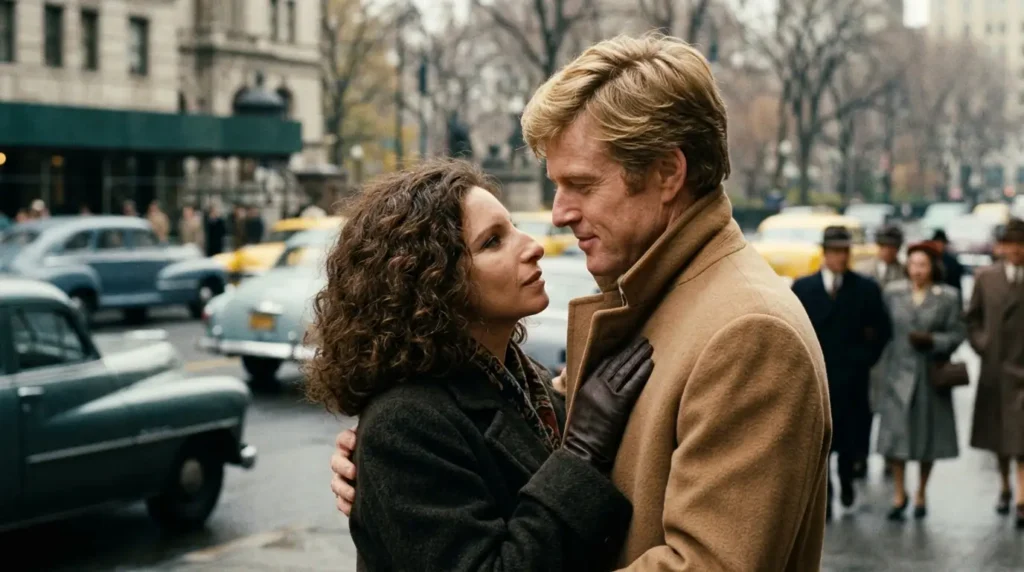
Back then, I was not someone who would normally go to the movies by himself. So why did I make an exception for The Way We Were?
Even today, I cannot remember the reason.
No one had invited me, and I was not particularly passionate about films. Perhaps something about the story or its stars had caught my attention.
Strangely enough, I remember very little of the film itself. What remains surprisingly vivid is the simple fact that I went to see it alone.
The Story Behind “Woman in Love” — A Collaboration with the Bee Gees
A Melody Created by Barry and Robin Gibb
When “Woman in Love” was released in 1980, Barbra Streisand was 38 years old. She had already achieved extraordinary success in both music and film.
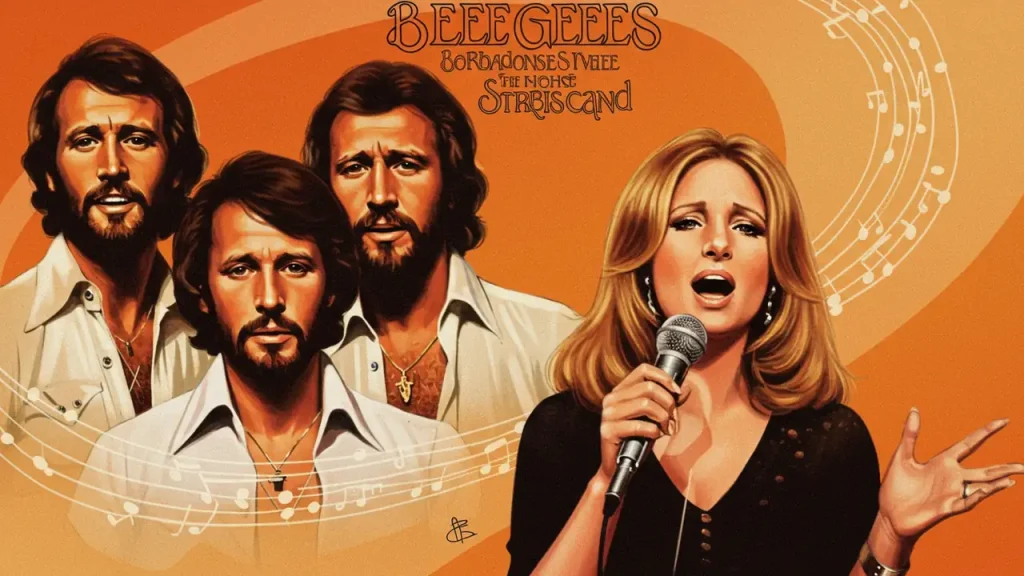
For her next musical chapter, she joined forces with Barry Gibb of the Bee Gees.
During the late 1970s, the Bee Gees had become international superstars, largely through the phenomenal success of the soundtrack to Saturday Night Fever. But the music Barry created for Streisand was quite different from the driving rhythms of disco. It was elegant, melodic pop music filled with emotional depth.
“Woman in Love” was written by Barry and his younger brother Robin Gibb. Barry also co-produced the recording with Albhy Galuten and Karl Richardson.
The production preserved the Bee Gees’ gift for memorable melodies while placing Streisand’s voice firmly at the center. The result was a remarkable meeting of two distinct musical identities.
The Extraordinary Success of “Guilty”
Released in 1980, Guilty, the album featuring “Woman in Love,” became one of the greatest commercial successes of Streisand’s career, selling more than 20 million copies worldwide.
The album cover shows Streisand and Barry Gibb standing close together, both dressed in white. The intimate atmosphere of the photograph reflects the warmth and musical chemistry heard throughout the record.
The title track, “Guilty,” features a duet between the two artists. They also sing together on “What Kind of Fool,” demonstrating just how naturally their voices and musical sensibilities complement each other.
A Worldwide Hit That Topped the American and British Charts
“Woman in Love” reached No. 1 on the Billboard Hot 100 on October 25, 1980, and remained at the top for three consecutive weeks. It also spent three weeks at No. 1 on the UK Singles Chart and achieved major success across Europe.
The song earned Barry and Robin Gibb the prestigious Ivor Novello Award for Best Song Musically and Lyrically.
Having helped define the disco era of the late 1970s, the Bee Gees demonstrated another side of their songwriting talent through Streisand’s interpretation. It is fascinating how their musical identity could take on such a different character in the hands of another performer.
The Melody and Voice That Reveal a Woman’s Heart
A Dramatic Journey Beneath a Gentle Surface
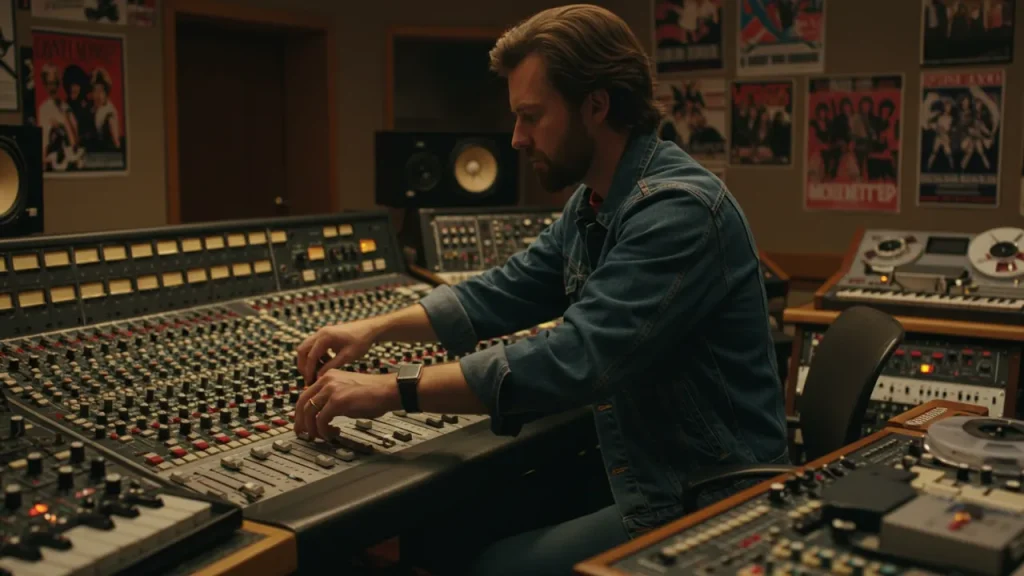
What attracts me most to “Woman in Love” is, above all, the beauty of its melody.
The song begins quietly, with Streisand’s voice gradually gathering emotional intensity as it moves toward the chorus. She handles this progression with remarkable ease, allowing the music to unfold without forcing the drama.
What particularly impresses me is the strength of her voice as she reaches the higher notes. Even as the volume increases, its beauty remains intact. It almost feels as though emotions held quietly inside are finally being released.
Barry Gibb’s flowing melodic style and Streisand’s powerful vocal range create a ballad that feels both grand and immediately accessible.
The Determination to Love, Expressed Through the Lyrics
The title “Woman in Love” sounds simple enough. Yet the lyrics are about much more than the happiness of falling in love.
The woman in the song longs to bring the person she loves into her world. She wants to protect their relationship and remain faithful to her feelings, whatever difficulties may arise.
At the heart of the song lies a powerful sense of determination.
One particularly interesting aspect is the idea that loving someone is a right worth defending. Rather than simply surrendering to romance, the woman seems determined to make her own choice and stand by it.
Barry Gibb has recalled that Streisand initially had reservations about part of the lyrics, feeling that they carried a rather strong message of women’s liberation.
That contrast between the song’s gentle musical atmosphere and the intensity of its underlying emotions is another reason I find it so compelling.

Sophisticated Pop Music in a Changing Musical Era
The year 1980 marked a period of considerable change in popular music.
Disco, which had dominated the latter half of the 1970s, was beginning to lose momentum. Meanwhile, new wave and synth-pop were gaining prominence, introducing new sounds and approaches to songwriting.
Against this changing backdrop, “Woman in Love” demonstrated the enduring appeal of an outstanding melody and an exceptional vocal performance.
A song does not necessarily need fashionable rhythms or extravagant production to move its listeners. Sometimes, the quality of the composition and the conviction of the singer are enough.
In Japan, the song also became familiar to Western pop music fans under its Japanese title, “Woman in Love” (ウーマン・イン・ラブ). Around the same period, Japanese artists such as Tatsuro Yamashita and Mariya Takeuchi were developing their own sophisticated pop sounds. In 1981, Eiichi Ohtaki released his celebrated album A LONG VACATION.
Although their musical styles differed, artists in both Japan and the West were creating records that placed great importance on melody, arrangement, and refined production.
Listening to “Woman in Love” Again, All These Years Later
More than four decades have passed since “Woman in Love” was first released.
Why does it still sound so fresh today?
For me, the answer lies in the timeless beauty of its melody and the extraordinary emotional conviction of Streisand’s singing.
When I was young, I simply enjoyed it as a beautiful, easy-to-listen-to love song. Now, with many more years behind me, I find myself noticing something deeper: the determination behind the words and the subtle emotional control within her performance.

And whenever I hear this song, faint memories of my university days return — those years spent living in a small apartment in Setagaya, Tokyo.
I also remember that mysterious trip to the cinema to see The Way We Were, all by myself.
Music is a curious thing. Its beauty lies not only in the songs themselves, but also in their ability to bring back the person we once were, even after decades have passed.
For me, “Woman in Love” is one of those songs.

音楽ファン同士の交流・リクエストはこちら / Connect & Request Songs Here