
Kyosuke Himuro’s History ➡ Click Here!
- 🎧 Listen to This Article
- No. 4 is BOØWY’s “B・BLUE.”
- First, listen to the official version on YouTube.
- Music That Keeps Running, a Heart on the Verge of Stopping
- The Wings: Freedom and Pain in a Single Image
- The Song That Opens BEAT EMOTION
- Four Musicians Driving in the Same Direction
- What Becomes Clear Beside No. 5, “MEMORY”
- In Closing — Toward the Sky on Broken Wings
🎧 Listen to This Article
Get a quick overview of this article through narration.
Recommended if you want to get a feel for “B・BLUE” and understand the overall flow of the article before reading.
🎵 English Narration
An English narration introducing the content of this article.
🎶 Japanese Narration
A Japanese narration introducing the content of this article.
Listening first can help you understand the mood of “B・BLUE” and the key points of the article more easily.
No. 4 is BOØWY’s “B・BLUE.”
Released on September 29, 1986 as BOØWY’s fourth single, “B・BLUE” was later included on the band’s fifth album, BEAT EMOTION, released on November 8 of the same year. The lyrics were written by Kyosuke Himuro, with music and arrangement by Tomoyasu Hotei.
The single reached No. 7 on the Oricon chart. BEAT EMOTION then debuted at No. 1 on the Oricon album chart and remained there for three consecutive weeks. After gaining momentum with JUST A HERO, BOØWY was becoming something much bigger in 1986, and “B・BLUE” stood at the heart of that ascent.
Yet the appeal of “B・BLUE” goes well beyond the momentum of its commercial success. The music races forward without hesitation, while the protagonist in Himuro’s lyrics still carries the wounds and loneliness left by a relationship that once mattered deeply.
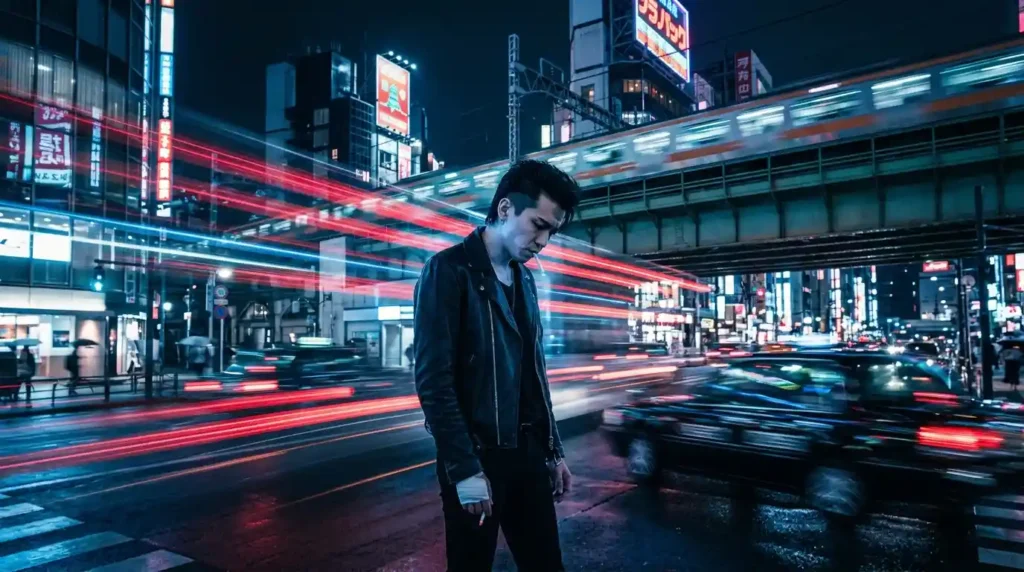
The music keeps running forward, while the heart has not fully escaped the past. It is this tension that draws me so strongly to “B・BLUE.”
A Poetic Interpretation
With broken wings, we still kept looking toward the sky.
We once held each other close, yet somehow our tomorrows took on different colors.
Back then, I never noticed the lonely smile that would eventually disappear into the night.
So I entrust this wounded heart to the wind and try, just once more, to fly far away.
💡 You might also like: View the original Japanese lyrics (External site)
If the lyrics are available only in Japanese, you can use your browser’s translation feature or an AI translation tool to understand their general meaning.
First, listen to the official version on YouTube.
🎵 Shared Credits
Artist: BOØWY
Song: B・BLUE
Lyrics: Kyosuke Himuro
Music & Arrangement: Tomoyasu Hotei
Provided by: Universal Music Group
YouTube: BOØWY - Topic
🎵 ① “B・BLUE” — Original Version
Individual Credits
Album: BEAT EMOTION
Original Single Release: September 29, 1986
Two-Line Commentary
A signature track from 1986, the year BOØWY accelerated toward even greater success, driven by sharp guitar work and relentless speed.
Kyosuke Himuro’s taut vocals merge with the force of all four members, sustaining the song’s intensity from beginning to end.
🎤 ② “B・BLUE (Live At Tokyo Dome / 1988)”
Individual Credits
Album: LAST GIGS COMPLETE
Recorded: Tokyo Dome, “LAST GIGS,” 1988
℗ 1988 USM JAPAN, a division of UNIVERSAL MUSIC LLC.
Two-Line Commentary
A live performance of “B・BLUE” from BOØWY’s final concerts at Tokyo Dome during “LAST GIGS.”
The tension of the occasion and the energy of the audience give the performance a raw intensity distinct from the studio version.
Music That Keeps Running, a Heart on the Verge of Stopping
The first thing that hits me when I hear “B・BLUE” is the speed running through the entire song. Makoto Takahashi’s drums pound out a powerful pulse, Tsunematsu Matsui’s bass anchors it from below, and Tomoyasu Hotei’s guitar cuts sharp lines across the sound. From the opening seconds, there is no room for hesitation.
Yet the landscape created by Kyosuke Himuro’s words feels somewhat different.
Two people who once held each other close have hurt one another and can no longer see the same future. In contrast to the exhilaration of the music, loneliness lingers inside the protagonist.

Why Is Such a Sad Song So Fast?
If the same story had been written as a quiet ballad, the pain of a fading relationship would probably have come to the foreground. “B・BLUE” chooses another path. Rather than lingering in sentiment, it sends a wounded person running forward exactly as he is.
To me, this combination lies at the heart of the song. The protagonist does not wait until his emotions are neatly resolved. He moves on while the pain is still there. That is why the fast tempo becomes more than sheer rock ’n’ roll excitement; it begins to express the urgency inside him.
He does not fly because the wounds have disappeared. He reaches for the sky while still carrying them. That sense of danger is part of what makes “B・BLUE” so compelling.

The Wings: Freedom and Pain in a Single Image
One of the images that defines this song is that of wings. Wings should allow someone to rise into the sky, yet here they are connected with a wounded heart. To me, that contrast captures the protagonist’s condition with remarkable clarity.
This is not a picture of someone simply forgetting everything and becoming free. He still carries the past, yet refuses to remain where he is. By connecting the end of a relationship with the moment a person begins moving again, the song opens itself to something broader than a love story alone.
Loving Someone Does Not Mean Seeing the Same Future
The relationship cannot be reduced to simple hatred, either. They may have hurt one another, but that does not erase the time when they genuinely wanted each other. Even so, the futures they imagine are no longer the same.
A relationship does not always end because of betrayal or one decisive event. Feelings can remain even as two people slowly begin walking in different directions. “B・BLUE” does not explain that change in detail. Instead, it lets us sense it through fragments of language and imagery.
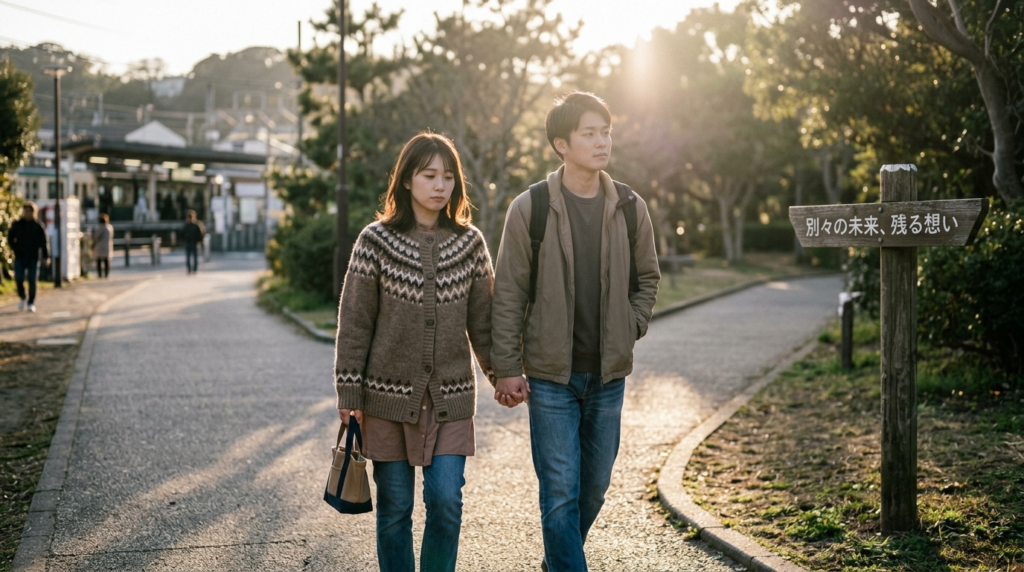
The Two Faces of the Word “BLUE”
I also sense a dual meaning in the word “BLUE.” Blue can evoke the open sky, while in English the word can also express melancholy and sadness.
There is the image of reaching toward the sky, and at the same time the pain that remains in the heart. Of course, the intention behind the title cannot be reduced to a single interpretation, but to me, the brief title “B・BLUE” contains both the light and the darkness that coexist within the song.
The Song That Opens BEAT EMOTION
“B・BLUE” is the opening track on BEAT EMOTION. It is immediately followed by “ONLY YOU,” which I ranked at No. 7 in this miniBest series.
It is an extraordinarily powerful way to begin an album. “B・BLUE” accelerates instantly, and “ONLY YOU” carries that momentum forward. Within those opening tracks, BOØWY establishes the strength of its melodies, the sharpness of its rhythm, and the unmistakable presence of Himuro’s voice.
1986: BOØWY Begins Its Climb to the Top
1986 was a year of major growth for BOØWY. The band released JUST A HERO in March, performed its first solo concert at Nippon Budokan on July 2, issued “B・BLUE” on September 29, and followed it with BEAT EMOTION on November 8.
BEAT EMOTION debuted at No. 1 on the album chart and remained there for three consecutive weeks. Released shortly beforehand as the lead single, “B・BLUE” also became a song that symbolized the period when BOØWY was reaching a much broader audience.
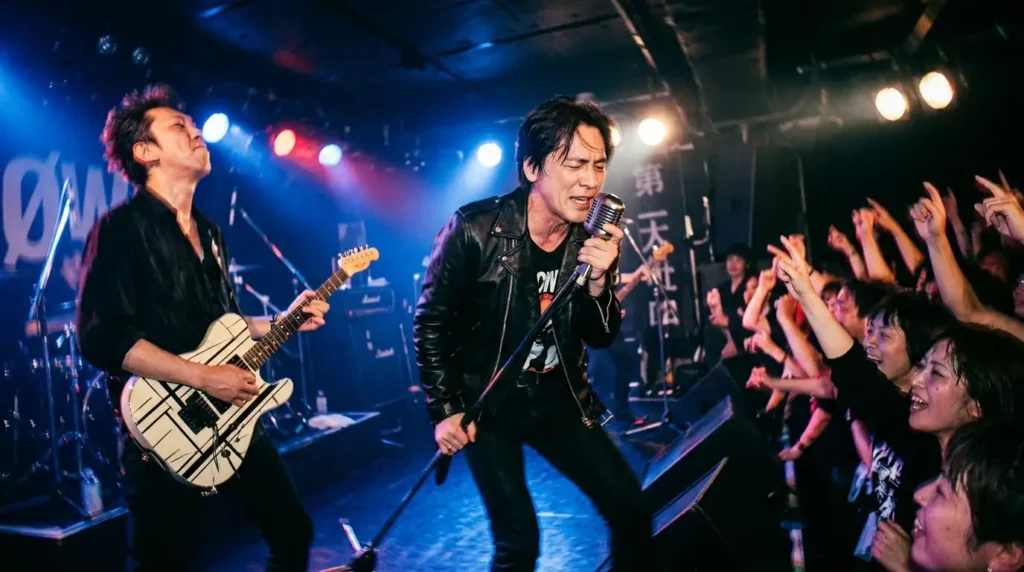
In 1987, “ONLY YOU” debuted at No. 4, followed by “MARIONETTE” at No. 1. Seen in chronological order, “B・BLUE” clearly stands near the entrance to the period when BOØWY’s popularity expanded at extraordinary speed.
Four Musicians Driving in the Same Direction
There is plenty to enjoy in “B・BLUE” simply by following Kyosuke Himuro’s vocals, and just as much by focusing on Tomoyasu Hotei’s guitar. But no single member alone creates the power of this song.
Makoto Takahashi’s drums generate the speed, while Tsunematsu Matsui’s bass gives it a firm foundation. Hotei’s guitar constantly shifts its expression as it shapes the contours of the song, and Himuro’s voice cuts through above them. Each individual sound is distinct, yet all four musicians are moving in the same direction. That unity is one of the greatest strengths of “B・BLUE.”
How the Song Changes Between the Studio and “LAST GIGS”
I included the official recording from the 1988 Tokyo Dome “LAST GIGS” alongside the original studio version because I wanted listeners to hear how the same song changes in a live setting.
The studio version stands out for the precision with which the individual parts fit together. On “LAST GIGS,” the response of the audience enters the sound itself, adding a particular tension to the performance. The structure of the song remains the same, yet its emotional temperature is unmistakably different.
“LAST GIGS” also marked BOØWY’s final Tokyo Dome concerts, held on April 4 and 5, 1988. When I listen to “B・BLUE” knowing that it was being performed on the band’s final stage, another layer emerges beyond the story contained in the song itself: the history of BOØWY seems to enter the music as well.
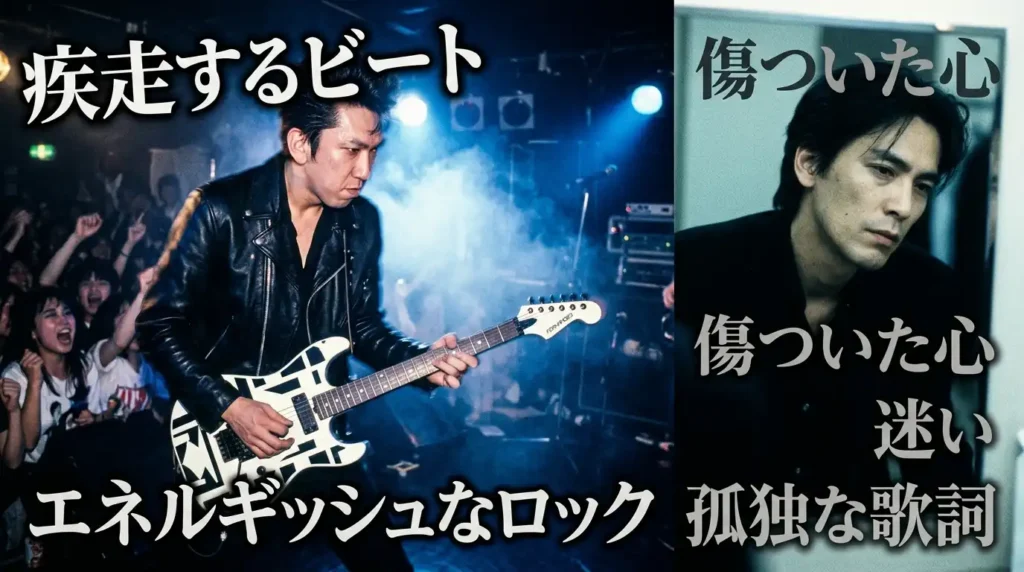
What Becomes Clear Beside No. 5, “MEMORY”
My No. 5 choice, “MEMORY,” also portrays a man and woman facing the end of a relationship. The actions taken by the two protagonists, however, are quite different.
In “MEMORY,” the protagonist does not blame the other person. Instead, he tries to bring the relationship to an end by removing himself from it. His decision to leave is clear.
The Man Who Walks Away and the Man Who Tries to Fly
By contrast, what I hear in the protagonist of “B・BLUE” is not a carefully organized decision, but an impulse to start moving again while still damaged.
That is also why I placed “B・BLUE” one position above “MEMORY.” Rather than quietly contemplating the pain of separation, it takes that pain with it and throws it into the speed of rock music. That intensity is closer to what I personally love most.
In Closing — Toward the Sky on Broken Wings
Released in 1986 as BOØWY was moving toward ever larger stages, “B・BLUE” became one of the songs that symbolized the band’s rapid acceleration.
Tomoyasu Hotei’s forward-driving music and Kyosuke Himuro’s wounded protagonist appear almost contradictory. Yet rather than weakening each other, those two elements create the distinctive tension that defines “B・BLUE.”
People cannot always wait until every emotion has been neatly resolved before moving on. Sometimes the wounds and uncertainty remain, and still we have to leave where we are and begin again.

If the wings are broken, let them be broken.
Still, reach for the sky. BOØWY turned that dangerous mixture of fragility and strength into rock music moving at full speed. That is what “B・BLUE” means to me.

音楽ファン同士の交流・リクエストはこちら / Connect & Request Songs Here