
■For more details about [The Carpenters]…
➡🌈 The Siblings Who Changed the World with Gentleness — The Miracle of the Carpenters 💛
🎧 Enjoy This Article in Audio
You can quickly grasp the main points of this article through narration.
Recommended for those who want to catch the vibe of the music and the flow of the article before reading.
🎶 English Narration
An English audio introduction to the contents of this article.
⌛ Duration: Approx. 3 mins
🎵 Japanese Narration
A Japanese audio introduction to the contents of this article.
⌛ Duration: Approx. 3 mins
* Listening to the audio before reading helps you better understand the world of the music and the main points of the article.
🎸 [Carpenters Selection] No. 18: “Solitaire”
Ranking at No. 18 is “Solitaire.”
While many of the Carpenters’ songs capture quiet moments in life, “Solitaire” is a ballad that particularly focuses on a meticulous portrayal of the inner self.
Rather than a flamboyant sound, the song is structured to layer the “unspoken regrets” deep within the protagonist’s heart. Karen Carpenter’s low, calm tones bring out the profound depth of this narrative.
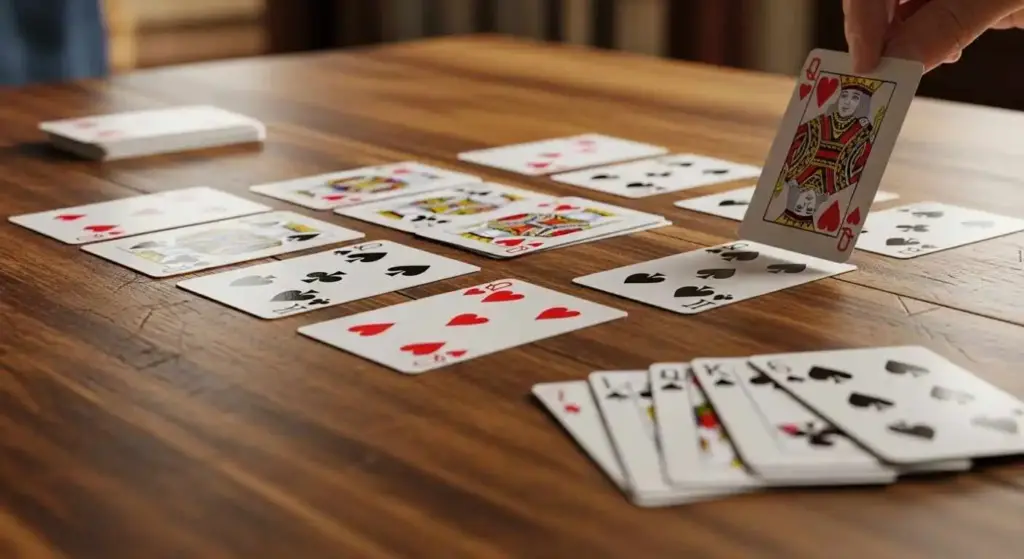
Lyrical Interpretation
The protagonist is a man who, despite having love in his heart, could not express it well, causing a slow drift from someone dear to him.
Unknowingly appearing "indifferent," he let his love quietly wither away.
What remains are long hours spent alone and irredeemable regret.
He sinks into a world of solitude, continuing the solitary game of "Solitaire" as if keeping his heart forever closed.
🎥 As always, please start by watching the official YouTube video.
🎬 Official Video Credits (Official Audio)
"Solitaire (Remastered)" / Carpenters
Provided to YouTube by Universal Music Group
From the album: Carpenters Gold
Label: A&M Records / UMG
© Universal Music Group
💬 2-Line Commentary
A track where Karen Carpenter’s soulful voice quietly portrays the inner life of a man shrouded in loneliness.
A ballad focused not on grandeur but on the "shadows of the heart," where the protagonist's regret and silence gain clarity with every listen.
Basic Information & Background
Release, Album, and Chart Performance
“Solitaire” was featured on the 1975 album “Horizon” and released as a single the same year.
It reached No. 17 on the Billboard Hot 100. While its chart performance was modest compared to their major hits, it stands as an iconic piece within the album’s overall understated sound.
The song was written by Neil Sedaka & Phil Cody. Although covered by several artists, the Carpenters’ version is generally considered the most widely recognized.
Karen’s vocal texture is incredibly compatible with the song’s inherent sense of isolation, making the narrative feel palpable.
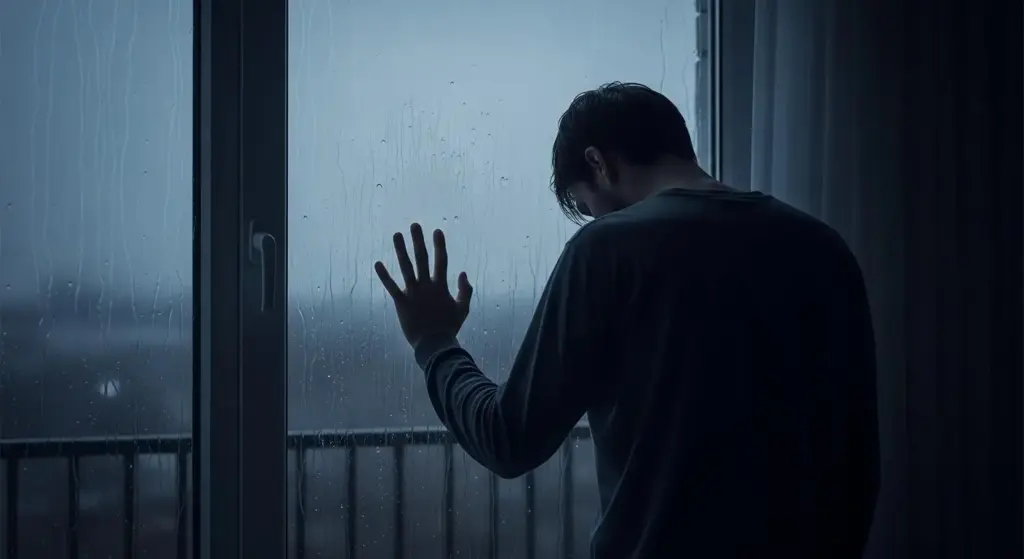
Position in Carpenters’ History
During the “Horizon” era, the Carpenters moved away from their early bright pop roots toward more introspective and quiet expressions.
“Solitaire” sits at the heart of this transition, serving as one of the works where the “shadows” in Karen’s voice are most prominent.
It lacks flashiness, yet possesses a charm that pulls the listener deeper into its world with every play—which is exactly why I placed it at No. 18 in the Best 20.
Grasping the Worldview
Atmosphere and Mood
This song depicts a “quiet heartbreak,” not one characterized by loud weeping or lamentation.
There are almost no dramatic flourishes; instead, a loneliness born from a lack of words steadily unfolds.

Karen’s performance is restrained. Rather than pushing emotions forward, she illustrates the protagonist’s internal state through her choice of phrasing and the subtle trembles in her voice.
As a result, the entire song feels as intimate as listening to someone’s private monologue.
Interpreting the First Half of the Lyrics
Where Did the Solitude Begin?
The lyrics open with direct descriptions of emotion:
“There was a man”
“A lonely man”
What is important here is that the protagonist didn’t suddenly become lonely due to a specific event; he is portrayed as someone who harbored a quiet isolation within himself from the start.
The subsequent line—
“Who lost his love / Through his indifference”
—sets the definitive tone for this story.

While “indifference” suggests a lack of interest, here it carries the nuance that
it wasn’t a lack of feeling, but an inability to “put those feelings out there,”
leaving them uncommunicated to the other person.
Love Wasn’t “Absent”—It Just Never “Reached”
The part leading into the chorus clearly shows that he did, in fact, care.
“A heart that cared / That went unshared”
“Until it died / Within his silence”

What is depicted here isn’t a violent breakup or a dramatic betrayal.
It is simply the passage of time without words, until an irreparable distance had formed—a specific kind of loss.
As “silence” is repeated as a keyword, we see the protagonist quietly closing his heart, unable to fully process the outcome.
What the “Solitaire” Metaphor Represents
The title “Solitaire” refers to the card game played alone.
In the first half of the lyrics, this “solo play” serves as a symbol for the quiet room the protagonist escapes into.
“And solitaire’s the only game in town”
(= All that remains for him is time spent alone.)
“And every road that takes him / Takes him down”
(= Every choice he makes only deepens his solitude.)
This is not a portrayal of dramatic despair, but rather
the sensation of slowly sinking.
Solitaire as a way of “getting through” life—that is the image of the protagonist in the first half of the song.

The Lyrical Journey and Emotional Flow
Where the Protagonist “Came to a Standstill”
The latter half of the lyrics explores the core of why the protagonist cannot escape his loneliness.
A particularly symbolic phrase is:
“And keeping to himself he plays the game”
(= He cannot break away from a lifestyle of constantly avoiding emotional expression.)
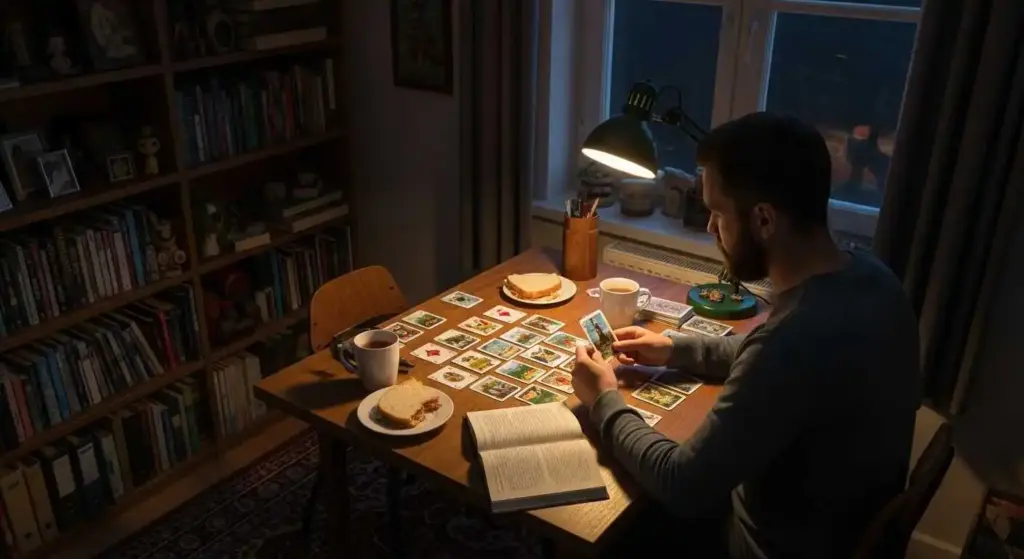
He isn’t merely drowning in sadness;
“keeping things to himself has become a habit.”
This single line is a vital description in the story’s conclusion, succinctly showing the protagonist’s “habitual loneliness.”
“Without her love, it always ends the same”
This phrase implies that his loneliness is not accidental, but “inevitable.”
No matter how precious the other person is, if he doesn’t change his habit of closing his heart, he will repeat the same mistake.
This part suggests a “life habit” that goes beyond mere regret.
“Life goes on around him everywhere”
This line is placed in contrast to his frozen time.
People around him change, move forward, and build their lives.
But he alone remains in the same spot, repeating the “unmoving time” of Solitaire.
By contrasting the flow of life with the stagnation of solitude, the weight on the protagonist’s chest becomes vivid.
The Finale: “A little hope goes up in smoke”
Though this part is the shortest in the song, it leaves a powerful lingering impression.
The “hope” described here refers to the small expectations the protagonist once held, or the faint wish that love might return.

But it turns into resignation:
“Just how it goes / Goes without saying”
(= It’s out of my hands now.)
Here, the protagonist understands his own weakness but accepts the reality that he cannot change it.
A quiet, heavy ending rather than a dramatic one—that is the allure of the latter half of “Solitaire.”
The Allure of Sound, Arrangement, and Vocals
A Melody That Draws a “Closed Circle”
The melody line has few large leaps, consisting instead of “closed movements” that slowly rise and fall within the same range. This reflects the protagonist’s state of circling the same spot—the “cycle of Solitaire.”

By avoiding major crescendos, the protagonist’s feelings never “open up” to the outside, allowing the entire song to exist as a “record of a closed world.”
Why We Should Listen to This Song Again Today
Differences from Other Carpenters’ Works
The Carpenters have many works like “Close to You,” “Top of the World,” and “I Need to Be in Love” that weave sadness into positivity and accessibility.
However, the charm of “Solitaire” lies in the fact that “it ends without offering salvation.”
The protagonist remains unchanged until the end, with no sign of having moved forward.
While “hope” appears in the song, it is merely a “tiny light that vanishes like smoke.”

Because of this, the song portrays the “difficulties of life” from a different angle than their other hits, holding a particularly quiet weight within the Best 20.
What We See When Listening Today
For modern listeners, the struggles the protagonist faces are not special; rather,
“the difficulty of gauging distance with others that everyone experiences at least once”
is likely to resonate deeply.
How to face others, how to convey feelings…
Time passing without being able to find those answers can happen to anyone.
“Solitaire” can be described as a song that depicts that universality in a quiet tone.
A Final Word to the Readers
If you haven’t had the chance to listen to music slowly lately, try playing “Solitaire” during a quiet evening.
The story behind the voice will surely reveal a different expression than before.



音楽ファン同士の交流・リクエストはこちら / Connect & Request Songs Here