
The history of Kobukuro is…Click here!
🎧 Listen to This Article
These narrations provide a quick introduction to the main ideas of this article.
Listen before reading to understand the world of “Million Films” and the overall direction of the article.
🎵 English Narration
This audio introduces the article in English.
🎶 Japanese Narration
This audio introduces the article in Japanese.
Listening first will help you understand the world of “Million Films” and the central ideas explored in this article.
No. 4: “Million Films”
“Million Films” was released on October 14, 2004, as part of the double A-side single “Eien ni Tomo ni / Million Films.”
It was also included on Kobukuro’s fourth original album, MUSIC MAN SHIP, released on November 3 of the same year, and became one of the songs that helped the duo reach an even wider audience.
We take photographs because there are moments we do not want to forget.
Travel scenery, family smiles, and seasonal celebrations—we select the scenes we hope to revisit someday and preserve them with a camera.
Yet relationships are not shaped only by moments worthy of commemorative photographs.
The walk home together with shopping bags in hand, an evening spent discussing what to have for dinner, and the time two people stood side by side after their conversation had faded into silence—all of these become part of their shared history.

“Million Films” compares the countless days shared by two lovers to an immeasurable collection of film.
Its story preserves not only small moments of happiness, but also emotional clashes, tears, and times when their relationship seems close to coming undone.
I chose this song as my No. 4 because it portrays not only the radiance of love’s beginning, but also the life that continues after that first excitement has passed.
The song accepts joy, misunderstanding, and tears as parts of the same story. Its greatest appeal lies in the image of two people who still choose to move toward tomorrow together.
A Free Interpretation
Even an ordinary day becomes a treasured photograph when I spend it with you.
Whenever we clash and tears begin to fall, we find a way to tie our bond together again.
Even the smiles and voices that no camera can preserve remain vivid inside my heart.
From now on, I want to keep creating more memories with you than we could ever count.
💡 Read alongside this article: View the original Japanese lyrics here (You will be taken to another website.)
First, Listen on YouTube
Shared Credits
Song: Million Films
Artist: Kobukuro
Lyrics and Music: Kentaro Kobuchi
Vocals: Kentaro Kobuchi and Shunsuke Kuroda
Label: Warner Music Japan
Release Date: October 14, 2004
Single: “Eien ni Tomo ni / Million Films”
Channel: Official Kobukuro Channel

“Million Films” is a love song that compares the everyday moments shared by two people to millions of frames of film. It portrays not only beautiful memories, but also a relationship strengthened through conflict and tears.
① Kobukuro – “Million Films”
Format: Official Video
Published by: Official Kobukuro Channel
Two-Line Commentary
The gently unfolding vocals bring the scenery of an ordinary day into view, one moment at a time.
As the song develops and the two voices grow fuller together, their desire to build a shared future becomes increasingly clear.
② “Million Films” – KOBUKURO LIVE TOUR ’08 “5296” FINAL
Format: Live Performance
Concert: KOBUKURO LIVE TOUR ’08 “5296” FINAL
Two-Line Commentary
Kentaro Kobuchi’s delicate voice and Shunsuke Kuroda’s powerful singing gradually fill the concert hall.
As their voices merge toward the end, the original song’s hope for the future is expressed with even greater openness and force.
“Million Films”: Capturing More Days Than We Could Ever Count
What Do a Million Frames of Film Represent?
The title “Million Films” does not refer to the literal number of photographs the couple has taken. Rather, it compares the scenery they have seen, the words they have exchanged, and the expressions that remain in their hearts to an immense collection of moving images.

A photograph can capture only the appearance of a single moment. It cannot record what the couple discussed before the shutter was pressed, where they went afterward, or what each person felt while standing beside the other.
Yet when we look at a photograph years later, we sometimes remember the events surrounding it as well. A tone of voice, the evening air, or a conversation on the way home—things that cannot be seen in the image begin to emerge from somewhere inside us.
A photograph preserves a single instant, but memory can restore the time that flowed before and after it.
That is precisely what “Million Films” explores. A day shared by two people may seem ordinary while they are living it, but when they look back, it becomes a precious day that cannot be exchanged for any other.
A Love Story That Does Not Preserve Happiness Alone
The two people in this song are not always smiling. Because they care about each other, expectations arise. When their feelings fail to reach one another, frustration grows, and their emotions collide.
Love songs often place the excitement of meeting or the pain of separation at the center of their stories. “Million Films,” however, looks closely at the life that exists between those two dramatic moments.
Everyday life with someone you love is not made of happiness alone.There are nights when you regret saying too much and days when you cannot understand the other person’s thoughts or calm the uneasiness inside you.
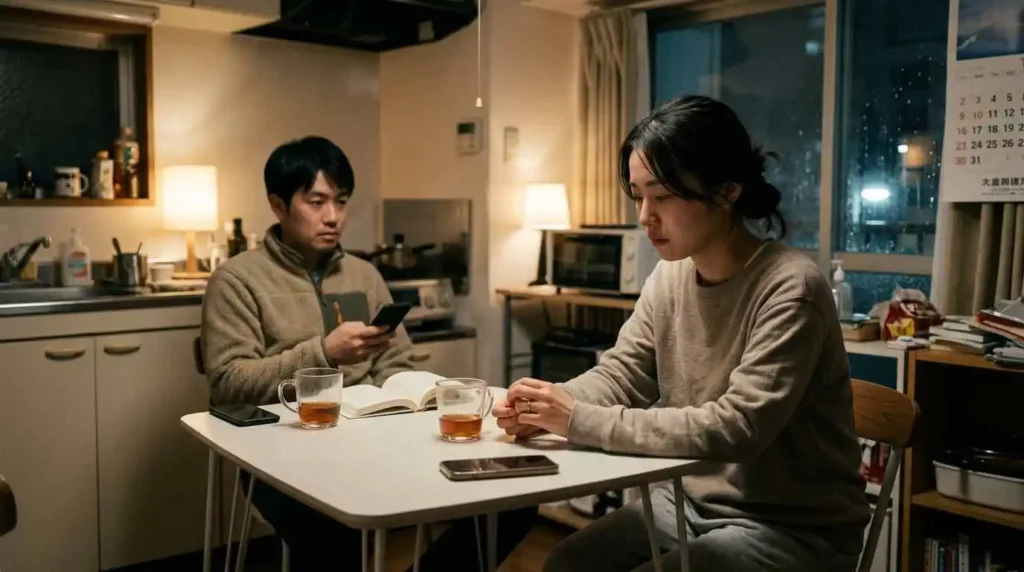
A Retied Knot Never Returns to Its Original Shape
Even so, the couple does not pretend that their conflict never happened. They accept the pain they have caused and try to create their relationship again in a new form.
When a loosened thread is tied again, the new knot forms in a different place. The mark of having been retied remains, but that point may become stronger than it was before.
The tears in this song are not proof that the relationship has failed. When both people understand why they were hurt and learn to see the other person’s feelings more clearly, those tears can become the beginning of a renewed relationship.
Strength does not belong to a couple who never hurts each other. It belongs to two people who, even after being hurt, refuse to turn away and find the courage to rebuild what they share.
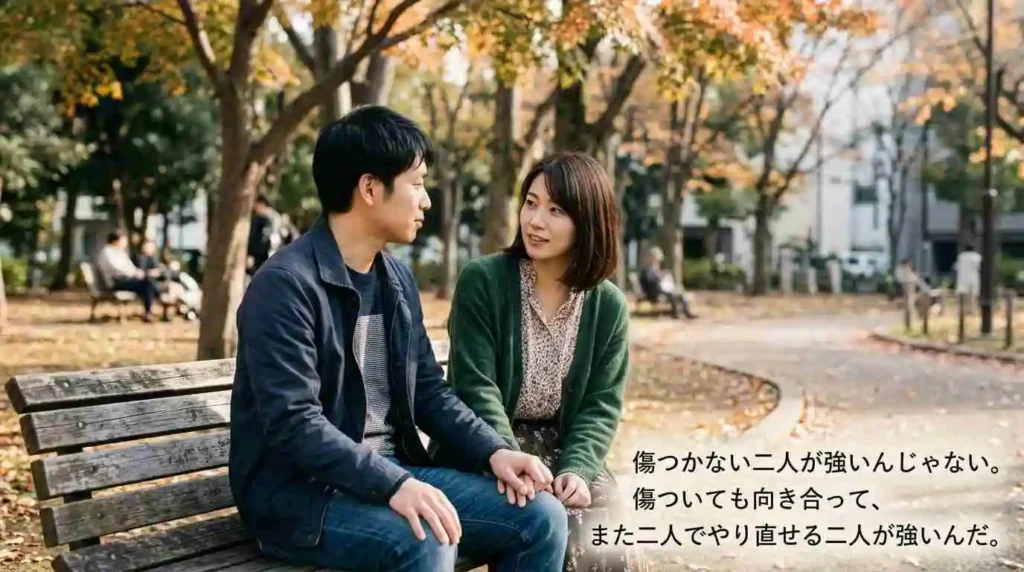
Because of this realistic perspective, “Million Films” never sounds like a simple celebration of happiness. It portrays both joy and anxiety in love and accepts them as parts of the couple’s continuing journey.
Music That Begins with Everyday Conversation
The story of “Million Films” does not begin with a grand confession or a dramatic incident. It begins with familiar scenes: waiting at a traffic light, carrying home groceries, and moving through the city in the evening.
The Roles of the Two Voices
Kentaro Kobuchi’s voice moves through the song as though he is carefully confirming each event before him. Rather than forcing the words outward, he sings as if speaking directly to the person beside him, creating an intimate sense of closeness.
When Shunsuke Kuroda’s rich voice enters, the scenery of one private day develops into a broader story. What begins as one person’s quiet thoughts gradually becomes the shared determination of two people choosing their future together.
Even when the melody opens up in the chorus, the heart of the song is not an extravagant promise. It is the wish to live through the day before them with someone precious and to create a future through the accumulation of such days.
The Future Waiting in the Final Empty Pocket
The song refers to a single empty pocket remaining at the end of an old photo album.
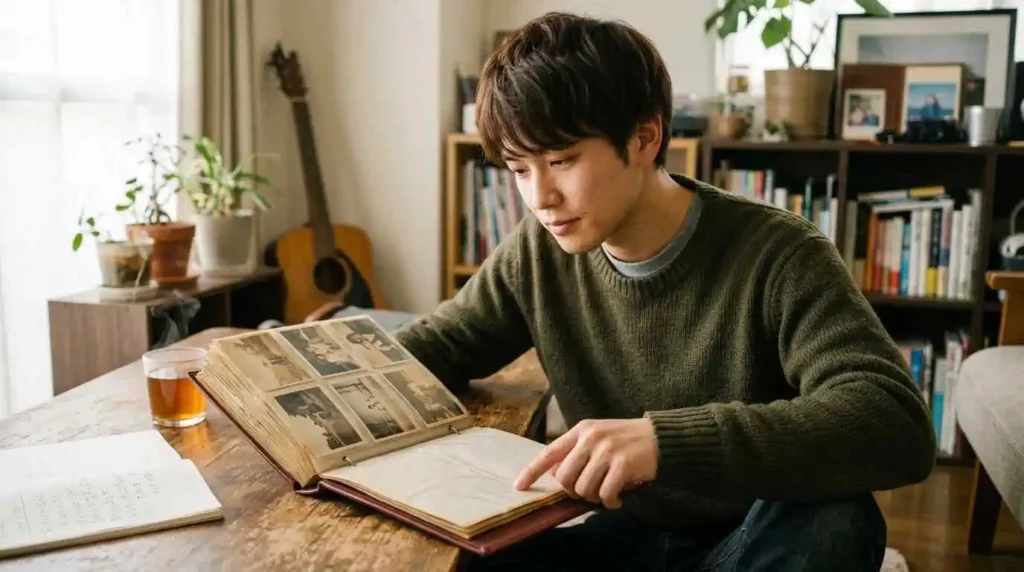
Looking through an album is an act of returning to the past. Yet because the final space remains empty, the couple’s gaze does not remain fixed on what has already happened. The empty pocket suggests that another photograph is still waiting to be taken during the days ahead.
No one knows whether that space will eventually hold a photograph of radiant smiles or a scene from a rainy day. In the same way, their relationship will not be preserved in a finished and unchanging form. It will continue to develop as their lives change.
The empty pocket does not represent something missing from the past. It is a place prepared for a memory the two of them have yet to create.
Because the song turns its eyes toward the future, “Million Films” does not become merely a nostalgic reflection on earlier days. It carries everything the couple has experienced so far while preparing to welcome a tomorrow they have never seen.
Why I Chose “Million Films” as My No. 4
In my Kobukuro Top 10, No. 7, “YELL”, encourages someone moving toward a new place. No. 6, “Wadachi”, portrays a person creating a path with their own footsteps. In No. 5, “Akai Ito”, two people who once separated choose each other again.
What “Million Films” portrays at No. 4 is the everyday life that follows. After major moments such as meeting or reuniting have passed, the couple continues to live together, moving through the same seasons and gradually building a shared life.
Not the Special Moment, but the Days That Follow
From the outside, their time together may look like an uneventful repetition. Yet the words they exchange and the way they look at each other change slightly from one day to the next. The same day will never come twice.
Their future is not guaranteed by fate. It is created through the small decision to spend each present day together.
“Million Films” is not a song about searching for one photograph that will transform a life. It is about accepting countless ordinary days as the couple’s own story and continuing to add new days to everything they have already shared.

In Closing
A photograph can stop a moment, but a relationship never stands still. Two people who laughed together yesterday may fall silent today, while two people who argued today may look at the same scenery and smile tomorrow.
“Million Films” does not portray a completed and perfect love. It portrays two people who continue to change, accepting both happiness and failure as parts of their shared history while moving toward the next scene.
Even when a moment was never captured by a camera, the fact that they lived through it together does not disappear. A voice remembered without warning, a mistake that remains funny after many years, or an instant of understanding without words can all become evidence that two people once shared the same time.
And one space in the album still remains empty. No one knows what will eventually be placed there, but the two of them begin another new day together.

音楽ファン同士の交流・リクエストはこちら / Connect & Request Songs Here