
The history of Kobukuro is…Click here!
🎧 Listen to This Article
You can quickly explore the main points of this article through Japanese and English narration.
This audio introduction is recommended for readers who want to understand the story of “Akai Ito” and the overall direction of the article before reading the full text.
🎵 English Narration
An English audio introduction to the main ideas in this article.
🎶 Japanese Narration
A Japanese audio introduction to the main ideas in this article.
Listening first will help you follow the separation, waiting, and reunion portrayed in “Akai Ito,” as well as the main ideas explored in the article.
No. 5 Is “Akai Ito”
Some love songs capture the thrill of the moment two people meet, while others dwell on the pain of separation.
But Kobukuro’s “Akai Ito” belongs fully to neither category. It tells the story of two people who love each other but cannot make the relationship work, who separate, fail to forget one another, and slowly begin moving toward the same place again.
The phrase “the red thread of fate” has a sweet, almost romantic sound. Yet the thread in this song is not a magical force that keeps two people together without effort.
It is a thread sustained by the desire to keep caring for someone, even while drawing close, drifting apart, and sometimes losing sight of each other altogether.
A Free Interpretation
They once loved each other deeply, yet little by little, their hearts began to miss each other.
Even while they were apart, he kept waiting, and somewhere inside, she could never quite forget him.
Then a letter asking, “Will you meet me?” begins to reconnect the feelings that were close to breaking.
The red thread slowly leads two people who still believe in each other back to the same place.
💡 You might also like: View the original Japanese lyrics (External site)
If the lyrics are available only in Japanese, you can use your browser’s translation feature or an AI translation tool to understand their general meaning.
First, Listen on YouTube
Shared Credits
Song: Akai Ito
Artist: Kobukuro
Lyrics: Kentaro Kobuchi
Music: Kentaro Kobuchi
Arrangement: Kobukuro
Label: Warner Music Japan

“Akai Ito” is a song Kobukuro had performed since their independent-label years. A newly recorded version was included on the single “Toki no Ashioto,” released on October 29, 2008, and the song was also used in a NISSAY commercial.
1. Kobukuro, “Akai Ito”
Individual Credits
Format: Official music video
Music Video Director: Yasuyuki Yamaguchi
Point of View: The man’s perspective
Cast: Junya Kasuga and others
Channel: Official Kobukuro Channel

The video was created in connection with Yui Aragaki’s version of the same song. Kobukuro’s video tells the story of a relationship slipping out of step from the man’s point of view. Directed by Yasuyuki Yamaguchi, the two videos present the same story from the perspectives of the man and the woman.
Two-Line Commentary
This music video portrays a devoted love that continues to trust even through a long separation.
The man’s anxiety and loneliness are conveyed through restrained imagery and Kobukuro’s deeply felt singing.
2. “Akaiito (Live at Osaka-jo Hall, 2007.7.5)”
Individual Credits
Format: Live audio video
Recorded: July 5, 2007
Venue: Osaka-jo Hall
Audio Provided by: Warner Music Japan
Displayed Title: Akaiito (Live at Osakajohall, 7/5/2007)
Two-Line Commentary
Kentaro Kobuchi’s delicate opening is gradually joined by Shunsuke Kuroda’s fuller voice, allowing the story’s emotion to widen step by step.
The breathing and tension of the live performance make the pain of waiting for someone feel even more immediate than in the studio recording.
This Is Not a Sweet Song About Fate
The Thread Between Them Was Never Strong to Begin With
From the title “Akai Ito,” one might imagine a happy romance between two people destined to be together.
Yet the couple in the song is not doing well. A casual exchange about an anniversary already reveals a small but unmistakable difference in emotional temperature.
A date that matters deeply to him is also tied, in her memory, to another man. She answers without malice, but the pain left in him is not something he can simply erase.
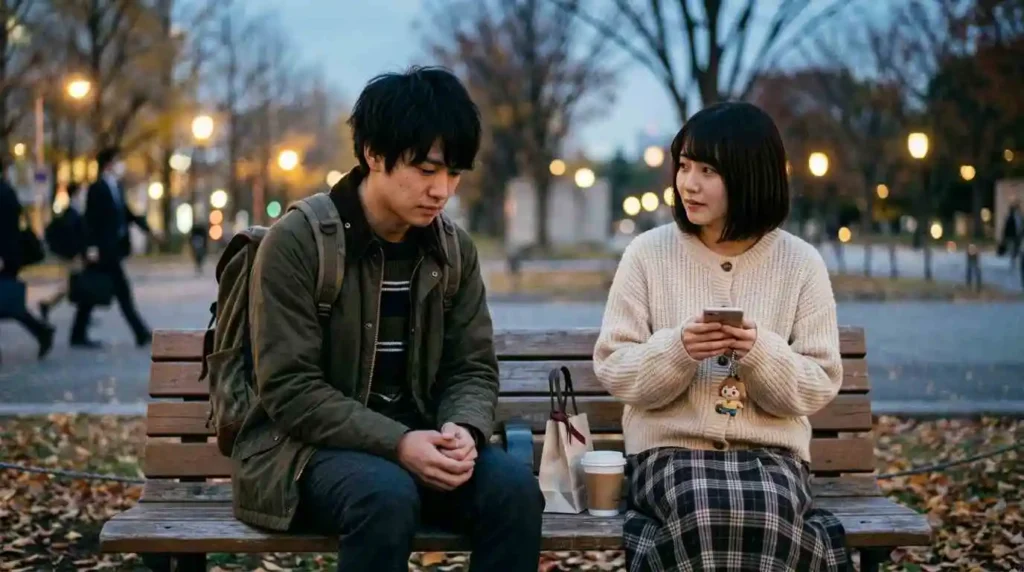
In a relationship, small mismatches like this can exhaust two people more deeply than a single dramatic betrayal.
The love between them is real. Even so, neither can accept the other’s words without suspicion. Whenever they meet, they return to the same argument and hurt each other again.
“Akai Ito” depicts the painful state in which two people have not stopped loving each other, yet being together has become difficult.
Because I love her, I want to be with her.
But that natural impulse is not always the right choice.
To protect their relationship, he chooses not to see her for a while.
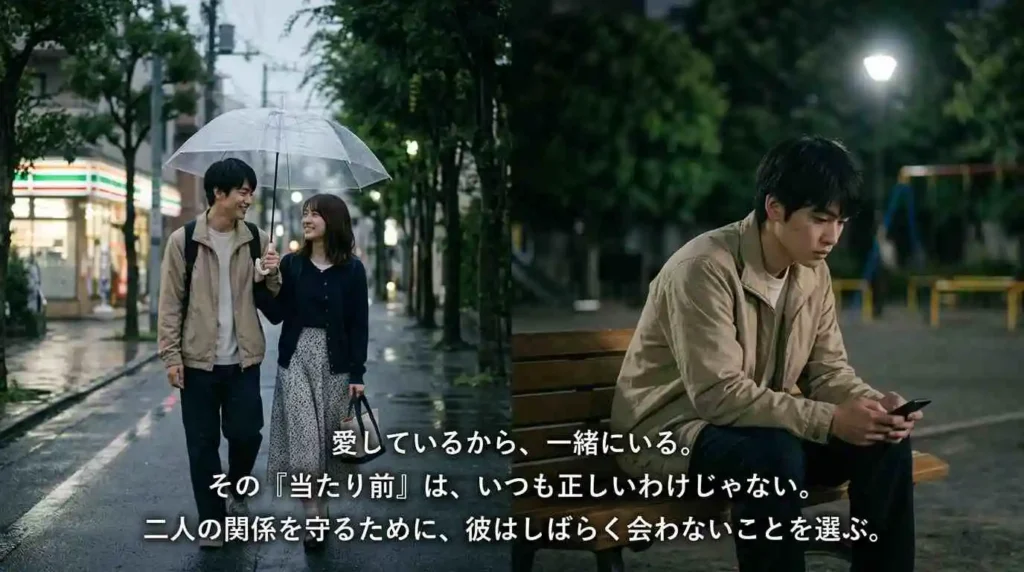
This decision is not a declaration that the relationship is over. It is a promise to step away from the daily clash of emotions and wait until she can choose her answer for herself.
Love Expressed Through Waiting
When we care for someone, we naturally want that person beside us. We do not want to lose them to anyone else.
But the man in this song does not pressure her to choose him. He tells her that he will remain in the same place until her heart is settled.
It sounds simple when expressed in words, but the person who waits receives no guarantee.
Will she return in a month, in a year, or never at all? He has no way of knowing.
Even so, he does not bind her to him merely to calm his own fear. He accepts the time she needs to find her own answer.
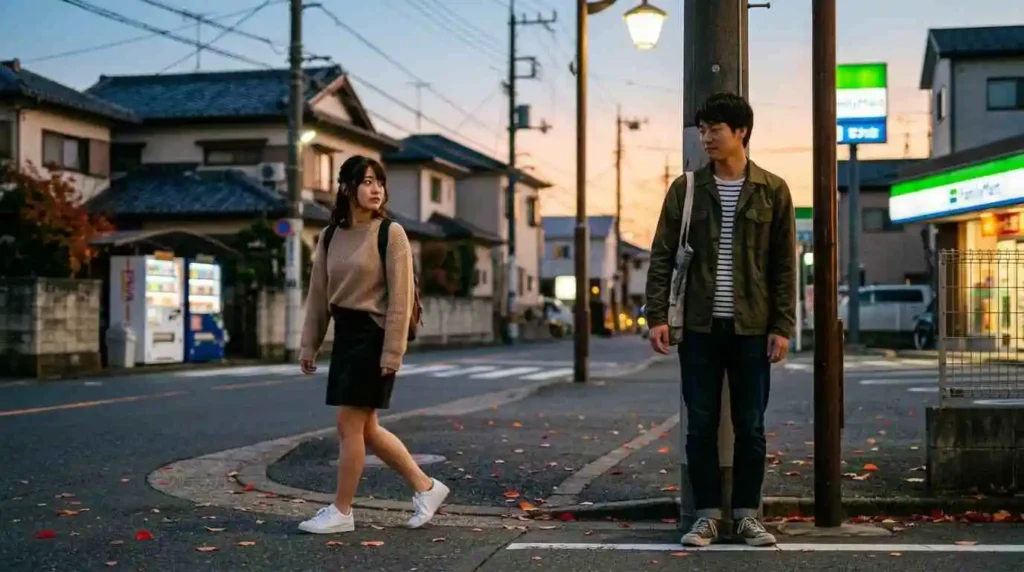
For me, this is where the true strength of “Akai Ito” lies.
The Seasons Reveal the Time Between Them
The Color of Flowers and the Landscape After They Fade
In this song, the changing seasons mirror the emotional movement of the couple.
The flowers of their early days are fresh and tentative, then grow more vivid with time. By contrast, the scenery moving beyond autumn and toward winter reflects his isolation.
People may believe they are living exactly as they did yesterday, but the seasons continue to move ahead.
The promised place and the familiar road remain unchanged, yet the person who once stood there is gone. Only then do we begin to feel the true weight of the time that has passed.
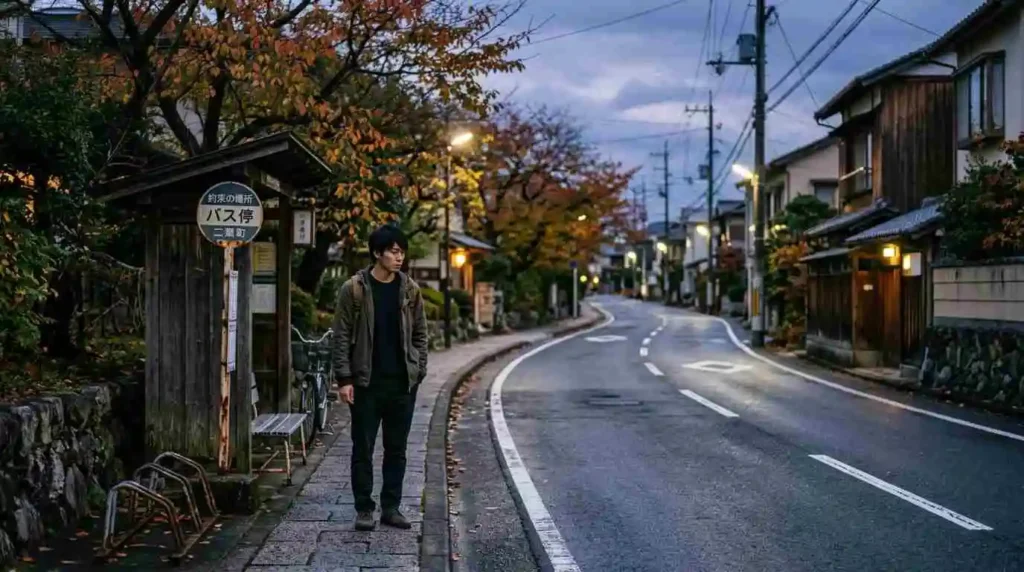
She, too, finds herself remembering the man she once loved while walking beside someone else.
Being with someone new does not mean an earlier love has disappeared completely. Sometimes the harder a person tries to forget, the more clearly the one still living in the heart comes into view.
The Letter Changes the Direction of the Story
Eventually, a letter from her arrives in his hands.
It contains neither a long explanation nor a dramatic declaration of love. It carries only a hesitant, simple wish: she wants to see him again.
That restraint is precisely what gives the message its weight.

She has not returned because someone persuaded her to do so. After living apart and facing her own feelings, she has chosen to meet him once more.
At this point, the red thread is no longer something that automatically binds them together.
It becomes the sign of a relationship they have chosen again, including the months of uncertainty, the lonely nights, and the days spent walking separate paths.
Two Voices Make the Waiting Feel Longer
In “Akai Ito,” the two voices do not simply take turns explaining the character’s emotions.
Kentaro Kobuchi’s singing sounds as though he hesitates for a moment before allowing each word to leave him. If he blames her, the relationship may break; if he says nothing, his own heart may not endure. The restraint in his opening reflects a man unable to move fully in either direction.
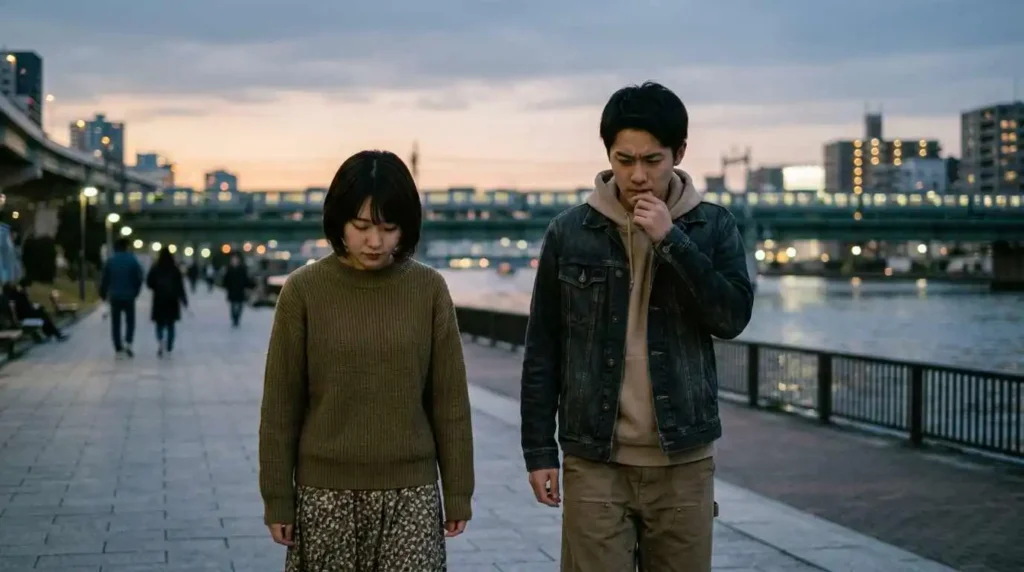
When Shunsuke Kuroda’s voice moves to the foreground, the feeling does not merely become stronger. The length of the time spent waiting begins to come into view.
The emotion he has carried alone does not simply become louder. A feeling he tried again and again to abandon, yet could never erase, finally takes on a clear shape.
In the live version, a slight tension remains where the two voices meet.
This is not a song celebrating a perfectly completed romance. Even after the reunion, the two cannot immediately return to who they once were. Because the performance includes that uncertainty, the reunion in “Akai Ito” never becomes overly sweet or loses its sense of reality.
Why I Ranked It No. 5
“Akai Ito” does not depend on a dazzling musical device that everyone remembers after a single listen.
Even so, the story reveals a different expression each time I return to it. At one stage of life, the reunion may be the part that moves us most. At another, it may be the man’s resolve to wait without seeing her.
The love portrayed in this song is not flawless or entirely beautiful.
There is jealousy. There is suspicion. There is also the immaturity of being unable to accept the other person’s past.
Yet because the relationship is imperfect, their final choice feels believable.
They are not reunited because they never hurt each other. They hurt each other, separate, and still choose one another again before beginning to walk the same road.
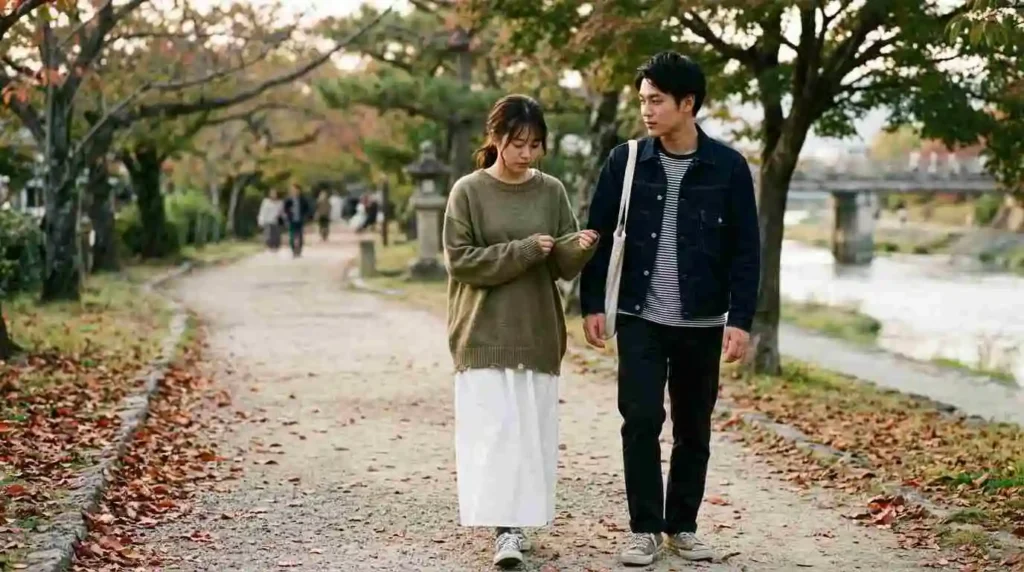
I ranked the song at No. 5 because of the honesty of that story.
In Closing
I do not know whether a red thread of fate truly exists.
But I do not believe a lasting relationship is sustained by an invisible force alone. There are days when words fail, days when doubt enters, and nights when continuing feels impossible. Even then, choosing the same person again and again may be what creates the thread between two people.

“Akai Ito” is not a song promising that happiness will come to anyone who simply waits for a destined partner.
Can we remain honest with ourselves during the time apart and continue to trust the other person? When we meet again, can we carry the old pain with us and still take a new step forward?
The song leaves those questions with us.
They did not return to each other merely because they had always been bound by fate.
Two people who could not forget each other, even while apart, chose to tie the red thread again with their own hands.

音楽ファン同士の交流・リクエストはこちら / Connect & Request Songs Here