
◆Click here for Yosui Inoue’s History!
🎧 Enjoy This Article in Audio
You can quickly grasp the main points of this article through narration.
Recommended for those who want to catch the vibe of the music and the flow of the article before reading.
🎶 English Narration
An English audio introduction to the contents of this article.
⌛ Duration: Approx. 3 mins 30 secs
🎵 Japanese Narration
A Japanese audio introduction to the contents of this article.
⌛ Duration: Approx. 3 mins 15 secs
* Listening to the audio before reading helps you better understand the world of the music and the main points of the article.
No. 22: “Kannazuki ni Kakomれて” (Surrounded by the Month Without Gods)
Released in December 1972, “Kannazuki ni Kakomarete” is a track from Yosui Inoue’s second studio album, “Yosui II: Sentimental.” While often overshadowed by his more flamboyant hits, this song leaves a powerful impression with the detached, analytical perspective characteristic of his early work.
Refusing to pander to the lively trends of the era, the track exudes a inescapable stillness, evoking the image of standing entirely alone in a cold, biting wind. In this review, we will delve into the unique atmosphere of this piece and explore the razor-sharp lyricism that continues to unnerve listeners to this day.
Deconstructing the World of “Kannazuki ni Kakomarete” (Poetic Translation)
Yearning for human warmth, I look up at the pale moon of the thirteenth night.
Migrating birds fly away in formation, leaving the solitary soul standing frozen in the chilling wind.
On this autumn night when the gods have departed, a futile whistle dissolves into the blue darkness, and all living things hold their breath, waiting for winter.
First, Listen via the YouTube Videos Below
Listen to the original studio track through the video link below, capturing the fresh yet tense atmosphere of the era.
Please click the image below:
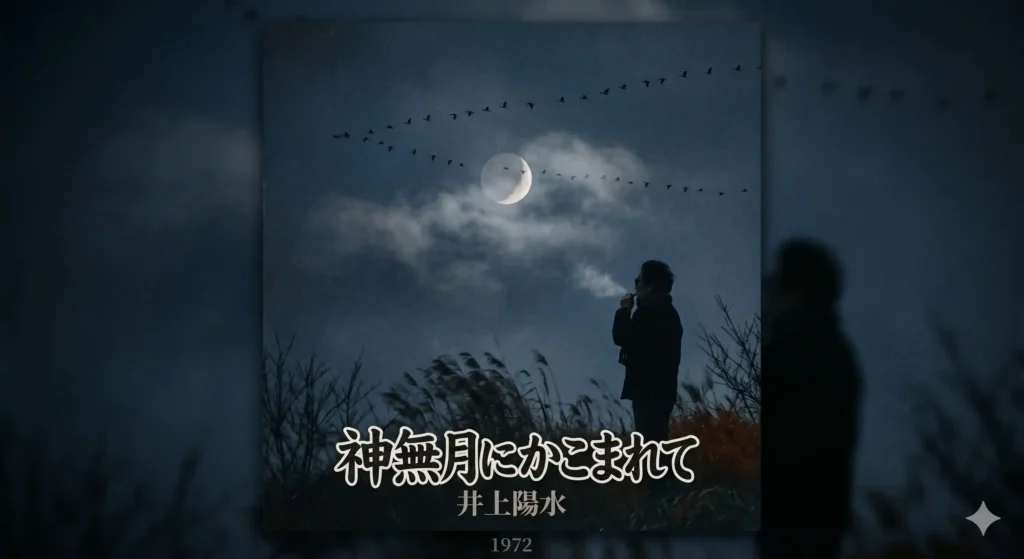
Credits
Vocal: Yosui Inoue
Lyrics & Composition: Yosui Inoue
Arrangement: Katsumi Hoshi
From the album "Yosui II: Sentimental" (Released December 10, 1972). It corresponds to Track 7 on CD/Streaming services and Side B, Track 1 on the original Vinyl LP.
Two-Line Overview
This original studio version portrays a desolate landscape of the early winter transition through a detached, first-person perspective.
Katsumi Hoshi's arrangement adds a band-driven depth to the folk core, solidly crystallizing the "blue night air" described in the lyrics.
Next is the live performance version. Please click the image below:
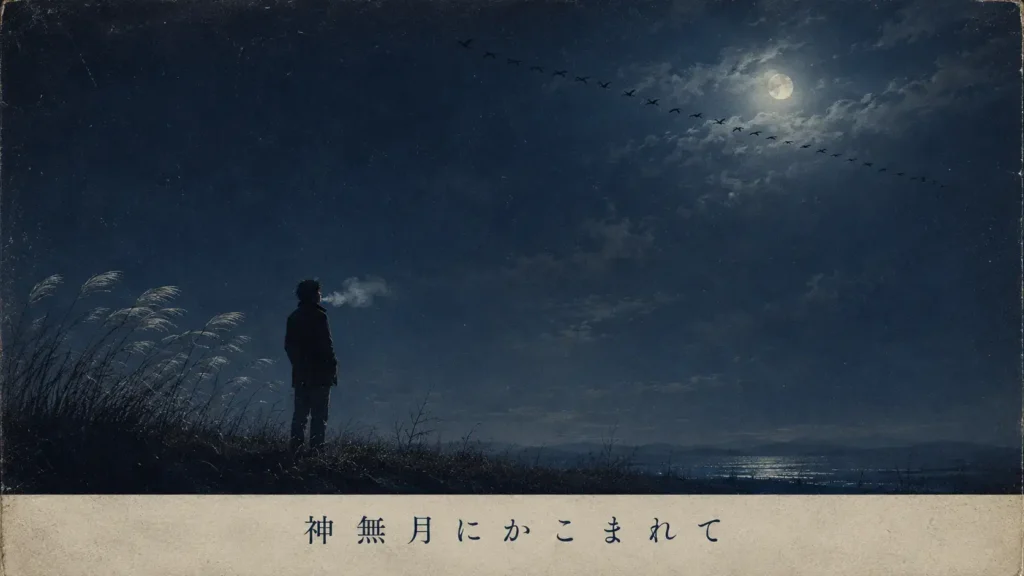
Credits
Vocal: Yosui Inoue
Lyrics & Composition: Yosui Inoue
Live recording from the NHK Hall performance on March 7, 1982.
Two-Line Overview
A distinct live rendition. Unlike the 1972 studio album version, this performance showcases Yosui's evolved vocal delivery and stage presence in front of a live audience in 1982.
(*Note: Most of the audio files of Yosui Inoue available on the internet are not official uploads. Therefore, out of respect for copyright guidelines, this blog refrains from embedding videos directly and instead utilizes custom-made images that link to external platforms.)
“Yosui II: Sentimental” as the Pinnacle of Early Yosui Literature
When discussing the legendary career of Yosui Inoue, his record-breaking million-seller “Kori no Sekai” (Ice World) is inevitably cited as his monumental achievement. However, I believe it was the album released just a year prior, “Yosui II: Sentimental,” that truly marked the exact moment he shed his amateur moniker “Andre Candre” and fully awakened as a masterful artist.
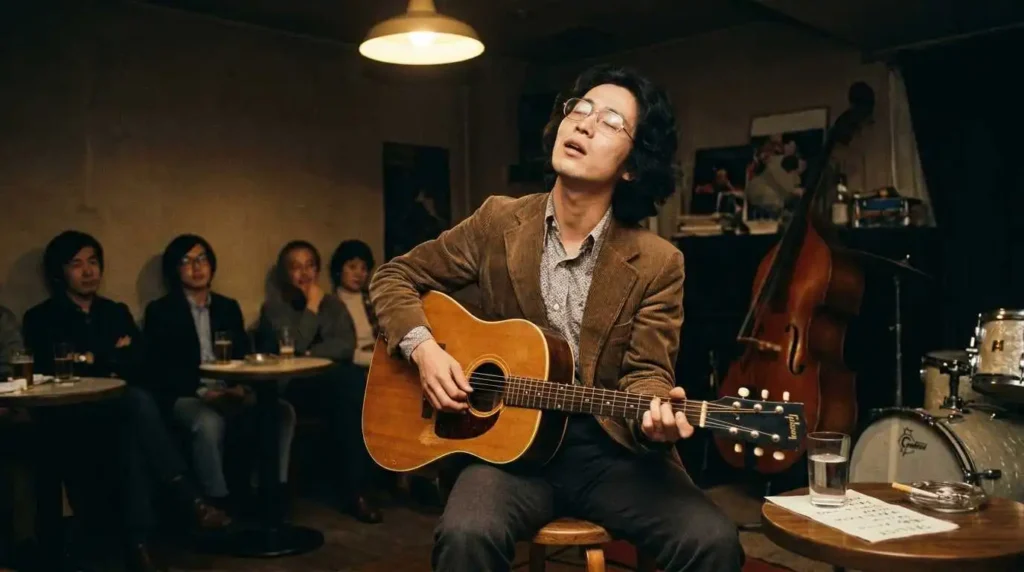
The atmosphere of this entire album is incredibly tense, yet fragile—and “Kannazuki ni Kakomarete” serves as the perfect embodiment of that duality.
- The raw, unrefined initial impulses seen in his debut album “Danzetsu” (Severance).
- The formidable pop sensibilities incorporating funk and kayokyoku that would later bloom in his third album “Kori no Sekai.”
Positioned precisely in the transition between these two eras, this track delivers highly refined folk-rock, blending the delicate resonance of an acoustic guitar with a deeply personal, yet strikingly cold objectivity.
The Sense of Isolation Embedded in the Term “Kannazuki”
The word “Kannazuki” refers to the tenth month of the traditional Japanese lunar calendar, roughly corresponding to modern-day November. It literally translates to “the month without gods,” originating from the lore that Shinto deities across Japan leave their regional shrines to gather at Izumo Taisha during this time.
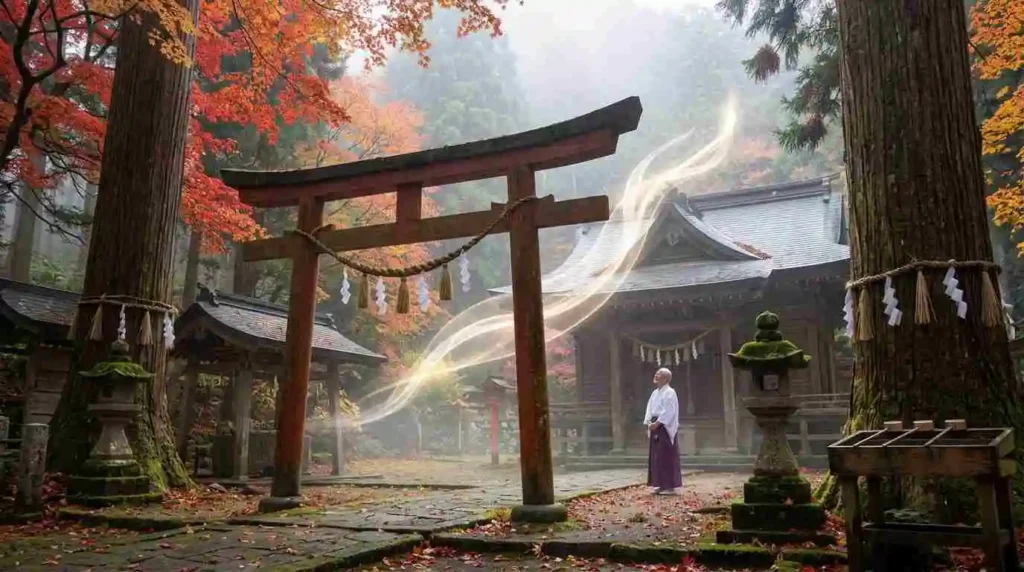
In the world Yosui crafts for this song, the protagonist stands entirely alone within this exact “abandoned space, completely devoid of divine protection or warmth.”
“Kannazuki ni Kakomarete” (Surrounded by the Month Without Gods)
This phrase does more than simply signify a changing of the seasons. It conveys a suffocating claustrophobia—the feeling of being completely walled in by an unyielding solitude and the vast, unstoppable flow of time, both of which remain entirely beyond one’s control.
No matter how busy or deeply integrated we are within the rhythmic demands of modern society, there are moments when anyone might feel a sudden, bottomless chasm of loneliness open up beneath their feet. Yosui, still in his early twenties, brilliantly consolidated that primal human existential dread into the singular imagery of “Kannazuki.”
A Chilling Gaze at the “Left Behind”: The Formation of Migrating Birds
In the middle of the song, Yosui introduces the imagery of migrating birds flying from north to south ahead of the impending winter.
_-1024x572.webp)
Here, Yosui’s lyrical choices diverge sharply from those of ordinary folk singer-songwriters. Rather than painting the migration as a beautiful, harmonious natural event, he describes the flock as though they are “running away” from the cold, explicitly shifting his analytical gaze onto “the one who cannot keep up with the formation.”
- The majority, moving in perfect alignment with the collective to navigate the changing seasons effortlessly.
- The minority, falling out of line and left behind without any guarantee of surviving until the next spring.
In a society that demands conformity and uniform progression, Yosui offers no pity to those who cannot or will not stay in line, indifferently leaving them to the mercy of the wind (“hitashira no kazemakase”). This clinical detachment is precisely why critics often refer to Yosui as an unapologetically objective observer.
Freezing the Senses: Hiromi Yasuda’s Hard-Edged Acoustic Guitar
The sheer quietude of this song is established not only by Yosui’s vocal performance but also by the acoustic guitar work of legendary studio musician Hiromi Yasuda, which forms the spine of Katsumi Hoshi’s detailed band arrangement.
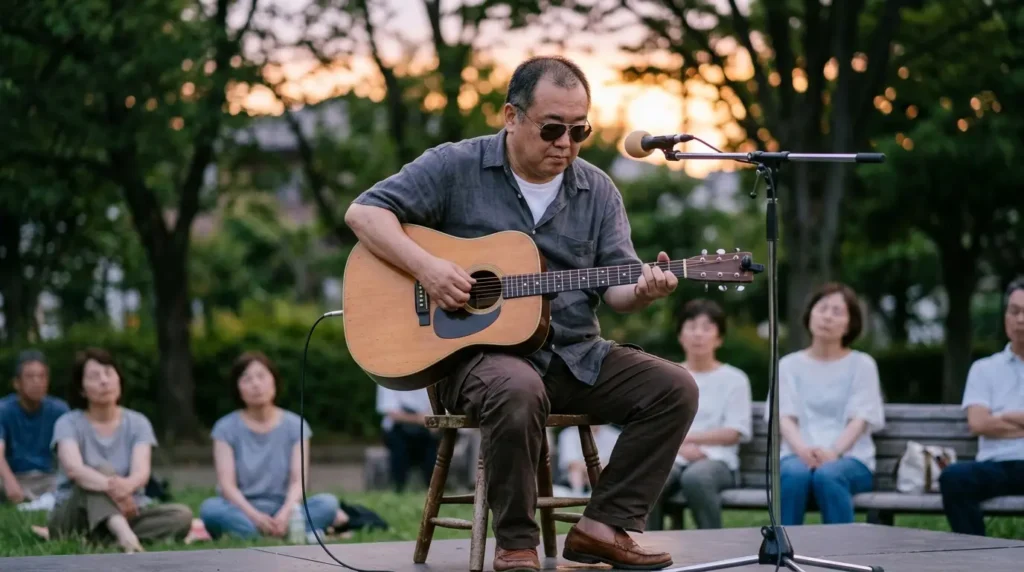
From the moment the opening note of the intro strikes, it feels as though the temperature in the room drops instantly. This style is the exact antithesis of the aggressive, heavily strummed folk music prevalent at the time; it is an incredibly disciplined, minimalist picking technique where every single note is meticulously selected.
- An ensemble layout that avoids cluttering, carefully measuring the space until each resonance completely fades out.
- A guitar style that sharpens the icy texture of Yosui’s prose, amplifying its impact.
Because this unyielding acoustic guitar acts as the anchor of the musical arrangement, listeners do not merely hear a passing song. Instead, they are forced into a visceral experience, as if they themselves are standing vulnerable under the freezing night sky of Kannazuki.
The Quiet Resolve Concealed in “Waiting for Winter”
The closing phrase of the lyrics, “holding one’s breath and waiting for winter,” serves as the focal core of the entire piece. The “winter” described here isn’t merely a season on the calendar; it symbolizes an unalterable, harsh reality—such as the collapse of human connections or the fading echoes of a collective societal euphoria.
_2026052-1024x572.webp)
Yosui neither laments the arrival of this metaphorical winter nor attempts to violently resist it. Instead, he captures a state of stoic endurance, stripping away all emotional outbursts with lines like “showing no tears, forgetting how to smile.”
This act of “holding one’s breath” is far from simple defeatism or escapism. On the contrary, it presents itself as a highly logical and resilient defense mechanism when confronting an immovable obstacle.
Separated from the flock, with the next spring entirely uncertain, the protagonist chooses to conserve every ounce of energy and silently sharpen his claws. Written by Yosui in his youth and framed by Yasuda’s crystalline guitar lines, this calculated patience is far more practical than shallow words of comfort, containing a grim, necessary wisdom for navigating life’s coldest seasons.
In Conclusion
“Kannazuki ni Kakomarete” remains a brilliant, fleeting flash of artistry captured during a time when the young Yosui Inoue had not yet become a mainstream juggernaut.
You won’t find over-the-top production or manufactured sentimentality engineered for quick empathy here. Yet, because of this artistic restraint, the song remains entirely untouched by time, maintaining the exact same sharp, unsettling tension it possessed upon its release in 1972.
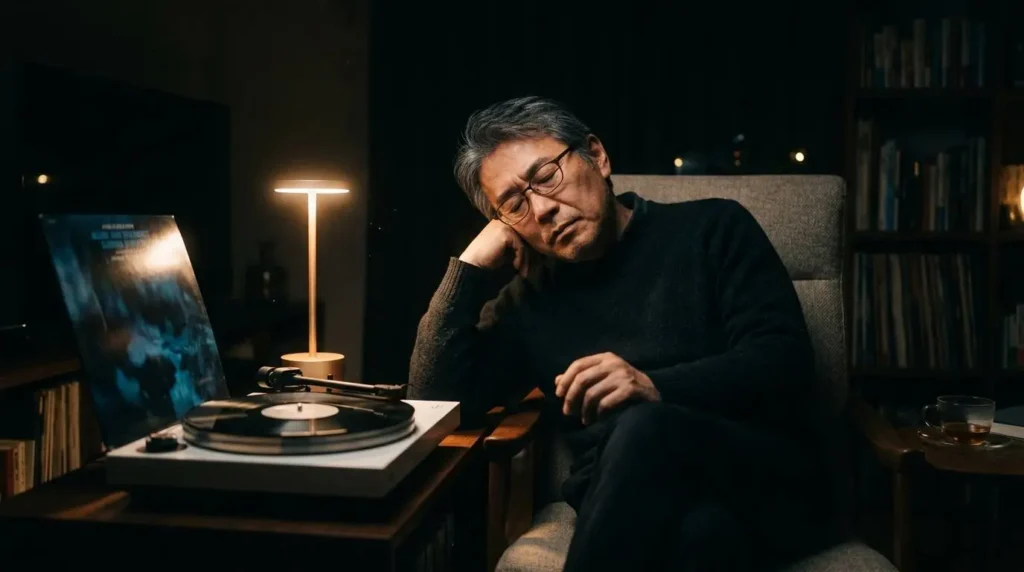
In an era where algorithmic playlists continuously stream background music tailored to effortless convenience, taking the time to confront a piece of music with undivided attention has become profoundly meaningful. Tonight, perhaps dim the lights in your room, and let yourself be fully immersed in the quiet, absolute intensity of this early masterpiece.

音楽ファン同士の交流・リクエストはこちら / Connect & Request Songs Here