
Click here for Yosui Inoue’s History!
- 🎧 音声でこの記事を楽しむ
- 🎧 Enjoy This Article via Audio
- No. 11: “Jinsei ga Nido Areba” (If There Were Two Lives)
- First, Please Listen to the YouTube Videos
- The Realism of “Aging” Captured by a Youthful Sensitivity
- An Overlapping Ensemble of “What Ifs” Echoing Across Generations
- The “Irreversibility of Time” Thrust Upon the Modern Era
- Closing Thoughts
🎧 音声でこの記事を楽しむ
ナレーションを通じて、この記事の要点をすばやく把握できます。
記事を読む前に、音楽の雰囲気や全体の流れを掴みたい方におすすめです。
🎵 日本語ナレーション
この記事の内容を日本語の音声でご紹介します。
⌛ 再生時間:約3分40秒
🎶 英語ナレーション
この記事の内容を英語の音声でご紹介します。
⌛ 再生時間:約3分
* 読む前に音声をお聴きいただくことで、楽曲の世界観や記事のポイントをより深く理解できます。
Click here for 【The History of Yosui Inoue】!
🎧 Enjoy This Article via Audio
Through the narration, you can quickly grasp the key points of this article.
Highly recommended for those who want to catch the musical atmosphere and overall flow before reading.
🎵 Japanese Narration
Listen to the content of this article in Japanese.
⌛ Playtime: Approx. 3 min 40 sec
🎶 English Narration
Listen to the content of this article in English.
⌛ Playtime: Approx. 3 min
No. 11: “Jinsei ga Nido Areba” (If There Were Two Lives)
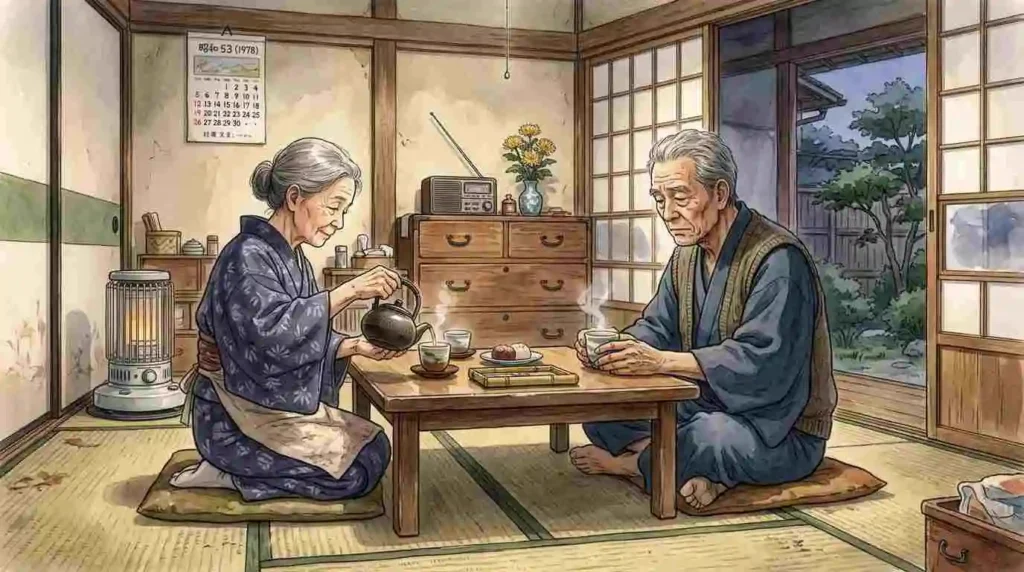
As this series enters its middle phase, the weight of the song selection continues to grow. The 11th track I am presenting this time is “Jinsei ga Nido Areba” (If There Were Two Lives), released in 1972. This masterpiece is widely recognized as a monumental landmark where the expressive artist Yosui Inoue, at the absolute dawn of his career, vividly captured the inescapable destiny embedded within human existence.
When reflecting on the fact that he was only in his early twenties at the time, yet observed the daily lives of his parents’ generation—who had passed their sixties—with such profound depth, I cannot help but feel a deep sense of awe.

How should we confront the universal themes of “aging” and “life choices” that everyone must face eventually? I would like to carefully explore the magnificent structure of this masterpiece from here.
Poetic Translation: The Worldview Cast by the Lyrics
Watching the figures of my aging father and mother,
the sheer weight of the time they have entirely spent for the family presses hard against my chest.

If life could somehow happen just one more time,
I wish that, for this next round, my father and mother would live entirely for themselves.

And as for me, I would like to face the two of them as they were in their youth,
sharing a cup of tea, and quietly speaking of the thoughts I could never bring myself to say.
First, Please Listen to the YouTube Videos
First is the original studio track. Please click the image below.
【Credits】
Yosui Inoue - "Jinsei ga Nido Areba"
Lyrics & Composition: Yosui Inoue
Arrangement: Katsumi Hoshi
Released as a single on March 1, 1972 / Included in the album "Danzetsu"
【Two-Line Commentary】
Through the gaze of a son watching his aging parents, this defining early track by Yosui Inoue quietly depicts the heavy burden of a life spent entirely for the family. The repetition of the phrase "If there were two lives" deeply echoes a regret over unredeemable time, alongside an unspoken, profound respect for his parents.
Next is a live version. Please click the image below.

【Credits】
Yosui Inoue - "Jinsei ga Nido Areba"
Lyrics & Composition: Yosui Inoue
Arrangement: Katsumi Hoshi
Live Footage: An acoustic guitar performance by Yosui Inoue at the age of 25.
※YouTube Video Title: "Jinsei ga Nido Areba - 25-Year-Old Yosui Inoue Live"
【Two-Line Commentary】
This live footage shows a 25-year-old Yosui Inoue leading into "Jinsei ga Nido Areba" after a long introductory monologue talking about his father. Rather than just the song itself, the performance pushes how the young Yosui perceived his father's presence to the forefront, serving as a precious record that colors the song's background.
The next one is also a live recording. Please click the image below.

【Credits】
Yosui Inoue - "Jinsei ga Nido Areba"
Lyrics & Composition: Yosui Inoue
Live Audio: From the live album "Hikigatari Passion"
Release Date: July 16, 2008
YouTube Video Title: "Yosui Inoue / Jinsei ga Nido Areba (Hikigatari Passion)"
【Two-Line Commentary】
This acoustic performance of "Jinsei ga Nido Areba" comes from the live album "Hikigatari Passion" released in 2008. Shifting away from the urgent desperation of his youth, his voice and timing—weathered by long years—allow the gaze directed toward his mother and father to settle into an even deeper, heavy resonance.
(※The vast majority of audio materials by Yosui Inoue available on the internet are not official digital distributions. For this reason, out of respect for copyright considerations, this blog adopts a format where we link to external sites via custom images rather than embedding the videos directly.)
The Realism of “Aging” Captured by a Youthful Sensitivity
Concrete Realities of Life Brought by a Piercing Eye
The core value of this musical piece lies within the almost startling concreteness of its granular descriptions. What surfaces within the song is by no means an adorned, literary expression. Instead, it is a sudden snapshot of an ordinary, everyday reality that exists everywhere, yet rarely catches anyone’s attention.
Take, for instance, the small prop of the “chipped teacup” used by the father.
It encapsulates the pure diligence of a man who worked tirelessly without ever glancing toward personal luxury, paired with a distinct, lingering sense of loneliness from being left behind by the passage of time.
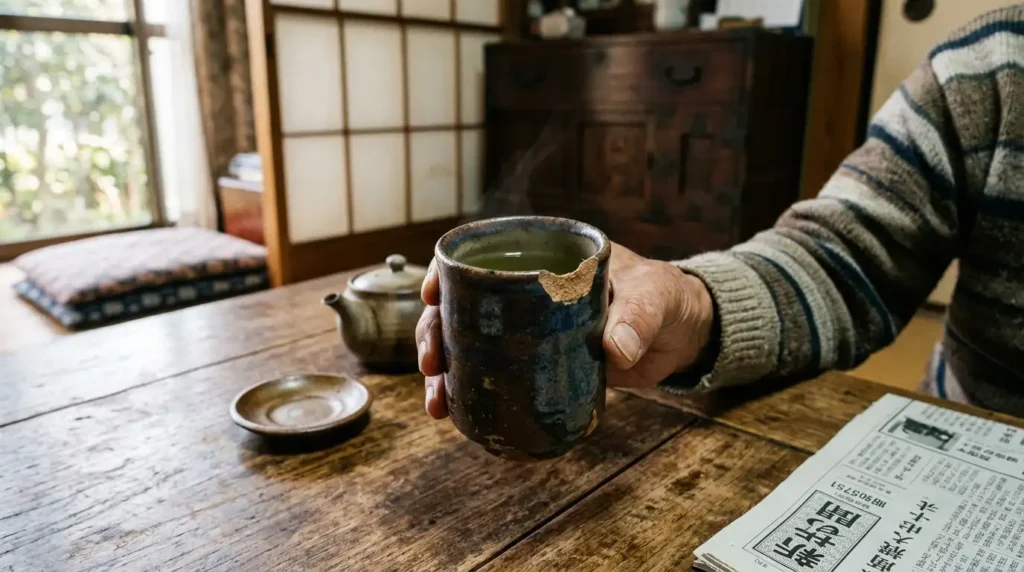
The image of the father staring fixedly at his own face reflected in the freshly poured tea stands before us with the profound stillness of a canvas painting.
- The Father’s Portrait: Countless wrinkles carved deep into his skin just as he finally finds a moment of respite after being constantly chased by his occupation.
- The Mother’s Portrait: Slender hands lifting a heavy pickle stone; years worn away entirely for the sole sake of her children.
These details are sketched out through an objective, deeply focused gaze that feels like a solo creator staring straight at a subject, entirely devoid of familial indulgence or cheap sentimentality. Because of this approach, listeners inevitably find themselves projecting the figures of their own parents, or perhaps their own future self-portraits, directly into the music.
The Heavy Weight of Everyday Existence in a “Pickle Stone”
What strikes an even deeper chord within the chest is the deliberate choice of the word “tsukemono-ishi” (pickle stone) when portraying the mother. Consider the immense weight of daily survival carried by those syllables. As a stark antithesis to the glittering imagery of mainstream pop music, there is no better phrase to symbolize an unglamorous, grounded, and utterly inescapable daily routine.
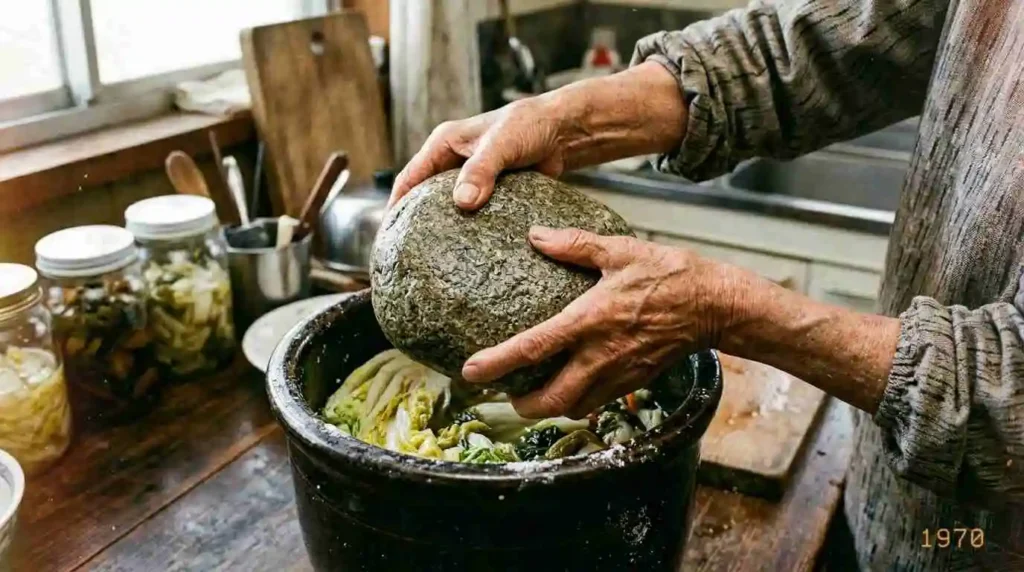
The slender hands of a mother who simply grew old while raising her children and serving the household. The moment those hands lift that heavy stone, the song hurls a fundamental, heavy question: “I know not for whose sake her life exists.” The disorientation and ache of suddenly viewing one’s own parent as an independent, individual “human being” forms the fundamental blues structure running beneath this song.
An Overlapping Ensemble of “What Ifs” Echoing Across Generations
From Youthful Conflict to a Universal Sorrow and Joy of Living
Moving into the latter half of the song, the focal point smoothly shifts from the objective sketches of the parents over to the internal landscape of “me,” the observer.
A young man in his early twenties, standing before the infinite potential of a future where he could theoretically become anything, overlaps his own tomorrow onto the backs of his parents who have already reached the autumn of their lives. The faint trace of bewilderment that surfaces in that moment, along with the internal emotional journey of gradually accepting an inescapable bloodline, is illustrated through a truly magnificent gradient.
What is vital to recognize here is that this song is absolutely not a simple expression of pity toward his parents, nor is it a detached, clinical analysis from a detached youthful perspective.
Rather, what resides there is nothing less than an unspeakable, profound reverence for the predecessors who threw away personal desire to live for the sake of the family. The haunting inquiry: “Whose life was it anyway, for parents who lived so purely and honestly?” This deeply caring gaze directed at his parents serves as the primary engine that pushes this piece far past the boundaries of standard folk music, generating an immense literary richness.
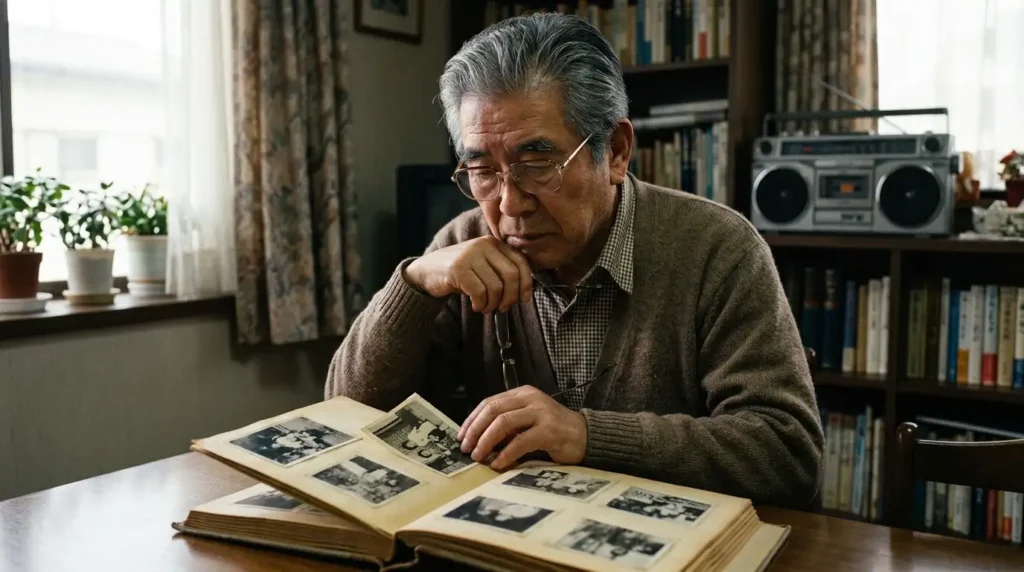
The youthful lens filled with a thirst for a boundless future stands in sharp contrast to the stark reality of the parents, whose options have narrowed to finding comfort solely in looking back at the past.
The vague longing for “somewhere that is not here” that almost everyone has cradled during their student or university days reawakens with incredible vividness every single time this melody reaches the ear—accompanied by the memory of how our hearts were squeezed by the quiet dignity of the adults who silently maintained their grounded existence.
An Internal Space Unlocked by the Enclosed Kotatsu
Near the conclusion of the track, the setting contracts into the exceptionally Japanese and enclosed environment of the kotatsu (a covered heated table).
While that space where a family huddles together to block out the exterior winter cold traditionally serves as a warm symbol of domestic harmony, within this particular song, it functions as a sealed chamber for quietly counting down the remaining hours of a lifetime.
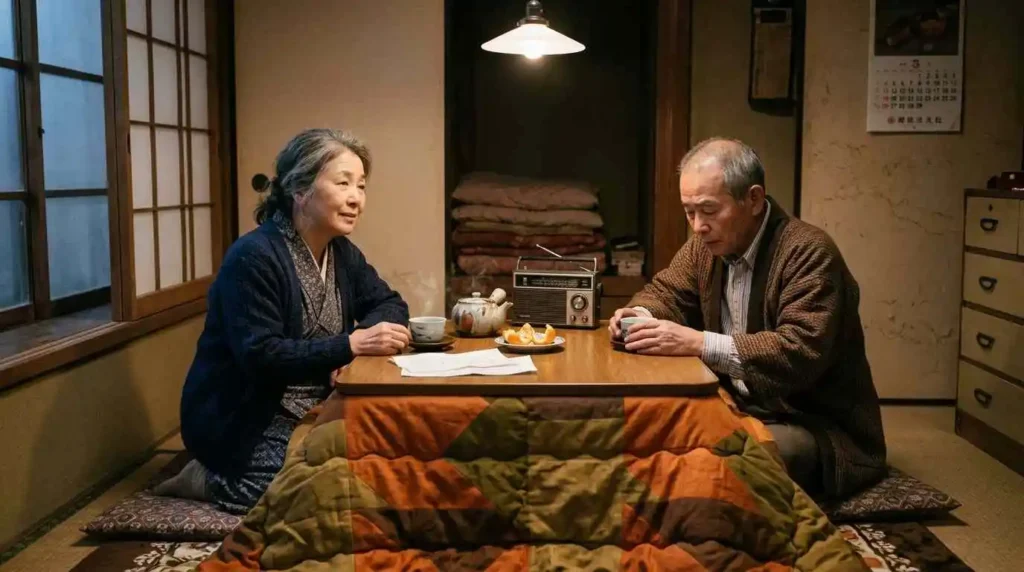
The elderly couple sits together, conversing about the dreams of their youth—dreams that are quite literally gone forever. Listening to this nearby, the young man experiences an expanding, indescribable sense of unresolved sorrow.
A world where all of life’s choices have transformed into history and become entirely set in stone. The faint suffocating weight of that reality, balanced against the preciousness of the daily routines that must nevertheless carry onward, is made to stand out with even greater intensity through the ironic dramatic device of the kotatsu’s warmth.
The “Irreversibility of Time” Thrust Upon the Modern Era
The Strength of Uncommodified Language
Now that more than half a century has slipped away since its initial presentation, the value of this song shows zero signs of decaying; if anything, its inner brilliance appears to be steadily expanding.
In a contemporary society where all information is consumed at breakneck speeds and sheer efficiency is deemed the ultimate virtue, the “weight of simply spending time” that Yosui maps out demands that we come to a grinding halt.
An unglamorous, awkward way of living that can never be measured by yardsticks of efficiency or productivity.
His writing style—which refuses to deny these lives whatsoever, yet simultaneously avoids over-romanticizing them—presents the unvarnished truth with a durability far greater than any fleeting buzzword worn out by the times.
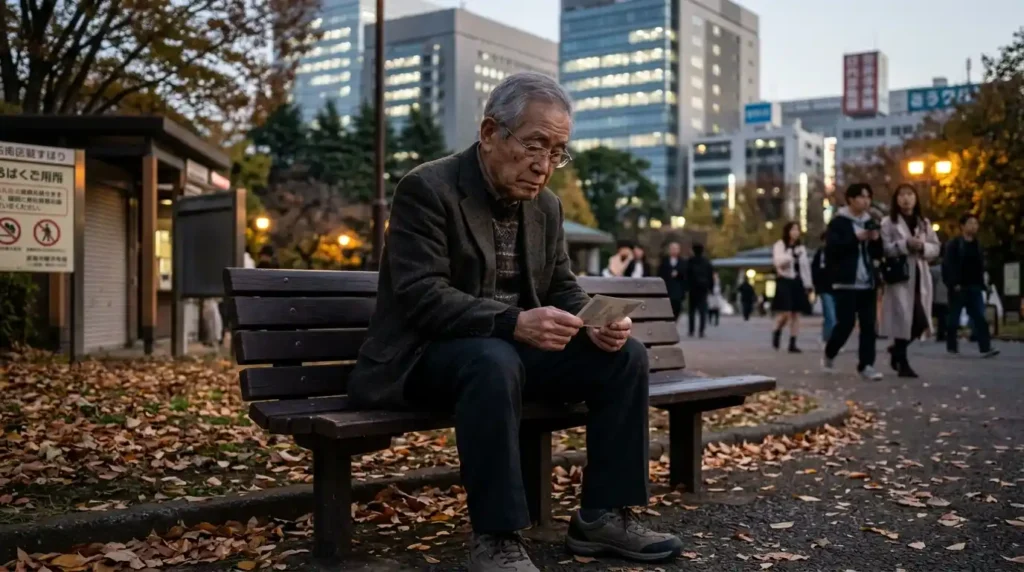
The reality that no matter how sophisticated our engineered society becomes, we can never escape the continuous sorrow of growing old and looking back at the past with regret is pressed upon us by this song with a quiet, yet completely unyielding authority.
The Reality of “65” Confronted by a 58-Year-Old Yosui
If we lean in and listen deeply to the third live recording introduced earlier, a secondary, crucial layer of truth reveals itself to us. Yosui was 58 years old at the time he stood on that specific stage, tracking just a hair away from his 59th birthday. In other words, this performance occurred precisely as he was staring down the barrel of the exact age of his father mentioned in the lyrics: “He turns sixty-five this February.”
To Yosui as a 23-year-old youth, the age of 65 may have felt like a distant, alien horizon of old age—a symbolic milestone that could only be filled in using pure imagination. However, when he reached 58 himself and could see that destination immediately ahead, the landscape must have looked remarkably different from the visions of his earlier years.
What existed there was no longer a faraway story, but a cool, direct reality toward which his own physical body and consciousness were marching. The reason a raw gravity beyond mere resolution and a profound realization—as if understanding his father’s life from the inside out as a fellow man—dwells within the 58-year-old Yosui’s delivery of “Jinsei ga Nido Areba” is precisely because he was standing dead center within the current of the “irreversibility of time.”
An Unending Inquest Concluding Inside the Listener
The most brilliant editorial boundary drawn in this track is the fact that it never offers an explicit answer to the hypothetical premise of “If there were two lives.”
If a second existence truly lay on the table, would they have chosen an entirely separate path and captured a different form of happiness, or would they have inevitably chosen the exact same worn-out routine? That inquiry is left permanently suspended in midair.

By withholding a clean resolution, the track allows the listener’s own philosophy of life to reflect back like a mirror. Simultaneously, it offers no easy emotional rescue; once the music cuts out, the listener is left to return immediately to the quiet rhythm of their separate, everyday existence.
This structural refusal to provide a cinematic, neat resolution is precisely what lends the piece a timeless dignity that bypasses eras. Long after the song concludes, listeners are left completely unable to stop questioning themselves regarding the journeys they have personally accumulated in their respective places, and how they intend to allocate the remaining time left ahead of them.
Closing Thoughts
“Jinsei ga Nido Areba” is by no means a song of cheap, retrospective longing designed solely for romanticizing days gone by.
It is an unyielding documentary regarding the core of human survival, captured by a 23-year-old youth through an incredibly sharp eye, which he then proceeded to deepen as he drew closer to that very age himself over the passing decades.
The young listeners who first encountered this track back in the day have likely now reached the same generation as the parents in the song, or perhaps have accumulated even more mileage beyond that marker.
Speaking for myself, I have already reached the age of 67. While the list of things I can no longer physically accomplish has certainly grown compared to my younger years, the things I genuinely want to pursue have become far more crystal clear than they ever were during the era when I belonged to an organization. More than anything else, the sheer reality of having the time right now to challenge those pursuits brings me an irrepressible joy.
This is not a defensive posture or sour grapes. Instead of merely sitting idle and waiting for the hours to slip away, pouring my energy into various endeavors day after day—including maintaining this blog—makes me feel incredibly fortunate and happy.
When I first heard this song 50 years ago, the age of “65” represented nothing other than a generic elderly milestone. To find myself today viewing that exact marker as a phase where one can still absolutely challenge anything—that shift in perspective makes me feel like I am finally beginning to comprehend life just a little bit more as the days roll by.
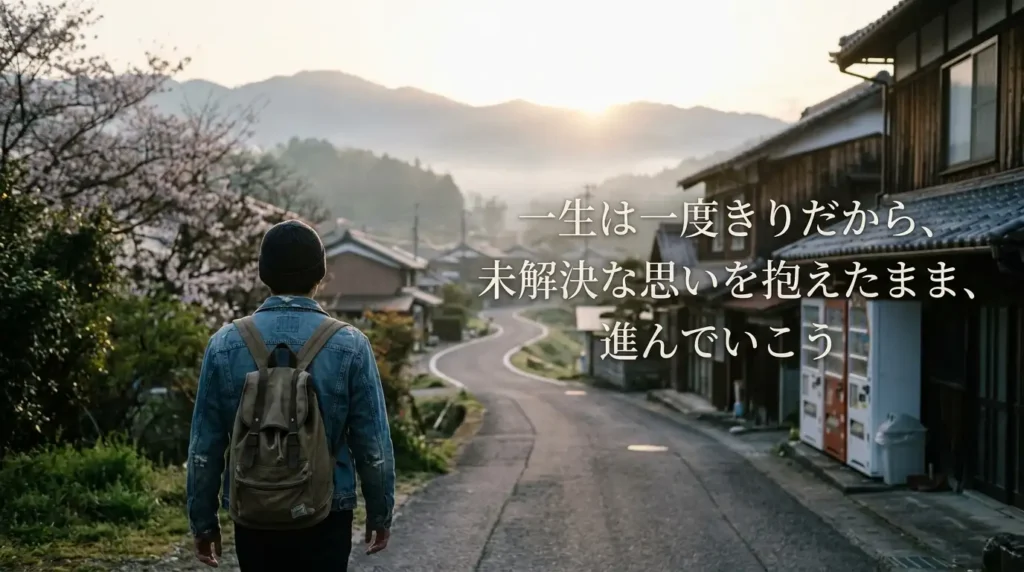
Therefore, perhaps I still do not fully comprehend “the true depth of the shadow dancing inside that chipped teacup.” Even so, precisely because this is a one-time journey with zero do-overs, I am fully prepared to keep walking forward while cradling that very irresolution within me.
This early masterpiece left behind by Yosui continues to cast a cool, yet undeniably steady light on the road that stretches out before us.


音楽ファン同士の交流・リクエストはこちら / Connect & Request Songs Here