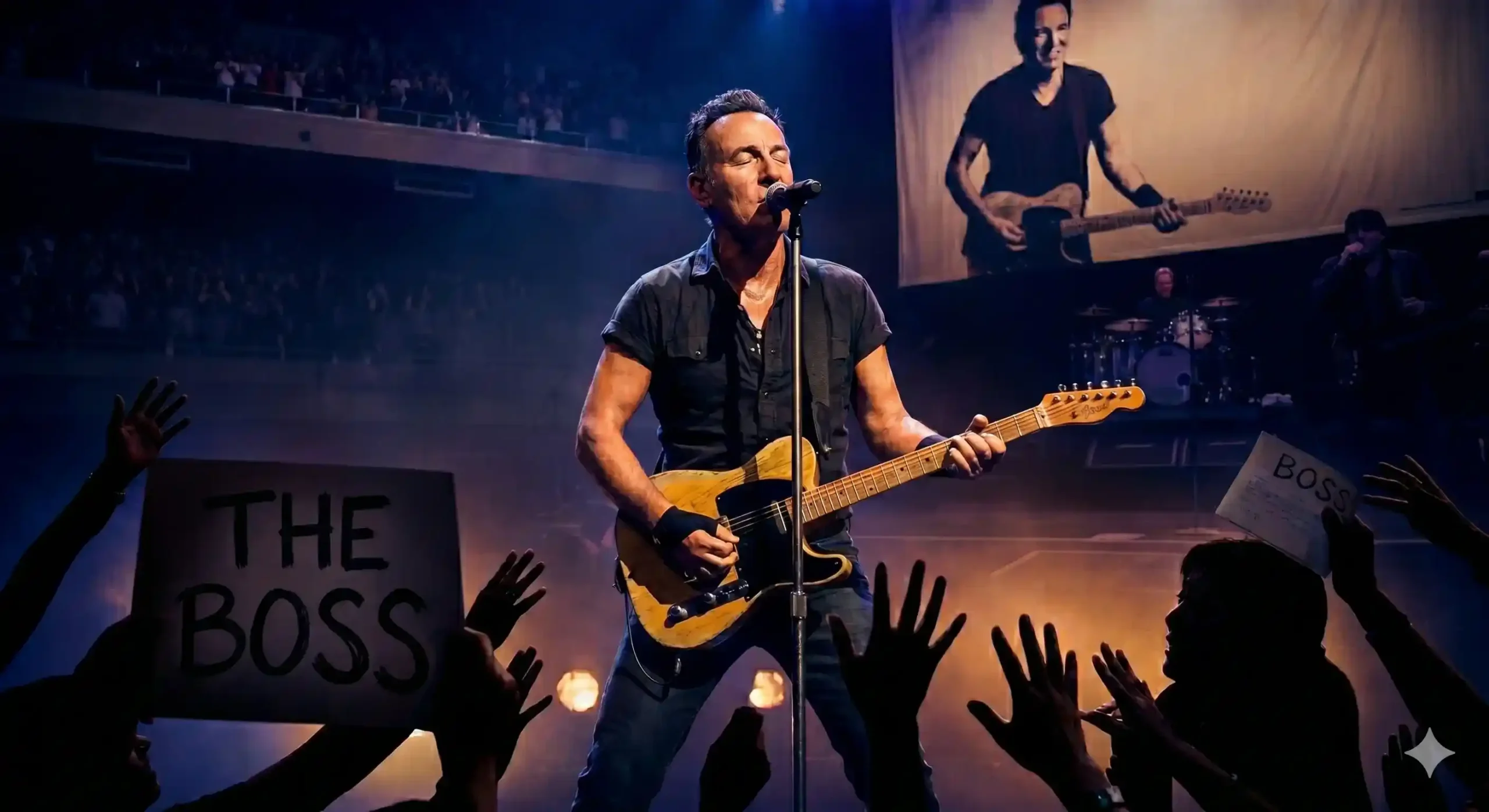
- 🎧 Enjoy this article with audio
- #9 is “Atlantic City”
- First, please listen to the official audio on YouTube
- The Critical Point of the Soul: The Release of Emotion at 0:48
- The Shock of “Nebraska” — The Bare Truth Revealed Through “Subtraction”
- “Winners and Losers” — Portraits of Those Standing on the Borderline
- The Premonition of Downfall Brought by an “Uncertain Favor,” or the Clinging to Survival
- Atlantic City — A Metaphor Where Vanity and Ruin Coexist
- The Paradoxical Hope Beyond “Everything Dies”
- A Question to Us Living in the Modern Age
- In Conclusion: Why I Placed This Song at #9
🎧 Enjoy this article with audio
You can easily check the main points of this article through audio first.
Recommended for those who want to grasp the essentials in a short time before reading.
🎶 English Narration
You can listen to the exact same content in English narration.
⌛ Playtime: Approx. 3 min
🎵 Japanese Narration
Explaining the contents of this article with Japanese audio.
⌛ Playtime: Approx. 3 min
* Listening to the audio before reading the text will help you understand the history and sound evolution of Springsteen in a more multi-dimensional way.
#9 is “Atlantic City”
The song I selected this time, “Atlantic City,” is the core track of the album “Nebraska,” released in 1982.
Stripped of all glamorous band sounds and recorded on a single cassette recorder, this song condenses the inescapable weight of fate and the loneliness inherent in humanity. Rather than a personal memoir, I would like to delve deep into the reality of “life” that this song confronts us with, from the perspective of a single listener.
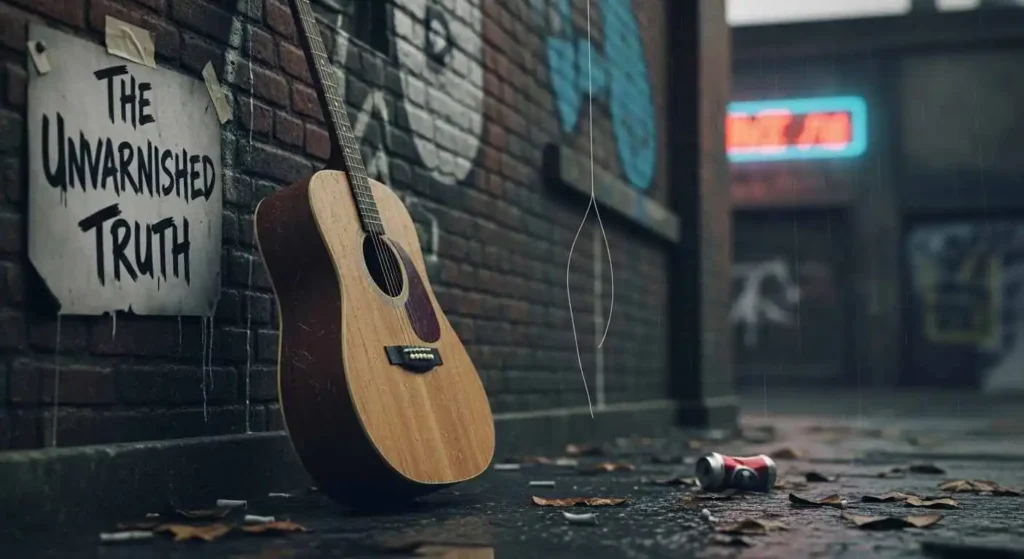
Free Translation: “A Free Translation of the Lyrics”
Everything will eventually come to an end. That is a cold, inescapable fact.
But there's a non-zero chance that what has died might someday return in another form.
So put your makeup on, fix your hair up pretty, and meet me tonight in Atlantic City.
I've reached the point of no return. I have no choice but to bet everything on this gamble.
First, please listen to the official audio on YouTube
🎬 English Credits
Title: Atlantic City
Artist: Bruce Springsteen
Lyrics/Music: Bruce Springsteen
Video Release: Published via the official YouTube channel (Official PV)
Features: Bruce himself does not appear; it's a visual work using black-and-white footage of Atlantic City landscapes and historical clips.
2-Line Commentary
The official music video for "Atlantic City," a representative song from the 1982 album "Nebraska." Composed mainly of iconic sights and monochrome historical footage of Atlantic City, the video beautifully captures the lyrical and quiet shadows of the song. With Bruce Springsteen absent from the video, it stands as a creative work that visualizes the urban decay and a narrative where hope and despair intertwine.
🎬 English Credits
Title: Atlantic City (from In Concert/MTV Plugged)
Type: Official live video (MTV Plugged performance)
Artist: Bruce Springsteen
Album: "In Concert/MTV Plugged" live video release
Recording Date: September 22, 1992 (Los Angeles, Warner Hollywood Studios)
Broadcast/Release: Broadcast on MTV in 1992, later released on VHS/DVD, and added to the official YouTube channel in 2018.
Label: Columbia Records
2-Line Commentary
This video is an official performance clip from the MTV live program "In Concert/MTV Plugged," featuring Bruce Springsteen and his band playing "Atlantic City."
Despite the "MTV Unplugged" branding, it was mostly performed as an electric set. It is known as a brilliant piece of live footage from his 1992 studio recording tour era.
The Critical Point of the Soul: The Release of Emotion at 0:48
When discussing this song, there is a sonic pinnacle that absolutely cannot be ignored. It is the moment when the phrase “And meet me tonight in Atlantic City,” delivered at the end of the chorus, rings out as if crawling up from the depths of despair.
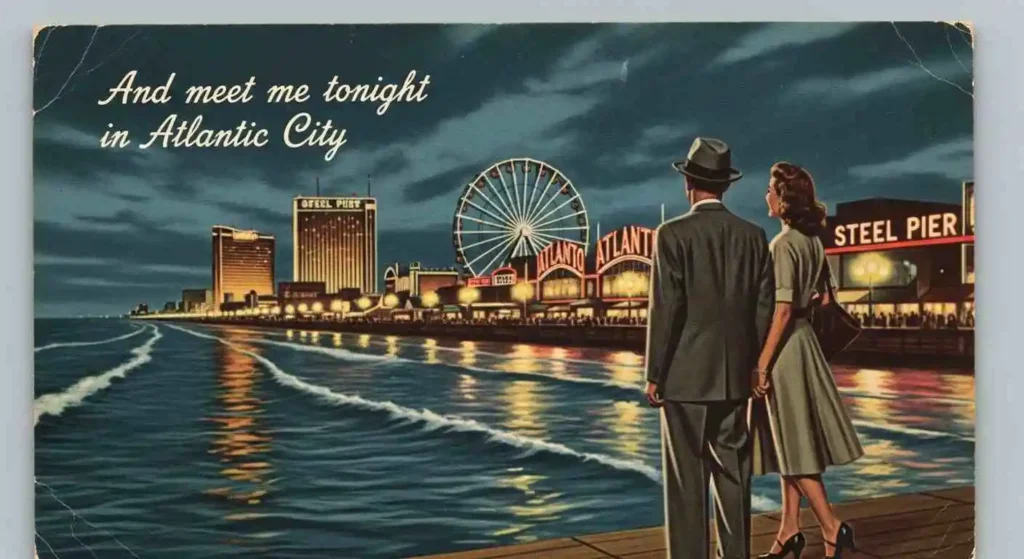
0:48, The Most Beautiful and Cruel Invitation Tearing Through the Silence
Pay attention to the progression starting around 0:48 of the official video.
Until then, the monologue crawls low, as if speaking to oneself—starting at 0:38 with the presentation of the cold fact, “Everything dies, baby, that’s a fact.”
Then, shifting completely from that heavy atmosphere, at 0:48 the melody floats up gently, giving the sensation of a hand reaching straight out to the listener.
I replay this song endlessly, just to witness this very moment.

At this line, Bruce’s voice transcends being a mere “song” and takes on a resonance akin to an earnest “prayer.” In a world where everything ends and dies out, he still calls out, “Meet me tonight.” This contradictory emotion is perfectly sealed within that short phrase.
The Miracle of the TEAC Tascam 144, Rejecting “Perfection”
A Single Machine in a Bedroom Over a ,000 Studio
Surprisingly, this audio was recorded by Bruce in his bedroom at his home in New Jersey using a “TEAC Tascam Series 144 Portastudio,” a cassette-based 4-track recorder that was just beginning to become popular at the time. Initially, this was merely intended as a “demo” to be re-recorded in a studio with the E Street Band.
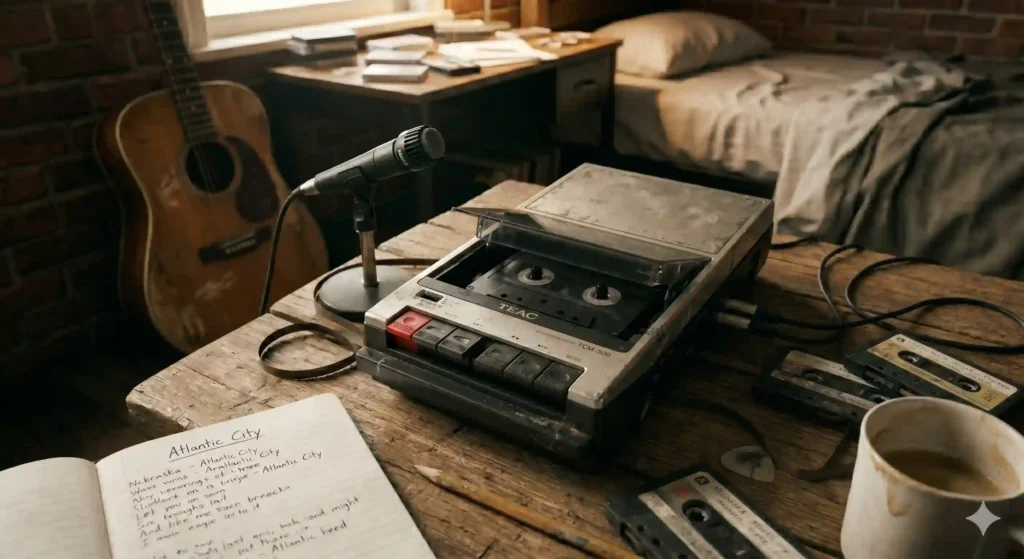
The Overwhelming Density of Loneliness That Scrapped the Band Recording
However, when he later re-recorded it with an ironclad band in a studio equipped with the best gear, he could not surpass the sound of this cassette tape. The studio version was simply too “clean.”
The slight distortion unique to a 4-track recorder, and the faintly mixing hiss noise. Especially the raspy high pitch toward the end of “Atlantic City” at 0:48. A raw “sense of existence” resides there, one that a multi-million dollar project could never reach. Valuing the “presence of loneliness” burned onto this tape over a flawless performance, he made the unprecedented decision in rock history to release the demo tape as the final product.

The Shock of “Nebraska” — The Bare Truth Revealed Through “Subtraction”
To understand this song, it is necessary to organize just how anomalous and brutal the album “Nebraska” was in the music scene of its time.
Abandoning the Stadium Lights for the Darkness of Solitude
The “Sincerity” of Defying Expectations
1982 was a year when, following the global success of his previous work “The River,” everyone expected his next stadium rock anthem. What Bruce Springsteen presented to the world instead was a solitary audio recording with no glamorous producers involved.
It was an overly bold and fearless answer to music as a business. To depict the “dark side of America” and the “darkness lurking within the individual” that could not be conveyed amidst the cheers of massive crowds, he deliberately chose the most solitary method.
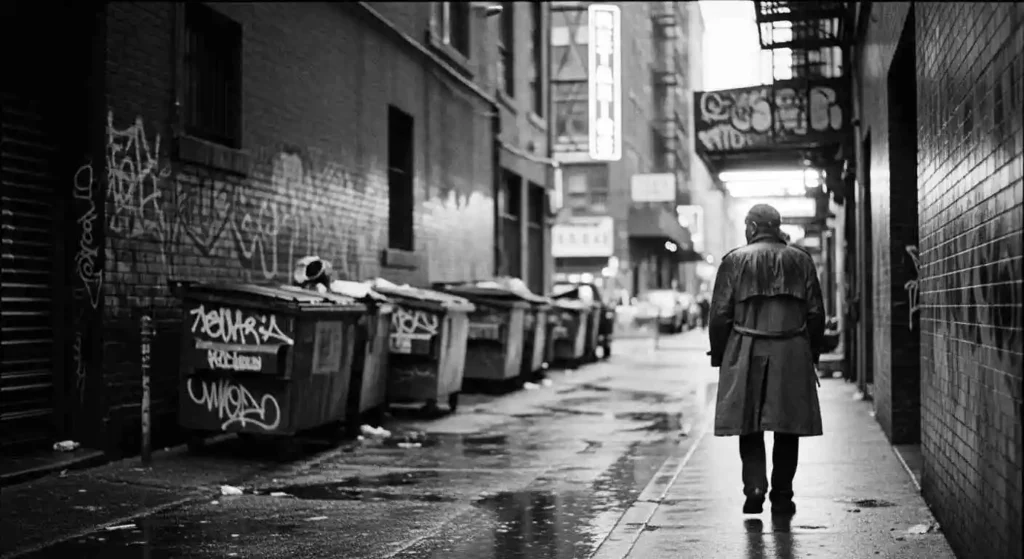
The “Gaps in Sound” Resonating with the Listener’s Loneliness
The brilliance of this recording lies in the fact that he intentionally avoided overstuffing the sound. The dry resonance of the acoustic guitar strings, and the melancholic melody of the mandolin that occasionally overlaps. The vast “gaps” in the background serve as a space to let the listener’s own loneliness slip in.
A Fanfare of Shattering Everyday Equilibrium
The Premonition of the End Signaled by the Bombing of the “Chicken Man”
The description at the beginning of “Atlantic City” that “they blew up the Chicken Man in Philly.” While this refers to an actual underworld incident, it is not mere background context. It is a symbolic event indicating that the once-maintained equilibrium of daily life has shattered with a resounding crash.
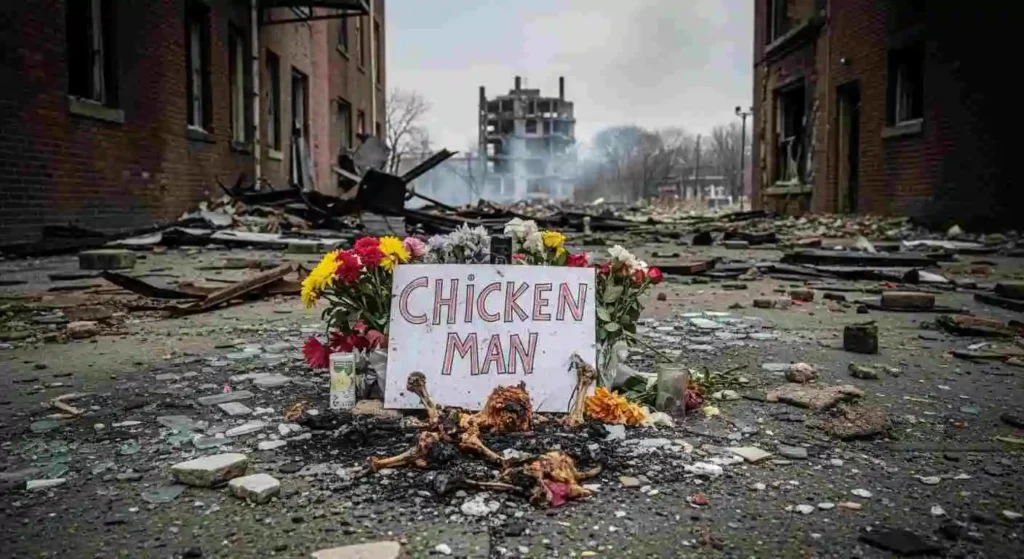
A collapse progressing quietly at the bottom of society. Bruce captures that unsettling atmosphere as coldly as news footage, yet somehow beautifully. What I feel every time I listen to this song is an inescapable sense of urgency, like cold fingers tracing down my spine.
“Winners and Losers” — Portraits of Those Standing on the Borderline
At the core of this song lies a sharp social insight that has not faded in the slightest, even more than 40 years after its release in the modern era.
The Inescapable Trap of Dichotomy
The Fear of the “Wrong Side” of the Line
“Down here it’s just winners and losers, and don’t get caught on the wrong side of that line.” The message embedded in this passage is ruthlessly realistic. We live our lives constantly subjected to some sort of evaluation axis.

Set in the gambling city of Atlantic City, Springsteen exposed how precariously humans attempt to maintain their dignity while balancing on this line. In that place, a “citizen” from yesterday can instantly fall to the side of the “losers” due to a slight misfortune or miscalculation.
The Process of Sincerity Turning into Defeat
The protagonist did not choose the path of evil from the beginning. He tries to find a job through legitimate means and save money, but reality mercilessly corners him.
What is depicted here is the cruel process in which a person trying to be sincere is forced into the “loser’s” side by a massive structural violence that individual effort cannot overcome. What draws me so strongly to this song is that it doesn’t merely pity the figure of the weak; rather, it portrays an individual’s will to decide “how to act” even in such a predicament, without extinguishing that inner flame.

The Premonition of Downfall Brought by an “Uncertain Favor,” or the Clinging to Survival
In the middle of the song, the protagonist says, “So, honey, last night I met this guy, and I’m gonna do a little favor for him.” A decisive turning point of the story is hidden here.
Morality Overwritten by Survival Instinct
Despite the casual sound of the word “favor,” it is obvious that it’s an irreversible act crossing the line of the law. What makes me shudder at this expression is that it’s chosen not out of malice, but out of pure “despair” and a “sense of duty.”
The protagonist is by no means a person who gravitated towards the underworld from the start. It was merely the accumulation of bad luck and the desperate situation of having to protect the loved one in front of him that drove him to that choice.
The Choice of the “Wrong Side” as an Inevitability
In society, once you enter a cycle of “losing,” the options to break out of it become extremely limited. When faced with a wall where honest effort no longer reaches, people are often forced to cling to “uncertain favors.”
With just this one sentence, Springsteen coldly depicted how easily an individual’s moral compass can be overwritten by their survival instinct. There is no tone of condemnation there; only a profound insight into the fragility of human beings who “just end up that way.”
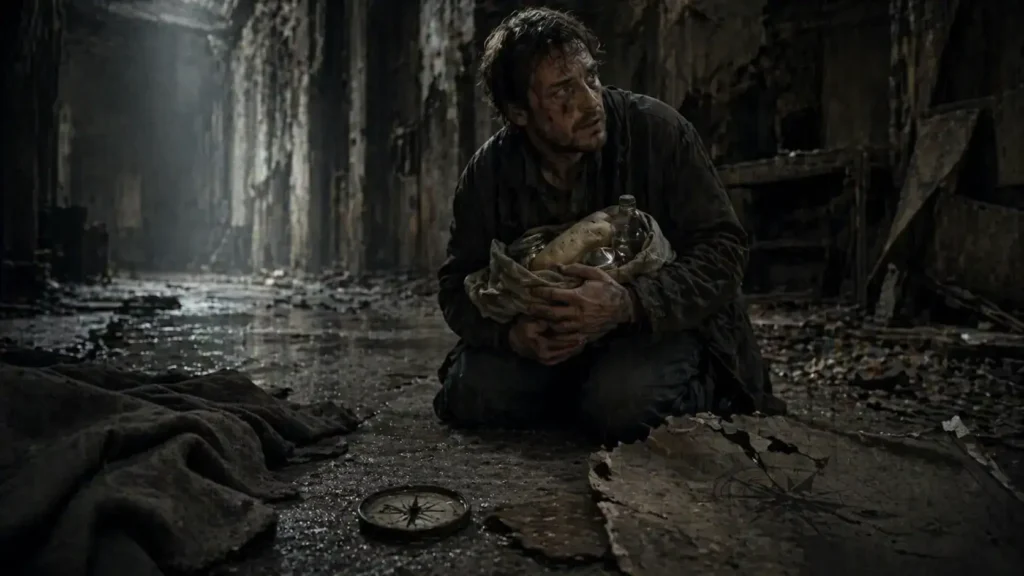
Atlantic City — A Metaphor Where Vanity and Ruin Coexist
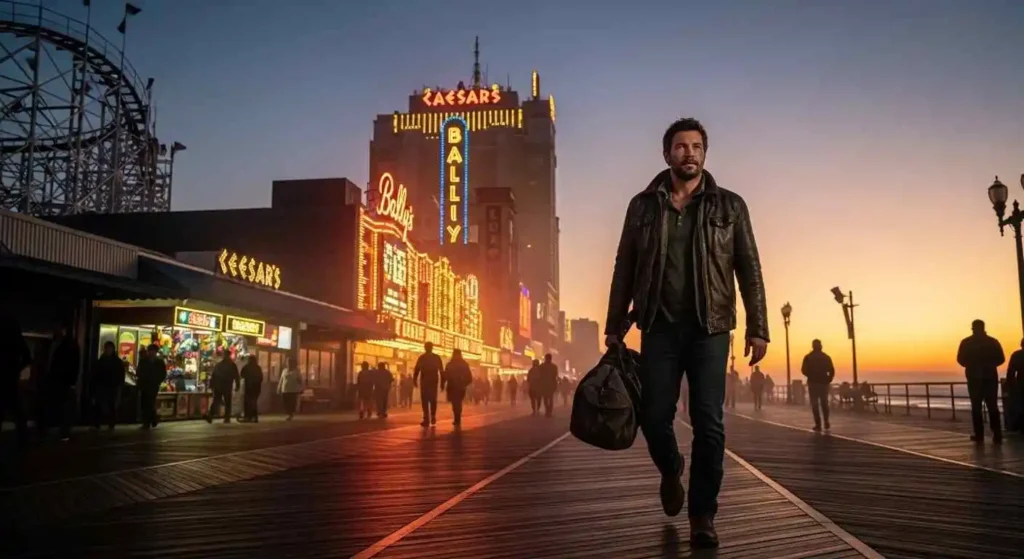
The background of the city of Atlantic City, which serves as the setting, also shapes the multi-layered nature of this song. Once thriving as the East Coast’s premier summer resort, it subsequently declined. And by legalizing casinos in the late 1970s, it attempted a revival—it is a city that literally placed a “gamble.”
The Light of Revival and the Shadow of the Slums
At the time Springsteen wrote this song, the city was a symbol of extreme disparity, where new casino buildings lined up on one side while ruined back alleys expanded in their shadows. The protagonist asking his lover to “put your makeup on, fix your hair up pretty” is the final, and most sorrowful, struggle to assimilate themselves into the “vanity” of such a city.
“Makeup” and “Hair” as the Last Bastion of Dignity
In a dying city, a man who has almost lost his future boards a bus heading toward ruin, acting like a winner if only in appearance. This contrast lends the song an unparalleled tension.
The Paradoxical Hope Beyond “Everything Dies”
The verse repeated in the chorus, “Everything dies, baby, that’s a fact / But maybe everything that dies someday comes back,” is highly paradoxical.
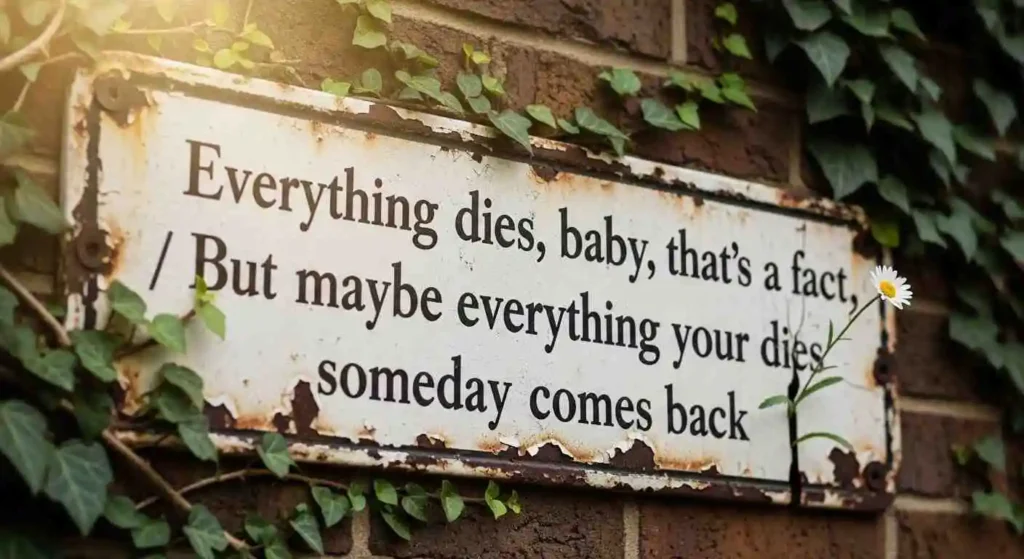
The Cycle of Death and Rebirth
Following the assertion that “everything dies” is the faint possibility that it “maybe … comes back.” Here, I sense the ultimate “gamble” embedded by Springsteen.
This is by no means cheap encouragement saying “good things will happen someday.” Rather, it sounds like it includes the fear that relationships that once died or lost pride might be reborn in another distorted form. Alternatively, it might be a declaration of resolve that a new phase can only be welcomed by ending (killing) the current dead-end situation.
Stagnation, or a Step Accompanied by Ruin
By heading to Atlantic City, the protagonist tries to push his current self towards “death” once, aiming to win some form of “rebirth.” Even knowing the high likelihood that it ends in ruin, he judged it to be better than rotting away in stagnation. This fierce yet quiet fighting spirit is what shakes the listener’s heart.
A Question to Us Living in the Modern Age
Why does this song, recorded on a single cassette recorder over 40 years ago, resonate so deeply with us today?
The Unchanging Conflicts of Human Nature
Societal structures have become more complex and technology has evolved, but the essential struggles of human beings—the conflict between the desire to protect a loved one and the harsh reality that obstructs it—have not changed at all.
If anything, in our highly efficient modern era, the “awkward sincerity” harbored by this protagonist seems even more displaced. When I listen to “Atlantic City,” I don’t just enjoy an excellent rock song; I fall into the sensation of peering into a mirror.
In Conclusion: Why I Placed This Song at #9
The reason I deliberately placed “Atlantic City” at #9 in this ranking is that I believe this song represents the pinnacle of Springsteen’s “quiet anger” and “ultimate realism.”
The triumphant freedom sung in “Born to Run” is also wonderful. However, when crashing into the cold wall of reality, what quietly yet powerfully supports my back is the “unyielding spirit in the face of despair” that this song possesses.
“Everything dies. That’s a fact.”
The strength to face this cold fact head-on and then definitively say, “So, put your makeup on and meet me tonight.” Every time I touch upon that aesthetic, I am able to straighten my posture and face the gamble named my own life once again. The bus bound for Atlantic City is still quietly waiting to depart within our hearts.
My Selfish Top 15 [Bruce Springsteen Edition]—next time, I will announce #8. Please let me talk in depth again about that melody that was playing on that day, in that place.

音楽ファン同士の交流・リクエストはこちら / Connect & Request Songs Here