🌐 English|🌐 日本語
Explore the Musical Life of Ryūun Nagai Here!
- 🎧 Listen to This Article
- No. 3 is “Noren” by Ryūun Nagai.
- First, Watch the Official Live Performance
- Behind the Noren Curtain: A Man’s True Self
- A Stubborn Pride That Refuses to Disappear
- The Woman He Desperately Wants to See
- Tears Hidden in a Drink, and Hope for Tomorrow
- Writing for Hiroshi Itsuki Opened a New Chapter
- From “Orokana Hōrō” to “Noren”
- Final Thoughts — Another Tomorrow for an Imperfect Man
🎧 Listen to This Article
Explore the key points of this article through a short audio narration.
Before reading, discover the emotional world of “Noren,” a song about stubborn pride, love, loneliness, and the longing for kindness.
🎵 English Narration
Listen to an English narration introducing the song and the main themes of this article.
🎶 Japanese Narration
Listen to the original Japanese narration for a different perspective on the song.
Listening before reading will help you appreciate the atmosphere of “Noren” and understand the themes explored in this article.
No. 3 is “Noren” by Ryūun Nagai.
Released on September 13, 1989, as a single by Hiroshi Itsuki, “Noren” was written and composed by Ryūun Nagai. The song received an Excellence Award at the 22nd Japan Lyricist Awards, helping establish Nagai’s reputation as a songwriter beyond his own recordings.
In 2010, Nagai recorded his own version for the self-cover album Jiriki Hongan. A song made widely known through Itsuki’s voice could now be heard in the voice of the man who created it.
At the center of the song is a man who has never been particularly good at navigating life. He drinks, thinks about a woman he loves, and struggles to conceal the loneliness he carries. Yet he has no intention of changing his ways simply to please the world.
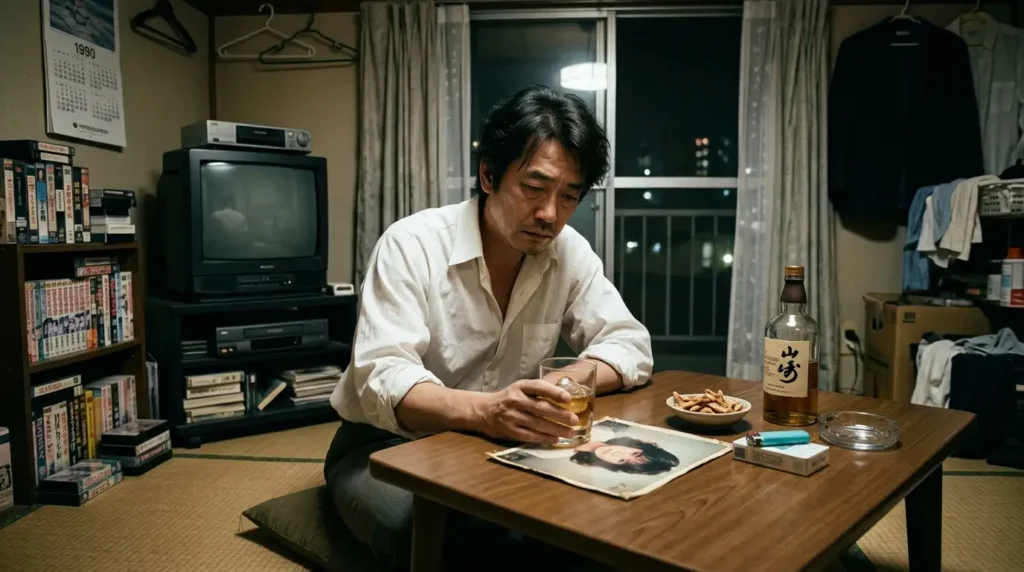
But is his stubbornness really a form of strength? He clings to his pride, yet cannot stop longing for human kindness. That contradiction gives “Noren” much of its emotional power.
A Free Interpretation of the Lyrics
On a lonely night, I drink to ease the ache, wishing for a little kindness.
I may never learn to live gracefully, but I cannot abandon who I am.
Tonight, more than anything, I want to see the woman I love.
I'll keep my tears and regrets to myself and try to believe in tomorrow.
Somewhere between pride and vulnerability, I long for a few warm words.
💡 You might also like: View the original Japanese lyrics (External site)
If the lyrics are available only in Japanese, you can use your browser’s translation feature or an AI translation tool to understand their general meaning.
First, Watch the Official Live Performance
Ryūun Nagai — “Noren”
Lyrics and Music: Ryūun Nagai
Performance: Ryūun Nagai LIVE 2021 “Yume mi tabi”
Recorded: November 28, 2021
Location: Hyūga, Miyazaki Prefecture, Japan
YouTube Release: January 21, 2022
Video Courtesy of: Official YouTube Channel “【Official】永井龍雲”
About the Song
A portrait of a stubborn man caught between pride and his longing for human warmth.
In this live performance, Nagai sings the song he originally wrote for Hiroshi Itsuki.
Behind the Noren Curtain: A Man’s True Self
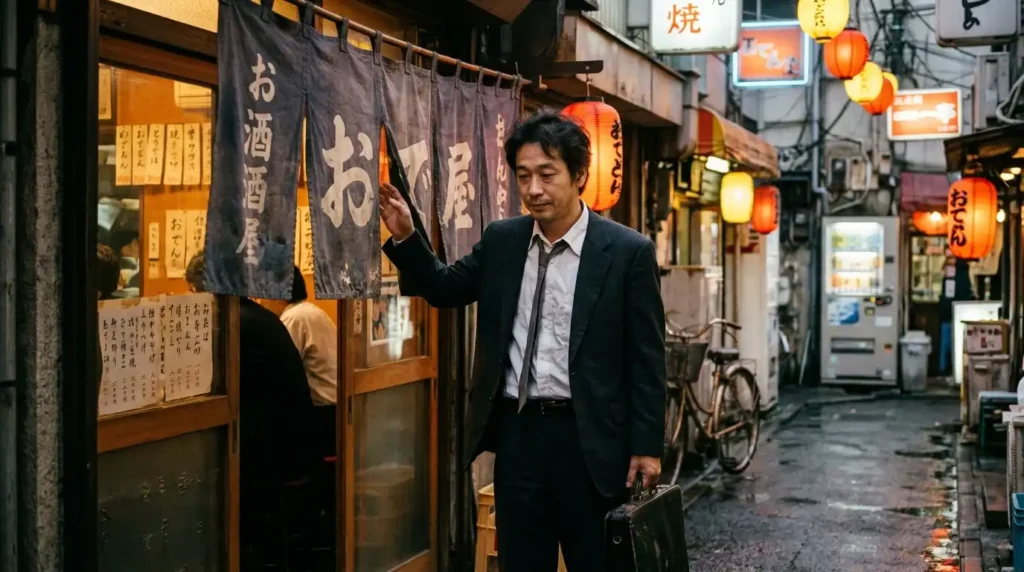
Picture a small bar glowing quietly along a nighttime street. A traditional Japanese curtain hangs over the entrance, moving gently in the breeze, while voices drift out from inside. The title “Noren” evokes a familiar scene like this, one filled with the warmth of everyday life.
A noren is more than a piece of fabric hanging in a doorway. For a long-established business, it can represent years of trust and reputation. Yet what stays with us in this song is not the history of a particular establishment, but the private emotions of a man with a drink in his hand.
The Things We Cannot Say in Public
During the day, a person may appear perfectly composed. But nighttime has a way of changing the mood. A conversation returns to mind, or the face of someone dearly missed suddenly appears. Even in a crowded room, loneliness can remain.
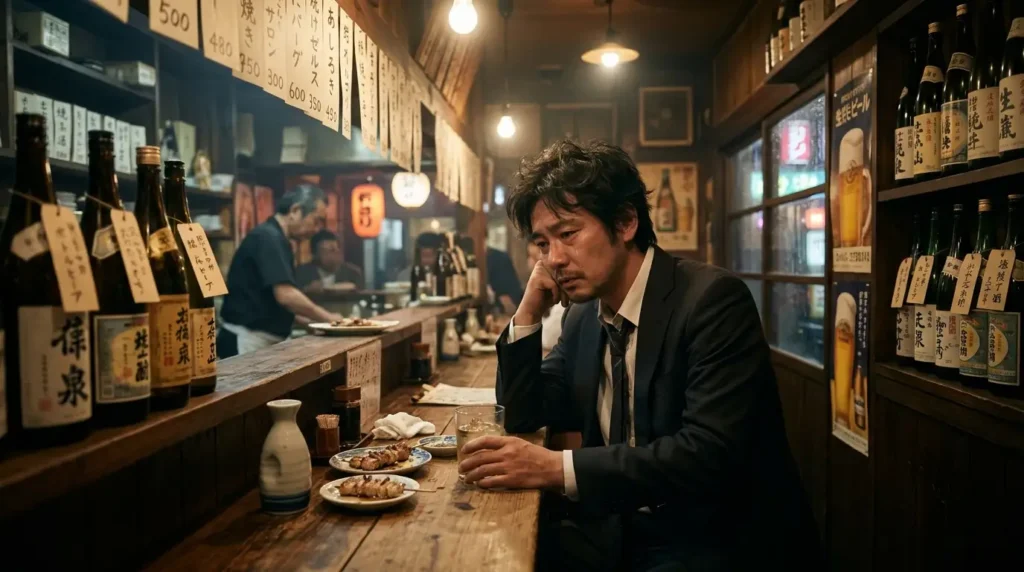
The lyrics do not describe a specific bar in detail. Still, the combination of alcohol and the noren curtain creates the impression of a man spending a long evening with his thoughts.
The Quiet Comfort of a Neighborhood Bar
There is something reassuring about a place where no one needs to know your past. Strangers sit nearby, each carrying a different story. They may never become friends, yet sharing the same room can sometimes be enough.
Perhaps “Noren” is such a fitting title because its protagonist is anything but an idealized figure. He is stubborn, awkward, and not especially impressive. Yet he seems like someone we might encounter in an ordinary neighborhood, just beyond a familiar doorway.
A Stubborn Pride That Refuses to Disappear
The man in “Noren” knows he is not particularly skilled at getting along in the world. His straightforward nature may cost him opportunities, and he probably makes life harder for himself than necessary. Still, he resists pretending to be someone else merely to satisfy those around him.
What makes him interesting is that he does not seem especially proud of this stubbornness. He struggles with his own personality, yet repeatedly falls back into familiar habits. He is not the person he might wish to become, but the person he actually is.
Knowing Your Flaws Does Not Mean You Can Change Them
Sometimes people understand their own shortcomings better than anyone else. They say things they should have kept to themselves, or fail to apologize when they know they should. Even after regretting their behavior, they may repeat the same mistakes.
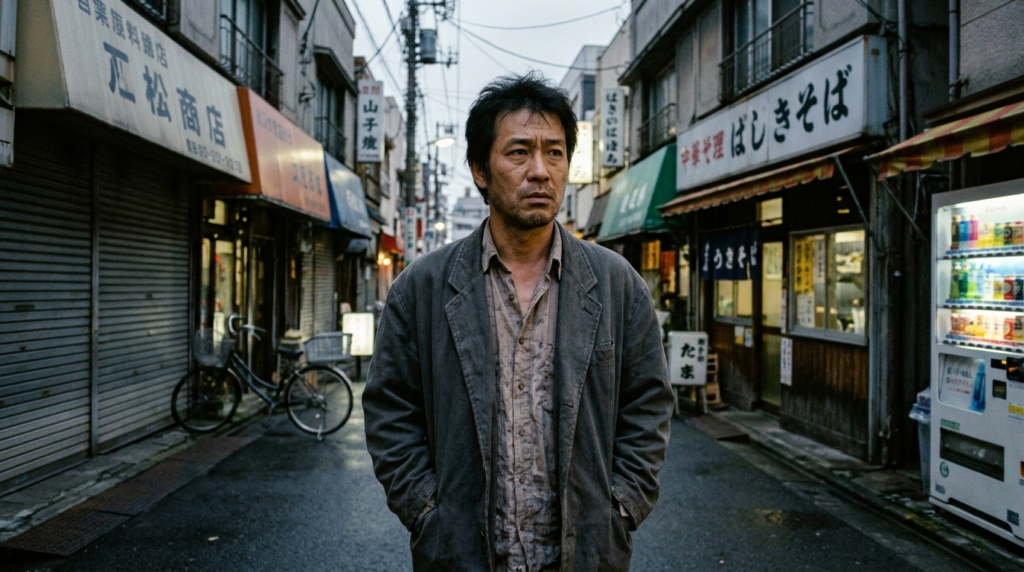
Stubbornness, of course, is not always admirable. Refusing to compromise can hurt others. But if every character in a song were perfectly reasonable and emotionally balanced, the world of music would be considerably less interesting.
The man in “Noren” is no hero who has conquered his flaws. He is an ordinary person learning to live with them. That familiarity makes him easy to recognize, and perhaps easier to understand.
The Woman He Desperately Wants to See
There is a woman he cannot forget. Tonight, he wants to see her more than anything. Beneath his usual stubbornness lies an unmistakably sincere longing.
We are not told where she is or what kind of relationship they share. There is no promised reunion, and we never hear her response. The song gives us only the intensity of his feelings.

When Love Overcomes Pride
A person may be able to maintain a tough exterior in everyday life, but love is another matter. Someone we thought we had forgotten can return to our thoughts without warning. Feelings that seemed settled can suddenly become impossible to ignore.
“Noren” places greater emphasis on the desire to see someone than on the eventual outcome of the relationship. The emotion may sound simple when put into words, but for the person experiencing it, there is nothing simple about it.
For a moment, the protagonist’s usual pride seems to fall away. Even the most stubborn man can become vulnerable when someone he loves is involved. That vulnerability makes his feelings remarkably human.
Tears Hidden in a Drink, and Hope for Tomorrow
Some people become louder and more confident when they drink. Others grow quiet. In the case of this song’s protagonist, alcohol seems to bring emotions he normally keeps hidden closer to the surface.
For some men, crying in front of others feels embarrassing or even shameful. Those who have spent their lives believing they must always appear strong may find it especially difficult to show tears.
The Loneliness Beneath a Tough Exterior
Yet refusing to cry does not make sadness disappear. No matter how composed someone appears, private feelings can remain painfully unresolved.
That tension can be heard in the man’s relationship with alcohol. Perhaps he does not want advice or encouragement. Perhaps he simply wants to hear a few gentle words, to be treated with warmth without having to explain everything that troubles him.
Tomorrow Will Come Anyway
There is also a determination to believe in tomorrow. Nothing suggests that the protagonist’s circumstances will suddenly improve. His personality may remain unchanged, and the woman he loves may never return his feelings.
Nevertheless, morning will arrive. Even if tonight’s drink tastes bitter, another day will bring its own encounters and possibilities.
There is no grand dream of success here, no promise of a dramatic transformation. He simply wants to face another day, carrying a life that has not turned out as he hoped. It is a modest determination, but one that feels genuine.
Writing for Hiroshi Itsuki Opened a New Chapter
Ryūun Nagai made his debut in 1978 with “Omoi.” The following year, “Michishirube Nai Tabi” brought him wider recognition as a singer-songwriter.
A decade later, in 1989, Hiroshi Itsuki released “Noren,” written and composed by Nagai. It was an intriguing combination: a songwriter whose roots lay in Japanese folk music, and one of the country’s most prominent enka singers.
In Itsuki’s interpretation, the protagonist’s pride and longing take on the emotional weight associated with enka. His commanding voice and expressive delivery give the character a powerful presence, suggesting a lifetime of experiences behind the words.
When Folk Songwriting Meets Enka
Alcohol, romantic longing, and masculine pride are familiar subjects in enka. Yet “Noren” never turns its protagonist into an idealized figure. Instead, Nagai portrays an ordinary man whose emotional contradictions are part of everyday life.
Itsuki’s recording of “Noren” received an Excellence Award at the 22nd Japan Lyricist Awards. The recognition demonstrated how Nagai’s songwriting could resonate beyond the folk tradition in which he had established himself.
A Song Returns to Its Creator on Jiriki Hongan
On July 7, 2010, Nagai released Jiriki Hongan, an album featuring eleven songs he had originally written for other performers. He recorded new versions in his own voice, with “Noren” appearing as the final track.
When discussing the album on his official website, Nagai compared these songs to children who had grown under the care of others and were now returning, briefly, to the person who had brought them into the world.
It is a touching way for a songwriter to describe his creations. A song may begin with its composer, but once another singer performs it, it takes on a life of its own. Jiriki Hongan was, in that sense, a reunion with music that had traveled beyond its creator.
Hearing “Noren” in Its Creator’s Voice
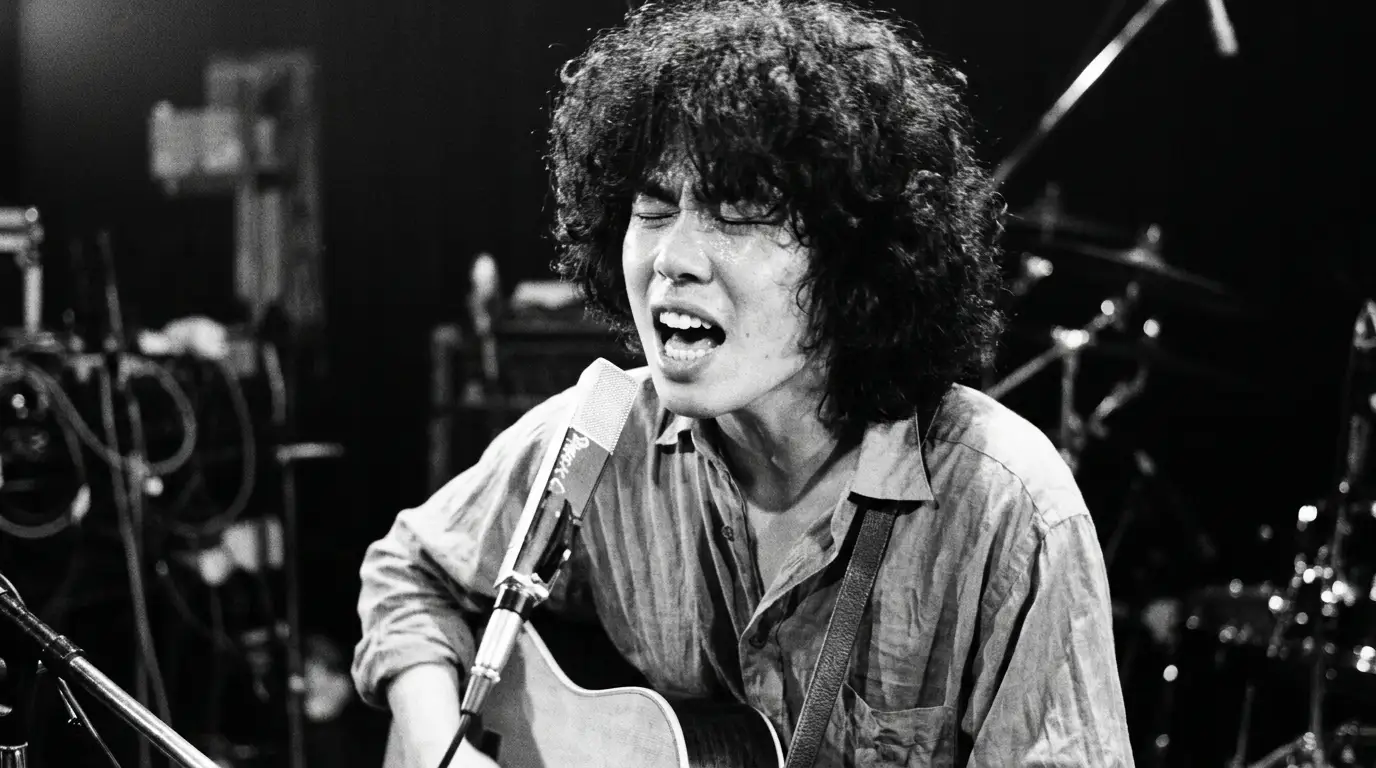
In the 2021 live performance featured earlier, Nagai sings “Noren” himself. More than thirty years after writing it for Itsuki, the song remains part of his performing repertoire.
There is an intimate quality to Nagai’s delivery, as though he is carefully weighing each word. Where Itsuki’s performance feels commanding and expansive, Nagai’s can sound like someone quietly sharing his own story.
There is no need to declare one interpretation superior. The same lyrics can suggest different personalities depending on who sings them. Discovering those differences is part of what makes “Noren” so rewarding to revisit.
From “Orokana Hōrō” to “Noren”
In the previous entry, No. 4, “Orokana Hōrō”, we explored a man who had followed the path he believed in, only to look back and question the choices he had made.
The man in “Noren” is different. He recognizes his shortcomings, drinks through another lonely evening, and thinks about someone he loves. Rather than dwelling on the years behind him, his attention is fixed on getting through the night before him.
Released roughly a decade apart, “Orokana Hōrō” from 1979 and “Noren” from 1989 approach life from different perspectives. The former questions the road already traveled; the latter considers how a person lives with the self he has become.
Final Thoughts — Another Tomorrow for an Imperfect Man
The protagonist of “Noren” is not introduced as a man who has accomplished something extraordinary. He drinks, longs for a woman, and struggles with his own personality. There is little about him that could be called conventionally admirable.
And yet, he is difficult not to like. He makes no grand claims about his life. He carries his weaknesses with him and still tries to believe that tomorrow may be worth facing.
When I imagine a noren hanging outside a neighborhood bar, I think of the countless lives that might pass through its doorway. Some people arrive with good news; others carry troubles they would rather not discuss. Eventually, they all step back into the night and return to their own lives.
“Noren” is not a celebration of masculine strength. It is a portrait of someone who clings to his pride, holds back his tears, and still longs for a little kindness. Nagai portrays that unguarded humanity with remarkable warmth.

音楽ファン同士の交流・リクエストはこちら / Connect & Request Songs Here