
Read about the history of Mayumi Itsuwa here!
- 🎧 Listen to This Article
- No. 2 is “Shoujo (Girl).”
- First, listen to the official YouTube video.
- “Shoujo” Is Quite Different from What Its Title Might Suggest
- The Warmth of Midwinter Makes Disappearance Even More Vivid
- A 21-Year-Old Songwriter Who Saw Aging in “Cute Little Puppies”
- A Japanese Veranda Brought to Life Through an American Recording
- A Great Dream Falls Apart — An Unusual Destination for a Song About Youth
- What the Girl Gazing into the Distance Finally Understands
- The Songwriter Mayumi Itsuwa Was Already There in “Shoujo”
- In Closing
🎧 Listen to This Article
You can quickly explore the key points of this article through narration.
Recommended if you would like to understand the world of “Shoujo” and the overall flow of the article before reading.
🎵 English Narration
An English narration introducing the content of this article.
🎶 Japanese Narration
A Japanese narration introducing the content of this article.
Listening first will help you grasp the world of “Shoujo” and the key points of the article more easily.
No. 2 is “Shoujo (Girl).”
“Shoujo” was Mayumi Itsuwa’s debut single, released on October 21, 1972. Her first album, also titled “Shoujo”, was released on the same day, marking the beginning of her professional career as a singer-songwriter at the age of 21.
For the album sessions, Itsuwa traveled to the United States in June of that year. Recording took place at Crystal Sound Studios in Los Angeles under the production of John Fischbach, with musicians including Carole King taking part. A label was even established for Itsuwa, making her debut unusually ambitious for a new artist and a notable event at the time.
I placed “Shoujo” this high in my ranking because it possesses a composure and depth that seem remarkable for a debut song. Rather than focusing on the brightness of youth that its title might suggest, the song looks directly at the reality that living things gradually change and eventually disappear from the places where they once belonged.
Interpretive Translation
In the warmth of a midwinter sun, a girl sits alone and gazes at the world before her.
The melting snow and aging lives around her cannot remain unchanged forever.
Even a dream she once treasured may suddenly lose its shape.
And the girl already knows that one day, she too will have to leave this place.
💡 You might also like: View the original Japanese lyrics (External site)
If the lyrics are available only in Japanese, you can use your browser’s translation feature or an AI translation tool to understand their general meaning.
First, listen to the official YouTube video.
Official Video Credits
Video: Mayumi Itsuwa “Shoujo” Official Video
Footage: From “Mayumi Itsuwa Concert Tour '92–'93”
Lyrics and Music: Mayumi Itsuwa
Provided by: MUSIC Liverary
Original Release: October 21, 1972
Two-Line Commentary
This official video presents Mayumi Itsuwa’s debut song “Shoujo” through footage from a later concert performance.
Watching her sing with a guitar in hand reveals how remarkably well a song written in her youth has endured across the decades.
“Shoujo” Is Quite Different from What Its Title Might Suggest
Neither Romance nor Youth Is at the Center of the Story
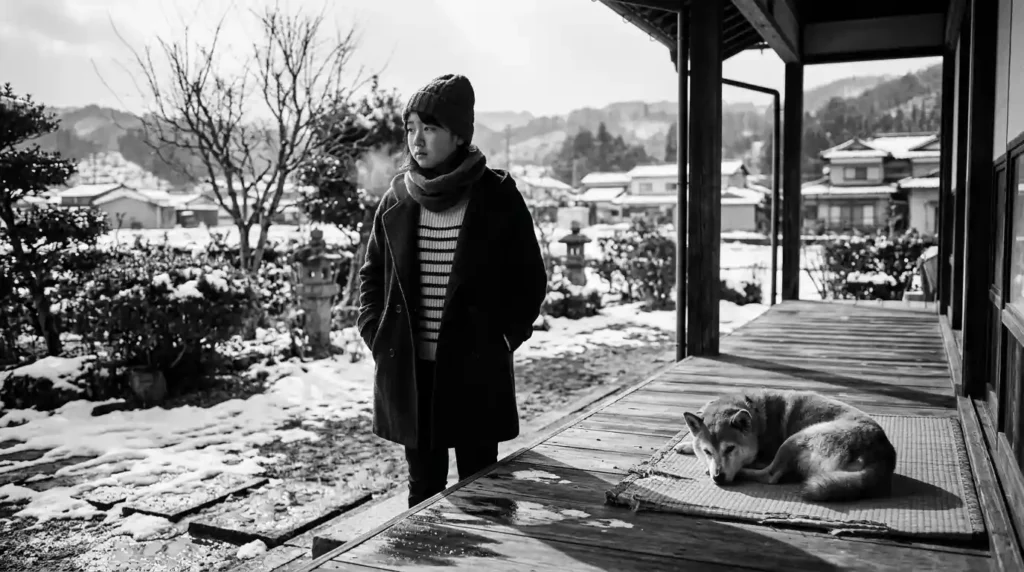
When you first encounter a title like “Shoujo,” or “Girl,” it would be natural to expect a song about young love or the brightness of adolescence. Instead, the images placed before us are a veranda in midwinter, sunlight, melting snow, aging dogs, a cold winter wind, and a solitary girl gazing into the distance.
There is no conversation with a lover and no scene celebrating the exhilaration of youth. The protagonist does not direct her emotions toward anyone. She simply watches and absorbs the changes taking place around her.
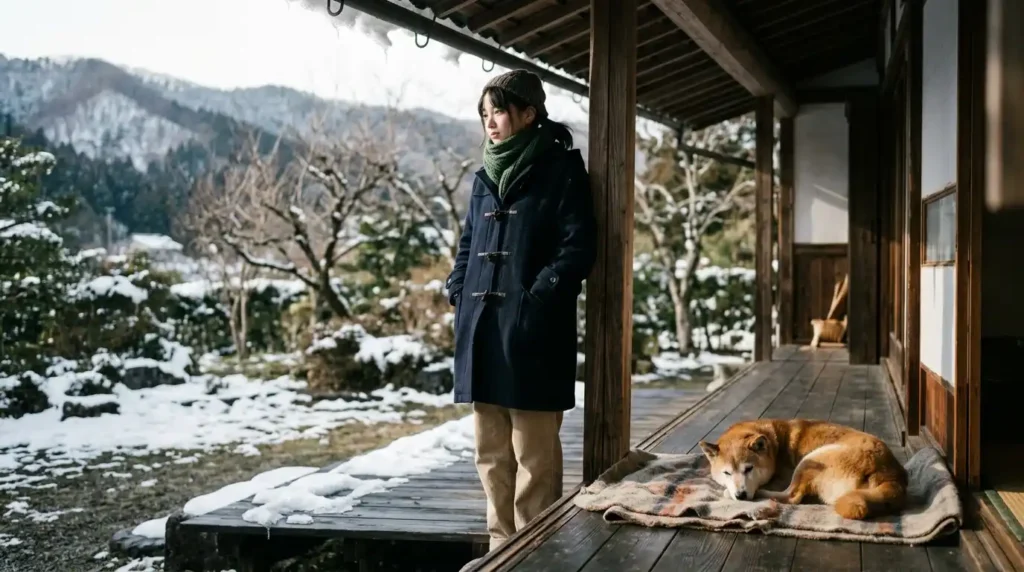
The song portrays a young person while placing aging and disappearance directly within her field of vision. For a debut song released in 1972, that is a remarkably bold idea. The contrast between the youth implied by the title and the mature themes explored in the song gives “Shoujo” its distinctive character from the very beginning.
The Girl Is Not an Innocent Child Who Knows Nothing
If we read the protagonist simply as an innocent child, we risk missing an essential part of the song. She understands not only that the snow before her will disappear, but also that the lives she cherishes will grow old and that even deeply held dreams can collapse.
By the end, she also understands that a day will come when she herself must leave the place where she now sits. She is not someone unaware of the future. Rather, she is portrayed as a young person who has already become conscious that nothing around her will last forever.
The Warmth of Midwinter Makes Disappearance Even More Vivid
Snow Melts Beneath the Bright Winter Sun
One of the song’s most effective touches is that winter is not represented by coldness alone. The setting is midwinter, yet sunlight reaches the veranda, creating enough warmth and calm for the girl to sit there quietly.
That same warmth causes the accumulated snow to melt. The sunlight feels gentle, yet at the same time it slowly erases the white landscape that had existed moments before. Comfort and loss are contained within the same event.
This is what makes the song’s treatment of the approaching spring so interesting. Spring is not presented simply as a symbol of hope. When the season changes, something new may begin, but the landscape that exists now must first come to an end. The girl watches that transformation taking place before her.
The Winter Wind Crosses a Boundary
When the cold winter wind eventually appears, the character of the scene changes. In contrast to the gentle sunlight, the wind never remains still; it passes through everything in its path.
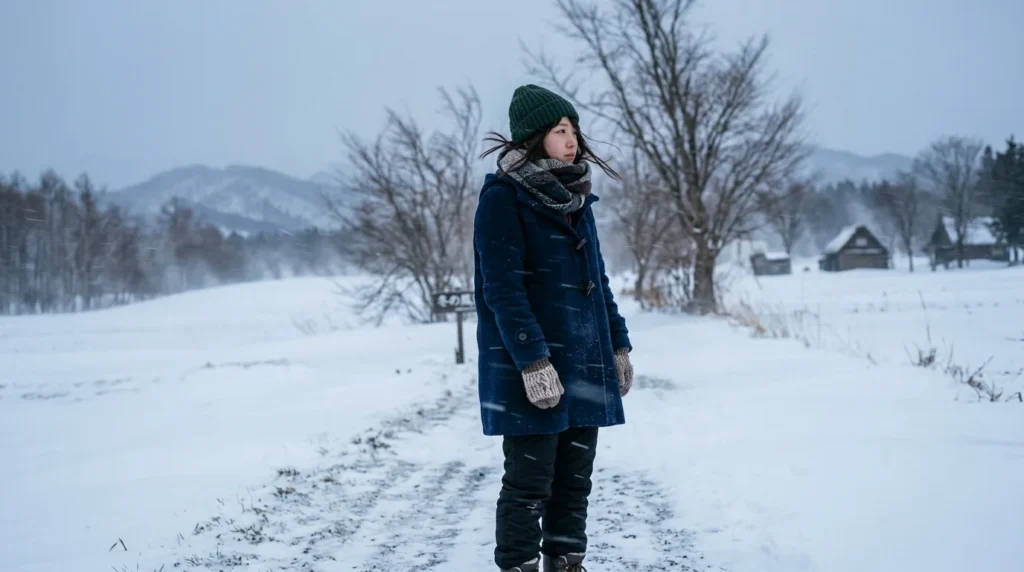
The girl cannot stop this movement through force of will. Snow, living creatures, and dreams cannot be preserved forever in exactly the same form. Without resorting to grand declarations, the song tells us that some changes in this world remain beyond our control.
A 21-Year-Old Songwriter Who Saw Aging in “Cute Little Puppies”
She Did Not Portray Life Through Cuteness Alone
One element of “Shoujo” that especially catches my attention is the presence of the dogs. A girl surrounded by little puppies could easily become nothing more than a gentle, charming picture. Yet Itsuwa brings the fact of aging into that scene as well.
Something may be adorable now, but its present form will not last forever. That is an obvious truth, yet it is unusual to place such an idea so deliberately inside a debut song centered on a young protagonist.
What makes this even more striking is that Mayumi Itsuwa herself was only 21 when the song was released. This was not a song written late in life while looking back across decades of experience. At the very beginning of her musical career, she was already incorporating the finite nature of life into her songwriting. To me, that reveals an unusually mature artistic sensibility.
A Japanese Veranda Brought to Life Through an American Recording
Los Angeles Production, Everyday Japanese Scenery
There is another fascinating contrast in the background of “Shoujo.” The recording took place in Los Angeles, yet the title track does not evoke the landscape of the American West Coast.
Instead, it presents the distinctly familiar Japanese setting of a veranda in the middle of winter. Recording with musicians overseas did not lead Itsuwa to adopt an artificially foreign setting. She continued to sing in Japanese about a landscape rooted in her own inner world.
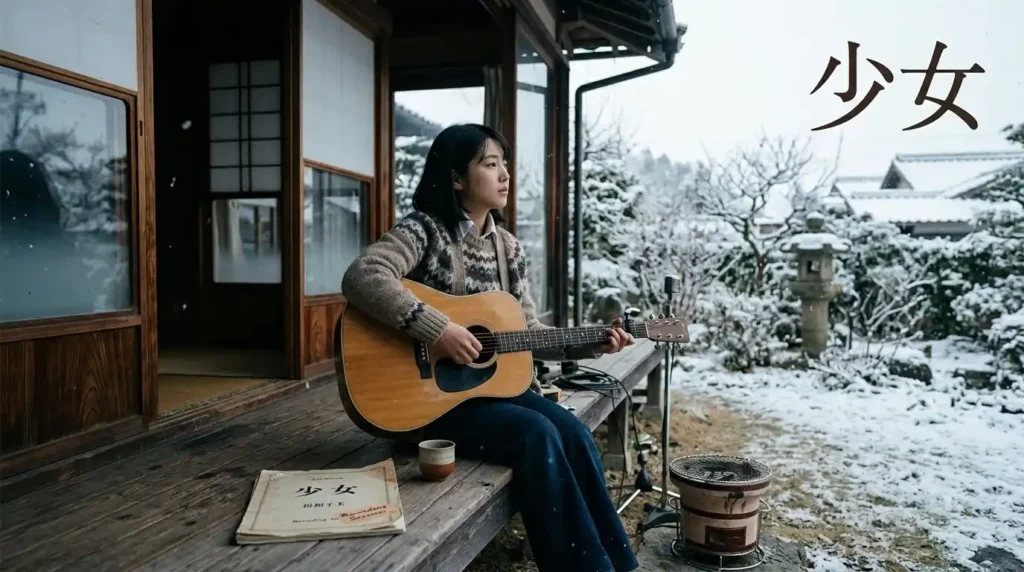
I think this combination helps explain why Itsuwa did not simply imitate the music surrounding her even at the beginning of her career. She was able to bring together musical stimulation from abroad and the everyday scenery she knew personally, shaping both into a single coherent work. That is one of the defining qualities of “Shoujo.”
A Great Dream Falls Apart — An Unusual Destination for a Song About Youth
It Does Not Speak Only of Hope for the Future
In songs about young people, dreams are often treated as something waiting to be fulfilled in the future. “Shoujo,” however, acknowledges from the outset that dreams themselves can be broken.
That does not mean the song rejects the value of having dreams. Something hurts precisely because it mattered deeply. Itsuwa allows both realities to exist within the girl at the same time.
Having a dream and knowing that a dream may not last forever are not contradictions. The song refuses to romanticize youth as a period of invulnerability. Instead, it accepts hope and disappointment as parts of the same life. That perspective enables “Shoujo” to speak to listeners far beyond the age of its protagonist.
What the Girl Gazing into the Distance Finally Understands
The Story Moves Toward the Realization: “One Day, Me Too”
The snow, the dogs, and the dream all share one characteristic. Each changes before the girl’s eyes, and none can preserve its present form forever.
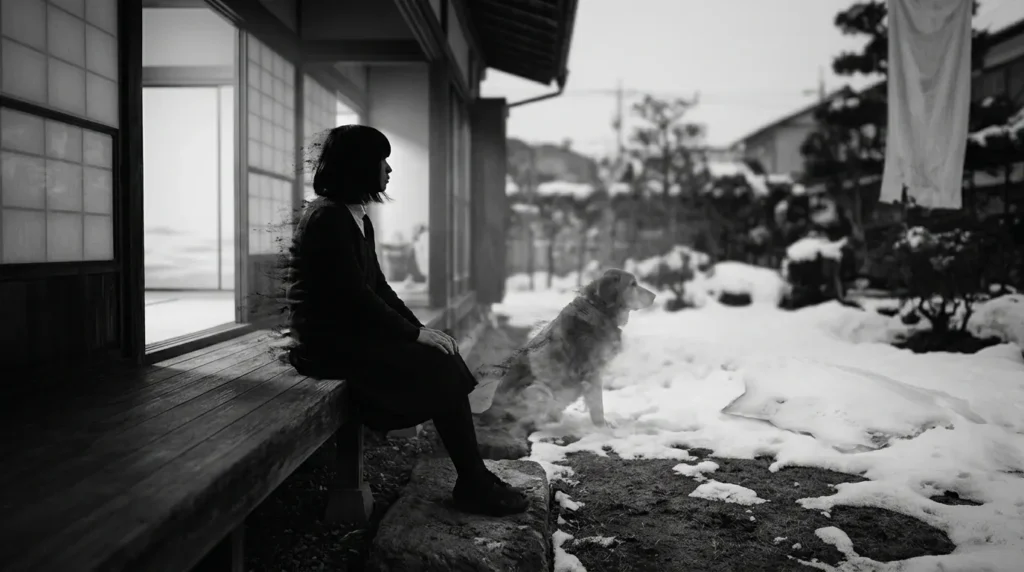
At the end of the story, the same rule finally reaches the girl herself. It is not only other people and animals that change; she is no exception. Even the veranda where she now sits will one day become a place she has left behind.
At this point, everything she has observed comes together. The melting snow, the aging of living things, and the collapse of dreams ultimately converge on one realization: she herself will also change. Because of this progression, the song is far more than a sequence of picturesque images.
The Songwriter Mayumi Itsuwa Was Already There in “Shoujo”
Throughout this Top 10, I have explored many sides of Mayumi Itsuwa: songs about separation, songs that look back on the past, songs that traveled across national borders, and works that move beyond grief toward a new stage of life.
When we trace that path back to her debut song, we can already see a characteristic that would continue through her later work. Instead of explaining emotions at length, Itsuwa places concrete scenery around a character and allows that scenery to reveal the person’s inner life.
In “Shoujo,” an entire world is created from one girl sitting on a veranda and the limited number of things that enter her field of vision. The ability to begin with a small everyday scene and expand it into a reflection on life itself was already present in her very first song. That is an essential point when considering the origins of Mayumi Itsuwa as a songwriter.
In Closing
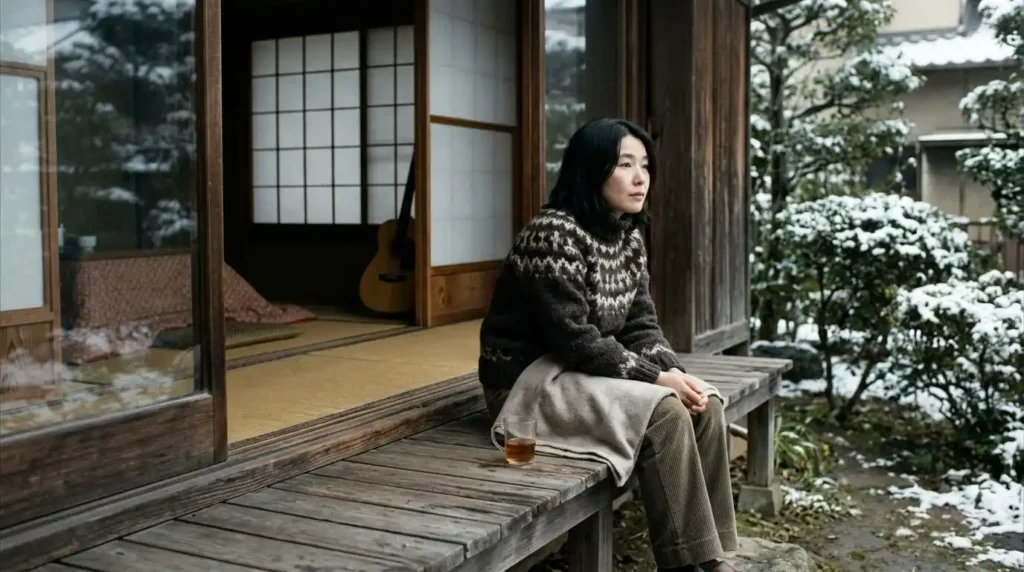
In “Shoujo,” a solitary girl sits on a veranda in midwinter and watches the changes taking place around her.
Within her field of vision are melting snow, aging life, and the collapse of a dream. By the end, she also understands that a time will come when she herself must leave the place where she now sits.
In 1972, Mayumi Itsuwa began her professional journey with this song. Instead of announcing dreams of glamorous success, she chose as her starting point a song about a girl contemplating changing life and the road that eventually awaits her. Seen from that perspective, “Shoujo” remains a remarkably clear expression of the origins of Mayumi Itsuwa as a songwriter.

音楽ファン同士の交流・リクエストはこちら / Connect & Request Songs Here