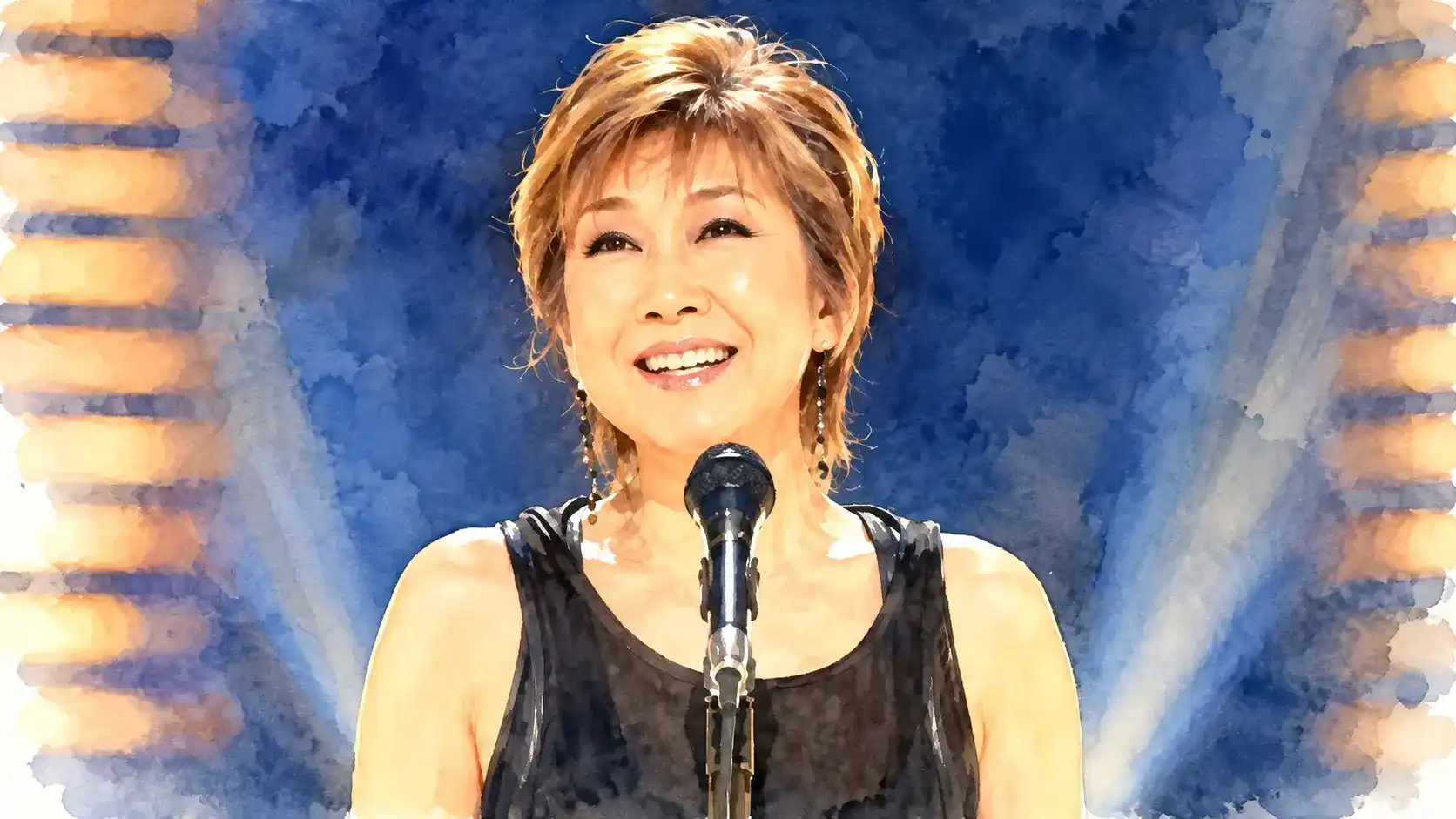
Explore Mariko Takahashi’s Musical Journey Here!
- 🎧 Listen to This Article
- 🎵 My Personal Best 10: Mariko Takahashi — No. 1 “Johnny e no Dengon” (A Message for Johnny)
- 🎥 First, Listen to the Song
- 1. Pedro & Capricious: The Beginning of Mariko Takahashi’s Career
- 2. A Different Kind of Woman in the Japanese Pop Music of 1973
- 3. Shunichi Tokura’s Melody and Arrangement
- 4. Yu Aku’s Lyrics: A Farewell Delivered Through Someone Else
- 5. The Emotional Conviction of Mariko Takahashi’s Voice
- 6. Time, Uncertainty, and Decision in a Short Story
- 7. “The Die Is Cast”: A Decision Without Turning Back
- 8. Listening Beyond the Boundaries of Showa-Era Pop
- 9. Why the Distance Created by a Message Still Matters Today
- 10. Why “Johnny e no Dengon” Is My Number-One Mariko Takahashi Song
🎧 Listen to This Article
Enjoy a concise audio introduction to the key ideas explored in this article.
Before reading, discover the story behind “Johnny e no Dengon” (A Message for Johnny) and the distinctive beauty of Mariko Takahashi’s voice.
🎵 English Narration
Listen to an English narration highlighting the main themes of this article.
🎶 Japanese Narration
Listen to the Japanese narration of this article.
Listening before reading will help you appreciate the emotions behind “A Message for Johnny” and the musical qualities explored throughout the article.
🎵 My Personal Best 10: Mariko Takahashi — No. 1 “Johnny e no Dengon” (A Message for Johnny)
Mariko Takahashi: Where It All Began, and Still Her Finest Moment
My number-one choice in this personal ranking of Mariko Takahashi’s ten greatest songs is “Johnny e no Dengon” (A Message for Johnny), released on March 10, 1973.
The song marked Takahashi’s recording debut as the second lead vocalist of Pedro & Capricious, performing at the time under the name Mari Takahashi.
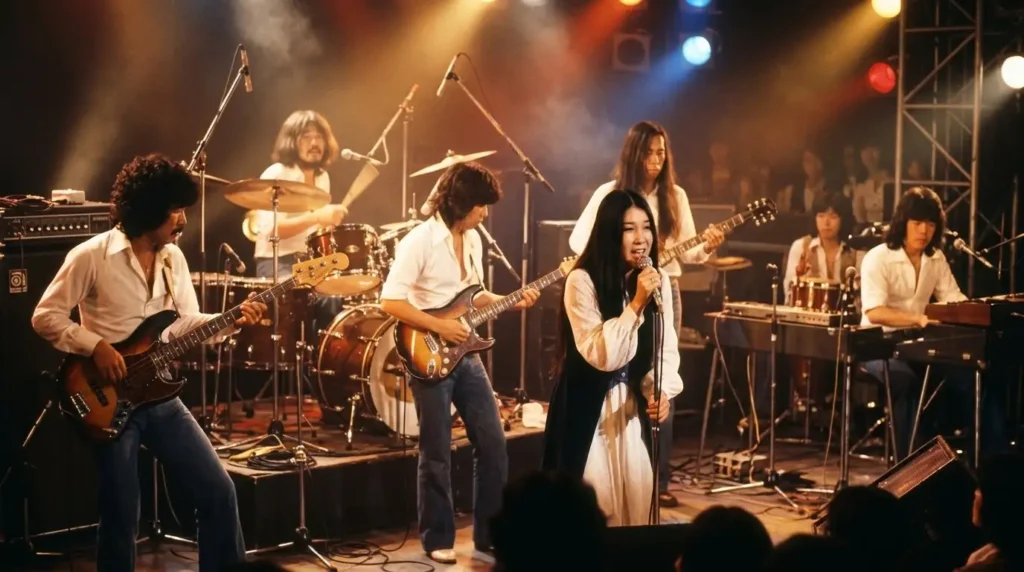
She would later record many celebrated songs, including “Momoiro Toiki” and “for you…”. Yet the performance that moves me most remains this early recording.
There is a youthful clarity and strength in her voice, along with a remarkable reluctance to embellish the emotions. Rather than the assurance of a seasoned performer, we hear a distinctive tension that makes every word feel immediate.
A Free Interpretation of the Lyrics
I waited two hours, but you never came.
Now I'm leaving this town behind.
Don't worry about me. I'll find a way to live on my own.
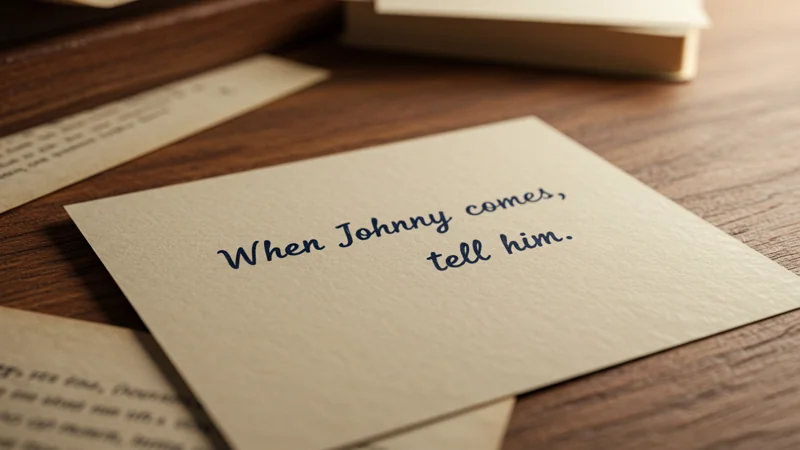
If Johnny comes looking for me, please tell him, as a friend,
I've chosen my own path, and I'm moving forward.
💡 You might also like: View the original Japanese lyrics (External site)
If the lyrics are available only in Japanese, you can use your browser’s translation feature or an AI translation tool to understand their general meaning.
🎥 First, Listen to the Song
“Johnny e no Dengon” — The Recorded Performance
🎬 Recording Information
Song: “Johnny e no Dengon” (A Message for Johnny)
Vocals: Mariko Takahashi
Lyrics: Yu Aku / Music and Arrangement: Shunichi Tokura
Related Album: “the best ~new edition~”
💡 What to Listen For
Notice the contrast between the restrained, conversational opening and the gradual expansion of the melody. Takahashi's clear, resonant voice conveys the emotions of a woman determined to leave, without ever overstating her sadness.
A 1993 Performance at Carnegie Hall
🎬 Live Performance Information
Song: “Johnny e no Dengon”
Vocals: Mariko Takahashi
Related Release: “CARNEGIE HALL N.Y. COMPLETE LIVE”
Performance: Carnegie Hall, New York, 1993
💡 What to Listen For
Compared with her early recording, this performance reveals a different command of phrasing and vocal expression. Rather than relying on dramatic gestures, Takahashi gives each line its own emotional character.
1. Pedro & Capricious: The Beginning of Mariko Takahashi’s Career
From “Wakare no Asa” to “Johnny e no Dengon”
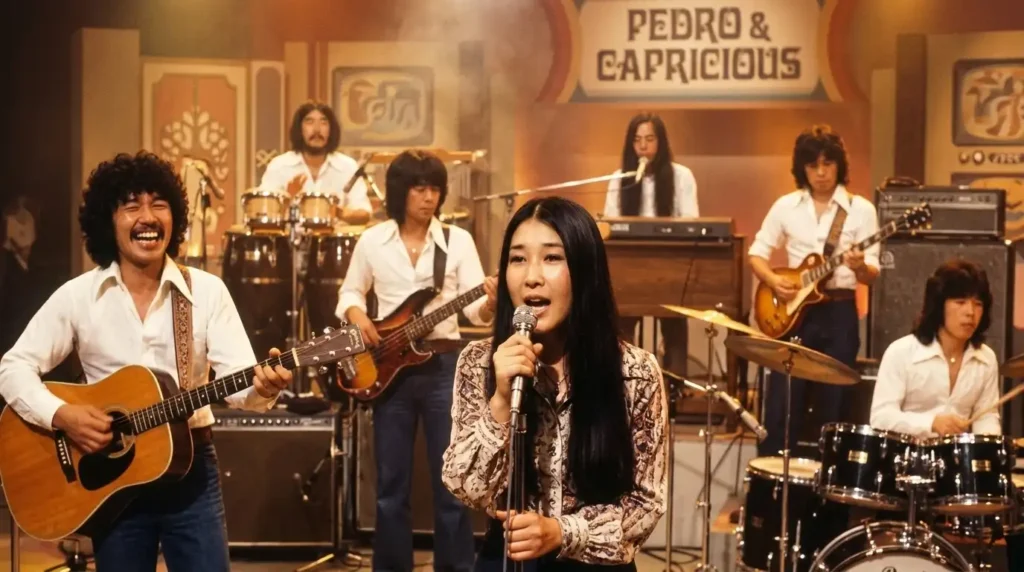
Pedro & Capricious made their recording debut in 1971 with “Wakare no Asa” (Morning of Farewell), featuring Yoko Maeno as lead vocalist. The group developed a distinctive sound by combining female vocals with musical influences drawn from Western popular music.
After Maeno’s departure, Mari Takahashi joined as the group’s second lead singer. The new lineup released “Johnny e no Dengon” in 1973.
The single marked Takahashi’s recording debut and opened a new chapter for Pedro & Capricious.
A Closer Look: The Name Pedro & Capricious
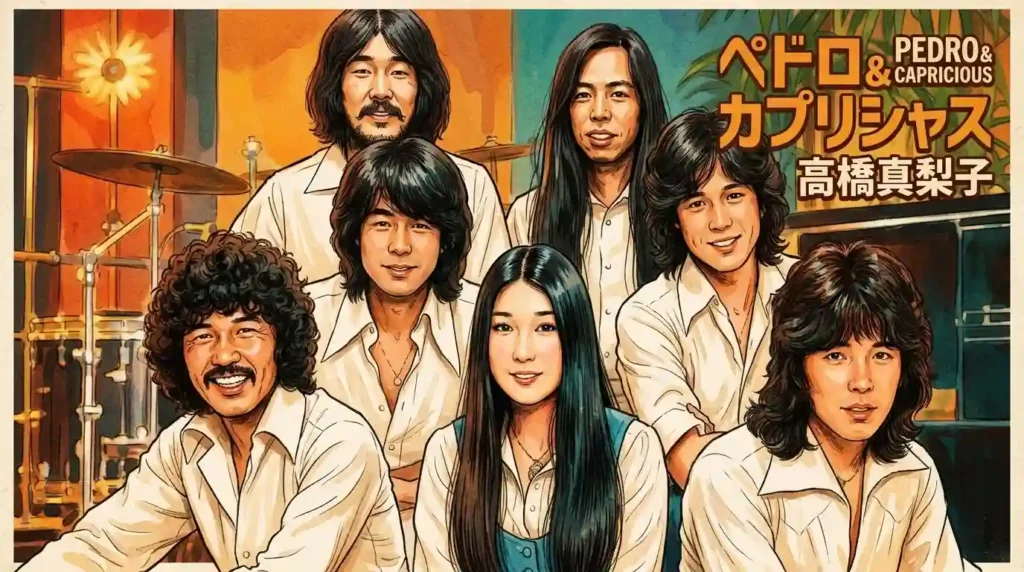
“Pedro” is a common masculine given name in Spanish-speaking countries. “Capricious,” meanwhile, is an English adjective meaning unpredictable, changeable, or inclined to act on a whim.
Together, the words create a name with a distinctly international flavor. That impression suits a group whose musical identity drew on Latin rhythms and Western pop influences.
2. A Different Kind of Woman in the Japanese Pop Music of 1973
In 1973, Japanese television and popular music were strongly influenced by the idol phenomenon. Singers such as Mari Amachi, Saori Minami, and Miyoko Asada enjoyed enormous popularity.
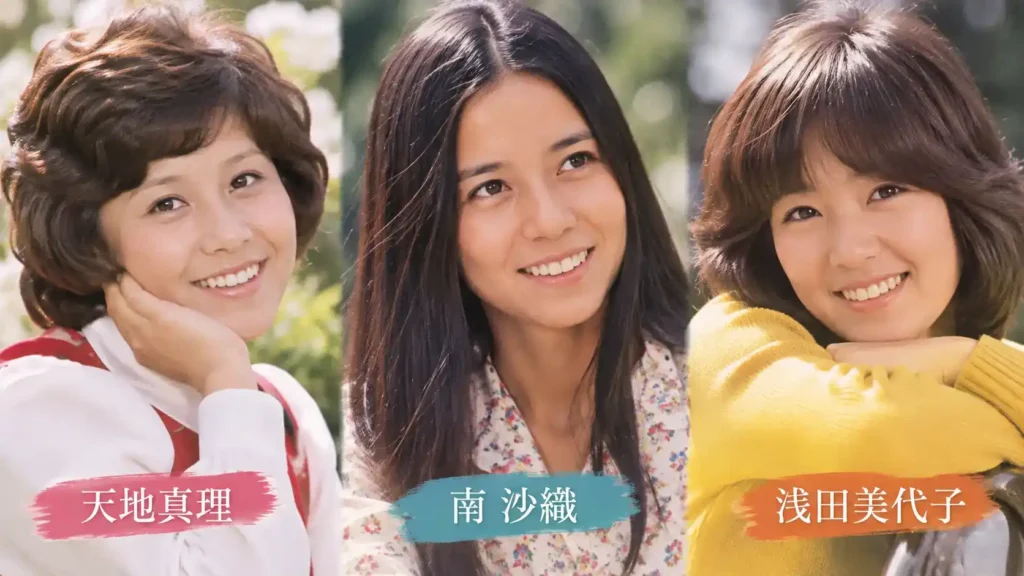
Against this backdrop, “Johnny e no Dengon” stood out for its portrayal of a woman who chooses to bring a relationship to an end on her own terms.
She waits for the man she loves, but refuses to wait indefinitely. When he fails to arrive, she decides to leave.
Yet beneath her outward composure, we can sense the pain of separation. What makes her so human is that her strength and vulnerability cannot be neatly separated.
The music also retains a certain lightness. As a result, her departure does not feel entirely tragic. It carries the possibility of a new beginning.
3. Shunichi Tokura’s Melody and Arrangement
An Opening That Feels Like a Conversation
One of the song’s most striking qualities is the natural flow of its opening lines. The everyday act of asking someone to deliver a message seems to fit effortlessly into the melody.
As the song progresses, however, the melodic movement gradually broadens. Emotions concealed beneath the narrator’s calm manner begin to emerge.
Western Musical Influences and the Natural Rhythm of Japanese
The arrangement combines rich instrumental accompaniment, including strings, with the rhythmic sensibility of Western popular music.
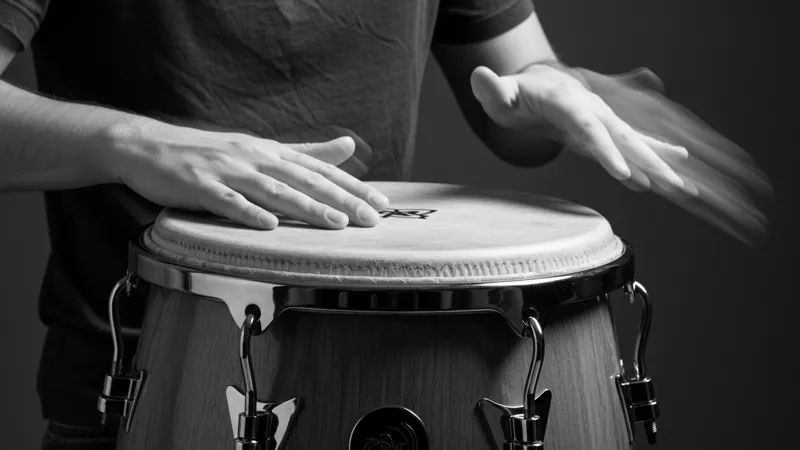
What impresses me most is that the accompaniment never attempts to explain the lyrics too forcefully. Even as the instrumental textures become fuller, the woman’s words remain at the center. The arrangement supports the story while allowing Takahashi’s voice to command our attention.
A more dramatic melody might have emphasized the sorrow of separation. Instead, Tokura preserves a sense of movement and lightness, allowing the heroine’s decision to suggest determination as well as loss.
4. Yu Aku’s Lyrics: A Farewell Delivered Through Someone Else
Why Doesn’t She Tell Johnny Herself?
Rather than saying goodbye to Johnny directly, the woman asks another person, presumably a mutual friend, to pass along her message.
Why does she leave before Johnny arrives? Has he forgotten their appointment, or has something prevented him from coming? The lyrics never reveal the reason.
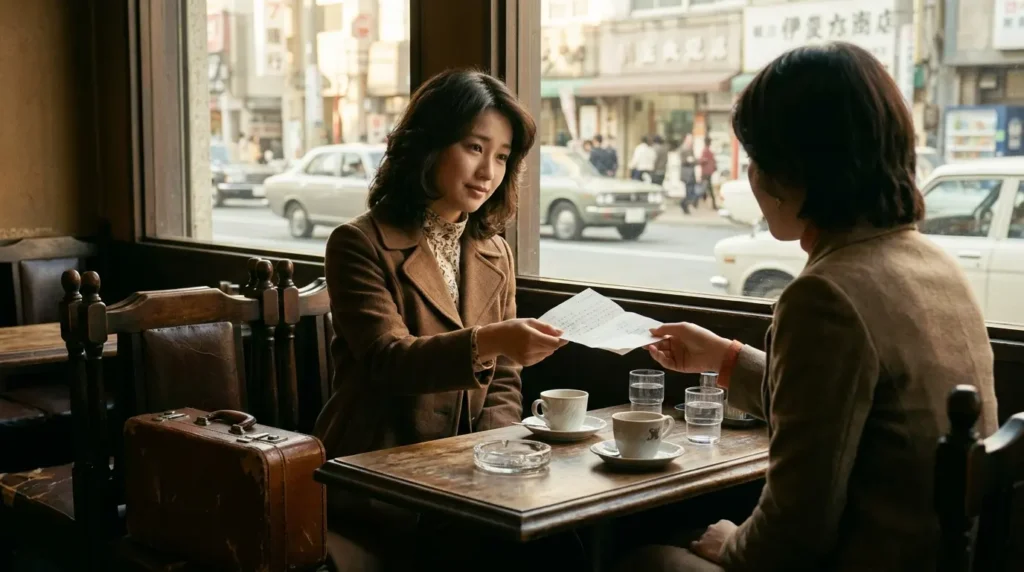
The Feelings Hidden Behind “I’ll Be Fine”
The woman wants Johnny to know that she will manage without him. She can return to her former work as a dancer, and she describes herself as naturally cheerful, almost as though she wants to reassure him.
Is she putting on a brave face? Is she trying to spare him from guilt? Or is she attempting to convince herself?
Each interpretation is possible. By refusing to provide a definitive answer, the lyrics allow several emotions to coexist within her words.
Rather than explaining everything she feels, Yu Aku leaves room for the listener’s imagination. Takahashi’s performance makes that unspoken dimension even more powerful.
5. The Emotional Conviction of Mariko Takahashi’s Voice
Expressing Emotion Without Overstatement
Takahashi has a remarkable ability to articulate each word clearly while allowing its emotional undertones to emerge naturally.
She never seems to explain the heroine’s feelings through exaggerated vocal gestures. Instead, subtle changes in volume and the way she finishes a phrase reveal what the lyrics leave unsaid.
The Unmistakable Presence of a Young Voice
Compared with her later performances, Takahashi’s voice at this stage has a particularly clear and youthful resonance.
Yet vocal strength is only part of its appeal. She effortlessly combines the heroine’s outward calm with the loneliness concealed beneath it.
There is no need to cry out in anguish to move an audience. “Johnny e no Dengon” already revealed the essential qualities that would define Takahashi as an extraordinary interpreter of songs.
6. Time, Uncertainty, and Decision in a Short Story
The Significance of Two Hours
One detail remains especially memorable: the two hours the heroine spends waiting for Johnny.
That precise length of time allows us to imagine her checking the clock, hoping for his arrival, and gradually reaching the decision to leave.
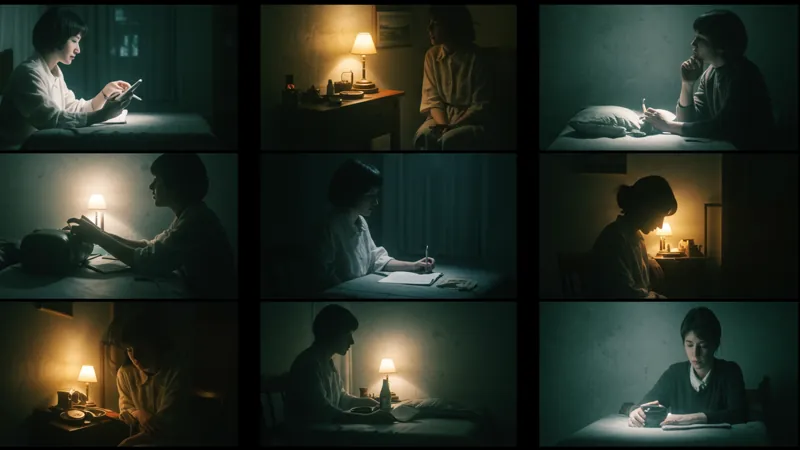
Because the lyrics never describe her thoughts during those two hours, listeners are free to imagine the disappointment, hesitation, and emotional struggle behind her decision.
Leaving Without a Destination
The woman plans to leave town on the next bus, although she does not appear to have decided which direction she will travel.
This detail is particularly revealing. Her determination to leave does not necessarily mean she has a clear vision of what comes next.
That uncertainty makes her more than a conventional portrait of a strong, independent woman. It makes her believable.
The Meaning of an Indirect Message
Even though she has decided not to see Johnny, she still wants him to know how she felt and why she left. That seemingly contradictory desire lies at the heart of the message she entrusts to someone else.
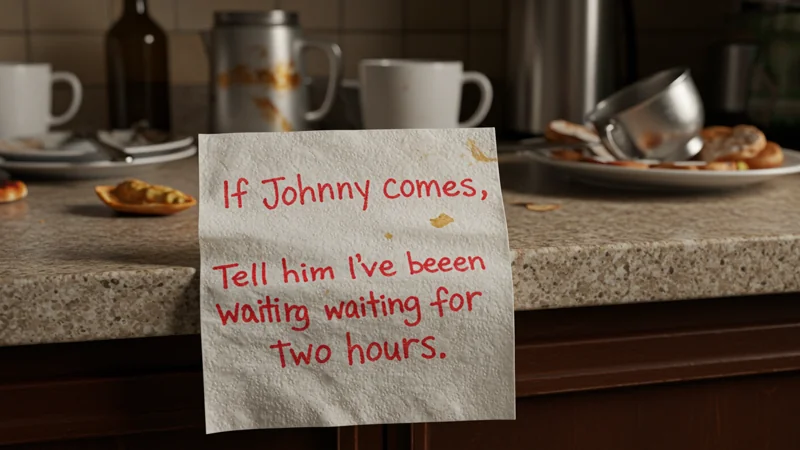
The story ends with the woman’s departure rather than a final confrontation between the two. Johnny’s reaction remains unknown, and their future is left unresolved.
By refusing to tell us what happens afterward, the lyrics preserve the emotional uncertainty of their farewell.
7. “The Die Is Cast”: A Decision Without Turning Back
Near the end of the song, the heroine uses the Japanese expression “Sai wa Nagerareta,” meaning “The die is cast.”
The phrase is traditionally associated with Julius Caesar and signifies a decisive step beyond the point of no return.

Yet the heroine does not necessarily feel certain about her future. She seems determined to act on her decision despite having no guarantee of what lies ahead.
For me, this is more than a declaration of independence. It is an expression of the courage required to move forward while still carrying doubt.
8. Listening Beyond the Boundaries of Showa-Era Pop
In recent years, Japanese popular music from the 1970s and 1980s has attracted renewed international attention, particularly through the rediscovery of city pop.
That does not necessarily mean “Johnny e no Dengon” is widely recognized overseas as a defining city-pop recording.
Its real appeal lies in the way it brings together the storytelling traditions of Japanese popular song and musical influences from the West.
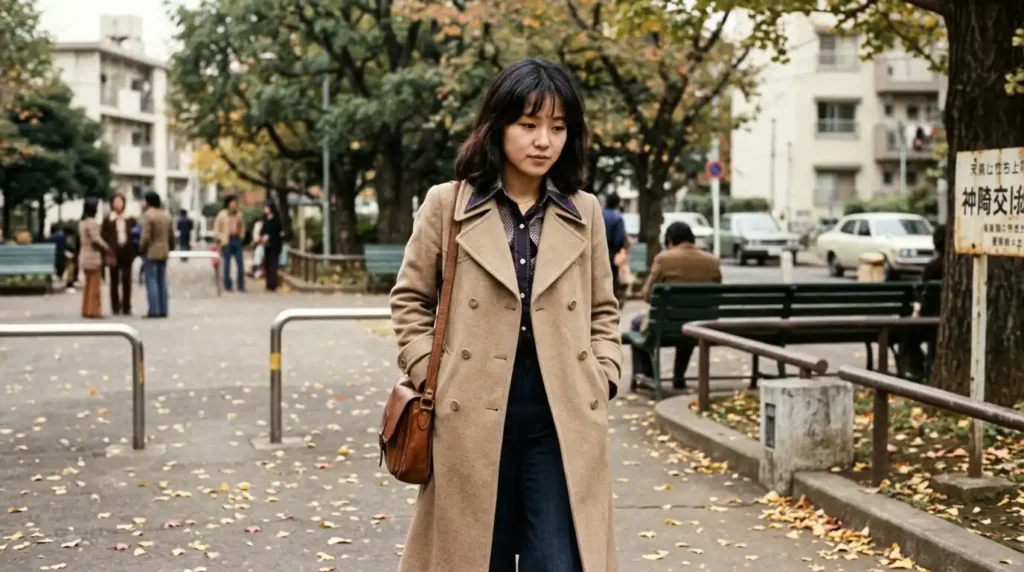
By placing a bittersweet story of separation within an accessible melody and a gently flowing rhythm, the song achieves an emotional balance that remains compelling decades after its release.
9. Why the Distance Created by a Message Still Matters Today
Today, reaching someone by telephone or instant message is easier than ever. But the ability to make contact is not the same as the ability to express what we truly feel.
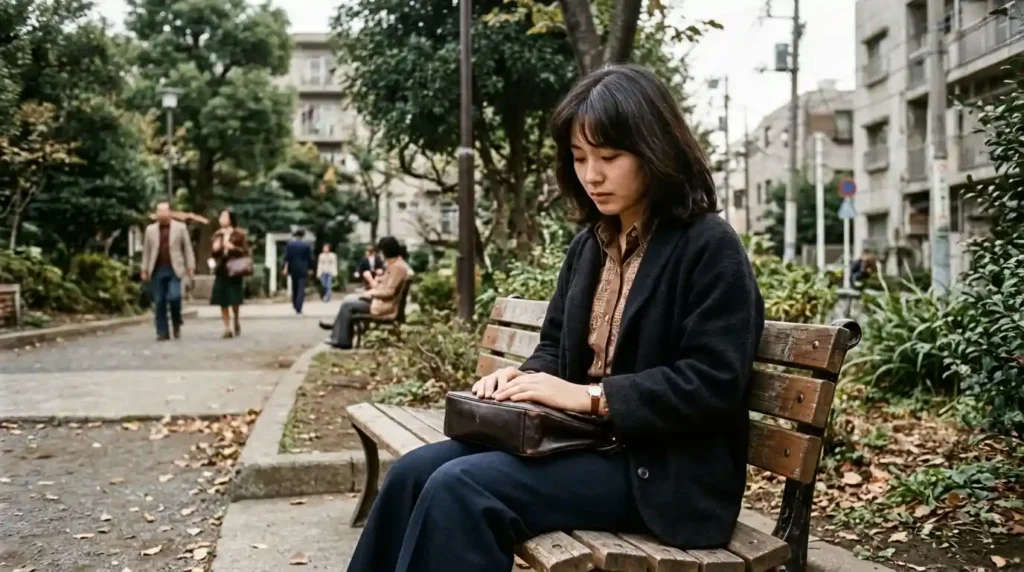
Was the heroine right to avoid speaking directly to Johnny? Perhaps she was afraid of confronting him. Or perhaps the distance was necessary for her to bring the relationship to an end.
Even while preparing to leave, she considers how her words will reach him. There is something deeply human about that mixture of concern, uncertainty, and emotional restraint.
When a relationship ends, we cannot always explain everything we feel. Sometimes we must walk away while important emotions remain unresolved.
Even in an age of constant communication, that difficulty has not disappeared. The old-fashioned idea of leaving a message through a friend still raises questions that feel surprisingly relevant.
10. Why “Johnny e no Dengon” Is My Number-One Mariko Takahashi Song
Mariko Takahashi has recorded many songs that demonstrate her extraordinary vocal ability. Some are sweeping ballads, while others reveal their emotional depth through quiet restraint.
What places “Johnny e no Dengon” above them all for me is the remarkable balance between its lyrics, melody, arrangement, and performance.
The heroine’s sorrow and hesitation remain with us long after the song has ended.
Beneath her resolute words lies loneliness; beneath the clarity of Takahashi’s voice, we sense uncertainty. Her ability to hold these contrasting emotions together makes the performance exceptional.
Mariko Takahashi’s recording career began with this song. And for me, it remains the recording in which the essence of her artistry shines most vividly.
Looking Back on My Mariko Takahashi Best 10
As I look back on this series, what strikes me most is the emotional complexity of the people who inhabit Takahashi’s songs.
Loving someone is not the same as wanting to control them. And ending a relationship does not necessarily mean that the feelings have disappeared.
Each of the ten songs in this ranking tells a different story. Beyond their positions on the list, I believe every one of them offers something new to discover whenever we listen again.
Thank you for following my personal Best 10 of Mariko Takahashi.

音楽ファン同士の交流・リクエストはこちら / Connect & Request Songs Here