- 🎧 Listen to this article
- Prologue — The Dreams and Realities of the Working Class Carried by “The Boss”
- Formative Years (1949–1972) — Jersey Mud and the Awakening of Rock ‘n’ Roll
- The Rise and Breakthrough (1973–1975) — From “The New Dylan” to “The Future of Rock”
- Trials and Maturity (1976–1982) — Lawsuits, Darkness, and the Double Album
- Golden Era and Frenzy (1984–1989) — Light and Shadow of “Born in the U.S.A.”
- Reinvention and Depth (1990–2011) — Parting and Reuniting with the E Street Band
- A Living Legend (2012–Present) — Confessions and the Return to the Source
- The Core of the Sound
- Timeline (Major Milestones)
- Listening Guide
- Summary — Why He Never Stops Running
- Coming Up Next — My Personal Best 15: Bruce Springsteen
🎧 Listen to this article
You can quickly check the key points of this article via audio.
Recommended for those who want to grasp the essentials before reading.
🎶 English Narration
The content of this article is explained in English audio.
⌛ Duration: Approx. 4 min
🎵 Japanese Narration
You can also listen to the same content in Japanese.
⌛ Duration: Approx. 4 min
*Listening to the audio before reading the text will help you understand Springsteen’s history and the evolution of his sound more vividly.
Prologue — The Dreams and Realities of the Working Class Carried by “The Boss”
Welcome to another installment of my “Personal Best” series. This time, we dive into the world of Bruce Springsteen.
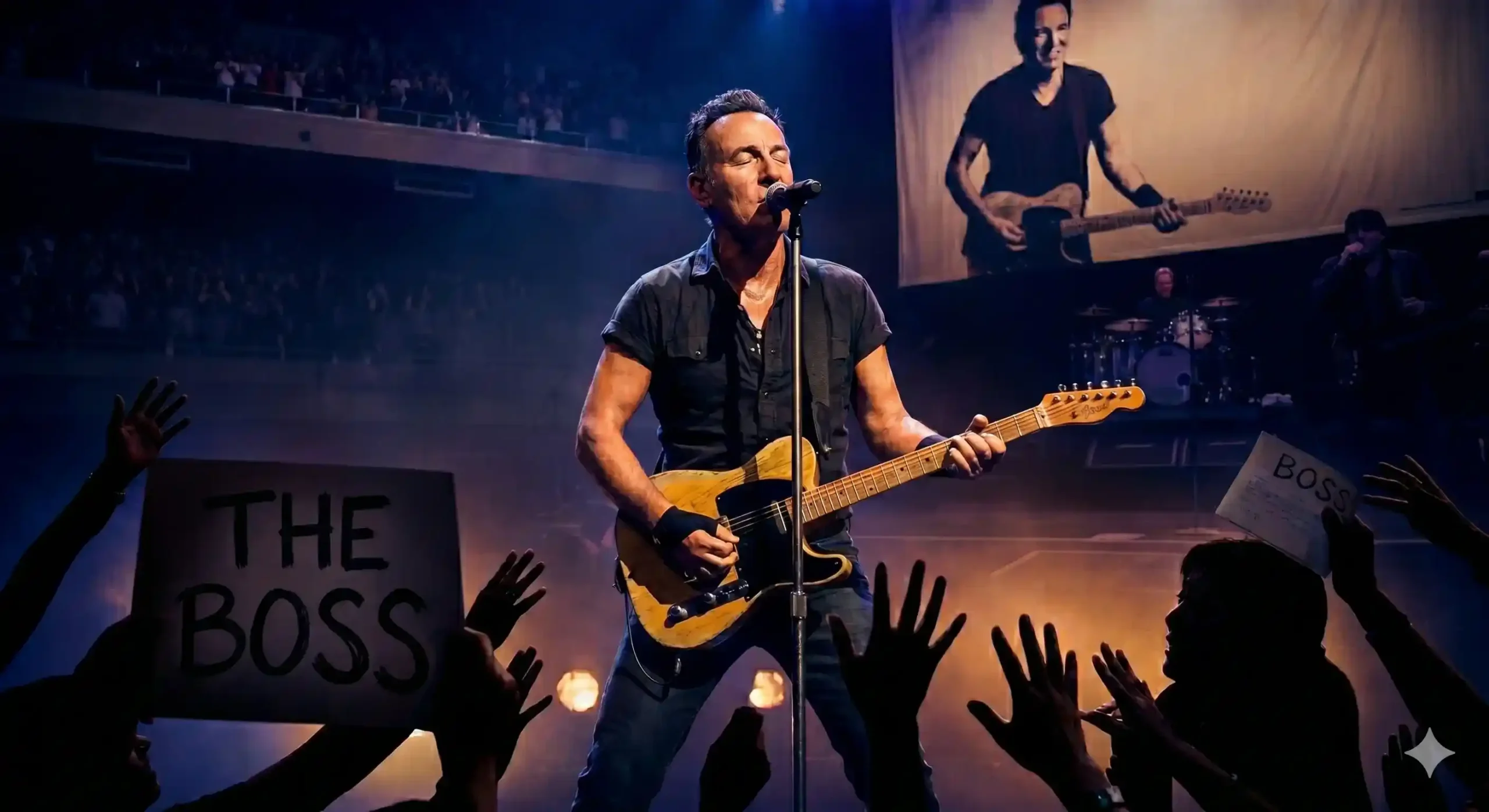
Affectionately known by fans as “The Boss,” he is far more than just a rock musician. He is the voice of the nameless workers struggling in the backstreets of America, a poet who finds a sliver of hope within defeat.
Since appearing as the “Future of Rock ‘n’ Roll” with his 1975 album “Born to Run,” he has continued to roar at the forefront of the scene for over 50 years.
However, behind his brilliant career lies a history of conflict with his father, a grueling legal battle over contracts, and the deep internal struggle of being cast as a “Symbol of America.”
Why does his music shake the soul so violently and become a part of our lives? Before introducing the songs, I want to trace the turbulent history of this extraordinary storyteller and the trajectory of his soul.
Formative Years (1949–1972) — Jersey Mud and the Awakening of Rock ‘n’ Roll
The Silence in Freehold and The Ed Sullivan Show
On September 23, 1949, in Freehold, New Jersey, Bruce Springsteen was born to Douglas, a stern and moody bus driver, and Adele, a bright and spirited secretary.
The household was never wealthy, and the shadow of his father’s silence and frustration always loomed large. Douglas was of Irish descent, and Adele was Italian. This relationship with his “silent father” would later become a central theme in many of Bruce’s songs.
What changed everything for him was the shock of seeing Elvis Presley on TV, followed by the arrival of The Beatles.
The moment he saw The Beatles on The Ed Sullivan Show in 1964, he realized his destiny. “This is it, this is my way out,” he thought. With a cheap guitar bought by his mother, he began his battle of self-expression.
The Local Hero of Asbury Park
Through his late teens and early twenties, he honed his skills in bands like The Castiles, Steel Mill, and Dr. Zoom & the Sonic Boom.
His home base was Asbury Park, a faded seaside resort. It was here that he met his future E Street Band brothers, including Clarence Clemons, Stevie Van Zandt, and Danny Federici.
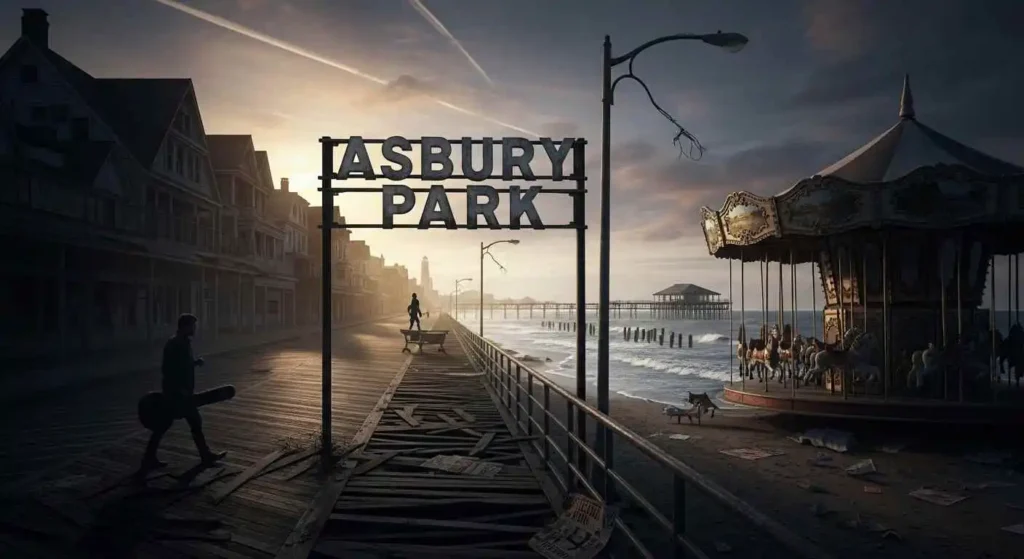
At the time, he was already a legend in the making, known as the “best guitarist in Asbury Park” for his marathon, high-energy live performances.
The Rise and Breakthrough (1973–1975) — From “The New Dylan” to “The Future of Rock”
A Late Debut and Overwhelming Expectations
In 1973, discovered by the legendary scout John Hammond, he debuted with the album “Greetings from Asbury Park, N.J.”
At the time, the record label tried to market him as the “New Bob Dylan.” However, Bruce had no intention of remaining just a folk singer.
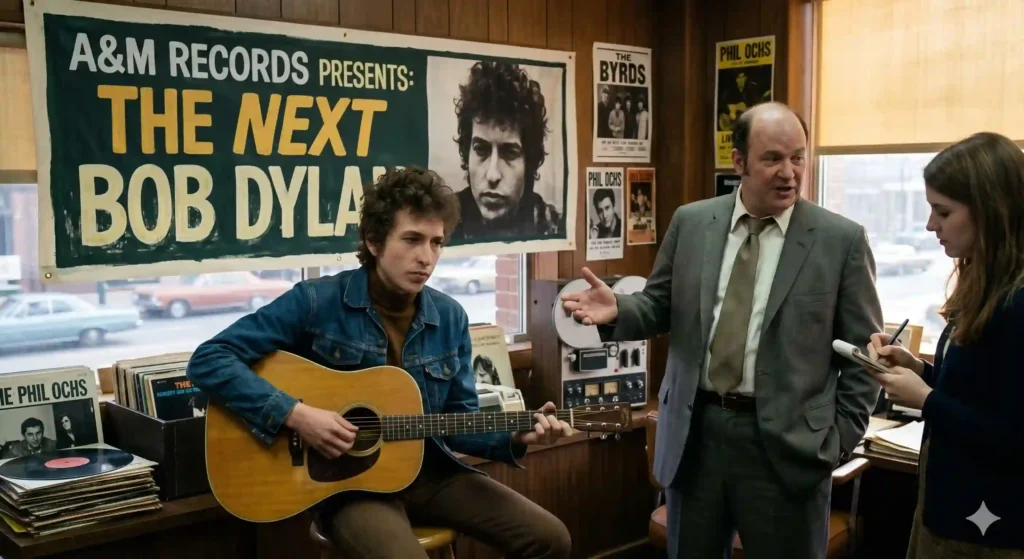
His second album, “The Wild, the Innocent & the E Street Shuffle,” showcased a grand sound incorporating R&B and jazz elements. While critics raved, sales were sluggish, leaving him on the brink of being dropped by the label.
1975: The Moment Rock History Changed
With his back against the wall, he created the masterpiece “Born to Run.”
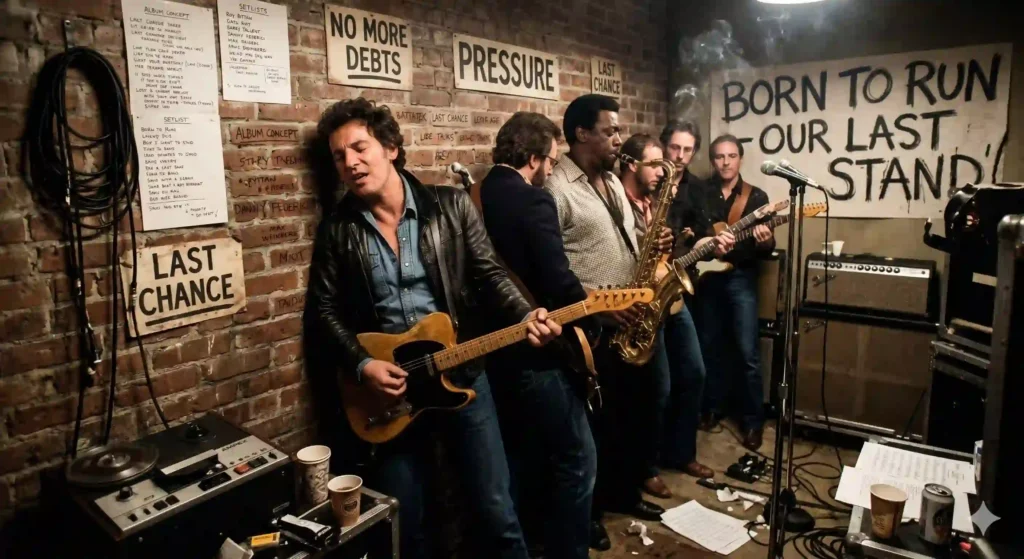
Seeking a perfect sound, he spent six months on the title track alone. Fusing Phil Spector’s “Wall of Sound,” Dylan’s lyricism, and Elvis’s raw energy, the album became a national phenomenon.
Music critic Jon Landau’s famous line, “I saw rock and roll future and its name is Bruce Springsteen,” became legendary. He appeared on the covers of Time and Newsweek simultaneously—an unprecedented cultural moment. This was the true beginning of the “Boss” legacy.
Trials and Maturity (1976–1982) — Lawsuits, Darkness, and the Double Album
The Legal Mire and “Darkness on the Edge of Town”
At the peak of his success, he was hit with a grueling legal battle with his former manager, Mike Appel. Barred from the studio for nearly three years, he channeled his frustration into live shows while reflecting deeply on his own identity.
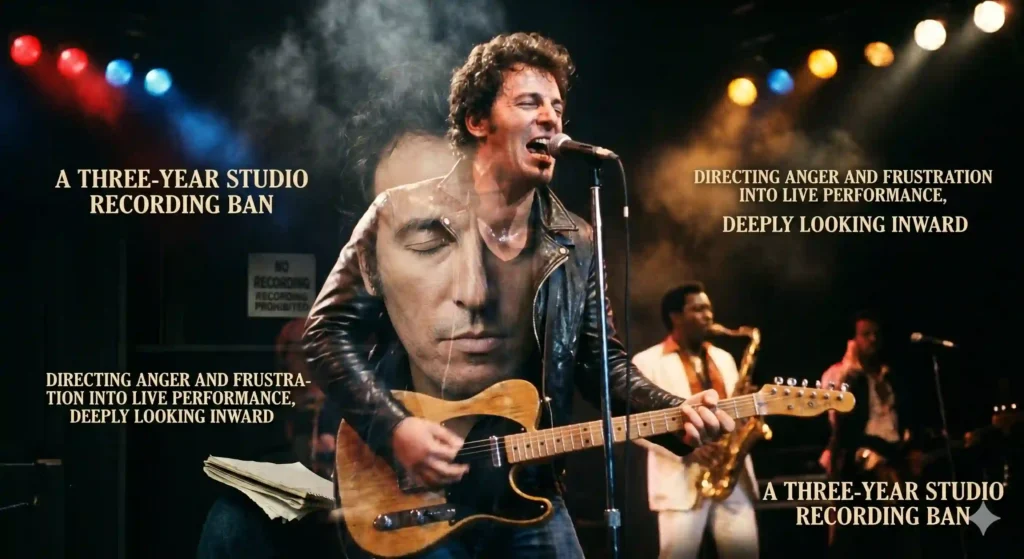
The resulting album, “Darkness on the Edge of Town,” stripped away the polish of its predecessor to present a gritty, honest look at the hardships of the working class.
Through songs like “The Promised Land,” he evolved from a “star” into a truly “trusted storyteller.”
“The River” and the Haunting “Nebraska”
In 1980, he released the double album “The River,” which gave him his first #1 album. It balanced high-energy party rockers with somber ballads about responsibility and the inevitable tragedies of life.
Then, in 1982, he did something radical: he scrapped the full-band recordings and released the raw 4-track home demos as the album “Nebraska.”
This acoustic work, exploring the dark underbelly of the American dream, would heavily influence the future of indie rock. He consistently chose integrity over commercial safety.
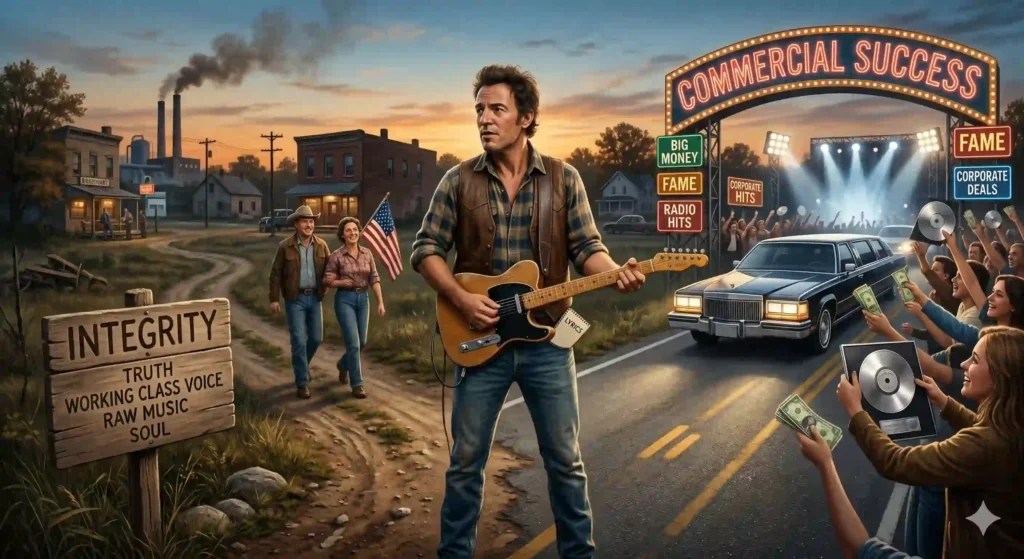
Golden Era and Frenzy (1984–1989) — Light and Shadow of “Born in the U.S.A.”
A Global Social Phenomenon
In 1984, the album that made Bruce immortal, “Born in the U.S.A.,” was released.
With 7 out of 12 tracks reaching the Top 10, it became a monster hit rivaling Michael Jackson’s “Thriller.”
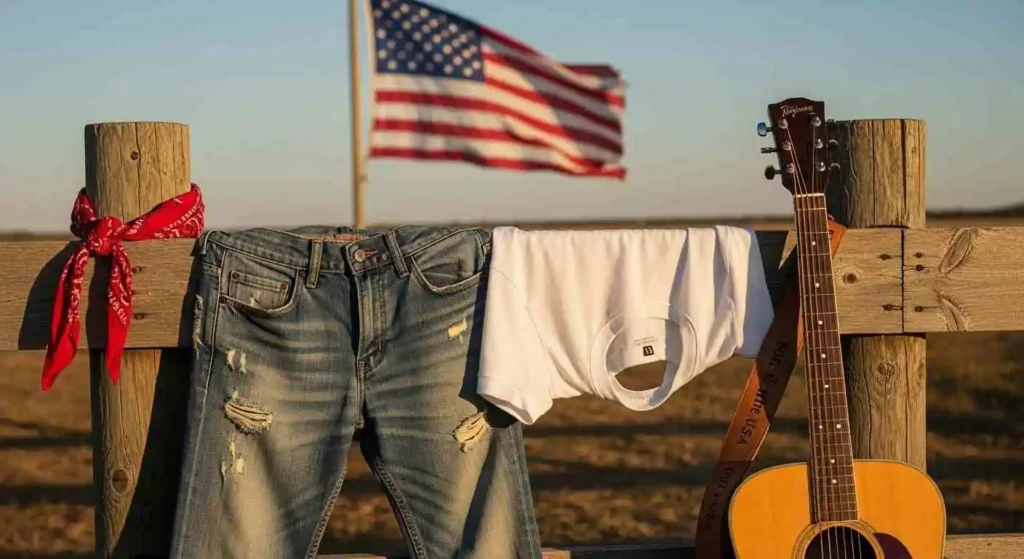
Muscular, clad in denim, and standing before the American flag, his image was consumed as a symbol of a “Strong America.” He ruled the world from the top of stadium stages.
A Misunderstood Message
However, the title track “Born in the U.S.A.” was actually a protest song about the plight of Vietnam veterans. To his dismay, the upbeat chorus led many, including politicians of the era, to mistake it for a jingoistic anthem.
This massive disconnect between his success and his identity, combined with the collapse of his first marriage, led to the introspective 1987 album “Tunnel of Love.”
Reinvention and Depth (1990–2011) — Parting and Reuniting with the E Street Band
Dissolution and the Answer to 9/11
In 1989, he bid farewell to the E Street Band. The 90s saw him move to LA, collaborating with new musicians and returning to his social-critic acoustic roots with “The Ghost of Tom Joad.”
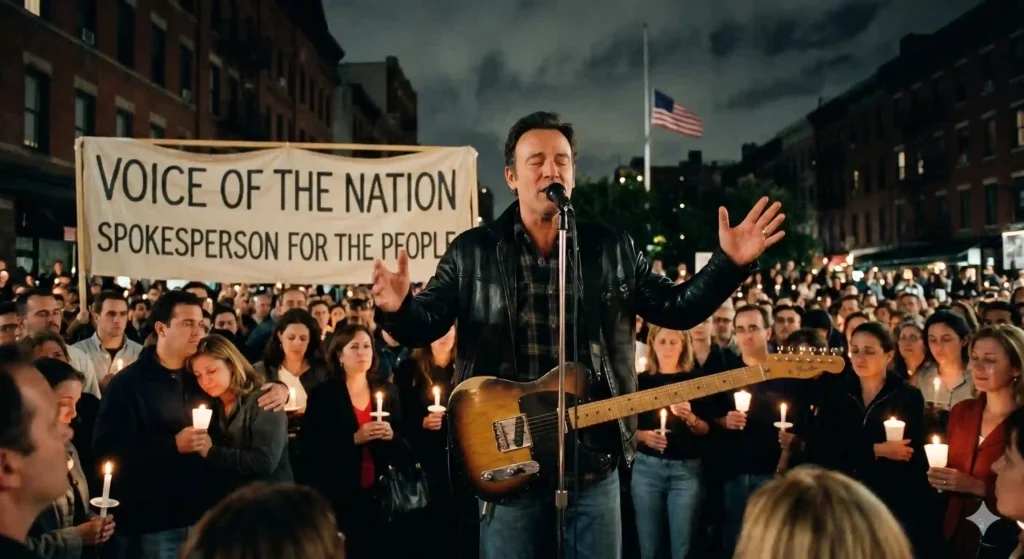
However, in 1999, he reunited the band for a massive tour. Then came the tragedy of 9/11. In a grieving America, he was once again called upon to be the “Voice of the People.” The 2002 album “The Rising” served as a requiem for lost lives and a prayer for rebirth, leaving a massive impact on society.
Farewell to the Soul Brothers
The late 2000s and 2010s brought both creative energy and profound loss. Keyboardist Danny Federici passed in 2008, followed by the “Big Man” himself, Clarence Clemons, in 2011. These losses left a giant void, but Bruce engraved their spirits into the music and refused to stop walking.
A Living Legend (2012–Present) — Confessions and the Return to the Source
Broadway and the Autobiography
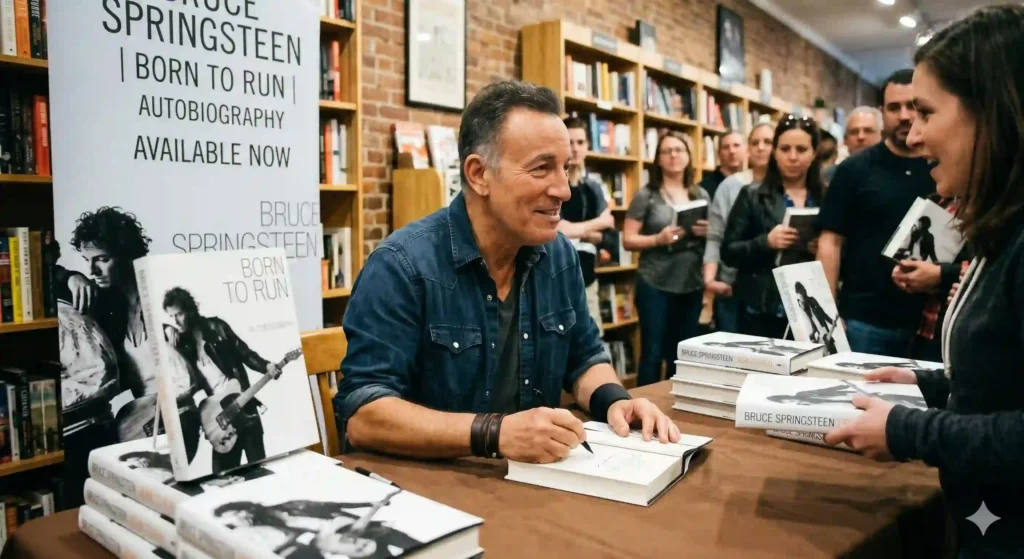
In recent years, he has delved into even more personal territory with the release of his autobiography “Born to Run” and the year-long “Springsteen on Broadway” residency.
There, he shared the origins of his stories and his own battles with mental health and family ghosts without a shred of vanity. Seeing a superstar of his stature bare his vulnerabilities so openly moved audiences worldwide.
“Letter to You” — The Roar Continues
In 2020, during the pandemic, he released “Letter to You,” recorded live in the studio with the E Street Band. Even in his 70s, his voice retains an undying vitality.
He continues to write letters from his Jersey farm to “those who were once young” and “those living in the now” all across the globe.
The Core of the Sound
The “Wall-like” Ensemble of the E Street Band
The magic of Bruce’s music is inseparable from the E Street Band.
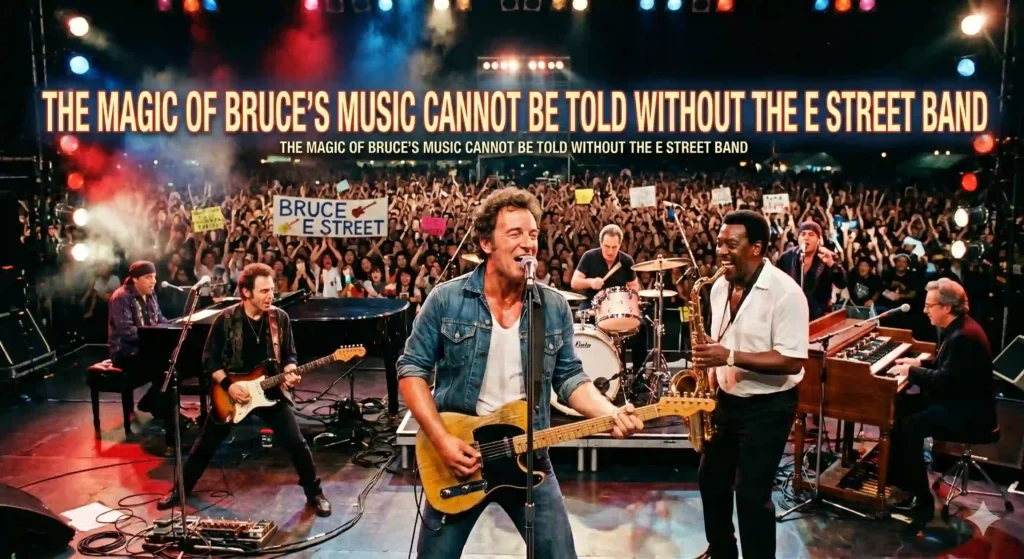
Roy Bittan’s elegant piano, Max Weinberg’s heavy-artillery drumming, and Clarence Clemons’ soaring sax. Together, they turn a “soliloquy” into a “universal cry.” Their performances are a blend of meticulous arrangement and explosive improvisation.
A Hybrid of Dylan and Elvis
His genius lies in placing Dylan-esque literary lyrics onto the raw, physical rock ‘n’ roll of Elvis and Little Richard. Reciting poetry while drenched in sweat—this coexistence of intellect and wildness is why he is beloved by white-collar and blue-collar fans alike.
Timeline (Major Milestones)
- 1949: Born in Freehold, New Jersey.
- 1973: Debuts with “Greetings from Asbury Park, N.J.”
- 1975: Releases “Born to Run.” Covers of Time and Newsweek.
- 1978: Releases “Darkness on the Edge of Town” after legal battles.
- 1984: “Born in the U.S.A.” becomes a global phenomenon.
- 1989: Disbands the E Street Band.
- 1999: Reunited the band and inducted into the Rock and Roll Hall of Fame.
- 2002: Releases “The Rising” in response to 9/11.
- 2011: Passing of soul brother Clarence Clemons.
- 2017: Starts “Springsteen on Broadway” residency.
- 2020: Releases the band album “Letter to You.”
Listening Guide
The Contrast of “Action” and “Stillness”
Bruce’s discography oscillates between explosive full-band rock albums and quietly narrated acoustic albums.
Start with “Born to Run” or “Born in the U.S.A.” to soak in the energy, then listen to “Nebraska” or “The Ghost of Tom Joad” to experience his deep loneliness and the will to overcome it.
Summary — Why He Never Stops Running
The history of Bruce Springsteen is the history of America itself, and the record of one man’s battle to remain “honest.” He never deifies himself; he stands on the same ground as his audience, asking, “Can we still make it to the Promised Land?”
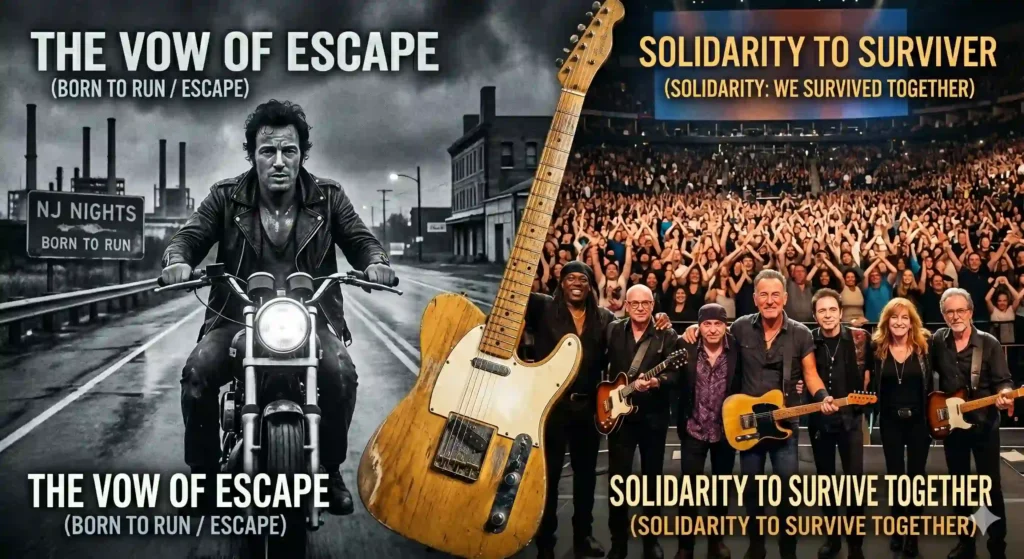
“Born to Run.”
The vow of escape from his youth has evolved into a message of “survival together.” His music remains timeless because it provides us with the ultimate weapon against the hardships and despairs we face daily: Rock ‘n’ Roll.
Coming Up Next — My Personal Best 15: Bruce Springsteen
We’ve traced the massive footprint of the Boss. From early jazzy chaos to stadium anthems and soul-stirring ballads, his catalog is immense.
Next time, I will select 15 tracks that make my soul scream, “This is Springsteen!” This ranking will ignore charts and popularity—it is purely my own sentimental journey through his music.
I’ll make sure the article carries the heat of that husky voice and the roar of Clarence’s sax. Stay tuned for the main event!
音楽ファン同士の交流・リクエストはこちら / Connect & Request Songs Here