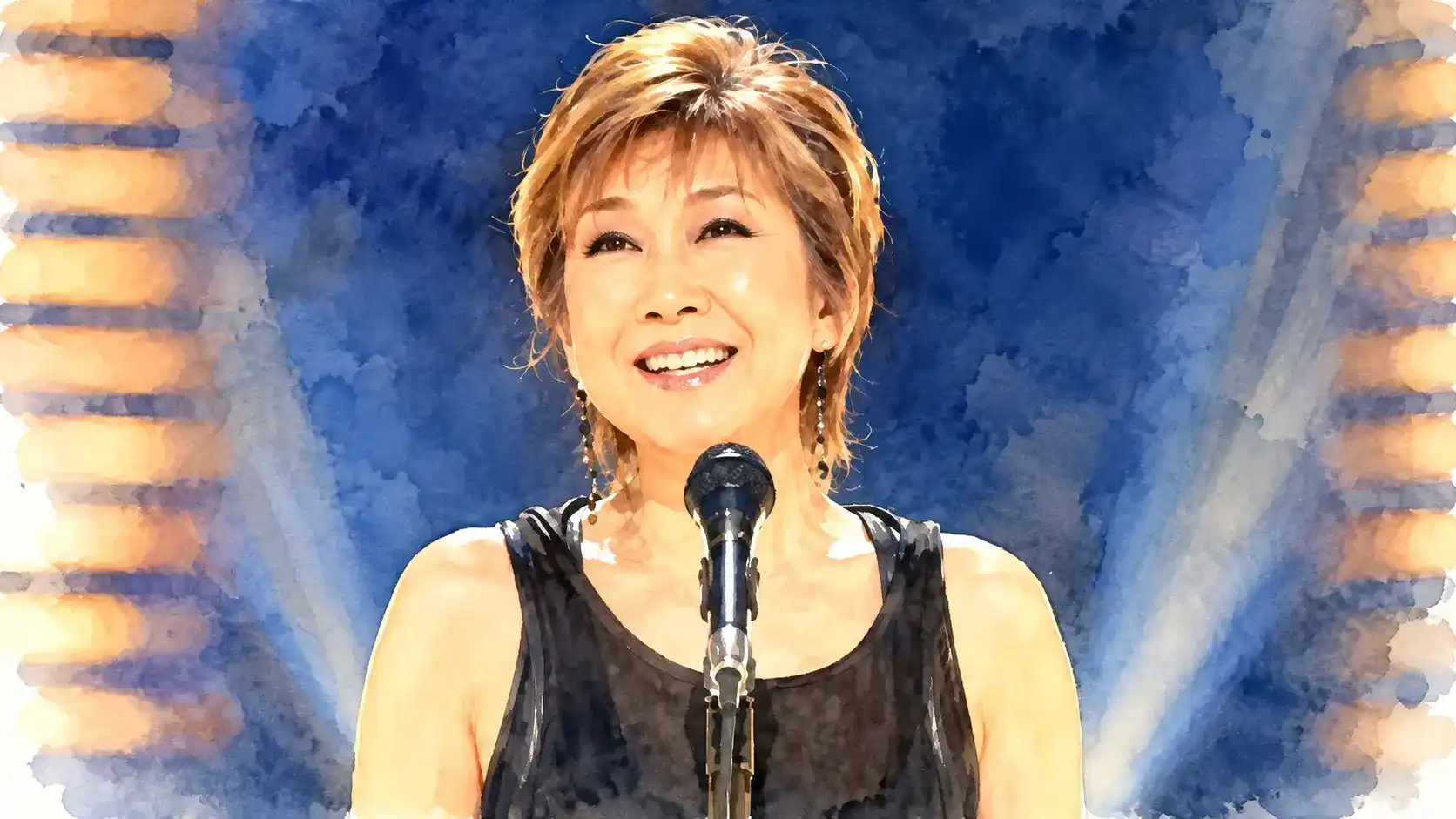
- 🎧 Listen to This Article
- Mariko Takahashi: A Musical Journey Spanning Half a Century
- Chapter 1: A Musical Journey That Began in Hakata
- Chapter 2: Pedro & Capricious and the Songs of the 1970s
- Chapter 3: Going Solo and Rising to New Heights in the 1980s
- Chapter 4: The 1990s to the 2010s — Artistic Maturity and International Stages
- Chapter 5: The Final Nationwide Tours — Beyond Half a Century
- Epilogue: What Her Voice Has Left Behind
🎧 Listen to This Article
Discover Mariko Takahashi’s remarkable musical journey through a narrated introduction.
Before reading, explore her years with Pedro & Capricious, her successful solo career, and her final nationwide concert tours.
🎵 English Narration
Listen to an English-language introduction to this article.
🎶 Japanese Narration
Listen to a Japanese-language introduction to this article.
Listening first will help you appreciate Mariko Takahashi’s musical legacy and follow the story of her extraordinary career.
Mariko Takahashi: A Musical Journey Spanning Half a Century
“Johnny e no Dengon,” “Gobangai no Mary e,” “for you…,” and “Momoiro Toiki.” These timeless songs, which helped define Japan’s Showa era, continue to touch listeners across generations. Through her unmistakable voice, Mariko Takahashi has built a remarkable musical career spanning more than half a century.
For me, she has always been a special singer, someone whose music has been part of my life since I was young. I have long been drawn to the slightly wistful quality of her voice, her restrained delivery, and, above all, her extraordinary ability to bring the scenes and emotions of a song’s lyrics vividly to life.
As part of my personal Best 10 series celebrating Mariko Takahashi’s music, I would like to take a closer look at the life behind those unforgettable songs. From her early encounters with jazz and her years with Pedro & Capricious to her success as a solo artist, international performances, and final nationwide concert tour, let us follow the journey of one of Japan’s most distinctive vocalists.
Chapter 1: A Musical Journey That Began in Hakata
A Childhood Shaped by Jazz
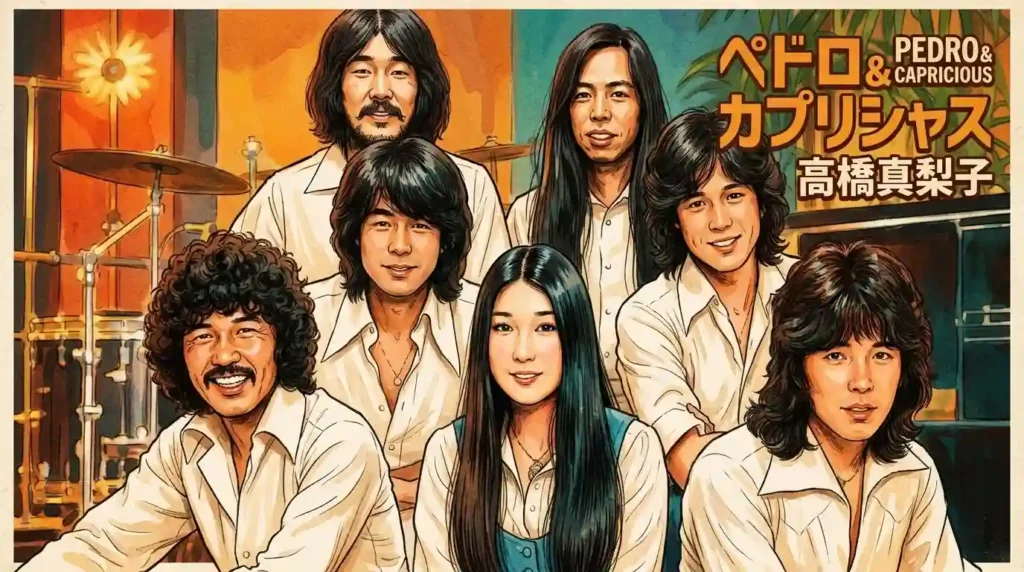
Mariko Takahashi was born on March 6, 1949, in Hiroshima Prefecture, Japan, and grew up in Hakata, Fukuoka.
Influenced by her father, who was a jazz musician, she began studying jazz at the age of 14. At 16, she moved to Tokyo to study under jazz pianist Yasushi Shibata. After graduating from high school, she returned to Hakata for a time and performed at local live music venues.
Her voice caught the attention of Pedro Umemura, the leader of Pedro & Capricious. His invitation brought her back to Tokyo, marking a major turning point in her journey toward becoming a professional singer.
The rhythmic sensitivity and phrasing she developed through jazz would remain central to her singing. I believe Takahashi’s greatest strength lies not simply in the power of her voice, but in her ability to communicate emotion through the length of a note, the placement of a phrase, or a carefully measured pause.
My Own Connection to Fukuoka
I spent a total of seven years living in Fukuoka because of my work. Knowing that Takahashi developed her musical foundations in Hakata brings back memories of the city and gives me a personal sense of connection to her story.
Chapter 2: Pedro & Capricious and the Songs of the 1970s
1973: Her Recording Debut with “Johnny e no Dengon”
In 1972, Takahashi joined Pedro & Capricious as the group’s second lead vocalist. The following year, she made her recording debut with “Johnny e no Dengon” (A Message for Johnny).
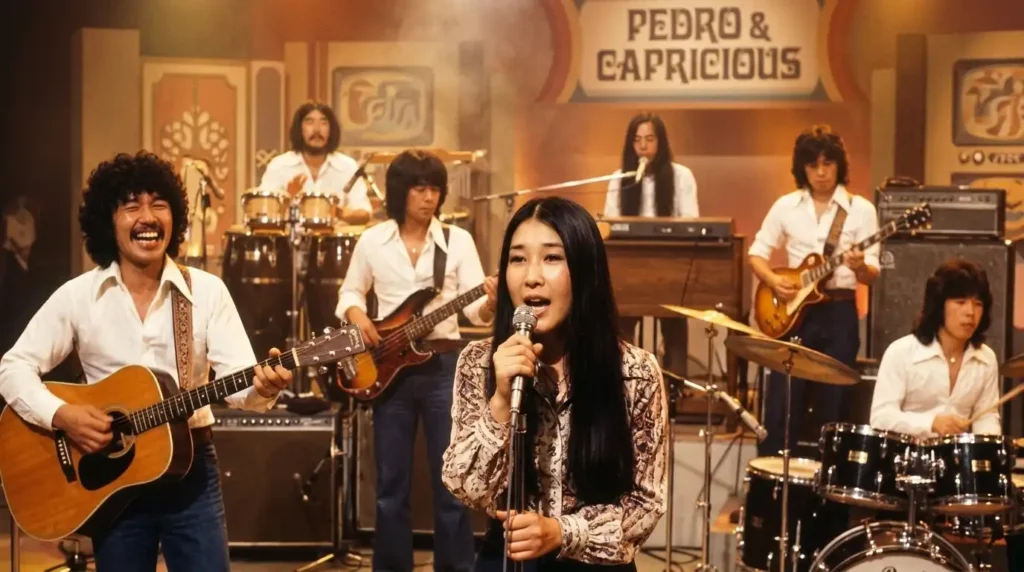
Written by lyricist Yu Aku and composer Shunichi Tokura, the song tells the story of a woman who has decided to leave a relationship and asks someone else to pass a message to the man she is leaving behind.
What I particularly appreciate about this song is its emotional restraint. Beneath its almost conversational delivery, I hear both the determination to walk away and the lingering sadness of a love that has not entirely faded.
“Gobangai no Mary e” and “Hikageri no Machi”
Released in the same year, “Gobangai no Mary e” (To Mary on Fifth Avenue) was another memorable collaboration between Yu Aku and Shunichi Tokura.
Its lyrics, in which someone asks about a former lover, suggest an entire history of relationships and passing years without explaining everything. Whenever I listen to it, I feel as though I am watching a scene from a short film.
Further hits, including “Hikageri no Machi,” followed. With her ability to interpret narrative lyrics against sophisticated, urban arrangements, Takahashi established herself as a vocalist of remarkable distinction.
There is something about these recordings that goes far beyond nostalgia. More than fifty years later, the emotions and human relationships they portray remain just as recognizable as ever.
Chapter 3: Going Solo and Rising to New Heights in the 1980s
1978: “Anata no Sora o Tobitai”
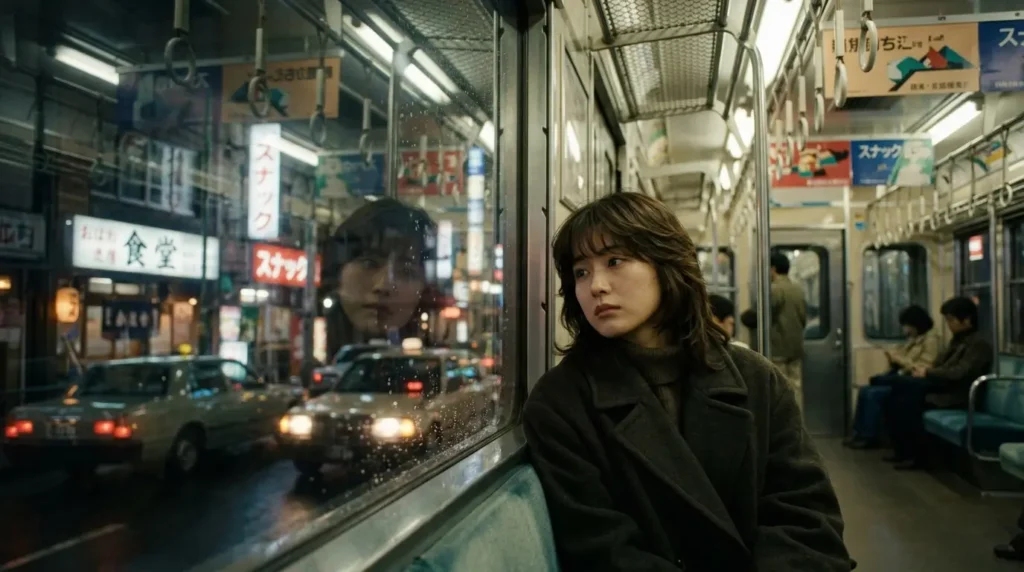
In 1978, Takahashi left Pedro & Capricious and launched her solo career with “Anata no Sora o Tobitai” (I Want to Fly Through Your Sky).
The following year, she began her first nationwide concert tour, “Hitori Aruki.” Live performances would become one of the defining pillars of her career.
Leaving an established group to create a musical identity of her own must have been a significant decision. It opened the door to an entirely new chapter in her life as an artist.
1982: “for you…” Establishes Her Reputation
In 1982, “for you…” was released and won the Gold Prize at the 11th Tokyo Music Festival World Competition. The song went on to enjoy lasting popularity.
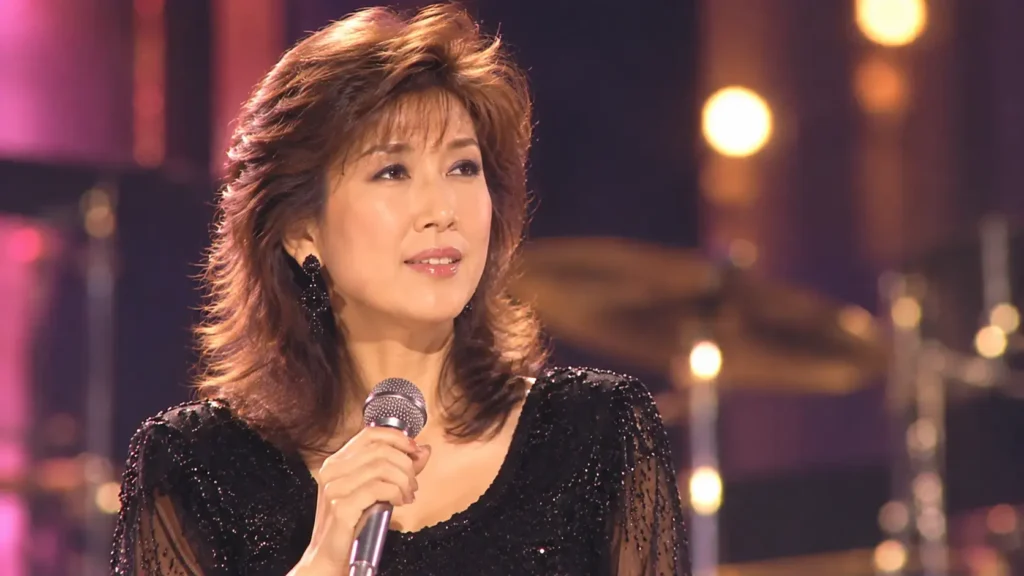
Her vocal expression is especially rich here, from the gentle opening lines to the moments when the emotion gradually intensifies. Even at her most powerful, every word remains clear, allowing the depth of the song’s affection to come through.
1984: The Breakthrough Success of “Momoiro Toiki”
In 1984, “Momoiro Toiki” (Pink Sigh) became a major hit. Its lyrics were written by Chinfa Kan, with music composed by Takashi Sato.
Its exotic-sounding melody and lyrics exploring mature romance create an atmosphere unlike that of an ordinary love song. Takahashi’s poised, expressive voice brings these elements together into a world entirely its own.
The album Triad, which included the song, received the inaugural Album of the Year Award at the 26th Japan Record Awards.
Both “for you…” and “Momoiro Toiki” played important roles in establishing Takahashi as one of Japan’s leading solo vocalists.
Chapter 4: The 1990s to the 2010s — Artistic Maturity and International Stages
The Complex Emotions of “Hagayui Kuchibiru” and “Gomen ne…”
“Hagayui Kuchibiru” (Frustrated Lips), released in 1992, and “Gomen ne…” (I’m Sorry…), released in 1996, are also essential songs in Takahashi’s repertoire.
“Hagayui Kuchibiru” conveys the frustration and passion of romantic longing, while “Gomen ne…” explores a complicated mixture of regret and affection.
Both songs express emotions that feel different from the straightforward intensity of youthful romance. They speak to the complexities of relationships shaped by experience, and Takahashi has a particular gift for bringing those subtle feelings to life.
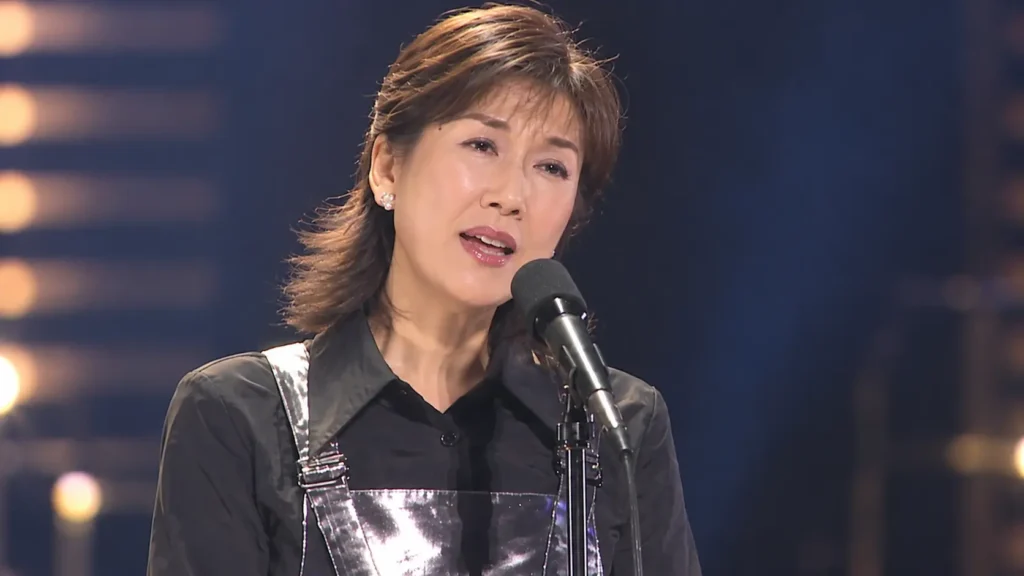
From Carnegie Hall to London and Hong Kong
In 1993, Takahashi performed in the main auditorium of Carnegie Hall in New York. The following year, she appeared at London’s Royal Albert Hall, and in 1997 she also performed in Hong Kong.
She returned to Carnegie Hall in 2008 and performed in its main auditorium for a third time in 2016.
Her ability to sustain a successful career in Japan while appearing at prestigious venues overseas remains one of the most remarkable aspects of her musical journey.
Forty Years of Music and Seven Million Concertgoers
In 2013, Takahashi celebrated the 40th anniversary of her recording debut. That same year, she returned to NHK’s prestigious year-end music program, Kohaku Uta Gassen (the Red and White Song Battle), for the first time in 29 years, taking the coveted final performance slot for the Red Team.
In June 2019, the cumulative attendance at her solo concerts reached seven million.
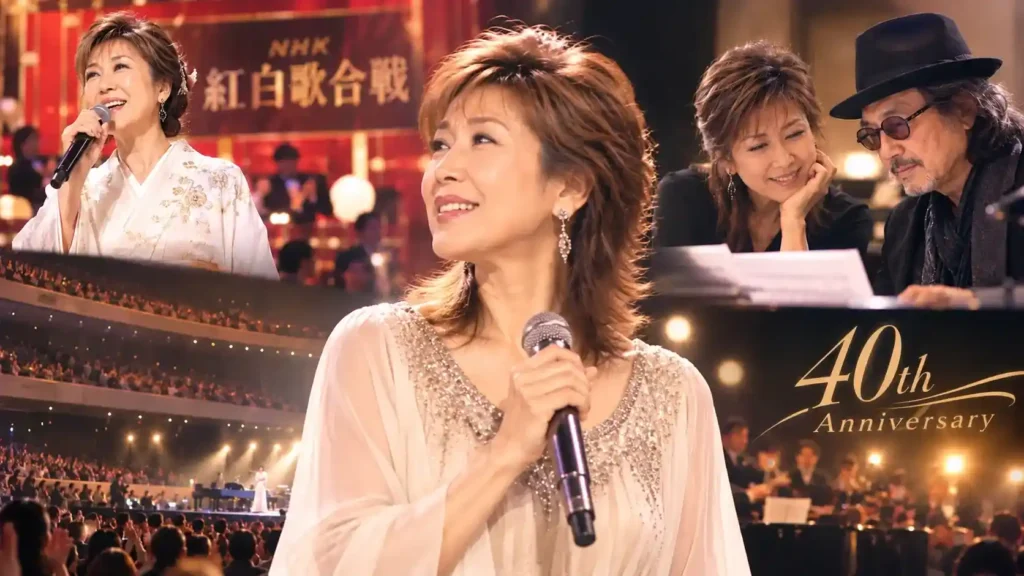
That achievement was not the result of a single hit. It reflected decades of audiences returning to hear her sing. To me, the figure represents something record and CD sales alone cannot measure: the enduring bond of trust between a singer and her listeners.
Another important figure in her story is her husband, music producer Henry Hirose. Their long-standing musical partnership has been a vital source of support throughout her career.
Chapter 5: The Final Nationwide Tours — Beyond Half a Century
2022: “our Days -Last Date-”
In January 2022, Takahashi began “our Days -Last Date-,” billed as her final nationwide concert tour. The performances continued for approximately a year, concluding in January 2023.
It was her 44th tour since her first in 1979, marking a significant turning point in a career built around performing for audiences throughout Japan.
On March 10, 2023, she marked the 50th anniversary of her recording debut.
2024–2025: The Encore Tour, “EPILOGUE”
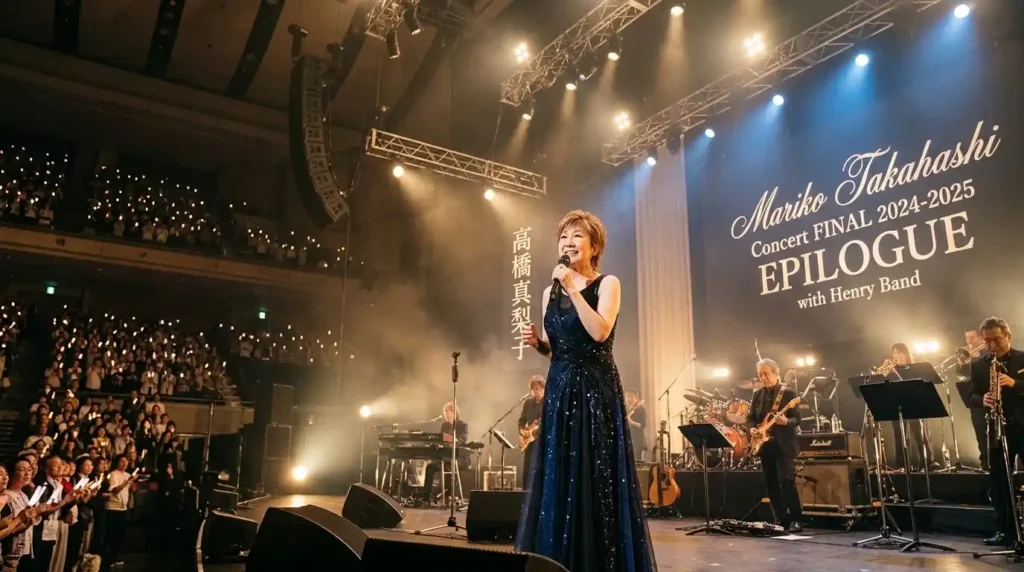
Following the conclusion of her nationwide tour, Takahashi responded to fans’ requests for an encore by launching “Mariko Takahashi Concert FINAL 2024-2025 EPILOGUE with Henry Band” in October 2024.
The 21-concert tour came to an end at the Tokyo International Forum in May 2025.
In October of the same year, the final performance was released as LIVE EPILOGUE ~Last Tour Encore~ on CD, DVD, and Blu-ray.
The word “epilogue” refers to the closing chapter of a story. In this case, however, it marked the end of her nationwide touring career, not necessarily her retirement from music itself.
The Concert I Wish I Had Seen
There is one thing I deeply regret about Mariko Takahashi. Despite listening to her music for so many years, I never attended one of her concerts.
I always assumed another opportunity would come along. Before I knew it, her final nationwide tour had ended.
Now I can only experience those performances through concert recordings. Even so, nothing can diminish the place her music has held in my life.
Epilogue: What Her Voice Has Left Behind
Looking back over Mariko Takahashi’s musical journey, I find myself realizing something. Despite the many remarkable songs she has recorded, what stays with me most is not necessarily her awards or achievements. Sometimes, it is simply the first few seconds of her singing.
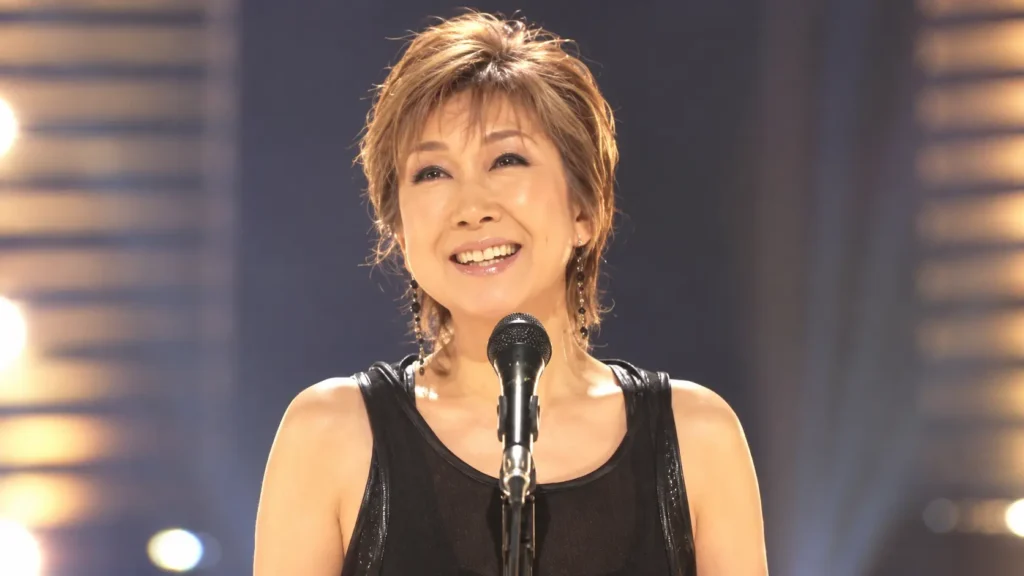
“Ah, that voice.” The moment I recognize it, a song I first heard decades ago brings back not only the melody but even the atmosphere of those distant days. Takahashi has that rare and wonderful ability.
I still regret never having experienced her voice in a concert hall.
Yet I have encountered her music countless times through records, CDs, and now concert videos. Perhaps, in my own way and from my own distance, I have been sharing a musical journey with her all along.
So, from all those memorable songs, which ten have I chosen, and how have I ranked them?
That is what my personal Best 10 series on Mariko Takahashi is all about. I hope you will join me, one song at a time, as we rediscover the magic of her voice.

音楽ファン同士の交流・リクエストはこちら / Connect & Request Songs Here