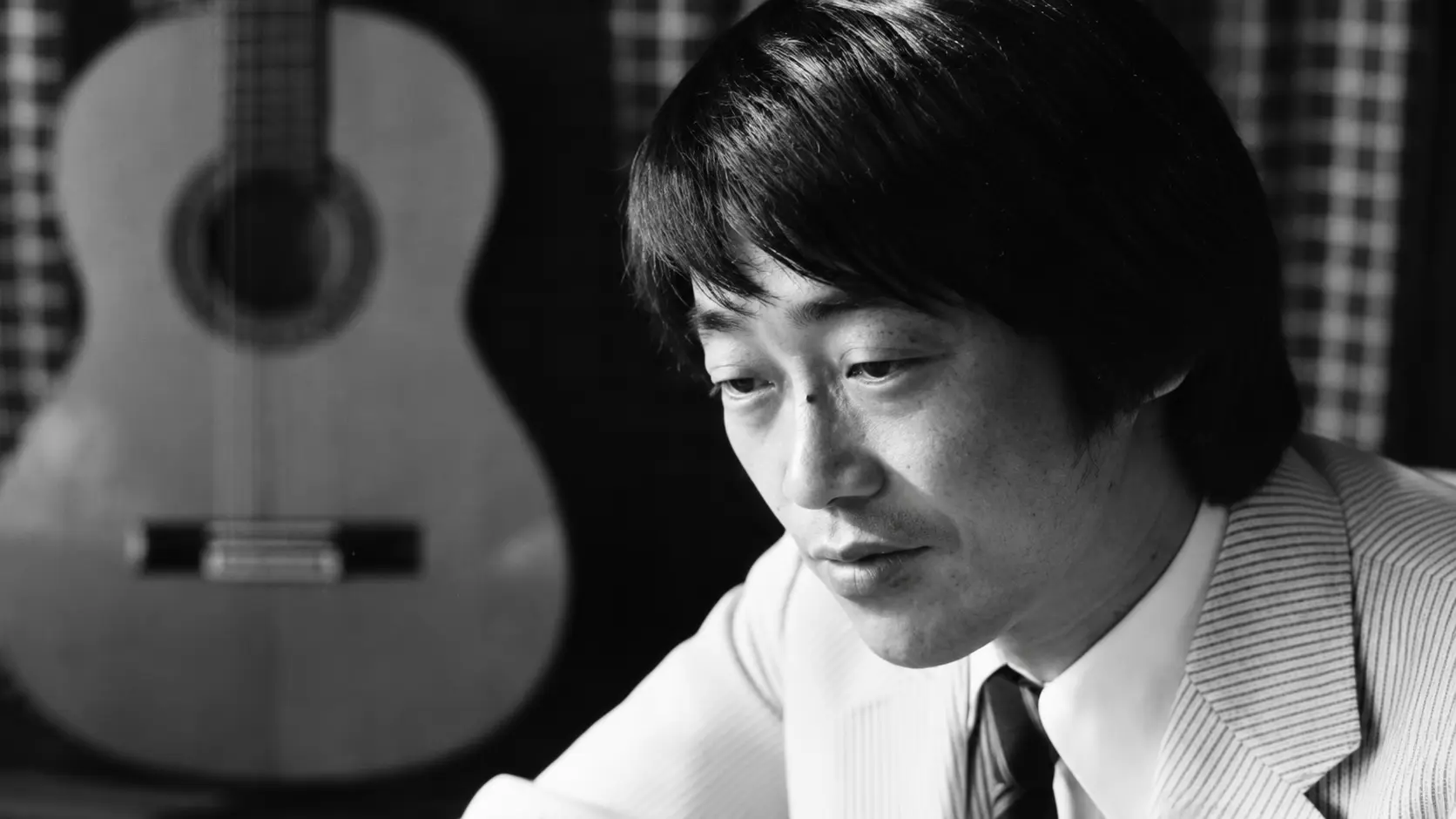
Discover the Story of Koichi Morita!
- 🎧 Listen to This Article
- No. 7: “Jidai Okure”
- First, Listen to Koichi Morita Sing “Jidai Okure”
- Eigo Kawashima’s Song, and Koichi Morita’s Composition
- Koichi Morita Takes Me Back to My University Days
- What “Jidai Okure” Meant in 1986
- What Changes When the Composer Sings His Own Song?
- Yu Aku and Koichi Morita — Words and Melody
- Why I Ranked It No. 7
- In Closing
🎧 Listen to This Article
Get a quick overview of this article through narration.
Recommended if you would like to get a feel for “Jidai Okure” and the overall flow of the article before reading.
🎵 English Narration
Listen to an English narration of this article.
🎵 Japanese Narration
Listen to a Japanese narration of this article.
Listening first will help you get a better sense of “Jidai Okure” and the key ideas explored in the article.
No. 7: “Jidai Okure”
“Jidai Okure” was written by lyricist Yu Aku, composed by Koichi Morita, and first released by Eigo Kawashima in 1986. It was also included on Kawashima’s album Jidai Okure, released on April 21 of the same year, and went on to become one of his signature songs.
Koichi Morita & Top Gallants II later recorded the song themselves. In this miniBest7, alongside Eigo Kawashima’s celebrated performance, I would also like to focus on “Jidai Okure” as sung by Koichi Morita himself, the composer who created its melody.
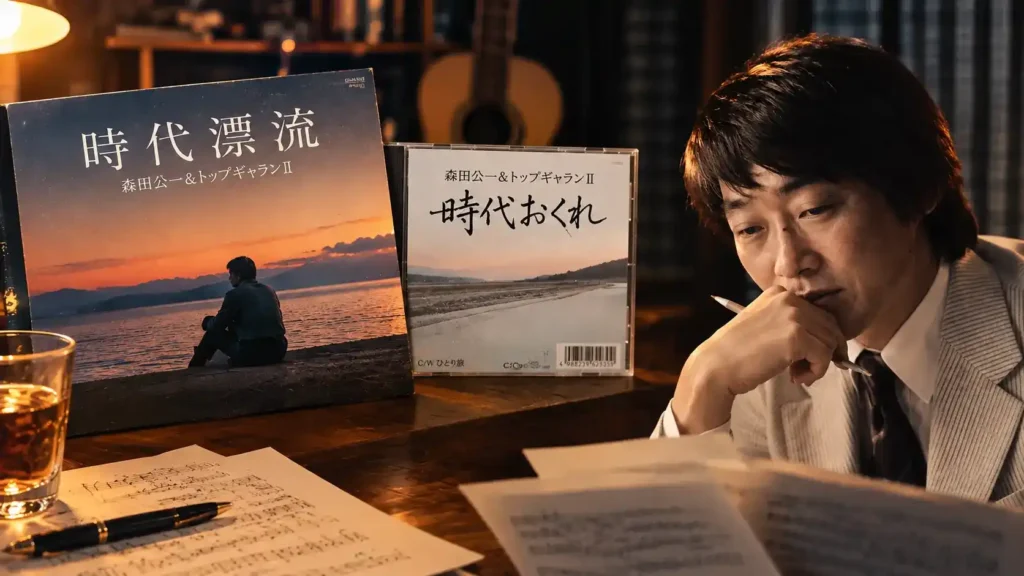
Even with the same song, a different singer can completely change its character.
When Eigo Kawashima sings it, the song carries the weight of a man speaking about the way he has chosen to live. Morita’s version, on the other hand, has a quieter quality, as though he is simply letting the melody he wrote and the words it carries unfold in their own way.
My Interpretation
Two drinks a day are enough for me.
No need to put on airs; I would rather remain awkward and treat people with kindness.
Instead of following whatever happens to be fashionable, I want to believe in what I have always valued.
Even if that leaves me a little behind the times, that is the kind of man I want to be.
💡 You might also like: View the original Japanese lyrics (External site)
If the lyrics are available only in Japanese, you can use your browser’s translation feature or an AI translation tool to understand their general meaning.
First, Listen to Koichi Morita Sing “Jidai Okure”
(This is not an official video, so the image below links to the video. Click the image to listen.)
Credits
Lyrics: Yu Aku / Music: Koichi Morita
Two-Line Note
A song about a man who refuses to force himself to follow the times, choosing instead to live honestly, even if somewhat awkwardly.
Its unadorned words convey kindness, loneliness, and the quiet dignity of a man shaped by the Showa era.
Eigo Kawashima’s Song, and Koichi Morita’s Composition
Credits
Eigo Kawashima “Jidai Okure” Official Lyric Video
Lyrics: Yu Aku / Music: Koichi Morita / Illustrator: Machi Yanagida
© Sony Music Labels / MUSIC Liverary
Two-Line Note
One of Eigo Kawashima’s signature songs, portraying a man who lives without pretension or haste and values his bonds with others.
Yu Aku’s words and Koichi Morita’s wistful melody come together to portray a way of life that continues to resonate across generations.
When people hear “Jidai Okure,” the first name that comes to mind for many is probably Eigo Kawashima. His deep, powerful voice and a performance that almost seems to carry the atmosphere of a traditional Japanese bar make it easy to understand why the song became one of his signature works.
Even so, if I were putting together a miniBest of Koichi Morita, I could not leave this song out.
That is because it is Morita’s melody, embracing Yu Aku’s words, that ultimately gives the song its complete form.
A Melody That Never Overpowers the Words
The melody never tries to push itself ahead of the lyrics. Rather than capturing the listener through dramatic leaps or flashy developments, it moves at the same pace as the words. Instead of following the melody itself, I often feel as though I am listening to one man quietly tell me his story.

Yet the music is never flat. There are subtle rises and falls within its calm progression, and when the title phrase finally arrives, everything we have heard about this man’s way of life seems to come together.
Morita does not use music to explain Yu Aku’s words. Instead, he creates a musical path that allows their meaning to enter the listener naturally. The lyrics and melody move together without competing with each other, and that is one of the song’s greatest strengths.
The Sound of Showa Kayō in Koichi Morita’s Melodies
For me, Koichi Morita has a sound that makes me want to call it “the very essence of Showa kayō.”
I do not mean that simply because he was a composer active during the Showa era. The moment I hear one of his melodies, I sometimes feel as though the atmosphere of those years, and even the everyday lives of the people who lived through them, begin to move again.
There is also something wistful in Morita’s music. That does not mean his songs are all sad. Even in his brighter compositions, there is often a faint trace of loneliness beneath the surface. That is the part that touches me most deeply.
His melodies do not fall completely into either light or darkness. Instead, they capture the human emotions that exist somewhere between the two. I think that is one of the main reasons I have always been drawn to Koichi Morita.
Koichi Morita Takes Me Back to My University Days
From here, I want to step away for a moment from “Jidai Okure” itself and talk about my own memories of Koichi Morita as a musician.
I entered university in 1977, the year after “Seishun Jidai” was released in 1976. The music of Koichi Morita & Top Gallants overlaps in my memory with the atmosphere of the years when I was beginning my life as a university student.
I remember listening to music alone in my apartment during those university years. This was not an age when any song you wanted could instantly be called up at any time. I think we spent far more time with a single record and a single song than we do today.
I would return from university and put on a record in an empty room. As soon as the music began, the atmosphere of the room changed. When I hear Morita’s melodies today, I sometimes remember not only the music but also the person I was around the age of twenty.
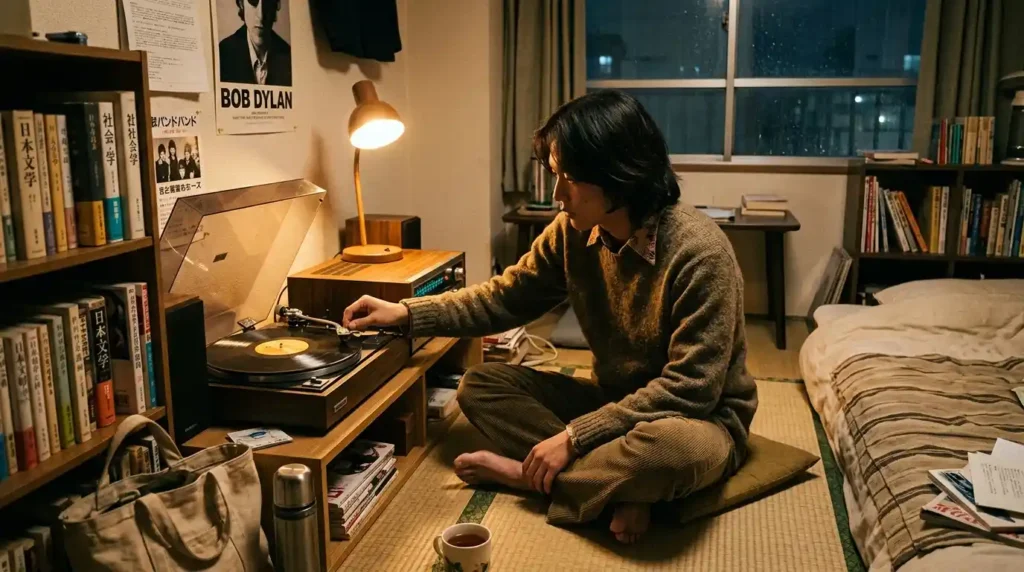
I Remember Not Only the Songs, but the Time Around Them
Music we listened to often when we were young can become connected to memories that have nothing directly to do with the songs themselves: the room we lived in, the season, the silence of the night, and whatever was on our minds at the time. In my memory, those things are not neatly separated from the music.
That is why the phrase “a composer I like” does not quite capture what Koichi Morita means to me. His melodies were present in a particular place and period of my student years. That is what continues to make his music special to me, even after so many decades.
“Jidai Okure” Came Later
Eigo Kawashima released “Jidai Okure” in 1986. By then, several years had passed since my university days, and I was already working.
And yet, when I listen to the song now, Morita’s characteristically wistful melody sometimes reaches even further back, bringing memories of my younger years to the surface.
The works of one musician can become connected to different periods of our lives, even when those periods are separated by many years. I think that is one of the pleasures of continuing to listen to music throughout a lifetime.
What “Jidai Okure” Meant in 1986
Looking back at Japan in 1986, the title “Jidai Okure” — literally, “Behind the Times” — feels particularly symbolic. Japan was moving toward the bubble economy, and things associated with novelty, glamour, and material prosperity were increasingly attracting attention.
Against that backdrop, the man Yu Aku portrayed was not someone trying to place himself at the center of society. He does not seek attention or try to make himself appear greater than he is. He drinks, values his friends, and keeps his complaints away from his family. He stands in sharp contrast to the glamour of the age.
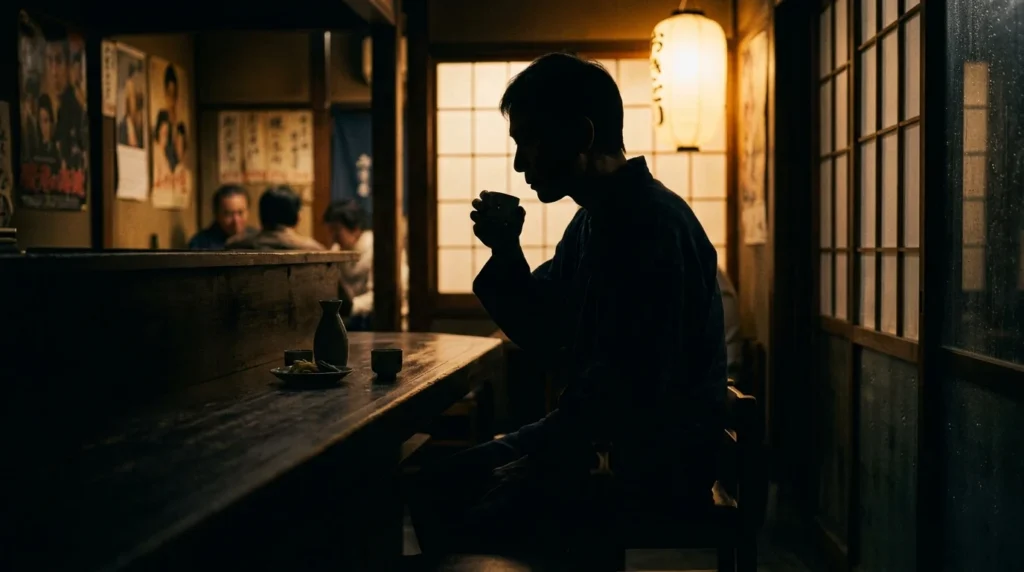
He Is Not a Man Who Cannot Keep Up with the Times
That is why the title “Jidai Okure” carries something more than simple self-deprecation. It is not that he cannot keep up with the times. He decides for himself which parts of the times he does not need to follow.
That is how the phrase sounds to me: as an expression of quiet determination.
No matter where society is heading, he does not feel compelled to run in exactly the same direction. Yet he does not reject the world and turn his back on it either. That sense of distance is what keeps the song’s protagonist from becoming merely a stubborn man.
A Man Who Never Talks About Being Cool Somehow Looks Cool
The man in this song never loudly declares his personal philosophy.
He does not try to win other people’s approval, nor does he attempt things that do not suit him. Even in his relationships with others, he maintains his own sense of restraint.
And yet, by the time we reach the end of the song, he somehow appears remarkably strong. Perhaps that is because the very fact that he does not display his strength becomes a form of strength in itself.
A Difficulty We Understand Better After Living Longer
Do not decorate yourself more than necessary in front of others. Do not take your frustrations out on your family. Value the friends who have been with you for years. Do not let competition with others consume you. Continue to care for the people who truly matter to you.
Put into words, these things sound simple. But after living in society for many years, we begin to understand how difficult they can be to maintain. Words I might once have dismissed as the sentiments of an old-fashioned man now carry a very different weight.
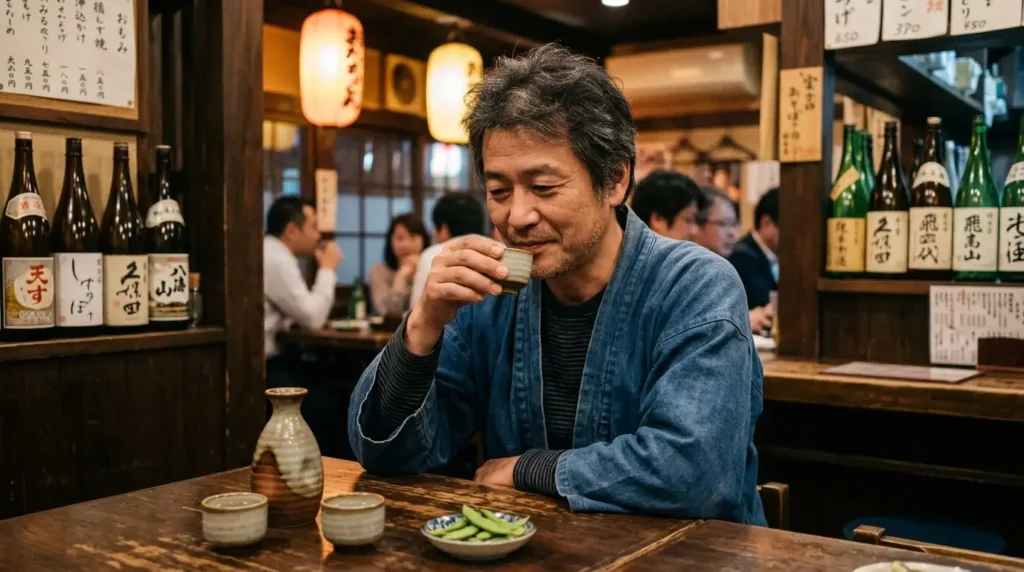
What Changes When the Composer Sings His Own Song?
Eigo Kawashima’s “Jidai Okure” has a weight that makes it seem as though the singer is carrying his own life within the song. The depth of his voice, the way he places each word, and his presence as a singer long associated with songs about drinking all merge with the composition. Kawashima and the song’s protagonist seem almost naturally connected.
Morita’s Version Reveals the Song as a Composition
Morita’s version leaves a somewhat different impression. Rather than dramatically acting out the song, he carries the melody and words forward in a straightforward way.
To me, his singing makes the contours of the song as a composition easier to hear beneath the powerful presence that defines Kawashima’s version.
This is not a question of which version is better. The same words and melody take on different expressions depending on who sings them. Being able to hear that difference is part of what makes “Jidai Okure” such an interesting song.
Koichi Morita: Singer and Composer
Koichi Morita had two distinct sides: the singer who performed songs such as “Seishun Jidai” with Top Gallants, and the composer who wrote songs for many other artists. “Jidai Okure” is especially interesting when we consider the latter side of his career.
What makes it even more interesting is that Morita’s own performance of the song also survives. When a composer sings a work that became widely known through another performer, it feels somewhat different from an ordinary cover. It can sound as though the composer is returning to a song that left his hands and developed a life of its own.
Through Eigo Kawashima, “Jidai Okure” became one of Kawashima’s signature songs. Yet at the source of its melody is Koichi Morita. I think the song has endured because the personalities of both performer and creator became part of the same work.
Yu Aku and Koichi Morita — Words and Melody
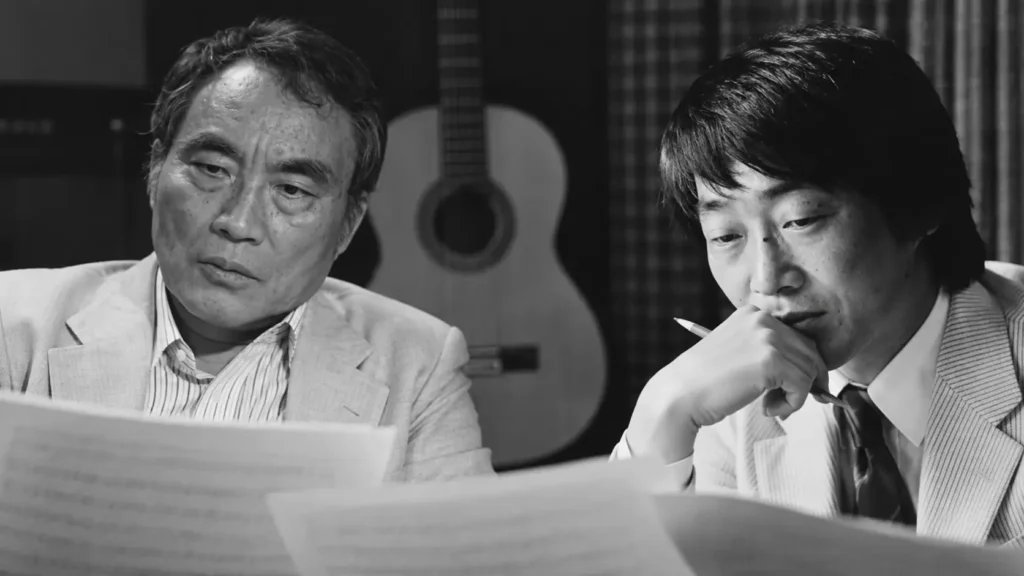
It is impossible to talk about Koichi Morita without considering his work with lyricist Yu Aku. In songs they created together, including “Geshukuya” and “Seishun Jidai,” there is a gaze directed toward the slightly awkward side of human beings and toward lives that do not always turn out as we hope.
The Two Men Who Sang of Youth Turn to an Adult Man
The man we encounter in “Jidai Okure” is no longer a young person lost in the middle of youth. He is an adult carrying the weight of many experiences while trying to choose his own way of living.
Yu Aku does not portray him as a great success. Nor does Morita give him a melody that makes him sound like a hero.
Because those two sensibilities come together, “Jidai Okure” never becomes a sermon or a lesson in how to live. Instead, it remains in the heart as the modest wish of one man.
Why I Ranked It No. 7
The main reason I placed “Jidai Okure” at No. 7 in this miniBest7 is that it allows me to hear both sides of Koichi Morita: the singer and the composer.
I first became familiar with Morita through songs he sang himself, such as “Seishun Jidai.” At the same time, the songs he wrote for other singers contain the same kind of wistful melodies that have always appealed to me. Although “Jidai Okure” is one of Eigo Kawashima’s signature songs, it also reminds me once again of Koichi Morita’s appeal as a composer.
And we can also hear the composer himself sing it. Listening to both Eigo Kawashima’s version and Morita’s version reveals how many different expressions a single song can contain. As an entry point into this miniBest looking back at Koichi Morita, I believe “Jidai Okure” deserves its place at No. 7.
In Closing
“Jidai Okure” became deeply embedded in the memories of many listeners through Eigo Kawashima’s performance. But when I listen to it again as part of a Koichi Morita miniBest, I become newly aware of the skill with which Morita’s melody supports Yu Aku’s words.
For me, Koichi Morita is a musician whose music brings back memories of my university days. “Jidai Okure,” however, came later, after I had entered working life. Looking back now, I can hear in both periods the same wistful quality in Morita’s music that I have always loved.
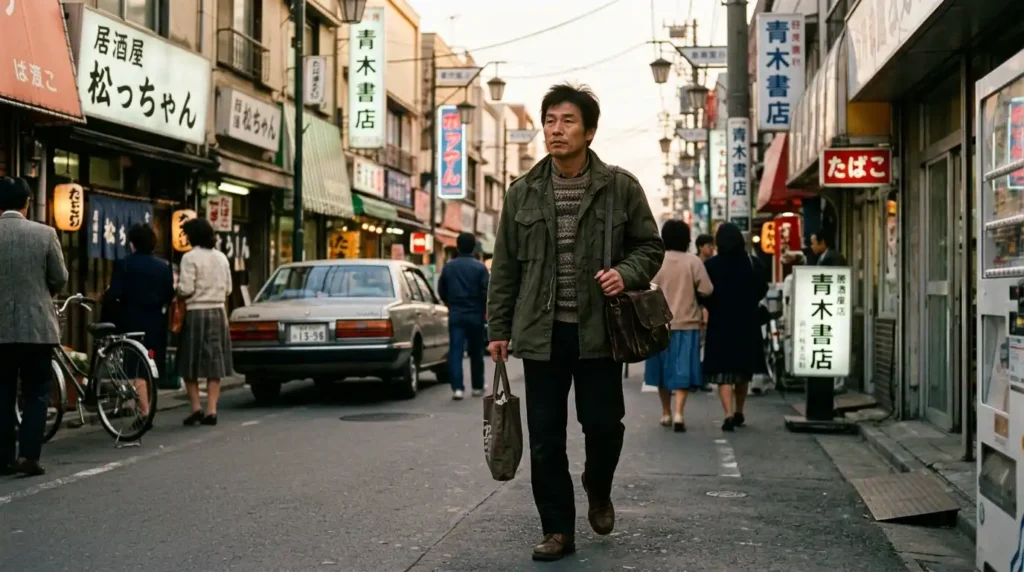
Do not compete for attention. Do not force yourself to do what does not suit you. Do not be consumed by envy or haste. Protect the things that truly matter to you. Is such a way of living really “behind the times”?
To me, the song seems to express something that does not easily become outdated, no matter how much the times change. From Eigo Kawashima’s celebrated performance to Koichi Morita’s own singing, and finally to the melody at the heart of it all: following the song back to its source makes the reason I chose it as No. 7 in “My Personal miniBest7: Koichi Morita” even clearer.

音楽ファン同士の交流・リクエストはこちら / Connect & Request Songs Here