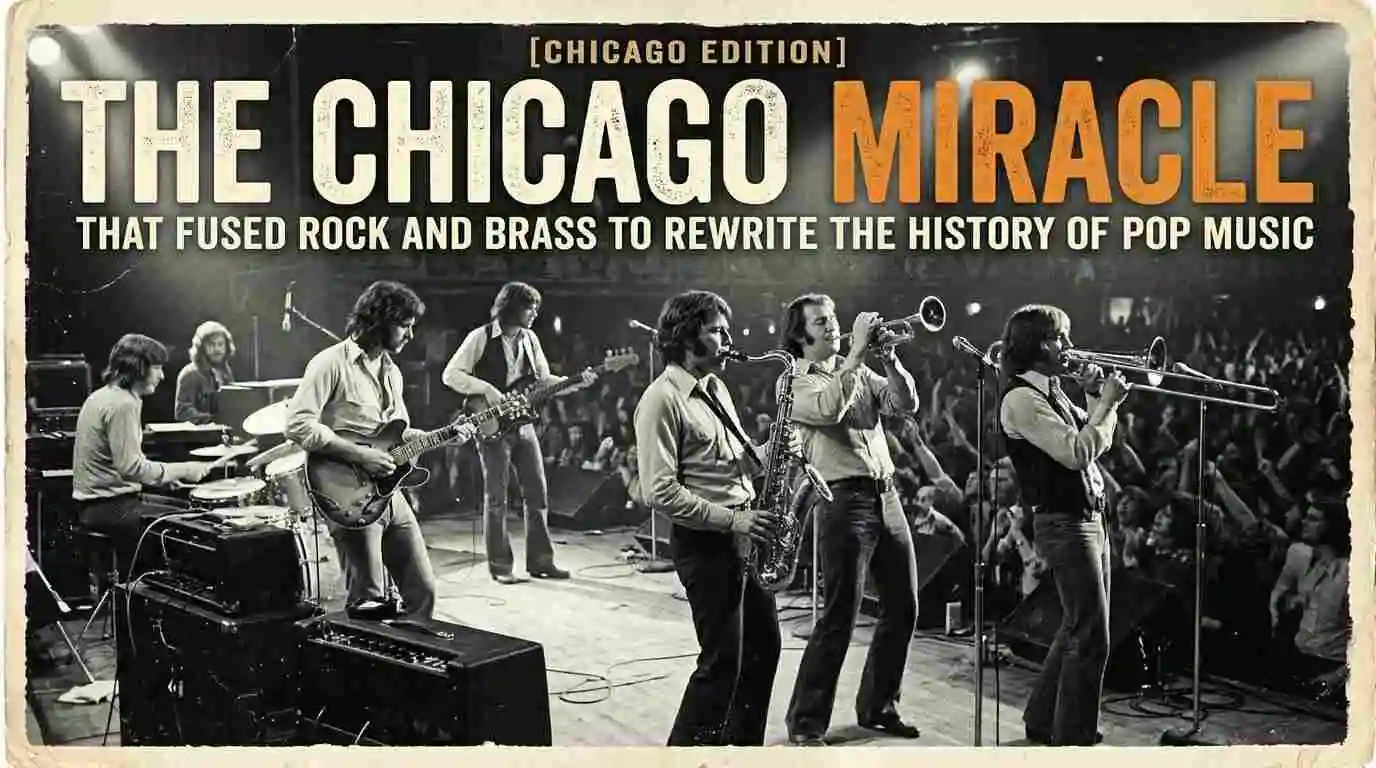
💛The “Miracle of Chicago,” the band that fused rock and brass and rewrote pop history, starts here: Read the series introduction.
- 🎧 Listen to This Article
- No. 1 is “Dialogue Part I & II”
- First, listen to the official YouTube audio.
- A dialogue, but not a calm conversation
- Terry Kath and Peter Cetera create two characters with their voices
- In Part II, the song changes from a private conversation into a collective voice
- The shift between the first half and the second half is stunning
- Robert Lamm’s construction and Chicago’s brass
- The ending of the studio version is incredibly cool
- The year 1972 and the memory of this song
- Why is it No. 1 in my Chicago edition?
- In closing
🎧 Listen to This Article
You can quickly grasp the main points of this article through narration.
Recommended if you want to get a feel for “Dialogue Part I & II” and the overall flow of the article before reading.
🎶 English Narration
This audio introduces the article in English.
🎵 日本語 Narration
This audio introduces the article in Japanese.
Listening first can help you understand the world of “Dialogue Part I & II” and the key points of the article more easily.
No. 1 is “Dialogue Part I & II”
My No. 1 song in the Chicago edition is “Dialogue Part I & II.”
After ranking Chicago’s songs up to this point, there was not just one song I wanted to place at the top.
“25 or 6 to 4” has the sharp edge of a rock band. “Saturday in the Park” has the gift of turning the air of a city into music. “Hard to Say I’m Sorry” has a beautiful melody that reaches across time.
Even so, I chose this song for the top spot. The reason is that Chicago’s intelligence, irony, brass power, vocal design, and hope for humanity sound most three-dimensionally inside this one song.
What I especially love about this song is the skillful exchange in the first half.
Terry Kath and Peter Cetera’s voices alternate like two characters on a stage. One sees the reality of society and grows irritated, while the other seems to look away from everything and brush it aside.
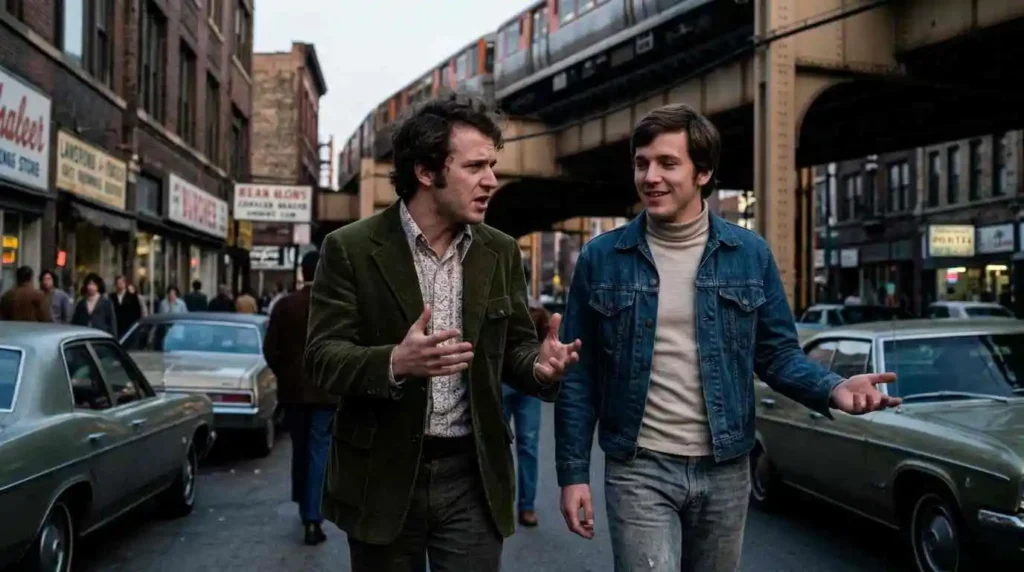
The rhythm of that exchange is wonderful. Although the theme is heavy, the song never turns preachy. It even feels a little light, a little witty, and that is exactly why it stays in the listener’s chest.
Then, when Part II begins, the scenery of the song changes all at once. The two voices that failed to meet in the first half become, in the second half, the voice of the entire band. Personal indifference and social questioning finally move toward a chorus that says we can change things.
This contrast between the first half and the second half is one of the song’s greatest attractions. On top of that, the ending of the studio version is unbelievably cool. After building to such a powerful height, the song does not close with a flashy final pose. It ends as if only the voice remains.
Ultra-Translation
The world is going wrong, yet you turn away and say nothing is wrong.
War, hunger, and pain numb the heart when we pretend not to see them.
But that does not mean nothing can be changed.
We still have the power to make the world a little better.
To protect the children, we can make change happen now.
First, listen to the official YouTube audio.
■ Common Credits
Chicago “Dialogue / Dialogue, Pt. I & Pt. II”
Written by Robert Lamm
Original album: Chicago V 1972
Produced by James William Guercio

“Dialogue” is a socially conscious Robert Lamm song built around a conversation between one person who questions social and political anxiety and another person who brushes it off by saying that nothing is wrong.
In the second half, the viewpoint shifts, and the hope that the world can be changed is pushed forward with Chicago’s distinctive horns, chorus, and rock drive.
■ Official Audio 1: Studio Version
Chicago “Dialogue, Pt. I & Pt. II 2002 Remaster”
Audio type: Official audio
Source: 2002 remastered version

The 2002 remaster makes it easy to hear the architectural beauty of the studio recording and the dialogue-style vocals by Terry Kath and Peter Cetera.
The movement from cool optimism and urgent social awareness in the first half to the hopeful second half brings the song’s message vividly into focus.
■ Official Audio 2: Live Version
Chicago “Dialogue Live in ’75”
Audio type: Official audio
Live recording from: Live in ’75
Audio provided by Rhino / Warner Music Group

In the 1975 live version, the exchange between Terry Kath and Peter Cetera gains even more heat and tension than in the studio version.
The horns, chorus, and rhythm section move forward as one, showing that Chicago was not merely a brass-rock band, but also a fierce live band.
A dialogue, but not a calm conversation
The title “Dialogue” means a conversation.
However, what “Dialogue Part I & II” depicts is not a quiet exchange of opinions.
The character sung by Terry Kath sees war, hunger, and social anxiety.
Meanwhile, the character sung by Peter Cetera does not try to take those problems deeply into himself. He does not simply fail to see them. He sounds as if he is preserving his everyday life by choosing not to see them.
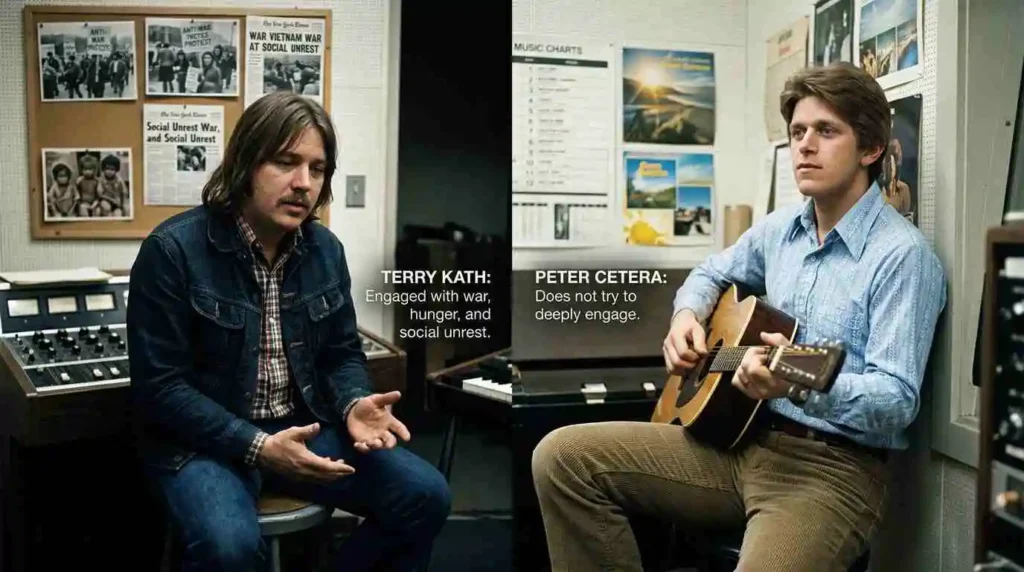
The sharpness lies in refusing to divide them into good and evil
Robert Lamm does not simply divide one side into justice and the other into evil.
He portrays the gap between a person who faces society and a person who avoids troublesome questions as a slightly ironic, slightly light conversation.
The Peter Cetera side does not shout back.
He simply dodges the questions. He does not think too deeply. If he cannot see problems around him, he assumes the world must be fine.
That lightness is what makes it frightening
The first half of this song does not loudly condemn social indifference. Instead, it makes that feeling sound like something that could exist, at least a little, inside anyone.
That is why the song still catches in my chest today, not only as a song from America in 1972.
Terry Kath and Peter Cetera create two characters with their voices
The brilliance of the first half lies not only in the words.
The difference between Terry Kath’s voice and Peter Cetera’s voice clearly brings the two characters into view.
A rough heat and a clear lightness
Terry Kath’s voice has a rough heat.
He wants to tell the other person something, but it does not quite get through. That frustration seeps from deep inside his voice.
Peter Cetera’s voice is the opposite.
It is clear, light, and somehow defenseless. That is exactly why the “everything is fine” attitude he sings has a frightening innocence.
The first half moves like a short play
Because of this casting, the first half sounds like a brief stage drama.
Chicago does not leave a heavy subject as mere heaviness. The band gives it irony and keeps the song moving forward. That is where Chicago’s intelligence appears.
In Part II, the song changes from a private conversation into a collective voice
In the first half, two characters face each other.
But in the second half, the view of the song suddenly opens wide.
The failed exchange between the two turns into the voice of the whole band.
The song does not move toward blame. It moves toward the idea that something can still be changed.
We can change the world.
We can save the children.
We can make it better.
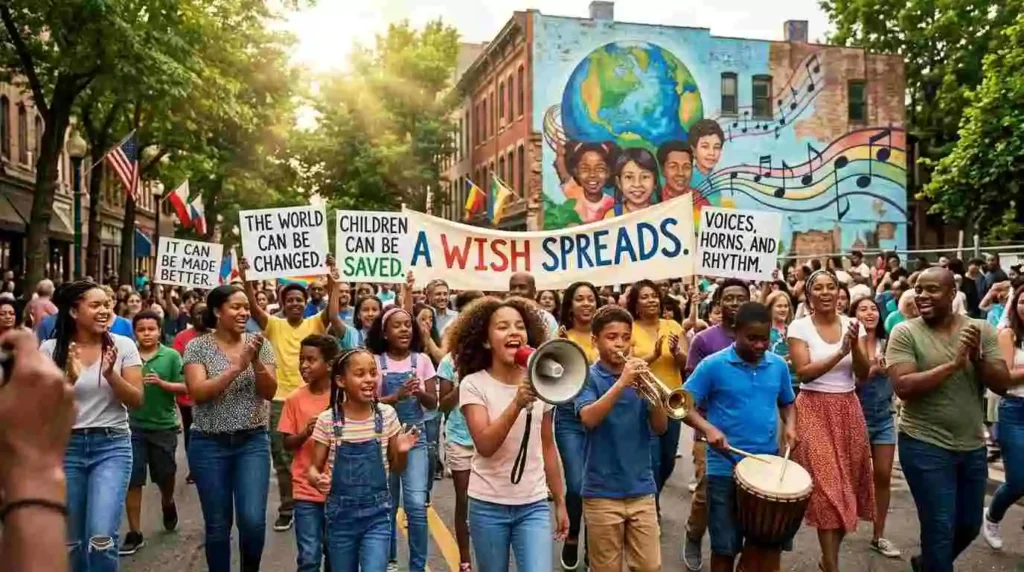
That wish spreads through voices, horns, and rhythm.
The air of the early 1970s overlaps with the sound
This flow contains the atmosphere of the early 1970s.
Resistance to the Vietnam War, memories of the civil rights movement, and the rise of youth culture all overlap with the surge of the second half.
The shift between the first half and the second half is stunning
One major reason I placed this song at No. 1 is the shift between the first half and the second half.
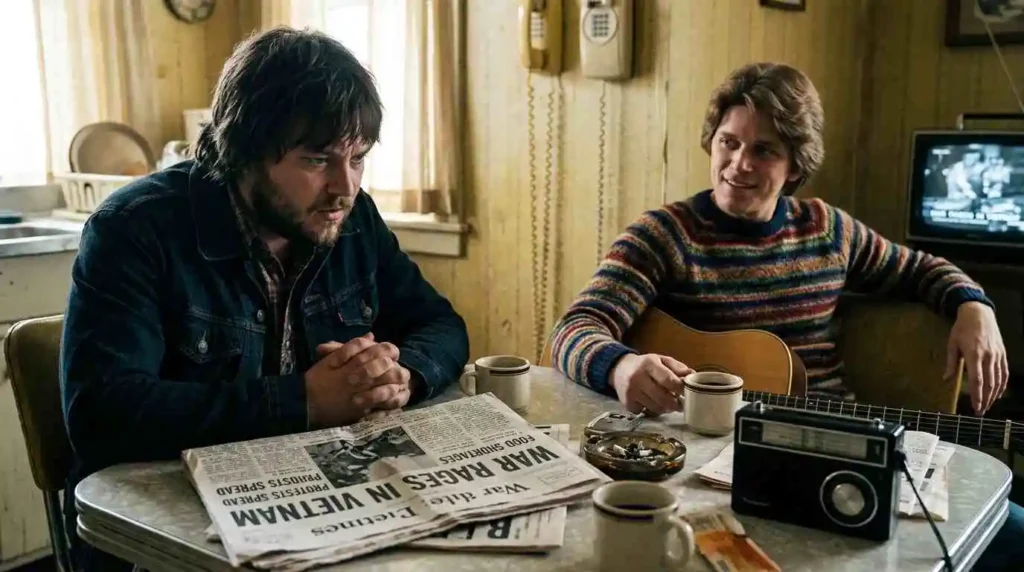
The first half is a slightly ironic, slightly dry conversation.
Even when one person asks questions, the other does not really accept them. Even when social reality is brought up, the other person acts as if it has nothing to do with him.
The second half shows a completely different face
Then, in the second half, the song shows an entirely different expression.
The rhythm opens up, the voices overlap, and the horns move further forward. It sounds as if a gaze that had been closed inward now opens toward the outside.
The two-part structure itself has meaning
Part I and Part II are not simply two separate songs connected together.
They are two necessary scenes for the movement from individual words to a shared voice.
Robert Lamm’s construction and Chicago’s brass
“Dialogue Part I & II” was written by Robert Lamm.
What first surprises me in this song is Robert Lamm’s sense of construction.
He presents a theme, places two characters, creates irony through conversation, and then carries everything into a collective voice. There is no waste in that flow.
The balance between words and sound never collapses
It is not easy to turn a social theme into music that is genuinely interesting.
If the message comes too far forward, the song becomes stiff. If only the pleasure of sound is emphasized, the weight of the words becomes thin.
Robert Lamm avoids both problems.
The conversation in the first half and the expansion in the second half both function naturally within the song.
The horn section pushes the song forward
What matters in the second half is Chicago’s horn section.
The trumpet, trombone, and saxophone do not simply sound bright. They push the entire song forward.
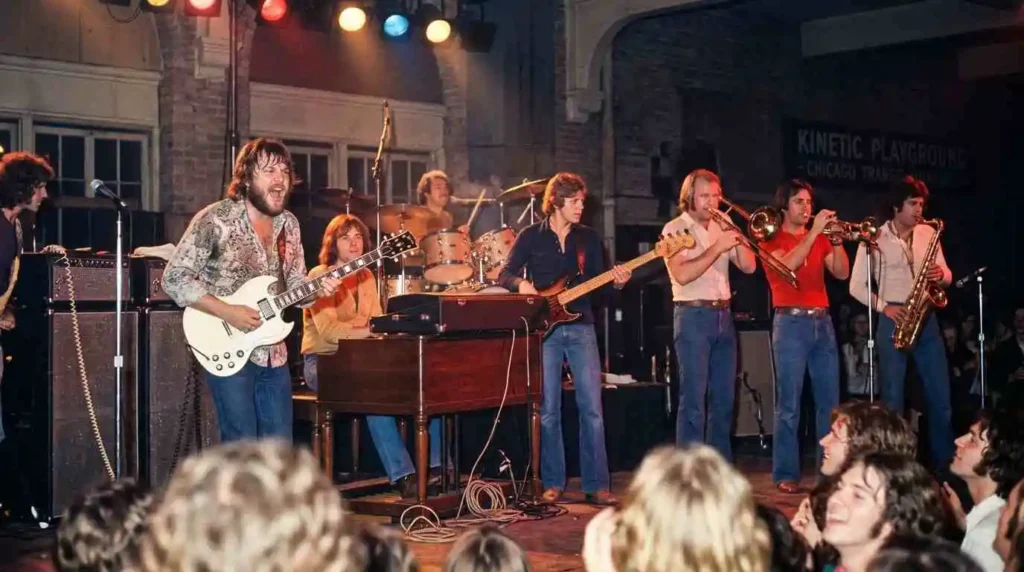
The brass in this band is not decoration.
For Chicago, the horns are like an engine that moves the song.
Footsteps of people who have not yet given up
That is why in Part II, I can hear the footsteps of people who have not yet given up on the world.
The song does not merely put forward an ideal. The sound itself tries to move ahead.
The ending of the studio version is incredibly cool
The one part of this song I absolutely have to mention is the ending of the studio version.
Normally, when a song has built up this much power, it would be tempting to end with a huge final sound.
But the studio version of “Dialogue Part I & II” does not move toward a simple curtain drop.
The thrill of cutting off sharply on the final “ha”
In the second half, the same wish is repeated again and again.
The voices gradually gather heat, and the listener is left with the feeling that it might still continue.
But the ending does not drag things out.
The song cuts off sharply, as if the voice has just started to say “make it ha.”
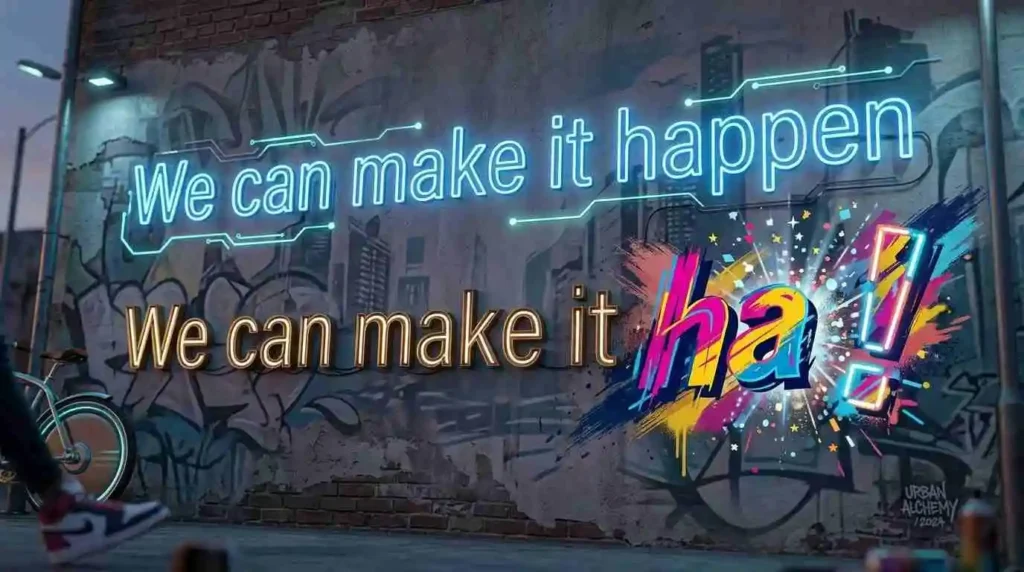
That ending is incredibly cool.
Instead of forcing a conclusion with a huge sound, the song leaves only the last breath and suddenly shuts the view.
The song ends, but the problem does not.
That feeling is decided by the final sound.
The year 1972 and the memory of this song
This song also carries the air of 1972.
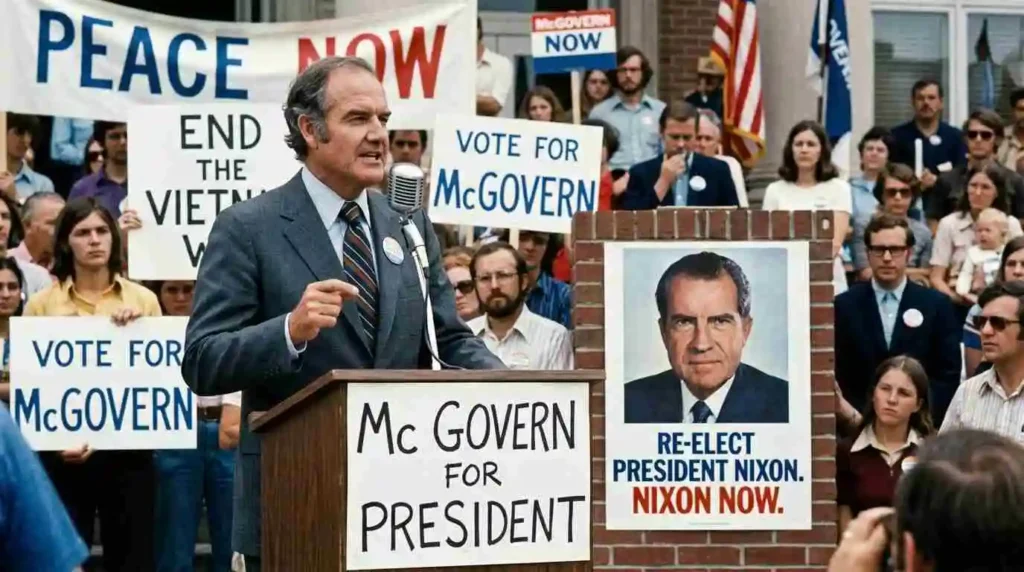
In America at that time, the Vietnam War was a major social issue.
In the presidential election that same year, George McGovern, who ran on an antiwar platform, challenged Richard Nixon. In an era where political distrust, youth culture, and questions about war overlapped, this song’s dialogue must have sounded sharp.
This is not a song to hear as a political slogan
Of course, I do not hear this song as a political slogan.
If we confine it only to that context, the song becomes smaller than it really is.
The strength of this song is that it starts from a specific time, yet can be heard beyond that time.
The structure of one person facing society and another avoiding troublesome questions exists in every era.
The wish in the second half does not grow old
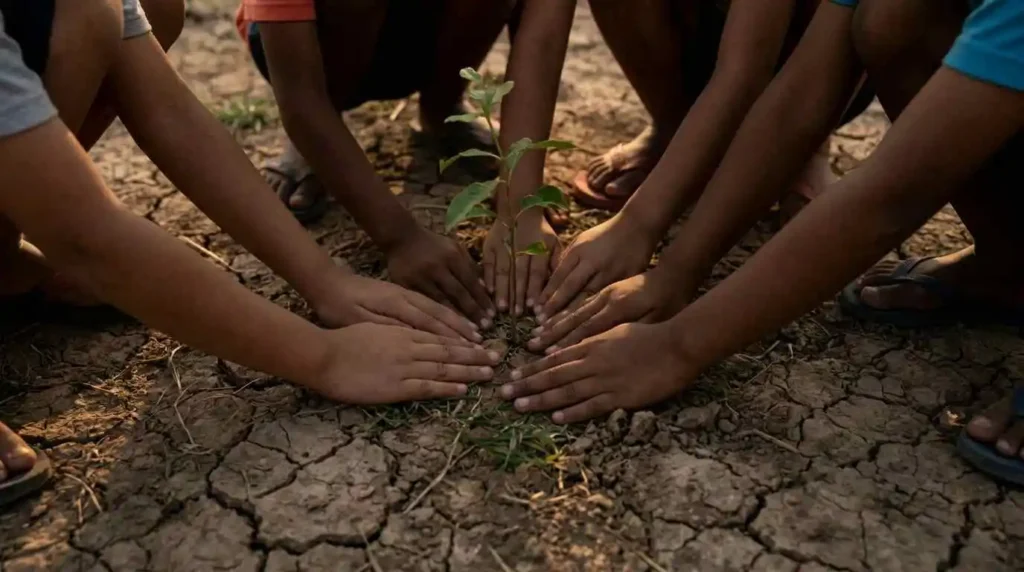
The wish to protect children, to make the world a little better, and to believe that there is something we can do does not disappear just because time passes.
Why is it No. 1 in my Chicago edition?
So why did I choose this song as No. 1 in my Chicago edition?
I believe “Dialogue Part I & II” is the song that most three-dimensionally shows Chicago’s musical appeal and the breadth of its ideas.
This song has the vocal contrast between Terry Kath and Peter Cetera.
It has Robert Lamm’s construction. It has the forward drive of the horn section. And it has the dramatic change from Part I to Part II.
A large social awareness that does not sound dark
There is also a large social awareness in this song.
Is it enough for only oneself to be safe? Can we keep looking away from society’s pain? Can people truly change the world?
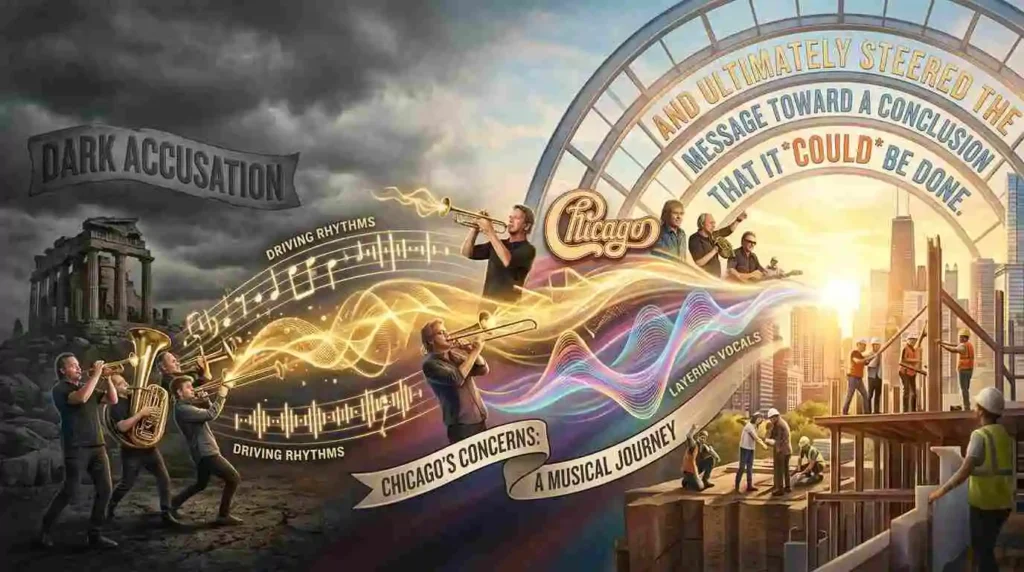
Chicago did not make that awareness sound like a dark accusation.
The band sounded the brass, drove the rhythm forward, layered the voices, and finally carried the song toward the belief that we can make it happen.
Intelligence, ambition, and humanity live together in this song
If I were to explain Chicago’s coolness through one song, there would be other candidates. But if I want to include Chicago’s intelligence, ambition, and humanity, I still choose this song.
In closing
“Dialogue Part I & II” is not merely a socially conscious rock song.
In the first half, two characters exchange words.
One looks at reality and becomes angry. The other tries not to see anything and escapes into everyday life. Their exchange is light, yet it leaves a small thorn deep in the chest.
Conversation becomes chorus, and irony moves toward hope
In the second half, the song suddenly opens up.
The conversation becomes a chorus, irony moves toward hope, and individual indifference is pushed back by a collective voice.
This song does not offer a simple answer.
It sings that the world can be changed, but it does not say that the world changes easily. It depicts human indifference, but it does not abandon humanity.

The one song I want to place at the summit of my Chicago edition
That balance feels very Chicago to me.
As the No. 1 song in my Chicago edition, I cannot think of a more fitting choice.
This song contains not only the coolness of brass rock, but also what Chicago was looking at and where the band was trying to go.
That is why my No. 1 song in My Personal Top 10 Chicago Songs is “Dialogue Part I & II.”

音楽ファン同士の交流・リクエストはこちら / Connect & Request Songs Here