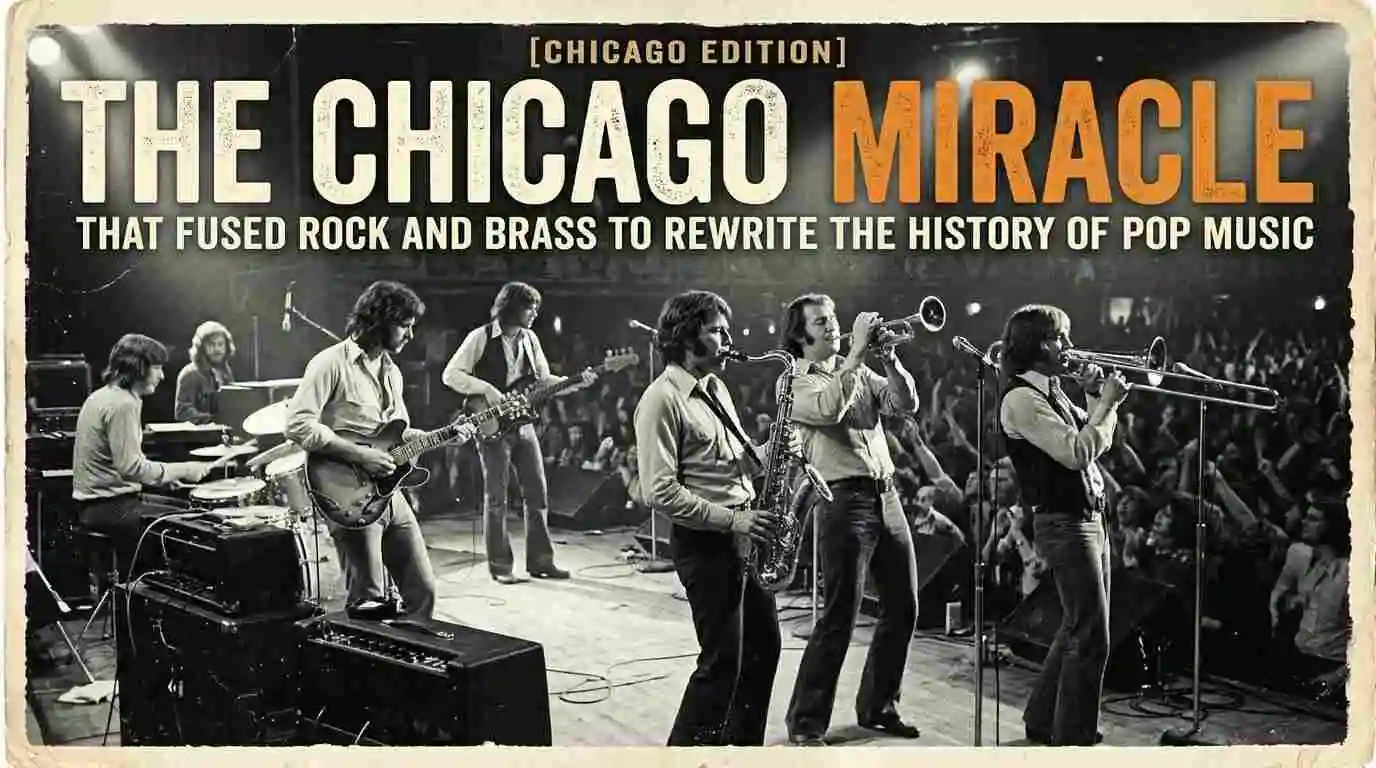
💛The “Miracle of Chicago,” which blended rock and brass to rewrite the history of pop music, can be found… right here!
- 🎧 Listen to This Article
- No. 5 is “25 or 6 to 4”
- First, Please Listen to the Official YouTube Audio
- Why I Chose “25 or 6 to 4” for No. 5
- The Original Title “25 or 6 to 4” and the Japanese Title “Long Night”
- The World of the Lyrics Lies Within a Sleepless Night
- The Sound That Depicts a Sleepless Mind
- “25 or 6 to 4” Within Chicago II
- The Life of the Song Revealed in the 1999 Live Version
- In Closing
🎧 Listen to This Article
You can quickly grasp the main points of this article through narration.
Recommended if you want to understand the mood of “25 or 6 to 4” and the overall flow of the article before reading.
🎶 English Narration
This audio introduces the article in English.
🎵 Japanese Narration
This audio introduces the article in Japanese.
Listening first will help you grasp the world of “25 or 6 to 4” and the key points of the article more easily.
No. 5 is “25 or 6 to 4”
For No. 5, I have chosen “25 or 6 to 4,” one of Chicago’s defining early songs.
This song was included on Chicago’s second album, Chicago, released in January 1970 and now widely known as Chicago II. It was also released as a single in June of the same year.
In the United States, it rose to No. 4 on the Billboard Hot 100, strongly showing that Chicago was not merely “a rock band with brass added,” but a new kind of band that fused rock and brass into one powerful sound.
Whenever I listen to this song, I feel that any explanation of Chicago suddenly becomes much shorter.
There is the skeleton of rock, the sharpness of brass, and Terry Kath’s guitar cutting right through the middle.
Within just a few seconds, the song tells us that Chicago was never an ordinary rock band.
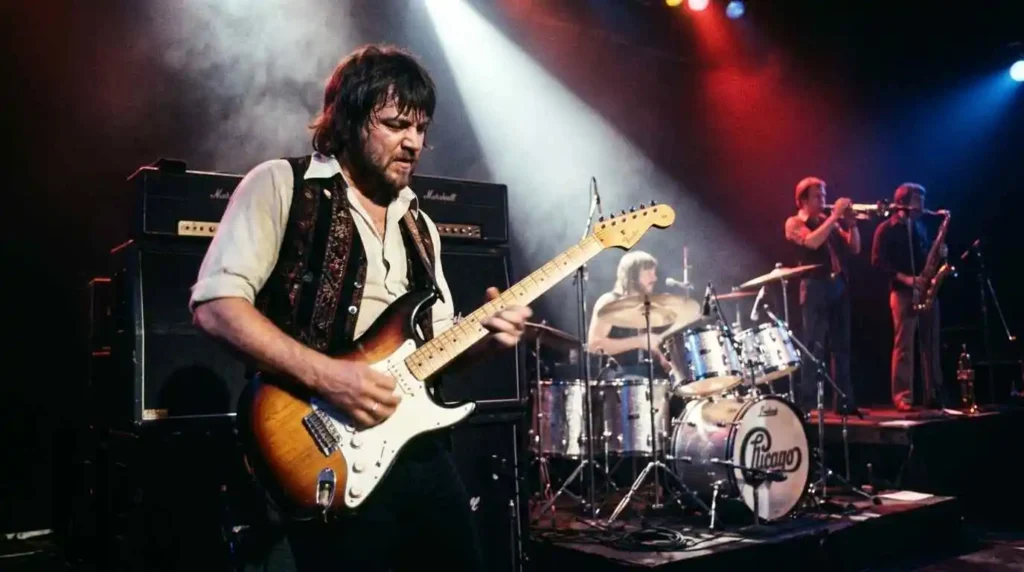
Still, “25 or 6 to 4” is not simply a flashy rock number.
As the Japanese title “Nagai Yoru,” meaning “Long Night,” suggests, a sleepless night lies at the center of this song.
In a room before dawn, the narrator is trying to put something into words.
His mind seems awake, but in truth it is close to its limit.
He does not even seem sure whether he wants to sleep or keep thinking.
Chicago does not turn that unstable state of mind into a sunken monologue.
Instead, the band brings together guitar, brass, and drums, transforming that uneasiness into fierce forward motion.
A Free Translation
Waiting for daybreak, he is searching for words.
He should sleep, but he cannot; in the room’s light and his sinking consciousness, only time keeps passing.
“25 or 6 to 4” — is it twenty-five minutes before four, or twenty-six?
In that blurred hour, his mind, nearly at its limit, is still trying to grasp something.
First, Please Listen to the Official YouTube Audio
Credits
Chicago “25 or 6 to 4”
Written by Robert Lamm
Produced by James William Guercio
Album: Chicago also known as Chicago II / 1970
Official audio: Chicago - 25 or 6 to 4 (Official Audio)
Two-Line Commentary
With its hazy sense of time — “twenty-five or twenty-six minutes before four” — this early Chicago classic is awakened all at once by sharp brass and Terry Kath’s guitar.
It is a decisive Chicago II-era track where the heat of a rock band and the architectural power of brass rock collide head-on.
Credits
Chicago “25 or 6 to 4 (Live in Chicago, IL, 1999)”
Written by Robert Lamm
Album: Chicago XXVI: Live in Concert
Audio provided by Rhino
Copyright: ℗ 1999 Warner Strategic Marketing
Two-Line Commentary
While the 1970 studio version has a sharpened tension, this 1999 live performance recreates the song with thicker brass and a more physical rock drive.
It is an official live recording that lets us experience the cutting riff and rising excitement of “25 or 6 to 4” as a stage expression from Chicago’s long career.
Why I Chose “25 or 6 to 4” for No. 5
Chicago’s Appeal Collides Within a Single Song
“25 or 6 to 4” contains Chicago’s appeal in a very clear form.
If you listen to it as rock, the strength of the guitar comes first.
If you listen to it as brass rock, the presence of the horn section grabs your ear.
If you focus on the rhythm, you can clearly hear the force pushing the whole song forward.
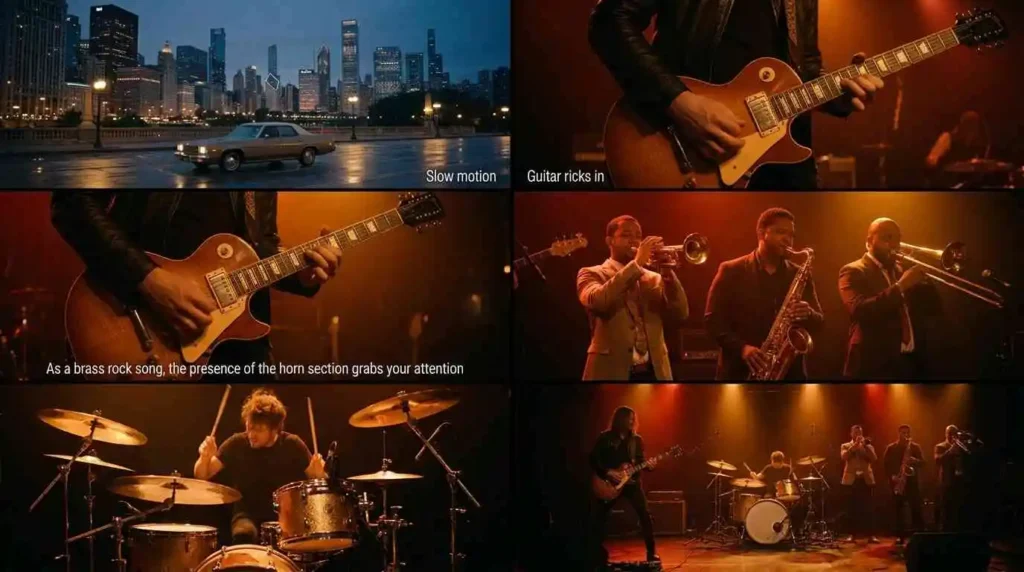
And these elements are not simply lined up one after another.
Guitar, brass, drums, and vocals all collide in the same place.
That overlap creates the song’s unusual heat.
Chicago was not a band that placed brass in the background as decoration.
When you listen to this song, you immediately understand that the horn section is sounding from the center of the music.
Neither the guitar nor the brass is merely supporting the other.
A Sense of Night That Goes Beyond Momentum
What makes “25 or 6 to 4” fascinating is that, while the sound itself is highly aggressive, the world of the lyrics is quite inward-looking.
The narrator is searching for something before dawn.
He is trying to stay conscious while sleep presses down on him.
He wants to find the words, but he cannot quite grasp them.
This is not a scene of victory, nor is it the joy of romance.
Even so, Chicago does not present that state as something frail.
Rather, as if sparks are flying inside a sleepless mind, the song keeps accelerating.
This song has the strange strength of a person who is exhausted but cannot stop.
That strength seems to burst out as rock and brass.
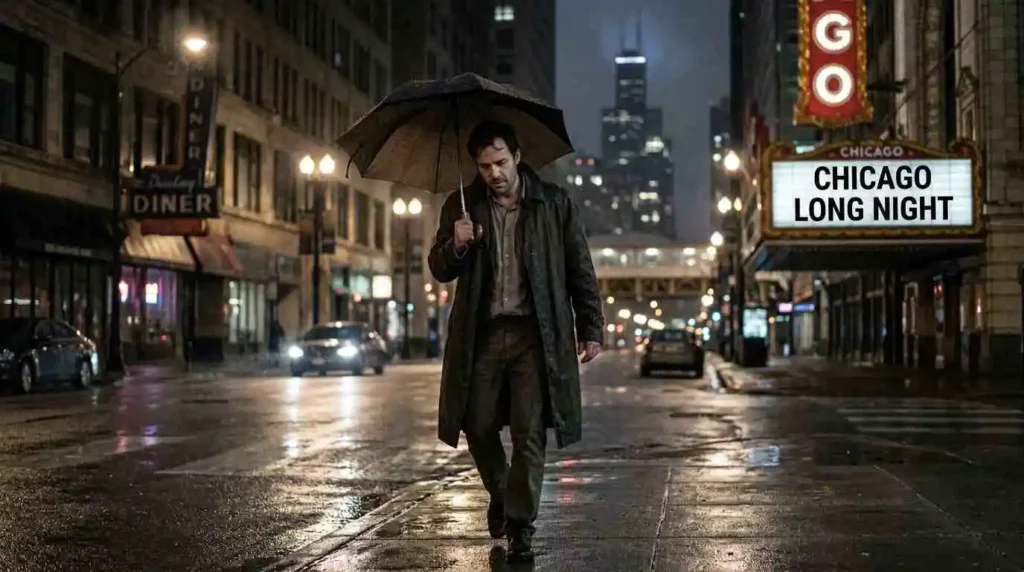
For me, “25 or 6 to 4” is not simply a song with a famous riff.
It is a song about a time when thoughts refuse to come together, the body feels heavy, and yet something still has to be shaped.
Because that urgency is there, the song’s drive feels even sharper.
The Original Title “25 or 6 to 4” and the Japanese Title “Long Night”
A Numerical Title Pointing to the Ambiguity Before 4 A.M.
At first glance, the original title “25 or 6 to 4” is difficult to understand.
It is generally understood as referring to twenty-five or twenty-six minutes before four in the morning.
In other words, the time is around 3:35 a.m. or 3:34 a.m.
It is too deep to call night, yet still too early to call morning.
This “time that cannot be clearly called one thing or the other” lies at the core of the song.
It is too late to sleep.
Yet it is too early to greet the morning.
The head is hazy, but the nerves are strangely tense.
The title, made only of numbers, captures that peculiar hour directly.

The Strength of the Japanese Title “Long Night”
The Japanese title “Nagai Yoru,” meaning “Long Night,” translates this difficult original title into Japanese with remarkable precision.
If one tries to explain the original title literally, the explanation can easily become too analytical.
But “Long Night” does not explain the time. Instead, it grasps the feeling of the whole song.
That is why Japanese listeners can enter the song so naturally.
The phrase “Long Night” does not simply mean that the night is long.
It suggests time that seems about to end but does not.
It suggests a body that wants to sleep but cannot.
It suggests the frustration of trying to organize one’s thoughts while words keep slipping away.
All of that fits into this short Japanese title.

I think this Japanese title is an excellent one.
It does not erase the strangeness of the original title completely.
Still, it creates a clear entrance for Japanese listeners.
And above all, it does not soften the sharpness of the song’s sound.
The World of the Lyrics Lies Within a Sleepless Night
The Narrator Is Trying to Put Something Into Words
The lyrics of this song do not tell a grand story.
The narrator is in a room before dawn.
He is resisting sleep and trying to say something.
But the words do not come easily.
Only time keeps passing.

What matters here is that the narrator has not completely given up.
He should probably go to sleep.
He must know that himself.
Even so, he is still searching for something.
That sense of “not being able to end it yet” lies deep inside the song.
The Pain of Time When Words Will Not Come
All of us experience nights like this.
There is something we want to write, but it does not become a sentence.
There is something we are thinking about, but it will not come out as words.
Something is moving inside the head, but nothing remains in our hands.
From the outside, this kind of time looks quiet.
But inside the person living it, it is quite noisy.
“25 or 6 to 4” sounds to me as if it is making that inner noise audible through rock and brass.

The Urgency That Exists Only Before Dawn
The time just before 4 a.m. has a distinctive feeling.
The momentum of midnight is already gone.
But the calm of morning has not yet arrived.
The mind is tired, yet some part of the heart refuses to sleep.
The lyrics of “25 or 6 to 4” capture the precariousness of that in-between hour.
That is why this song is not bright.
But it is not merely dark either.
Fatigue, frustration, persistence, and a faint flash of inspiration all contend in the same place.
And Chicago makes that conflict burst outward through sound.
From here, I want to look more closely at the power of that sound, especially the relationship between Terry Kath’s guitar and the brass.
The Sound That Depicts a Sleepless Mind
Terry Kath’s Guitar Defines the Shape of the Song
Terry Kath’s guitar is indispensable when discussing “25 or 6 to 4.”
The guitar riff that sounds from the opening instantly defines the atmosphere of the song.
Because of this riff, the song has already risen as strong rock even before the brass enters.
It is a short phrase, yet it has the power to seize the listener’s ear and refuse to let go.
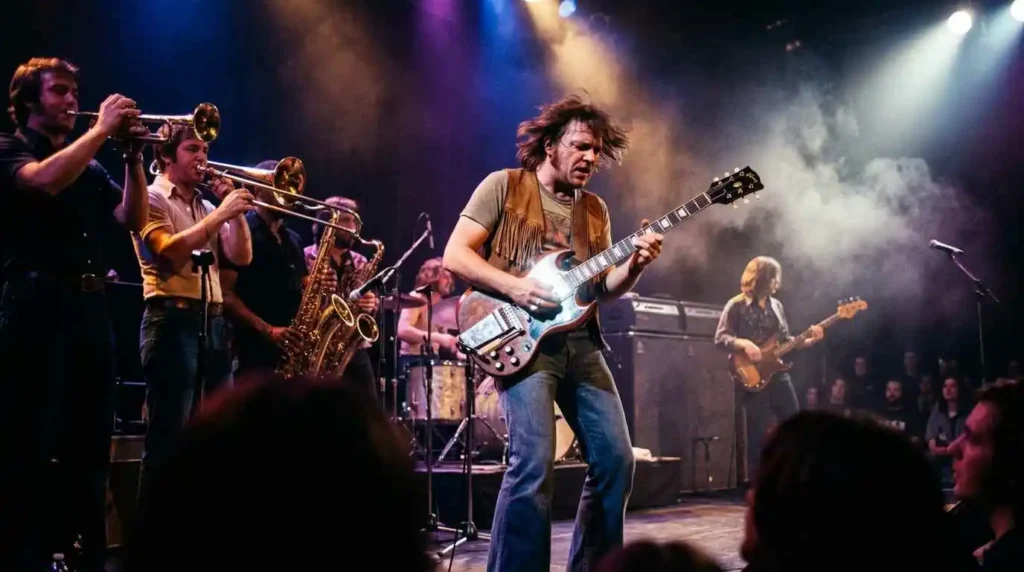
Terry Kath’s guitar is not merely rough.
Its thickness, its timing, and the way it collides with the brass all help move the whole band forward.
The guitar ignites the song, the brass cuts through the air, and the drums drive the entire performance.
When those three movements overlap, “25 or 6 to 4” turns the confusion before dawn into sonic momentum.
The Brass Is Not Decoration; It Is the Engine of the Song
Chicago’s brass is not simply a sound used to make the song more colorful.
In “25 or 6 to 4,” the horn section sounds from the center of the song.
It steps forward with the same strength as the guitar, locks into the rhythm, and raises the temperature of the song step by step.
Because of the way the brass enters, the song does not remain just another rock number.
Every time the brass comes in, it sounds as if thoughts are colliding inside the narrator’s head and something that cannot become words is bursting out as sound.
The tension of “25 or 6 to 4” is born from this struggle between guitar and brass.
“25 or 6 to 4” Within Chicago II
A Song That Shows the Aggression of Early Chicago
The album that includes “25 or 6 to 4” is Chicago, commonly known as Chicago II, a work filled with the ambition of early Chicago.
It boldly connects rock, jazz, and brass arrangements, clearly showing the band’s direction.
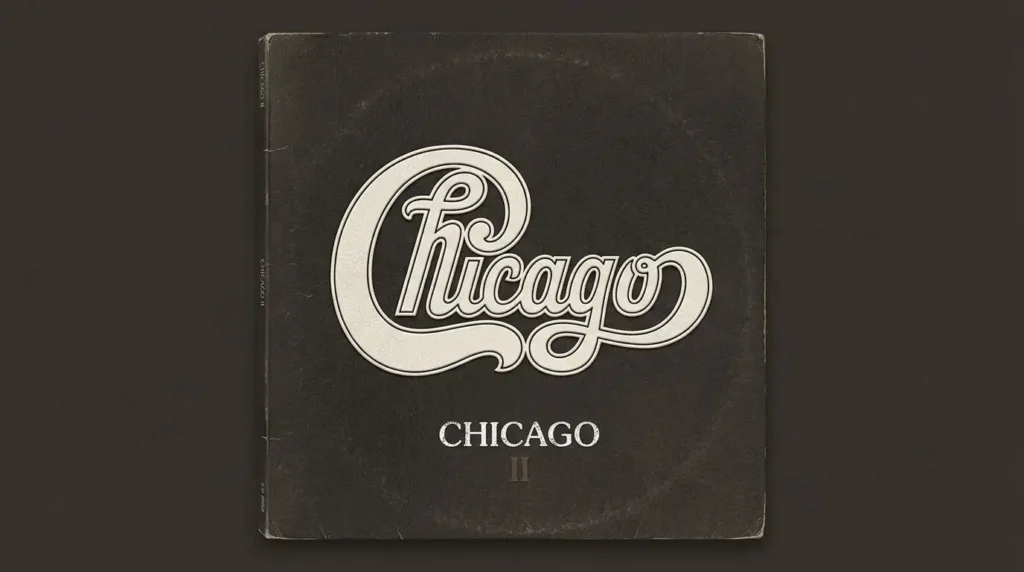
Within that album, “25 or 6 to 4” is a very accessible entry point.
The album as a whole contains suite-like breadth and a strong experimental spirit.
By contrast, “25 or 6 to 4” compresses Chicago’s character into a short span of time.
The bite of the guitar, the power of the brass, the tension in the vocal, and the forward-moving rhythm all come through very clearly within one song.
It Proves That Chicago Was a Rock Band
When people think of Chicago, many may recall the beautiful ballads of later years.
But when I listen to “25 or 6 to 4,” I can clearly hear that Chicago was originally a very strong rock band.
In this song, the brass does not soften the rock.
Rather, the brass amplifies the sharpness of the rock.
That is why “25 or 6 to 4” is indispensable when talking about Chicago.
The Life of the Song Revealed in the 1999 Live Version
A Structure That Does Not Collapse Across Time
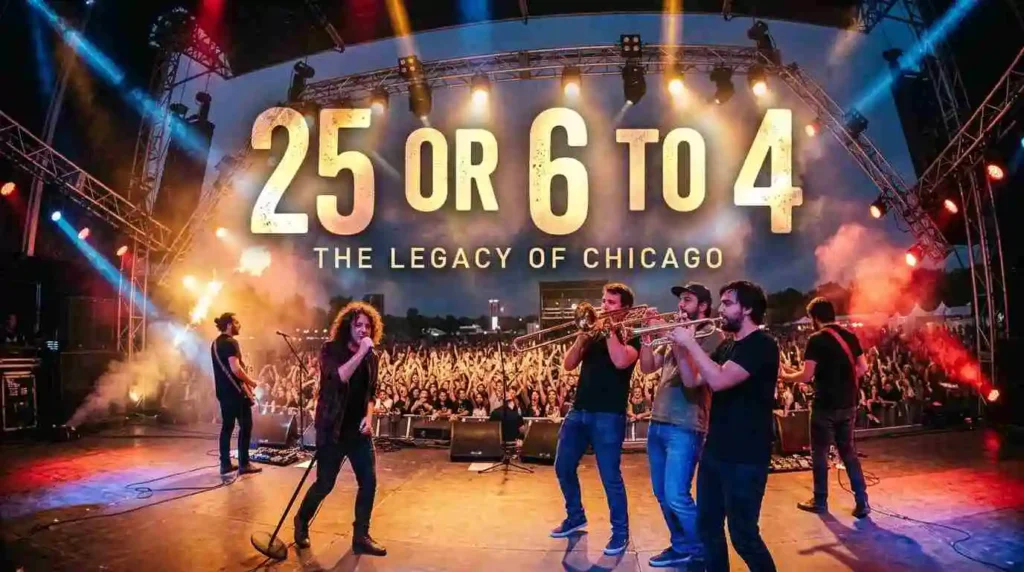
This time, in addition to the 1970 studio version, I also included the official 1999 live version.
When I listen to the 1999 live version, I can clearly hear just how strong the structure of “25 or 6 to 4” is.
Even when the era changes and the texture of the performance changes, the core of the song does not easily waver.
The riff sounds.
The brass enters.
The rhythm runs forward.
At that moment, the listener knows, “Yes, this is that song.”
This song has that much power to change the air instantly.
A Physical Force That Grows Stronger Live
The studio version has sharpened tension.
On the other hand, the 1999 live version has a physical force that belongs to a song played on stage.
The sound expands more broadly, and the collision between brass and guitar comes through more directly.
“25 or 6 to 4” is a song fully realized as a recording, yet it can still fight powerfully on stage.
In fact, precisely because guitar and brass collide head-on, the heat of live performance suits it so well.

In Closing
I chose “25 or 6 to 4” for No. 5 because this song shows the appeal of early Chicago with striking clarity.
The roughness of rock.
The sharpness of brass.
The urgency before dawn.
The pressure of a person searching for words.
All of these collide within a short span of time.
“25 or 6 to 4” is one of Chicago’s defining brass-rock classics.
At the same time, it is also a song about a person who is still searching for something inside a sleepless hour.
The ambiguous time before 4 a.m.
Too late to sleep, yet too early to call morning.
There, the narrator keeps searching for words.
And Chicago struck through that unstable time with sharp guitar and brass.
That is why this song is not merely nostalgic.
Even now, when I listen to it, my body reacts.
A fire lights up in my head, and a feeling that had almost stopped begins to move again.
That is what “25 or 6 to 4” means to me.

音楽ファン同士の交流・リクエストはこちら / Connect & Request Songs Here