
Click here for Yosui Inoue’s History!
- 🎧 Enjoy This Article in Audio
- No. 27 is “Zenmai Jikake no Kabutomushi” (Clockwork Beetle)
- First, please listen to the YouTube video
- The True Identity of the “Discomfort” Radiating from the Song
- The Multifaceted Nature of Sound and Performance
- “Deconstruction of Meaning” Leading to “Asia no Junshin”
- The Efficacy of Nonsense Resonating in the Modern Era
- In Conclusion: As an Eternally Unsolvable Mystery
🎧 Enjoy This Article in Audio
You can quickly grasp the main points of this article through narration.
Recommended for those who want to catch the vibe of the music and the flow of the article before reading.
🎶 English Narration
An English audio introduction to the contents of this article.
⌛ Duration: Approx. 3 mins 30 secs
🎵 Japanese Narration
A Japanese audio introduction to the contents of this article.
⌛ Duration: Approx. 3 mins 30 secs
* Listening to the audio before reading helps you better understand the world of the music and the main points of the article.
No. 27 is “Zenmai Jikake no Kabutomushi” (Clockwork Beetle)
Looking back at the numerous songs created over Yosui Inoue’s long career, we sometimes encounter these small pieces with a “strange touch”.
It’s neither a grand love song nor a message song capturing the era, but a work that simply and dispassionately sketches a bizarre scene right in front of you.
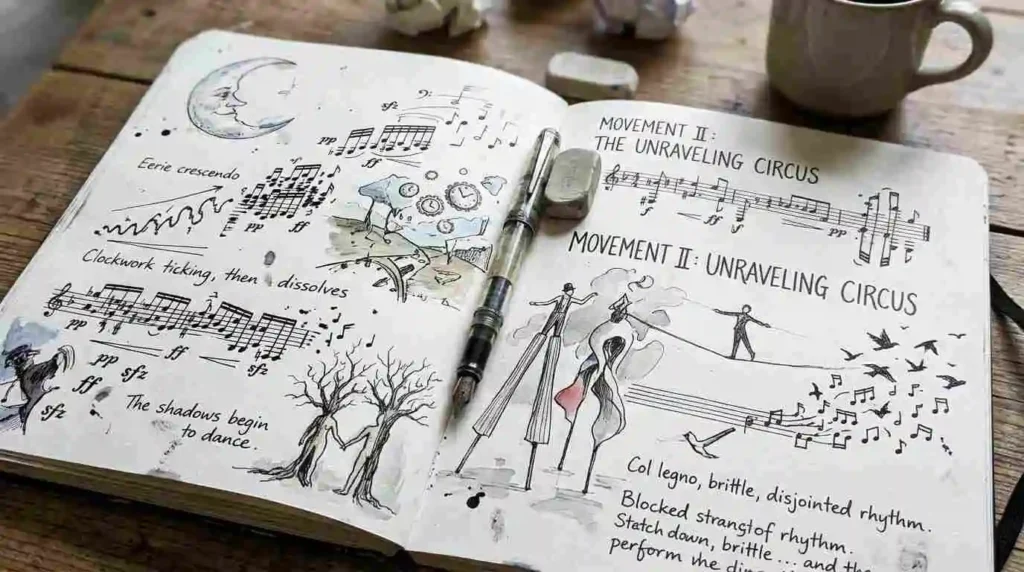
However, it is precisely in these seemingly plain songs that his genius linguistic sense and unique fascination of gently peeking into the realm of the unconscious are condensed.
This time, I’d like to quietly savor the “meaninglessness” and “surreal scenes” presented in this song as a single collage of sound.
First, please listen to the YouTube video
(*Since the majority of Yosui Inoue’s audio sources on the internet are not officially distributed, this blog uses a format that links to external sites from uniquely prepared images, in consideration of copyright.)
Click the image below to listen.

Credits
Song Title: Zenmai Jikake no Kabutomushi (Clockwork Beetle)
Lyrics, Composition & Vocals: Yosui Inoue
Arrangement: Katsu Hoshi
Featured Album: "Nishiki no Koma" (Two-Colored Top)
Release Date: October 1, 1974
2-Line Commentary
Included in "Nishiki no Koma", this is a folk number where Yosui Inoue's characteristic unsettling nature and fairy-tale imagery intersect. Through the metaphor of a broken beetle, it quietly depicts the collapse of innocence and the discomfort of human relationships.
Next is the acoustic guitar version. Please click the image below.

Credits
Song Title: Zenmai Jikake no Kabutomushi (Clockwork Beetle)
Lyrics, Composition & Vocals: Yosui Inoue
Arrangement: Katsu Hoshi
Featured Album: "Nishiki no Koma" (Two-Colored Top)
Original Release Date: October 1, 1974
Video Title: Yosui Inoue / Zenmai Jikake no Kabutomushi (Acoustic Passion)
2-Line Commentary
A track from "Nishiki no Koma", this song quietly depicts a sense of loss and the fragility of happiness through the fairy-tale motif of a broken beetle. The rustic sound of the acoustic performance overlaps with Yosui Inoue's uniquely unsettling and symbolic words, leaving a strong lingering echo despite being a short song.
The True Identity of the “Discomfort” Radiating from the Song
A Collage of Words Where the Ordinary and Extraordinary Intersect
What characterizes this song is the “combination of heterogeneous words” evident in its title.
The word “Kabutomushi” (rhinoceros beetle) evokes images of a vital nature—the smell of summer, the rustling of trees, or the feel of soil.
Colliding against this is the artificial and cold modifier “Zenmai Jikake” (clockwork).
With just this one point, an eerie yet somewhat comical image of a jerky, metallic insect moving about comes to mind.
I myself directed my attention back to this peculiar worldview a while after its release (1974, my first year of high school), after entering university.
In the coffee shops I frequented back then, four-and-a-half-tatami-mat folk songs and straightforward love songs played constantly.
In an atmosphere where such straightforward emotional expressions were the mainstream, the “collage of words” this song possessed had a highly unorthodox resonance.
_202605181945-1024x572.webp)
Yosui’s lyrics occasionally feature these logical leaps and sequences of nonsensical words.
By piecing words together like patchwork, it is as if he is replacing familiar, everyday scenes with surreal paintings.
The Joy of Surrendering to the “Void of Meaning”
When we listen to music, we unconsciously tend to search for the correct answers hidden behind the words—”What is the protagonist of this song feeling?” or “What is the creator trying to convey?”
However, this song lightly dodges such earnest thought processes of the listener with its aloof vocals.
No matter how much you read into the lyrics, there are no lessons or clear storylines to be found.
Just an unnatural clockwork beetle crawling around, casting a strange shadow on our everyday lives.
To swallow that unnaturalness and absurdity whole, and surrender oneself to the “void of meaning” he presents.
_202605181955-1-1024x572.webp)
I only recently realized that spending time captivated by something that holds no clear answer might actually be a highly luxurious musical experience.
The Multifaceted Nature of Sound and Performance
Meticulous Sound Design by Katsu Hoshi
And it is the skill of arranger Katsu Hoshi that prevents this surreal worldview from ending as mere wordplay, establishing it as a magnificent acoustic work.
An Inorganic Groove and Calculated Gaps of Sound
Listen closely to the acoustic guitar refrain continuing from the intro.
Despite using a warm acoustic instrument, its resonance is somewhat cold and repetitive.
It sounds exactly like the song’s theme, “clockwork”, being wound up tightly at a steady rhythm, representing the sound of a machine driving systematically.

Listening even closer, you can tell that the placement of the percussion ringing in the background and the use of the gaps in sound (rests) are highly meticulously calculated.
While borrowing a simple folk guise, an extremely experimental sound approach is actually being attempted.
The intertwining of Yosui’s listless vocals and this inorganic groove further highlights the strange, floating sensation the song possesses.
It is surprising that “meaninglessness” could be so boldly visualized in sound in the Japanese music scene of the 1970s.
Comparison Between the Studio Recording and Live Take
Another way to enjoy this song is to observe how it is performed in the raw space of a live show.
This time, let’s compare the studio recording with the live video link (introduced as the second song).
Liberation from the Miniature Garden and Absurd Humor
If the studio version is a meticulously calculated “exquisite miniature garden,” the live version of “Zenmai Jikake no Kabutomushi” wears a looser, freer air.
On stage, Yosui doesn’t obsess over a perfect reproduction of the record; he subtly changes the nuances and pauses of his vocals to match his mood that day and the atmosphere of the venue.

Surreal words sung sometimes as if speaking to you, and at other times slightly pushing you away.
Listening to this song live, there’s a sense that, curiously, “absurd humor” comes to the forefront more than the coldness of the studio version.
While it is a completed piece of work, it is never fixed, showing a different expression every time it is performed.
This depth is also a part of the mysterious charm this song holds.
“Deconstruction of Meaning” Leading to “Asia no Junshin”
Lyricism Prioritizing Phonetics and Rhythm
Here, let’s jump ahead in time slightly and think about the “leap of words” this song possesses from the perspective of the influence he had on the subsequent music scene.
In the late 1990s, when “Asia no Junshin” (already introduced at No. 29!) was unleashed as PUFFY’s debut song, many listeners were blown away by its lyrics.
That chorus, where places from all over the world like “Beijing, Berlin, Dublin, Liberia” are listed without context, is handed down as the ultimate example of the “deconstruction of meaning” in Japanese pop music.
However, for fans who have passionately followed Yosui’s discography from his early days, they should realize that the roots of that peculiar linguistic sense were already quietly, yet firmly, lurking in his early experimental songs like “Zenmai Jikake no Kabutomushi”.

The “Kabutomushi” (rhinoceros beetle), a natural insect, and the “Zenmai” (clockwork), a mechanical part.
The method of this song, which juxtaposes nouns of entirely different dimensions, can be called the prototype of “Asia no Junshin”, which generated an irresistible groove through a list of place names.
For him, words are not merely a means of communication to deliver serious messages.
Just like the cutting of an acoustic guitar or the rhythm line of a bass, they function as an instrument possessing “tone” and “resonance”.
Intentional Escape During the Golden Age of Folk
Looking back at the folk song boom of the early 1970s when this song was released, the uniqueness of this approach stands out even more.
At the time, singing about the frustrations of youth, rebellion against society, or one’s raw private life in a small four-and-a-half-tatami-mat room had become a kind of absolute format.
It was an era where “passionate, relatable messages” were strongly demanded from songs, and listeners overlaid their own images onto them.
Amidst such a feverish historical backdrop, Yosui stood alone, nonchalantly singing about an “unnatural insect moving by clockwork”.
Here, his strong antithesis to the era’s movement, or perhaps a very cynical sense of distance, is evident.
Carefully avoiding getting caught up in the surrounding frenzy, he dared to line up surreal, meaningless words.
By doing so, didn’t he lightly attempt an escape from “being forced to have a message” or “becoming someone’s spokesperson”? (This particular fixation, in my mind, has continued as a conflict spanning over 50 years, viewed as the contrast between two maestros: “Yosui Inoue and Takuro Yoshida”.)

I believe this objective stance of “never getting heated” and “always staying one step back” is the biggest reason why he was never consumed as an outdated folk singer, and was able to consistently and effortlessly remain at the forefront of the Japanese music scene.
The Efficacy of Nonsense Resonating in the Modern Era
The Luxury of Not Seeking “Empathy”
In modern music and entertainment, “how well it aligns with the listener’s heart and evokes empathy” has become a major benchmark.
Don’t you feel the atmosphere where sharing emotions like “I get it!” or “They feel exactly the same way I do” seems to be an absolute condition for a hit?
However, this “Zenmai Jikake no Kabutomushi” rejects (or ignores) “empathy” from the listener right from the start.
No one overlays their own life or romance onto a song about an eerie clockwork insect.
What is here is merely a surreal and detached scene. It doesn’t cuddle up to anyone’s emotions, nor does it force a message onto society.
It’s just that a “strange thing” is there, remaining “strange.”
This thorough “absence of empathy” is exactly what opens up a comfortable breeze for us today, as we are constantly expected to connect or conform with others.
Adult Entertainment Wandering the Labyrinth
Tilting your head and wondering, “In the end, what was this song trying to say?”, before you know it, you are drawn to its strange comfort and find yourself repeating it over and over.
That very time spent wandering the labyrinth is, in fact, the greatest entertainment this song provides.
Enjoying the meaninglessness, playing by rolling absurd scenes around in your head.
That can be called a superb playground for adults, liberating us from our daily lives where logical correctness and mutual understanding with others are constantly demanded.
In Conclusion: As an Eternally Unsolvable Mystery
If the numerous masterpieces that recorded massive hits are his “public face”, then these surreal and experimental songs are his “hidden face”, where the madness and playfulness within him quietly peek through.
And the unfathomableness of that hidden face, the mysterious part that won’t let you grasp the whole picture no matter how much you listen, is precisely the reason why we cannot pull away from his music even decades later.
The next time you find a rhinoceros beetle on a sunny summer day, try to suddenly recall the cold acoustic guitar refrain of this song.
The everyday scenery you thought was completely normal might warp just a little and shine bizarrely.
Because that is the magic of sound and words that Yosui has set.

音楽ファン同士の交流・リクエストはこちら / Connect & Request Songs Here