
Explore Mariko Takahashi’s Musical Journey Here!
- 🎧 Listen to This Article
- No. 4: “Haruka na Hito e” — A Timeless Ballad from the 1994 Winter Olympics
- “Haruka na Hito e” — Listen to the Song Through Its Official Videos
- The Story Within the Lyrics — Separation and New Beginnings
- Mariko Takahashi’s Lyrics — A View of Life Beyond Beautiful Ideals
- Ryo Matsuda’s Melody and Masaki Iwamoto’s Arrangement
- Mariko Takahashi’s Singing — A Voice That Gives Words Their Weight
- The 1994 Winter Olympics and “Haruka na Hito e”
- Listening Again, 32 Years Later
- “Haruka na Hito e” — The Many Meanings Behind Its Title
- In Closing — What Remains, Even Across the Distance
🎧 Listen to This Article
Discover the highlights of this article through a short audio narration.
Before reading, explore the themes of farewell and hope in “Haruka na Hito e,” along with the expressive beauty of Mariko Takahashi’s voice.
🎵 English Narration
Explore the song’s lyrics, melody, and Mariko Takahashi’s vocal artistry in English.
🎶 Japanese Narration
Enjoy a Japanese narration that introduces the same song and its emotional depth.
Listening before reading can help you appreciate the song’s emotional atmosphere and the key themes explored in this article.
No. 4: “Haruka na Hito e” — A Timeless Ballad from the 1994 Winter Olympics
Released on February 2, 1994, Mariko Takahashi’s single “Haruka na Hito e” (To Someone Far Away) remains memorable to many listeners as NHK’s theme song for the 1994 Lillehammer Winter Olympics.

Whenever I listen to this song, I sense a depth that sets it apart from both a conventional anthem of encouragement and a ballad about romantic separation.
Longing for someone who is moving away, confronting life’s hardships, and finding the determination to keep loving despite the distance. These emotions come together naturally within a single melody.
By exploring the story told through its lyrics and the structure of its music, I would like to consider why this song continues to leave such a lasting impression.
“Haruka na Hito e” — Listen to the Song Through Its Official Videos
🎥 YouTube Video 1
Song Information
Title: Haruka na Hito e (To Someone Far Away)
Artist: Mariko Takahashi
Single Release Date: February 2, 1994
Lyrics: Mariko Takahashi
Music: Ryo Matsuda
Arrangement: Masaki Iwamoto
Album: Couplet (released September 7, 1994)
Tie-in: NHK Theme Song for the 1994 Lillehammer Winter Olympics
What to Listen For:
The melody begins with quiet reminiscence before gradually opening into a broader emotional landscape. Even while acknowledging the sadness of separation, it conveys the strength to move forward.
🎥 YouTube Video 2 — A Live Performance from 2016
This performance comes from Takahashi's 2016 concert tour, “infini,” recorded at the Tokyo International Forum. It was released on her official YouTube channel in January 2022.

Comparing it with the studio recording reveals subtle differences in phrasing, timing, and vocal dynamics. Listen closely to how Takahashi, drawing on decades of experience, brings fresh expression to a song she first recorded more than twenty years earlier.
The Story Within the Lyrics — Separation and New Beginnings
Memories of a Town Where Two People Once Lived
The song opens with a scene that recalls a town where two people once lived together.
A familiar landscape unexpectedly brings back memories from long ago. Most of us have experienced something similar at one time or another.
What interests me is that the lyrics never explain the relationship between these two people in detail. Were they lovers, or simply two people who had shared an important part of their lives? The listener is left to imagine the answer.
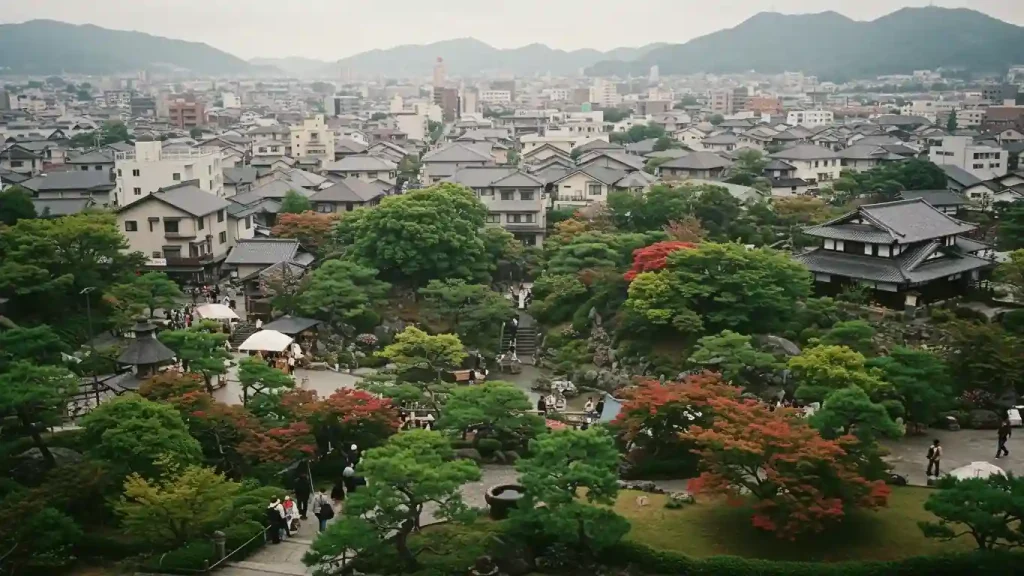
Because the relationship remains undefined, the person addressed in the song can represent not only a former lover but also a family member, a friend, or someone who once played a significant role in our lives.
Two People Taking Different Paths
The story does not remain in the past. It gradually moves toward accepting that the two people must follow separate paths, while expressing the hope that the other person will find the strength to continue.
There is both sorrow at parting and respect for the other person’s future.
Even when we can no longer remain together, we can still wish someone happiness. To me, this idea lies at the heart of the song.
The Image of a Solitary Bird Taking Flight
In the middle of the song, the beginning of a new chapter in life is associated with the image of birds taking flight.
Birds often symbolize freedom, yet the image of a lone bird rising into the sky also suggests solitude.

There are moments in life when we can no longer walk beside someone we care about. Nevertheless, we must find the courage to move toward an unfamiliar destination.
This scene seems to capture both the loneliness of departure and the possibilities waiting beyond it.
Mariko Takahashi’s Lyrics — A View of Life Beyond Beautiful Ideals
Does Suffering Make Us Kinder?
At the center of the song are questions about what it means to love another person and whether kindness can grow from painful experiences.
Yet suffering does not automatically make everyone more compassionate. Sometimes, being hurt makes it harder to trust others.
That is why I prefer to understand the hope expressed in these lyrics not as a universal rule of life, but as the wish to remain kind even after experiencing pain.
Heard in this way, the song’s message becomes more personal and meaningful.
Dreams and Jealousy — An Honest Portrait of Human Nature
Alongside the desire to pursue one’s dreams, the lyrics also acknowledge emotions that suggest jealousy toward others.
This is an important detail. If the song were concerned only with the nobility of love, there would be little reason to introduce such an uncomfortable feeling.
In reality, however, we sometimes compare our circumstances with those of others, even while genuinely celebrating their achievements. The very act of pursuing a dream can bring anxiety and impatience.

What makes Takahashi’s lyrics compelling is that they acknowledge human weakness without surrendering the possibility of hope.
By recognizing both our ideals and our imperfections, the song becomes something more substantial than a simple message of encouragement.
Feelings We Wish Could Cross the Sea
Later in the song, the lyrics describe the desire to send one’s feelings across the sea to someone far away.
We can imagine not only physical distance but also a separation created by the passage of time or by the different choices people make in life.
There is no certainty that those feelings will reach their destination. Yet the desire to express them remains. This quiet urgency connects with the memories introduced at the beginning, giving the song a sense of emotional unity.

Ryo Matsuda’s Melody and Masaki Iwamoto’s Arrangement
From a Quiet Opening to an Expansive Chorus
Ryo Matsuda’s melody does not begin with an overwhelming display of emotion. Instead, it unfolds with a calm, almost conversational quality.
Its natural rises and falls gradually draw the listener into the music while allowing the words to remain at the forefront.
When the chorus arrives, the vocal range and overall sound expand, creating the impression that a gaze previously turned inward is now opening toward the wider world.
This progression beautifully complements the lyrics’ movement from accepting separation toward embracing the future.

An Arrangement That Gives the Voice Room to Breathe
Masaki Iwamoto’s arrangement makes effective use of piano, strings, and other instrumental textures, gradually changing the density of the accompaniment as the song develops.
What stands out is that Takahashi’s voice never becomes lost, even as the instrumentation grows fuller.
During the quieter passages, the arrangement allows every nuance of the lyrics to emerge. At the emotional peaks, it carries her voice into a much broader musical landscape.
The melody guides the emotional journey, while the arrangement gives that journey its breadth. Their balance is central to the song’s impressive sense of scale.
Mariko Takahashi’s Singing — A Voice That Gives Words Their Weight
A Husky Tone and Delicate Emotional Expression
Takahashi is often admired for her powerful voice and beautifully sustained high notes.
In “Haruka na Hito e,” however, I hear a different dimension of her artistry that cannot be explained by vocal power alone.
Her slightly husky tone combines warmth with inner strength. When she gently brings a phrase to its close, there is a trace of sadness, as though she were looking back on a time that can never return.

In the chorus, by contrast, her voice gains strength and the words reach the listener with greater directness. The transition feels entirely natural because she follows the emotional development of the song so carefully.
The Difference Between the Studio Recording and the Live Performance
In the studio recording, the melody and accompaniment are carefully balanced, allowing us to appreciate the beauty of the composition as a whole.
The 2016 live performance, on the other hand, brings her breathing, phrasing, and subtle vocal expressions into sharper focus.
Performed twenty-two years after its original release, “Haruka na Hito e” demonstrates how the same song can take on new shades of meaning as a singer grows older and gains experience.
The 1994 Winter Olympics and “Haruka na Hito e”
The 1994 Winter Olympics were held in Lillehammer, Norway. “Haruka na Hito e” was chosen as the theme song for NHK’s coverage of the Games.
The Olympics are not only about the joy of victory. They also reveal the disappointment of athletes who fall short, and the courage of those who must begin a new chapter after their competitive careers.
What makes this song especially fitting for the occasion is that it does not celebrate winners alone.
Whatever the result, the years of dedication and effort that came before it still have meaning. I believe this interpretation helps explain why the song resonates so naturally with the world of sport.

Yet the song loses none of its appeal when heard outside the context of the Olympics. At different turning points in our lives, it can speak to us in entirely new ways.
Listening Again, 32 Years Later
What Remains When Distance Changes a Relationship
Thirty-two years have passed since the song’s release in 1994. The ways we communicate and maintain relationships have changed dramatically.
Today, we can exchange messages with someone on the other side of the world almost instantly. But being able to contact another person is not the same as truly understanding one another.
In some ways, the convenience of modern communication makes the frustration of being misunderstood even more noticeable.
The distance portrayed in “Haruka na Hito e” may therefore represent more than geography. It can also suggest the circumstances that separate people and the emotional gaps that cannot easily be closed.

“Haruka na Hito e” — The Many Meanings Behind Its Title
Finally, I would like to consider the title itself.
Who is the distant person addressed in “Haruka na Hito e”?
It might be a lover who now lives far away. Others may think of a friend they have not seen for years, or someone dear to them whom they can never meet again.
It could also be a former companion with whom they once shared their dreams, or someone who profoundly influenced the course of their lives.
Because the title does not define a particular relationship, listeners are free to connect the song with their own experiences.
And depending on whom they remember, the very same song can reveal an entirely different emotional character.

In Closing — What Remains, Even Across the Distance
Looking back over our lives, we can probably all think of people with whom we were once close but who gradually became distant.
We followed different paths, and today we may not even know where those people are or what they are doing. Yet at unexpected moments, their smiles or the words we once exchanged can return with remarkable clarity.
Strangely enough, as the years pass, we sometimes come to recognize kindness we failed to appreciate at the time, along with the value of ordinary moments that once seemed insignificant.
Listening to “Haruka na Hito e” feels as though a door to those memories is quietly opening.
Perhaps we will never meet again. Even so, I hope that person is happy, wherever life has taken them.
When the music fades, it is this simple, heartfelt wish that stays with me.

音楽ファン同士の交流・リクエストはこちら / Connect & Request Songs Here