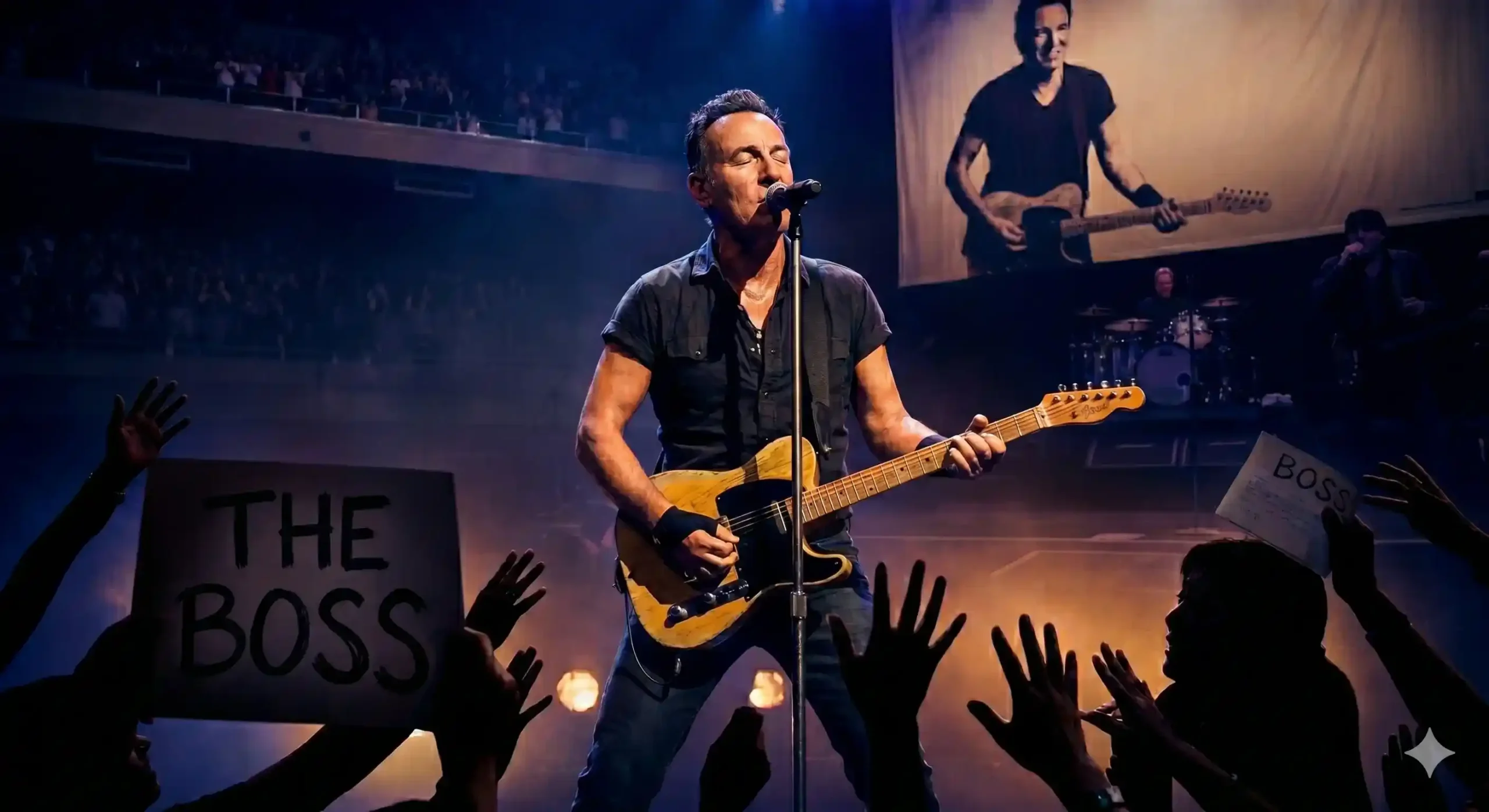
The History of Bruce Springsteen —— From the Roar of New Jersey to the Return to the Sanctuary: The Indomitable Storyteller and the “Conscience of America.”
🎧 Enjoy This Article in Audio
You can easily grasp the main points of this article through audio first.
Recommended for those who want a quick summary before reading.
🎶 English Narration
This audio explains the contents of the article in English.
⏳ Playtime: Approx. 3 min
🎵 Japanese Narration
You can also listen to the same content with Japanese narration.
⏳ Playtime: Approx. 3 min
* Listening to the audio before reading will help you understand the atmosphere of the song and the key points of the article more dynamically.
#3 is “The River”
Released in 1980, the album of the same name became Springsteen’s first #1 on the US Billboard charts and a massive hit, recording over 5 million in sales in the US alone.
There may be no other song that depicts the process of innocent youthful dreams gradually wearing away in the face of unforgiving reality as cruelly and beautifully as this one.
The story he weaves transcends the mere sorrow of the American working class, making a massive impact worldwide as a milestone in the ’80s rock scene.
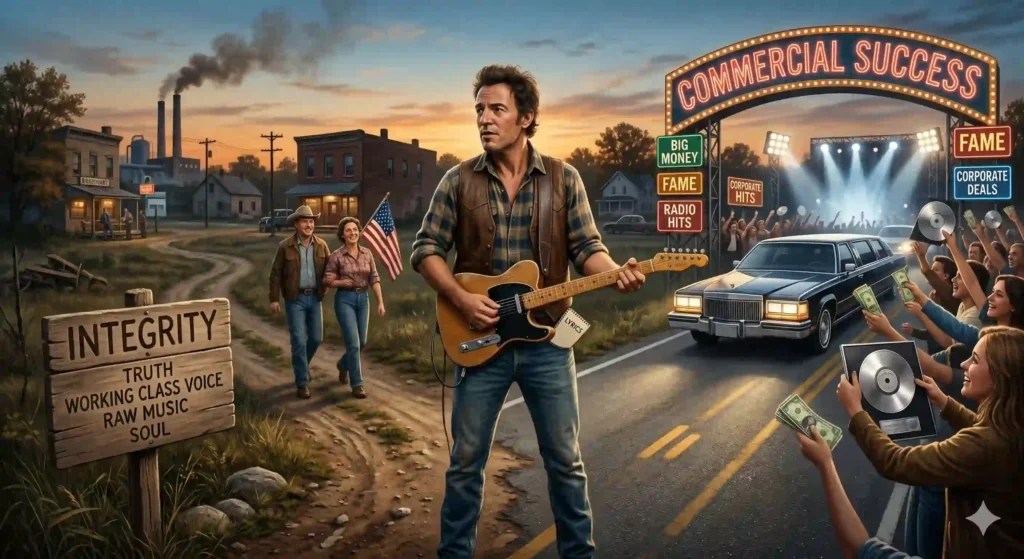
Borrowing the figure of a young man from a distant land, this song continues to quietly shake the “resignation” and “sense of loss” within our own hearts today.
Hyper-Translation of the Lyrics
Falling in love with the momentum of youth, caught in a life with no escape.
Neither marriage nor work turned out as dreamed, and before I knew it, what was important faded away.
Still, only the memory of her from the old days returns to my chest like a curse.
The river is already dry, but I'm going back down there again tonight.
First, please listen to the official audio on YouTube
Japanese Credit
Bruce Springsteen "The River" Official HD Video
Written and Composed by: Bruce Springsteen / Album: "The River" (1980)
2-Line Commentary
One of Springsteen's greatest narrative songs, overlapping the marriage, labor, and loss of dreams of a young couple with the memory of a drying "river." The sound of the harmonica and restrained vocals quietly bring to the surface the reality of the American working class and the pain of youth.
Japanese Credit
Title: "The River"
Live at Glastonbury 2009
Written and Composed by: Bruce Springsteen
Original Album: "The River" (1980)
2-Line Commentary
Bruce Springsteen's representative ballad singing of youthful love, marriage, labor, and the loss of dreams entrusted to the memory of a "river." On the grand stage of Glastonbury, the quiet storytelling and the heavy performance of the E Street Band overlap, making the song's sorrow echo on a larger scale.
Japanese Credit
Bruce Springsteen & E Street Band
"The River" Live at Glastonbury 2009
Written and Composed by: Bruce Springsteen
Original Album: "The River" (1980)
Video Source: Bruce Springsteen & The E Street Band “The River (Live in Glastonbury, 2009)” Official Broadcast
2-Line Commentary
Bruce Springsteen's signature ballad depicting youthful love, marriage, work, and the loss of dreams layered over the memory of a "river." In this live version before a massive Glastonbury audience, the quiet storytelling and the E Street Band's performance make life's bitterness and sorrow resonate on a much grander scale.
A Departure Without Blessing, and an Abrupt End to Youth
Everyone goes through a period in life holding onto a baseless hope that “maybe I can walk a special path.”
When I was a student, society seemed like a freer, vaster stage. However, reality always comes with some kind of constraint, and the innocent season eventually comes to an end.

The “end of youth” that visited the protagonist of this song was all too abrupt.
Refusing to live in the same closed-off valley town as his father, they tried to slip away to a lush green place together with his lover, Mary. But an unexpected pregnancy ends their innocent drive.
What he received on his 19th birthday was a union card to support his family and a hastily prepared wedding coat.
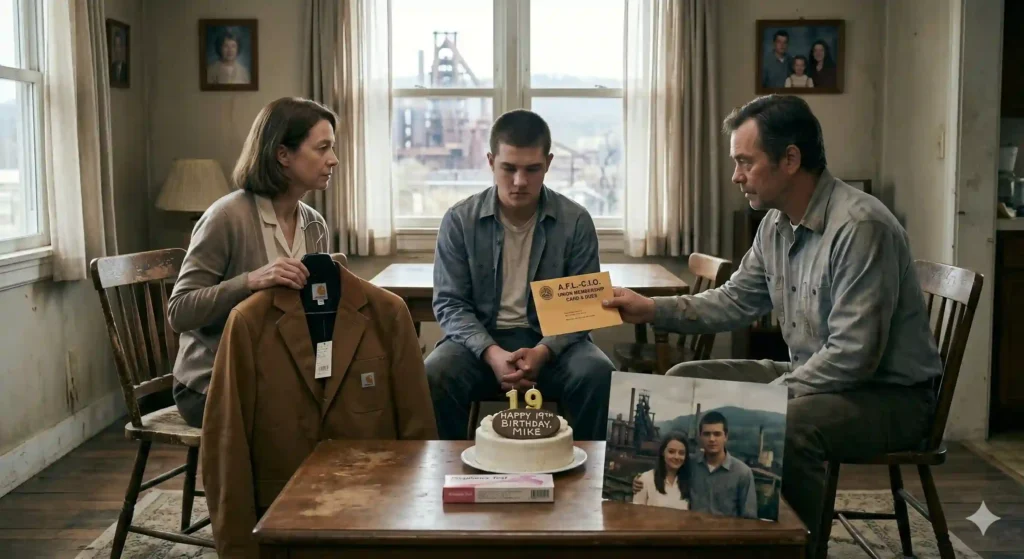
At the courthouse wedding procedure, there were no smiles, no wedding dress, and no bouquets of blessing. It was not a departure filled with hope, but a moment where he was inescapably burdened with the heavy responsibilities of an adult.
“Important Things” Disappearing into the Void
What awaited them was an even harsher reality.
Jobs at the construction company kept decreasing, swallowed by the wave of recession, and economic hardship wore down not just their livelihood, but their minds. The “important things” the two once thought they could never let go of had vanished into the void without a trace before they knew it.
In order to survive, there are times when you have to bottle up your emotions and give up on something.
In a long life as a working adult, there must be times in anyone’s life when, faced with unreasonable situations, you had no choice but to silently play your role and suppress your feelings.
In the song, the protagonist gets through the days “acting like he doesn’t remember,” and Mary turns her eyes away from reality “acting like she doesn’t care.” This depiction of the defense mechanism of “pretending” is all too raw and tightens the listener’s chest.

“A Memory Too Beautiful” Functioning as a Curse
As their lives dry up, what torments the protagonist the most is the “beautiful memory of the past.”
The night they borrowed his brother’s car and went to the reservoir. Mary’s wet skin and the breath he felt right beside him. The more vivid that memory is, the more it highlights the despair of the lost present, binding him like a curse.
Springsteen throws an extremely cruel question here.
“Is a dream a lie if it don’t come true? Or is it something worse?”
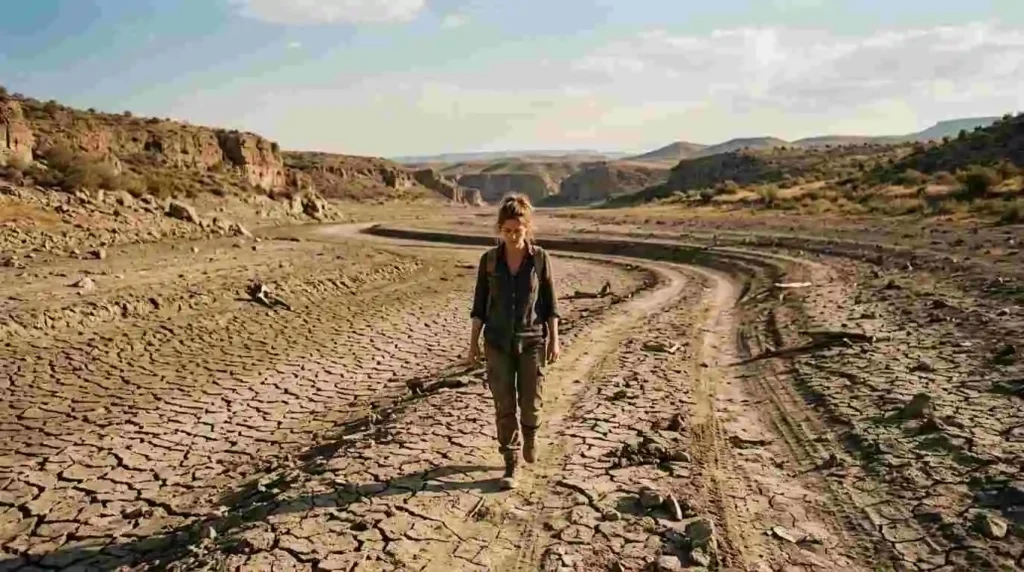
How much easier would it be if we could just write it all off as a lie. The figure of a man who still can’t help but drive down to the dried-up riverbed without a single drop of water. His clumsy steps, wandering in search of the heat of the past even while in the midst of despair, depict a kind of universal human karma that transcends mere tragedy.
The “Inevitable Loss” Presented by a Sobbing Harmonica
The overwhelming persuasive power of this song is deeply rooted not only in the story of the lyrics, but in the soundscape itself.
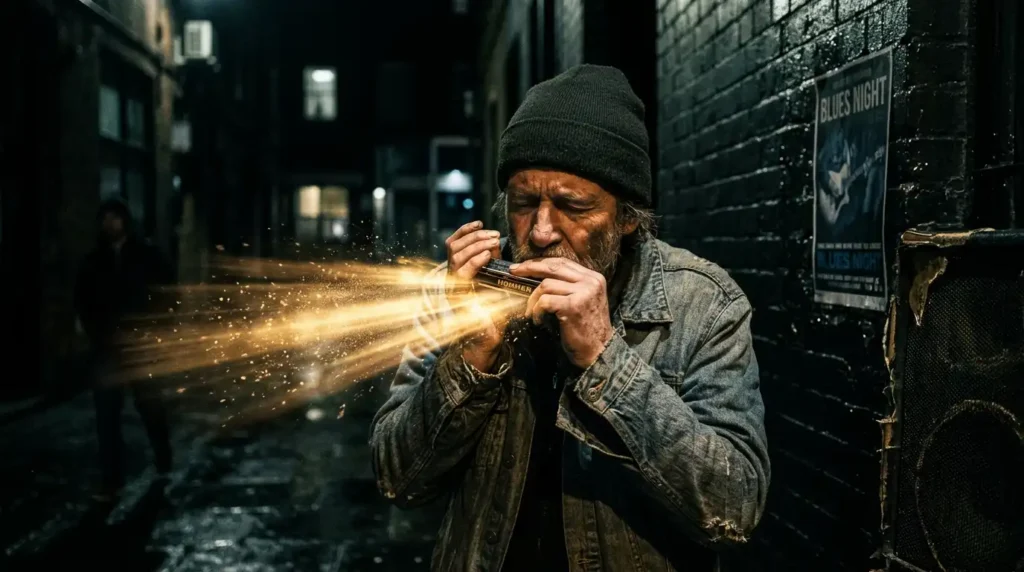
The harmonica intro that echoes as if tearing through the darkness at the beginning.
It sounds not like a mere melody, but like a “sob” against an inescapable fate. When thinking of Springsteen’s music, many might imagine the thick sound of the E Street Band or the uplifting tone of the saxophone. But in “The River,” the band’s ensemble is stripped down to the limit, and the cold strokes of the acoustic guitar ruthlessly portray a desolate landscape.
Here, the “catharsis” and “escapism” that rock music often provides are nowhere to be found.
The entire sound perfectly synchronizes with the “helpless sense of confinement” the protagonist is placed in, dragging the listener into the center of a dry land. Even the silence drifting in the gaps between the sounds eloquently speaks to the magnitude of what they have lost.
の置かれた「どうにもならない閉塞感」_202605-1024x572.webp)
The Overwhelming Silence Where Tens of Thousands of Solitudes Resonate
When this song is played in the massive space of a stadium, what spreads is not enthusiasm, but an eerie, pin-drop silence. Tens of thousands of audience members listen intently to the tone of the harmonica echoing in the darkness.
It goes beyond a simple musical experience; it is a secret time where each person gently brings forth the personal pain they had sealed deep in their hearts. I know of no other live space that so deeply affirms and embraces the fact that everyone lives while losing something in solitude.
The “Ritual” Toward the Past Necessary to Survive
Knowing that the water no longer flows, why does the protagonist head to the river again tonight?
Even this ending, which at first glance seems like a lingering attachment to the past or an escape from reality, its true meaning is painfully clear now, having overcome countless days when things didn’t go as planned. He is not running away from reality; rather, to barely get through the harsh everyday life that will continue tomorrow, he is performing a ritual to confirm that the former brilliance was “certainly there.”
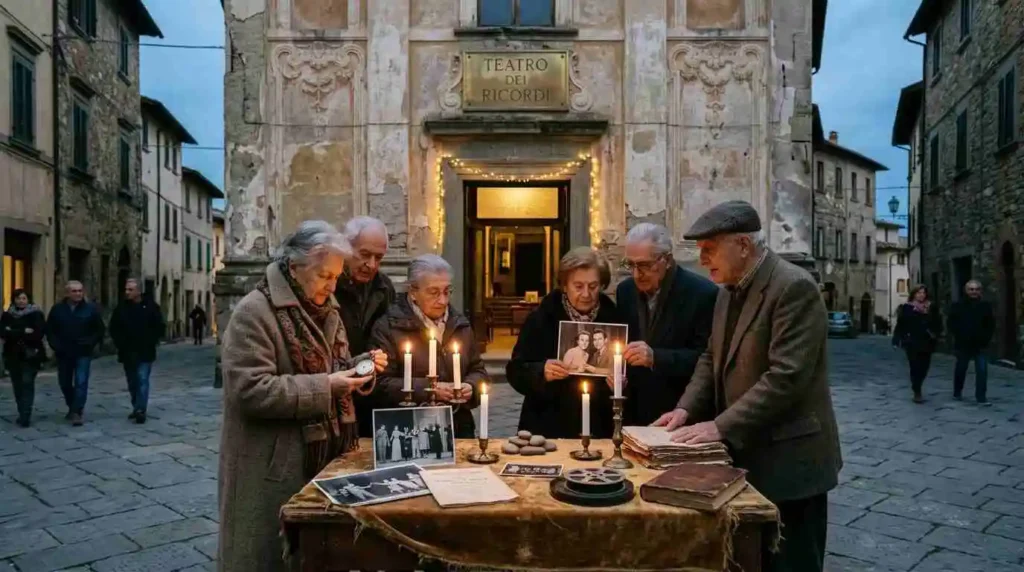
We too, at times, have moments when we want to touch the illusions of a past that will never return. It is by no means a backward-looking act, but perhaps a desperate defense mechanism to get back just a little of the heat our former selves possessed into our hearts, gaining the strength to stand up and face things once again.
In Place of a Conclusion: The Real Reason for Ranking it at #3
The reason I chose this song for the extremely high position of #3 is that, despite offering absolutely no easy salvation or hope, it mysteriously possesses the power to inspire the heart.
There are nights when pleasing messages like “Tomorrow will surely be better” feel cruelly powerless. Springsteen strips away such false comfort and thrusts the truth that “there are periods in life when you simply must endure.”
That sincere gaze, paradoxically, has become the greatest hymn to us. A time like walking on a dried-up riverbed will inevitably come in anyone’s life. But there is a quiet, robust strength gained only by those who know the feel of that dry dirt. This song sharply continues to teach us that fact, in any era.

音楽ファン同士の交流・リクエストはこちら / Connect & Request Songs Here