
Kyosuke Himuro’s History ➡ Click Here!
- 🎧 Enjoy This Article in Audio
- No. 6 is BOØWY’s “Wagamama Juliet.”
- First, listen to the officially distributed audio on YouTube.
- “Wagamama Juliet” never explains how the romance ends
- Kyosuke Himuro wrote not only the lyrics, but the music as well
- A single released ahead of JUST A HERO
- The balance among the four members revealed at Budokan
- What becomes clear when it is placed beside No. 7, “ONLY YOU”
- In closing — when laughter becomes a memory
🎧 Enjoy This Article in Audio
Listen to a concise narration covering the key points of this article.
Recommended if you would like to get a feel for “Wagamama Juliet” and understand the overall flow of the article before reading.
🎵 English Narration
An English narration introducing the main points of this article.
🎶 Japanese Narration
A Japanese narration introducing the main points of this article.
Listening first will help you grasp the atmosphere of “Wagamama Juliet” and the key points of the article before you begin reading.
No. 6 is BOØWY’s “Wagamama Juliet.”
Released on February 1, 1986 as BOØWY’s third single, “Wagamama Juliet” was later included on their fourth album, JUST A HERO, released on March 1 of the same year.
Both the lyrics and music were written by Kyosuke Himuro. Released ahead of JUST A HERO, the single reached No. 39 on the Oricon weekly singles chart and remained on the chart for 12 weeks.

It feels distinctly different from BOØWY’s harder-driving rock numbers. Yet calling it simply a sweet ballad would not quite capture it either.
There is the loneliness of two people drifting apart, a love that no longer seems to work, and the feeling of someone’s laughter gradually turning into a memory. The song places those unresolved emotions inside a beautiful melody.
My interpretation
Even behind a defiant smile, there is still pain that refuses to disappear.
The glamour of the night and the games of love eventually pass, leaving only emptiness behind.
I want to forget you, yet somehow your laughter is slowly becoming a precious memory.
After crying all there is to cry, I carry the sadness with me and begin to move forward again.
💡 You might also like: View the original Japanese lyrics (External site)
If the lyrics are available only in Japanese, you can use your browser’s translation feature or an AI translation tool to understand their general meaning.
First, listen to the officially distributed audio on YouTube.
🎬 Credits
Song: BOØWY “Wagamama Juliet”
Lyrics & Music: Kyosuke Himuro
Artist: BOØWY
Released: February 1, 1986
Audio provided by: Universal Music Group
YouTube: BOØWY - Topic (officially distributed audio)
🎵 Two-line commentary
Released as a single in 1986, “Wagamama Juliet” is one of BOØWY's signature mid-tempo numbers.
Himuro's own melody and wistful vocal are delicately supported by Tomoyasu Hotei and the other members of the band.
“Wagamama Juliet” never explains how the romance ends
What I find interesting about this song is that it never lays out the relationship in chronological order. Why did distance grow between them? Who pulled away first? What happened afterward? The circumstances themselves are barely explained.
Instead, what emerges are fragmented images of night, rain, dreams, laughter, irony, and sadness.
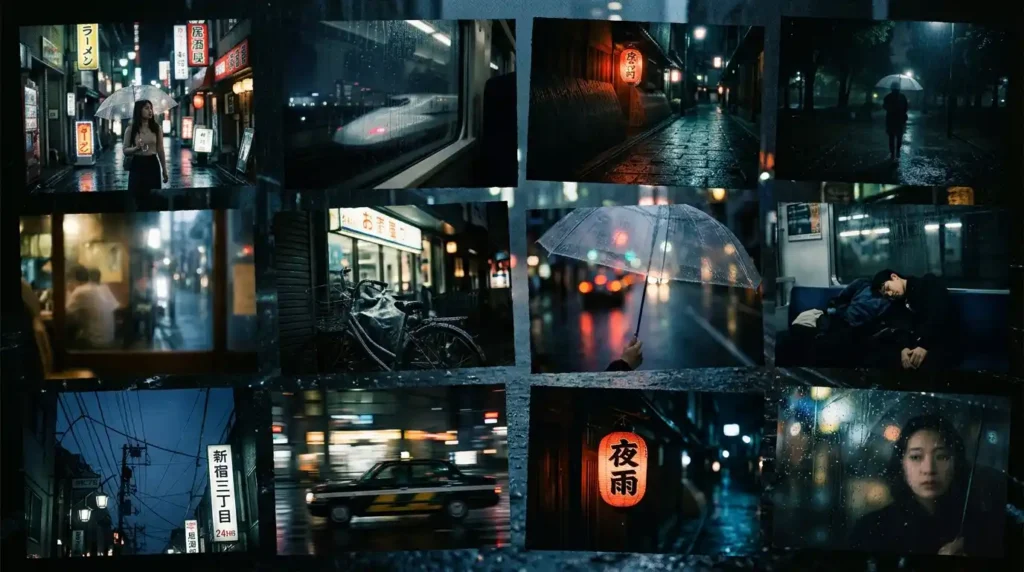
Rather than following a sequence of events, the song presents scenes that seem to have lodged in the heart while the relationship was falling apart. That approach keeps “Wagamama Juliet” from becoming a straightforward breakup song.
Trying to move away while the heart remains behind
There are words of bravado, yet the feelings for the other person have not faded so easily.
There is a sense that things can no longer return to the way they were, while the heart itself remains fixed in place. That mismatch gives the entire song its distinctive sadness.
Human emotions do not become neatly organized the moment a relationship changes. Good memories and painful ones remain mixed together, and as time passes, a particular expression or voice can sometimes stay with us more strongly than everything else.
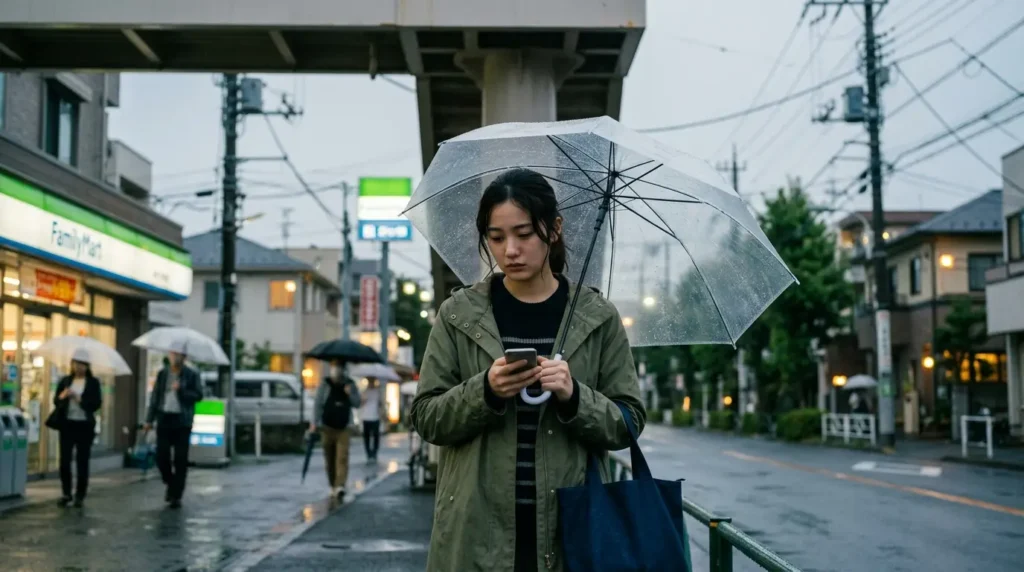
When laughter turns from reality into memory
What strikes me most is the memory of the other person’s laughter.
Something that once existed right in front of you eventually becomes something you can hear only inside your own mind. That change leaves behind a loneliness that is difficult to put into words.
Time does not always erase everything. Sometimes it makes only certain fragments clearer. To me, “Wagamama Juliet” sounds like a love song that reaches all the way into the strange way memories remain with us.
Kyosuke Himuro wrote not only the lyrics, but the music as well
Many BOØWY songs feature lyrics by Kyosuke Himuro and music by Tomoyasu Hotei. “Wagamama Juliet,” however, was both written and composed by Himuro himself.
Knowing that makes the relationship between the words and the melody even more interesting to me. The emotional instability expressed in the lyrics and the gently wavering movement of the melody seem to have been born from a single idea.
Turning emotional uncertainty into melody rather than sheer force
When people think of Kyosuke Himuro, his sharp voice, provocative stage presence, and unmistakable cool as a rock vocalist may come to mind first. But this song reveals another side of him.

Rather than releasing emotion in one straight burst, the song seems to sink slightly and then rise again. That movement mirrors the heart of someone who cannot simply put the relationship behind them.
Himuro the singer and Himuro the songwriter
This is not a simple argument that a song is somehow better because Himuro composed it himself. What interests me is how the melody and vocal delivery feel inseparable—from where he raises his voice to where he pulls it back and which words he chooses to emphasize.
In my No. 7 selection, “ONLY YOU,” I was drawn to the feeling of Himuro’s voice pushing forward from the band. In “Wagamama Juliet,” the opposite happens: his voice blends into the song while conveying the uncertainty inside the character. The two songs sit next to each other in my ranking, yet their appeal is quite different.
A single released ahead of JUST A HERO
“Wagamama Juliet” was released as a single on February 1, 1986, one month before JUST A HERO arrived on March 1. It appears as the third track on the album.

JUST A HERO became a major turning point for BOØWY.
Universal Music Japan’s official profile also identifies the band’s fourth album as the work that triggered their breakthrough.
July 2, 1986 — BOØWY’s first Nippon Budokan concert
About four months after the album’s release, BOØWY played their first solo concert at Nippon Budokan on July 2, 1986. “Wagamama Juliet” was included in the set that night.
Near the end of the concert, during “IMAGE DOWN,” Himuro delivered the line that would become legendary among fans: “Welcome to Live House Budokan!”
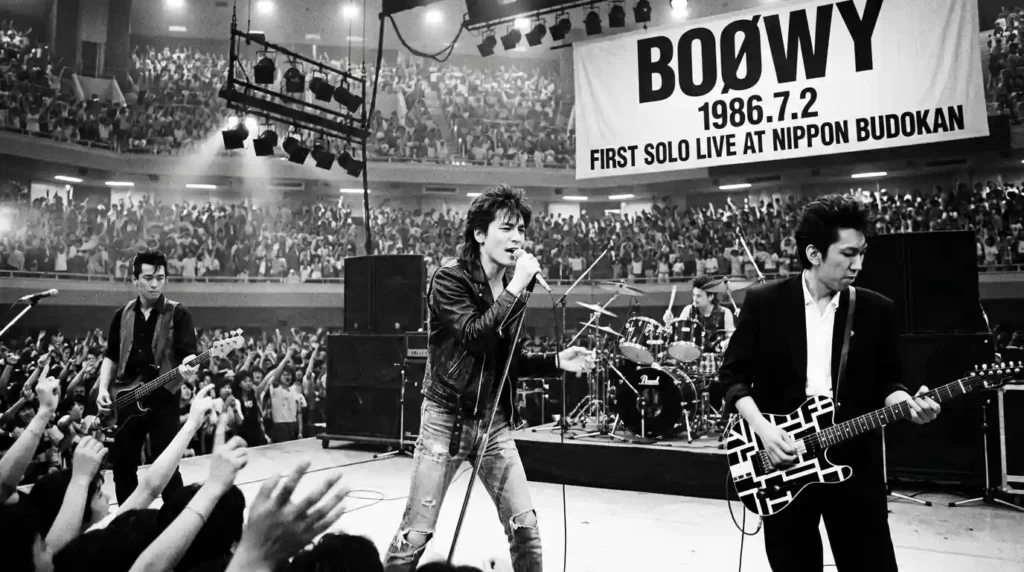
About a month later, the performance was released as the live album “GIGS” JUST A HERO TOUR 1986, which also included “Wagamama Juliet.” It captured BOØWY at the moment when the band was moving toward much larger stages.
The balance among the four members revealed at Budokan
In July 2026, Universal Music Japan published a feature marking the 40th anniversary of BOØWY’s first Budokan concert. Discussing “Wagamama Juliet,” the article noted how the four musicians played without competing for the foreground, allowing Himuro’s melody to take center stage.
Listening to the live recording, Hotei’s guitar never overwhelms the vocal, while Tsunematsu Matsui’s bass and Makoto Takahashi’s drums avoid pushing unnecessarily to the front. Yet the performance never sounds restrained or weak. That balance says a great deal about BOØWY’s strength as a band.
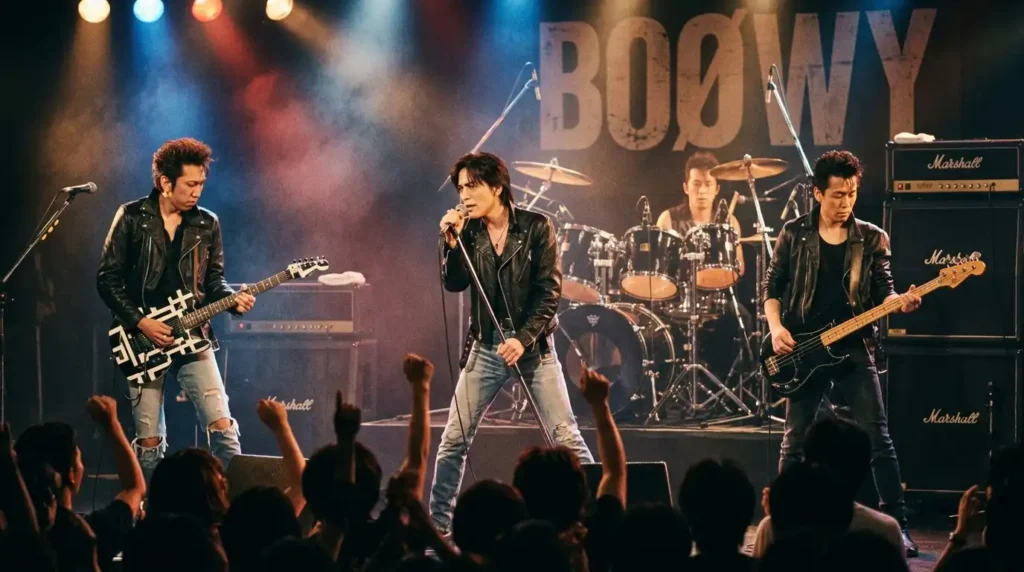
A live set cannot be built on hard-driving songs alone
At their first Budokan concert, BOØWY moved through songs with very different personalities, including “BAD FEELING,” “JUSTY,” and “BABY ACTION.” Placing “Wagamama Juliet” among them changed the character of the performance as a whole.
A band does not have to rely only on speed and volume to hold an audience. It can also create a moment in which everyone suddenly focuses on the song itself. I think that ability was one of the reasons BOØWY had become such a formidable live band by this point.
What becomes clear when it is placed beside No. 7, “ONLY YOU”
My No. 7 choice, “ONLY YOU,” is also a love song. But when I listen to the two songs back to back, the emotions seem to be moving in very different directions.
In “ONLY YOU,” I hear the feelings moving toward the other person. The performance has forward momentum, and Himuro’s vocal seems determined to reach the person directly.
One song reaches closer; the other watches someone drift away
In “Wagamama Juliet,” by contrast, distance has already opened between the two people. The song never clearly says whether the character wants to return or finally let go. That uncertainty is part of what makes it so compelling.
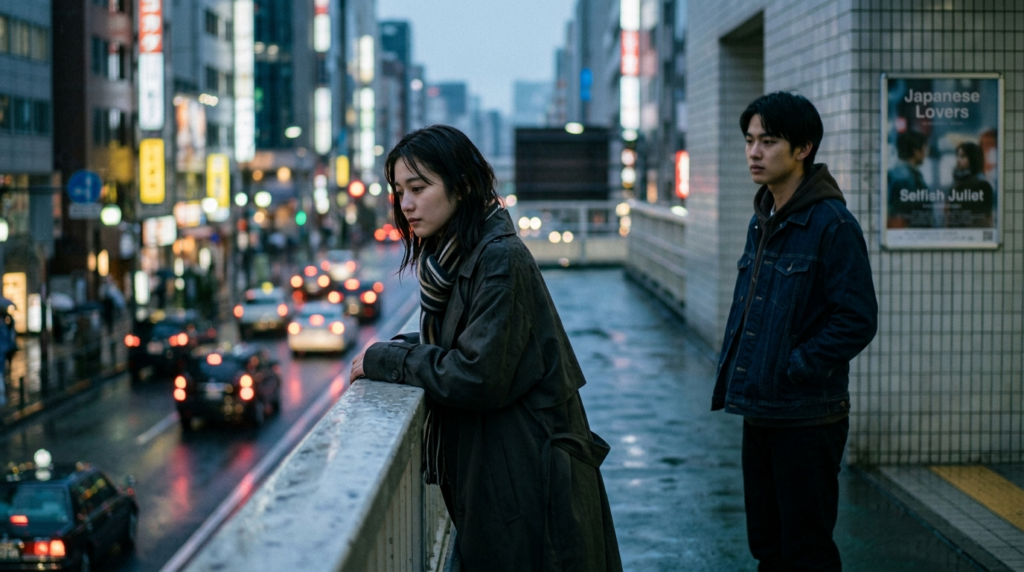
The feeling does not end when the song does. For a while afterward, the night, the rain, and the other person’s laughter remain in my mind. That lingering effect draws me to “Wagamama Juliet” even more strongly than “ONLY YOU.”
Even when the distance between two people changes, the person who remains in your heart does not necessarily move away at the same speed. Perhaps “Wagamama Juliet” is a song about that very mismatch.
In closing — when laughter becomes a memory
“Wagamama Juliet” was released in 1986, the year BOØWY began making a major leap forward. Yet what draws me to the song today cannot be explained simply by the band’s momentum or popularity at the time.
After a relationship changes, the details of what happened may gradually fade while a voice or expression remains strangely vivid. At the heart of this song is the complicated human emotion that refuses to be neatly sorted out.
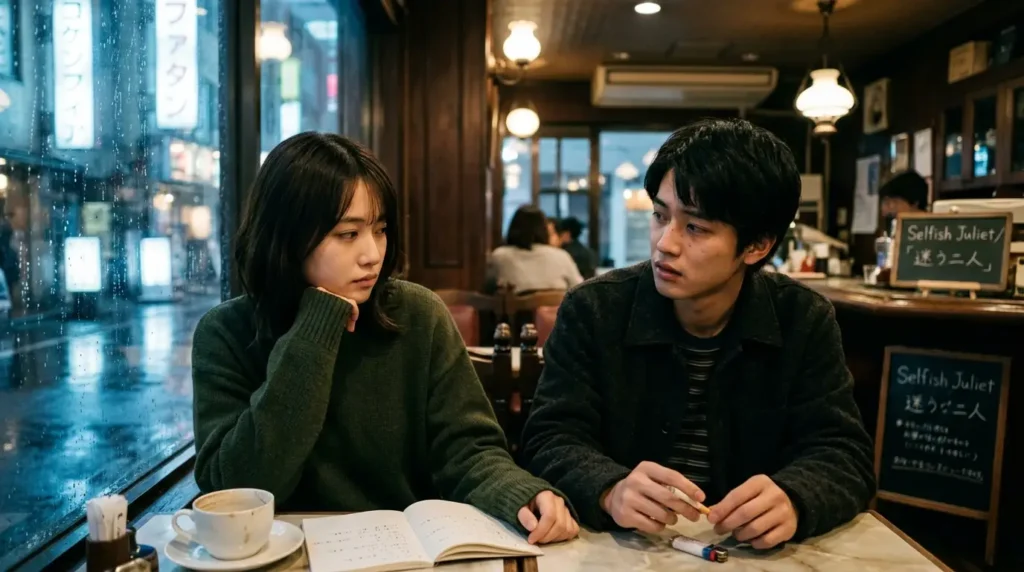
Kyosuke Himuro put that world into words, wrote the melody himself, and then gave it his own voice. Beyond the striking image of BOØWY’s frontman, “Wagamama Juliet” reveals his more delicate side as a songwriter.

音楽ファン同士の交流・リクエストはこちら / Connect & Request Songs Here