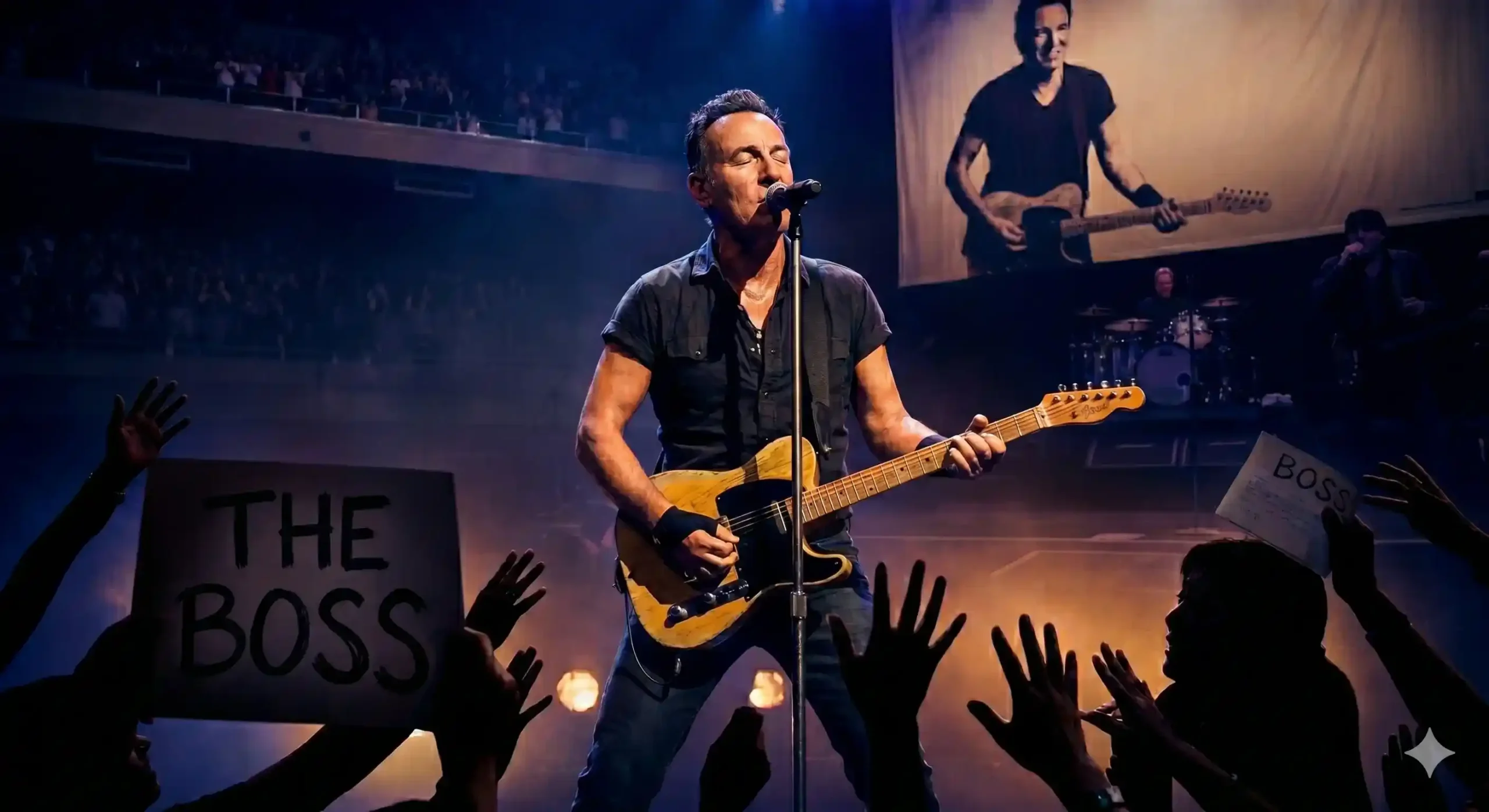
The History of Bruce Springsteen —— From the Roar of New Jersey to the Return to the Sanctuary: The Indomitable Storyteller and the “Conscience of America.”
- 🎧 Listen to this article
- No. 10 is “Born in the U.S.A.”
- First, please listen to the official audio
- The “Sonic Impact”
- The Tragedy of a “Cry” Exploited by Politics
- Sting’s Message of “Solidarity”
- The Story of “The Abandoned” Told Behind the Sonic Roar
- Why did this “Despair” have to be Stadium Rock?
- The Boss’s Voice Finally Reaching Me After My Career Journey
- Conclusion: The Resolve to “Keep Living Right Here, Right Now”
🎧 Listen to this article
You can quickly listen to the key points of this article.
Recommended for those who want to grasp the essentials before reading.
🎶 English Narration
The content of this article is explained in English narration.
⌛ Duration: Approx. 3 min
🎵 Japanese Narration
You can also listen to the Japanese narration of this article.
⌛ Duration: Approx. 3 min
* Listening to the audio before reading will help you understand the world and background of Springsteen’s music more vividly.
No. 10 is “Born in the U.S.A.”
In 1984, the world was intoxicated by the powerful drum beats of this song and the roar of “Born in the U.S.A.!” shaking stadiums everywhere.
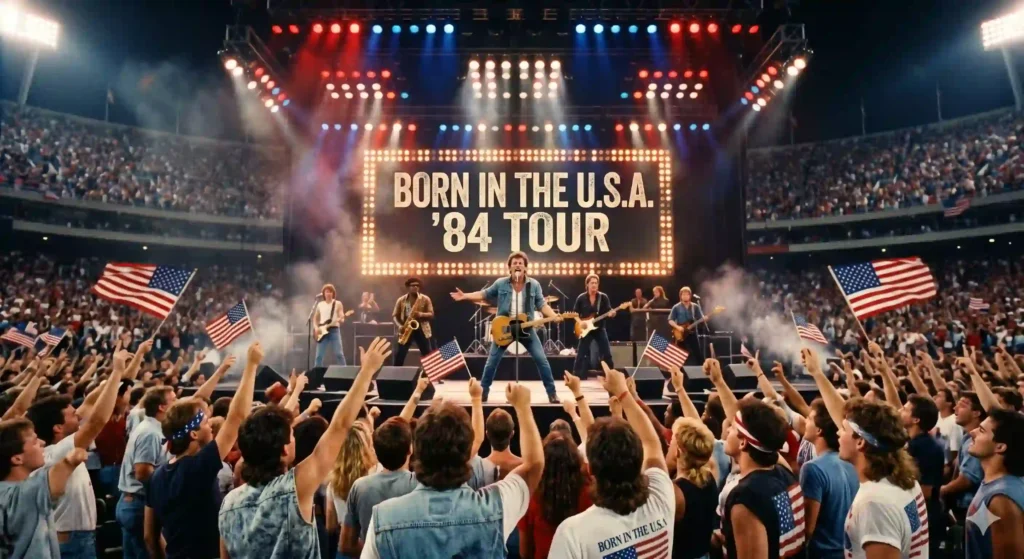
At the time, I was in my mid-20s, in my fourth year of my professional career.
Back then, this song resonated with me simply as a “high-energy rock anthem.”
Now, more than 40 years later, “Born in the U.S.A.” carries a completely different color for me. This is by no means a song praising America.
Rather, it is a song of stark realism—a painful cry from men who were tossed aside by the massive machinery of the state, presented under the protective “coating” of an explosive rock sound. Today, I would like to delve deep into this “most misunderstood hit in history” along with my own reflections.
The Narrative Essence (Super Translation)
Born in a dead-end town, raised like I was being kicked while I was down.
Handed a rifle, sent to a foreign land I didn't know, and told to kill the "enemy."
When I came back home, there was no place left for me.
And yet, I have no choice but to keep living in this country. In this cursed, beloved place.
First, please listen to the official audio
📌 Credits
Bruce Springsteen — Born in the U.S.A. (Official Video)
Posted by: Bruce Springsteen (Official YouTube Channel)
Description: Official Video for “Born in the U.S.A.” by Bruce Springsteen
*This is the iconic music video released officially on YouTube.
📌 Commentary
"Born in the U.S.A." is a landmark track released in 1984. It is widely known as a rock anthem that depicts the harsh realities faced by American veterans and the working class.
The music video is a definitive piece where powerful rock sounds fuse with symbolic lyrics.
📌 Credits
Bruce Springsteen - Born In The U.S.A. (Live)
Posted by: Bruce Springsteen (Official Artist Channel)
Description: Bruce Springsteen performs “Born In The U.S.A.”
Release Date: July 23, 2018
*Official live footage from the Official Artist Channel.
📌 Commentary
A live performance from the 1988 Amnesty International tour. Here, being introduced as "my friend" by Sting, the Boss demonstrates that this song's message transcends simple nationalism—it is a universal inquiry into human rights and dignity.
The “Sonic Impact”
1984. Japan was at the threshold of the frenetic “Bubble Economy” era.
My free student days were already in the past, and I was throwing myself into my daily life as a member of a large organization in my hometown, Oita.
The “Strength” I was seeking back then
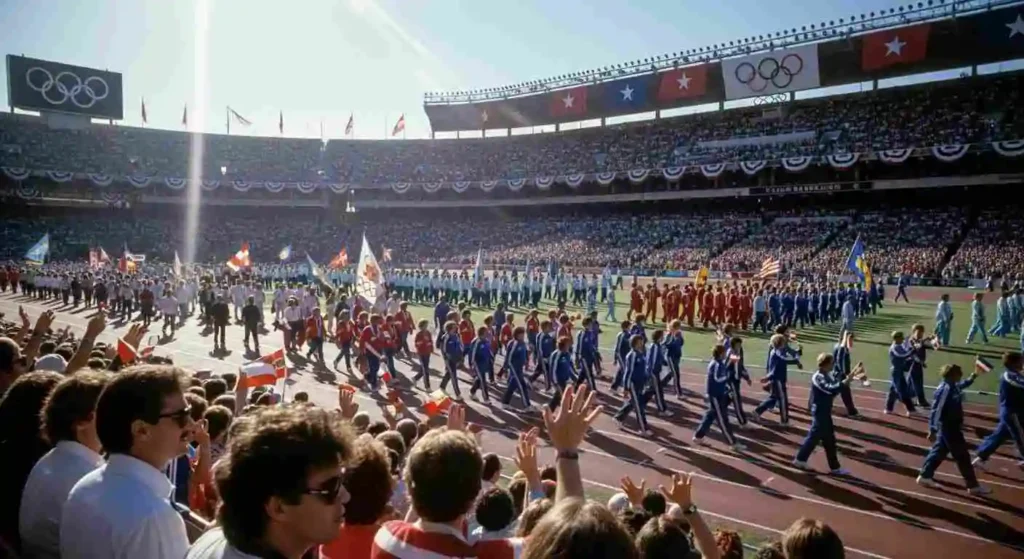
Do you remember the atmosphere of those days? President Reagan was championing a “Strong America,” and the Los Angeles Olympics were held that year.
In the midst of days consumed by work, the sound of Max Weinberg’s snare—hitting like a cannon—coming through my car stereo felt like a “victory sound” that blew away my exhaustion.
The Tragedy of a “Cry” Exploited by Politics
Few songs have been consumed with an interpretation so diametrically opposed to their intent.
Politicians who only listened to the chorus tried to use it as a symbol of patriotism for their election campaigns.
Enthusiasm that left the lyrics behind
The crowds waving the Stars and Stripes in stadiums while shouting “Born in the U.S.A.!” were, for the most part, not hearing the despair embedded in every line of the lyrics.
To them, it had become a song about the pride of being born in America.
The Great Misunderstanding of a Patriotic Anthem
Springsteen himself must have felt considerable anguish over this misunderstanding.
He intended to denounce social contradictions by depicting the harsh reality of Vietnam veterans. However, that message was unintentionally “masked” by the overly catchy melody and overwhelming sound. Ironically, the more it sold, the further the song’s true meaning drifted away.
Sting’s Message of “Solidarity”
Let’s look at the second live video mentioned earlier. The 1988 Amnesty International tour. The person who introduced Springsteen there was none other than Sting.
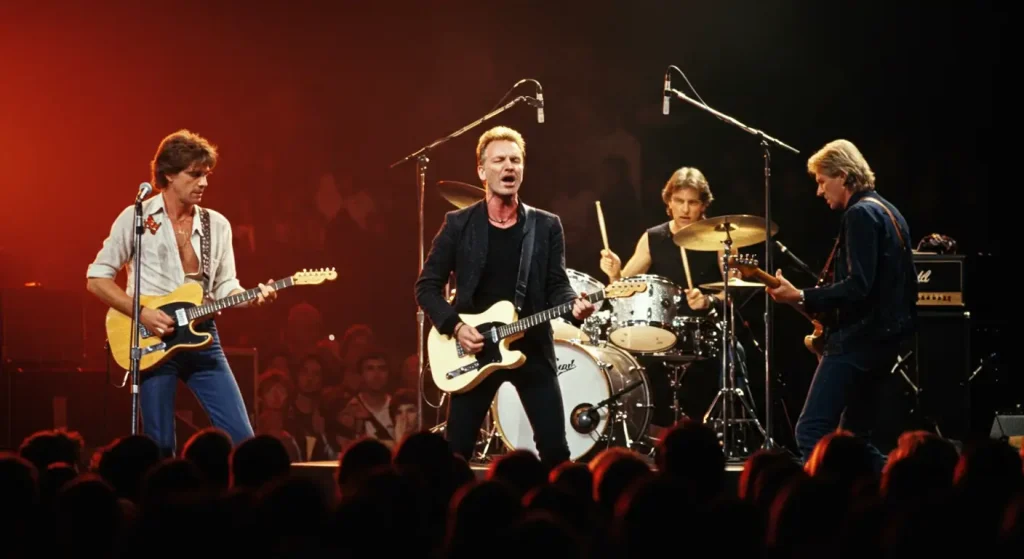
The Boss’s Truth Revealed at the Amnesty Live
Sting calls him “my friend” and proudly welcomes him to the stage. At this time, the Boss emphasized an acoustic resonance and sang even more passionately, trying to bring the “human suffering” of this song to the surface.
The weight behind the word “Friend”
The fact that an intellectual and human rights activist like Sting supported the Boss carries great significance. It was the moment that proved this song is for “oppressed people” all over the world, transcending the borders of America. Through Sting’s introduction, it seemed to me that the song regained its original sharp fangs.
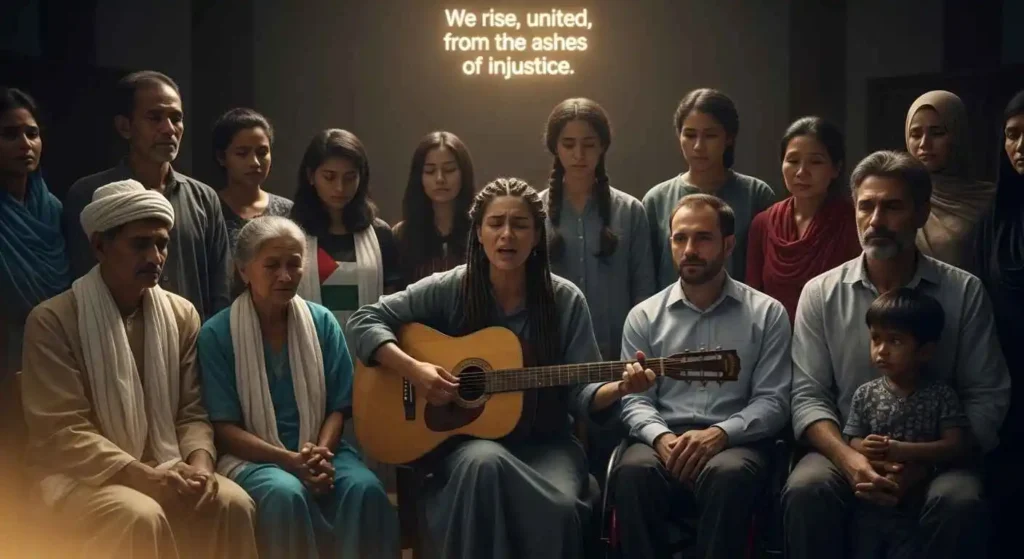
The Story of “The Abandoned” Told Behind the Sonic Roar
So far, we have looked back at how this song was misunderstood by politics and the masses, and how I perceived it in 1984. From here, I want to step deeper into the world of the lyrics and approach the essence of the realism the Boss portrayed.
The Brother Lost at Khe Sanh, and the Photo Left in Saigon
In the middle of the lyrics, the story is suddenly pulled back into gruesome memories.
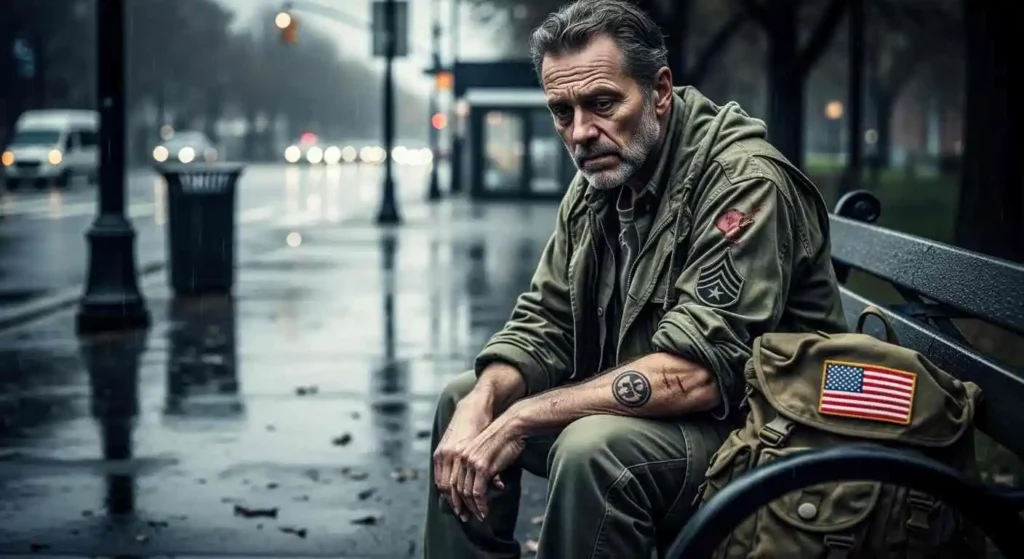
The protagonist had a “brother” (comrade) who fought the Viet Cong at the Battle of Khe Sanh. But that brother is no longer of this world. There was a woman he loved in Saigon, and all the protagonist has left is a picture of his brother in her arms.
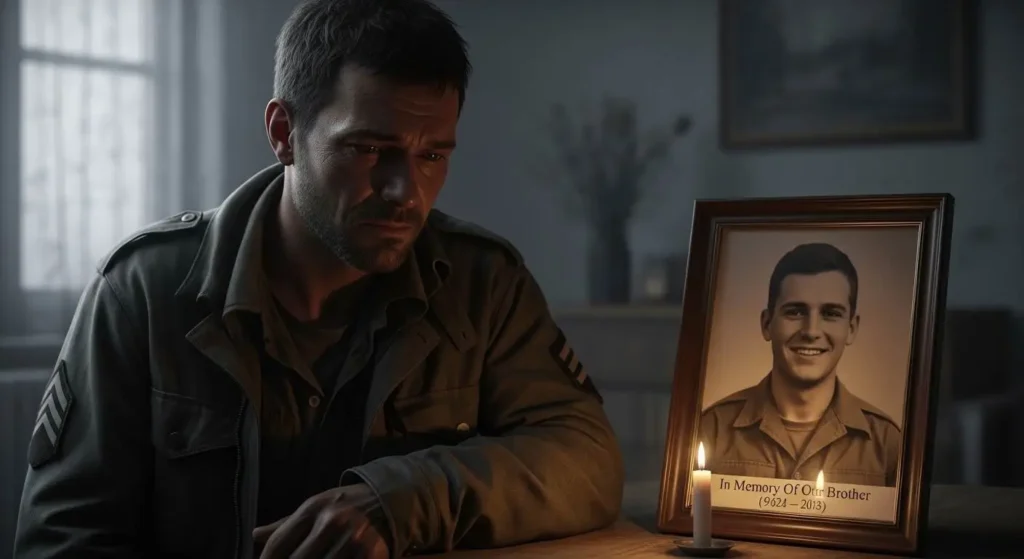
This passage is more than just a war tragedy. It captures the lives lost on the battlefield and the unerasable emptiness felt by those who survived. These emotions are condensed into short phrases. At the very moment thousands in the stadium are pumping their fists, the Boss was singing of the loneliness of a man staring at this single “photograph of the deceased.”
The Home he Returned to was Just Another Battlefield
When the protagonist finally returns home, a warm welcome does not await him. When he visits the refinery where he used to work, the hiring man simply says coldly, “Son, if it was up to me…”
A man who risked his life for his country is treated as “surplus labor” in peacetime society. This absurd reality was the massive wound that America carried at the time. The words of the Veterans Administration (V.A.) officer, “Son, don’t you understand, now?” symbolize a structural rejection that no individual can overcome.
Why did this “Despair” have to be Stadium Rock?
A question arises here. Why was it necessary to play such a dark and hopeless story with those glittering synthesizers and earth-shaking drums?
Max Weinberg’s Drumming: The Pulse of “Anger”
Listening again, I realize that the ground-shaking drum sound isn’t just there to create a “good vibe.” Isn’t it the “sound of angry footsteps” being stomped by a man ignored by society, just to prove his existence?
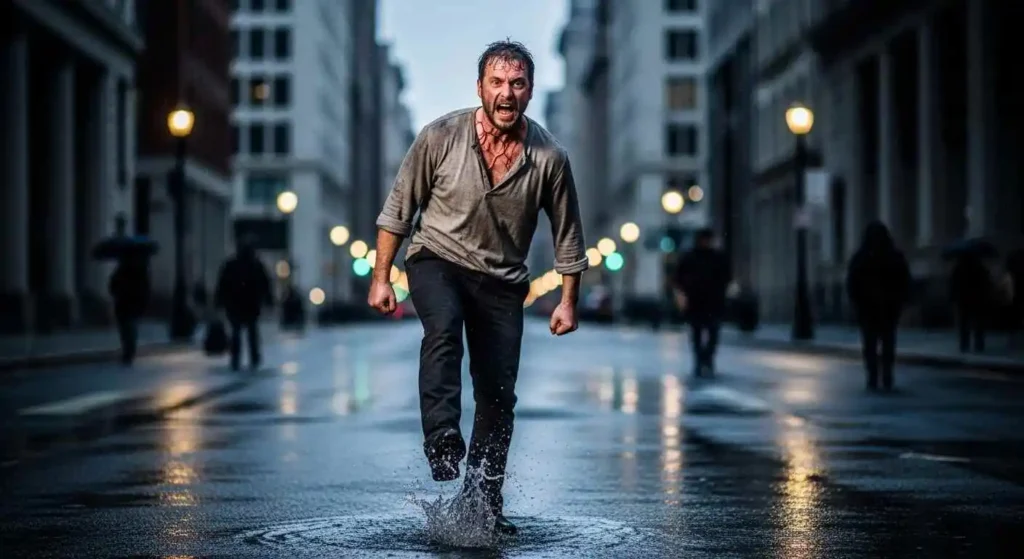
A “Night Landscape” Painted Under the 80s Sun
The 1980s was an era that demanded everything be positive and shining. Springsteen dared to borrow the format of stadium rock—the symbol of “Light”—to smuggle in the “Shadow” story of the bottom of society.
If this had been a quiet folk song, it likely wouldn’t have caused such a massive sensation. To scream the most miserable reality in the most brilliant place. This paradox is the brilliance of his artistry, and the reason why we are still drawn to this song 40 years later.
The Boss’s Voice Finally Reaching Me After My Career Journey
Resonance with the “Inescapable Loneliness” Felt Within Organizations
The Realization of “Ten Years Burning Down the Road”
The phrase near the end of the lyrics, “I’m ten years burnin’ down the road.” I, too, have rushed through my time—working frantically, supporting my family, and fulfilling my social roles—literally “burning down the road.”
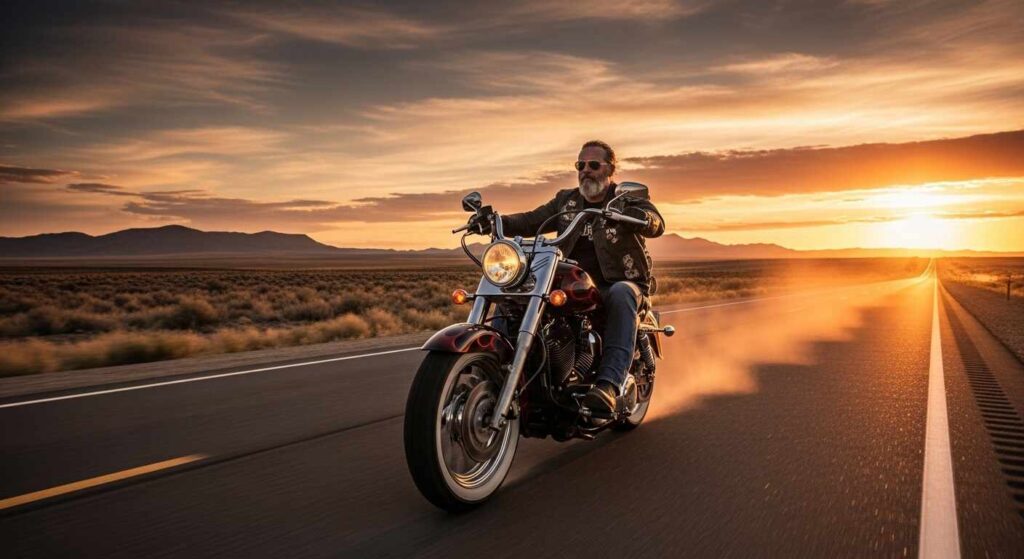
Looking back, perhaps we were all under the obsession that we “had to be strong.” The Boss’s roar feels like it’s patting our shoulders, giving us a wordless sense of solidarity, saying, “You’ve been living your life as hard as you can, haven’t you?”
Conclusion: The Resolve to “Keep Living Right Here, Right Now”
At the end of the song, the protagonist calls himself a “Cool rocking daddy” and keeps on keeping the rhythm, even at the edge of despair.
To Escape the Curse and Reclaim Pride
The fact that he was “Born in the U.S.A.” was a blessing and an inescapable curse for him. Yet, he continues to stand on his own feet in his dead-end town, or by the gas fires of the refinery, carrying that curse on his back.
We are the same. Even as times and positions change, we have no choice but to keep living with our own dignity in the place where we have put down roots. For me, now over 60 and taking a new step as a freelancer, this song is no longer a “social critique of another country.” It is a quiet declaration of the resolve to “keep holding the steering wheel of my own life,” no matter the circumstances.
My Thoughts Behind the 10th Place Ranking
The 10th place ranking—it is proof that this song is both the “entrance” to the giant that is Springsteen and a “profound textbook” to be deciphered over a lifetime.

音楽ファン同士の交流・リクエストはこちら / Connect & Request Songs Here