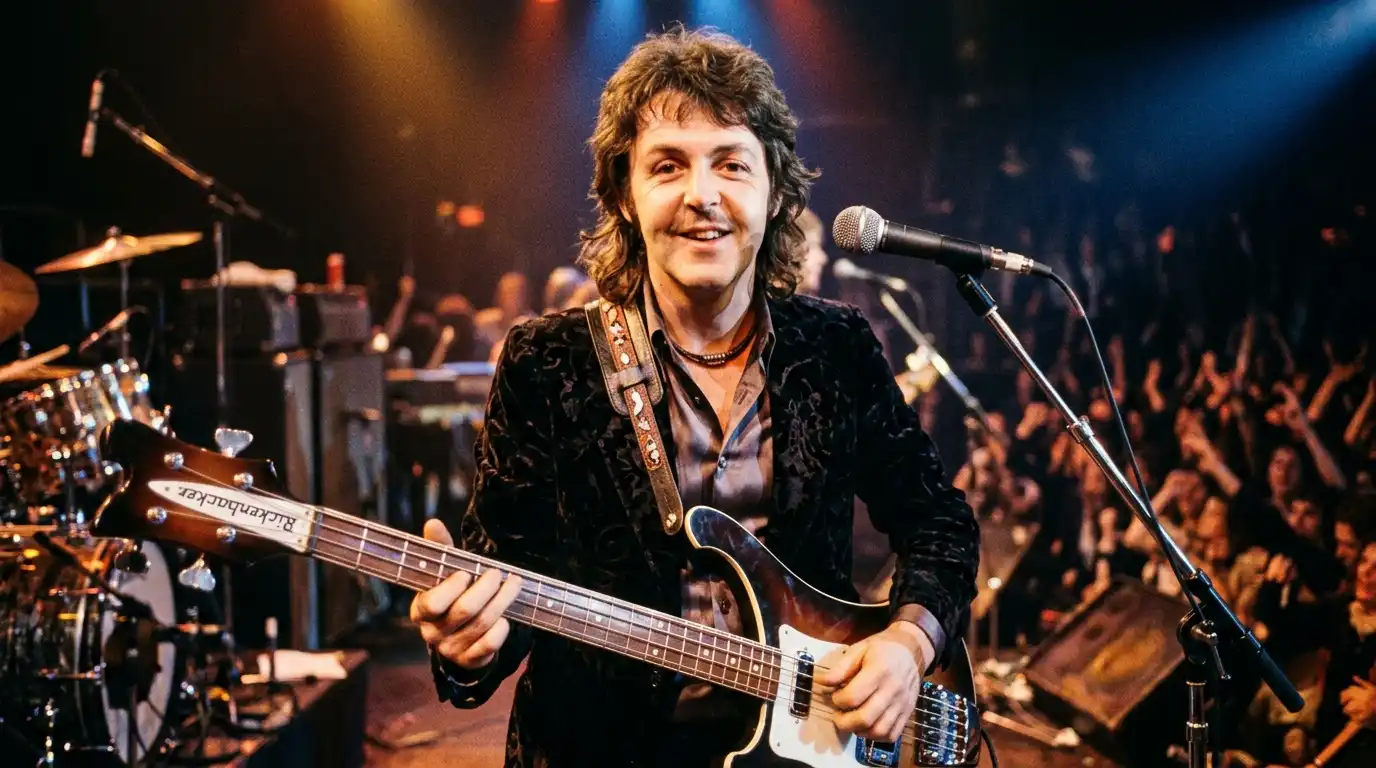
Explore Paul McCartney’s Journey Here!
- 🎧 Enjoy This Article in Audio
- No. 6: “No More Lonely Nights”
- First, Listen to the Official YouTube Video
- A New Song Written for the Film
- George Martin and David Gilmour — What Each Brought to the Song
- A Song That Outlived the Film
- Why This Song Still Stays with Me
- In Closing — When the Voice Ends, the Guitar Remains
🎧 Enjoy This Article in Audio
You can quickly catch the key points of this article through narration.
Recommended if you would like to get a feel for “No More Lonely Nights” and understand the overall flow of the article before reading.
🎵 English Narration
An English narration introducing the content of this article.
🎶 Japanese Narration
A Japanese narration introducing the content of this article.
Listening first makes it easier to grasp the appeal of “No More Lonely Nights” and the key points of the article.
No. 6: “No More Lonely Nights”
At No. 6 is Paul McCartney’s “No More Lonely Nights.”
Released as a single on September 24, 1984, it was one of the new songs written for the film Give My Regards to Broad Street.
The film featured newly recorded versions of songs spanning McCartney’s Beatles years through his solo career, but “No More Lonely Nights” was not a remake of an earlier song. It was one of three new compositions created specifically for the film.
The recording was produced by George Martin, while Pink Floyd’s David Gilmour contributed electric guitar.
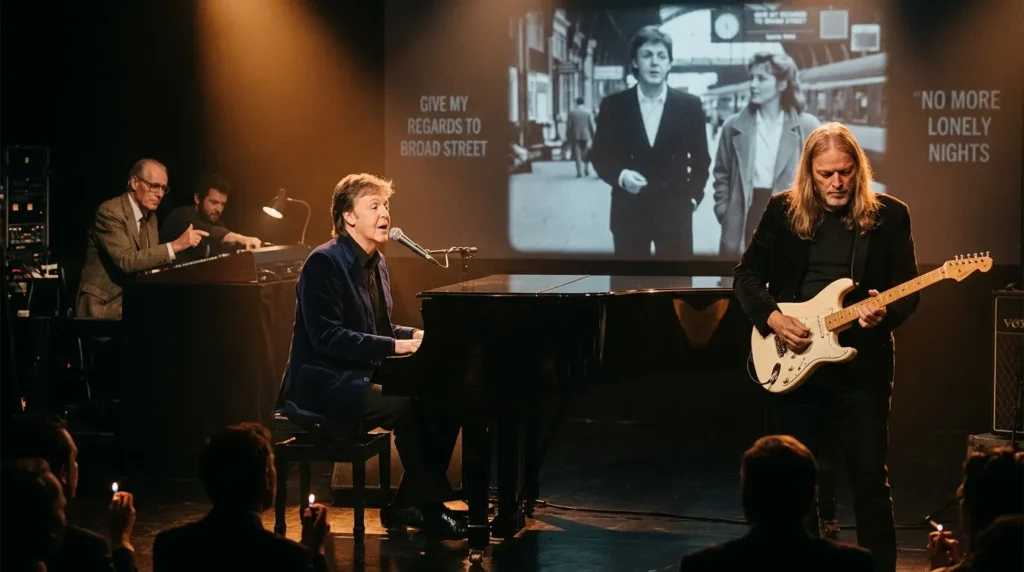
The single reached No. 2 on the UK Singles Chart and No. 6 on the Billboard Hot 100 in the United States. It became a major success in its own right, independent of the film, and remains one of McCartney’s defining ballads of the 1980s.
A Free Translation
I don't want to spend another night apart from you.
Even when I lose my way, my heart still turns toward you.
However long it takes, I'll wait for the sadness to give way to a smile.
Until that day comes, I won't let go of what I feel for you.
First, Listen to the Official YouTube Video
🎬 Video Credits
Song: “No More Lonely Nights”
Artist: Paul McCartney
Written by: Paul McCartney
Produced by: George Martin
Guitar: David Gilmour
Original video: 1984
Published by: Paul McCartney Official YouTube Channel
📝 Two-Line Commentary
Written for the film Give My Regards to Broad Street, this is one of McCartney's defining ballads of 1984.
Its beautiful melody and vocal are given an unforgettable final glow by David Gilmour's expressive guitar.
A New Song Written for the Film
To understand “No More Lonely Nights,” it helps to know something about its connection to Give My Regards to Broad Street.
Released in 1984, the film was written by McCartney himself, who also starred in it. The story unfolds over the course of a single day as he searches for the missing master tapes of a new album.
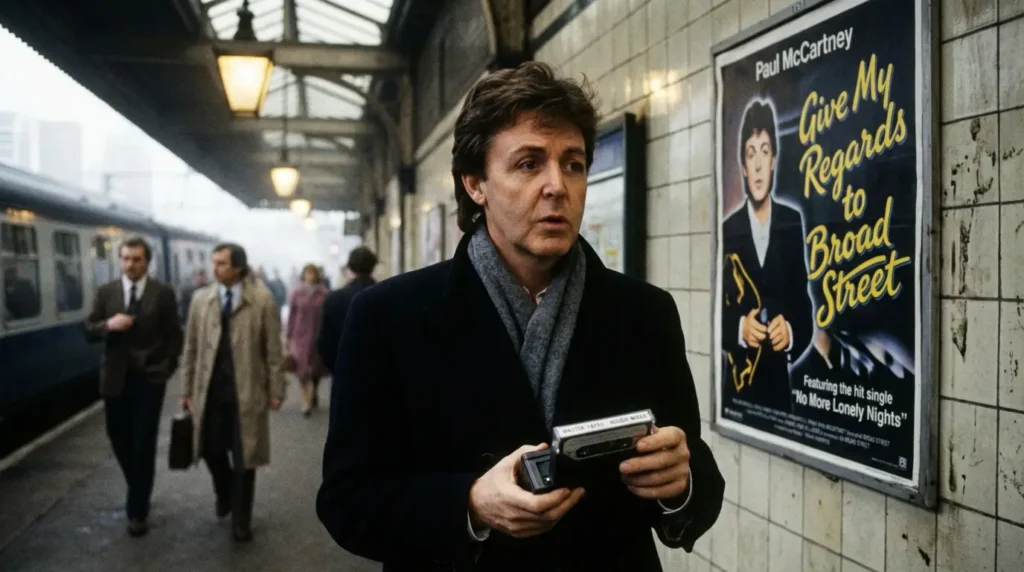
The cast included Linda McCartney, Ringo Starr, Tracey Ullman, and Dave Edmunds. Musically, the film revisited some of McCartney’s best-known songs, including “Yesterday,” “Here, There and Everywhere,” “Eleanor Rigby,” “The Long and Winding Road,” and “Band on the Run,” all presented in newly recorded versions.
Against that backdrop, “No More Lonely Nights” stood apart as one of three new songs written specifically for the film.
That is an important point when considering the song. The film was filled with classics already familiar to millions of listeners. Any newly written number would inevitably be heard alongside them — and those classics happened to be songs McCartney himself had written in earlier years.
Yet “No More Lonely Nights” was never overshadowed by them. Instead, it demonstrated that the McCartney of 1984 remained a first-rate melody writer capable of creating a song with an identity entirely its own.
A Classic McCartney Ballad for 1984
During the early 1980s, McCartney was actively exploring sounds that differed from both the Beatles and Wings, particularly on albums such as Tug of War and Pipes of Peace.
“No More Lonely Nights” reflects the sonic character of the 1980s, yet at its heart lies one of McCartney’s most enduring strengths.
That strength is a melody clear enough to grasp on the first listen, yet strong enough to remain rewarding after repeated plays.
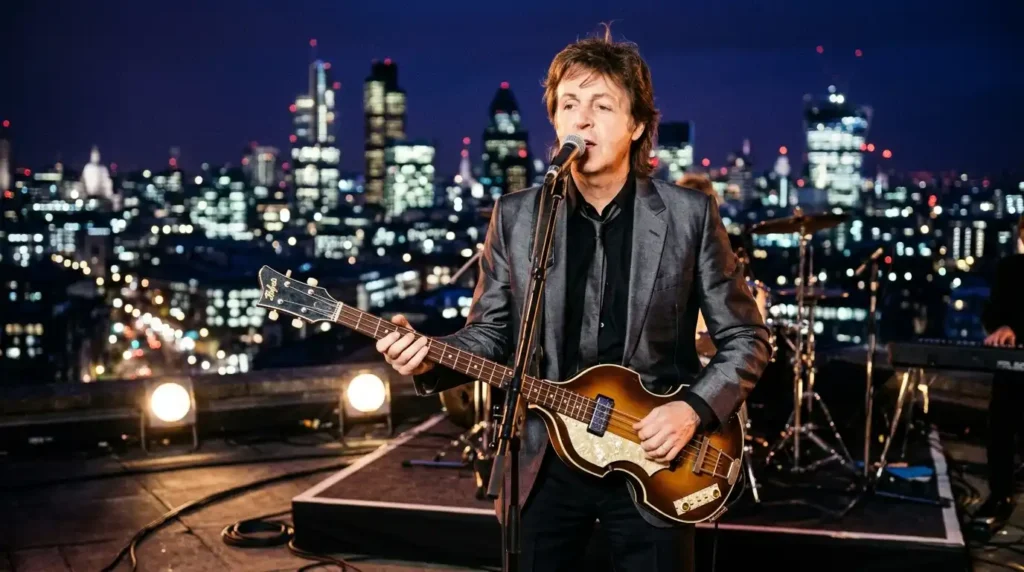
The production may change with the times, but the song itself always remains at the center. In that sense, “No More Lonely Nights” is unmistakably McCartney.
The Simple, Direct Feeling Behind “No More Lonely Nights”
The emotion at the heart of the song is remarkably simple.
There is the loneliness of being apart from someone you love, the refusal to stop caring, and the desire never again to spend another lonely night without that person.
The title “No More Lonely Nights” itself expresses the very heart of the song.
McCartney does not bury the feeling beneath elaborate language. That simplicity allows one of his great gifts — the sweeping, emotionally direct melody — to speak all the more clearly.
Waiting Without Pressuring the Other Person
What I hear in this song is not the drama of an intense romantic struggle. It is the willingness to wait for the other person’s feelings to change, without allowing one’s own feelings to disappear simply because the waiting may take time.
What is also striking is that, although the song is about loneliness, it never sinks into despair. Beyond that loneliness there remains the possibility that the two of them may someday recover what they once shared.
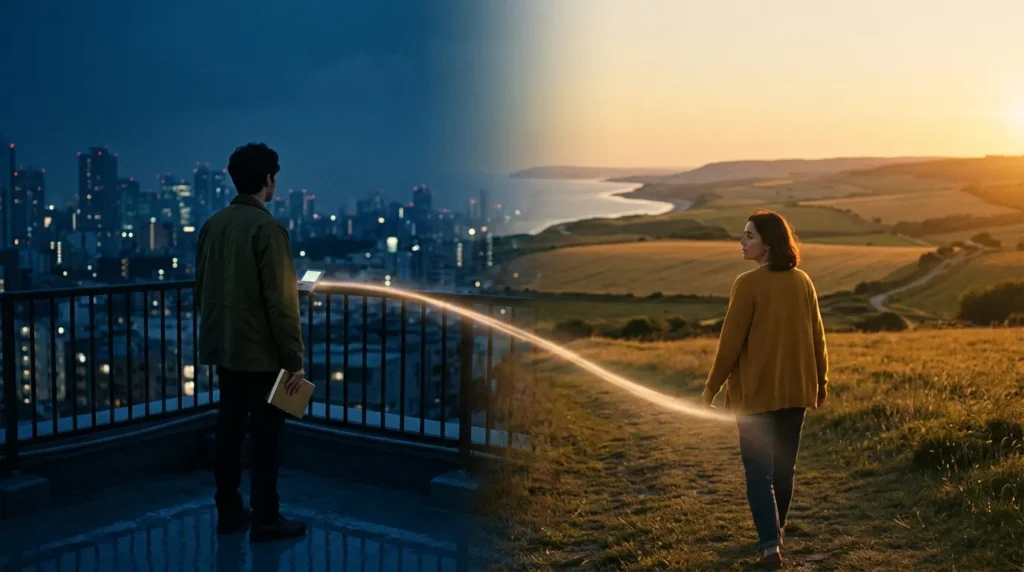
McCartney’s gentle vocal makes that feeling sound less like obsession and more like quiet sincerity.
George Martin and David Gilmour — What Each Brought to the Song
What makes “No More Lonely Nights” distinctive is not McCartney’s beautiful melody alone.
George Martin, who had understood McCartney’s music since the Beatles years, and David Gilmour, with his instantly recognizable guitar tone, both added another dimension to the recording.
Working with George Martin Again
The soundtrack was produced by George Martin.
The album’s arrangements were handled by McCartney and Martin. Having continued their relationship after the Beatles broke up, the two once again joined forces on a large-scale project with Give My Regards to Broad Street.
“No More Lonely Nights” begins with piano and voice at its center, then gradually expands as the arrangement gathers weight.
Yet the production never buries the melody. McCartney’s voice remains the focal point, while the surrounding instruments are placed carefully around it.
What I find particularly impressive is that the song grows in scale without becoming overblown. The expanding textures and fuller rhythm lift the emotion, yet the intimacy of the piano and voice at the beginning is never completely lost.
The scale grows, but the outline of the melody remains perfectly clear. That balance reflects the long musical understanding between McCartney and George Martin.
The Lingering Impact of David Gilmour’s Guitar
The other unmistakable personality in the recording is David Gilmour’s electric guitar.
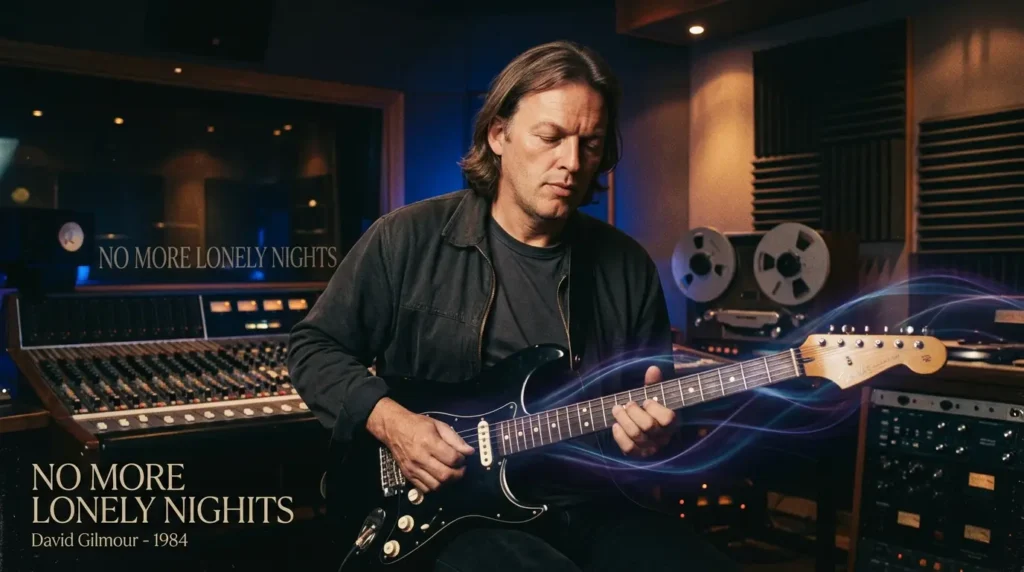
Gilmour is not the kind of guitarist who overwhelms a song with a flood of rapid notes. He can hold a single note, allow it to bend and breathe, and use the space between phrases to create emotion with remarkably few notes.
That quality becomes most apparent toward the end of the song.
It feels as though the guitar takes over the emotion that the voice alone could no longer fully express.
That performance is what keeps “No More Lonely Nights” from being merely an elegant McCartney ballad.
A Guitar That Never Overpowers McCartney’s Melody
At first glance, McCartney and Gilmour seem to come from very different musical worlds.
Yet in this song, that difference works beautifully.
Gilmour places his distinctive tone into the spaces around McCartney’s clear, melodic writing. His guitar neither dominates the song nor settles for the role of simple accompaniment.
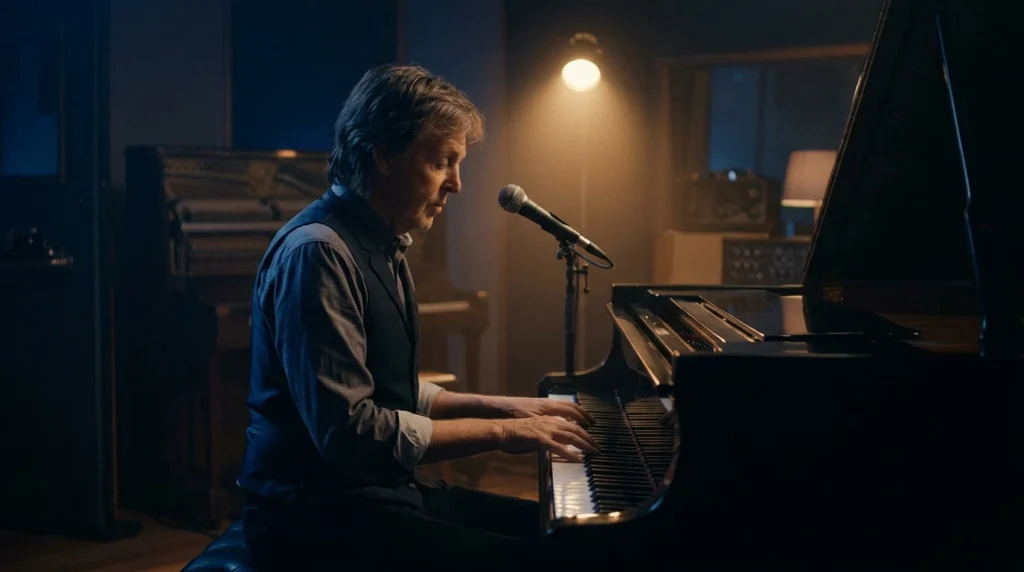
One thing especially worth listening for is the silence after Gilmour finishes a phrase. He does not fill every available space. By allowing room before the next note arrives, he makes each phrase feel even more significant.
The appeal of this recording lies partly in the way McCartney and Gilmour retain their individual identities while meeting at exactly the right musical distance.
A Song That Outlived the Film
“No More Lonely Nights” was released as the lead single on September 24, 1984, reaching No. 2 in the UK and No. 6 in the United States.
The song was also nominated at both the Golden Globe Awards and the BAFTA Awards.
Although it was created for a film, it gradually became a Paul McCartney song that could be enjoyed even by listeners who had never seen the movie.
Its ability to stand on its own, despite having originated as film music, says a great deal about the strength of the composition.
Another Side of the Song: The “Playout Version”
The 1984 seven-inch single paired “No More Lonely Nights (Ballad)” on the A-side with “No More Lonely Nights (Playout Version)” on the B-side.
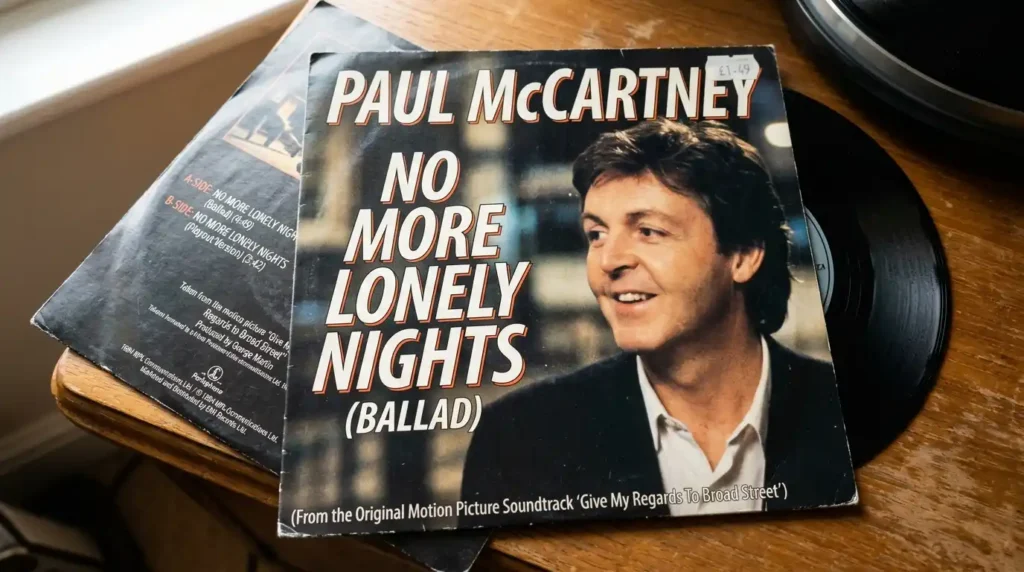
Unlike the ballad version featured here, the Playout Version pushes the rhythm to the forefront and transforms the song into a much more upbeat performance.
The ballad version emphasizes beauty and melancholy, while the Playout Version turns the same musical material into something lighter and more energetic. Hearing the two versions back to back makes it clear just how dramatically tempo, rhythm, and tone can change the character of a song.
Yet the underlying shape of the melody remains intact.
Even after such a major change in arrangement, it still unmistakably sounds like a McCartney song. That too says something about his strength as a songwriter.
Why This Song Still Stays with Me
The appeal of “No More Lonely Nights” goes beyond the fact that it is a beautiful ballad.
It begins with quiet piano and voice, then gradually grows fuller as the song progresses. With that change, the emotion that initially feels restrained also begins to deepen.
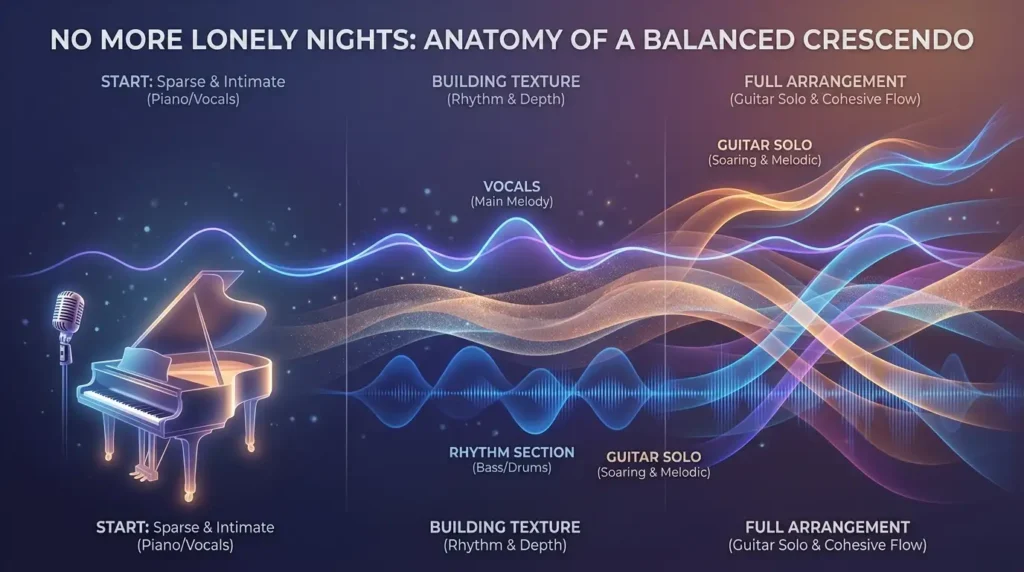
What matters is that no single element pushes itself too far forward. The voice, piano, rhythm, and guitar each retain their own role while contributing to one continuous musical arc.
The arrangement itself creates the emotional movement without relying on obvious tricks.
That is why the song develops such a natural sense of lift as it approaches its final section. Gilmour’s guitar gains its real power because of everything that has led up to it.
McCartney’s gift for melody, George Martin’s sense of structure, and Gilmour’s distinctive musical personality never compete for attention. Instead, all three move in the same direction, and that unity is central to the recording’s remarkable completeness.
In Closing — When the Voice Ends, the Guitar Remains
“No More Lonely Nights” was born from a 1984 film project. But you do not need to know the story of that film to connect with the song.
At its heart is the loneliness of spending the night apart from someone you love, and the wish to bring that separation to an end.
It is a deeply universal feeling, carried by one of McCartney’s characteristically beautiful melodies.
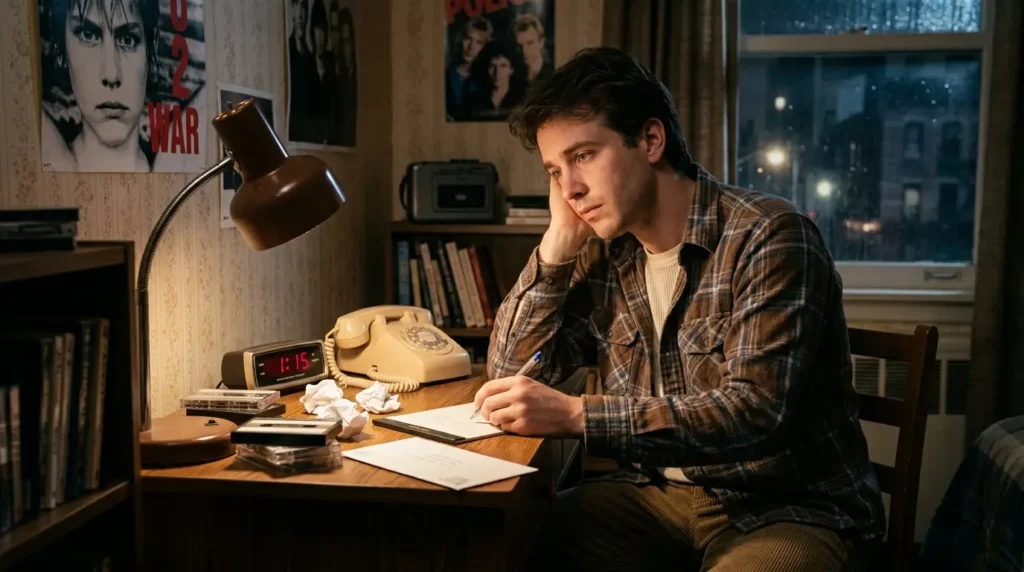
And at the end, what remains is David Gilmour’s guitar.
Even after the voice has faded, that sound seems to linger in the ear for a little longer.
The song may have begun as part of a film, but its ability to move listeners as a self-contained piece of music is one reason it has endured far beyond that original setting.
For me, “No More Lonely Nights” is a song whose beauty lies not only in its melody, but in the way it stays with you right through its final note.

音楽ファン同士の交流・リクエストはこちら / Connect & Request Songs Here