- 🎧 Enjoy This Article in Audio
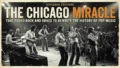
- The Era When Rock’s Energy and Brass’s Velocity Intersected
- A Musical Collective Born in the Windy City
- An Audacious Manifesto Unveiled by Their Debut
- The Golden Era of the 1970s
- Tragedy, Turbulence, and the Triumph of the Ballad
- The Resurgence of the 1980s
- The Journey Beyond Cetera’s Departure
- 🌹 A Prologue to “My Personal BEST 10”
🎧 Enjoy This Article in Audio
You can quickly grasp the main points of this article through narration.
Recommended for those who want to catch the vibe of the music and the flow of the article before reading.
🎶 English Narration
An English audio introduction to the contents of this article.
⌛ Duration: Approx. 3 mins
🎵 Japanese Narration
A Japanese audio introduction to the contents of this article.
⌛ Duration: Approx. 3 mins 15 secs
* Listening to the audio before reading helps you better understand the world of the music and the main points of the article.
The Era When Rock’s Energy and Brass’s Velocity Intersected
In the late 1960s, rock music was undergoing a massive period of transformation. Psychedelic rock, heavy rock, art rock, and jazz rock were carving out new forms of expression one after another, rapidly rewriting the map of popular music.
Emerging from that very chaos was a band born in the Midwestern city of Chicago: Chicago.
What made them truly groundbreaking was that they pushed the horn section to the absolute forefront, positioning it as a lead-status instrument rather than a mere decoration or background element.
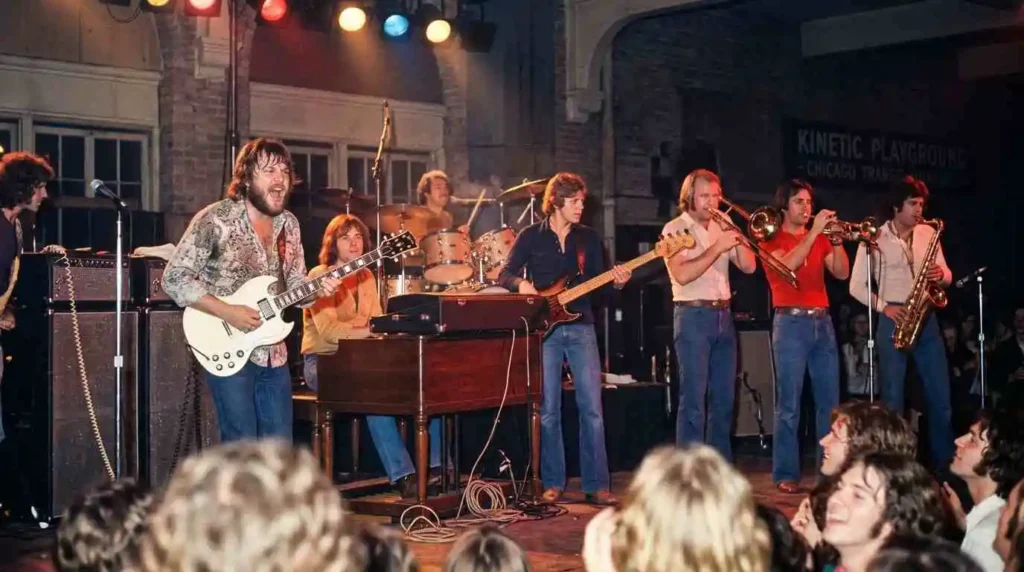
Of course, horns had already played vital roles in the worlds of R&B, soul, and jazz long before then. However, Chicago took that sharp brass resonance and slammed it head-on into distorted electric guitars, driving basslines, and powerful drums, firmly cementing it at the core of rock music.
The sophisticated chord progressions of jazz, the structural beauty of classical music, the raw energy of rock, and the approachability of pop. Chicago’s music systematically built these elements into a single, massive architecture of sound.
A horn section that roared like a lead guitar. A rock band that breathed like a symphony. The miracle of Chicago lies precisely in their ability to make both realities coexist simultaneously.
A Musical Collective Born in the Windy City
A Band That Played Everything Themselves
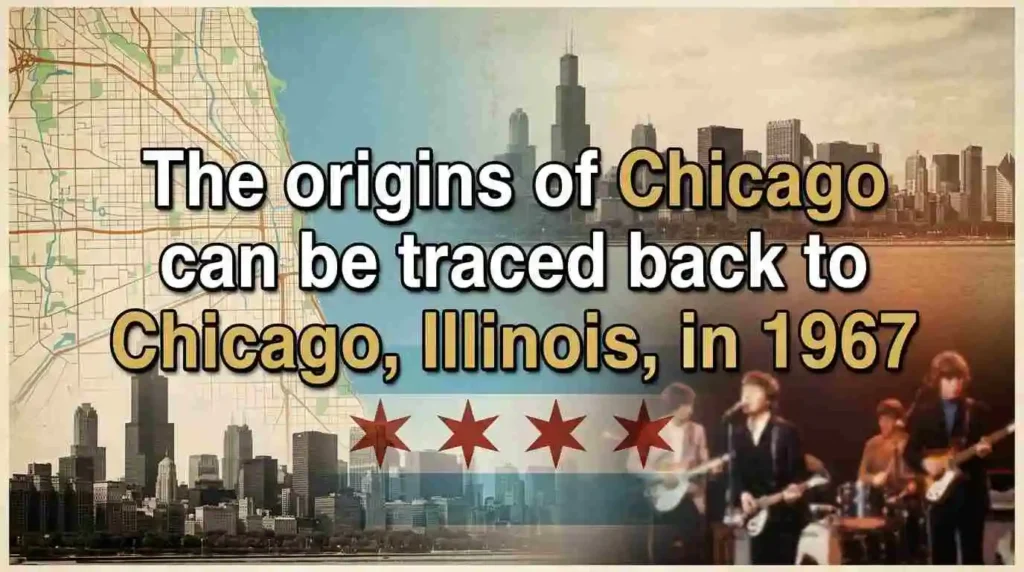
The story of Chicago traces back to 1967 in Chicago, Illinois.
The initial concept forged by horn players Walter Parazaider, James Pankow, and Lee Loughnane was soon joined by Terry Kath, Robert Lamm, and Danny Seraphine. With the eventual addition of Peter Cetera, the foundational blueprint of what would become Chicago was officially formed.
Walter Parazaider handled the saxophone and woodwinds, James Pankow became the anchor of their brilliant arrangements on trombone, and Lee Loughnane added a soaring brilliance on trumpet.
To this foundation, they added Terry Kath, a guitarist and vocalist possessing a raw blues soul; Robert Lamm, an intellectual and soulful composer; Danny Seraphine, who injected complex jazz polyrhythms into a rock beat; and Peter Cetera, who possessed a crystalline, high-tenor voice.
Chicago’s ultimate strength didn’t just lie in the inclusion of horns. It was the presence of three distinct vocalists with completely different personalities—Robert Lamm, Terry Kath, and Peter Cetera—who seamlessly traded the spotlight from song to song. On top of that, the entire band breathed and functioned as a single living organism. This created a unique dynamic entirely unseen in other groups.
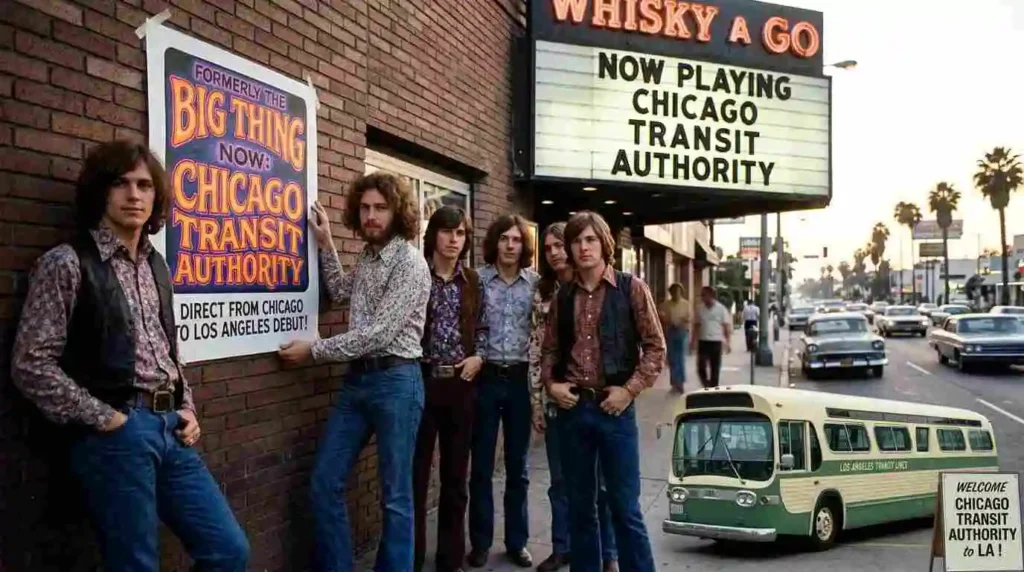
Originally performing under the name “The Big Thing,” the group relocated to Los Angeles in 1968 under the guidance of producer James William Guercio, renaming themselves the “Chicago Transit Authority.” From this point forward, the wheels of their grand epic began to turn.
An Audacious Manifesto Unveiled by Their Debut
An Unprecedented Departure as a Double Album
In 1969, they unleashed their self-titled debut album, “Chicago Transit Authority”. For a brand-new band to release a double LP as their debut statement was considered an incredibly bold commercial gamble at the time.
Yet, Chicago possessed an immense amount of musical information that justified it. Complex arrangements that couldn’t be contained within short singles, extended jams, political messages, avant-garde sonic experimentation, and infectious pop melodies—capturing all of this required a canvas as massive as a double album.
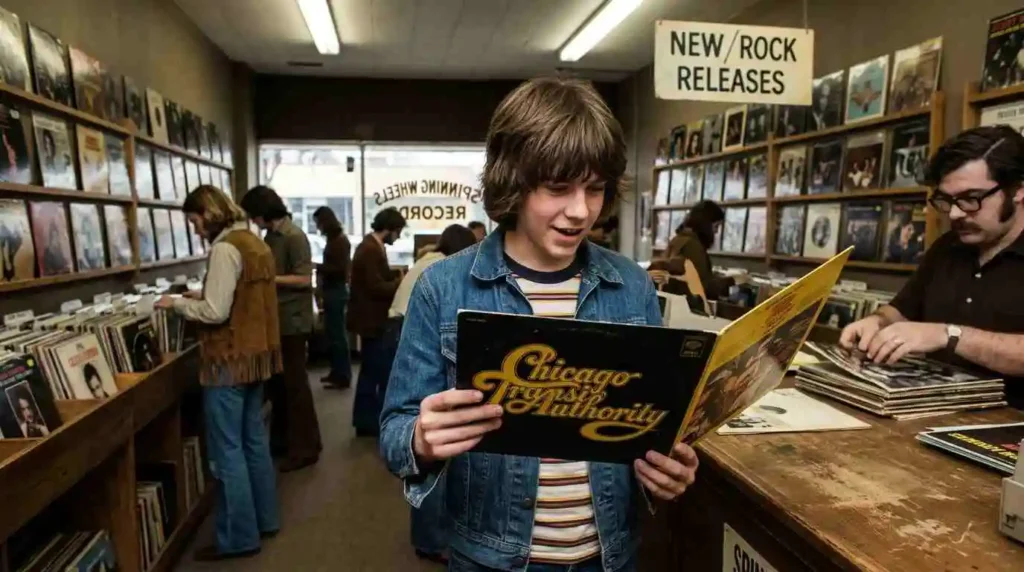
Tracks like “Does Anybody Really Know What Time It Is?” and “Beginnings” perfectly showcased Robert Lamm’s signature urban intellect and accessible melodic charm.
In “Questions 67 and 68,” the raw momentum of the young band and the vibrant energy of the brass section burst forth completely. Meanwhile, the Terry Kath-penned “Introduction” functioned as a definitive musical manifesto that condensed the entirety of Chicago’s multifaceted identity into a single track.
Furthermore, their experimental drive knew no boundaries from the very beginning, as demonstrated by “Prologue (August 29, 1968),” which integrated real audio from the anti-war riots and police clashes at the 1968 Democratic National Convention, and “Free Form Guitar,” a track built entirely out of raw amplifier feedback.
This landmark debut enjoyed an incredibly long run on the charts, instantly putting Chicago on the map. Shortly thereafter, to avoid legal objections from the actual municipal transit line, the band streamlined their name to a sleek, singular moniker: Chicago.
The Golden Era of the 1970s
Complex, Yet Universally Accessible Music
Entering the 1970s, Chicago managed to simultaneously capture staggering creative output and massive commercial success. From “Chicago” (commonly known as “Chicago II”) and “Chicago III” to the massive 4-LP live box set “Chicago at Carnegie Hall,” they consistently released ambitious, multi-disc masterpieces.
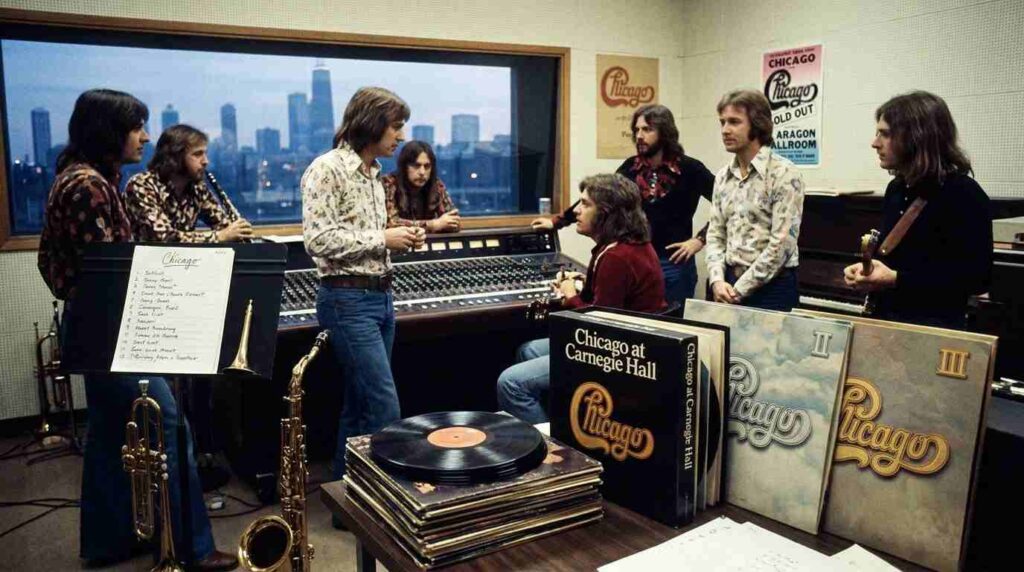
On “Chicago II,” James Pankow introduced “Ballet for a Girl in Buchannon,” a breathtaking classical suite written for a rock band that yielded the timeless hits “Make Me Smile” and “Colour My World.” This suite achieved a flawless balance between sophisticated classical structures and pop accessibility, serving as a landmark achievement that defined Chicago’s musicality.
Furthermore, in the iconic “25 or 6 to 4,” a driving guitar riff and razor-sharp brass lines created an electrifying tension, while tracks like “Free” put their raw, aggressive rock-and-roll edge on full display.
During this era, even though Chicago was performing highly sophisticated and complex music, they never left the listener behind. Hidden within their intricate arrangements was always a powerful melody and an infectious, welcoming groove.
One of the tracks where this radiant charm fully bloomed was “Saturday in the Park.” Capturing the vibrant, open atmosphere of a city park through bouncy piano chords and celebratory horns, this song definitively proved that Chicago wasn’t just a band of virtuosos, but masters of crafting pop anthems that anyone could sing along to.
They continued to address societal issues in “Dialogue (Part I & II),” revealed a deeply romantic side in “Just You ‘n’ Me,” and showcased a sweeping sonic landscape that captured the very spirit of the American era in tracks like “Call on Me,” “Old Days,” and “Harry Truman.”
Chicago was an exceptionally rare entity capable of balancing social consciousness, intellectual depth, pop sensibilities, and absolute musical mastery on the exact same stage.
Terry Kath: A Wild Soul
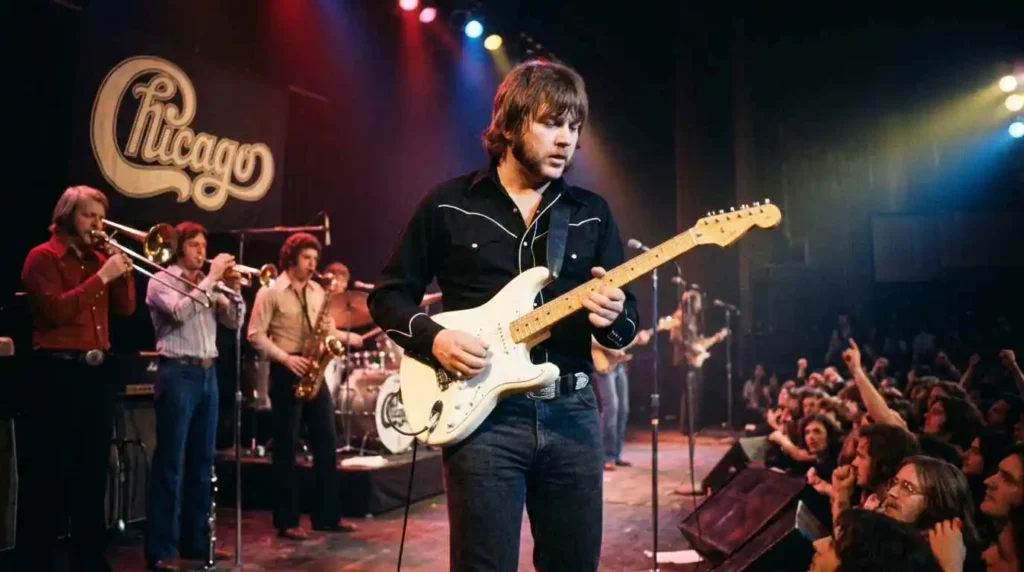
It is impossible to discuss the music of early Chicago without honoring the singular presence of Terry Kath. His guitar playing transcended mere technical proficiency; it seamlessly fused a gritty blues soul, raw rock aggression, and avant-garde noise manipulation.
The legendary anecdote that Jimi Hendrix deeply admired Terry Kath’s talent is still widely celebrated today. While the precise details of their encounters have taken on a legendary status over time, it remains a historical certainty that the musical community of the era held Chicago’s musicianship in the highest esteem.
Because Terry Kath was there, Chicago’s music never lost its dangerous rock edge, no matter how polished or intricate the arrangements became. He was the spiritual anchor, holding the line between Chicago’s pop accessibility and hard-hitting rock integrity—the absolute “wild soul” of the band.
Tragedy, Turbulence, and the Triumph of the Ballad
The Light and Shadows of the Late 1970s
By the mid-1970s, Chicago stood at the absolute pinnacle of global success. Their albums topped the charts consecutively, and the band’s popularity reached monumental proportions.
In 1976, the Peter Cetera-led ballad “If You Leave Me Now” went to number one in both the US and the UK, eventually earning the band a Grammy Award. This masterpiece opened up entirely new horizons for Chicago, proving that the pioneers of brass rock were equally capable of crafting breathtaking ballads that resonated with listeners worldwide.
This melodic lineage seamlessly carried over to “Baby, What a Big Surprise.” Driven by Peter Cetera’s clear vocal delivery and elegant instrumentation, Chicago’s romantic identity grew distinct and undeniable.
Yet, behind this massive commercial glory, the toll of relentless exhaustion, creative divergence, and an impending, unpreventable tragedy was quietly closing in.
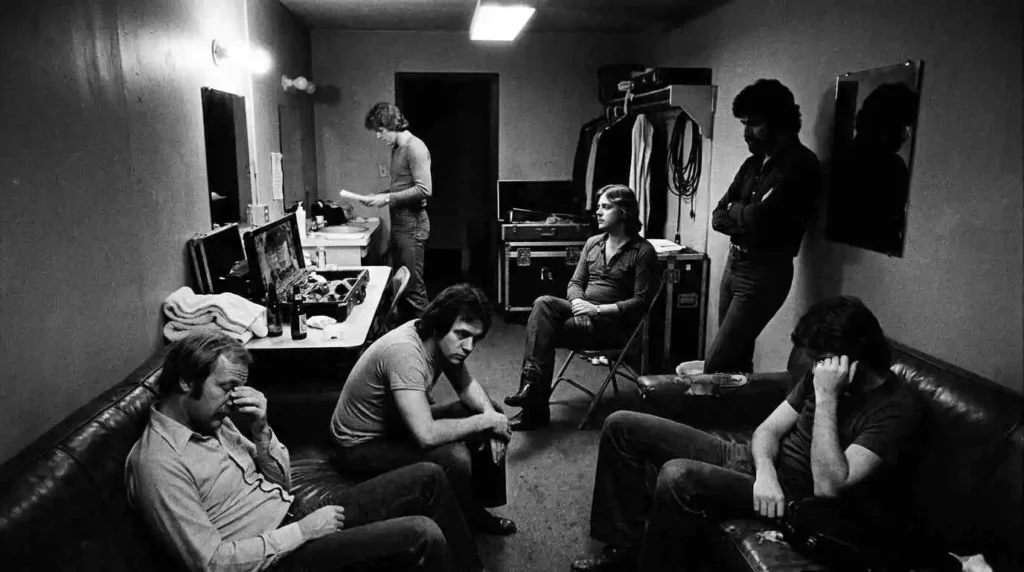
On January 23, 1978, Terry Kath passed away suddenly from an accidental, self-inflicted gunshot wound at a friend’s home. He was only 31 years old.
This devastating loss was far more than just the absence of a band member. It tore out the spiritual anchor and the raw, heavy rock nucleus of Chicago itself.
Paralyzed with grief, the remaining members ultimately resolved to keep the band alive, recruiting new guitarist Donnie Dacus to release “Hot Streets.” Tracks like “Alive Again” clearly broadcasted their fierce determination to rise above the sorrow and stand on their feet once more.
However, the broader musical landscape was shifting at a breakneck pace toward disco and new wave, leaving Chicago struggling to maintain their footing. Albums like “Chicago XIII” and “Chicago XIV” failed to capture their signature magic, culminating in the termination of their long-standing relationship with Columbia Records.
Chicago had hit the most formidable wall of their career.
The Resurgence of the 1980s
Reconstruction via David Foster
Just as critics and the public began dismissing Chicago as a relic of the past, they orchestrated an unbelievable comeback. The spark for this resurrection was their signing with Warner Bros. Records and their fateful alignment with producer David Foster.
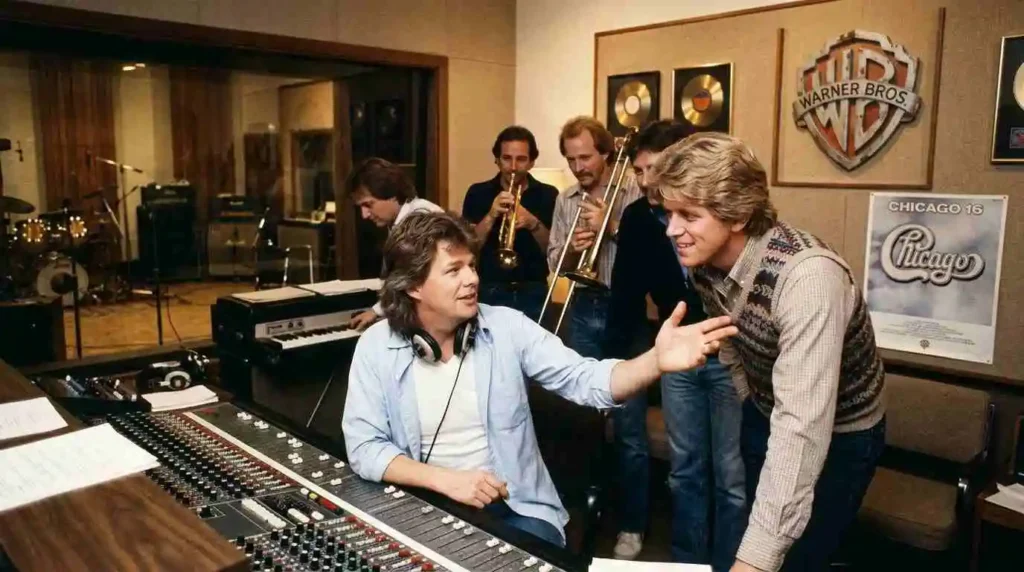
Foster initiated a bold and rigorous reconstruction of Chicago’s sound. Recognizing the immense commercial potential of Peter Cetera’s soaring, smooth tenor voice, he systematically steered the band away from a horn-driven progressive rock collective and molded them into the premier icon of sleek AOR and adult contemporary music.
The definitive proof of this musical transformation arrived with 1982’s “Chicago 16” and its lead single, “Hard to Say I’m Sorry,” which effortlessly soared to number one on the charts. While the sonic texture was a radical departure from the Chicago of old, its immaculate melody, pristine arrangement, and the emotional resonance of Cetera’s vocals captured a brand-new generation of listeners.
The momentum continued with “Love Me Tomorrow,” beautifully marrying an elegant, 80s orchestral sweep with deeply heartfelt vocal execution.
This resurgence exploded exponentially with 1984’s “Chicago 17,” which dominated the global charts and the MTV era with an ironclad string of massive hits, including “Stay the Night,” “Hard Habit to Break,” and the wedding classic “You’re the Inspiration.”
During this era, the iconic horn section was noticeably dialed back to make room for contemporary synthesizer arrangements. Yet, the absolute precision, punch, and sophistication of the brass remained an essential component of the band’s identity. They had evolved dramatically, but their core musical DNA remained unbroken.
The Journey Beyond Cetera’s Departure
The Indestructible Legacy of the Collective
In 1985, at the absolute zenith of their multi-platinum resurgence, Chicago faced yet another massive crossroads when Peter Cetera officially departed the band to focus entirely on his solo career. Losing their signature voice during a commercial peak would have been a fatal blow to almost any other group.
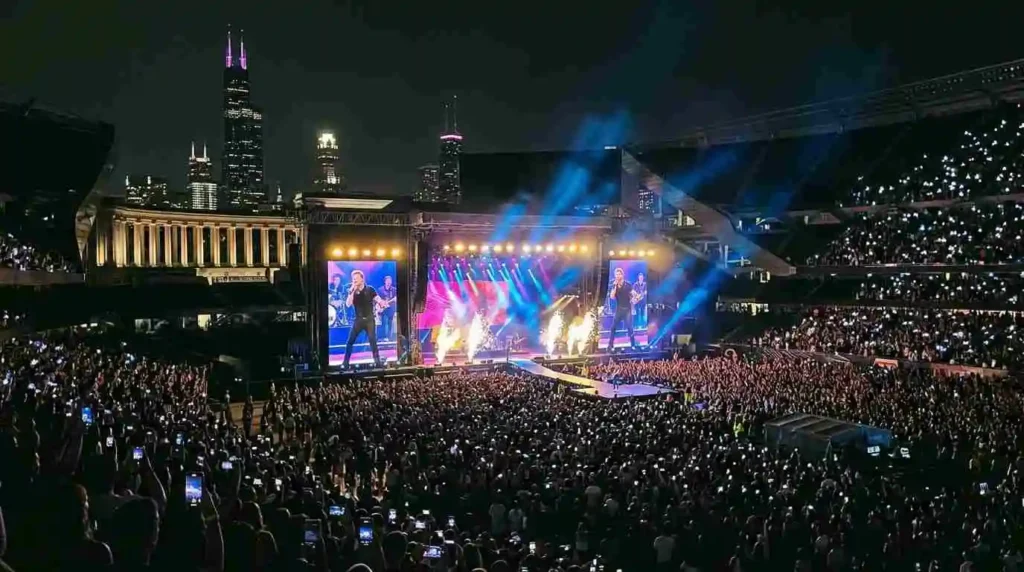
But Chicago’s resilience as a collective proved indestructible. They recruited the immensely talented Jason Scheff on bass and vocals, entering a vibrant new chapter without missing a beat.
They silenced any lingering skepticism with the major chart success of “Will You Still Love Me?” Then, on 1988’s “Chicago 19,” the band secured yet another number-one single on the Billboard Hot 100 with “Look Away,” brilliantly delivered by lead vocalist Bill Champlin. Alongside hits like “I Don’t Wanna Live Without Your Love,” Chicago maintained a formidable commercial presence well into the late 80s.
Through every major lineup change, shifting musical trend, and industry storm, Chicago continued onward as an elite live touring institution, mapping out an active career that spans over half a century.
In 2016, this exceptional journey received its definitive validation with their induction into the Rock and Roll Hall of Fame. Having moved over 100 million records worldwide, they stand securely as one of the longest-running and most successful rock bands in modern history.
🌹 A Prologue to “My Personal BEST 10”
The true, enduring magic of Chicago lies within their overwhelming diversity.
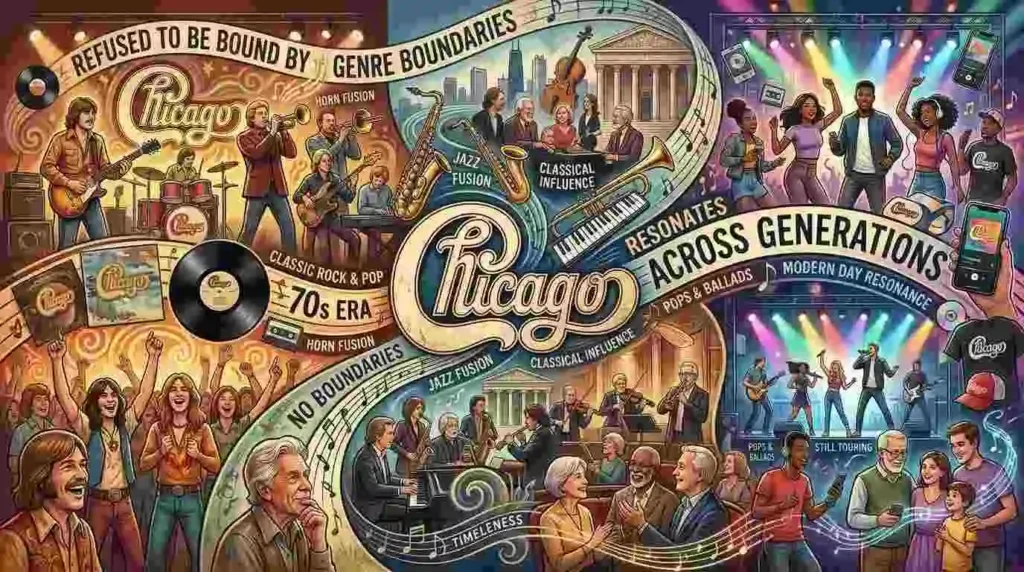
Their catalog seamlessly balances fierce, politically charged rock with bright, radiant pop snapshots of a peaceful afternoon in the city. It houses the blistering, raw guitar work of Terry Kath alongside the tender, heartbreaking vocal ballads of Peter Cetera. Their legendary brass arrangements can roar with the ferocity of a lead guitar in one moment, and wrap around a melody with symphonic elegance in the next.
Chicago was a band that consistently refused to be confined by the arbitrary boundaries of genre. This unyielding artistic freedom is precisely why their music has refused to weather, continuing to resonate vividly across generations.
In the upcoming series, “My Personal BEST 10: Chicago Edition,” I will step inside this massive, magnificent labyrinth of sound to carefully curate and share ten extraordinary tracks that have etched themselves permanently into my life.
From the revolutionary energy of their early brass rock and the expansive pop masterpieces of the 70s, to their socially conscious tracks and the pristine adult contemporary architecture of the 80s—every single era carries a brilliant sound that could only ever belong to Chicago.
The immaculate precision of their horn arrangements, the historic dynamic of their contrasting vocalists, and the timeless melodies that never lose their luster.
Let us begin this definitive journey together, uncovering this magnificent architecture of sound one record at a time.
音楽ファン同士の交流・リクエストはこちら / Connect & Request Songs Here