
◆Click here for Yosui Inoue’s History!
- 🎧 Enjoy This Article in Audio
- No. 28 is “Natsu Matsuri” (Summer Festival)
- First, please listen to the YouTube videos
- The “Summer Festival” in My Memory and the Clinging Heat
- Two “Summer Festivals” Resonating Across Eras
- The Paradox of Loneliness Amidst the Hustle and Bustle
- A Quiet Powerful Drug in This Position
- In Conclusion
🎧 Enjoy This Article in Audio
You can quickly grasp the main points of this article through narration.
Recommended for those who want to catch the vibe of the music and the flow of the article before reading.
🎶 English Narration
An English audio introduction to the contents of this article.
⌛ Duration: Approx. 2 mins 30 secs
🎵 Japanese Narration
A Japanese audio introduction to the contents of this article.
⌛ Duration: Approx. 2 mins
* Listening to the audio before reading helps you better understand the world of the music and the main points of the article.
No. 28 is “Natsu Matsuri” (Summer Festival)
In this world, there are songs strongly tied to a specific season or scent. For me, Yosui Inoue’s “Natsu Matsuri” is exactly one of those songs.
This song I’ve chosen carries a kind of raw, lingering fever from those days, going beyond mere nostalgia. It was a sense of impatience we certainly felt back then, an unspeakable gloom.
This time, I would like to unravel the unique gravitational pull of “Natsu Matsuri” by crossing my memories from those days with my current perspective.
A Free Translation of the Lyrics
Returning to the hometown summer festival for the first time in a decade.
The heat, voices, smells, and laughter of childhood come rushing back.
Walking down familiar paths, peeking at food stalls, going to meet my past self.
It seems changed, yet unchanged—the summer memories of my hometown.
First, please listen to the YouTube videos
(*Currently, most audio sources of Yosui Inoue on the internet are not official releases. Therefore, out of consideration for copyright, this blog adopts a format of linking to external sites using originally prepared images rather than embedding videos directly.)
Please click the image below.
_202605171749-1024x572.webp)
Credit
Yosui Inoue "Natsu Matsuri"
Lyrics: Yosui Inoue / Music: Yosui Inoue / Vocal: Yosui Inoue
Included in: "Yosui II Sentimental", released on December 10, 1972.
2-Line Commentary
A song that vividly recalls the hometown summer festival as a childhood memory.
The sight of a younger sister in a yukata, cotton candy, friends, and food stalls quietly brings out the nostalgia and the distance of time.
Please click the image below. (Live version)
・・・これまでと少し違うテイストで描いてください_-1024x572.jpg)
Credit
Yosui Inoue "Natsu Matsuri"
Lyrics: Yosui Inoue / Music: Yosui Inoue / Vocal: Yosui Inoue
Video: From the live performance at Showa Women's University Hitomi Memorial Hall on August 19, 2006. "Natsu Matsuri" is included in the DVD "The Premium Night - Showa Women's University Hitomi Memorial Hall Live".
2-Line Commentary
A nostalgic song that recalls childhood summer festivals with a younger sister, cotton candy, food stalls, and the laughter of friends.
In the live video, Yosui Inoue's quiet singing voice brings out the memories of his hometown and the distance of time even more deeply.
The “Summer Festival” in My Memory and the Clinging Heat
My memory of this song is actually quite vague, and I didn’t listen to it extensively on purpose. However, as one of Yosui’s fans, naturally I have heard it time and time again.
It is by no means a cheerful song. Rather, it is so dark it almost gives you a chill, and there is even a slightly eerie presence drifting about.
Bittersweet Memories in My Hometown Tsukumi and the Yellow Yukata
When I was an elementary school student, my usual allowance was 10 yen a day, but I remember my parents giving me a special 100 yen only on festival days.
However, I didn’t get it every day during the festival; the promise was 100 yen in total for the entire period.
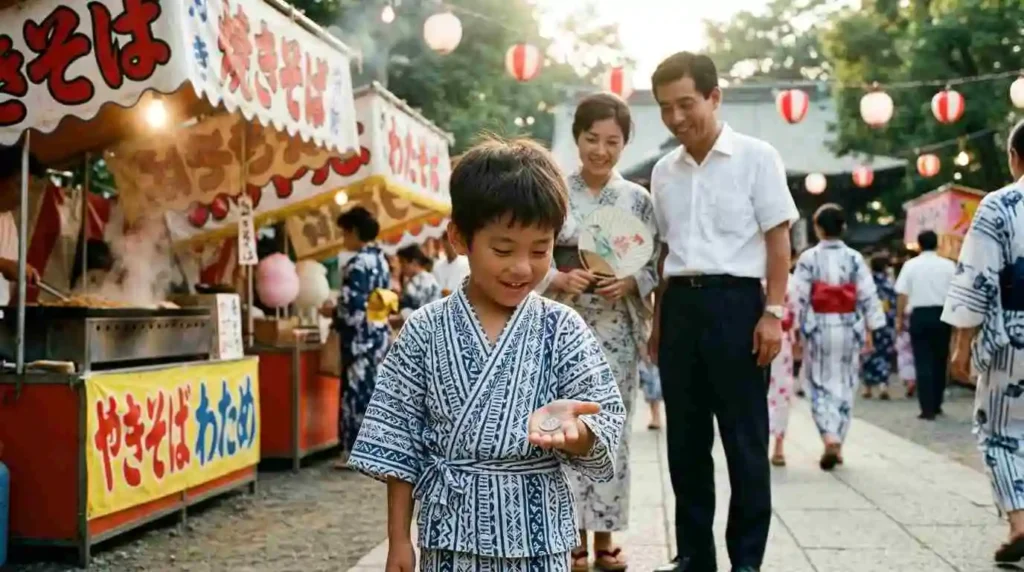
Back then, it was a time when you could buy three takoyaki on a skewer for 10 yen. For my elementary school self, the sum of 100 yen was so big that I was under the illusion that “I could buy anything with this.”
It seems comical now, but carried away in high spirits, I dropped that 100 yen I had just received and remember going alone to the Tsukumi Police Station.
“Excuse me, I dropped 100 yen. Has it been turned in???” I asked, but the curt reply was, “No.” I was quite depressed.
My own bittersweet memories overlap with the tone of this song. The summer festival, which was supposed to be fun, was never truly enjoyable. Such an atmosphere resonates with it.
Looking back calmly, there should have been more memories of fun “summer festivals,” yet at the bottom of my festival memories, this bitterness is always precipitated.
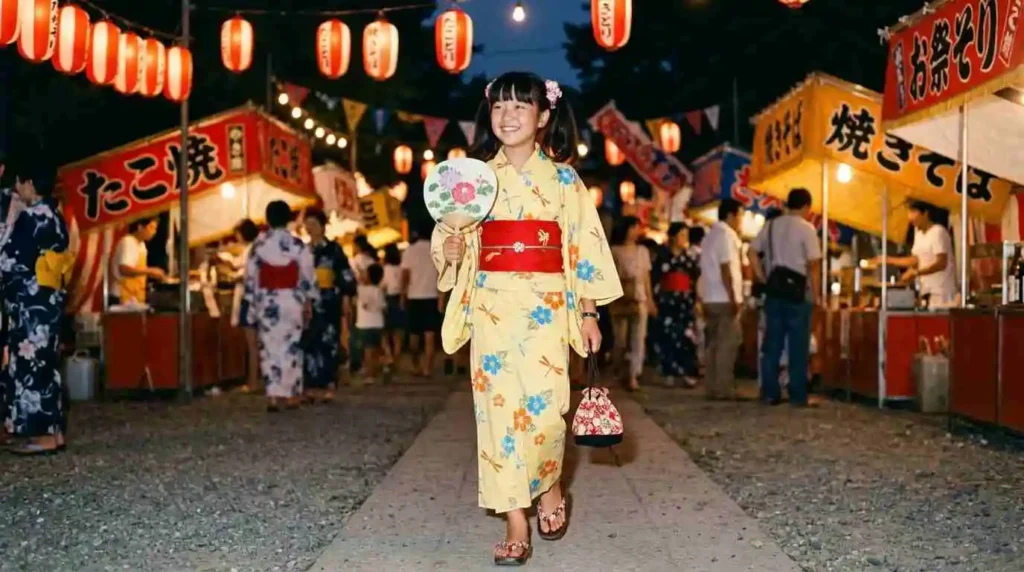
I also vividly remember seeing a girl I liked at a summer festival when I was in junior high.
The yellow yukata she was wearing. The surrounding hustle and bustle vanished, and only she seemed to emerge in the darkness.
In the end, I drifted away from her without ever exchanging a single word, before or since. To express that bizarre state of excitement and the tremendous loneliness after the festival ended, I know of no better song than Takuro Yoshida’s “Matsuri no Ato” (After the Festival). (Sorry for the abruptness!)
The Four-and-a-Half Tatami Room and a Sense of Nowhere-to-Go Emptiness
This unvented loneliness in my hometown eventually shifted into a slightly different kind of isolation during my life after moving to Tokyo.
My college days in Tokyo. The wooden apartment I lived in back then would mercilessly trap the heat in the summer, and even if I opened the window, only a lukewarm breeze would blow in.
There was no decent air conditioning, just a small fan making a monotonous sound, stirring the lukewarm air in a four-and-a-half tatami mat room. Even there, I was listening to “Natsu Matsuri” on record.
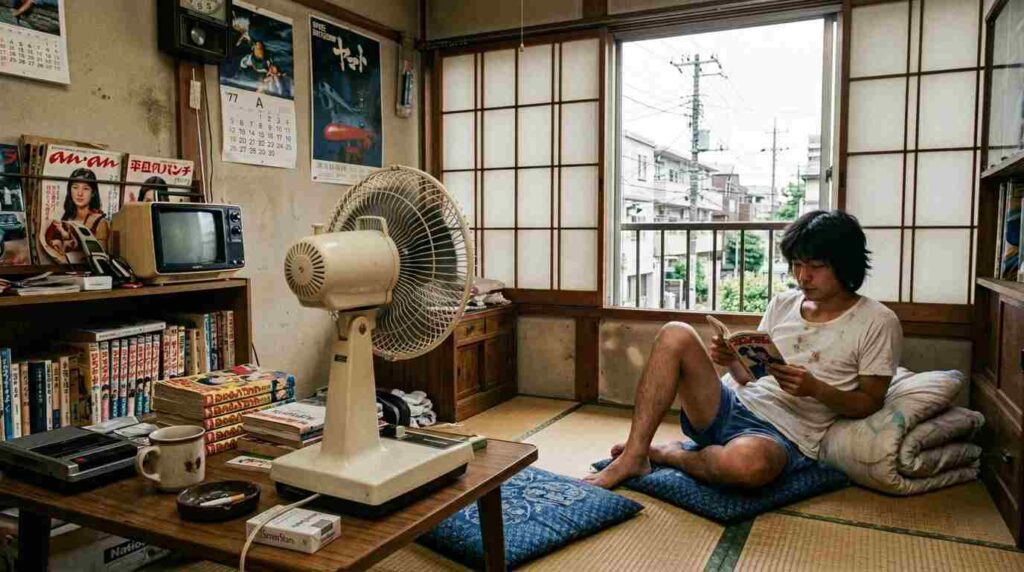
Yosui’s voice, seemingly transparent yet somehow shadowy, and slightly detached, harmonized strangely well with that clinging summer humidity.
The mysterious heat born of youth, and the intense emptiness that was its flip side. I think this song quietly but with distinct outlines spoke for the indescribable anxiety I harbored during that moratorium period before transitioning from a student to a working adult.
Summers back then were more earthy, endlessly longer, and accompanied by a much more stinging pain.
Even the festival music and the sound of fireworks going off in the distance somehow functioned as a device to amplify the isolation of feeling as if I alone were disconnected from the world.
Two “Summer Festivals” Resonating Across Eras
While overlapping my own time, such as bitter memories of my hometown and the gloom felt in the four-and-a-half tatami room, carefully comparing the two video audio tracks introduced this time clearly reveals how multifaceted the appeal of this song is.
And it clearly highlights how Yosui’s own voice and expression have deepened over time. The greatest core of these two audio sources is that, despite being the exact same song, the “era” in which they are sung is completely different.
The Sharp Energy of Youth
The first audio source is filled with the raw, sharp energy emitted by the young Yosui. The recording, which feels as if it vacuum-packed the atmosphere of the 1970s exactly as it was, combined with Mr. Katsu Hoshi’s meticulous arrangement, creates a breathtaking sense of tension.
The cold resonance of the acoustic guitar and the restrained rhythm. Stripped of excessive decoration, the voice of the young Yosui echoing in the waste-free sound space seems to harbor the very same nowhere-to-go impatience we held in those days.
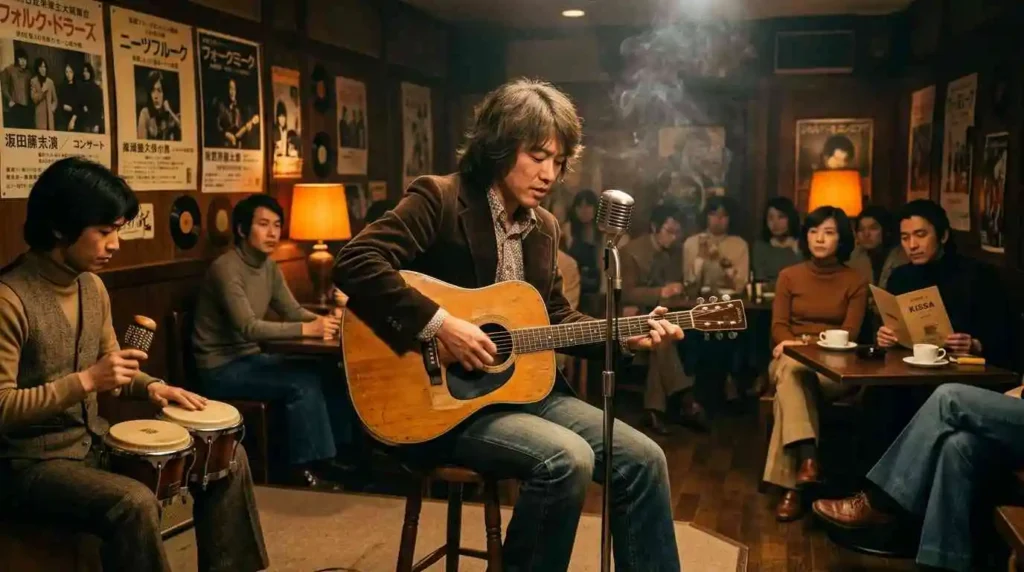
The Rich Vividness Emitted in the Period of Maturity
On the other hand, the second audio source is a mature performance from many years later. The stinging impatience of the past has changed shape, replaced by an unshakable presence and the swelling of his deepened vocals pushed to the forefront.
The singing voice that takes on heat as if responding to the audience’s breathing, and the breathtaking interplay with the accompanying musicians.
What is recorded there is a “rich vividness” that can only be expressed by someone who knows the subtleties of life inside out, entirely different from the tense air of his youth.
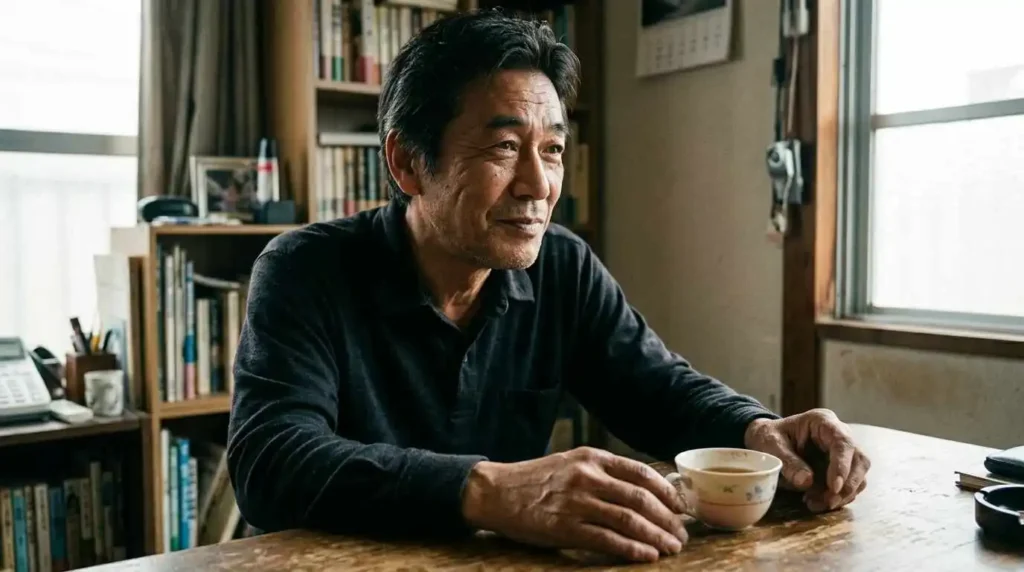
By comparing these two performances separated by eras, we can understand that the song “Natsu Matsuri” is not merely a record of youth, but possesses a fadeless strength that continues to resonate while changing its shape alongside the singer’s own age and experience.
The Paradox of Loneliness Amidst the Hustle and Bustle
What one typically associates with the title “Natsu Matsuri” (Summer Festival) is a bright and vibrant scene full of vitality, such as colorful food stalls, the smiling faces of passersby, and fireworks lighting up the night sky.
However, the “Summer Festival” depicted by Yosui brilliantly betrays such common mental landscapes.
The Isolation of the “Individual” Standing Out in the Crowd
What is spoken of in the lyrics is the cruel temperature gap with the surroundings that stands out precisely because you are in the center of the festival’s hustle and bustle. The more the surroundings burst with enthusiasm, the colder one’s own heart becomes.
Just like myself standing alone after dropping 100 yen at the hometown festival, or that night when I could only stare at the yellow yukata from afar, the sensation of being isolated from the world is brilliantly scooped up.
Words That Open the Drawers of Memory
As if rejecting easy empathy, Yosui’s choice of words, which dispassionately describes the scene, is excellent.
Eliminating descriptive words as much as possible, the technique of projecting landscapes directly into the listener’s brain through a succession of fragmented images is truly like a single painting.
Precisely because the expression of leaving things unsaid is maintained, the listener opens the drawer of their own memories and superimposes their own “Summer Festival” landscape onto it.
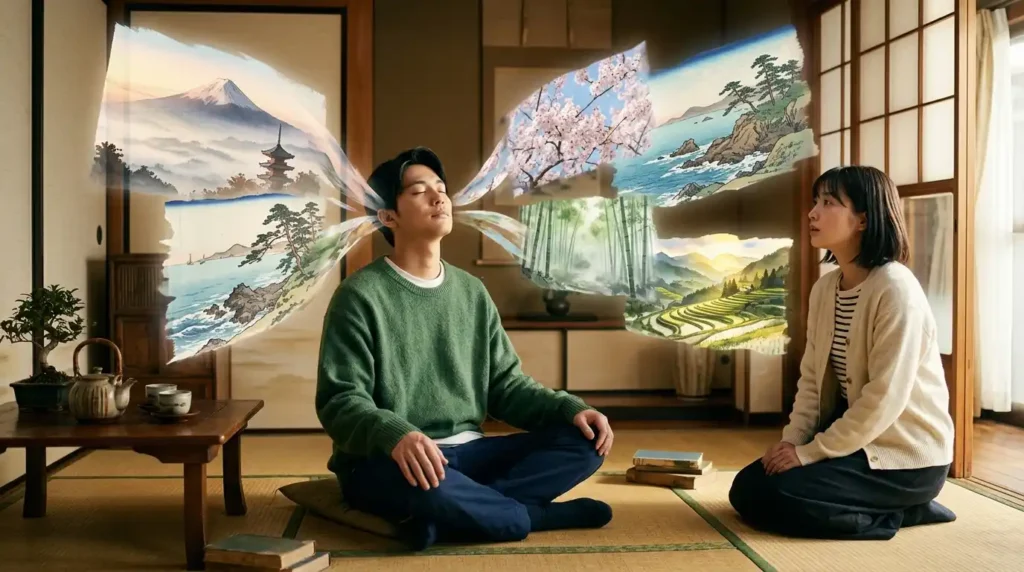
The greatness of the artist Yosui Inoue lies in the fact that no matter how emotional the landscape he sings about, he never drowns in the waves of emotion.
In this “Natsu Matsuri” as well, his gaze remains cold to the end, maintaining an objectivity as if looking down on his own experience from high above.
The “Heat” Dwelling in the Voice and the Pared-Down Expression
During the folk song boom of the time, it was an era when many young people shouted their dissatisfaction with society and their own conflicts with bare words. In the midst of that, Yosui’s approach of narrowing down his words to the absolute limit was an anomaly.
Even while in the very center of the enthusiasm, there is a kind of resignation, as if already staring at the stillness after the festival has ended.
Listeners perceive a definite “heat” in the depths of his seemingly detached, cold singing voice, and are inevitably forced to project their own regrets and pain into its gaps.
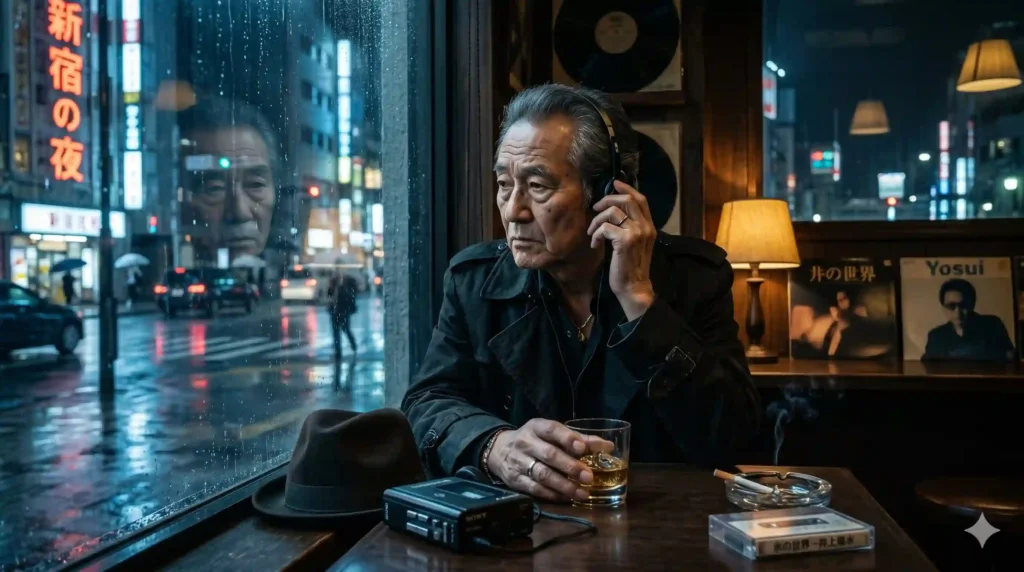
The helplessness I felt at the police station as an elementary schooler, my junior high self who could do nothing but follow the yellow yukata with his eyes, and those immature days of college life blown by the wind of a fan in a four-and-a-half tatami room.
Through Yosui’s singing voice, I feel them transcending mere nostalgia and being sublimated into a deep yearning for the irreversible time called life.
A Requiem for Bygone Time
Now, facing this song once again, I realize that it is not merely singing about a “feature of summer,” but is a requiem for the bygone time itself.
Eternally Circling Seasons and Youth That Won’t Return
The sound of festival music, the sweet smell of cotton candy, the heat of the crowd. Such festival scenes reliably come around every year.
However, the impatience we felt back then, the despair bordering on an unidentifiable sense of omnipotence, will never return. Though the seasons repeat, our own time marches on irreversibly.
That cruel contrast is vividly depicted by borrowing the extraordinary space of the “Summer Festival.”
The Depth of Maturity Brought by the Live Audio
What touches the heart in the mature Yosui performance heard in the live audio (the second video) introduced at the beginning is that he himself has accepted all the weight of that “irreversible time” and then reconstructed his own past song.
The sharp, knife-like voice of his youth is also appealing, but that voice, which has gained persuasiveness over a long time, has an unfathomable capacity to gently envelop all sorrows.
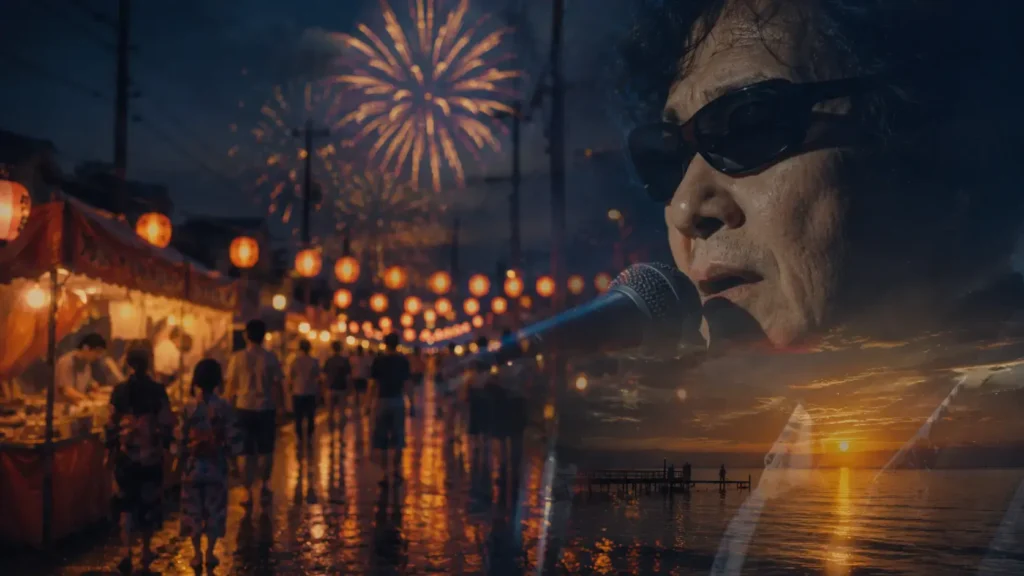
A Quiet Powerful Drug in This Position
This time, in my personal Best 30, I ranked this “Natsu Matsuri” at No. 28.
Yosui Inoue has many huge hit songs that anyone can hum and cheerful, pop masterpieces.
Among them, this song is extremely introspective, and is by no means the kind of track you can casually listen to as everyday background music. It is a song like a “quiet powerful drug” that forces you to face your own inner self deeply.
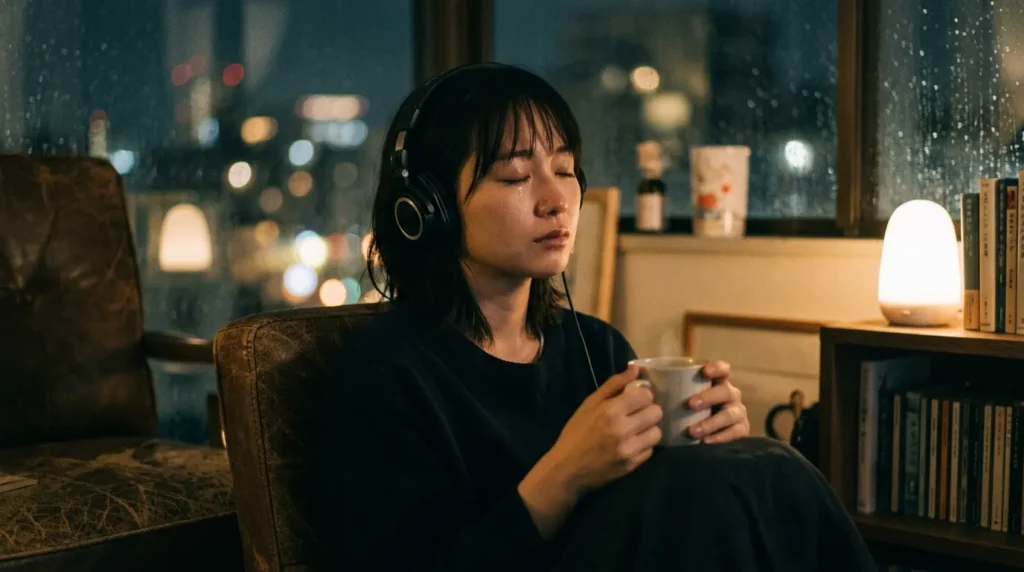
The Starting Point for Knowing Yosui’s “Darkness” and “Emptiness”
However, in discussing the “darkness” Yosui possesses and his sharp observation skills that seem to see right through the essence of humanity, this early masterpiece cannot be excluded.
As an important piece for deeply understanding his vast musical world, and as a gateway to peek into the abyss of his unfathomable talent, I confidently placed it in this position.
Ranking is, after all, only one aspect, but even now, having listened to it countless times, it still gives me a fresh emotion that sends shivers down my spine at unexpected moments. That unparalleled strength of the song is the biggest reason for this positioning.
In Conclusion
Every time summer comes, the music of a festival will surely echo somewhere in Japan. However, that “Summer Festival” we once experienced now exists only at the bottom of our memories.
_202605171748-1-1024x572.webp)
Yosui Inoue’s “Natsu Matsuri” is a masterpiece that vacuum-packs such eternally lost times with a touch of eeriness and haunting beauty.
If you ever suddenly feel a sense of loneliness amidst the hustle and bustle of a summer night, please try surrendering yourself to this sound world in a quiet room.

音楽ファン同士の交流・リクエストはこちら / Connect & Request Songs Here