
- 🎧 Listen to This Article
- October 29: Celebrating Tsunku’s Birthday
- Today’s Featured Song: “Single Bed” (1994)
- First, Enjoy the Official Audio on YouTube!
- 1994: An Era of Million-Selling Hits
- Why Does the Melody of “Single Bed” Stay with Us?
- Understanding the Lyrics: Is He Missing His Former Lover or His Younger Self?
- Why “Single Bed” Has Remained Popular for Decades
- Tsunku Lost His Singing Voice, but His Music Never Ended
- Final Thoughts: Love May End, but the Person We Once Were Remains
🎧 Listen to This Article
Discover the highlights of this article through a short audio narration.
Before reading, enjoy an introduction to Sharam Q’s “Single Bed,” its emotional appeal, and Tsunku’s musical journey.
🎵 English Narration
Listen to an English narration introducing the highlights of this article.
🎶 Japanese Narration
Listen to a Japanese narration introducing the highlights of this article.
Listening first will help you appreciate the bittersweet emotions, memories of youth, and Tsunku’s enduring passion for music explored in “Single Bed.”
October 29: Celebrating Tsunku’s Birthday
October 29 marks the birthday of Tsunku, the charismatic vocalist who rose to fame as the frontman of Sharam Q.
Born in 1968, he turns 58 in 2026.
Born in Osaka Prefecture, Tsunku formed Sharam Q in 1988. The band made its major-label debut on July 22, 1992, with the single “18 Months.”
A string of hits followed, including “Single Bed” in 1994, “Zurui Onna” in 1995, and “Iiwake” in 1996.
Tsunku later demonstrated his remarkable talent as a music producer. Through his work with Morning Musume and numerous Hello! Project artists, he became one of the most influential figures in Japanese pop music.
In 2014, Tsunku publicly announced that he had laryngeal cancer and subsequently underwent surgery to remove his larynx, including his vocal cords. The operation brought a profound change to his life, leaving him unable to sing as he once had.
Yet he continued creating music. Today, on his birthday, I would like to revisit one of Sharam Q’s most memorable songs, “Single Bed.”
Today’s Featured Song: “Single Bed” (1994)
Released on October 21, 1994, “Single Bed” was Sharam Q’s sixth single. Tsunku wrote the lyrics, while guitarist Hatake composed the music.
The song was also used as the ending theme for the Japanese television anime “DNA².” Its popularity continued to grow into the following year, eventually reaching approximately 1.2 million copies sold and becoming Sharam Q’s first million-selling single.
One fascinating aspect of this song is that it did not become an overnight sensation. Instead, it gradually found its audience, gaining popularity over time.
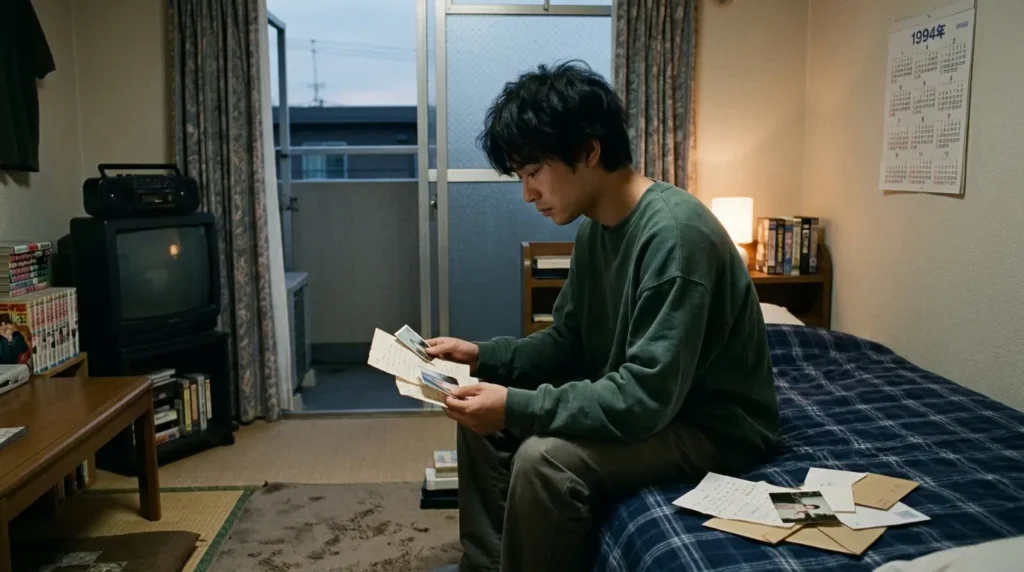
A Free Interpretation of the Lyrics
A year has passed since we parted. I thought I had grown up, but deep inside, my heart has hardly changed.
We once shared our dreams in a narrow single bed, finding happiness even when we had almost nothing.
I believed that meeting someone new would help me forget you, but no one could replace the memories we made together.
Only after losing you did I understand how precious our love had been.
If I could turn back time, I would never let you go again.
💡 You might also like: View the original Japanese lyrics (External site)
If the lyrics are available only in Japanese, you can use your browser’s translation feature or an AI translation tool to understand their general meaning.
First, Enjoy the Official Audio on YouTube!
🎥 Official Audio Credits
Sharam Q – "Single Bed" (1994)
Lyrics: Tsunku / Music: Hatake
Audio provided by Sony Music Direct (Japan) Inc.
Source: YouTube "Sharam Q - Topic" (Officially Provided Audio)
About the Song
One of Sharam Q's signature ballads, "Single Bed" portrays loneliness and lingering feelings for a former lover through Tsunku's emotionally charged vocals.
Hatake's beautiful melody brings the pain of separation and memories of lost love vividly back to life.
When I First Heard This Song… ♫
| My Age | Elementary School | Junior High | High School | University | 20s | 30s | 40s | 50s | 60+ |
| Release Year | 1994 | ||||||||
| When I Heard It | ● |
I believe I first heard this song around the time of its release in 1994.
I was 36 years old and working at a bank. However, my responsibilities were quite different from those of an ordinary banker.
There were few established procedures or clearly defined rules. My colleagues and I had to discuss everything and make nearly every decision ourselves.
What kept us going was a strong sense of responsibility. During those four years, weekends and overtime hours hardly mattered. Work had become an all-consuming part of our lives.

There were only a few pleasures in those demanding days: drinking with colleagues late at night and listening to music whenever I could find a little time.
It was during that period that I discovered Sharam Q’s “Single Bed.”
Amid my hectic and somewhat exhausting daily routine, its beautiful melody felt surprisingly comforting.
From then on, I sang it countless times at karaoke bars and small Japanese nightlife lounges. Of course, reproducing Tsunku’s distinctive vocal style was never easy! (Laughs)
1994: An Era of Million-Selling Hits
The Golden Age of CDs in Japan
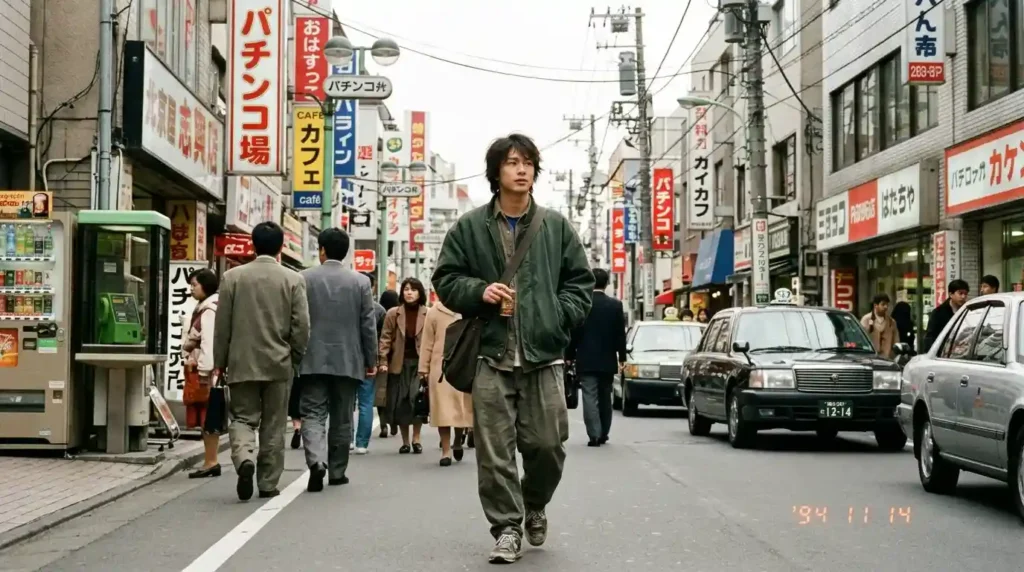
In 1994, Japan’s music industry was enjoying the height of the CD boom.
Memorable hits appeared one after another, including Mr.Children’s “innocent world,” B’z’s “Don’t Leave Me,” and TRF’s “survival dAnce ~no no cry more~.”
Television music programs, radio broadcasts, CD rental shops, and karaoke were all important parts of everyday musical culture.
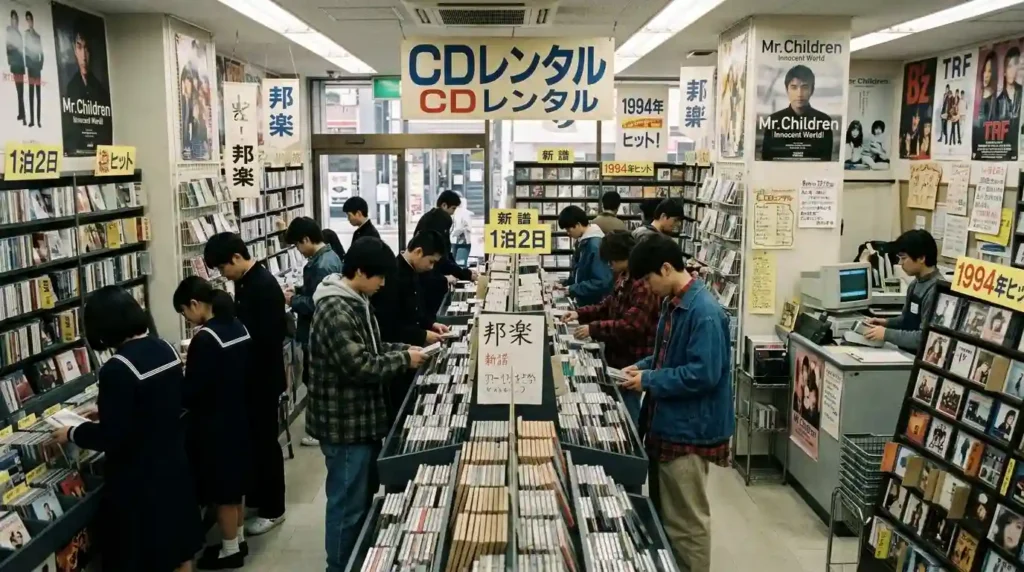
Unlike today, people could not instantly search for any song on a smartphone. A melody heard unexpectedly on television or the radio could therefore leave a particularly powerful impression.
Sharam Q: Flamboyant Style, Surprisingly Honest Love Songs
Sharam Q was hardly a conventional band of polished heartthrobs. Their appeal came partly from their Kansai-style humor, colorful performances, and theatrical presentation.
With Tsunku’s distinctive vocals, Hatake’s guitar, and Taisei’s keyboards, the group combined musical ability with a strong sense of entertainment.
Why Does the Melody of “Single Bed” Stay with Us?
Hatake’s Beautifully Simple and Melancholic Composition
What I particularly love about this song is the beauty of its melody.
Rather than emphasizing complicated musical techniques, Hatake created a memorable tune that almost anyone could hum along to.
The verses remain within a relatively restrained vocal range, gently establishing the narrator’s everyday life and emotional state. When the chorus arrives, however, the melody opens up, allowing feelings that had been held back to emerge with full force.

Why Tsunku’s Voice Is So Well Suited to a Heartbreak Ballad
His slightly nasal tone, distinctive upward inflections, and emotional treatment of the ends of phrases make Tsunku an unmistakable vocalist. His style may not appeal to everyone, but that individuality is precisely what makes this performance so compelling.
When recalling happier moments, he sings with tenderness. As regret intensifies, his voice becomes more forceful. These changes mirror the emotional journey of the song’s narrator.
The Guitar and Keyboard Arrangement
The guitar and keyboards support the melody while the bass and drums maintain a steady rhythm. Rather than overwhelming the listener with instrumental showmanship, the arrangement keeps the vocals at its center.
The guitar passages, in particular, combine the presence of a rock band with the tenderness required by a heartfelt ballad.
Understanding the Lyrics: Is He Missing His Former Lover or His Younger Self?
One Year After the Breakup, Nothing Has Really Changed
The narrator has been separated from his former girlfriend for a year.
He has changed his clothes and even replaced his car, perhaps hoping to become a more attractive and mature man. Yet emotionally, he remains attached to the relationship he has lost.
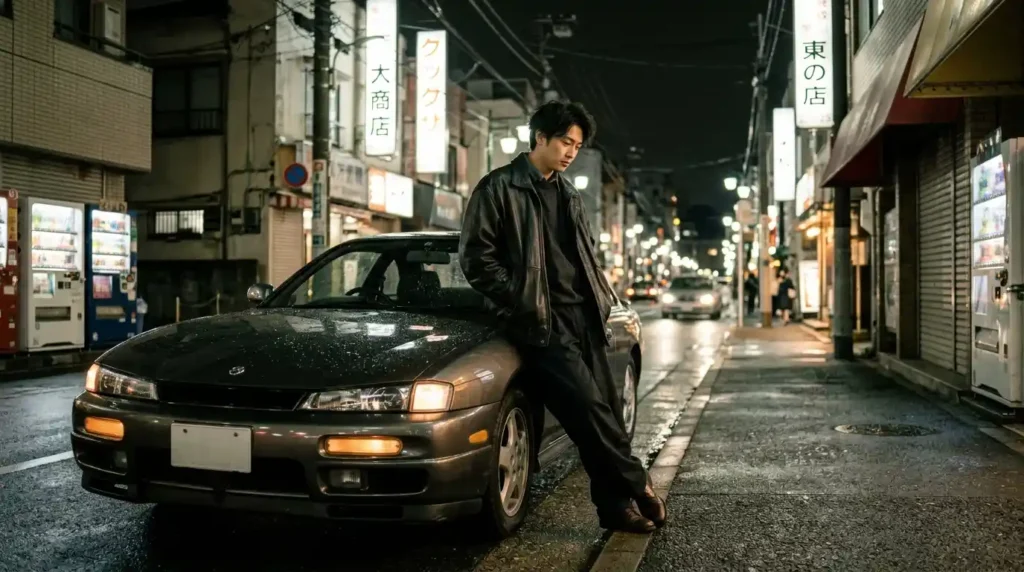
The Single Bed: A Perfect Symbol of Young Love
Imagine two young lovers sharing a bed designed for just one person. There could hardly have been enough space to turn over comfortably.
Yet for them, it was a special place where they talked about their dreams, laughed together, and sometimes shed tears.
A small room, limited money, and dreams of a future that had yet to take shape. An entire chapter of their young lives emerges through the image of a single piece of furniture.
Why Did Their Two-Year Relationship End?
According to the lyrics, their relationship lasted two years.
Over time, they drifted apart until their relationship reached the point where each seemed to be waiting for the other to initiate the breakup.
Interestingly, the lyrics never reveal the decisive reason for their separation. Was there infidelity? Did work interfere with their relationship? Or did they simply imagine different futures? We are never told.
What Does He Really Want to Recover?
The more I listen to this song, the more I wonder whether the narrator is missing only his former girlfriend.
Perhaps he also longs for the person he used to be: a young man who had not yet established himself, who believed in the future, and who could laugh at the smallest things.
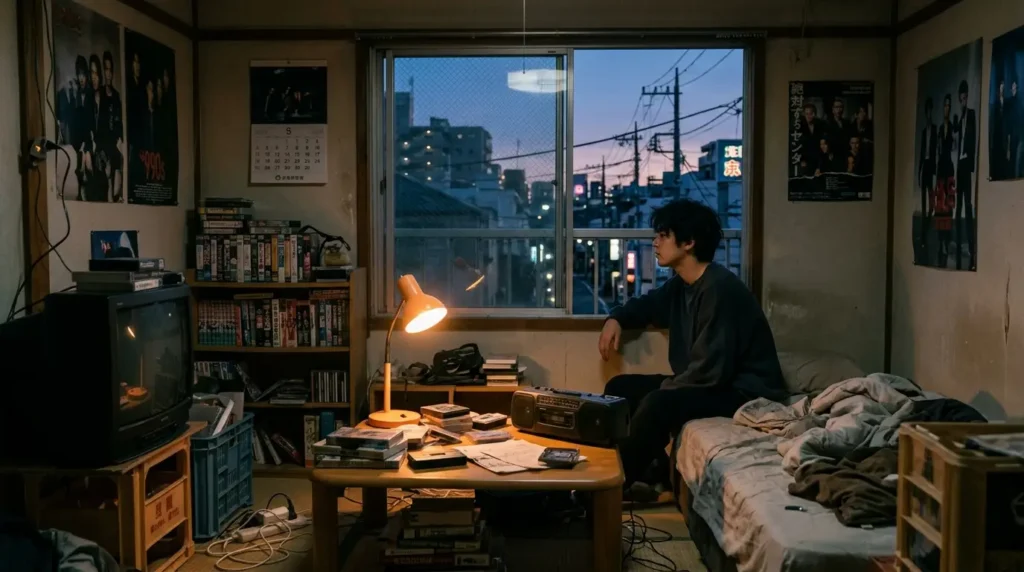
Perhaps that is why “Single Bed” is more than a heartbreak song for young people. It can also awaken memories of an entire period of our lives.
Why “Single Bed” Has Remained Popular for Decades
A Song in Which Anyone Can Recognize Themselves
The narrator of “Single Bed” is an ordinary man who cannot fully recover from heartbreak and continues to think about the woman he once loved.
When we are young, we may hear it simply as a love song. As we grow older, the same melody can become a reminder of our own youth. Its meaning changes depending on the stage of life at which we encounter it.
A Ballad That Makes You Want to Sing Along
The chorus invites us to sing with all the emotion we can muster. Even listeners who have never experienced a similar breakup may feel as though they are singing a story of their own.
Thirty-two years have passed since its release in 1994. Its lasting appeal comes not merely from its commercial success, but from the personal memories that listeners have attached to it.
Tsunku Lost His Singing Voice, but His Music Never Ended
The Decision That Changed His Life in 2014
Whenever I listen to “Single Bed,” there is something I cannot help thinking about.
The man who gave us this deeply moving performance can no longer sing in the voice we hear on the recording.
In March 2014, Tsunku announced that he had laryngeal cancer. Following treatment, he initially reported that the disease was in remission. However, cancer was subsequently detected again, and in October of that year, he underwent surgery to remove his larynx, including his vocal cords.
In April 2015, during an entrance ceremony at his alma mater, Kindai University, he publicly revealed that he had lost his natural voice.
For a singer, what could it possibly mean to lose the very voice through which he had expressed himself for so many years?
I cannot truly understand the suffering involved. If I had been in his position, could I have made the same decision? I find myself returning to that question.
Learning to Speak Again and Continuing to Create
After the removal of the larynx, it is no longer possible to produce sound by vibrating the vocal cords in the usual way.
Nevertheless, Tsunku learned esophageal speech, a technique that allows a person to produce speech without vocal cords. Although singing as he once did is no longer possible, he has continued his creative work as a songwriter, composer, and music producer.
What a Recorded Voice Can Preserve
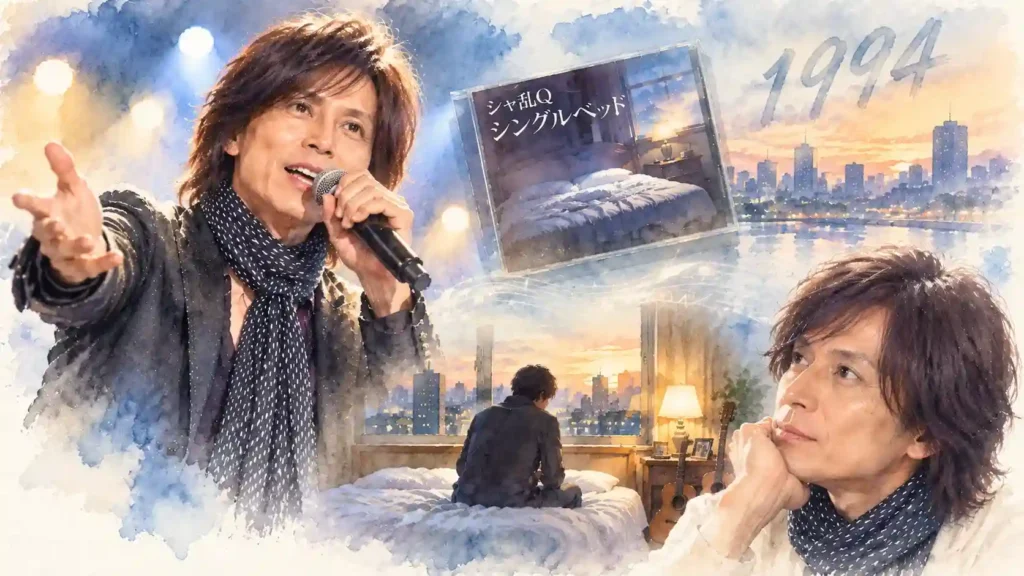
When I listen to “Single Bed” today, Tsunku’s voice, recorded in 1994, somehow sounds different from the way I remember it.
Those distinctive tremors in his voice and the emotion in every phrase belong to a moment in his life that can never be recreated in quite the same way.
Even when a singer’s life changes dramatically, the voice captured in a recording remains. Decades later, it can still move our hearts.
Final Thoughts: Love May End, but the Person We Once Were Remains
Just as the narrator remembers a former lover he cannot forget, perhaps I, too, encounter my younger self whenever I hear this song.
And even after 32 years, Hatake’s beautiful melody and Tsunku’s heartfelt performance have lost none of their appeal.
Although Tsunku can no longer sing as he once did, the many songs he helped create will continue to be heard, remembered, and sung by generations to come.

音楽ファン同士の交流・リクエストはこちら / Connect & Request Songs Here