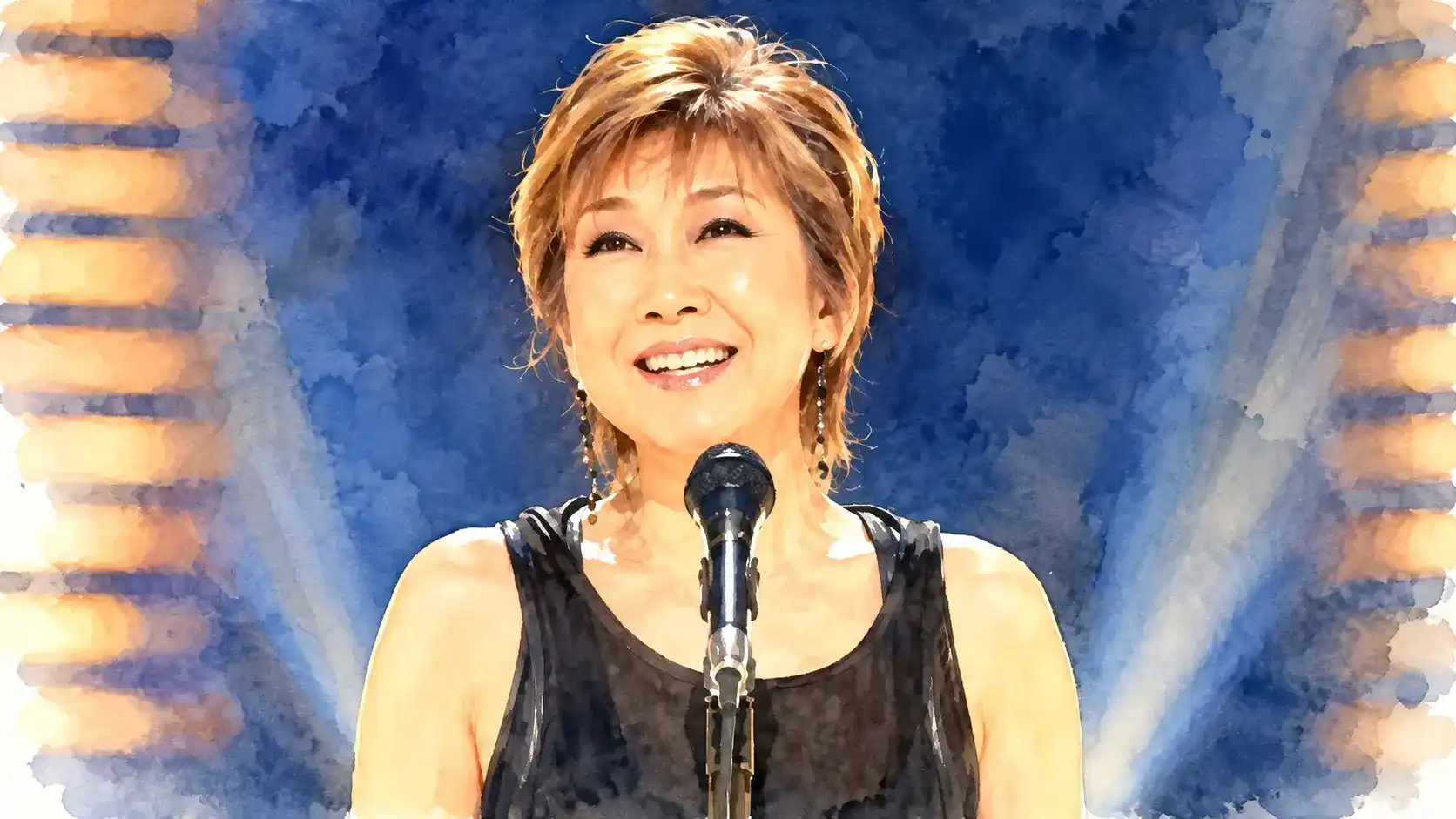
Explore Mariko Takahashi’s Musical Journey Here!
- 🎧 Listen to This Article
- Mariko Takahashi Best 10 — No. 9: “Hagayui Kuchibiru” (Frustrating Lips) — So Close, Yet So Far Apart
- First, Let’s Listen to “Hagayui Kuchibiru” in the Official Video
- Chapter 1: Mariko Takahashi and the Complexity of Adult Love in 1992
- Chapter 2: The Frustration at the Heart of Yoko Aki’s Lyrics
- Chapter 3: Ichiro Hada’s Melody and Masaki Iwamoto’s Arrangement
- Chapter 4: The Convincing Power of Mariko Takahashi’s Voice
- Chapter 5: Listening to “Hagayui Kuchibiru” Today
- Final Thoughts: A Song About Feelings That Words Cannot Fully Express
🎧 Listen to This Article
Enjoy a narrated overview of the article and its key insights.
Before reading, listen to discover the emotional tension of adult love portrayed in “Hagayui Kuchibiru” (Frustrating Lips), and get a feel for the story behind the song.
🎵 Japanese Narration
Listen to a Japanese-language narration of this article.
🎶 English Narration
Listen to an English-language narration of this article.
Listening first can help you appreciate the bittersweet emotions of “Hagayui Kuchibiru” and the expressive beauty of Mariko Takahashi’s voice.
Mariko Takahashi Best 10 — No. 9: “Hagayui Kuchibiru” (Frustrating Lips) — So Close, Yet So Far Apart
Sometimes, the closer two people hold each other, the more painfully aware they become of the distance between them. That is the contradiction at the heart of “Hagayui Kuchibiru,” a song about the complicated emotions of adult love.
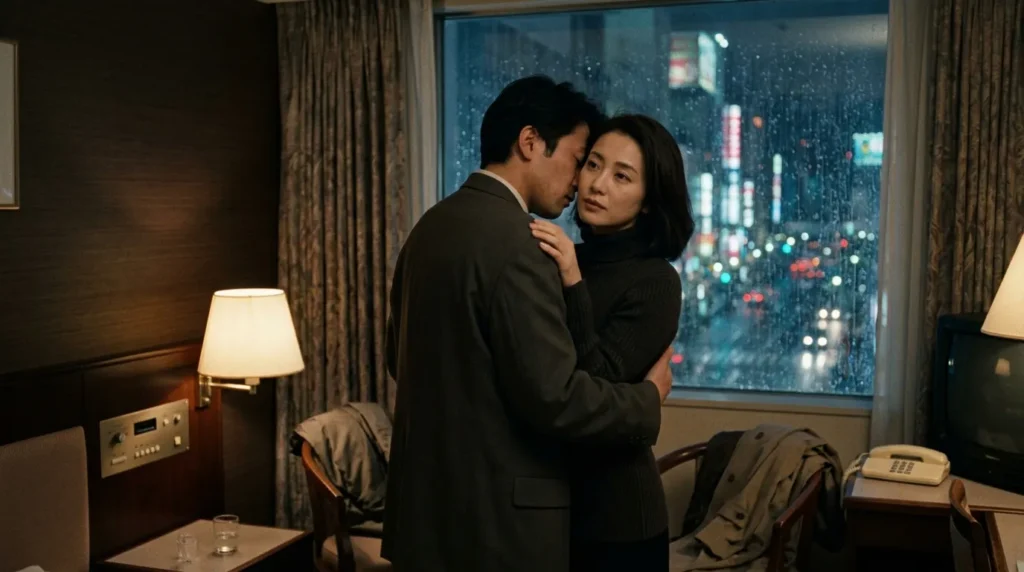
The woman in this song is not quietly waiting for love to come her way. She wants a deeper connection. She wants her partner to stop hiding behind appearances and meet her with genuine passion. There is an unmistakable urgency in the words written by Yoko Aki.
By the time the song was released in 1992, Mariko Takahashi had already established herself through hits such as “Momoiro Toiki” and “for you…” In “Hagayui Kuchibiru,” her mature, expressive voice gives remarkable depth to lyrics that intertwine desire and loneliness.
My Personal Interpretation
Even when we hold each other close, it doesn't mean our hearts truly connect.
Sometimes, even your tenderness only deepens my loneliness.
What I long for isn't love that's merely for show, or just another kiss.
Take off your mask, and reach for the real me with all your passion.
How can you be so close to me, and yet leave my heart feeling so empty?
💡 You might also like: View the original Japanese lyrics (External site)
If the lyrics are available only in Japanese, you can use your browser’s translation feature or an AI translation tool to understand their general meaning.
First, Let’s Listen to “Hagayui Kuchibiru” in the Official Video
Song Information
Song Credits
Title: Hagayui Kuchibiru (Frustrating Lips)
Artist: Mariko Takahashi
Lyrics: Yoko Aki
Music: Ichiro Hada
Arrangement: Masaki Iwamoto
Single Release Date: May 16, 1992
Album: Lady Coast (Released August 26, 1992)
Tie-in: Theme song for the TBS television drama Nemurenai Yoru o Kazoete (Counting the Sleepless Nights)
Brief Overview
The song was released as a single approximately three months before appearing on the album Lady Coast, where it serves as the opening track.
Experience “Hagayui Kuchibiru” Live
This live performance is available on Mariko Takahashi's official YouTube channel.
While the studio recording allows us to appreciate the finer details of her carefully shaped vocals, the live performance reveals her breathing, dynamics, and subtle shifts in expression. The same song can take on a different character when performed onstage.
Chapter 1: Mariko Takahashi and the Complexity of Adult Love in 1992
From Pedro & Capricious to a Solo Career
Looking back at Mariko Takahashi’s career, one important turning point came in 1973, when she joined Pedro & Capricious as the group’s second lead vocalist.
She became widely known through songs such as “Johnny e no Dengon” (A Message for Johnny) and “Gobangai no Marie e” (To Marie on Fifth Avenue). In 1978, she began her solo career and continued developing a distinctive vocal style.
Following signature songs such as the 1984 hit “Momoiro Toiki” and the much-loved “for you…,” she released “Hagayui Kuchibiru” in 1992.

This is not a song about looking back nostalgically on a love that has ended. It captures emotions unfolding in the present: the frustration of feeling unfulfilled even when the person you desire is right in front of you.
That is precisely why the contrast between Takahashi’s composed vocal delivery and the boldness of the lyrics is so striking.
The Japanese Music Scene in the Early 1990s
By 1992, CDs had become the dominant format in Japan’s music market, and television drama theme songs were helping produce numerous hits.
“Hagayui Kuchibiru” was also released as the theme song for the TBS drama “Nemurenai Yoru o Kazoete” (Counting the Sleepless Nights).
At a time when television dramas could introduce a song to a broad audience, this connection helped bring Takahashi’s recording to public attention.
Yet a television tie-in alone cannot explain why a song remains worth hearing decades later. What makes this recording distinctive is the way Takahashi delivers lyrics that refuse to romanticize love, without sacrificing the elegance of her performance.

Chapter 2: The Frustration at the Heart of Yoko Aki’s Lyrics
Physical Intimacy Without Emotional Fulfillment
The two people in the song are already intimate enough to hold each other closely. Nevertheless, the woman feels that something is missing in the way her partner approaches her.
People may be considerate toward strangers yet become selfish when dealing with someone they love. The opening lines acknowledge this uncomfortable side of human relationships without trying to disguise it.
The woman is certainly not passive. She makes it clear that she wants something different from her partner.
But what she seeks is not simply greater physical passion. Touching someone and truly understanding that person are two different things. Yoko Aki brings this contradiction into focus through provocative language and unexpected imagery.
Why “Lips”?
One of the most interesting choices in the song is its title. Rather than using an abstract word such as “heart” or “love,” Aki focuses on something tangible: the lips.
Lips have two closely connected roles. They allow us to communicate through words, and they also express affection through kissing. Both can bring people closer, but neither guarantees emotional understanding.
In the lyrics, the woman tells her partner that he is kissing her in the wrong place. On one level, this is a direct complaint about physical intimacy. On another, it sounds like a plea: “Why can’t you understand what I really need?”
The Japanese word “hagayui” conveys an especially uncomfortable kind of frustration: the irritation of wanting something to happen but being unable to make it happen as one wishes.
Here, that single word seems to capture both her impatience with her partner’s failure to understand her and her own unfulfilled longing.

What the “Mask” and “Loneliness” Suggest
Another striking image in the lyrics is the mask. It suggests the woman’s dissatisfaction with a partner who seems unwilling to reveal his true feelings. Being polite or considerate is not necessarily the same as opening yourself emotionally to someone close to you.
Equally revealing is the image of loneliness as an empty space within the heart, something that needs to be filled. The implication is clear: simply being with another person does not automatically make loneliness disappear.
In fact, having someone so close can make the parts of that person you cannot reach feel even more distant.
What the woman appears to want is not conventional kindness, but a relationship in which neither person has to hide behind appearances.
Are They Married, or Is This a Secret Affair?
Listening to this song also raises an intriguing question: what exactly is the relationship between these two people?
At times, the lyrics could describe the emotional distance that develops within a marriage. At others, they seem to evoke a private encounter between lovers whose relationship cannot be openly acknowledged.
However, the song never establishes whether either person is married, whether they are having an affair, or whether they are simply an unmarried couple. The nighttime setting and the intensity of the language are not enough to settle the question.
Perhaps that ambiguity is part of the song’s appeal. By leaving the relationship undefined, Aki allows listeners to connect the story with their own experiences.
Loneliness can exist within a marriage just as easily as within a romantic relationship. That is what gives the song a meaning beyond any one particular situation.
Chapter 3: Ichiro Hada’s Melody and Masaki Iwamoto’s Arrangement
A Melody That Moves from Restraint to Emotional Intensity
Ichiro Hada’s melody preserves the clarity of the lyrics while gradually building momentum toward the chorus. Despite the intensity of the words, the song never feels unnecessarily harsh. Its melodic flow gives the emotions a natural shape.
The relatively restrained delivery of the opening develops into something more urgent as the recurring phrases emerge. Words that might seem provocative when read on a page begin to sound like a heartfelt appeal when carried by the melody.
That transformation is one of the song’s most compelling qualities.
The repetition in the chorus also seems to reflect a familiar emotional experience: understanding a problem intellectually while remaining unable to resolve it emotionally.
It is almost as though the woman keeps returning to the same unresolved point. That circular feeling fits the frustration expressed in the title.

An Arrangement That Keeps the Voice at the Center
The arrangement was created by Masaki Iwamoto. What stands out is the way the instrumental accompaniment supports Takahashi’s voice without competing for attention.
The rhythm section maintains the song’s forward movement, while the keyboards and strings give the music a sense of space and depth.
An important aspect of the arrangement is that it does not simply translate the emotional intensity of the lyrics into greater volume.
The instrumentation has enough richness to sustain the drama, yet leaves room for every word to be heard. That balance allows the subtle changes in Takahashi’s vocal tone to make their full impact.
Chapter 4: The Convincing Power of Mariko Takahashi’s Voice
Expressiveness Beyond Vocal Power
It would be difficult to explain Mariko Takahashi’s appeal simply in terms of vocal power or her ability to reach high notes.
The way she places individual words, controls the strength of her voice, and shapes the endings of phrases reflects the technique she developed over a long career.
What I find particularly impressive is her ability to deliver provocative lyrics without making the performance sound exaggerated or theatrical.
In “Hagayui Kuchibiru,” moments of forceful expression alternate with passages of deliberate restraint.
Rather than portraying the woman merely as strong-willed or demanding, Takahashi seems to reveal the uncertainty beneath her assertiveness. That emotional complexity is what makes the performance so convincing.

How the Live Performance Brings the Lyrics to Life
Watching the live performance introduced earlier, we can hear how the emotional character of her voice changes from one phrase to the next.
And it is not only the sustained notes that deserve attention. Even the way she delivers a short word, or the brief pause before entering the next phrase, reveals remarkable sensitivity.
These details create nuances that would be difficult to convey through a straightforward reading of the lyrics.
Rather than explaining the meaning of every line through dramatic gestures, she lets her voice do the work. For me, that is one of the qualities that makes Mariko Takahashi such an exceptional singer.
Chapter 5: Listening to “Hagayui Kuchibiru” Today
More than three decades have passed since the song was released in 1992.
The circumstances surrounding romantic relationships have changed considerably, as have the ways people communicate with one another.
Yet even today, isn’t it possible to feel misunderstood by someone who is close enough to touch?
Communication may have become easier and faster, but that does not necessarily mean emotional understanding has become any simpler.
What I especially like about this song is the way the raw emotions of a relationship remain visible beneath such a polished vocal performance.
There is irritation, desire, and loneliness in the lyrics. Rather than turning these conflicting feelings into one simple emotion, the song allows them to coexist.
It does not try to make adult love appear more beautiful or uncomplicated than it really is. I admire that refusal to romanticize the situation.
Final Thoughts: A Song About Feelings That Words Cannot Fully Express
“Hagayui Kuchibiru” brings together Yoko Aki’s lyrics, Ichiro Hada’s melody, Masaki Iwamoto’s arrangement, and Mariko Takahashi’s distinctive vocal performance.
It is not a song that offers an easy answer to the difficulties of love. Instead, it seems to leave the challenge of truly connecting with another person unresolved.
The studio recording reveals the close relationship between the lyrics and the arrangement, while the live performance offers the immediacy of hearing those words come alive onstage.
Listening to both may give you a slightly different appreciation of the same song.
Mariko Takahashi’s “Hagayui Kuchibiru.”
I hope you’ll take some time to listen to it again and enjoy everything this remarkable performance has to offer.

音楽ファン同士の交流・リクエストはこちら / Connect & Request Songs Here