Simon & Garfunkel’s history is available here!
- 🎧 Listen to This Article
- No. 10 Is “April Come She Will”
- 🎥 As always, let us begin with the official YouTube videos.
- From April to September—A Love Story Told Through Six Months
- Beyond the Story of Two Lovers
- A Quiet Drama Created by Voice and Guitar
- Fifteen Years Engraved in Two Performances
- The Song’s Role Within the Album
- In Closing
🎧 Listen to This Article
You can quickly explore the main points of this article through narration.
This audio is recommended for readers who would like to understand the atmosphere of “April Come She Will” and the overall direction of the article before reading.
🎶 English Narration
This audio introduces the content of the article in English.
🎵 Japanese Narration
This audio introduces the content of the article in Japanese.
Listening first will make it easier to understand the world of “April Come She Will” and the main ideas explored in the article.
No. 10 Is “April Come She Will”
My No. 10 Simon & Garfunkel song is “April Come She Will.”
The song appears as the ninth track on Simon & Garfunkel’s second album, Sounds of Silence, released on January 17, 1966. The album was created in the wake of the major success of “The Sound of Silence,” which had established the duo as a leading force in folk rock.
Alongside songs such as “Kathy’s Song,” “Richard Cory,” and “I Am a Rock,” each of which approaches loneliness and the human mind from a different angle, “April Come She Will” lasts less than two minutes. Its brevity, however, does not make its story insignificant.
A love begins in April, rests peacefully in May, changes in June, separates in July, ends in August, and becomes a memory in September. With the names of only six months, the song carries us from an encounter to a final loss in a single, unbroken movement.
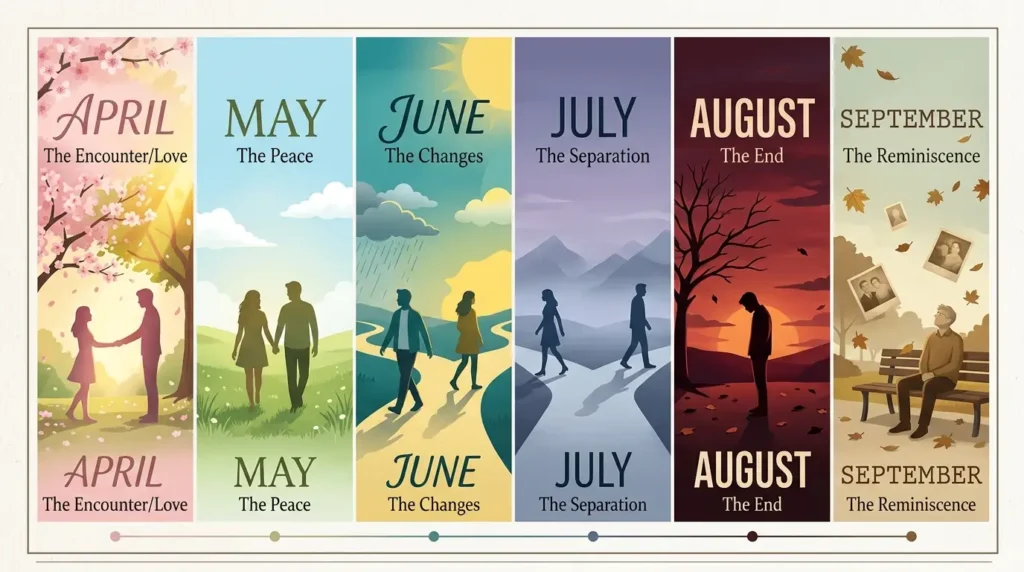
The song was also included on the soundtrack album for the 1968 film The Graduate. The music became inseparable from the atmosphere and themes of the film, while the soundtrack album reached No. 1 on the U.S. albums chart.
I chose this song for the No. 10 position not because it compresses many events into a short running time. What draws me to it is the way it leaves the reasons for the separation unexplained and simply allows the seasons to move forward, awakening memories that belong to each listener.
A Poetic Interpretation
In April, you appeared as though guided to me by the spring rain, and by May you were resting peacefully in my arms.
But in June, your heart began to wander through the darkness of the night, and in July you flew away without leaving a word of farewell.
In August, beneath the first cold breath of autumn, our love came to an end and could no longer return to what it had been.
Then in September, I quietly remembered the love that had once been new and the younger selves we had been.
🎥 As always, let us begin with the official YouTube videos.
Credits Shared by Both Videos
Shared Credits
Song: April Come She Will
Artist: Simon & Garfunkel
Written by: Paul Simon
Official YouTube Channel: Simon & Garfunkel
① Studio Recording
Album: Sounds of Silence
Producer: Bob Johnston
Release Date: January 17, 1966
Provided by: Columbia Records
Video Format: Auto-generated by YouTube
Two-Line Commentary
This hushed studio recording is shaped by Art Garfunkel’s crystalline voice and Paul Simon’s delicate acoustic guitar.
By linking the beginning and ending of love to the changing seasons, the song preserves a fragile memory in less than two minutes.
② The Concert in Central Park Version
Film: The Concert in Central Park
Recorded: September 19, 1981
Location: Central Park, New York City
Performance Type: Live performance
Published by: Simon & Garfunkel Official YouTube Channel
Two-Line Commentary
Performed before the enormous audience at their reunion concert, this live version centers on Art’s voice and Paul’s acoustic guitar.
The intimate performance within such a vast setting brings the song’s solitude and changing seasons into even sharper focus.
From April to September—A Love Story Told Through Six Months
“April Come She Will” contains no conversation between the lovers, no description of where they met, and no single incident that clearly causes their separation. The story is carried forward by the names of the months from April through September.
A Relationship Born in Spring and Unraveling in Summer
April—She Appears
In April, as the spring rain fills the streams, she comes to the narrator. The awakening of nature after winter is placed alongside the moment when love begins to grow.

May—Resting in His Arms
In May, she rests in the narrator’s arms. This is the calmest point in their relationship, but the happiness is given no lengthy explanation before the song moves on to June.
June—Her Heart Changes Direction
In June, she changes her tune and wanders restlessly through the night. The song does not describe an open quarrel. Instead, it captures the first sign that a heart which had remained in one place has begun to move elsewhere.
July—A Farewell Left Unspoken
In July, she suddenly flies away. By describing her departure as flight rather than simply saying that she leaves, the song suggests that the narrator is given no time to ask why or to try to stop her.
The Two Months in Which Love Becomes Memory
August—Love Reaches Its End
In August, love meets its death. A straightforward reading suggests that it is not the woman herself who dies, but the love that existed between them. Although August is still part of summer, the early appearance of a cold autumn wind anticipates the ending that has already entered their relationship.

September—The One Left Behind Looks Back
In September, the narrator remembers a love that had once been new. The focus of the story shifts from the woman who departed to the man who now looks back on the past.
Beyond the Story of Two Lovers
Is “She” Simply One Woman?
The most natural reading is that the woman in the title is an actual lover. Yet her appearance in April and her gradual departure as the months move forward also echo the passing of time from spring into summer.
She arrives with the April rain, is surrounded by the gentle light of May, changes in June, and disappears into the distance in July. Her movement reflects both a lover’s change of heart and the natural progression from spring into summer.
Did the season change because she left?
Or did she leave because the season had changed?
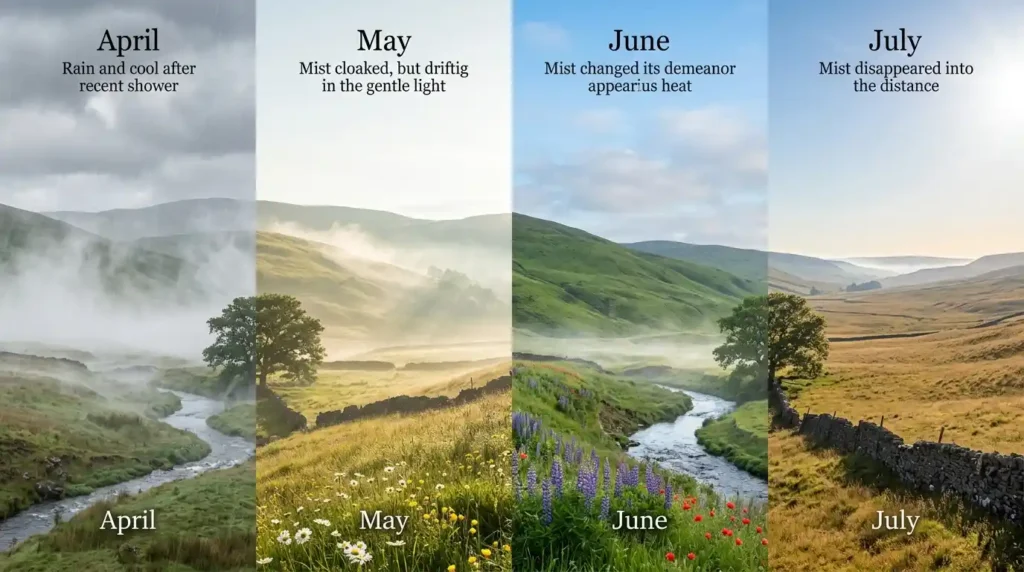
Paul Simon offers no answer. By refusing to define a single cause for the separation, the song becomes more than a breakup story belonging to one particular couple. It becomes a work about the passing of time itself.
What Remains of an Old Love Is Often the Season, Not the Events
When people look back on a past relationship, the exact order of events and the details of conversations gradually become indistinct. Yet the temperature of the air, the angle of the light, or the scent after the rain may return with surprising clarity.
There are songs that instantly return me to an era I had almost forgotten. What comes back is not a written record of what happened, but the feeling of who I was in that place—what brought me joy and what I feared at the time.
Perhaps “April Come She Will” remembers more than the woman herself. In September, the narrator may also be remembering the person he was in May, when he still knew nothing of the separation that lay ahead.
A Quiet Drama Created by Voice and Guitar
Art Garfunkel’s Voice
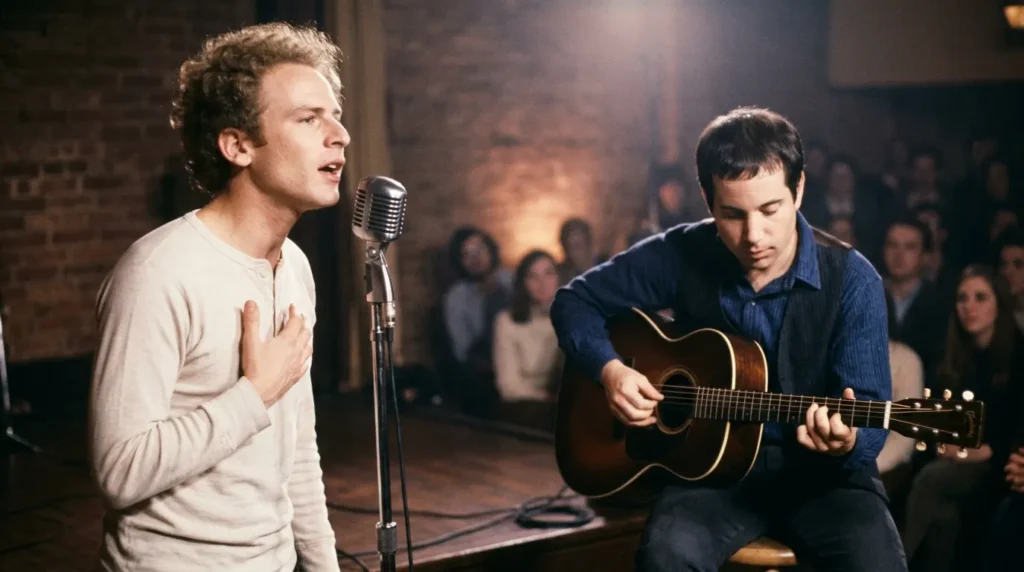
At the center of the song is Art Garfunkel’s clear, luminous voice. Rather than openly proclaiming the pain of loss, he sings as though he were calmly reading through a sequence of months whose order had already been decided.
Because the emotion is not expressed violently, the separation begins to sound less like one private incident and more like the passage of time that no one can stop. A vocal performance that never displays tears directly makes the narrator’s loss feel even deeper.
Paul Simon’s Acoustic Guitar
Paul Simon’s acoustic guitar does not exaggerate the scenery described in the words. Its delicate fingerwork creates a steady current that carries the song through the six months from April to September without hesitation.
An Entire Life Cycle in Less Than Two Minutes
The studio recording lasts approximately one minute and fifty-two seconds. Even so, when it ends, it feels less like a miniature song than a complete account of a relationship being born, changing its form, and disappearing.
Between April and May lie the encounter and growing intimacy. Between June and July come the change of heart and the separation. Then, between August and September, a love that had belonged to the present becomes a memory of the past.
Each listener fills the unspoken spaces between the months with personal experience. Because the song gives so little background about its characters, everyone can place a different April or September within it.
Fifteen Years Engraved in Two Performances
The Studio Version Recorded by the Young Duo
In the 1966 studio version, Art’s voice and Paul’s guitar sound remarkably close to the listener. The recording has the private quality of someone quietly rereading an old letter that was never intended to be shown to anyone else.
The Central Park Version After Their Reunion
By contrast, an estimated 500,000 people gathered for the Central Park concert on September 19, 1981. Before that enormous outdoor audience in New York City, the duo performed this modest song of less than two minutes.
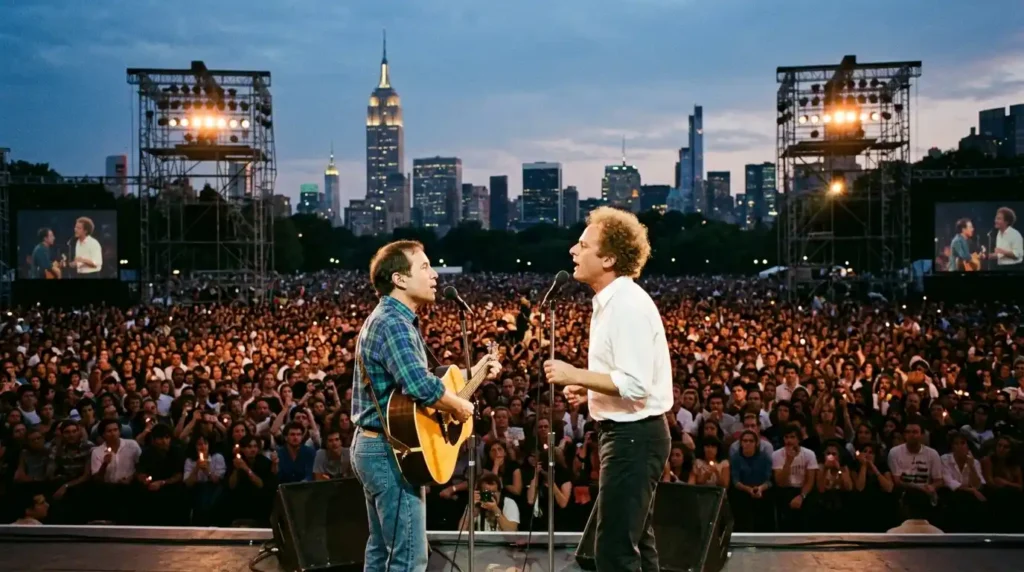
Although the scale of the setting had changed completely, the core of the song remained intact. Art’s voice and Paul’s guitar brought the April rain and the July separation into the night air of a great metropolis.
Their Own Passage of Time Within the Same Song
Between the young duo who recorded the studio version and the two men who stood together again in Central Park, fifteen years had passed—a period far longer than the six months described in the song.
In the Central Park performance, the narrator’s memory of a vanished love seems to overlap with the years Paul and Art themselves had traveled through. It is still the same song, but their shared history adds a different layer of meaning.
The Song’s Role Within the Album
A Small Season Placed Within Sounds of Silence
Sounds of Silence contains songs that explore loneliness, alienation from society, and human dignity. Rather than looking outward toward society, “April Come She Will” narrows its attention to the six months that pass between one man and one woman.
The limited scale of its setting does not make its meaning slight. By joining the unstoppable progression of the seasons with the instability of the human heart, a private separation expands into a universal story about time.
Why I Chose It for No. 10
I did not place this song at No. 10 merely as an introduction to the larger works that will appear higher in the ranking. Simon & Garfunkel were capable not only of addressing major themes, but also of reflecting an entire span of human life within a song that lasts less than two minutes.
In Closing
The woman who appeared in April rested in the narrator’s arms in May. In June, her heart turned in another direction, and in July she flew away without a word. Then in August, beneath a cold wind, their love came to an end.
What the narrator looks toward in September is not the reason for the separation. He remembers a love that had once been new and the person he had been when he still trusted it without question.

“April Come She Will” does not loudly mourn a love that has been lost. It accepts that a beautiful time cannot last forever, while preserving the knowledge that those days truly existed.
April will return the following year. Yet neither the woman who appeared in that particular April nor the narrator who welcomed her can return to who they were. Even so, the season in which their love existed does not disappear; it comes alive again whenever the song is heard.

音楽ファン同士の交流・リクエストはこちら / Connect & Request Songs Here