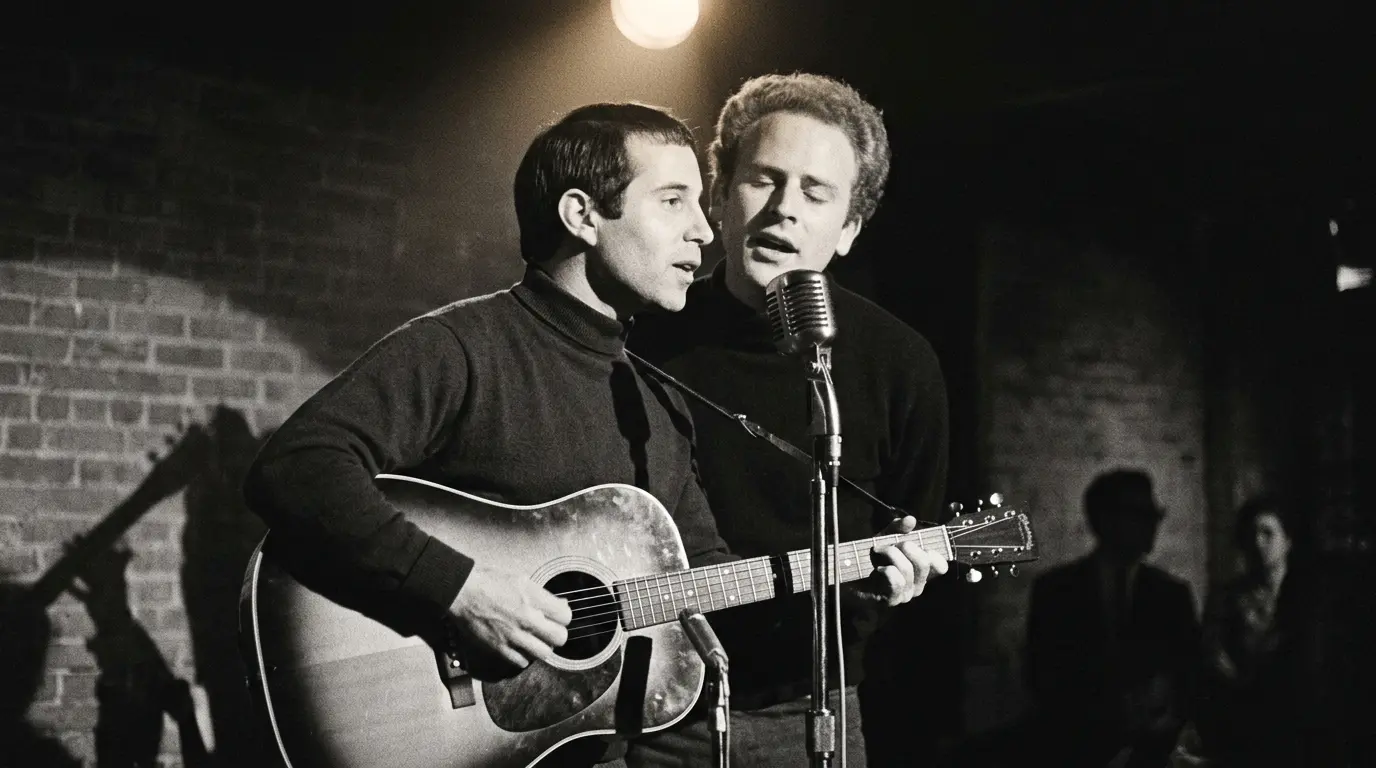
Simon & Garfunkel’s history is available here!
- 🎧 Listen to This Article
- My No. 3 song is “Scarborough Fair/Canticle.”
- 🎥 As always, let us begin with the official YouTube videos.
- Transforming an Old Ballad into Their Own Music
- “Scarborough Fair” and “Canticle”
- The Studio Version and the Central Park Performance
- The World of the Lyrics Revealed After the Sound
- Why I Chose It as My No. 3 Song
- In Closing
🎧 Listen to This Article
Listen to a concise narration of the key points covered in this article.
The English narration is a helpful introduction to the atmosphere of “Scarborough Fair/Canticle” and the overall flow of the article before you begin reading.
🎵 English Narration
An English audio introduction to the content of this article.
🎶 Japanese Narration
A Japanese audio introduction to the content of this article.
Listening first will make it easier to understand the atmosphere of “Scarborough Fair/Canticle” and the main points of the article.
My No. 3 song is “Scarborough Fair/Canticle.”
Simon & Garfunkel’s “Scarborough Fair/Canticle” opens their third album, Parsley, Sage, Rosemary and Thyme, released on October 10, 1966.
The album reached No. 4 on the U.S. album chart, becoming their first original album to enter the Top 10. The song gained wider recognition through the film The Graduate and climbed to No. 11 in the United States when it was released as a single in 1968.
What first drew me to this song was its sound. An old English folk melody, intricate guitar playing, Art Garfunkel’s crystalline voice, and another melody gradually joining from behind—the combination evoked a distant place I had never seen.
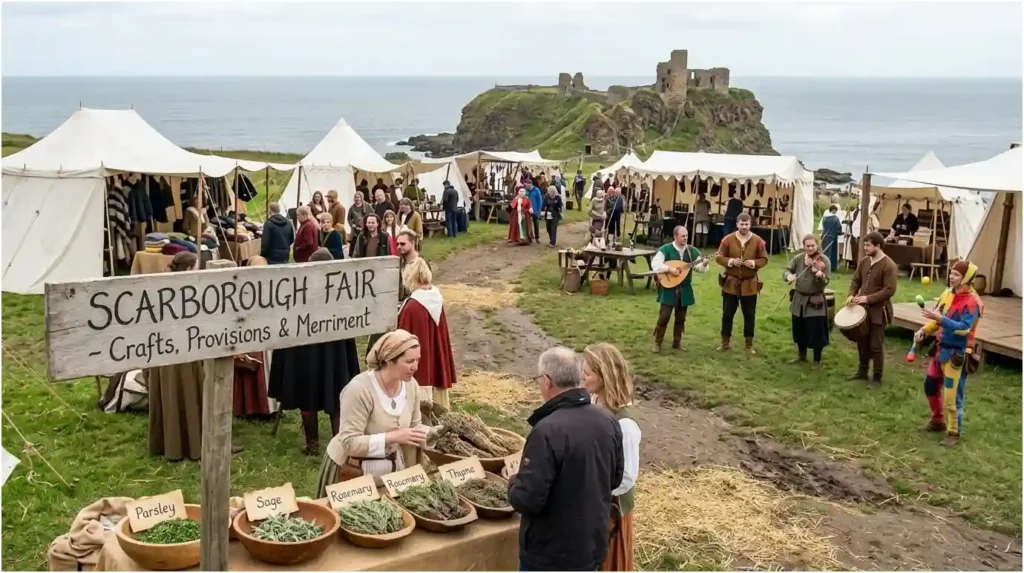
Years later, as I traced the lyrics and the background of the recording, I discovered that two stories—one of lost love and another of war—were unfolding simultaneously beneath its graceful sound.
A Free Interpretation
Tell her that I still remember her.
Yet all that remains between us are wishes that can never be fulfilled.
On the road to Scarborough, the memory of a love already lost returns again and again.
🎥 As always, let us begin with the official YouTube videos.
Shared Credits
Song: Scarborough Fair/Canticle
Artist: Simon & Garfunkel
Original song: Traditional English ballad
Arrangement: Paul Simon / Art Garfunkel
Vocals: Paul Simon / Art Garfunkel
Official channel: Simon & Garfunkel

This version combines the traditional, anonymously written ballad “Scarborough Fair” with “Canticle,” a counter-melody adapted from Paul Simon’s earlier song “The Side of a Hill.”
① Studio Recording
Video title: Simon & Garfunkel - Scarborough Fair/Canticle (Audio)
Album: Parsley, Sage, Rosemary and Thyme
Album release date: October 10, 1966
Producer: Bob Johnston
Format: Official studio recording
Two-Line Commentary
This studio work weaves an English traditional song and an anti-war counter-melody into a single composition containing two separate stories.
The delicate guitar and layered voices cast the shadow of another era behind an ancient love song.
② The Concert in Central Park
Video title: Simon & Garfunkel - Scarborough Fair (from The Concert in Central Park)
Concert: The Concert in Central Park
Recorded: September 19, 1981
Location: Central Park, New York City
Release: The Concert in Central Park
Audience: Approximately 500,000
Format: Official live video
Two-Line Commentary
This historic concert brought the two men back onto the same stage after roughly eleven years, revealing the increased depth of their mature voices.
Unlike the meticulously constructed studio version, this performance presents the melody directly while carrying the presence of the vast audience around it.
Transforming an Old Ballad into Their Own Music
The melody of “Scarborough Fair” does not move toward a clearly defined climax. Instead, it seems to circle around the same place. Its restrained flow gradually draws the listener deeper into the song.
An Acoustic Guitar Pattern Shaped by the Fingertips
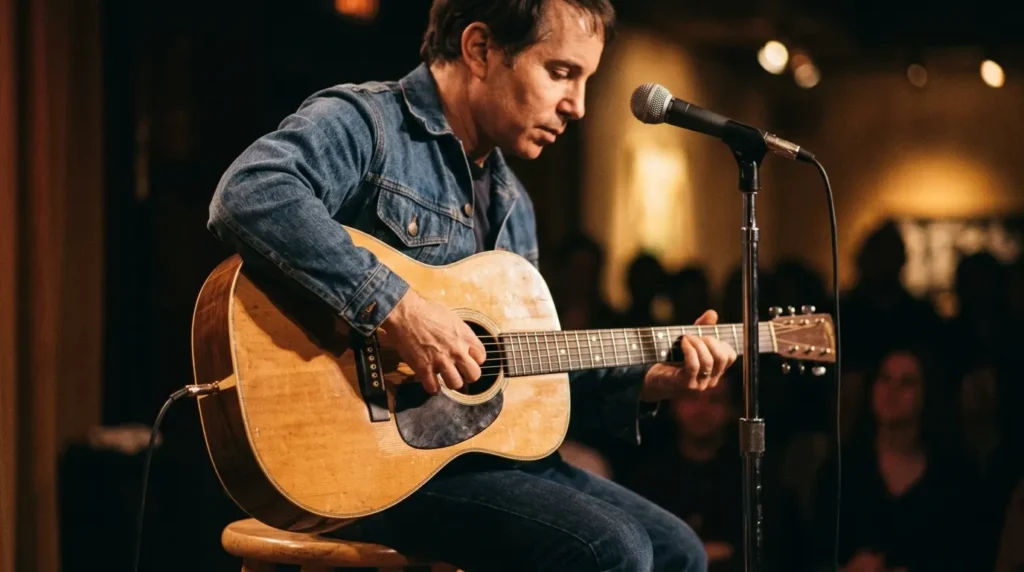
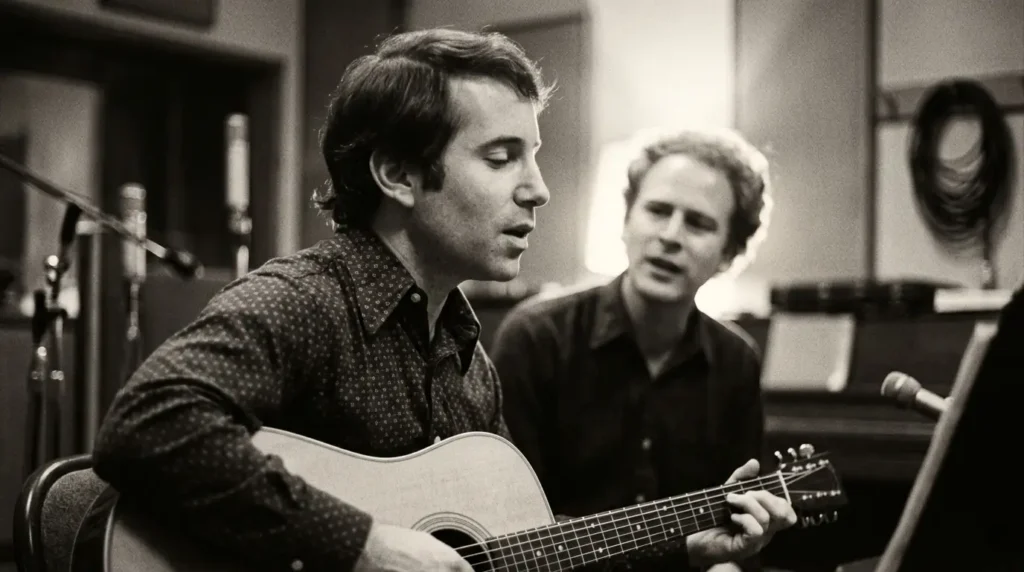
Paul Simon’s guitar does not drive the song with a forceful beat. His fingerpicking supports the melody by sounding each string individually. The rhythm remains steady without becoming mechanical, while the vibration of the strings moves between the vocal lines.
A Traditional Melody Shaped by Precise Record Production
The song retains the character of an old ballad, but the recording is far more than a simple reproduction. The guitar, voices, and background instruments are carefully positioned and rebuilt as a distinctly Simon & Garfunkel work.
The Distance Created by Art Garfunkel’s Voice
Art Garfunkel carries the main melody with a voice that rises smoothly into its upper register without forcing emotion upon the listener. Rather than addressing someone standing before him, he seems to be sending his words toward someone far away.
His singing does not merely sit above the guitar; it flows alongside the strings. The boundary between human voice and instrument becomes faint, creating the impression that an old story is reaching us from a distant place.
How the Voice Changes After We Understand the Lyrics
At first, it is the beauty of Garfunkel’s voice that captures the ear. Once the story becomes clear, however, the same singing can sound like a call to someone who can no longer be reached. The sound itself remains unchanged, but our understanding alters the way we hear it.
“Scarborough Fair” and “Canticle”
What distinguishes Simon & Garfunkel’s version is its layering of a second song over the old love ballad. “Canticle” was developed from “The Side of a Hill,” an anti-war song Paul Simon had written earlier.
A Love Song in Front, an Anti-War Song Behind It
In the foreground, the narrator asks a traveler bound for Scarborough to carry a message to a former lover. Behind that story, the words of “Canticle” introduce soldiers, warfare, and those who send others into battle through a separate melody.
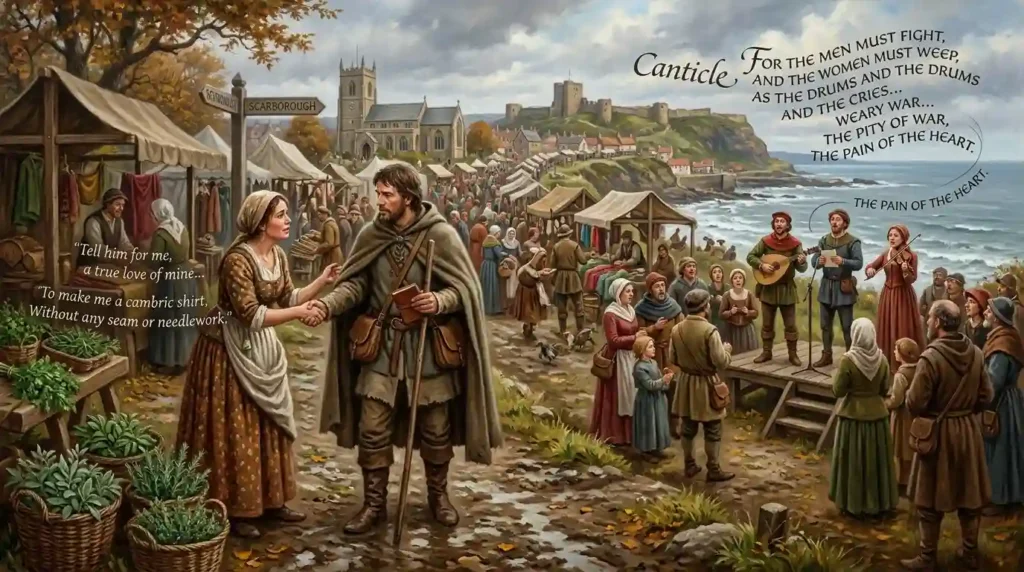
- The main melody expresses the narrator’s feelings for a former lover who lives far away.
- The counter-melody depicts soldiers heading toward battle and those who issue the orders.
- The two songs are linked by circumstances that personal wishes alone cannot change.
Rather than presenting the love song and anti-war song one after the other, the arrangement allows them to proceed at the same time. As the voices draw closer, private separation and the loss caused by war begin to resonate together.
Two Voices in Harmony, Facing Different Directions
Unlike a conventional duet, the two men sing different words and melodies simultaneously. Their voices are musically connected, yet the worlds they describe are not the same. This union and separation create a quiet tension within the song.
The Song Changes According to Where We Listen
At first, the ear follows the main melody. On another listening, attention shifts toward Paul Simon’s counter-melody. When the complete arrangement is heard again, it becomes clear that the two songs are changing the meaning of each other.
The Three-Dimensional Sound Created in the Studio
In the studio version, the main melody, counter-melody, guitar, and background instruments appear to come from different positions. Although the structure is complex, it can still be enjoyed naturally as one beautiful song without analyzing how it was constructed.
The Studio Version and the Central Park Performance
The two videos featured here present the 1966 studio recording and a live performance from 1981. Hearing the song across these two periods reveals both what remained unchanged and what the passing years added to it.
The Studio Version Created by Two Young Musicians
The studio recording carefully controls the way its two melodies intertwine. The guitar and voices feel close, and every sound is distinct. It represents the achievement of two young musicians using studio techniques to create music that could belong to no one else.
The Live Version Performed Before Approximately 500,000 People
Approximately 500,000 people gathered for the Central Park concert on September 19, 1981. Despite the scale of the outdoor event, the duo did not turn the song into a grand spectacle. The performance remains centered on its melody and voices.
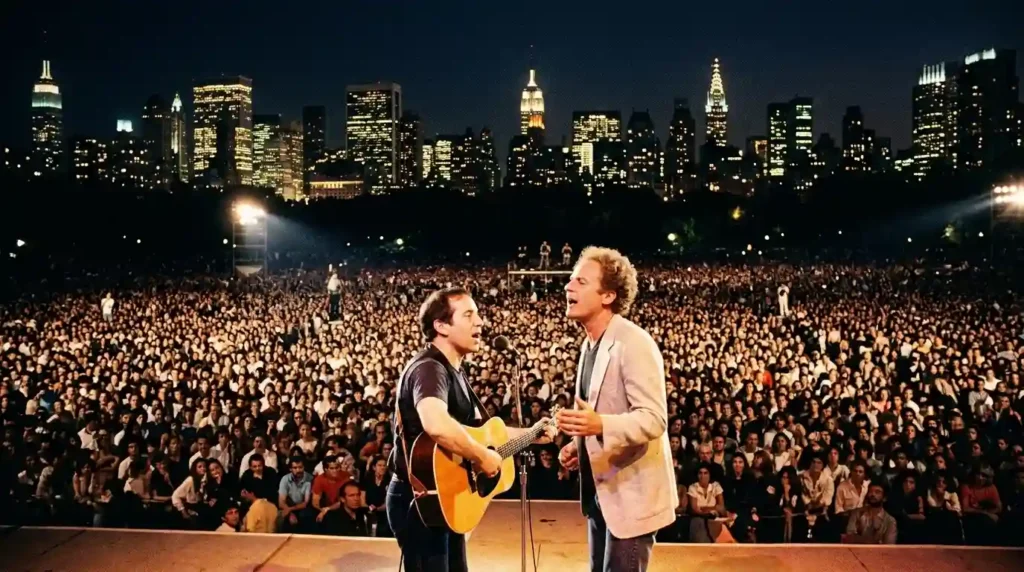
Art Garfunkel’s singing carries a fullness different from that of his younger voice, while Paul Simon’s guitar supports the song with quiet assurance.
The Meaning of Hearing Them Sing Together Again
If the studio version captures the exacting collaboration of two young musicians, the live version carries the knowledge that they had followed separate paths before standing beside each other again. The song remains the same, but the intervening fifteen years give it a different weight.
The World of the Lyrics Revealed After the Sound
For many years, I listened to this song for the beauty of its melody and harmonies. Following its meaning later revealed a story of two people who cannot easily find their way back to each other.
What Was Scarborough Fair?
Scarborough is a coastal town in northeastern England. The annual fair held there received a royal charter from King Henry III in 1253 and developed into an important event that attracted merchants from many regions.

The narrator asks a traveler going to the fair to remember him to a former lover who lives there. The song does not describe the activity of the marketplace; it begins with a message intended for someone far away.
Three Impossible Tasks
The narrator asks the former lover to make a shirt without seams, find an acre of land between the sea and the shore, and reap it with a sickle made of leather.
- Make a seamless shirt without needlework.
- Find a piece of land between the sea and the shore.
- Reap the crop with a leather sickle that cannot serve as a blade.
None of these tasks appears possible. The promise that they may become lovers again once everything is accomplished can therefore be heard less as hope for reconciliation than as an expression of the distance between them.
A Meaning That Cannot Be Reduced to One Answer
Traditional songs often survive in different lyrical forms and invite different interpretations, so the narrator’s intentions cannot be determined with certainty. He may be testing the former lover, or he may be unable to abandon a relationship that has already ended. To me, the impossible conditions sound like a way of acknowledging that they cannot return to what they once were.
Why the Four Herbs Remain in the Memory
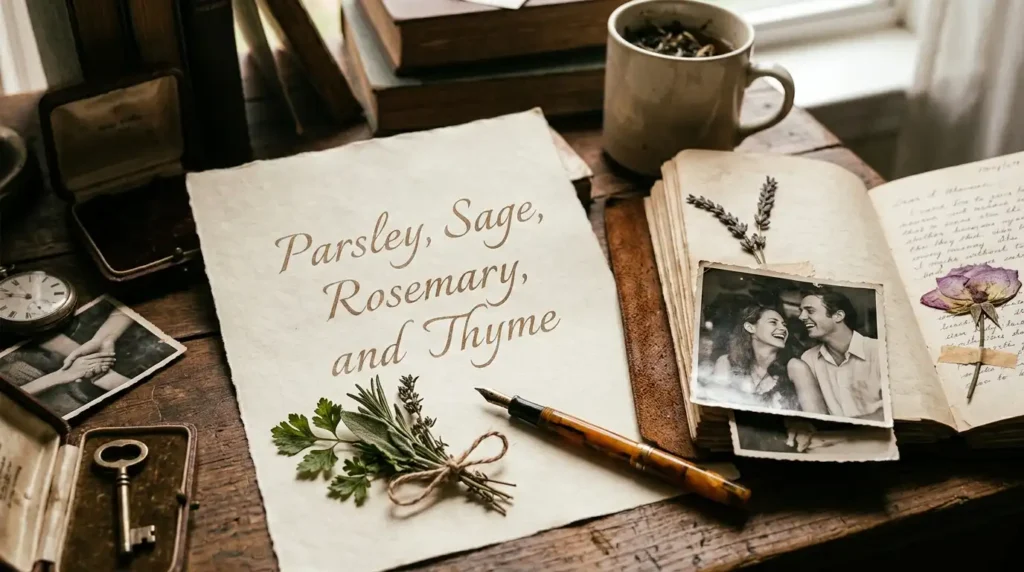
The recurring words “parsley, sage, rosemary and thyme” remained in my memory long before I understood what the song meant. The four plants have sometimes been associated with qualities such as love and remembrance, but they can also sound like a refrain calling a lost relationship back into the present.
Why I Chose It as My No. 3 Song
A Song That Cannot Be Fully Heard in One Listening
At first, the melody and singing draw me in. Then my attention moves toward the guitar and the details of the recording, before the meaning of “Canticle” and the traditional lyrics begins to emerge. The song contains several points of entry, and each one leads toward a different attraction.
It combines an English folk ballad with an anti-war song from the 1960s, yet never makes the listener feel confronted by a difficult composition. Its first impression is simply that of a beautiful song. That achievement distinguishes it even within Simon & Garfunkel’s remarkable body of work.
A Song That Deepens the Longer We Listen
Even after knowing the song for decades, I can still discover another voice or sound whenever I return to it. Its value does not depend on a single powerful first impression; it grows through the time spent listening. That is the strongest reason I have placed it at No. 3.
In Closing
“Scarborough Fair/Canticle” brings together an English traditional ballad, delicate guitar playing, Art Garfunkel’s voice, and the anti-war counter-melody added by Paul Simon.
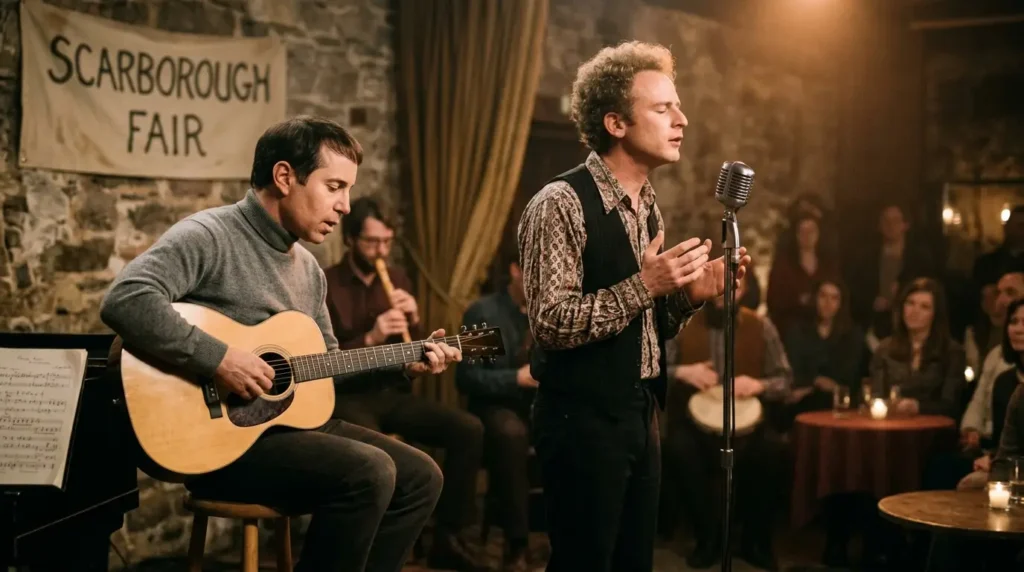
Its music can capture the heart without any knowledge of the lyrics. Once the words are followed, however, a message to a former lover and the lives of people caught in war become visible within the same composition.
First we fall in love with the music, and only after many years do we discover what was being sung. For me, “Scarborough Fair/Canticle” is a song that reminds me why listening to music from another language can remain so rewarding throughout a lifetime.

音楽ファン同士の交流・リクエストはこちら / Connect & Request Songs Here