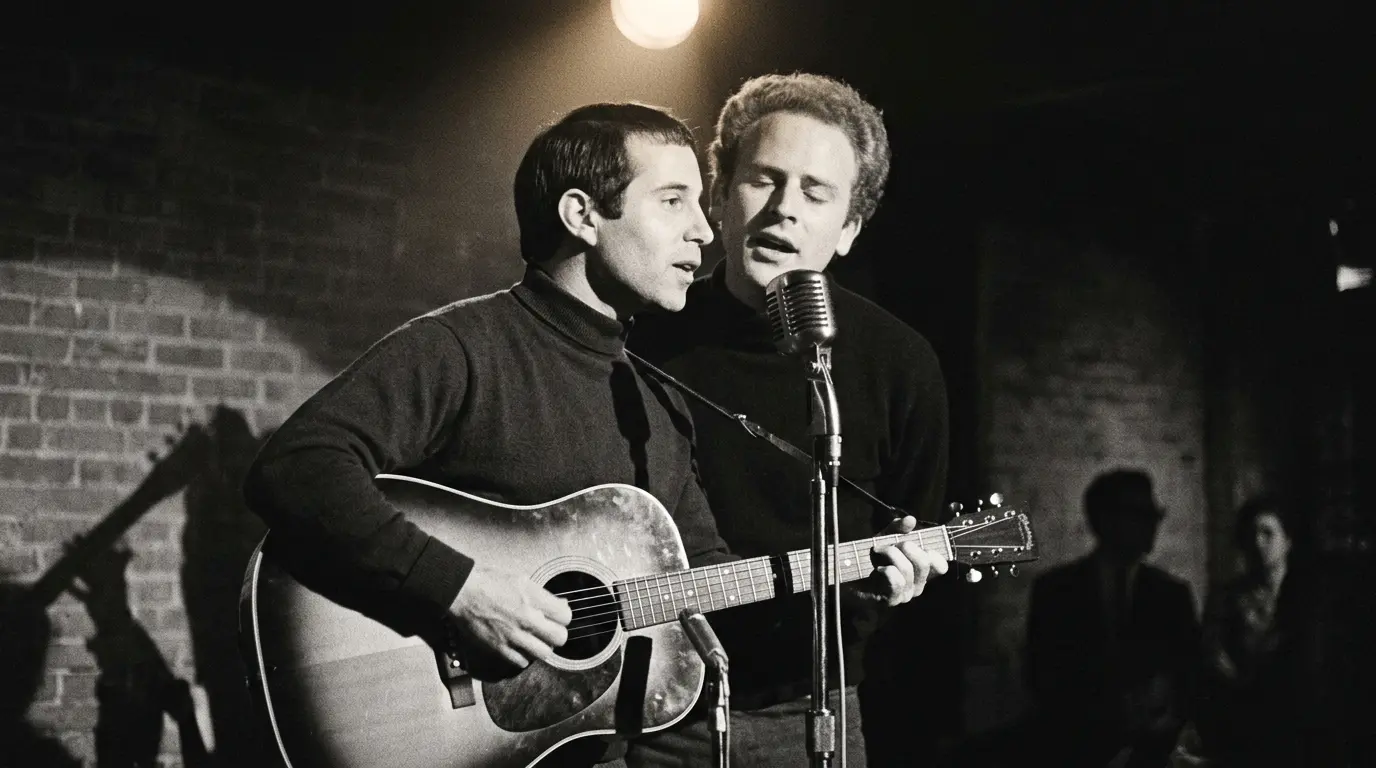
Simon & Garfunkel’s history is available here!
- 🎧 Listen to This Article
- No. 1 is “Bridge Over Troubled Water”
- 🎥 As always, let us begin with the official YouTube videos.
- A private appeal becomes something immense
- The height of their success and the end of the partnership
- Why “Bridge Over Troubled Water” is my No. 1
🎧 Listen to This Article
Listen to a concise narration covering the key points of this article.
Recommended for readers who want to understand the appeal of “Bridge Over Troubled Water” and the overall direction of the article before reading.
🎵 English Narration
An English audio introduction to the content of this article.
🎶 Japanese Narration
A Japanese audio introduction to the content of this article.
Listening first will make it easier to understand the world of “Bridge Over Troubled Water” and the article’s main themes.
No. 1 is “Bridge Over Troubled Water”
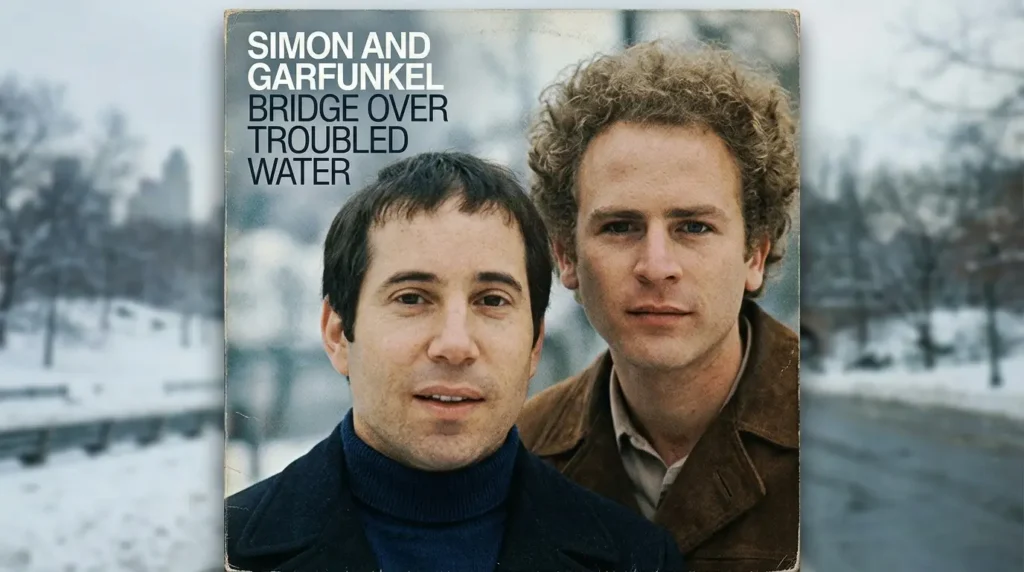
“Bridge Over Troubled Water” is the title track of Simon & Garfunkel’s fifth studio album, released on January 26, 1970. It ultimately became the duo’s final studio album.
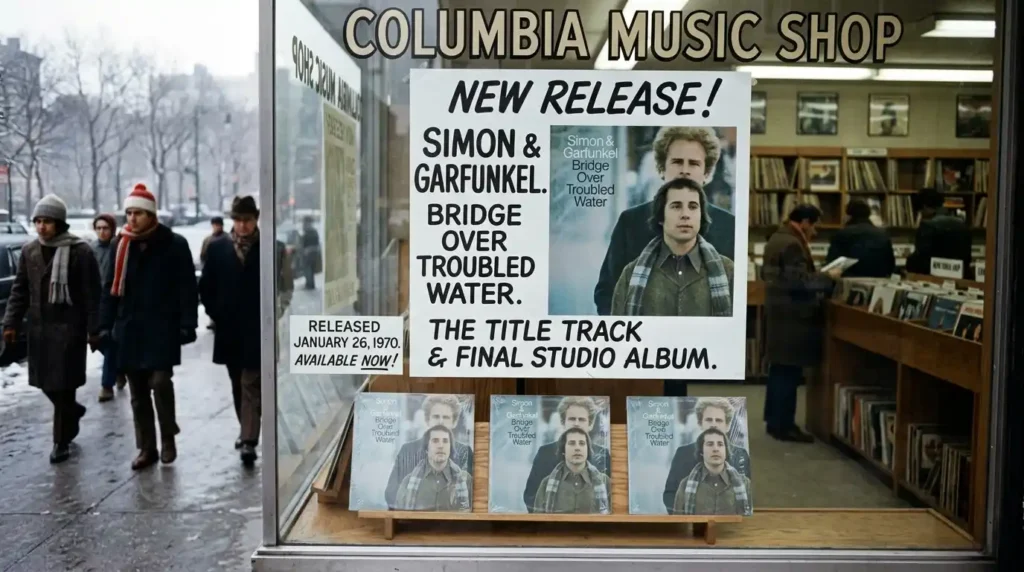
The title track reached No. 1 in the United States and won five awards at the 1971 Grammy Awards, including Record of the Year and Song of the Year. The album also received Album of the Year, taking Simon & Garfunkel to the highest point of their popularity and critical acclaim.
The song begins with a quiet piano. As Art Garfunkel’s voice rises, the arrangement gradually expands around him. Its message of becoming a bridge for someone in distress is inseparably connected to the musical progression.
Yet by the time the song was created, the partnership itself was approaching its end. Their greatest song about human connection was completed during the final phase of their work together. That fact is also part of why I chose “Bridge Over Troubled Water” as my No. 1 Simon & Garfunkel song.
My interpretation
Even when your tears leave you unable to see the way ahead, I will not leave you alone.
Like a bridge across violent waters, I will bear the weight of your pain.
Your season will eventually arrive, and your dreams will begin to shine.
Until that day, I will always be walking just behind you.
🎥 As always, let us begin with the official YouTube videos.
Shared credits
Song: Bridge Over Troubled Water
Artist: Simon & Garfunkel
Written and composed by: Paul Simon
Lead vocals: Art Garfunkel
Official channel: Simon & Garfunkel Official Artist Channel

Paul Simon wrote and composed the song, while Art Garfunkel performed the lead vocal. Both videos have been released through the official Simon & Garfunkel YouTube channel.
① Original studio recording
Video title: Simon & Garfunkel - Bridge Over Troubled Water (Audio)
Album: Bridge Over Troubled Water
Released: 1970
Two-line commentary
The original recording begins with a quiet piano and Art Garfunkel’s voice before expanding into a vast musical current.
The gospel-influenced melody and arrangement give powerful substance to the promise of supporting someone in distress.
② The Concert in Central Park version
Video title: Simon & Garfunkel - Bridge over Troubled Water (from The Concert in Central Park)
Concert: The Concert in Central Park
Date: September 19, 1981
Venue: Central Park, New York City
Two-line commentary
After following separate paths, the two men reunited to perform the song before an audience of approximately 500,000 people.
Art’s matured voice and Paul’s accompaniment add the new meaning of reunion to the song.
A private appeal becomes something immense
A great musical surge begins with one voice
The song does not have a long introduction. Larry Knechtel’s piano sounds quietly, and Art’s voice appears almost immediately. Rather than addressing a vast audience, he seems to be speaking important words directly to one person standing before him.
Why Art Garfunkel sings the lead alone
Many of the duo’s best-known recordings are built around the precise blending of their two voices. In “Bridge Over Troubled Water,” however, Art carries the principal melody. Paul entrusted one of his most important compositions to his partner’s voice.
Art’s singing can carry words over a great distance without forcing emotion upon the listener. His voice rises as the song progresses, but the performance never becomes an exhibition of technique. Even as the volume increases, his distance from the person addressed in the song remains unchanged. Only his determination not to abandon that person grows stronger.
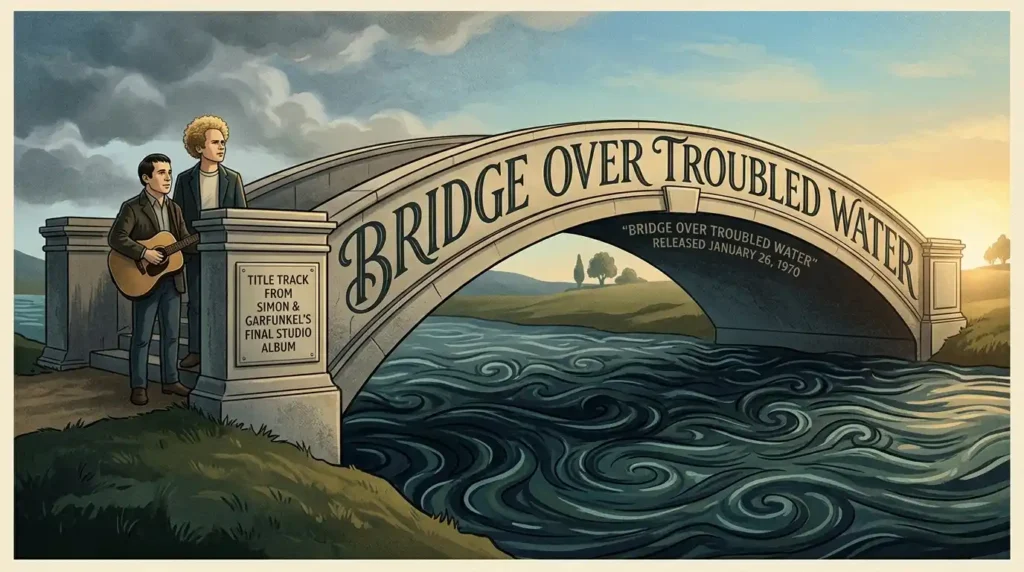
One man wrote the song, and the other sang it with the voice most suited to its meaning. Precisely because they do not sing the same melody together, the recording reveals how deeply each man needed the other’s talent.
Three scenes that transform the relationship
- Standing beside someone who is exhausted and in tears.
- Protecting someone who has lost all refuge and is surrounded by darkness.
- Watching from behind as that person begins to walk forward again.
In the first two scenes, the singer promises to support someone in pain. In the final scene, however, that person prepares to begin a new voyage. The narrator no longer attempts to lead from the front. He moves behind the other person and watches over the journey.
The final verse takes the song beyond consolation
Helping someone does not mean keeping that person beside you forever. When the other person returns to their own life, you do not decide the direction for them. You remain where they can find you if they turn around. Because of this final scene, the song becomes more than a simple expression of comfort.
The river remains, but someone becomes the bridge
Paul Simon drew inspiration from gospel music when writing the song. Although it carries the resonance of spiritual salvation, its central question is universal: what can one human being do for another?
A road that allows someone to cross on their own feet
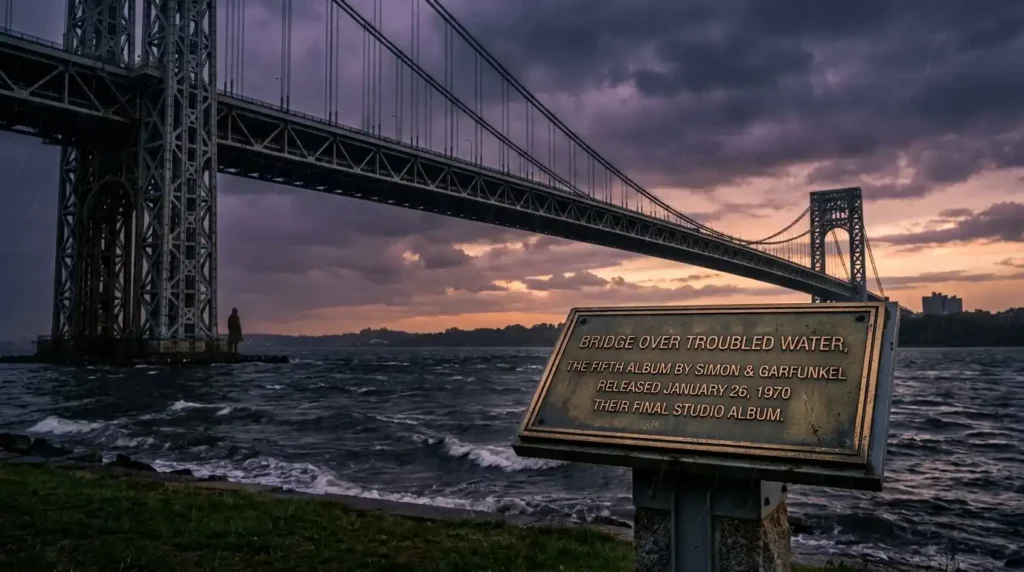
The power of the bridge metaphor lies in the fact that it does not attempt to make the turbulent water disappear. One person cannot completely remove another person’s grief or hardship. Yet it is still possible to become a road by which that person can reach the opposite bank on their own feet.
The person who becomes the bridge must bear the weight until the crossing is complete. The narrator understands that he cannot solve another person’s suffering, but he refuses to do nothing. That resolve is contained within the song’s brief central metaphor.
A recording that turns a quiet promise into a vast sound
In the studio recording, bass, drums and strings are gradually added around the piano. Rather than announcing its grandeur from the beginning, the arrangement expands in proportion to the song’s emotional development.
An arrangement that supports rather than overwhelms the voice
The drums in the closing section are not there merely to make the performance more dramatic. They give physical weight to a commitment that had previously been expressed through the voice, transforming a private appeal into music that can be shared by countless listeners.
Even as more instruments enter, Art’s voice remains at the centre. His vocal line rises while the piano and rhythm support it from below. The bridge named in the title seems to acquire a musical structure through the arrangement itself.
The height of their success and the end of the partnership
Before the two men moved toward separate shores
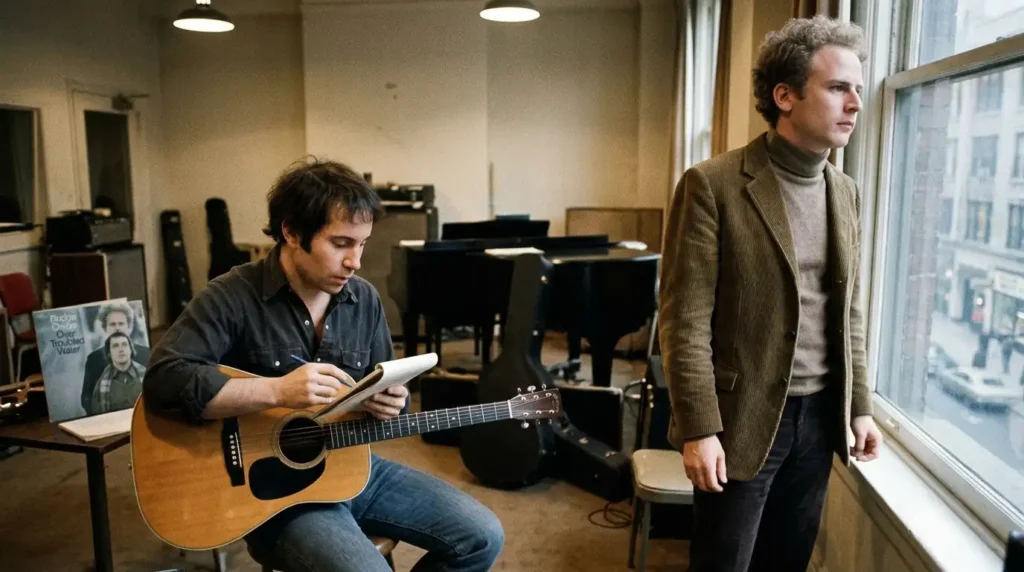
When “Bridge Over Troubled Water” was released in 1970, Simon & Garfunkel stood at the height of their success. Yet Art was pursuing work in film, while Paul was spending more time writing alone. After years of working together, their visions of the future were no longer aligned.
The album achieved worldwide success but ultimately became their final studio album. The period in which they completed their greatest work was also the period in which their paths began to divide.
A song about support and a partnership that did not endure
We cannot claim that the song was written specifically about the separation of Paul and Art. Nevertheless, the fact that the two men sang about becoming a bridge for someone else while being unable to continue along the same road themselves gives the song a more complicated emotional weight.
Caring deeply about another person is not the same as being able to preserve that relationship. The deeper the trust, the greater the expectations and disappointments can become. Yet in the studio, Paul’s melody and words joined Art’s voice to produce a recording that neither man could have created alone.
A final achievement created together
Their partnership did not endure, but their connection remained within the finished work. “Bridge Over Troubled Water” was not written to celebrate their unity, yet it became the strongest achievement of the final phase of their collaboration.
1981: the two men return to the same stage
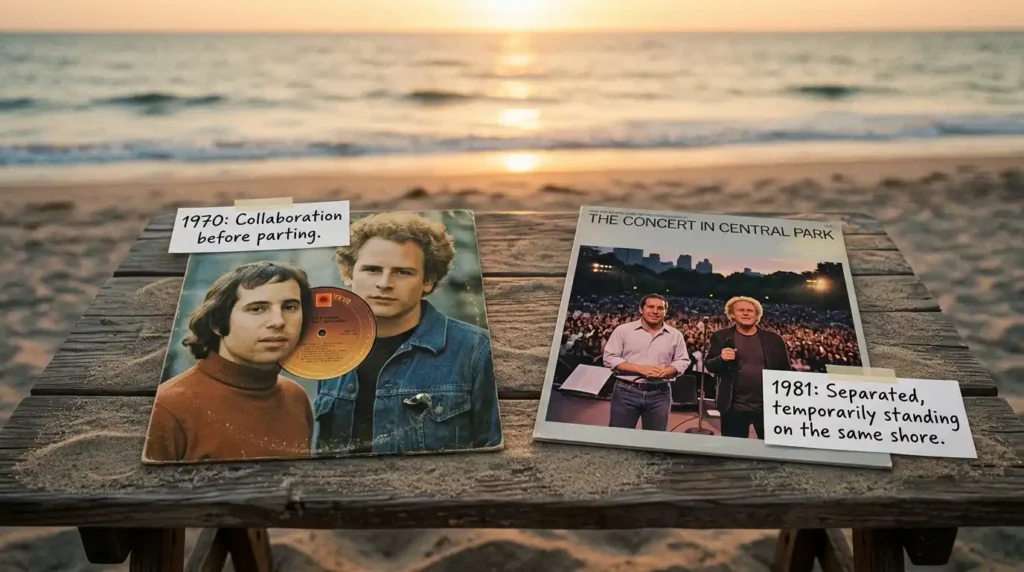
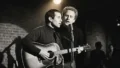
Approximately eleven years later, the two men performed the song together again at the Concert in Central Park. Art sings while Paul remains beside him, and the years absent from the original studio recording are now visible in their presence.
The reunion did not erase every disagreement from the past. Even so, for the duration of the performance, Art was once again singing a song written by Paul, and music had brought the two men back to the same place.
Two performances reflecting separation and reunion
If the 1970 recording represents a final collaboration completed shortly before their separation, the 1981 performance records two men who had lived apart temporarily standing on the same shore again. Heard together, the two versions reflect their success, separation and reunion.
Why “Bridge Over Troubled Water” is my No. 1
Their differences joined in the finest possible form
Simon & Garfunkel created songs distinguished by beautiful harmony, social observation and narrative power. It may therefore seem surprising to place at the top a recording in which Art performs most of the vocal alone.
Yet the essential nature of the partnership appears here through the division of their roles: one man writes, and the other sings. Paul selected the voice best suited to the song, and Art transformed the melody into a direct address to someone in distress.
A song in which the listener’s position keeps changing
The positions of narrator and listener change according to the circumstances of the person hearing the song. On one day, it becomes a promise to support someone else. On another, it becomes a voice supporting the listener. Its meaning can therefore never be confined to a single interpretation.
The song represents the clearest union of their two talents, yet its completion coincided with the end of their work together. I chose it as my No. 1 because it reveals not only musical beauty, but also the distance between the ideals and realities of human relationships.
In closing
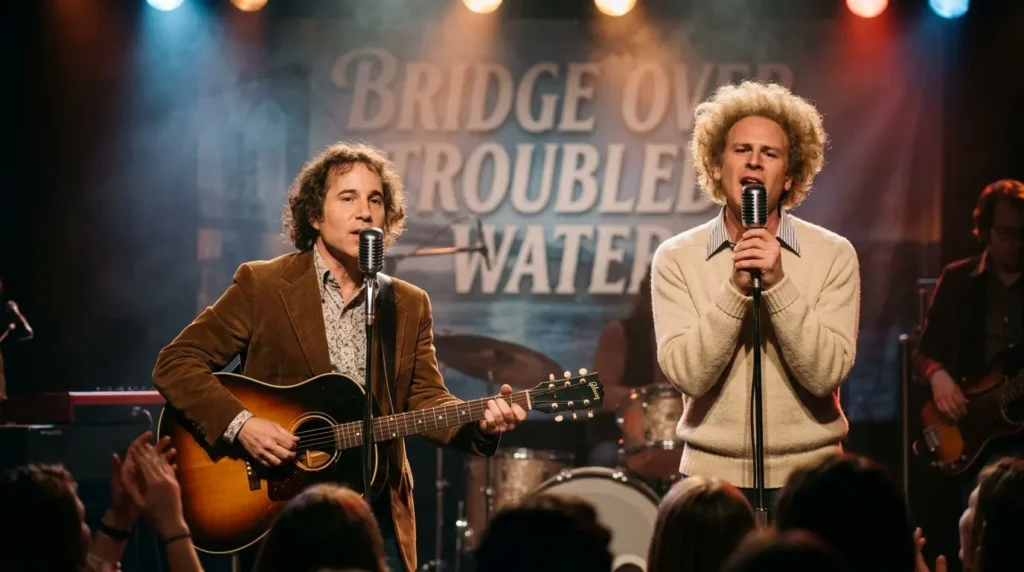
“Bridge Over Troubled Water” does not command a grieving person to stand up. One person cannot erase another person’s suffering. The song simply promises not to leave that person to cross the river alone.
In reality, the two men may not have been able to remain bridges for each other. Yet the song Paul wrote and Art sang has travelled beyond their personal relationship and continues to reach people throughout the world.
A promise addressed to one person begins with a quiet piano, becomes an immense piece of music, and continues to connect people more than half a century later. “Bridge Over Troubled Water” is the most beautiful and most poignant destination Simon & Garfunkel reached during the final phase of their partnership.

音楽ファン同士の交流・リクエストはこちら / Connect & Request Songs Here