🌐 English|🌐 日本語
Explore the Musical Life of Ryūun Nagai Here!
- 🎧 Listen to This Article
- No. 1 is “Shirube nai Tabi” by Ryūun Nagai.
- Listen to the Official YouTube Audio
- Beyond the Closed Window, the Sky He Remembers
- Birds in Flight, and a Voice of One’s Own
- Strangers We Pass, Friends We Remember
- Walking Before the Path Is Clear
- A Song of Departure from a Twenty-One-Year-Old Ryūun Nagai
- Closing Thoughts — Toward Days We Have Yet to Know
🎧 Listen to This Article
Listen to the highlights of our article on “Shirube nai Tabi.”
Explore the song’s blue skies, friendships formed along the way, and the courage to make your own path.
🎵 English Narration
Listen to the article’s highlights in English.
🎶 Japanese Narration
Listen to the article’s highlights in Japanese.
No. 1 is “Shirube nai Tabi” by Ryūun Nagai.
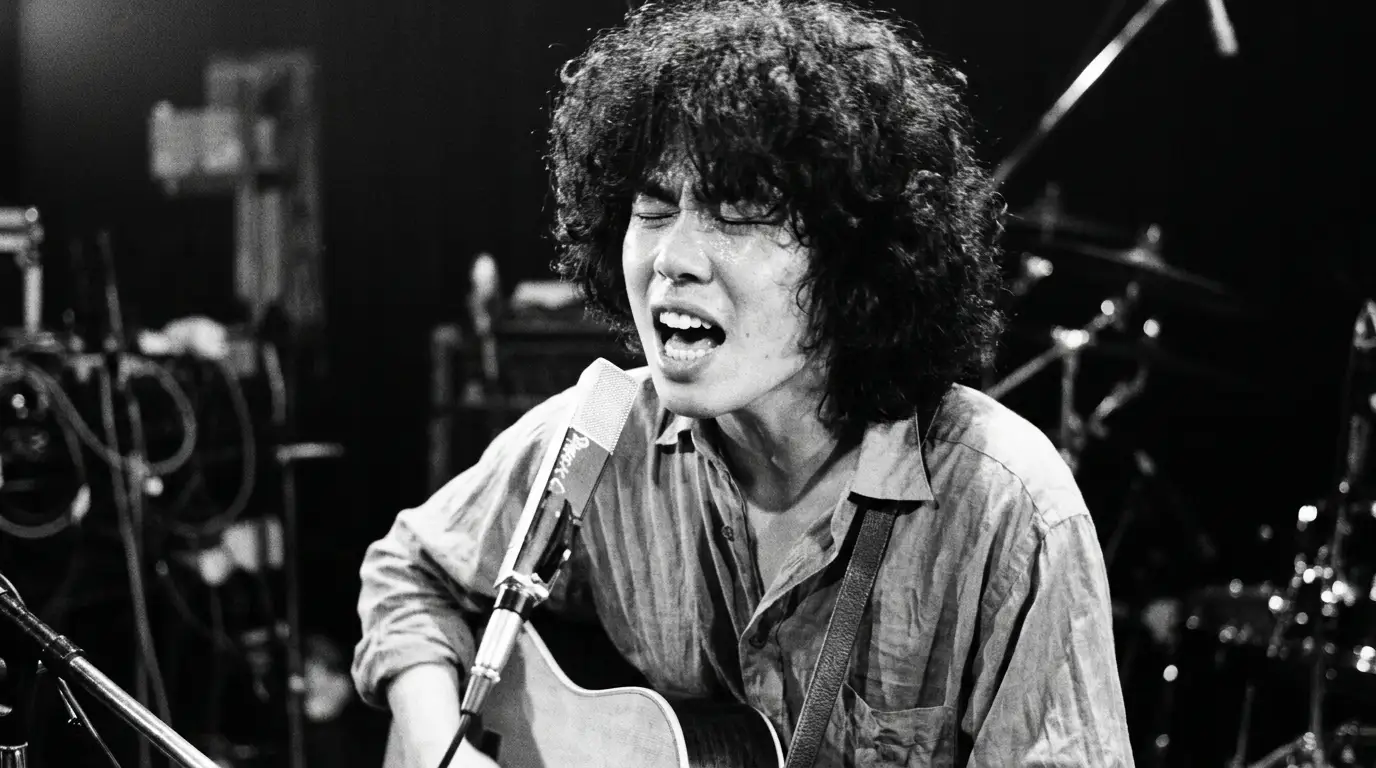
“Shirube nai Tabi” was released on August 21, 1979, as Ryūun Nagai’s fifth single. It also appeared on his third album, Dankan, released on October 21 that year. Nagai wrote both the words and music. The title means “A Journey Without Signposts.”
Featured in a commercial for Glico Almond Chocolate, the song reached No. 21 on the Oricon weekly singles chart. Released the year after his debut, it became one of his signature songs.

This song about youth begins by calling to someone in a closed room. Beyond the window, birds fly across a blue sky. Drawn toward that view, the song moves on to encounters with others and a journey made through one’s own steps.
A Free Interpretation
Even with your heart closed, the world you once dreamed of is still waiting.
You may not know your destination, but keep sight of what you hope for.
The friends you meet while pursuing your dreams make the journey precious.
Even without a path in view, your own road begins with the first step.
💡 You might also like: View the original Japanese lyrics (External site)
If the lyrics are available only in Japanese, you can use your browser’s translation feature or an AI translation tool to understand their general meaning.
Listen to the Official YouTube Audio
Audio Credit
Ryūun Nagai — “Shirube nai Tabi”
Official YouTube audio: Ryūun Nagai – Topic
About the Song
A call to young people to trust their hopes and begin walking toward an uncertain future.
It celebrates friendships formed along the way and the courage to make a path through one’s own steps.
Beyond the Closed Window, the Sky He Remembers
The first invitation is to open a window. Before packing for a journey, simply look beyond the room. The same starting point is offered both to someone ready to set out and to someone who has been unable to move for a while.
The voice has the closeness of a friend expressing concern. It does not demand an explanation for staying inside; it points toward what lies outside. It is easy to picture someone responding to that voice and approaching the window.
Remembering What Hope Felt Like
Beyond the window is the blue sky this person once looked up at with hope. However low their spirits may be now, there was a time when something made their heart race. The song brings that memory back within reach.
The sky above a new beginning can remain surprisingly vivid in memory: a day before leaving for school, the start of a journey, a first walk through an unfamiliar town. Sometimes the brightness overhead stays with us longer than the details of what happened.
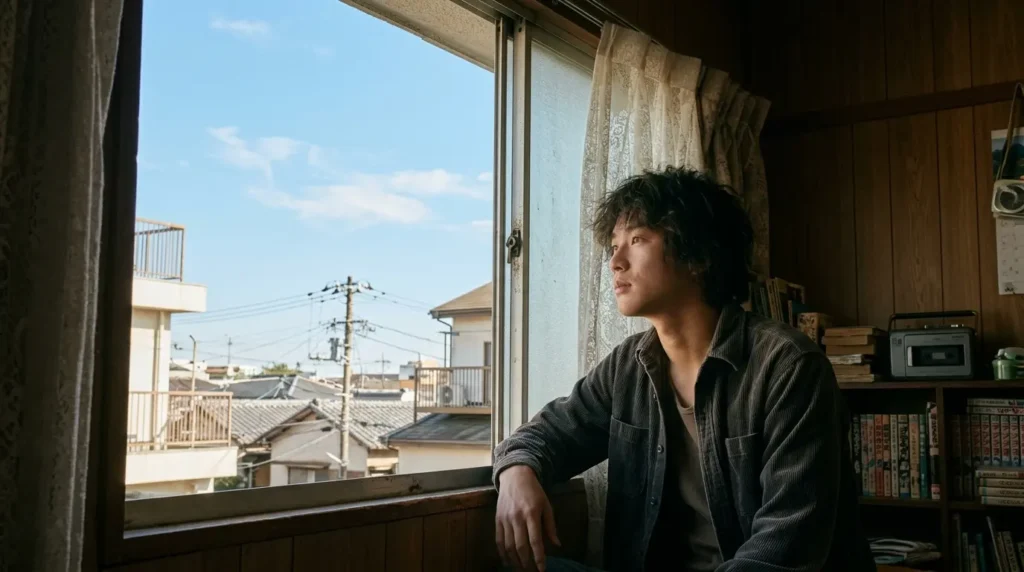
The blue sky in “Shirube nai Tabi” carries that sense of anticipation. Even if the old feeling cannot return immediately, the familiar view is still there. Its presence draws the person inside toward the world beyond the room.
Birds in Flight, and a Voice of One’s Own
As the gaze turns skyward, birds enter the song. Their wings bring movement to the view from the window. Since the call to the birds leads into a call to young travelers, their flight suggests people preparing to find their way in the wider world.
A flock has the strength of creatures crossing a vast sky together. Watching it is different from following a single bird; the whole space seems to come alive. That expansive view gives the song a freedom far removed from the closed room where it began.
What Need Not Disappear When We Move Together
The birds are urged not to lose their voices. Heard as encouragement to young people, the appeal suggests holding on to one’s own hopes even within a group. The image of flight becomes a matter of personal choice as well as movement.
Following others can feel reassuring while still leaving a faint uneasiness. Is the path everyone else has chosen really the one you want? The song makes that small, questioning voice seem worth keeping.

Some Hopes Have Yet to Find Words
A voice of one’s own does not always take the form of a clear goal. Something that catches your interest, or something you cannot quite give up, may hold a hope still taking shape. The call to the birds seems to reach those who are undecided as well as those who know where they are going.
Strangers We Pass, Friends We Remember
The scene shifts to a journey through youth. Most of the people passing on the bridge are strangers whose names remain unknown. Each has somewhere to go, and many pass without becoming part of one another’s lives. Yet among them are people who unexpectedly become friends.
Two strangers start talking and lose track of time. A conversation about dreams leads to plans to meet again. Perhaps it is through small moments like these that companionship begins along the way.
Someone Who Knew You While You Were Still Dreaming
Working toward something often means living through days with little to show for them. But with someone willing to listen, yesterday’s failure can become a story you laugh about together. Time spent with friends can give you the strength to continue.
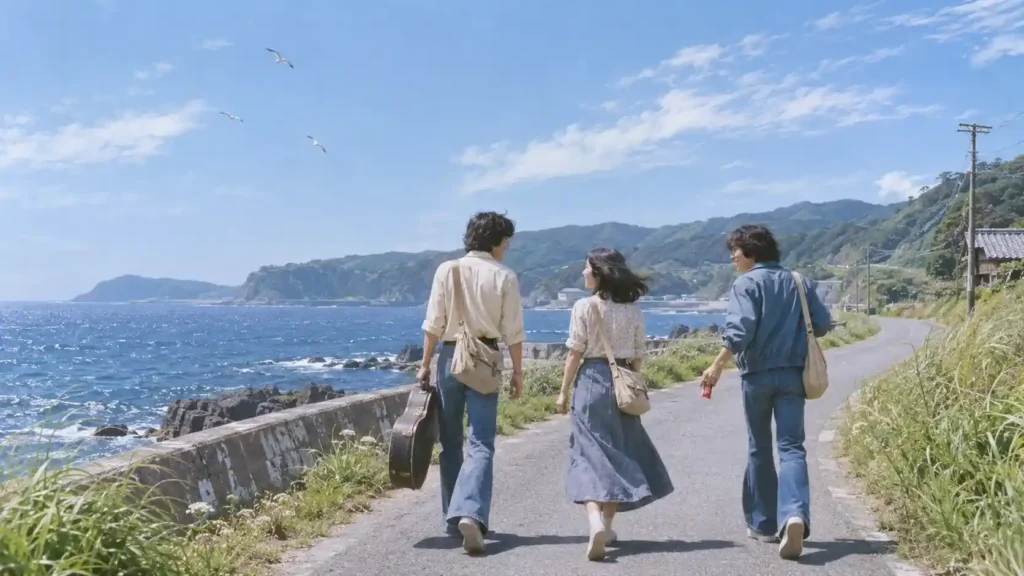
The song celebrates such encounters openly. Its happiness comes from meeting good companions while still searching for a dream, rather than from celebrating an achievement afterward. That warmth may bring a familiar face to the listener’s mind.
It need not be someone who always encouraged you. It might be a friend with whom you wasted hours talking, or someone whose opinions regularly clashed with yours. Simply sharing a period of life can leave memories that belong to those two people alone.
Whatever became of the dream, there are people you are glad to have met. The song values that happiness along the way. Its picture of youth grows from one person’s future into a scene filled with other faces.
Walking Before the Path Is Clear
The title, “A Journey Without Signposts,” holds the uncertainty of not knowing which way to go. It is natural to hesitate when the destination is unclear. But the song does not wait for directions to appear.
The path takes shape because the young traveler walks. The repeated encouragement challenges the wish to see the future before setting out. Even without knowing what lies ahead, each step leaves a real trace.
Some Connections Become Clear Only in Hindsight
Few people follow exactly the route they imagined. A change of plans or a pause along the way may lead to a later encounter. What made little sense at the time can reveal its meaning much later.
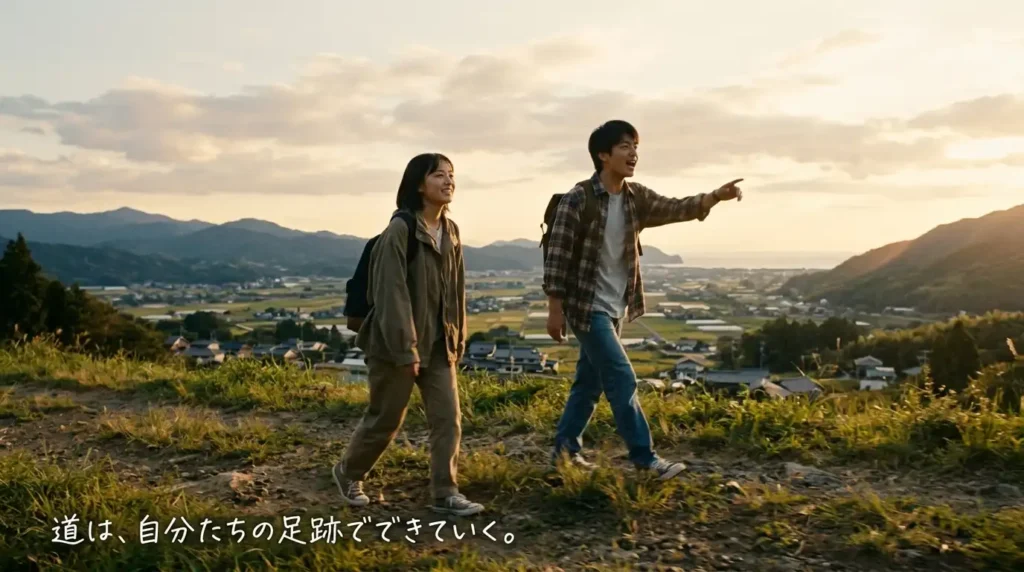
There is strength in the song’s faith in a hesitant young person. The singer believes in possibilities that the traveler cannot yet see. Hearing that conviction may make the listener want to take another step, too.
Toward the end, the birds are urged to fly higher still. The gaze that began inside a room finally reaches toward the heights of the sky. The song closes with the momentum of moving forward, without showing where the journey ends.
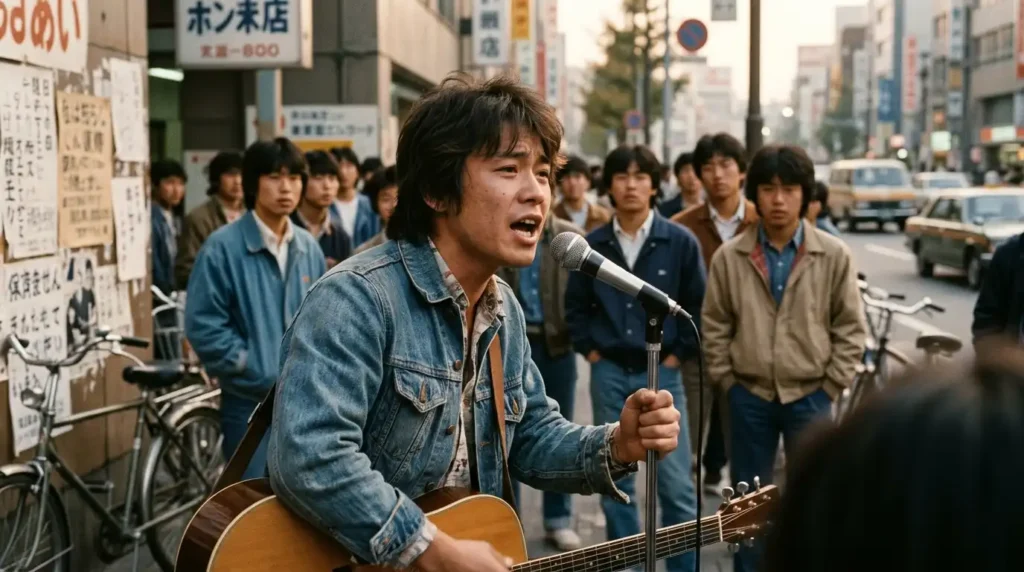
A Song of Departure from a Twenty-One-Year-Old Ryūun Nagai
Nagai was twenty-one when the single was released. A young singer was addressing people of his own generation. His words carry the warmth of someone encouraging others while trying to believe in his own future.
Writing for USEN’s music website encore, music critic Issei Tomisawa recalls that the opportunity to write a Glico commercial song arrived as expectations for Nagai were growing. He describes “Shirube nai Tabi” as a work into which Nagai poured his efforts at that moment.
At a time when he was trying to bring his music to a wider audience, Nagai sang about young people heading into the future. Seen against that background, the song’s brightness feels deeply earnest. It speaks from a place where the outcome is still unknown, bringing it close to listeners facing uncertainties of their own.
Closing Thoughts — Toward Days We Have Yet to Know
“Shirube nai Tabi” combines the nostalgia of looking back on youth with the brightness of wanting to begin something new. You may start listening with the past in mind, then realize that the song seems to be speaking to who you are today.
You may not know the whole route, but beyond the open window are sights you have yet to see. There are people you can meet only by setting out, and pleasures you discover only by beginning. The journey in this song continues into each listener’s tomorrow.



音楽ファン同士の交流・リクエストはこちら / Connect & Request Songs Here