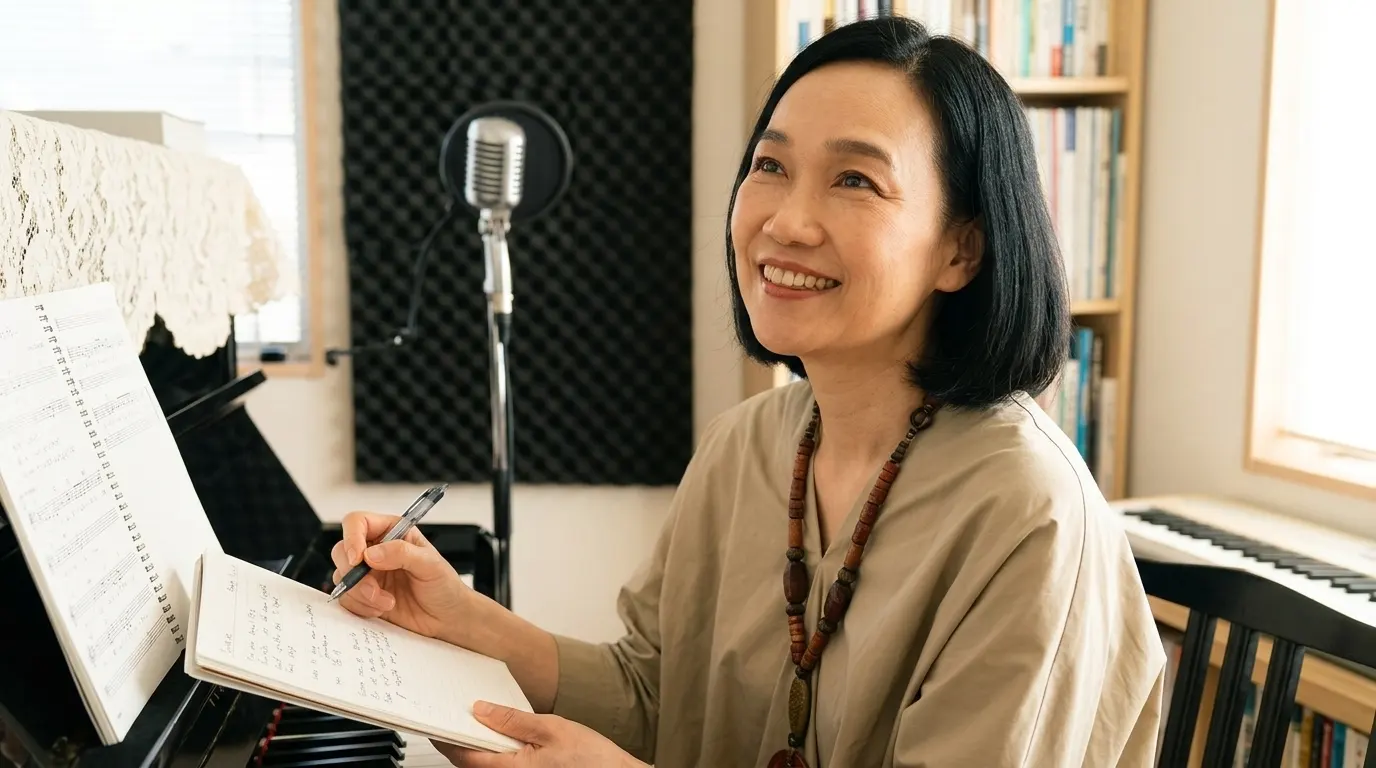
Read about the history of Mayumi Itsuwa here!
- 🎧 Enjoy This Article in Audio
- No. 4 is “Sayonara Dake wa Iwanaide.”
- First, listen to the official audio on YouTube.
- Rain and an Umbrella Reveal What Has Changed
- Why Is “Goodbye” the One Word She Cannot Accept?
- Motoki Funayama’s Arrangement Gave Itsuwa a New Sound
- A “New Direction” That Surprised Mayumi Itsuwa Herself
- 1978: The Song That Opened the Next Door
- In Closing
🎧 Enjoy This Article in Audio
Listen to a concise narration covering the key points of this article.
Recommended if you would like to get a feel for “Sayonara Dake wa Iwanaide” and the overall flow of the article before reading.
🎶 English Narration
An English narration introducing the content of this article.
🎵 日本語
A Japanese narration introducing the content of this article.
Listening first will help you grasp the emotional world of “Sayonara Dake wa Iwanaide” and the key points of the article before reading.
No. 4 is “Sayonara Dake wa Iwanaide.”
“Sayonara Dake wa Iwanaide” was released as a single by Mayumi Itsuwa on March 21, 1978. The lyrics and music were written by Itsuwa herself, with an arrangement by Motoki Funayama. The song was later included on her original album Nokoribi, released in December of the same year.
The song also marked an important turning point in Itsuwa’s career. In Oricon’s ranking of her best-selling singles, it stands among her highest-ranking releases, second only to “Koibito yo.” Two years before that song became a major hit in 1980, “Sayonara Dake wa Iwanaide” had already introduced Itsuwa to a much broader audience.
Judging from the title alone, this might sound like a song about desperately trying to stop someone from leaving. But the narrator already understands that from tomorrow on, she will be walking alone. The real question is not whether the relationship will end, but what words should be left at the very end. That is what makes this song so compelling.
My Interpretation
Even after the rain has stopped, your image remains in my heart.
I cannot bring myself to say the words of farewell, as if they might erase the happiness we once shared.
I know that from tomorrow I will have to walk alone,
but for now, I want to leave our memories untouched, without saying goodbye.
💡 You might also like: View the original Japanese lyrics (External site)
If the lyrics are available only in Japanese, you can use your browser’s translation feature or an AI translation tool to understand their general meaning.
First, listen to the official audio on YouTube.
🎵 Official Audio: “Sayonara Dake wa Iwanaide” / Mayumi Itsuwa
Provided by Sony Music Direct (Japan) Inc.
℗ 1978 Sony Music Entertainment (Japan) Inc.
Released: March 21, 1978
Two-Line Commentary
Released in 1978, the song portrays a woman facing the end of a relationship while wishing that one final, definitive word — “goodbye” — will remain unspoken.
Itsuwa’s restrained vocal and melancholy melody bring the narrator’s feelings into sharp focus as she recognizes that the relationship has reached its end.
Rain and an Umbrella Reveal What Has Changed
The Relationship Is Already Visible in the Opening Scene
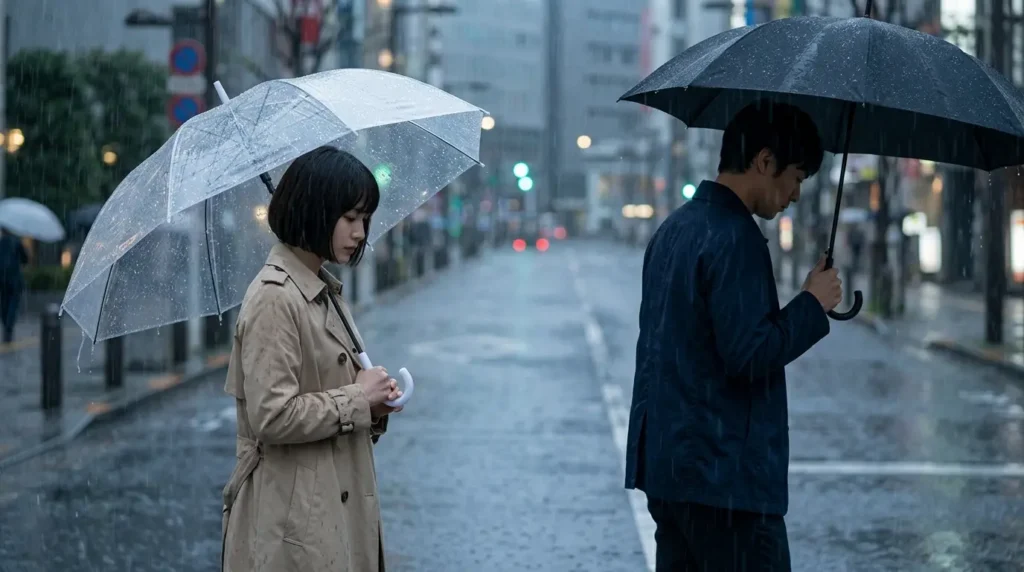
The song begins with rain. In the middle of that rainy scene, the narrator notices a small but decisive change: the person beside her no longer tilts the umbrella toward her. Instead of explaining what happened between them at length, Itsuwa uses a single gesture to show the growing distance between two people.
We are never told exactly what caused their relationship to change or who was responsible. Yet something as simple as the position of an umbrella is enough for the narrator to sense that the other person’s feelings have moved away from her.
Spring Will Come, but You Will No Longer Be Beside Me
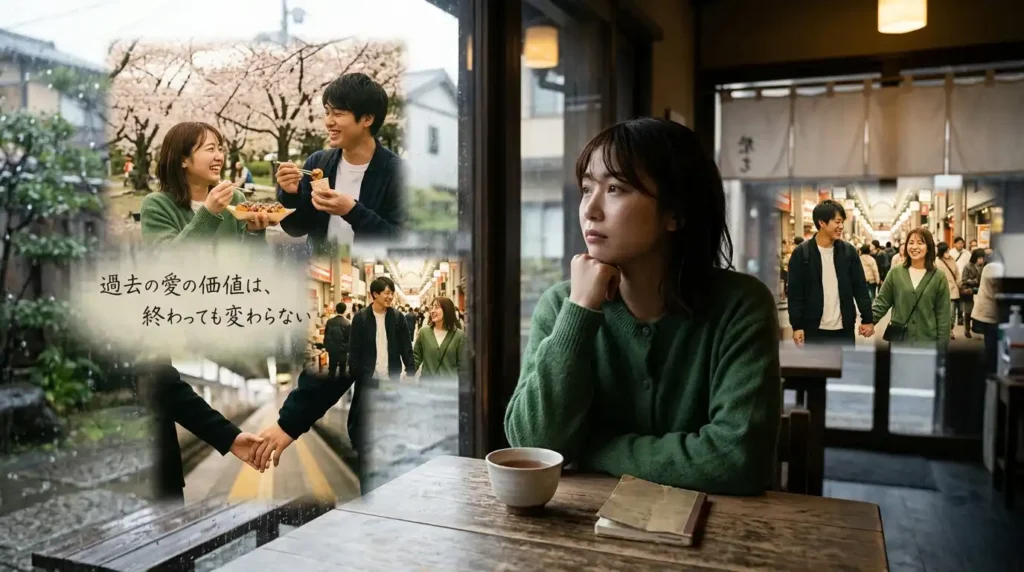
From there, the song turns its attention toward the arrival of spring in the city. Spring usually suggests a new beginning, but here it does not function as a simple symbol of hope. The season may change, yet the narrator knows she will be walking alone.
Even more striking is the image that remains before her: the back of the person who is leaving. She does not see a face turned toward her, but someone moving away. Time advances from rain toward spring, while the two people themselves are moving in opposite directions. It is a remarkably visual piece of songwriting.
Why Is “Goodbye” the One Word She Cannot Accept?
“Don’t Go” Is Not the Answer
The song does contain a wish for the other person not to leave. Yet the narrator does not believe that pleading with him will solve everything. No matter how desperately she asks him to stay, she knows that the loneliness inside her cannot simply be erased.
That is precisely why the title becomes so important. Rather than trying to stop his departure by force, she asks for only one thing: do not say the word “goodbye.” The focus shifts from asking him to change what he will do to deciding how their shared memories will be left behind.

She Does Not Want One Final Word to Close Their Happy Days
What the narrator is trying to avoid is not the fact of separation itself. She does not want the happiness they once shared to end with one definitive word of farewell.
This is more than a matter of wording. We do not remember the past only as a sequence of events; we often remember it together with the final words exchanged or the last image of someone walking away. For the narrator, “goodbye” therefore carries far more weight than simply marking the end of a romance.
The end of love is not the same thing as denying the value of the time when that love was real. By separating those two ideas, the title “Sayonara Dake wa Iwanaide” gains its extraordinary emotional force.
Motoki Funayama’s Arrangement Gave Itsuwa a New Sound
Building Emotion Gradually Rather Than All at Once
Mayumi Itsuwa wrote both the lyrics and music, while Motoki Funayama handled the arrangement. One of the first things that stands out is how the song avoids presenting its full emotional weight immediately. The vocal remains at the center while the arrangement gradually increases in density and intensity.
The narrator’s emotions develop in much the same way. The song begins with rain, moves toward the prospect of walking alone, and eventually arrives at the words of the title. Because the lyrical progression and the musical arrangement rise together, the listener can follow the emotional movement without feeling that it has been forced.
Keeping Mayumi Itsuwa’s Voice at the Center
Itsuwa does not begin by pushing her voice to its limits. She preserves the shape of each word and moves through the melody almost as though she were confirming each phrase for herself. As a result, when greater strength enters her voice later in the song, the change becomes unmistakable.
The words of the title, in particular, are not sung with sadness alone. Alongside the plea is a sense of strength from someone who understands that the situation can no longer be changed. Because the performance never collapses entirely into vulnerability, the song avoids becoming purely sentimental.
A “New Direction” That Surprised Mayumi Itsuwa Herself
Chosen from Several Demo Recordings
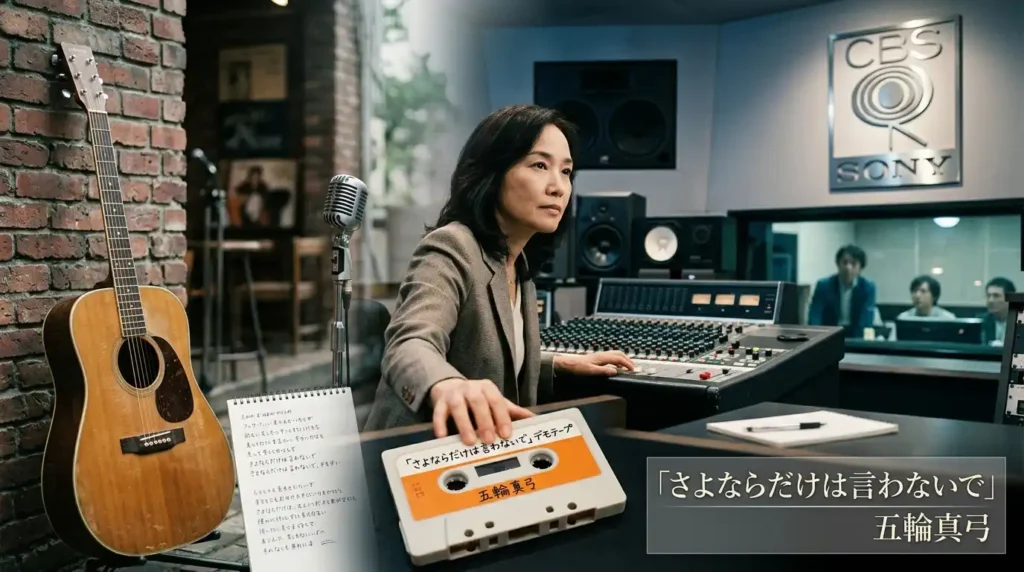
The song also has an interesting production story that helps explain its place in Itsuwa’s career. In a later interview, she recalled that she and her CBS/Sony director were searching for a new musical direction, and that she recorded several demos onto a cassette tape and handed it to him.
The song selected from those demos was “Sayonara Dake wa Iwanaide.” Itsuwa herself later said that it was quite different from what she had been doing before and therefore represented a challenge.
It would be misleading to look only at the result and conclude that she had simply decided to make a more commercially successful song. Until then, Itsuwa had often been discussed within the categories of folk and Japan’s emerging “new music” scene, while she herself did not want her music confined to one particular genre.
After Her Overseas Experiences, a New Focus on Japanese Song
From the beginning of her career, Itsuwa had worked with musicians and recording environments outside Japan, including sessions in the United States and activities in France. She later explained that these experiences gradually made her more conscious of bringing her own sensibility as a Japanese artist into her music.
“Sayonara Dake wa Iwanaide” was one of the songs in which that change became accessible to a broader audience. The melody is immediately approachable, while the sound and cadence of the Japanese language move to the foreground. Rather than abandoning the songwriting skills she had developed, Itsuwa was finding a different doorway through which to bring her music to listeners.
1978: The Song That Opened the Next Door
From “Nokoribi” to “Koibito yo”
“Sayonara Dake wa Iwanaide” was released as a single in March 1978. In September of the same year, “Nokoribi” followed as another single. In December, both songs were included on the album Nokoribi.
About two years later, Itsuwa achieved even greater success with “Koibito yo.” But if we look only at the sudden scale of that 1980 hit, we risk overlooking the changes already underway beforehand. By 1978, Itsuwa was already moving toward a style that could reach a wider audience while continuing to write and compose her own material.
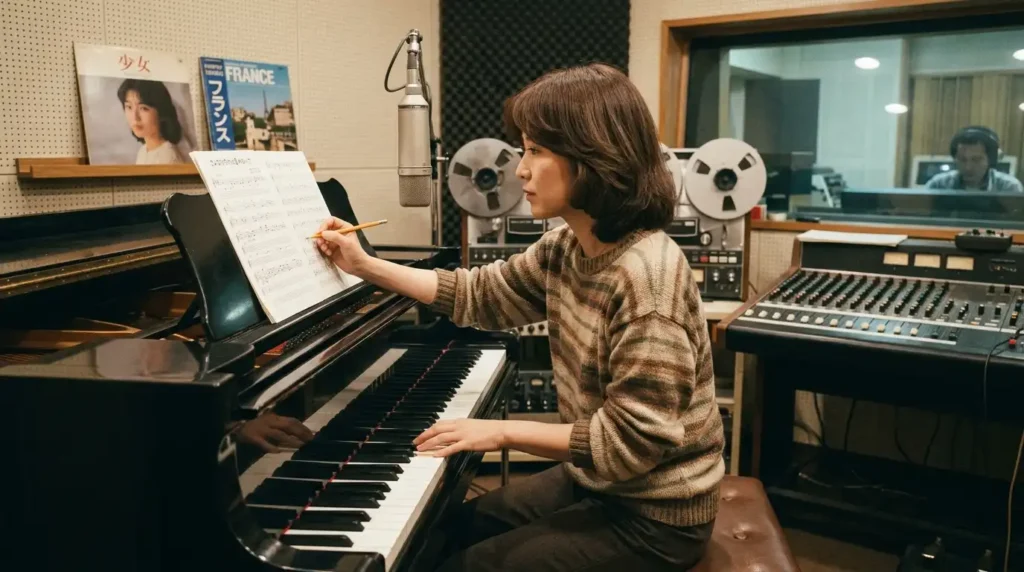
“Sayonara Dake wa Iwanaide” was the song that turned that change into a tangible hit. It belongs neither entirely to the era of her early overseas recordings nor to the later world of “Koibito yo,” but stands between them, connecting the two stages of her career.
In Closing
There is no dramatic confrontation or extraordinary event in “Sayonara Dake wa Iwanaide.” There is a rainy day, an umbrella that is no longer tilted toward her, a city approaching spring, the back of someone walking away, and one final word left unspoken. With those elements alone, the song captures the moment when a relationship comes to an end.
At the same time, the song represented a new direction for Mayumi Itsuwa herself. Drawing on everything she had already developed as a songwriter, she worked with Motoki Funayama’s arrangement to create a Japanese-language song with greater immediacy and accessibility, allowing her music to reach a broader audience.
What stays with me most, however, is that the narrator is not primarily trying to win the other person back. She is trying to decide which words should remain at the end. The title “Sayonara Dake wa Iwanaide” is, in itself, the conclusion of the story.
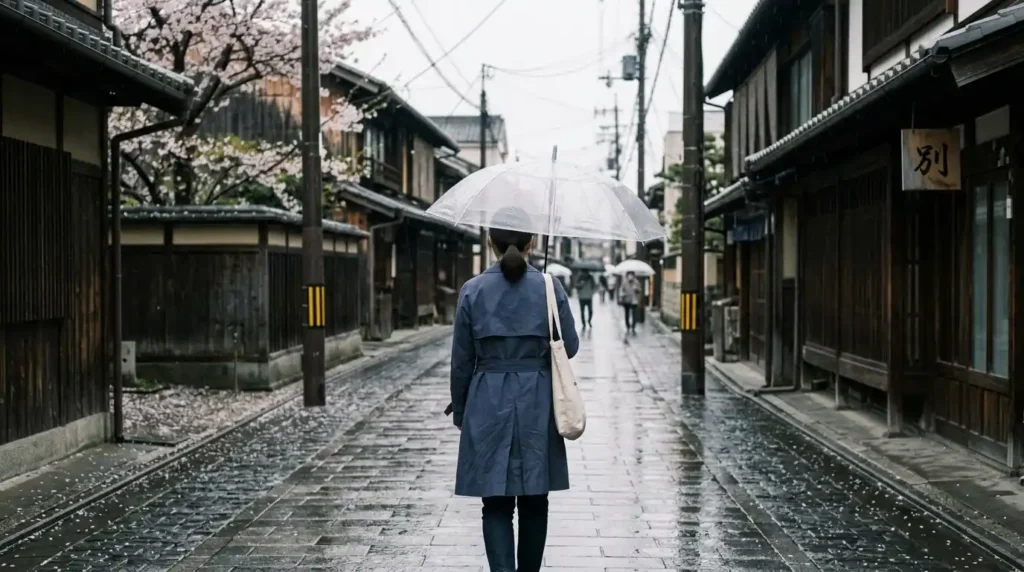
Even when love comes to an end, the happiness that existed within it does not simply disappear. She does not want those memories to be closed by a single word of farewell. That feeling, written into a song in 1978, still feels remarkably undated today — and that is where the enduring strength of “Sayonara Dake wa Iwanaide” lies.

音楽ファン同士の交流・リクエストはこちら / Connect & Request Songs Here