
- 🎧 Listen to This Article
- September 7 Is Kotaro Yamamoto’s Birthday: Remembering “Misaki Meguri”
- Today’s Song: “Misaki Meguri”
- First, Watch These YouTube Videos
- The Sadness Hidden Inside a Bright Melody
- 1974: A Time When Japanese Folk Music Was Changing
- Toshio Okada’s Interpretation of “Misaki Meguri”
- Where Is the Cape in “Misaki Meguri”?
- More Than Half a Century Later, the Bus Is Still Moving
🎧 Listen to This Article
Get a quick overview of this article through narration.
Recommended if you want to get a feel for “Misaki Meguri” and understand the flow of the article before reading.
🎵 English Narration
Listen to an English narration introducing the key points of this article.
🎶 Japanese Narration
Listen to a Japanese narration introducing the key points of this article.
Listening first can help you better understand the atmosphere of “Misaki Meguri” and the main ideas explored in the article.
September 7 Is Kotaro Yamamoto’s Birthday: Remembering “Misaki Meguri”
Kotaro Yamamoto was born on September 7, 1948, in Chiyoda, Tokyo. His real name was Kotaro Yamamoto, written with different kanji. After graduating from Tokyo Metropolitan Hibiya High School, he studied economics at Sophia University before moving on to the Faculty of Social Sciences at Hitotsubashi University.
While still a university student, he became active with the folk group Salty Sugar. In 1970, their song “Hashire Kotaro” became a major hit, earning the group the New Artist Award at the 12th Japan Record Awards.
With its rapid-fire narration modeled on a horse-racing broadcast and its comic storyline, “Hashire Kotaro” made an unforgettable impression. For many Japanese listeners, it was probably the first song that came to mind whenever Kotaro Yamamoto’s name was mentioned.
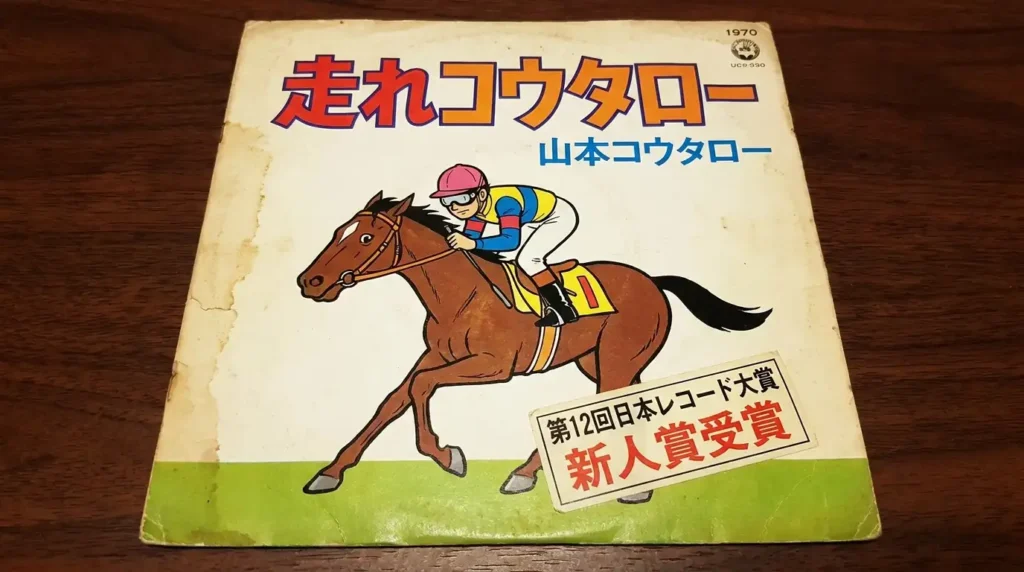
Yet only four years later, “Misaki Meguri” revealed an astonishingly different side of him.
In 1974, Yamamoto formed Kotaro Yamamoto and Weekend with Kazumi Mori and Hideo Itagaki. Their debut single, “Misaki Meguri,” was released on June 1 of that year. The lyrics were written by Michio Yamagami, the music was composed by Yamamoto under his real name, and the arrangement was by Ichizo Seo. The song reached No. 5 on the Oricon chart and sold approximately 390,000 copies, becoming one of Yamamoto’s signature recordings alongside “Hashire Kotaro.”
His career later extended far beyond singing. Yamamoto worked extensively as a radio and television personality, host, writer, and lecturer.
At Hakuoh University, he taught subjects including sociology and global environmental issues, remaining active for many years in fields far removed from music.
Sadly, he passed away on July 4, 2022, at the age of 73. Yet “Misaki Meguri” remains one of the enduring folk songs of 1970s Japan and continues to be loved more than half a century later.
Today’s Song: “Misaki Meguri”
If you listen only to its bright, open melody, “Misaki Meguri” can sound like a refreshing travel song about riding a bus along the coast and visiting a cape overlooking the blue sea.
But the lyrics reveal a very different picture. The narrator is traveling alone to a cape he had once planned to visit with someone dear to him. This is not simply a song about sightseeing. It is a journey in which he retraces, by himself, a promise that can no longer be fulfilled.
A Free Interpretation
I am heading alone toward the cape we once promised to visit together.
Even with the blue sea spreading beyond the window, my thoughts keep returning to you.
As I watch the happy people around me, I quietly remember the future that never came to be.
When this journey ends, I will carry the sadness with me—and return to everyday life.
💡 You might also like: View the original Japanese lyrics (External site)
If the lyrics are available only in Japanese, you can use your browser’s translation feature or an AI translation tool to understand their general meaning.
First, Watch These YouTube Videos
These are not official uploads, so I have linked the images to YouTube rather than embedding the videos directly. Click an image to open the video in a new tab.
Common Credits
Song: Misaki Meguri
Artist: Kotaro Yamamoto and Weekend
Lyrics: Michio Yamagami
Music: Kotaro Yamamoto
Arrangement: Ichizo Seo
Original release: June 1, 1974

🎵 Video 1 Credits
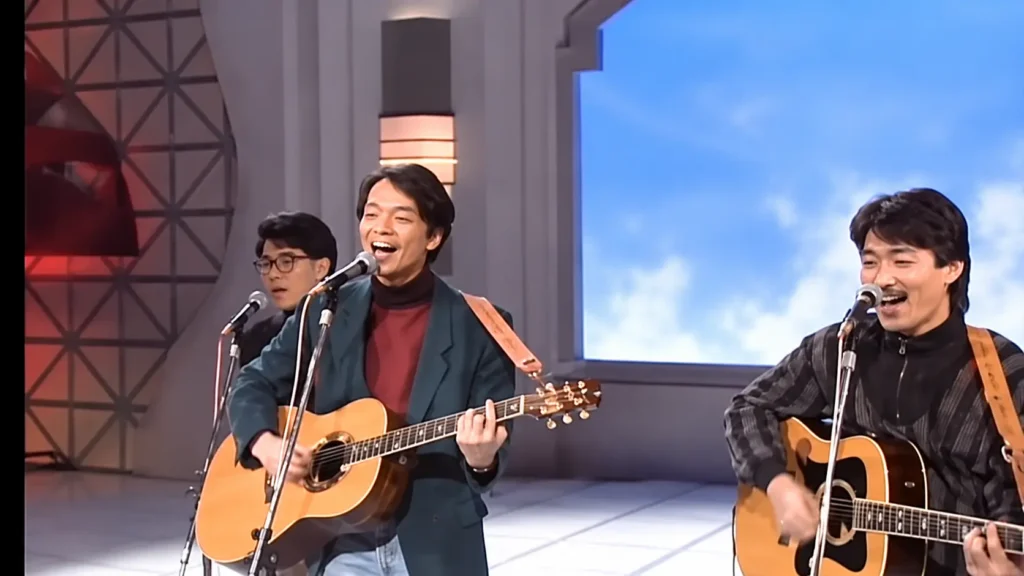
Television performance by Kotaro Yamamoto and Weekend
Footage: Performance from a television program
Unofficial YouTube upload
Two-Line Commentary
A television performance featuring Yamamoto and the other members singing with guitars in hand.
The footage offers a valuable glimpse of the group itself—their expressions, stage presence, and atmosphere at the time.
🎵 Video 2 Credits
Kotaro Yamamoto and Weekend
Audio: “Misaki Meguri”
Unofficial YouTube upload
Two-Line Commentary
A video that lets you concentrate on the 1974 hit itself.
The refreshing folk sound stands in striking contrast to the sadness of a narrator traveling toward the cape with an unfulfilled love still in his heart.
When I First Heard This Song…♫
| My Age | Elementary School | Junior High | High School | University | 20s | 30s | 40s | 50s | 60+ |
| Year Released | 1974 | ||||||||
| When I First Heard It | ● |
I first heard “Misaki Meguri” when I was 15, in my first year of high school. By then, Kotaro Yamamoto had already left a powerful impression on me through “Hashire Kotaro,” which I had heard in 1970 when I was in the sixth grade.
After that lively, humorous song about horse racing, here was a beautiful folk song filled with images of a blue sea and a distant cape. I remember being surprised that the same musician could create something so different. More than anything, I was drawn to the melody—it seemed to make the road to the cape and the coastline appear in my mind as I listened.
More than 50 years have passed since then. Even today, the song still reaches me deeply. For me, it remains one of those songs I could never forget.
The Sadness Hidden Inside a Bright Melody
One of the great strengths of “Misaki Meguri” is the contrast between the sadness of its lyrics and the brightness of its music. The narrator carries a profound sense of loss. He travels alone to a place he was supposed to visit with someone else, looking at happy people around him while confronting memories of a relationship that can no longer continue as once imagined.
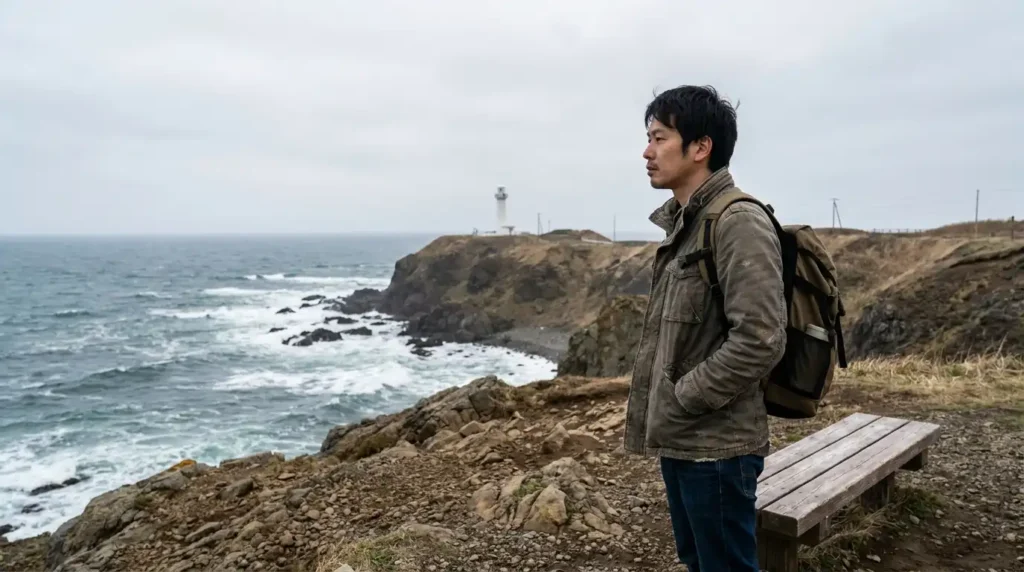
And yet the melody Yamamoto gave the song is never gloomy. Built around acoustic guitar, it keeps moving lightly forward. The bus continues along the road, the scenery outside the window keeps changing, and eventually the narrator prepares to return to the city when the journey is over.
To me, that bright melody sounds like part of the story itself: even when we carry sadness with us, life keeps moving forward.
The Song Was Originally Meant to Sound Very Different
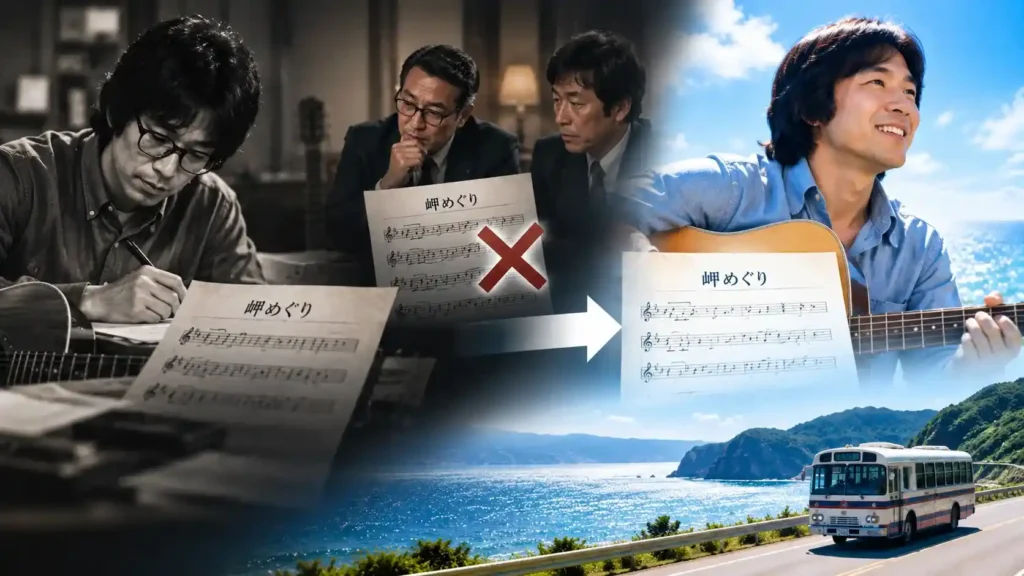
There is an intriguing story behind that musical brightness. The melody for “Misaki Meguri” was originally commissioned from Kosetsu Minami.
The version he wrote, however, was reportedly in a minor key and reflected the sadness of the lyrics more directly.
The staff felt that it did not suit Kotaro Yamamoto’s image, so the version was not adopted. Yamamoto then composed a new melody himself, creating the bright and refreshing “Misaki Meguri” we know today.
Instead of placing sad music beneath sad words, the song sets a sense of loss against a melody that seems almost as clear as a blue sky. I believe that contrast is one reason “Misaki Meguri” became something more memorable than a conventional heartbreak song.
1974: A Time When Japanese Folk Music Was Changing
From Society and Protest to Everyday Life and Personal Emotion
When “Misaki Meguri” was released in 1974, Japanese folk music was also entering a new phase. In the late 1960s, many folk songs had focused strongly on antiwar movements, social activism, and youthful rebellion. By the early 1970s, however, more songs were turning toward intimate subjects such as love, separation, everyday life, hometowns, and loneliness.
In 1974 alone, Japanese listeners heard songs such as Grape’s “Shoryo Nagashi,” as well as Kaguyahime’s “Aka Chochin” and “Imoto.” Rather than grand social statements, songs about ordinary young people—their relationships, families, separations, and loneliness—were finding a wide audience. “Misaki Meguri” can also be understood within that broader change.
The Narrator Does Not Try to Win the Other Person Back
One striking aspect of the lyrics is that the narrator does not try to recover what has been lost.
He does not go looking for the other person, nor does he plead for the relationship to begin again. Instead, he visits the cape they once talked about seeing together, takes in the place with his own eyes, carries the sadness within himself, and eventually prepares to return to the city.
The journey does not rewrite the past. It allows someone carrying that past to return to everyday life. When I heard the song at 15, I certainly did not think about it in those terms. Listening now, after many more years of life, the ending feels very different to me.

Toshio Okada’s Interpretation of “Misaki Meguri”
One person who has discussed this song from a particularly interesting angle is Toshio Okada.
What I find especially interesting in Okada’s discussion is that he does not treat “Misaki Meguri” merely as a single song about lost love. Instead, he connects it to the broader transformation of Japanese folk music from the 1960s into the 1970s.
The focus was shifting from songs built around large social and political themes toward songs about individual lives, love, and loneliness. Okada places “Misaki Meguri” within that transition.
He also draws attention to the fact that, at the end of the song, the narrator returns to the city. He does not remain at the cape, absorbed forever in his sadness. The journey ends, and ordinary life begins again. Seen from that perspective, “Misaki Meguri” can be heard not simply as a beautifully written heartbreak song, but as the story of someone accepting a loss and finding a way back into everyday life.
Where Is the Cape in “Misaki Meguri”?
Whenever I hear this song, one question naturally comes to mind: Where exactly is this cape?
When composing the song, Yamamoto reportedly imagined a dramatic landscape such as Cape Ashizuri or the Shiretoko Peninsula. That is also fairly close to the scenery I have always pictured while listening to the song.

After the record was released, however, Yamamoto asked lyricist Michio Yamagami what place he had imagined while writing the words. Yamagami reportedly had the area around Jogashima on the Miura Peninsula in mind.
The lyricist and the composer had been imagining different capes while creating the same song. It is a fascinating detail, and somehow it seems perfectly suited to “Misaki Meguri.”
No specific place name appears in the lyrics. That allows every listener to bring their own coastline and their own imagined cape into the song.
The cape I pictured in my mind when I was 15 was probably different from the one imagined by either Yamagami or Yamamoto. Perhaps that openness is part of the song’s lasting appeal.
More Than Half a Century Later, the Bus Is Still Moving
More than half a century has now passed since “Misaki Meguri” was released in 1974.
I was 15 when I first heard it. Today I listen to the same song from a completely different stage of life. Yet whenever the introduction begins, I can still picture a bus traveling along a coastal road, with the blue sea filling the view beyond its windows.

When I was young, I heard it mainly as a sad love song. Today, I hear something more: a song about carrying sorrow with you and still returning to your own life.
As the years pass, we accumulate promises that were never fulfilled, places we can no longer return to, and people we can no longer see. Even so, life goes on.
Just like the bus in “Misaki Meguri,” continuing down the road with the blue sea beside it.
The 15-year-old me who heard this song in 1974 and the person listening to it more than half a century later see slightly different scenery in the same song. But one thing has never changed: every time I hear it, I still find myself thinking, “What a beautiful song.”
September 7 is Kotaro Yamamoto’s birthday. Today, as I listen once again to “Misaki Meguri,” I feel like revisiting the “cape” that has remained somewhere in my own memory all these years.



音楽ファン同士の交流・リクエストはこちら / Connect & Request Songs Here