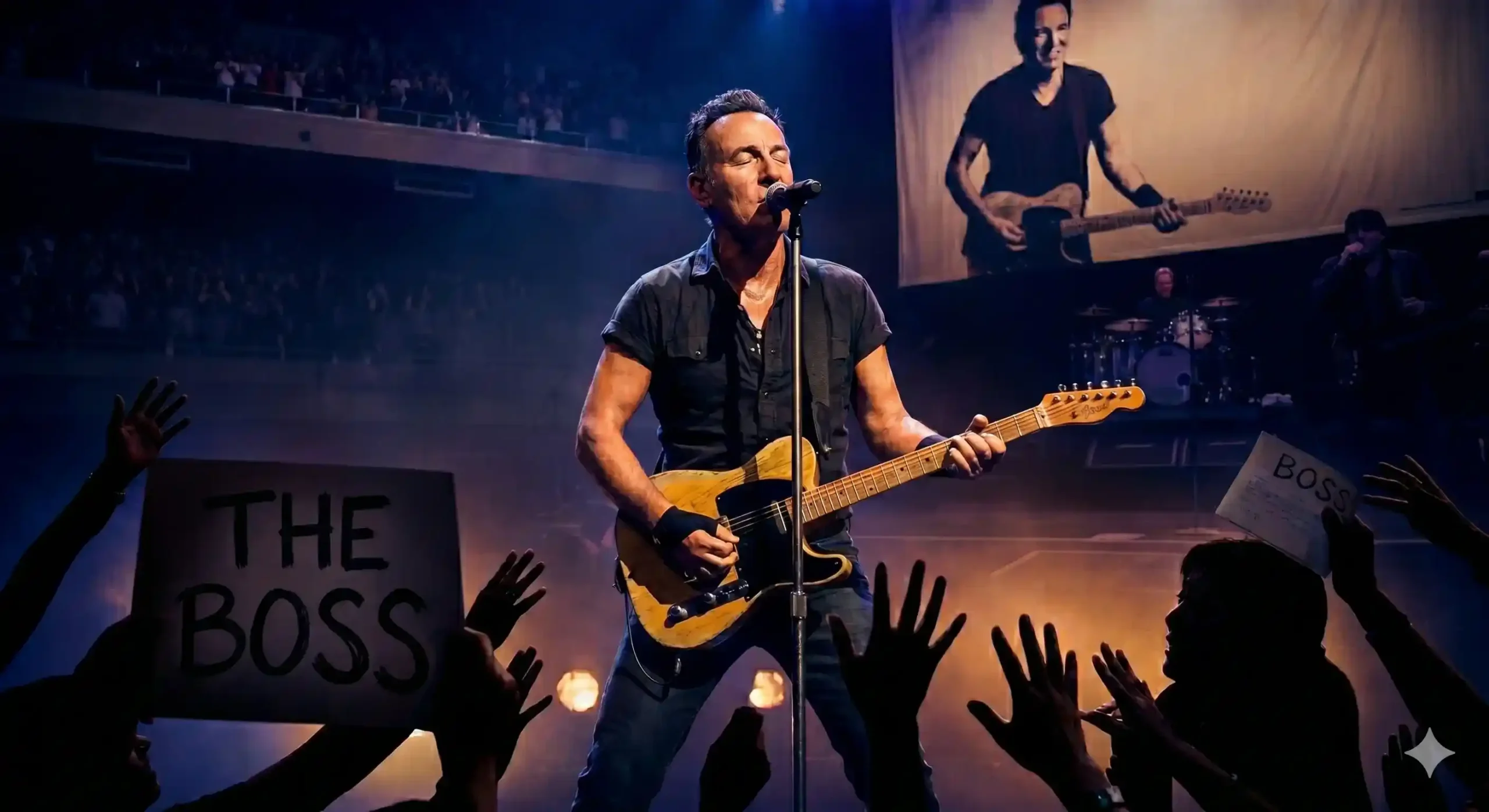
- 🎧 Listen to this article
- No. 15: “Darkness on the Edge of Town”
- First, listen to the official audio
- What becomes visible after the sprint of youth ends
- The fate of living with “Secrets”
- Soundscapes of dry wind and the smell of blood
- To reclaim “Oneself” at the bottom of despair
- Another reason I chose this as No. 15
- We meet again at the “Edge of Town”
- Conclusion: The resolve to love the dark
🎧 Listen to this article
You can first check the key points of this article through audio.
Recommended for those who want to grasp the essentials quickly before reading.
🎶 English Narration
The content of this article is explained in English audio.
⌛ Playback time: Approx. 3 min
🎵 Japanese Narration
You can also listen to the same content with a Japanese narration.
⌛ Playback time: Approx. 3 min
* Listening to the audio before reading will help you understand Springsteen’s history and the evolution of his sound more multi-dimensionally.
No. 15: “Darkness on the Edge of Town”
From Springsteen’s vast catalog, I chose to place this song at No. 15. I did so because, in compiling this list, this song is an unavoidable confrontation with the very “essence of humanity.”
The title track of the album released in 1978, this song stands in stark contrast to the somewhat optimistic and dramatic escapism seen in his previous work, “Born to Run.” What we find here is the quiet yet fierce determination of a man who has stepped off the glamorous stage to take his stand in the darkness at the edge of town.
When filled with the sense of omnipotence that comes with youth, one tends to believe that going “somewhere far away” will solve all problems.
However, as the years pass and one’s roles and responsibilities in society increase, a cold reality sets in. It is a structural contradiction: with every step up the ladder of success, a person leaves a pure part of their true self behind in the “darkness at the edge of town.” Every time I hear this song, I am reminded of the weight of those “fragments of the soul” that are discarded behind the facade of success and stability.
Interpretation: “The Boundary of the Soul”
Shadows still race out at that old spot,
But her blood no longer burns with that heat.
Everyone carries a secret in their heart, hiding it in the darkness outside of town.
Until the day they finally let it go,
Facing themselves quietly in a place where no one's eyes can reach.
First, listen to the official audio
📌 Song Credits
Song Title: Darkness on the Edge of Town
Artist: Bruce Springsteen
Written and Composed by: Bruce Springsteen
Album: Darkness on the Edge of Town
Release Date: June 2, 1978
© 1978 Bruce Springsteen
Summary
A signature track by rock singer Bruce Springsteen, released as the title track of his 1978 album.
It portrays the struggles of daily life and complex emotions while celebrating the human strength to resist despair.
✅ Official Video Credits
“Darkness on the Edge of Town (Live at The Paramount Theatre 2009)”
Channel: Bruce Springsteen (Official Artist Channel)
Performance: Bruce Springsteen & The E Street Band
Recorded: December 13, 2009 / Paramount Theatre, Asbury Park, NJ
Video provided by: Official YouTube (Columbia Records / Official Artist Channel)
© Bruce Springsteen (Full live performance based on the 1978 original)
📌 Summary
A full-album live performance of "Darkness on the Edge of Town" recorded in 2009 at the Paramount Theatre in Asbury Park, NJ.
Performed in an empty theater, this performance was released as an official work capturing the original mood of the album.
What becomes visible after the sprint of youth ends
Once, the young “Boss” from New Jersey sang that “this town rips the bones from your back” and tried to escape on the highway at full throttle. However, in this song delivered a few years later, there is no longer a car for escape, nor the innocent smile of a lover in the passenger seat.
What is sung here is the end of “escape” and the beginning of “confrontation.”
In the lyrics, a former lover (or perhaps another version of oneself reflected in the mirror) has moved to a high-end neighborhood, frantic to maintain a “certain style.”
She has gained social success and a peaceful life. However, the narrator—”I”—turns his back on that glittering life on the hill and walks in the opposite direction. The destination is the edge of town, the “darkness” where even the streetlights don’t reach.
This composition is a poignant metaphor even for us living today. In the process of entering society, building a career, and maintaining appearances, how much of our “true selves” have we shaved away? As the light of success grows stronger, the remnants of “compromise” and “loss” pile up like shadows at the edge of town. This song demands that we look those hard-to-face shadows straight in the eye.
The fate of living with “Secrets”
The content of the second verse hits the core of this song.
“Everybody’s got a secret, son / Something that they just can’t face / They carry it with them every step that they take.”
The more one holds a position of responsibility within an organization, the more one suffers from the divergence between the public and private self. There, “correctness” and “strength” are always demanded, and showing weakness is not allowed. While behaving rationally on the surface, one carries an indescribable sense of discomfort deep down. Perhaps there is no one in this world who does not carry such a “secret.”
Most people try to forget that discomfort or “secret” when it feels like it’s crushing them, or they try to paint over it with vanity. Or, unable to bear the weight, they lose sight of themselves.
However, the protagonist of this song refuses to cut that “secret” loose. He moves to an inconspicuous place while still carrying it. He moves to an inconspicuous place while still carrying it. “Where no one asks any questions or looks too long in your face.” The “darkness” mentioned in this line is not merely a physical location.
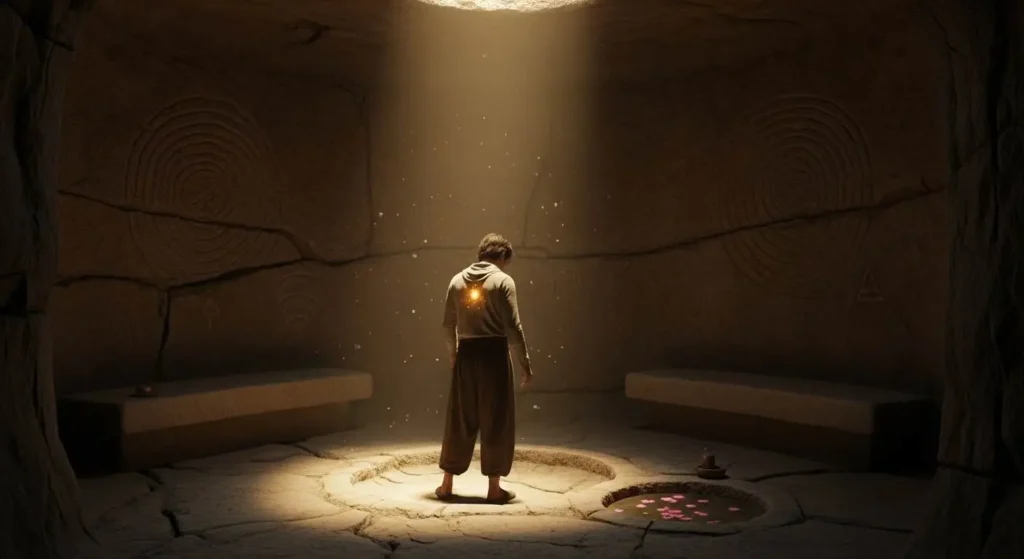
It is the last fortress within an individual’s inner self—a “sanctuary”—freed from social evaluation, others’ expectations, and the “logic of light” such as efficiency and cold reasoning. It is dark and lonely, but at the same time, it is the place where one can be most honest.
Soundscapes of dry wind and the smell of blood
Moving to the sound, the greatness of this song becomes even more apparent. The heavy, persistent drum beat of Max Weinberg echoes from the intro. It’s like a heartbeat ticking away a reality from which there is no escape. Then, Springsteen’s vocals. As the song nears its end, his voice becomes raspy, turning into a scream.
This “scream” expresses a “will” that lies beyond despair. He is not simply mourning. He is staying in the darkness, struggling to protect the dignity of his own soul.
Staying true to oneself in the dark is far more difficult—and far more brave—than navigating skillfully in the light. The “Darkness” that no one sees, which exists within me and within you. Not denying it, but acknowledging its existence and living with it. That might be the lonely struggle called “maturity.”
To reclaim “Oneself” at the bottom of despair
The Japanese title for this song is “Yami ni Hoeru Machi” (The City Howling at the Darkness). While not a literal translation, it captures the essence of the track perfectly. The “howling” here is not a mere expression of dissatisfaction, but a naked resistance against an overwhelming reality that tries to erase one’s existence.
In life, there are moments of “defeat” that no amount of effort can resist. It could be the breakdown of a cherished relationship or the frustration of a dream you poured your passion into. In the world this song depicts, former glory is a thing of the past, and all that’s left are people preoccupied with “maintaining a certain style.”
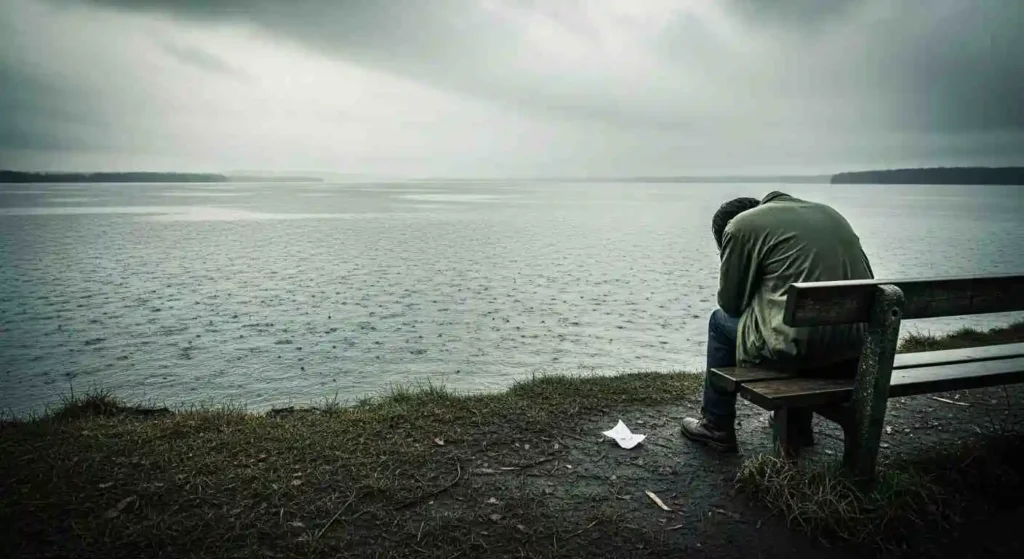
But Springsteen sings that even after accepting defeat, there is something that cannot be taken away. That is the choice to stand in the “Darkness on the Edge of Town.”
The strength in “Choosing” solitude
For many, solitude and darkness are things to be avoided. However, as you listen to this song repeatedly, you realize that this darkness is the place where you can reunite with your “true self” once the social mask has been stripped away.

During our prime years, we are required to function as part of a large system—be it an organization or society. Often, “how one should behave” takes precedence over “what one truly thinks.”
When you are exhausted from maintaining that perfect “style” and your soul feels parched, the urge to drive to a place where the city lights don’t reach—much like the protagonist of this song—is not an escape. it is a quiet, sacred war to reclaim your own core.
Another reason I chose this as No. 15
The reason I chose this song as No. 15 in the “Bruce Springsteen edition” is that it served as the foundation—a “North Star”—for his subsequent musicality.
If this song didn’t exist and he had stopped with the sheer sprint of “Born to Run,” he might have ended up as just a “spokesperson for the youth.” But with this album, he found the “voice of the working class,” those who groan at the bottom of society yet live without losing their dignity.
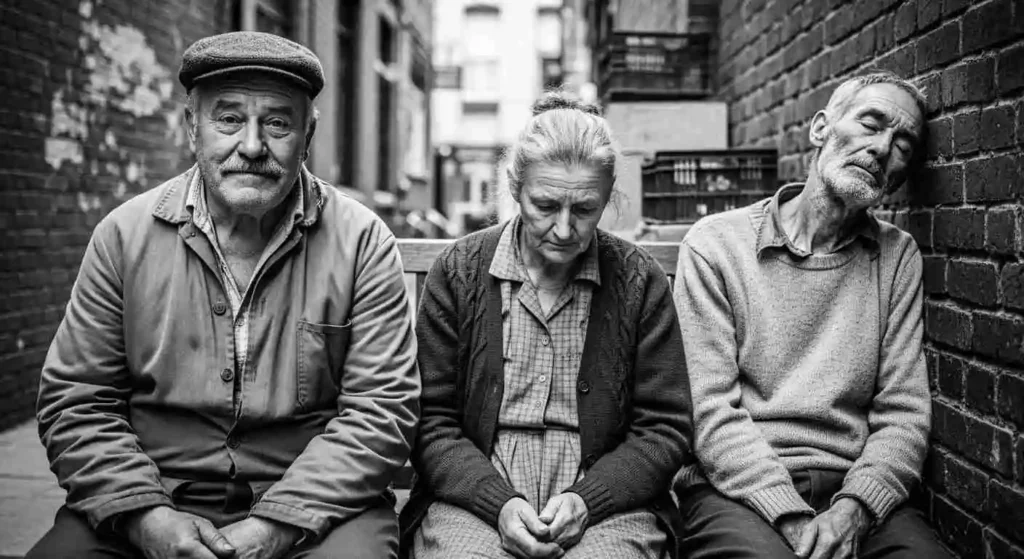
It is precisely because of this perspective of looking into the “darkness” that the deep human insights in his later works like “The River,” “Nebraska,” and even the global hit “Born in the U.S.A.” became possible.
We meet again at the “Edge of Town”
At the beginning, I said this song was both an “entrance” and a “destination.”
When I was young, this song was an entrance to the “harsh reality I might face one day.” Now, having passed through many stages of life, this song resonates as a destination: “In the end, this is where humans return (to face themselves).”
Whether you achieve worldly success or experience a great loss, that “darkness” always spreads at the edge of town. It is not a darkness that seeks to swallow us, but a wide, deep darkness that allows us to be ourselves.
“I’ll tell her there’s a spot out ‘neath Abram’s Bridge / And tell her there’s a darkness on the edge of town.”
These words sound like an “invitation to freedom.” A place where you can move away from the noise around you and listen only to your inner voice. It is there that a person can finally begin to speak words that carry the warmth of their own blood.
Conclusion: The resolve to love the dark
Imagine the final scene where Springsteen thrashes his guitar while letting out a strained cry. There is sadness there, but more than that, it is filled with a steel-like conviction: “I’m going to live right here.”
Shouldn’t we also cherish our own “Darkness” amidst the daily hustle and bustle? It may be dark, but it is certainly not a place of despair. It is our “Promised Land,” where we can be our truest and most free selves.

音楽ファン同士の交流・リクエストはこちら / Connect & Request Songs Here