🌐 English|🌐 日本語
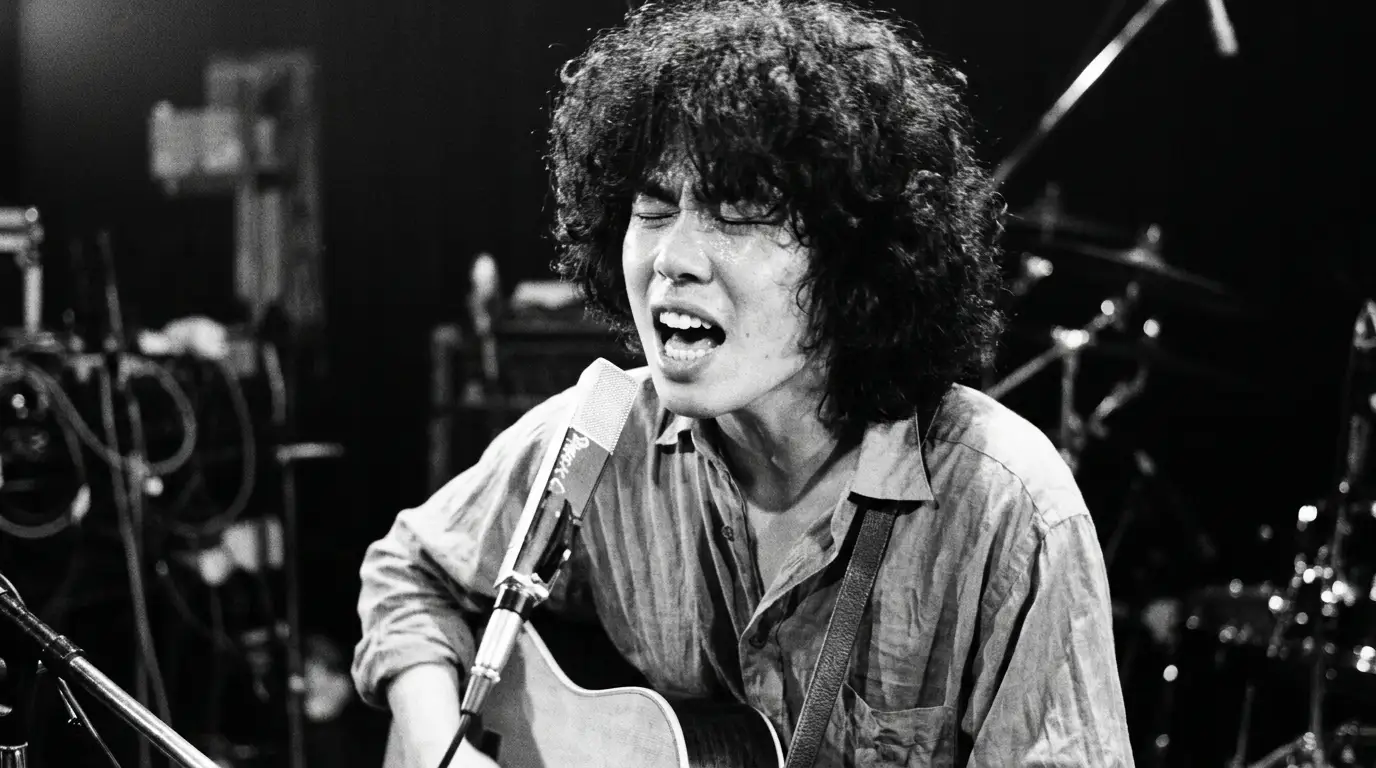
Explore the Musical Life of Ryūun Nagai Here!
- 🎧 Listen to This Article
- No. 7: Ryūun Nagai — “Meguriawase (Fate Brought Us Together)”
- First, Listen to the Official YouTube Audio
- An After-School Yard That Brings Youth Back to Life
- The Shared Notebook That Preserved Their Private World
- Love Left Unspoken and Misunderstandings Left Unresolved
- A Wish to Change Fate and Spend Their Lives Together
- How Ryūun Nagai’s Voice Gives Meaning to Every Word
- In Closing — A Love From Yesterday and a Life Still Ahead
🎧 Listen to This Article
Enjoy a concise audio introduction to the key ideas explored in this article.
Before reading, listen to discover the story behind Ryūun Nagai’s “Meguriawase” and the themes explored throughout the article.
🎵 English Narration
An English-language audio introduction to the article.
🎶 Japanese Narration
A Japanese-language audio introduction to the article.
Listening first will help you appreciate the song’s story of reunion, unspoken feelings, and the possibility of a shared future.
No. 7: Ryūun Nagai — “Meguriawase (Fate Brought Us Together)”
“Meguriawase” was originally released on March 25, 2017, as part of Ryūun Nagai’s album Slide Show. The song was also included on Oibito, released on December 13 of the same year to commemorate his 40th anniversary as a recording artist and his 60th birthday. Nagai wrote both the lyrics and music, while Nanae Kodera arranged the version featured on Oibito.
Slide Show marked Nagai’s first album of newly written original material in three years. He described it as a work that looked back on four decades of music and expressed his gratitude to the fans who had supported him throughout his career. “Meguriawase” was also performed at his 40th-anniversary concert on December 16, 2017.
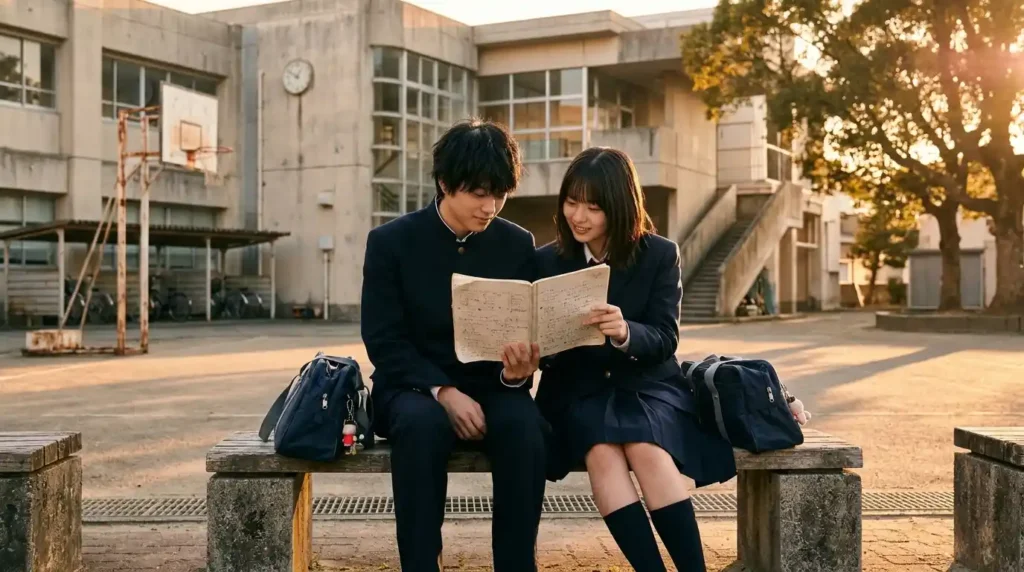
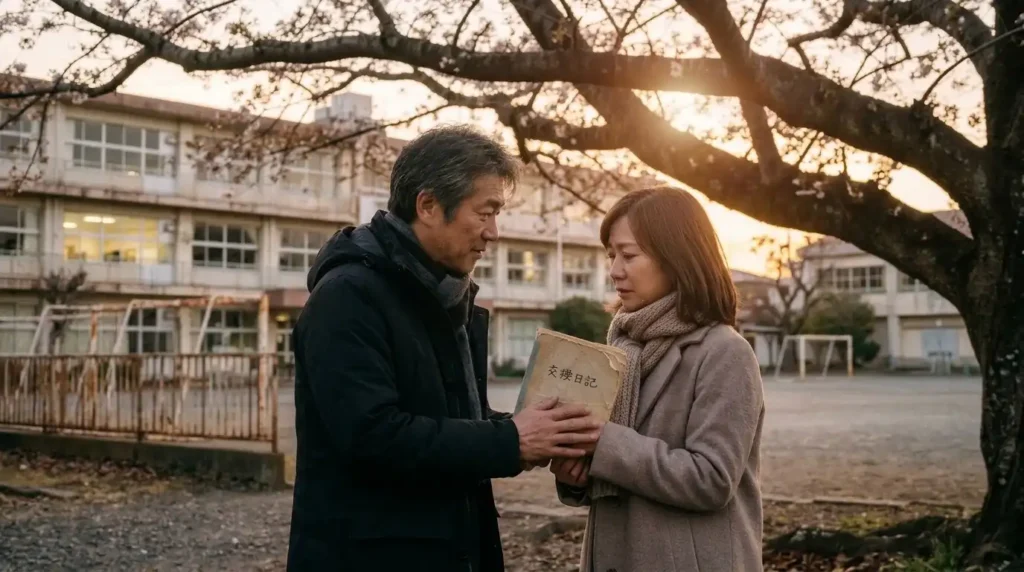
The song tells the story of two former lovers who meet again after many years apart. An empty schoolyard after classes and a notebook they once exchanged bring their shared past back to life. Yet the song is concerned with more than memories of youth. At its heart is the desire to spend the years ahead with someone fate has brought back into one’s life.
A Free Interpretation of the Lyrics
Two young lovers parted without ever fully expressing their feelings.
If fate brings them together again after so many years, they want to speak honestly at last.
They are ready to accept the lives they have lived apart, along with everything they once left unsaid.
And if destiny could be changed, they would choose to spend the rest of their lives together.
💡 You might also like: View the original Japanese lyrics (External site)
If the lyrics are available only in Japanese, you can use your browser’s translation feature or an AI translation tool to understand their general meaning.
First, Listen to the Official YouTube Audio
Ryūun Nagai — “Meguriawase”
Audio provided by: Age Free Music
YouTube channel: Ryūun Nagai - Topic
Published: December 25, 2025
About the Song
Two former school-age sweethearts reunite and confront the feelings they could never express.
Through Nagai's intimate, conversational vocals, the song conveys a longing to spend their remaining years together.
An After-School Yard That Brings Youth Back to Life
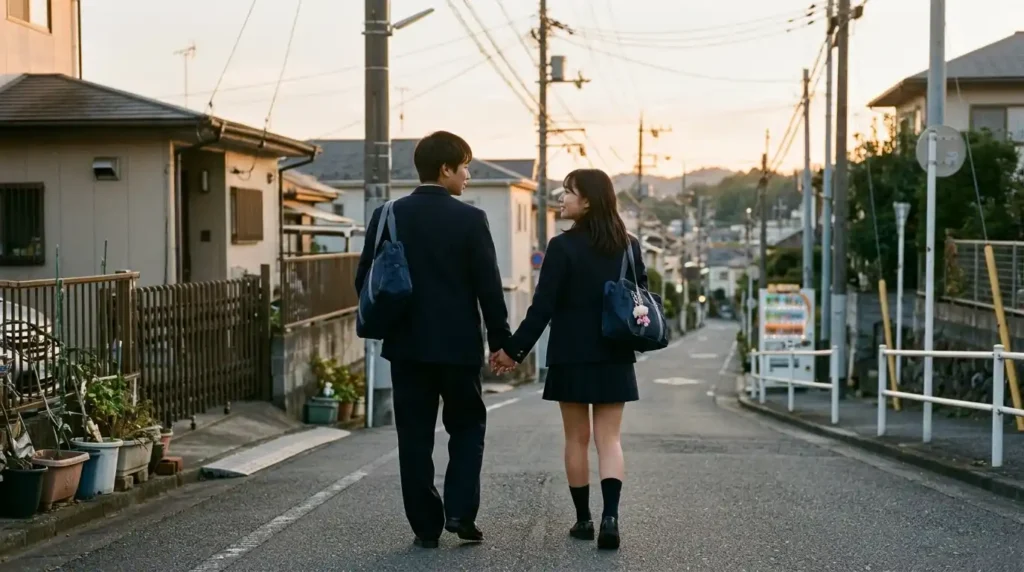
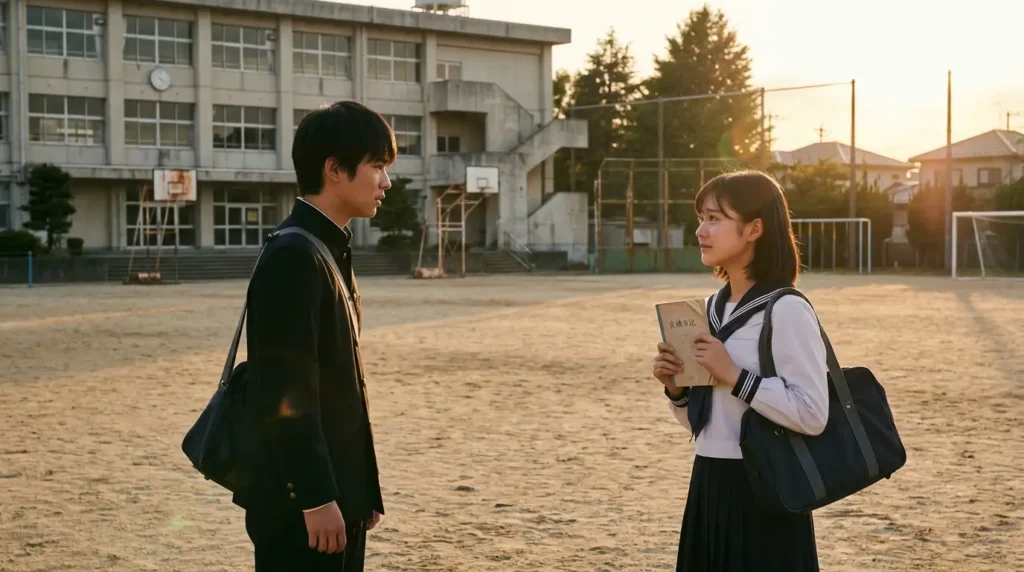
“Meguriawase” opens with two people recalling their younger days after meeting again. The memories that emerge are remarkably simple: a schoolyard at dusk and the familiar experience of walking home hand in hand.
School-age romance unfolds within a shared everyday world. Two people might pass each other in a classroom or hallway, then walk home together when lessons end. There was a time when seeing each other required no special arrangement. Their lives naturally brought them together.
When an Ordinary Scene Becomes an Extraordinary Memory
The after-school setting is effective precisely because it does not exaggerate the couple’s intimacy. A school building in the fading light and a familiar route home are enough to suggest the closeness they once shared. The listener can imagine their relationship without being told every detail.
When they were young, they may have assumed that tomorrow would bring another opportunity to meet. Yet graduation, further education, or the beginning of working life can change relationships that once seemed permanent. The lyrics never explain why the couple separated, but they make it clear that the everyday life they shared has long since disappeared.
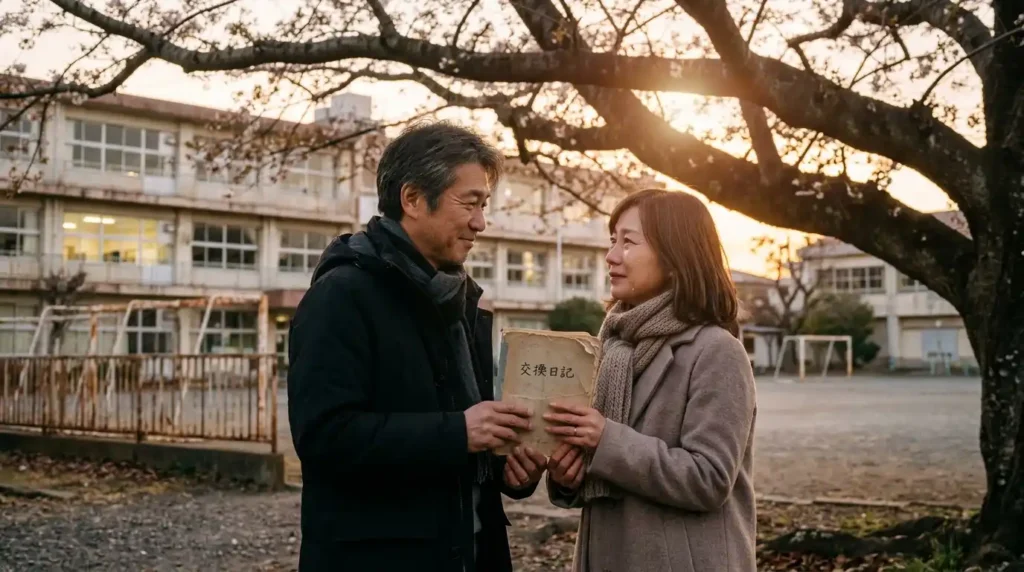
There is something convincing about this scene that goes beyond an idealized portrait of adolescence. Because the two were once so close, the mere thought of that schoolyard may be enough to awaken memories that need no explanation between them.
The Shared Notebook That Preserved Their Private World
Alongside the schoolyard, another important element appears in the lyrics: a notebook the couple once passed back and forth.
Before mobile phones and social media became commonplace, young people sometimes exchanged notebooks in which they wrote their thoughts and feelings to one another. Words that felt embarrassing to say aloud could be easier to put on paper. Even the anticipation of receiving a reply was part of the experience.
In “Meguriawase,” the couple leaf through a notebook that has been carefully kept over the years, smiling as they revisit its pages. The scene is especially affecting because the people reading those words are no longer the young lovers who originally wrote them.
Written Words and the Uncertainty of Memory
Human memory changes over time. Pleasant experiences may become more vivid, while details that once seemed important gradually fade. We may even come to understand another person’s feelings only years after an event has passed.
The notebook, however, preserves what the couple actually wrote. Its pages may contain expressions they would never use today, or declarations so sincere that they now seem almost embarrassing. They are reading the words of their younger selves through the eyes of the people they have become. That experience carries a significance beyond simple nostalgia.
What Even a Shared Notebook Could Not Express
Still, the notebook cannot be assumed to contain everything they truly felt. Some emotions become easier to express in writing, while others remain difficult to acknowledge even on paper.
The lyrics suggest that the couple shared their personal hurts and spoke about their dreams. Despite such intimacy, they could not fully communicate their love. The notebook therefore represents both the closeness of their relationship and the emotional inexperience that often accompanies youth.
Love Left Unspoken and Misunderstandings Left Unresolved
A closer reading of “Meguriawase” reveals two distinct things the narrator wishes to communicate to the person he has met again.
The first is the affection he could not adequately express when they were young. The second is his desire to explain misunderstandings from their past. Both concern the relationship they once shared, but they are not the same problem.
Loving Someone Is Not the Same as Understanding Them
Caring deeply for another person does not guarantee that those feelings will be understood. An innocent remark may be interpreted in an unexpected way, or an opportunity to explain oneself may pass before either person realizes its importance.
Young lovers can find it difficult even to understand their own emotions. Fear of rejection may lead to silence, while pride may produce behavior that contradicts what someone genuinely feels. Such mistakes are hardly unusual in relationships formed before emotional maturity has fully developed.
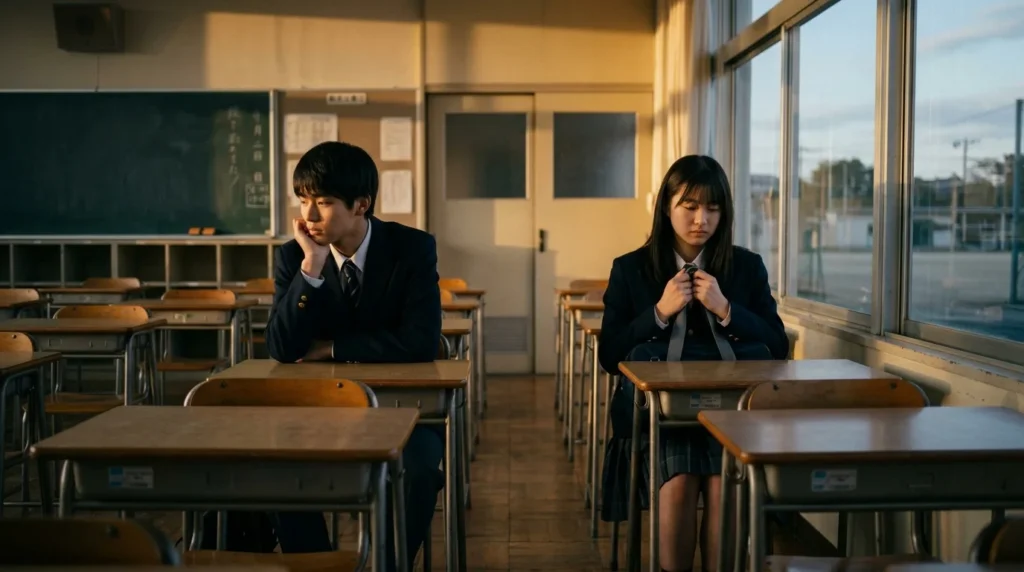
The song never identifies the precise misunderstanding that occurred between the couple. By leaving those circumstances unexplained, Nagai allows listeners to approach the story through their own experiences rather than confining it to one particular incident.
Conversations That Become Possible With Time
Events that seemed impossible to understand in youth can sometimes look different after years of experience. A person may become better able to imagine another’s circumstances or recognize a meaning in past behavior that was not apparent at the time.
Time alone, of course, does not resolve misunderstandings. What matters is a willingness to listen and to reconsider what each person was trying to express.
We cannot change what happened, but we may be able to change how we understand it. Their reunion offers the couple an opportunity for a kind of conversation they may not have been capable of having when they were younger.
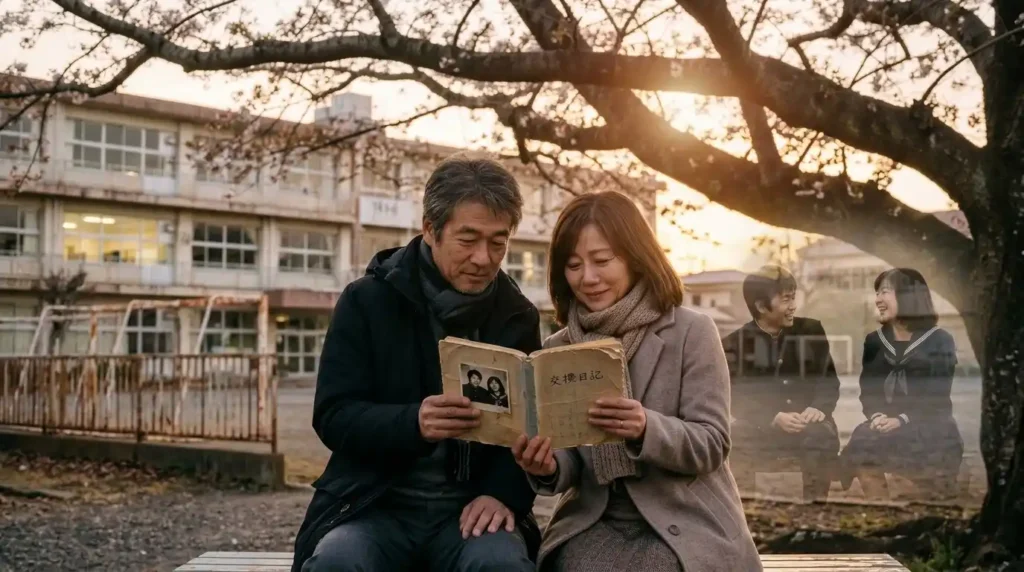
A Wish to Change Fate and Spend Their Lives Together
As the song progresses, the narrator’s desire moves beyond expressing what he once felt. He begins to imagine sharing the rest of his life with the person who has returned to him.
This development gives the song its distinctive emotional weight. Former lovers might meet again, exchange memories, and part with a renewed appreciation of their past. But the narrator wants something more than the chance to revisit what they once had.
Can a Love From School Days Truly Be Recovered?
During the years they spent apart, both people lived lives of their own. Work, personal relationships, and countless experiences may have changed their priorities and values. Having once known someone intimately does not mean knowing the person they have since become.
Choosing to share a future would therefore mean more than recreating their school-age romance. They would need to discover who they are now, respect the paths each has taken, and build a relationship suited to their present lives.
That is what makes the narrator’s wish so substantial. A longing for lost youth alone would hardly explain the desire to spend one’s remaining years with another person. The song suggests an affection that reaches beyond the past and asks something of the future.
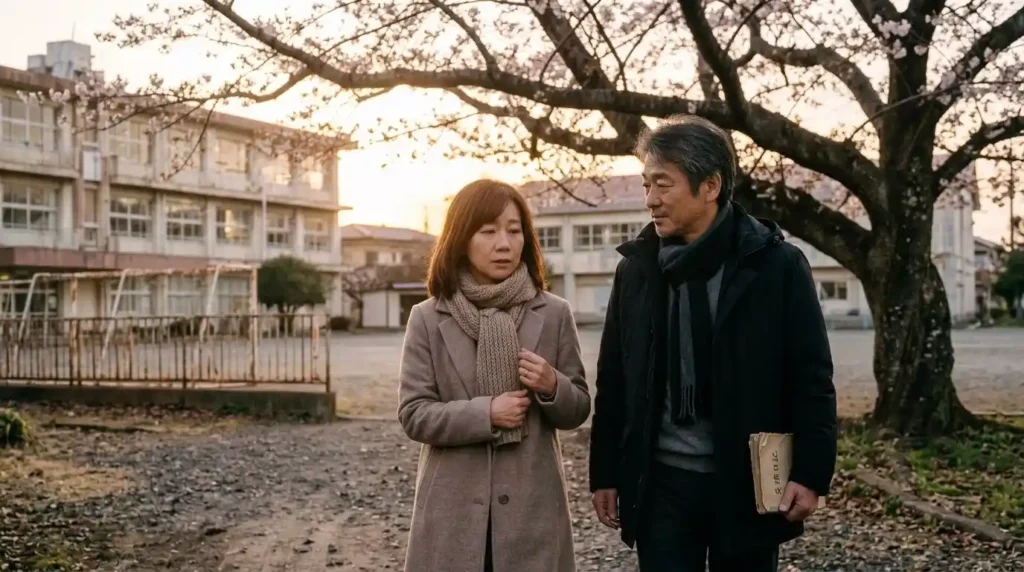
The Ending the Song Chooses Not to Reveal
The lyrics do not tell us what ultimately happens to the couple. Do they become lovers again, or return to their separate lives? The answer remains unknown as the narrator continues to express his hope for a shared future.
In real life, even profound affection cannot always overcome circumstances. The other person may not feel the same way, and existing responsibilities may make a renewed relationship impossible. Nevertheless, a reunion can reveal feelings that someone had never fully acknowledged.
Rather than promising a happy ending, the song gives voice to a future that may never come to pass. That uncertainty lends the narrator’s desire a poignancy that distinguishes the work from a conventional recollection of youthful romance.
How Ryūun Nagai’s Voice Gives Meaning to Every Word
The appeal of “Meguriawase” extends beyond the story told in its lyrics. Nagai’s vocal performance plays an equally important role in shaping the listener’s experience.
A Voice That Feels Like a Personal Conversation
Nagai is a singer who pays close attention to the words he delivers. In this song, he avoids excessive dramatization, creating the impression that the narrator is speaking directly to someone who knows him well.
The passages recalling youth have a gentle familiarity, while the repeated wish for reunion carries increasing emotional force. As the melody returns, the listener senses that the narrator’s longing is not merely a passing moment of sentiment.
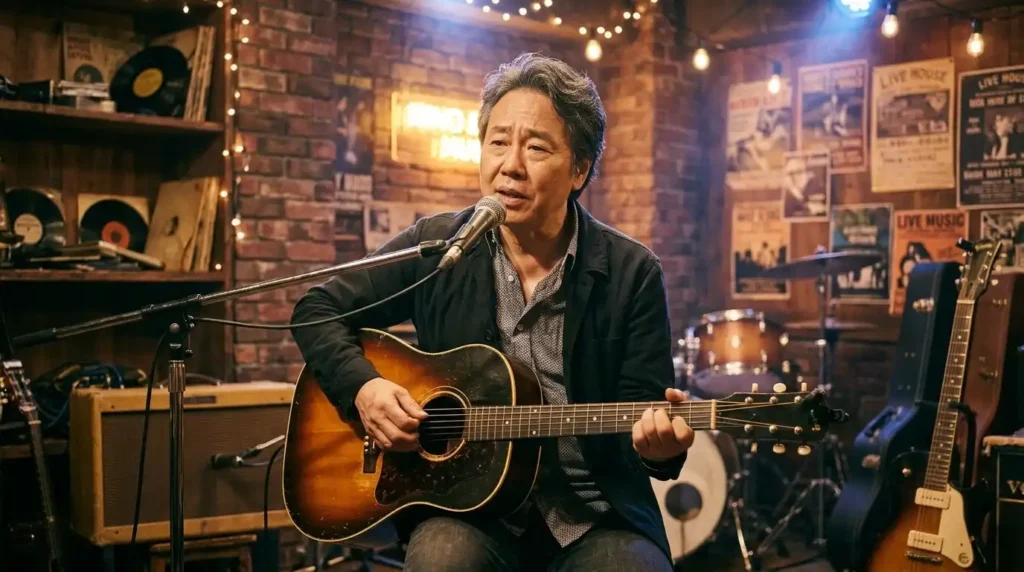
There is little sense of someone attempting to persuade another person through sheer intensity. Instead, Nagai evokes a man who has finally found the words to express feelings he has carried for years. The warmth of his delivery makes the story feel personal and believable.
The Unity of Melody and Arrangement
Nagai’s own melody follows the natural movement of the lyrics and supports the unfolding narrative. In particular, the recurring musical phrases associated with the reunion reinforce the narrator’s desire through a memorable melodic line.
The version included on Oibito features an arrangement by Nanae Kodera. The accompaniment works in harmony with Nagai’s voice, allowing the words to remain clear and giving the song a measured, intimate character.
“Meguriawase” does not depend on dramatic musical surprises. Its strength lies in the relationship between an accessible melody and direct, emotionally resonant writing. Together, they make the feelings of two people reunited after many years remarkably easy to understand. It is a fine example of Nagai’s gift for storytelling through song.
In Closing — A Love From Yesterday and a Life Still Ahead
“Meguriawase” portrays two people reunited after many years apart. The schoolyard after classes and the notebook they once exchanged offer tangible glimpses of the closeness they shared in their youth.
Yet the story is not simply about remembering an old romance. Its deeper concern is the possibility of saying what could not be said before and, if circumstances allow, choosing to share the years that remain.
The past cannot be revisited or rewritten. What the couple can still decide is how to face each other now that their paths have crossed again.
If you were reunited with someone you once loved deeply, what would you want to say? And would you truly wish to share your life with that person again?
Ryūun Nagai’s “Meguriawase” begins with memories of youth but ultimately invites us to consider a much larger question: whom would we choose to spend the later chapters of our lives with?

音楽ファン同士の交流・リクエストはこちら / Connect & Request Songs Here