
Explore Mariko Takahashi’s Musical Journey Here!
- 🎧 Listen to This Article
- My Personal Best 10: Mariko Takahashi — No. 3 “Gomen ne…” (I’m Sorry…)
- 🎥 First, Listen to “Gomen ne…”
- 1996 — A Theme Song for Tuesday Suspense Theater
- Understanding the Lyrics — What Stands in the Way of an Apology
- Listening to the Music — Yasuhiro Mizushima’s Melody and Tomoji Sogawa’s Arrangement
- Mariko Takahashi’s Vocal Performance — The Power of Emotional Restraint
- The Memories This Song Awakens — What We Discover After Losing Something Precious
- Final Thoughts — The Weight of Words Left Unspoken
🎧 Listen to This Article
Discover the emotional depth of Mariko Takahashi’s “Gomen ne…” (I’m Sorry…) through a narrated introduction to the article.
Listen before reading to explore the song’s themes of regret, broken trust, and Takahashi’s expressive vocal performance.
🎵 English Narration
An English audio introduction to the key themes and musical highlights of this article.
🎶 Japanese Narration
A Japanese audio introduction to the key themes and musical highlights of this article.
Listening first will help you appreciate the song’s emotional story and the subtle beauty of Takahashi’s performance.
My Personal Best 10: Mariko Takahashi — No. 3 “Gomen ne…” (I’m Sorry…)
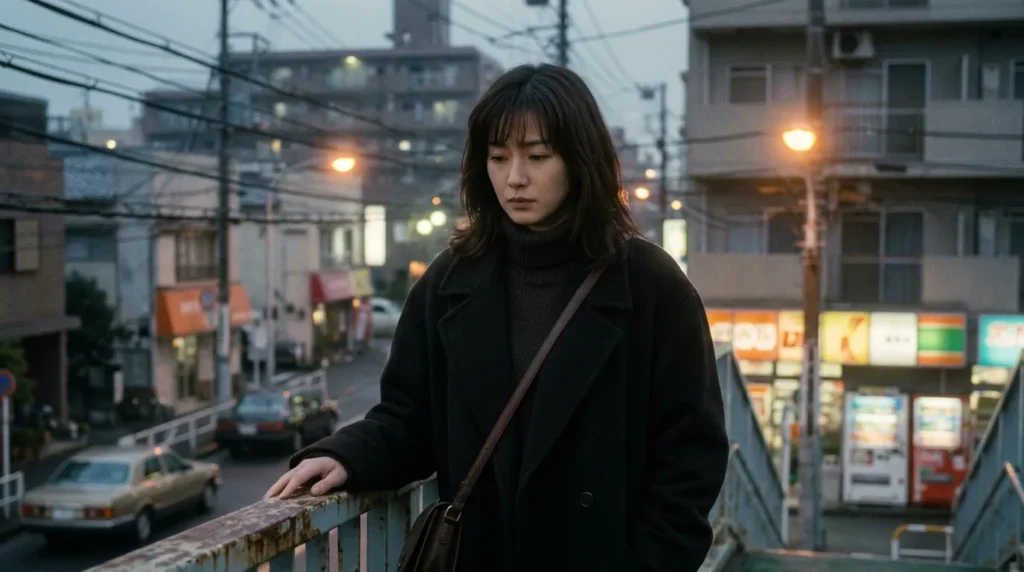
She loved someone deeply, yet it was her own mistake that caused him pain. She wants to apologize, but the words refuse to come. This is the painful emotional territory explored in Mariko Takahashi’s “Gomen ne…” (I’m Sorry…).
Released in 1996, this song is much more than a ballad about the sorrow of separation. When someone realizes that they have destroyed a relationship through their own actions, what do they regret, and what can they still hope for? That question runs through the song, from its restrained opening to its emotionally charged chorus.
The Meaning of the Lyrics — A Free Interpretation
I loved you, yet I was the one who hurt you.
I keep returning to that night I can never undo.
There were things I should have said before making excuses.
Even knowing we may never find our way back, I want you beside me tonight.
If there is a place where we never have to say goodbye, I want to go there with you.
💡 You might also like: View the original Japanese lyrics (External site)
If the lyrics are available only in Japanese, you can use your browser’s translation feature or an AI translation tool to understand their general meaning.
🎥 First, Listen to “Gomen ne…”
Audio from the Official Channel
Song Information
Title: Gomen ne… (I'm Sorry…)
Artist: Mariko Takahashi
Lyrics: Mariko Takahashi
Music: Yasuhiro Mizushima
Arrangement: Tomoji Sogawa
Album: RIPPLE — Released May 2, 1996
Single release: June 21, 1996
Television tie-in: Theme song for Nippon TV's Tuesday Suspense Theater

This recording is available through an official channel. Listen closely to the restrained opening and the moment when Takahashi's voice gains emotional weight in the chorus. The contrast reveals much of the song's character.
1996 — A Theme Song for Tuesday Suspense Theater
“Gomen ne…” first appeared on the album RIPPLE, released in May 1996, before being issued as a single the following month. It also became known as a theme song for Nippon TV’s long-running drama series Tuesday Suspense Theater.
That connection is particularly interesting when considering the emotional character of the song.
In a suspense drama, the resolution of a crime does not necessarily erase the emotional wounds or regrets of the people involved. A song heard after the story ends can give expression to feelings that the final scenes leave unresolved. The lingering melody of “Gomen ne…” seems especially well suited to such a moment.
It is a ballad of shadows and emotional complexity, capable of carrying the atmosphere left behind by a dramatic story. Yet its appeal does not depend on knowing the television series. The circumstances of the song’s narrative are clear, and the protagonist’s remorse emerges through each carefully chosen word.
Understanding the Lyrics — What Stands in the Way of an Apology
A Mistake the Song Refuses to Conceal
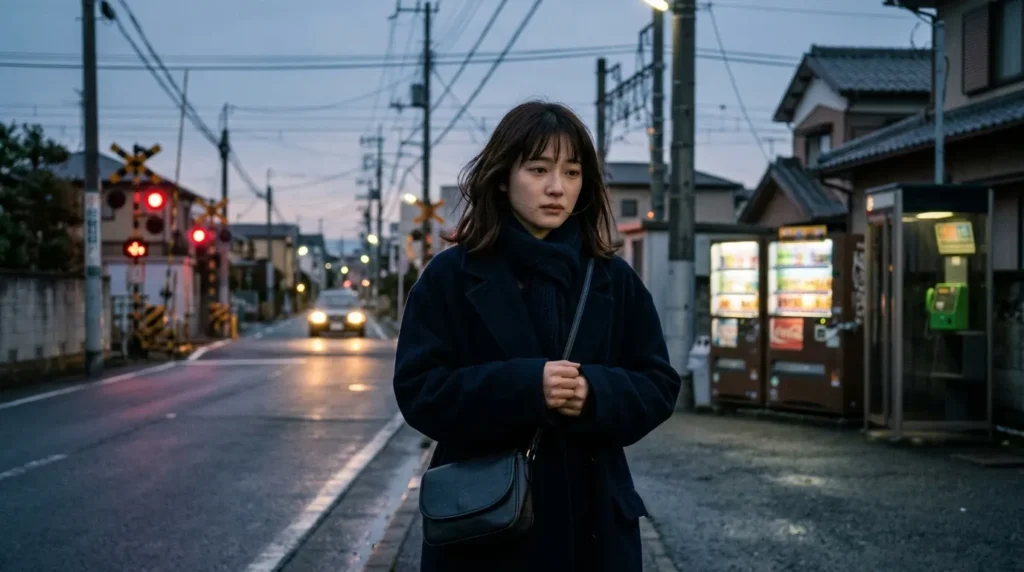
The protagonist looks back on a night when she gave herself to another person. Meanwhile, the man she loved had been waiting for her throughout the night. The lyrics do not disguise what happened. They present it as a mistake for which she herself bears responsibility.
What remains especially painful is the length of time he spent waiting. For the protagonist, it may have been a single night’s mistake. For the person waiting, however, those hours must have been filled with uncertainty and unanswered questions. The lyrics never describe his feelings directly. Nevertheless, his presence emerges through a few understated details, making her confession all the more devastating.
That is why the listener cannot simply interpret the song as another tragic love story in which the protagonist deserves sympathy. The pain of the person she betrayed remains an essential part of her remorse.

Regret Comes Before Excuses
The protagonist does not offer a series of explanations to justify her behavior. Instead, she returns to the painful realization that she could have treated the person she loved with greater care.
Regret contains two different kinds of suffering: remorse for what we have done and the difficulty of accepting its consequences. In this song, those feelings cannot easily be reconciled.
Because she knew his kindness, the realization that she betrayed his trust becomes even harder to bear. Her belief that she could have devoted herself more fully to him offers little comfort now that the opportunity has passed.
What makes this situation especially painful is that an apology cannot guarantee the restoration of a relationship. Recognizing that you were wrong and being forgiven by the person you hurt are two entirely different things. The distance between them lies at the heart of the song’s emotional power.
A Longing for a Place Without Farewells
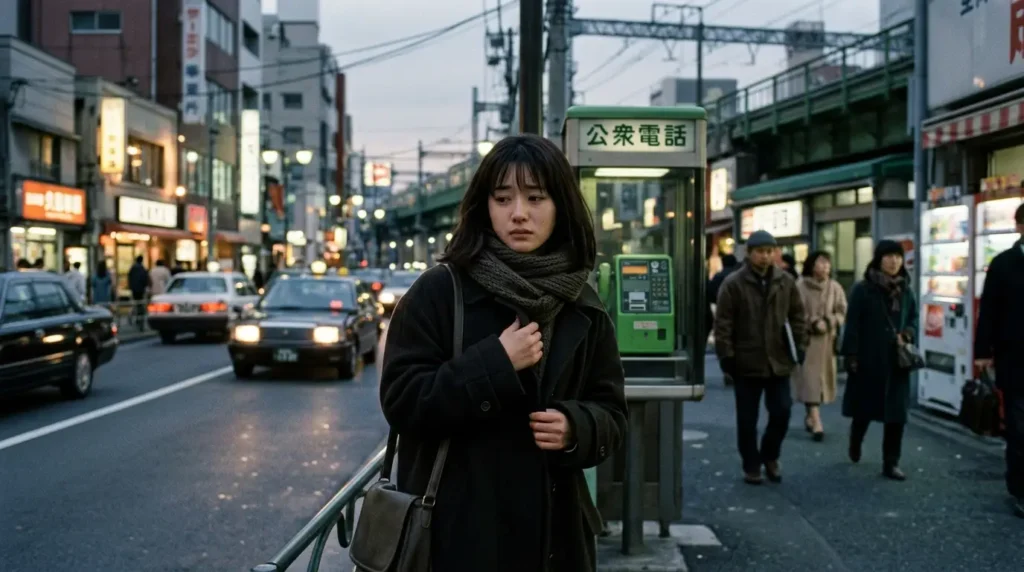
At one point, the lyrics evoke the desire for a place where separation and sorrow do not exist. In reality, however, no one can erase the past or make an act of betrayal disappear.
The Place She Wants to Return to Is Their Former Life Together
It seems to me that the protagonist wants more than simply to prevent her lover from leaving. What she truly longs for is a return to the time when mutual trust felt natural and secure.
Yet even if they were to embrace again in the same room, that would not undo what happened. Physical closeness cannot automatically restore emotional intimacy. The contrast between those two forms of connection gives the song much of its poignancy.
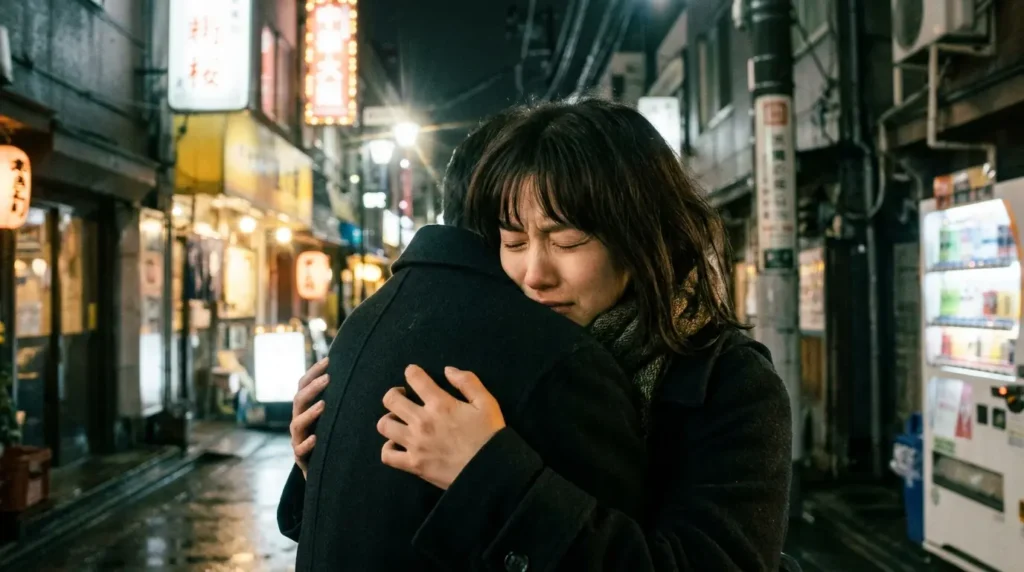
Even so, she asks to be held for just one more night. Rather than demanding a promise about their future, she clings to the brief time still available to them. That modest but desperate wish reveals how emotionally cornered she has become.
Listening to the Music — Yasuhiro Mizushima’s Melody and Tomoji Sogawa’s Arrangement
From a Quiet Confession to an Emotionally Charged Chorus
Yasuhiro Mizushima’s melody avoids grand gestures at the beginning. It unfolds as though the singer were carefully weighing each word, gradually expanding as the chorus approaches.
Following the melodic line, we can hear how thoughtfully space has been left for the lyrics. In the opening phrases, individual words seem to reach us from close by. As the vocal range expands, the emotional shape of the confession becomes increasingly clear.
Because the song does not begin with an urgent, high-register appeal, the listener discovers the protagonist’s circumstances little by little. This progression allows the entire composition to unfold like a personal confession.
Through that development, regret that has been repeatedly suppressed finally seems to overflow into the singer’s voice. The effect is not merely one of sadness. We also hear the urgency of someone struggling to communicate what should have been said much earlier.
An Arrangement That Creates Space and Resonance
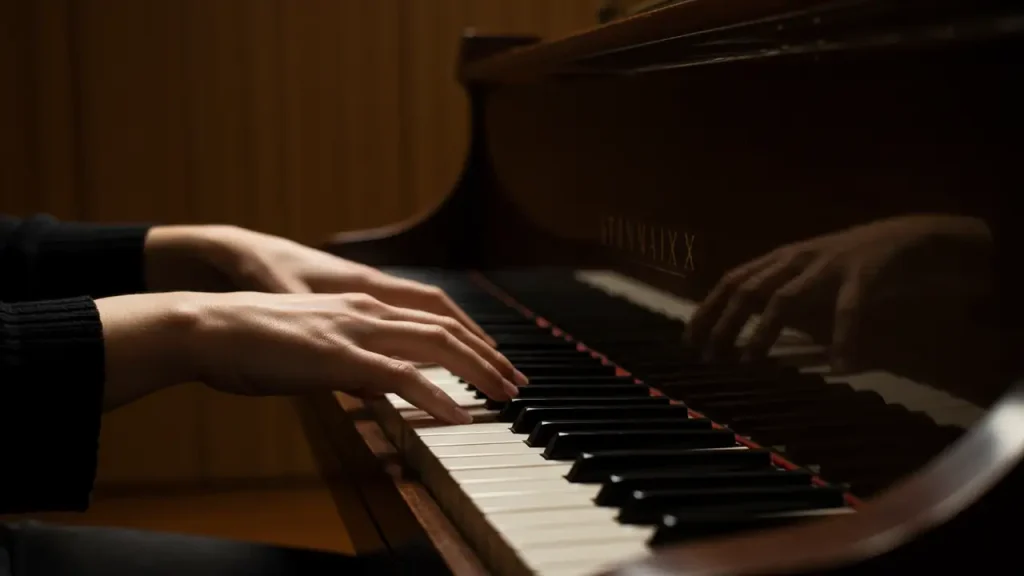
In Tomoji Sogawa’s arrangement, the keyboards, strings, and other instrumental textures maintain a sense of tension behind the vocal. Even when the accompaniment grows fuller, Takahashi’s voice remains the unmistakable center of attention.
Listen closely to the contrast between passages where the vocal stands prominently in the foreground and those where the instruments fill the surrounding space. Changes in musical density create moments for the lyrics to speak and others in which the accompaniment seems to absorb their emotional weight.
Rather than relying on dramatic effects for their own sake, the arrangement supports the natural communication of the song’s meaning. I believe that restraint contributes to the elegance of a ballad that continues to reward repeated listening.
The instrumental interlude also deserves attention. After the singing pauses, the melody seems to carry forward feelings that words alone could not fully express.
Mariko Takahashi’s Vocal Performance — The Power of Emotional Restraint
Breathing, Phrasing, and Hesitation
What impresses me most about this performance is not simply the strength of Takahashi’s voice, but the way she delivers each word. She begins almost conversationally, allowing phrases to end gently. These subtle changes communicate the protagonist’s hesitation without making it seem theatrical.
One particularly revealing detail is the brief pause before her voice grows stronger.
At certain moments, she sounds as though she is hesitating before speaking or gathering the courage to continue. Such details give the protagonist a human presence that the written lyrics alone cannot fully convey. Rather than explaining every emotion directly, Takahashi uses breath and phrasing to invite the listener’s imagination. It is an example of vocal maturity that cannot be measured by pitch accuracy or volume alone.
She does not imitate the sound of crying. Instead, she communicates the emotion beneath the words through subtle changes in vocal color and intensity. That sense of discipline is, to me, one of the defining qualities of her singing.
The Strength at the Heart of the Chorus
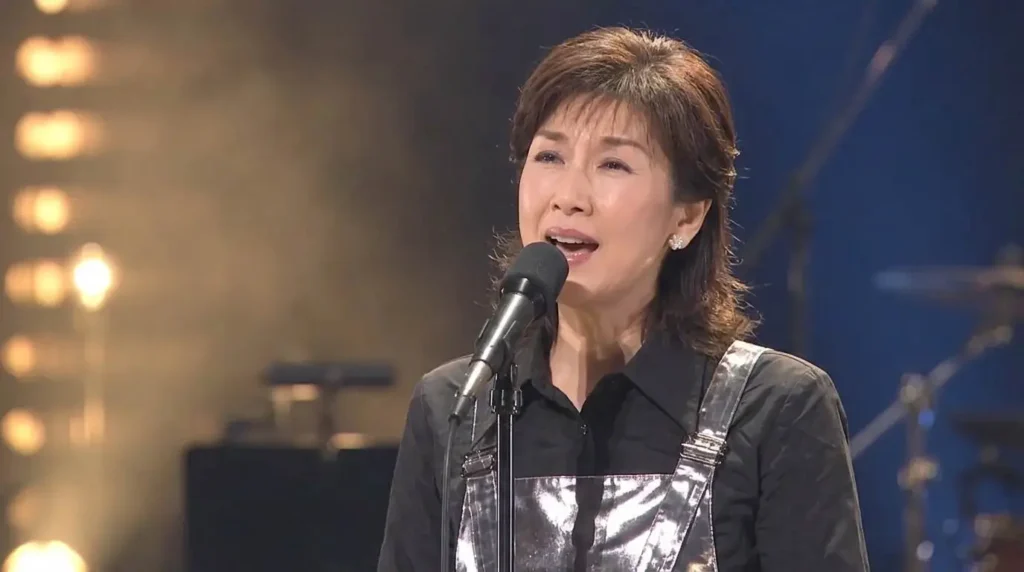
In the chorus, Takahashi’s voice opens up, and the melody takes on a more clearly defined shape. Yet because she never depends on sheer force, what remains with the listener is the pain carried by the words rather than a display of vocal power.
Pay particular attention to the way she ends sustained notes. Instead of simply holding their intensity until the final moment, she allows the sound to settle gently. The silence that follows becomes part of the expression. There is a sense of waiting for an answer in that space. Because the singer does not reveal everything, listeners can bring their own memories and experiences into the song.
Whether the protagonist deserves forgiveness is ultimately left for the listener to decide. The fact that Takahashi never forces an emotional judgment upon us is another of the performance’s remarkable qualities.
The Memories This Song Awakens — What We Discover After Losing Something Precious
Sometimes we recognize the value of another person’s kindness only when we are about to lose it. “Gomen ne…” captures the painful moment when that realization may have come too late.
Understanding the protagonist’s feelings does not mean approving of her actions. The listener can recognize her suffering while also imagining the pain of the person who waited for her. The ability to hold both perspectives at once gives the story its emotional depth. Although this is a love song, it also raises questions about trust and what it means to act with sincerity toward another person.
There is no need to romanticize the protagonist’s mistake or treat it as evidence of passionate love. On the contrary, the seriousness of what she has done is precisely what gives her regret its weight.
Although the song became familiar to audiences through a television drama of the 1990s, the emotions it portrays are not confined to that era. Even today, when communication is easier and more immediate than ever, rebuilding broken trust remains profoundly difficult.
Final Thoughts — The Weight of Words Left Unspoken
When “Gomen ne…” comes to an end, what stays with me most strongly is not the separation itself, but the thought of everything that might have been done before the relationship was damaged.
What if she had considered his feelings more carefully? What if she had confronted her own weakness before it was too late? There are no easy answers to such questions.
Even when we cannot know whether an apology will be accepted, we still have a responsibility to face the consequences of our actions.
Mariko Takahashi has recorded many songs celebrating the beauty of love. In “Gomen ne…,” however, she confronts a more uncomfortable side of human nature, one that cannot be resolved through comforting words alone. She presents this emotional conflict neither as a moral lecture nor as an excuse for the protagonist’s behavior. Instead, she gives us the voice of one deeply flawed human being.
The lyrics, melody, arrangement, and vocal performance each serve a distinct purpose. Together, they transform a painful subject into a deeply affecting musical work.
Takahashi delivers that suffering without unnecessary exaggeration, allowing it to reach the listener quietly and directly. Perhaps that is why this song continues to linger in the heart long after the final note has faded.


音楽ファン同士の交流・リクエストはこちら / Connect & Request Songs Here