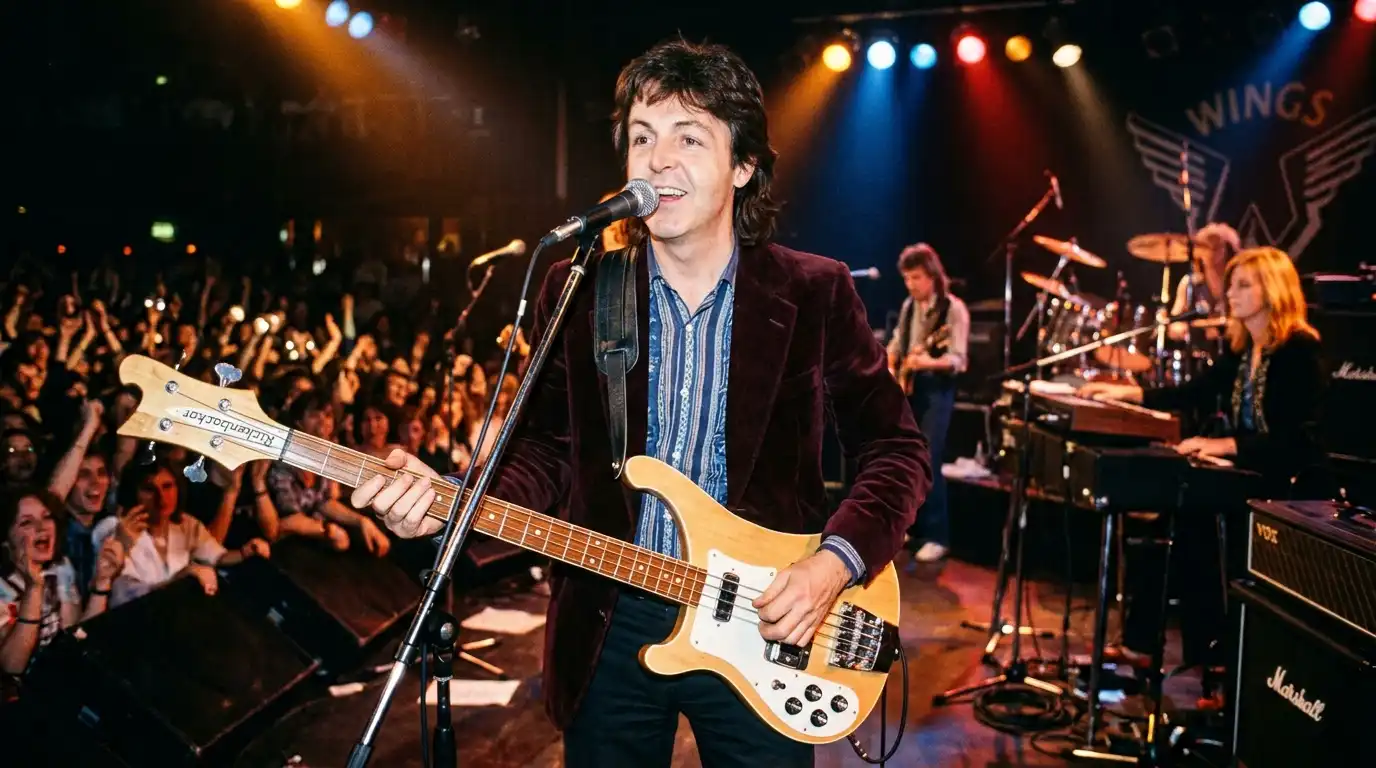
Explore Paul McCartney’s Journey Here!
- 🎧 Listen to This Article
- No. 11: “Band on the Run”
- First, listen to the official YouTube recordings.
- Three Different Worlds Inside One Song
- Just Before Lagos, Wings Became a Trio
- The Unexpected Reality of Recording in Lagos
- The Skill of Making Three Sections Sound Like One Song
- Band on the Run Took Wings to the Next Level
- Onstage, the Escape Story Becomes Even Bigger
- In Closing――What Was Waiting at the End of the Escape
🎧 Listen to This Article
You can quickly explore the key points of this article through narration.
Recommended if you would like an introduction to “Band on the Run” and the overall flow of the article before reading.
🎵 English Narration
An English narration introducing the content of this article.
🎶 Japanese Narration
A Japanese narration introducing the content of this article.
Listening first will help you understand the background, musical appeal, and key points of “Band on the Run” before reading the full article.
No. 11: “Band on the Run”
No. 11 on my personal Paul McCartney Best 15 is “Band on the Run.”
The title track from Wings’ album Band on the Run, released on December 7, 1973, was issued as a single in the United States on April 8, 1974, and in the United Kingdom on June 28.
The single reached No. 1 on the Billboard Hot 100 and No. 3 on the UK Singles Chart. The album also topped the U.S. chart on three separate occasions and became the best-selling studio album in the United Kingdom in 1974.
Yet the turbulent circumstances in which the album was created are difficult to imagine from those spectacular results alone. Two members left Wings just before the recording sessions began, leaving Paul McCartney, Linda McCartney, and Denny Laine as the only three members who traveled to Lagos, Nigeria.
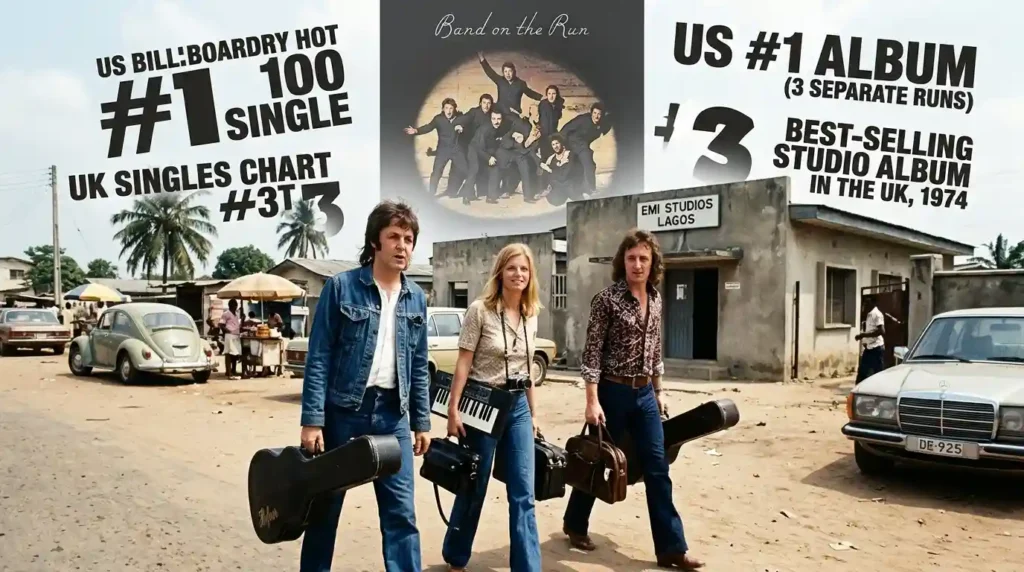
A song about a group on the run was born at a moment when Wings itself was being shaken to its foundations. Once you know that background, the title “Band on the Run” begins to carry a resonance far beyond its fictional story.
Free Interpretation
I’ve had enough of being trapped inside these walls.
We leave everything behind and run in search of freedom.
The jailer and the judge may hunt us down, but they will never catch us now.
Run, keep running――until freedom is finally ours.
First, listen to the official YouTube recordings.
Shared Credits
Artist: Paul McCartney
Written by: Paul McCartney / Linda McCartney
Provided to YouTube by: Universal Music Group
YouTube: Official PAUL McCARTNEY Channel
① “Band On The Run”
Album: Band on the Run
Artist credit: Paul McCartney & Wings
Original release: 1973
YouTube release: December 12, 2018
Two-Line Commentary
One of Wings’ defining songs, evolving from a restrained opening into a powerful rock performance.
Its three contrasting sections turn the journey from confinement to escape into music itself.
② “Band On The Run (Live)”
Album: Tripping the Live Fantastic
Artist credit: Paul McCartney
Version: Live recording
YouTube release: August 30, 2018
Two-Line Commentary
The live version preserves the studio recording’s complex structural shifts while adding a more immediate sense of power.
In the final section, the audience helps create a growing excitement that shows how naturally the song works onstage.
Three Different Worlds Inside One Song
The most striking feature of “Band on the Run” is the way the music changes shape dramatically within a single song. Rather than maintaining the same rhythm, tempo, and atmosphere from beginning to end, it moves through three distinctly different sections.
It begins with a subdued sound that suggests an enclosed space. The restrained vocal and synthesizer create a sense of being unable to move. Gradually, the song begins to shift, eventually opening into an expansive rock section driven by strummed acoustic guitar.
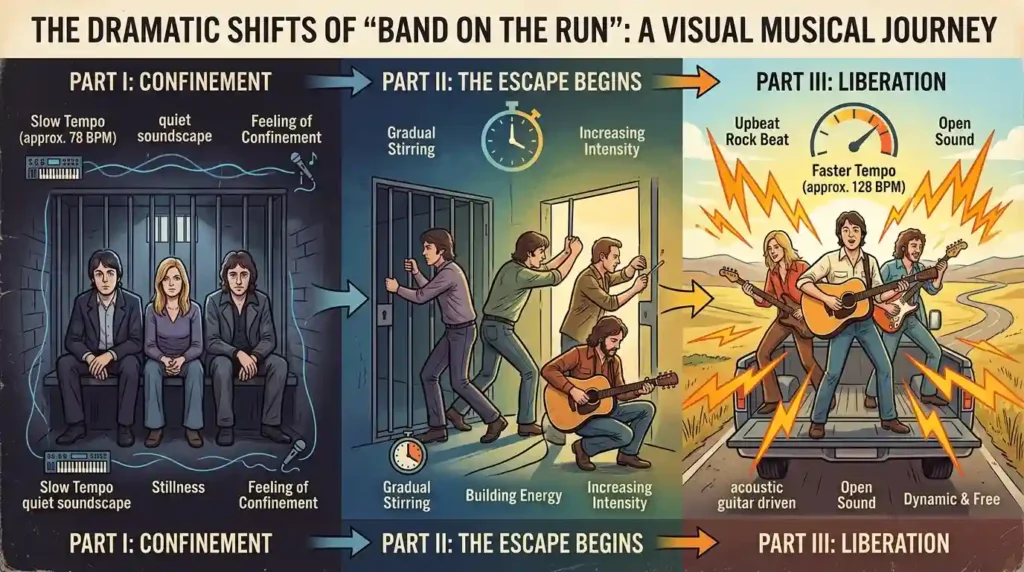
The Music Itself Begins to Run
What makes the structure especially effective is that the musical changes move in the same direction as the story. At first, the central figure is trapped and dreaming of getting outside. By the latter part of the song, however, the story has moved into a world of fugitives and pursuers.
By the time the title phrase begins to repeat, the music is fully in motion. Acoustic guitar, bass, drums, and backing vocals come together, creating something that sounds almost like a different song from the stillness of the opening. Yet the transitions feel remarkably natural.
A story that begins in confinement eventually starts running with the music itself.
In this song, the lyrics and the musical structure move in the same direction.
“Band” Does Not Simply Mean a Musical Group
If we interpret the word “band” only as a musical group such as Wings, the meaning of the title becomes slightly misleading. According to Paul himself, “band” here primarily refers to a group of people who have escaped from prison――a band of outlaws.
Paul has also said that the idea carries something of the atmosphere of the film Butch Cassidy and the Sundance Kid. In other words, “Band on the Run” is not a song directly about Wings. It is a fictional story centered on a group of fugitives trying to stay ahead of those pursuing them.
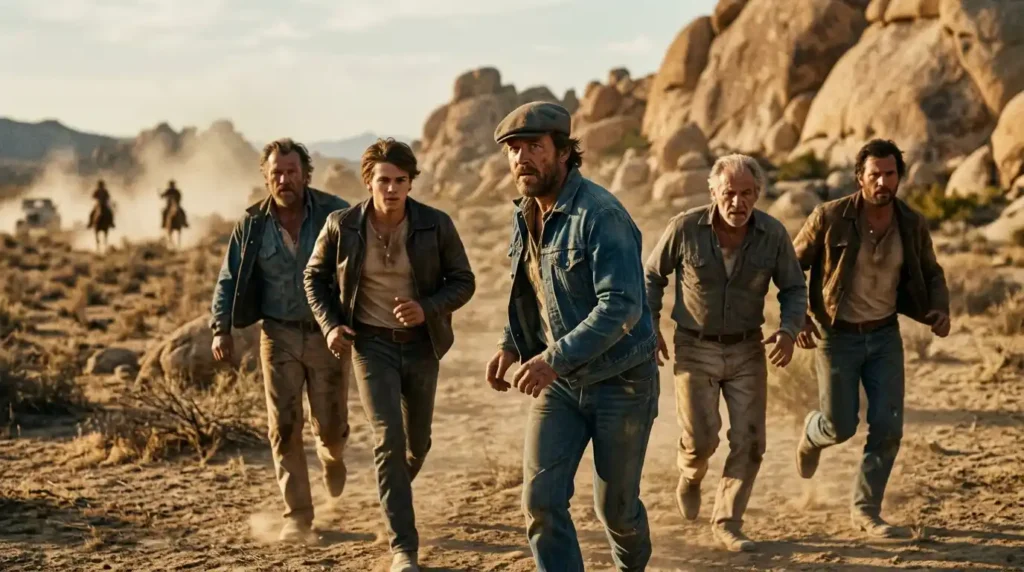
Just Before Lagos, Wings Became a Trio
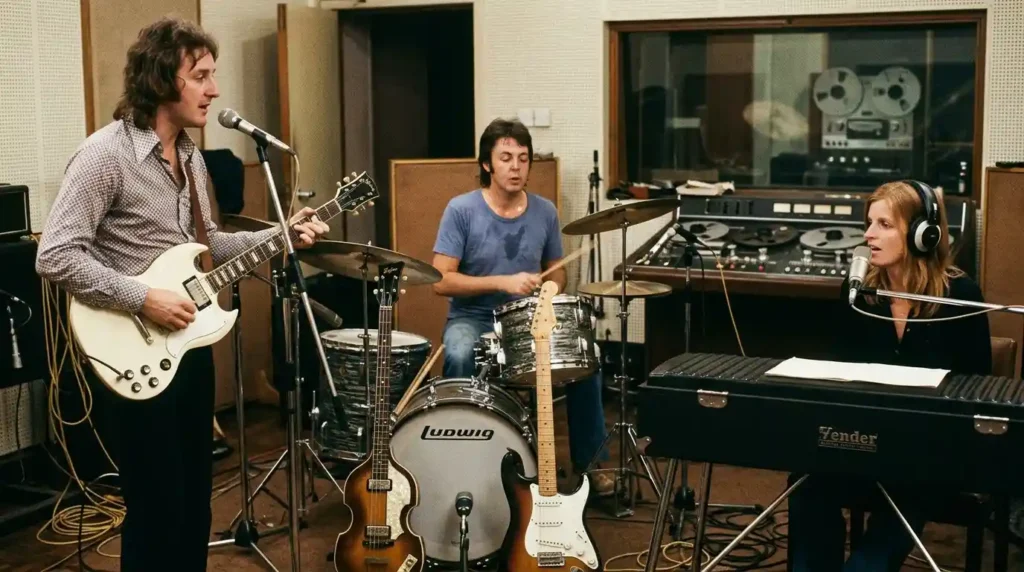
Before recording the album that included this song, Wings faced a major disruption. Guitarist Henry McCullough and drummer Denny Seiwell left the group in quick succession.
As a result, the only official members who traveled to Nigeria were Paul, Linda, and Denny Laine. It would hardly have been surprising if they had postponed or completely reworked the recording plan. Instead, they continued to Lagos as scheduled.
No Drummer――So Paul Played the Drums Himself
Paul filled the gap left by the departing drummer himself. He played drums on the album’s Lagos recordings while also handling bass, guitar, keyboards, and vocals.
Denny Laine took on several roles centered on guitar and vocals, while Linda contributed keyboards and vocals. Although the group had become smaller, the finished recordings never sound thin. If anything, becoming a trio forced each member to cover a much broader musical range.
- Paul McCartney――vocals, bass, guitar, drums, keyboards, and more
- Linda McCartney――keyboards, vocals
- Denny Laine――guitar, vocals, and more
Paul later recalled that having fewer people around also made the group more flexible in some respects. A plan that had apparently fallen apart ended up bringing his abilities as a multi-instrumentalist much more clearly to the foreground.
The Unexpected Reality of Recording in Lagos
One reason Paul chose Nigeria was his desire to leave familiar surroundings behind and make an album somewhere different. But when they arrived, EMI’s Lagos studio turned out to be very different from what they had imagined.
Engineer Geoff Emerick traveled with them, but the studio was not fully equipped and the available technology imposed considerable limitations. The group therefore had to improvise and make the most of what was available.
The Album Demos Were Stolen in a Robbery
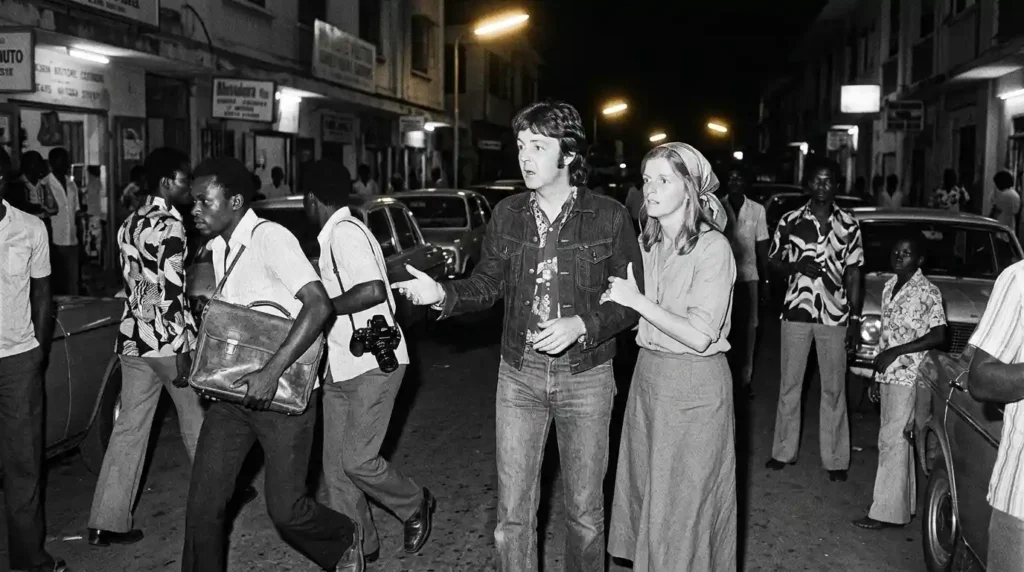
Then came an even more serious incident. While walking in Lagos at night, Paul and Linda were attacked by robbers. Along with money and a camera, the thieves also took the original demo tapes prepared for the album.
The missing demos were never recovered. Without the recordings they had prepared in advance, Paul and the others continued the sessions by reconstructing the songs from memory.
Today, recordings can easily be duplicated across several devices or stored online. In 1973, losing the physical tape could mean losing the recording itself. The fact that the sessions continued despite that setback says a great deal about the unusual circumstances surrounding this album.
There Was Also Tension with Fela Kuti
In Lagos, tension also arose between Paul and Afrobeat pioneer Fela Kuti. Fela suspected that a famous Western musician had come to Nigeria intending to exploit local African music.
After hearing the material Paul was working on, however, Fela understood that he was not simply trying to appropriate African music. The tension between them eased, while Paul himself came away deeply impressed by Fela’s music and performances.
The Skill of Making Three Sections Sound Like One Song
Leaving the story of the recording sessions behind, I want to return to the sound itself. What fascinates me most is that the three sections are clearly different, yet they never feel like unrelated fragments stitched together.
The subdued opening, the transitional middle section, and the acoustic-guitar-driven finale each have different textures and a different sense of momentum. Yet because all three belong to the same story of escape, they still feel completely natural as one song.
The Acoustic Guitar That Drives the Final Section
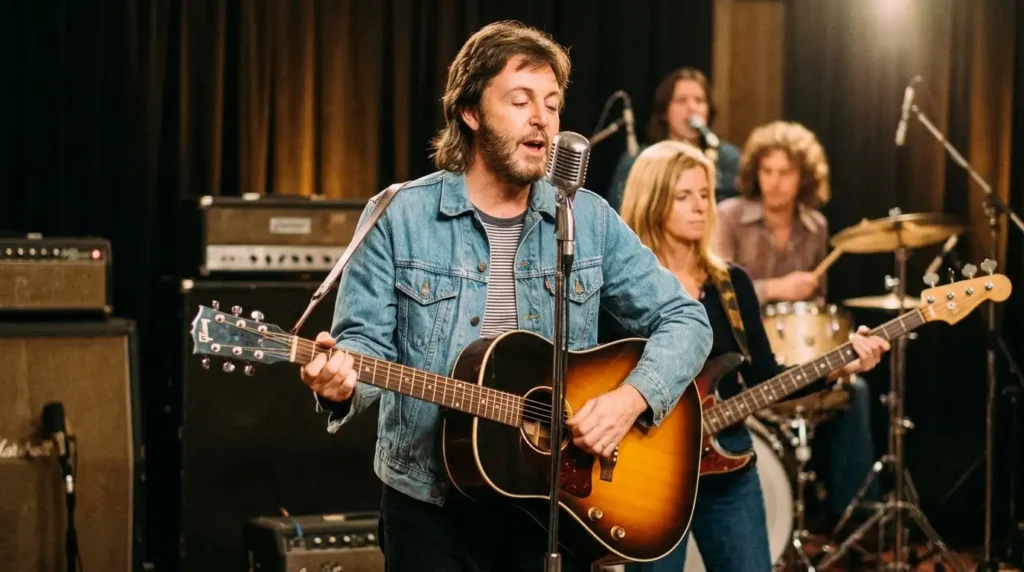
The moment that attracts me most comes when the final section begins. Instead of relying on an aggressive electric-guitar attack, the song is propelled forward by the rhythmic strumming of an acoustic guitar.
Bass, drums, and backing vocals then join it as the title phrase returns again and again.
The structure is actually quite intricate, yet it ultimately arrives at a melody almost anyone can remember. Paul’s strength as a songwriter lies partly in his ability to make complexity sound effortless.
Why Five Minutes Never Feels Long
The official recording runs for more than five minutes, but it does not simply stretch out the same musical idea. Each change of scene introduces something new, naturally carrying the listener into the next section.
It begins in a quiet, enclosed space, moves into a desire to get outside, and finally becomes a full-scale pursuit. Because that passage of time is built directly into the musical structure, the five-minute song unfolds almost like a short film.
Band on the Run Took Wings to the Next Level
The album Band on the Run became a defining release for Wings.
It spent a total of four weeks at No. 1 in the United States, also topped the UK Albums Chart, and became Britain’s best-selling studio album of 1974.
A recording project that began with two members leaving the group and continued through a series of unexpected problems in Lagos ultimately became one of Wings’ greatest successes. The album also produced major songs such as “Jet,” helping Wings rapidly build a body of material that belonged unmistakably to the band itself.
A Grammy Award in 1975
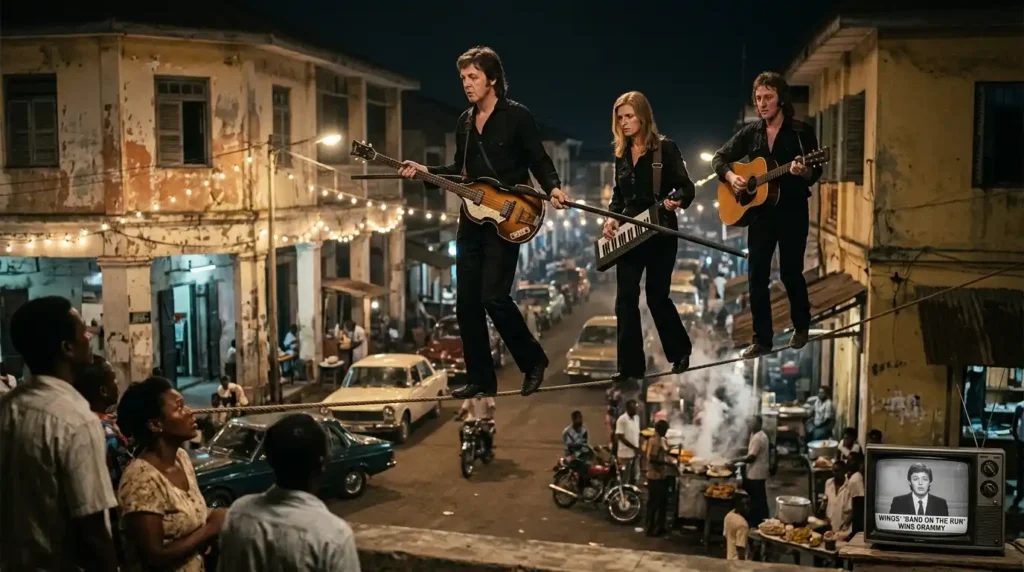
The title track “Band on the Run” won the Grammy Award for Best Pop Vocal Performance by a Duo, Group or Chorus at the 17th Annual Grammy Awards in 1975.
Wings had been a five-piece immediately before the trip to Lagos. By the time the recording began, only three members remained at its core. Yet the album they completed went on to receive worldwide acclaim. The final result looks like a classic success story, but the road to it was anything but secure.
Onstage, the Escape Story Becomes Even Bigger
The second official YouTube recording featured above comes from the live album Tripping the Live Fantastic. It preserves the studio version’s three-part structure, but onstage the momentum feels more immediate.
The effect is especially strong in the final section, where the title phrase becomes something the audience can share. A song originally recorded by the three remaining members in 1973 eventually grew into music performed before vast crowds. That transformation is part of what has allowed the song to remain such an enduring part of Paul’s live repertoire.
“Band on the Run” remains one of the songs most closely associated with Paul McCartney’s concerts. Knowing the circumstances in which it was created makes its survival for more than half a century even more remarkable.
In Closing――What Was Waiting at the End of the Escape
In “Band on the Run,” a trapped figure longs to get outside and eventually becomes part of a group fleeing its pursuers. The song does more than describe that story in words: the music itself creates the motion of escape as it moves from the restrained opening into the powerful final section.
Meanwhile, the real recording sessions saw Wings reduced to three members, forced to work with limited facilities in Lagos, and even robbed of their demo tapes. Yet the sessions continued.
The album they eventually completed became one of the defining works of Wings.
To me, that turbulent journey somehow suits the name Band on the Run far better than the story of an album created exactly according to plan ever could.
The plan fell apart, but the three who remained never stopped making music.
Beyond a song about people on the run, Wings ended up creating one of the greatest records of their career.

音楽ファン同士の交流・リクエストはこちら / Connect & Request Songs Here