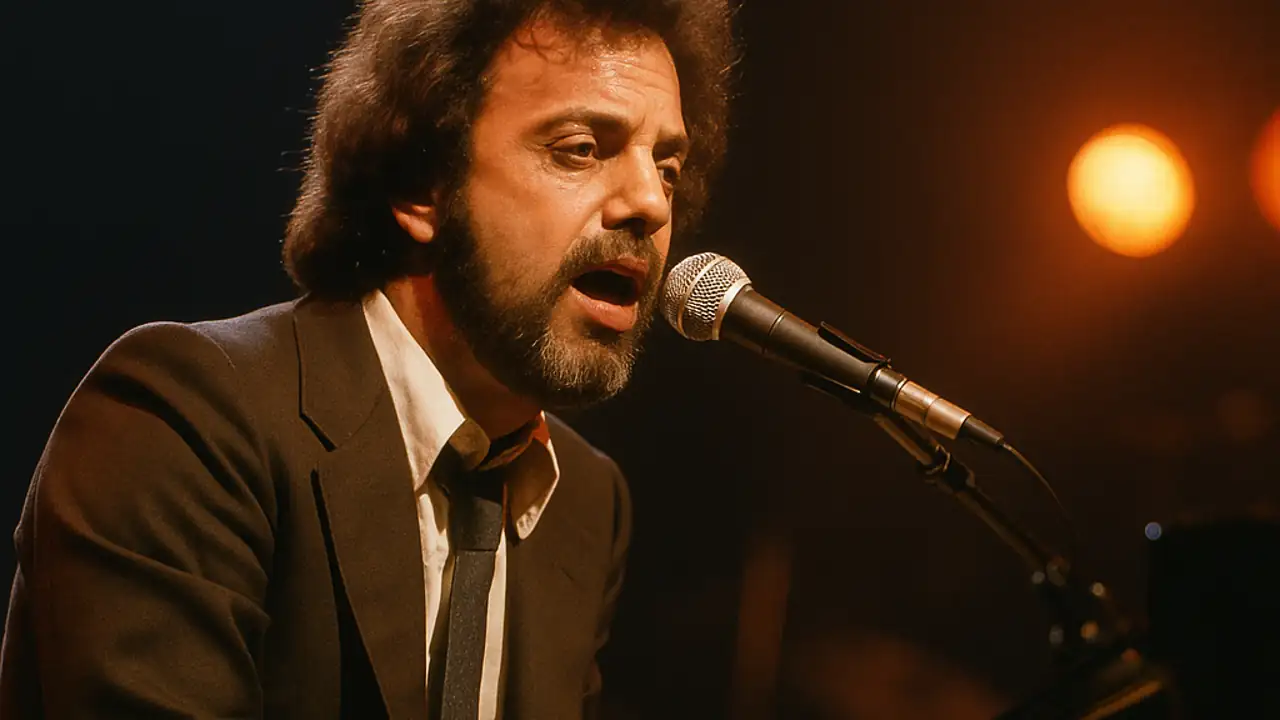
🎧 Enjoy This Article in Audio
You can quickly grasp the key points of this article through narration.
If you would like to get a feel for “The Stranger” and understand the flow of the article before reading, start with the narration.
🎶 English Narration
An English audio introduction to the content of this article.
🎵 日本語
A Japanese audio introduction to the content of this article.
Listening first can make it easier to understand the atmosphere of “The Stranger” and the key points of the article.
🎹Today Is Billy Joel’s Birthday
Billy Joel was born on May 9, 1949, in the Bronx, New York. Centering his music on the piano while drawing from rock, pop, jazz, and other styles, he became one of the defining American singer-songwriters to emerge from the 1970s onward.
Among his best-known songs are “Piano Man,” “Just the Way You Are,” “My Life,” “Honesty,” and “Uptown Girl.”
Among his albums, The Stranger, released in 1977, was the work that propelled Billy Joel to worldwide stardom. “Just the Way You Are” went on to win both Record of the Year and Song of the Year at the Grammy Awards.
A Free Poetic Interpretation
We all hide a face somewhere deep inside.
The more we love, the longer its shadow can grow.
Kindness, desire, weakness—each belongs to us.
And one night, we may meet ourselves as though meeting a stranger.
First, Watch the Official YouTube Video
🎵 Credits
Song: The Stranger
Artist: Billy Joel
Written by: Billy Joel
Producer: Phil Ramone
Engineers: Jim Boyer, Phil Ramone
Album: The Stranger (1977)
Recording Studio: A&R Recording, New York
Label: Columbia Records
The song opens with a quiet piano and that unforgettable whistle. Then, almost without warning, the mood shifts and a tense, driving rhythm takes over. “The Stranger” explores the hidden faces people keep from one another and the parts of the human heart that even those closest to us may never completely understand.
This performance captures Billy Joel in 1977. Compared with the polished studio recording, the live version reveals a more immediate energy—the momentum created by Joel’s piano, his voice, and the band working as one.
When I First Heard This Song
| My Age | Elementary School | Junior High | High School | University | 20s | 30s | 40s | 50s | 60+ |
| Release Year | 1978 | ||||||||
| When I Heard It | ● |
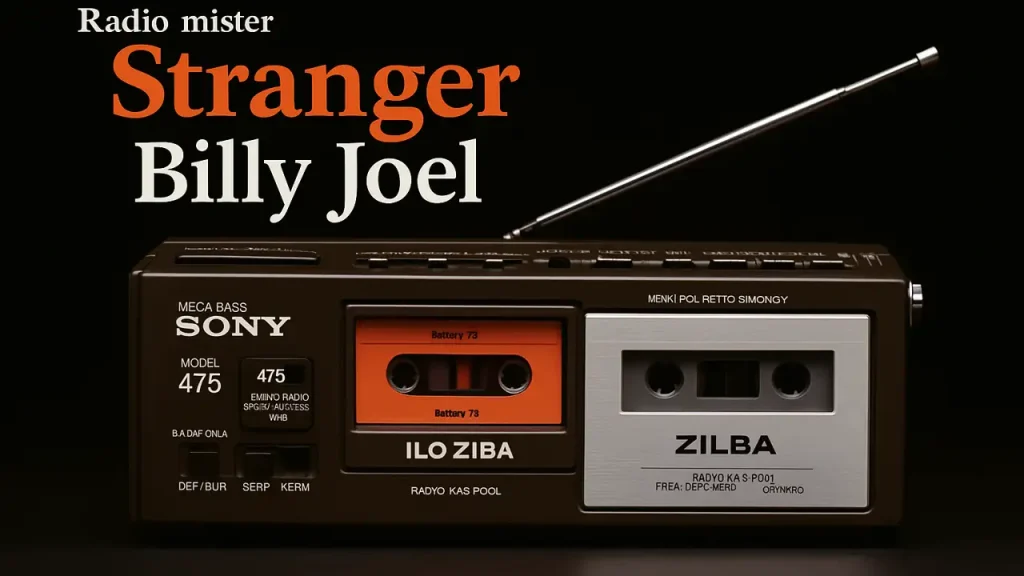
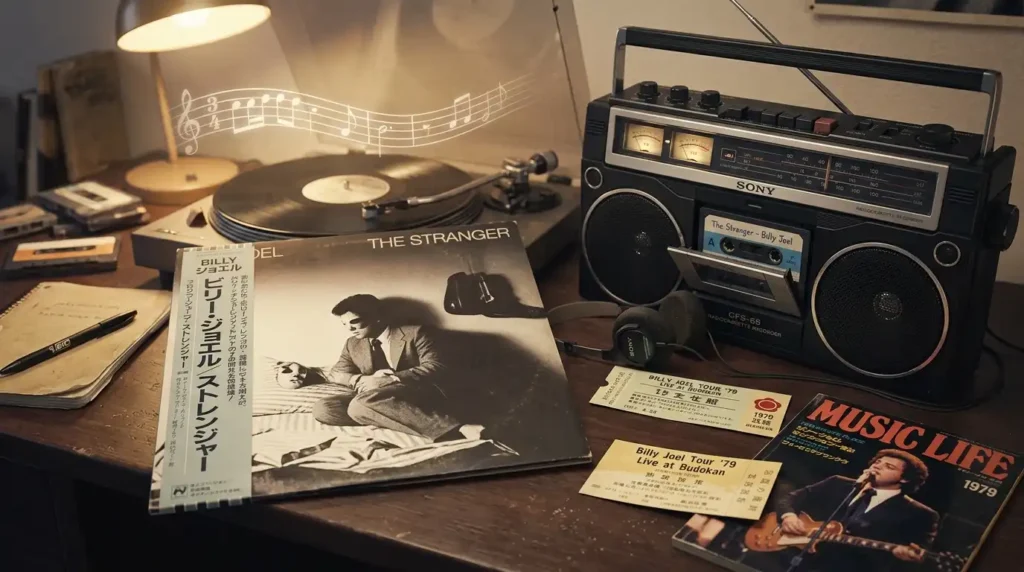
I first heard “The Stranger” around 1978, when I was in my second year at university. What remains strongest in my memory is hearing the song in a television commercial for Sony’s ZILBA-P stereo radio-cassette player.
The first thing that caught my ear was, of course, that whistle. It sounded slightly lonely, yet it also carried a sophisticated urban atmosphere unlike the ballads I had been listening to. Then, from that restrained opening, the rhythm suddenly began to move. That contrast drew me in immediately.
🎧 Sony’s ZILBA-P Commercial and the Song’s Huge Success in Japan
In 1978, “The Stranger” was used in a television commercial for Sony’s ZILBA-P series of stereo radio-cassette players.
At the time, recording FM broadcasts onto cassette tape—known in Japan as “air-checking”—was becoming popular among young listeners, and the radio-cassette player itself had become a symbol of a new way of enjoying music.
Along with the television commercial, radio airplay and cable broadcasting helped push the song further. Released in Japan as a single, “The Stranger” quickly climbed the charts.
It reached No. 2 on the Oricon weekly singles chart dated August 21, 1978. With sales of roughly 500,000 copies, an extraordinary figure for a Western song in Japan at the time, it also became the country’s best-selling Western single of 1978.
How The Stranger Changed Billy Joel’s Career
The album The Stranger was released on September 29, 1977. It was Billy Joel’s fifth studio album and his first album produced by Phil Ramone.
Joel had already gained recognition with “Piano Man” in 1973, but the albums that followed had not yet turned him into a major commercial star.
The Stranger brought together his gifts as a songwriter and the strength of a band sharpened through live performance, capturing both in the studio with remarkable clarity.
The result was a breakthrough.
The album reached No. 2 on the Billboard 200. Four songs entered the U.S. Top 40: “Just the Way You Are,” “Movin’ Out (Anthony’s Song),” “She’s Always a Woman,” and “Only the Good Die Young.” Billy Joel had arrived as a major star.
1977: A Turning Point in Popular Music
The year 1977 was also a moment when popular music was branching out in dramatically different directions. Fleetwood Mac achieved enormous success with Rumours, while the Sex Pistols pushed punk into the cultural spotlight. By the end of the year, the film Saturday Night Fever helped turn disco into an even larger global phenomenon.
Billy Joel, however, did not simply chase one of those trends. Rock remained his foundation, but he naturally blended in jazz, R&B, Broadway-style drama, and a piano language shaped by classical training.
That flexibility is one reason The Stranger has never felt trapped inside a single era.

A Striking Sound That Begins with a Quiet Whistle
One of the most memorable features of “The Stranger” is the sharp contrast between its opening and the body of the song. Piano and whistle create a quiet, almost suspended space. Then bass and drums enter, and the song suddenly surges forward.
What matters is that this is more than a simple shift from quiet to loud. The introspective atmosphere of the introduction and the tense rhythm of the main section mirror the dual nature of the human personality explored in the lyrics.
Who Is “The Stranger”?
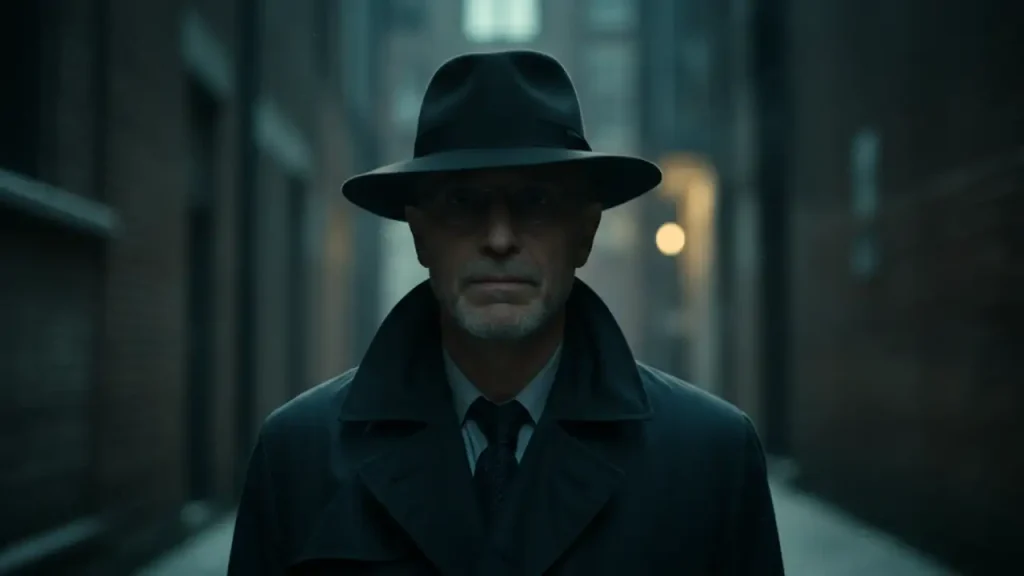
The “stranger” in this song is not an unknown person passing by on the street. Billy Joel is describing the hidden face within ourselves and within the people we love—the face we do not usually show.
Even when we love someone and share many secrets, we do not reveal everything. Alongside kindness, we carry desire, weakness, jealousy, and fear. “The Stranger” quietly suggests that those hidden impulses are not separate from us; they are part of being human.
That is why the song goes beyond the boundaries of a simple love song. Can we ever fully understand the person we love? And how completely do we understand ourselves? Those questions remain long after the music ends.
Hearing Billy Joel at the Nippon Budokan in 1979
I have another memory connected with Billy Joel that I have never forgotten: his concerts at the Nippon Budokan in Tokyo on May 21 and 22, 1979. The shows were part of the tour that followed the success of 52nd Street, and they marked Billy Joel’s second visit to Japan.
I attended one of those two concerts, although after all these years I can no longer remember whether it was May 21 or May 22.
What I do remember is the stage itself. In my memory, several pianos were set up, and Billy Joel moved across the stage with remarkable energy as he performed. It was completely different from the static image one might have of a singer simply sitting at a piano. I was struck by the sheer physical presence of Billy Joel as a rock musician.
As a university student, I had the chance to hear a world-class artist perform at the Nippon Budokan in Tokyo.
Looking back, it was an extraordinary experience.
And now, I feel even more grateful to my parents for allowing me to make that trip to Tokyo.
Why “The Stranger” Became Such a Special Song in Japan
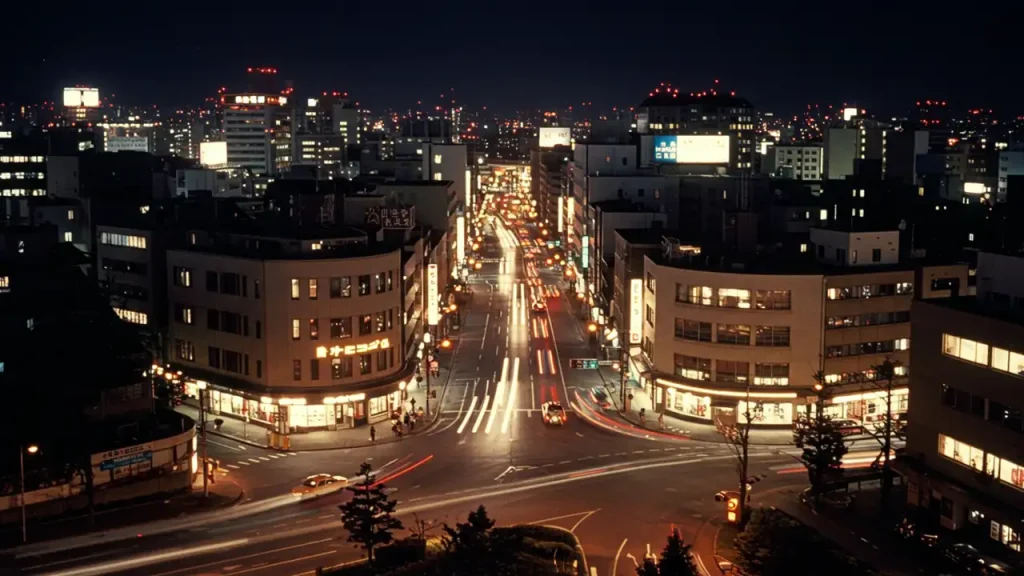
Looking back at the history of “The Stranger,” one fact is especially interesting. The song was not released as a single from the album in the United States, yet in Japan it received its own single release and climbed all the way to No. 2 on the Oricon chart.
In other words, the song’s prominence in Japan was not simply imported from its success in America. Concert appearances, radio and cable airplay, and Sony’s ZILBA-P television commercial all came together. Japanese listeners themselves helped turn “The Stranger” into a major hit.
That Whistle Still Takes Me Back to 1978
For me, “The Stranger” is more than simply one of Billy Joel’s signature songs.
The moment I hear that whistle, the atmosphere of the days when I first saw the Sony radio-cassette commercial returns. Beyond that memory lies the Nippon Budokan in 1979. Music has a mysterious power to preserve not only sound, but also the time and place in which we first heard it.
Nearly half a century after the release of The Stranger, the song has not lost its power. The quiet whistle, the sudden forward rush of the rhythm, and the lyrics that look into the unknown self hidden within us—all of these elements still belong to one complete and compelling world.
For me, “The Stranger” is a song in which my memories of 1978 and Billy Joel’s music are still playing together in the same place.
“`


音楽ファン同士の交流・リクエストはこちら / Connect & Request Songs Here