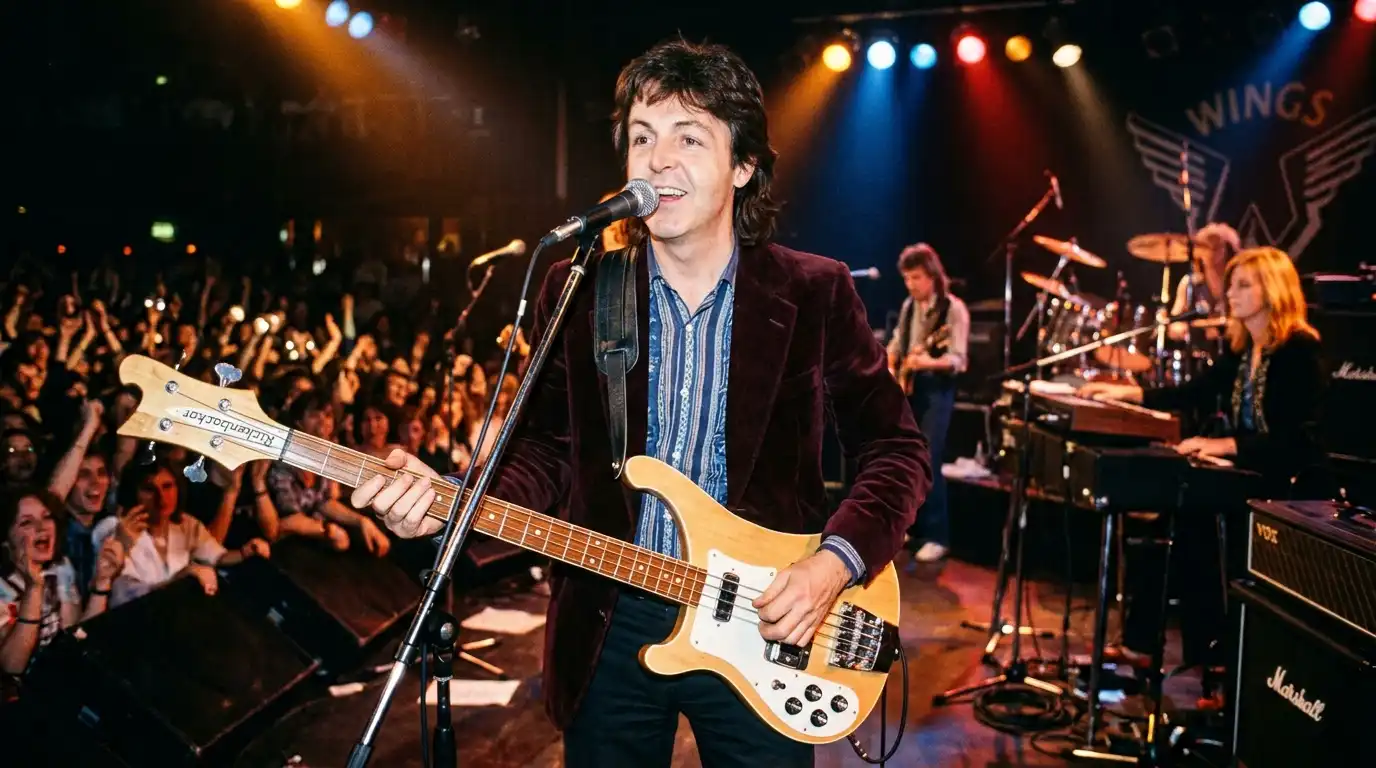
Explore Paul McCartney’s Journey Here!
🎧 Enjoy This Article in Audio
Listen to a concise narration covering the main points of this article.
Recommended for readers who want to understand the power of “Live and Let Die” and the overall flow of the article before reading.
🎶 English Narration
An English narration introducing the content of this article.
🎵 Japanese Narration
A Japanese narration introducing the content of this article.
Listening first will make it easier to grasp the musical character of “Live and Let Die” and the article’s main points.
No. 15 is “Live and Let Die.”
Paul McCartney’s “Live and Let Die” ranks No. 15 in my personal Top 15.
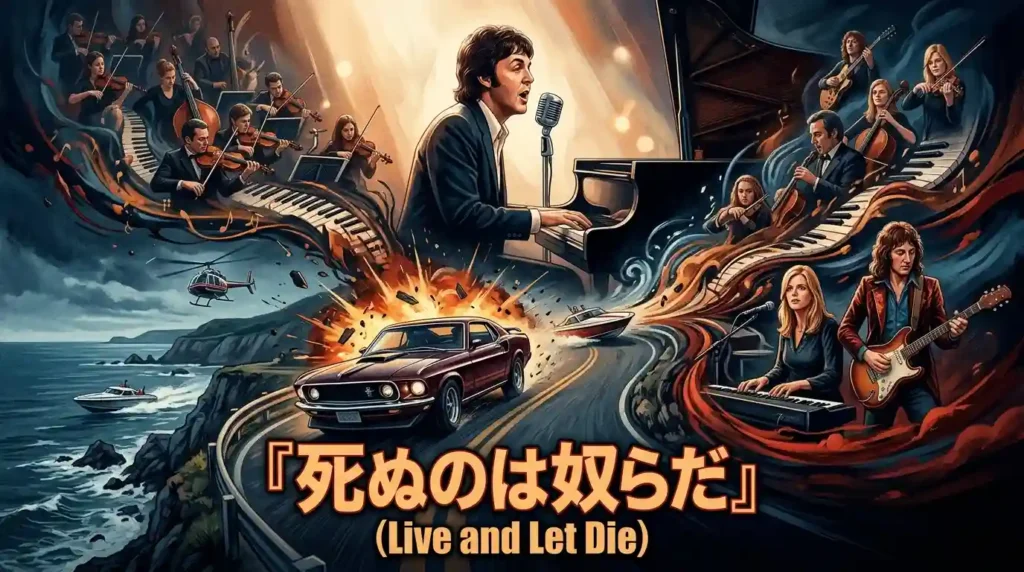
Released as a single in June 1973, it became one of the most distinctive James Bond themes and a defining song of the Wings era.
It reached No. 9 on the UK Singles Chart and No. 2 on the Billboard Hot 100 in the United States. It also became the first James Bond theme song to receive an Academy Award nomination for Best Original Song.
The song begins with a restrained piano and vocal, only for an orchestra and rock band to surge forward together moments later. In the middle, the music shifts into a lighter rhythm before returning to a tense, forceful arrangement. In just over three minutes, the song repeatedly changes direction.
At the time, Paul McCartney was trying to establish Wings as a new band after beginning his post-Beatles career as a solo artist. Released after the success of “My Love,” “Live and Let Die” demonstrated not only Paul’s songwriting ability, but also Wings’ capacity to take on a major international film project.
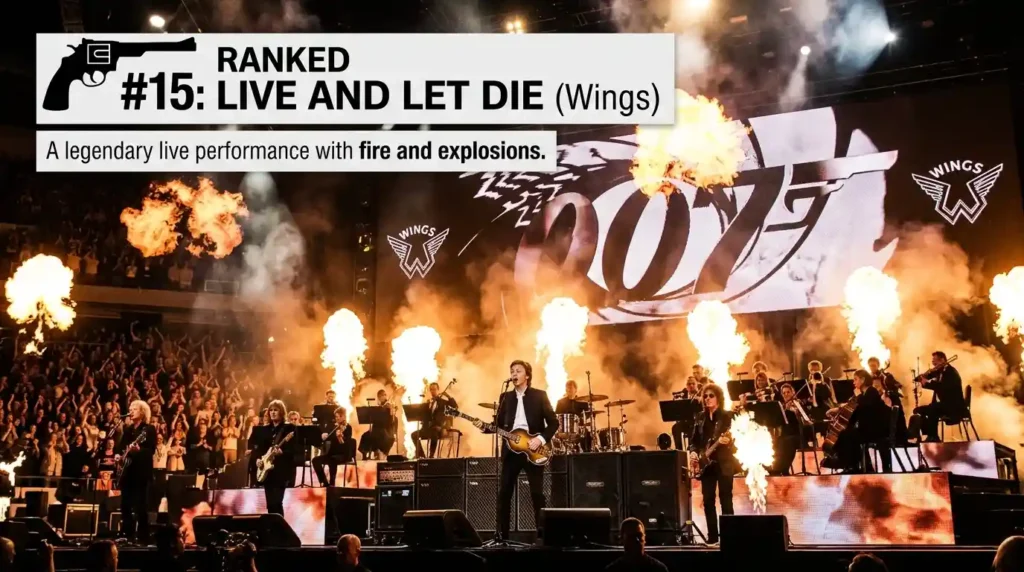
I had no intention of opening this Top 15 with a quiet, understated song.
This is a song that burst beyond the cinema screen, expanded through George Martin’s orchestral arrangement, and eventually became one of Paul’s defining concert spectacles, complete with flames and explosions.
My Personal Top 15 Paul McCartney Songs begins with the first explosive strike delivered by “Live and Let Die” at No. 15.
Interpretive Translation
When I was young, I believed that I could live my own life and allow others to live theirs.
But in a world that keeps changing, those words alone are not enough.
Once you decide that a task must be done, cast hesitation aside and move forward.
When life and death hang in the balance, your resolve will be tested.
First, listen to the official YouTube recordings.
Common Credits
Song: Live and Let Die
Written by: Paul McCartney and Linda McCartney
Lead Vocal: Paul McCartney
Official Source: Paul McCartney’s official YouTube channel
Recording Credits
Artist: Paul McCartney & Wings
Recording: Original 1973 studio recording
Release shown in the video: Pure McCartney
Producer: George Martin
Orchestral Arrangement: George Martin
Two-Line Commentary
Released in 1973, this recording served as the theme song for the James Bond film Live and Let Die.
George Martin’s orchestral arrangement collides with Wings’ rock performance in one of Paul McCartney’s defining works.
Performance Credits
Artist: Paul McCartney
Release: Good Evening New York City
Venue: Citi Field, New York City
Recorded during: Concerts held on July 17, 18, and 21, 2009
Executive Producer: Paul McCartney
Two-Line Commentary
This official recording appears on the 2009 live release Good Evening New York City.
The performance and the roar of the Citi Field audience capture the modern concert identity of “Live and Let Die.”
A Song That Began with a Film Title
“Live and Let Die” was not a song Paul began writing without restrictions. Because it was intended as the theme for the James Bond film Live and Let Die, he had to incorporate the predetermined title into the lyrics and create a work suited to the world of James Bond.
“Live and Let Die” is not an expression that would arise naturally in everyday conversation. The title transforms the familiar phrase “Live and let live,” combining an affirmation of life with a stark reference to death.
Finding the Musical Shape in Ian Fleming’s Novel
After receiving the assignment, Paul read Ian Fleming’s original novel and absorbed its atmosphere before beginning to compose. Rather than writing music to accompany individual scenes from a completed film, he shaped the impressions he drew from the title and story into a song that could stand independently.
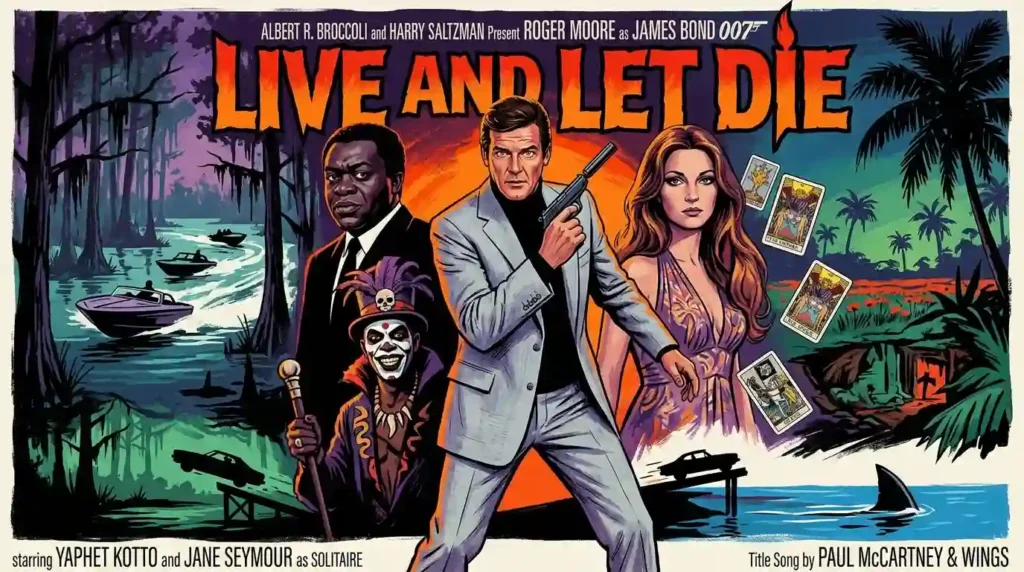
Paul did not choose to write a theme song that maintained one tempo and mood from beginning to end. Instead, he moved between a quiet vocal passage, urgent orchestration, forceful rock, and a lighter central section, using sound alone to evoke a film filled with rapidly unfolding dangers.
More Than a Promotional Song Repeating the Title
Paul did not create a theme designed merely to advertise the film title. The opening presents a person discovering that beliefs held in youth no longer function so easily in a rapidly changing world. That uncertainty establishes a path toward the title’s far harsher declaration.
The lyrics do not simply celebrate ruthless behavior. They follow a person who once held an idealistic view of life but is forced to make a different judgment when confronted by danger. Through that shift, the film’s title begins to sound like the troubled decision of an individual rather than a detached slogan.
George Martin’s Design for Sudden Musical Change
Paul once again worked with George Martin, who had helped shape so many Beatles recordings. Martin served as producer and orchestral arranger, bringing Paul’s contrasting musical ideas together within a single composition.
The orchestra is not used merely to make the band sound grander. It lifts the melody, abruptly redirects the music, and carries the listener into each new stage. Martin’s arrangement is not background decoration; it is one of the principal forces governing the structure.
An Explosion That Shatters the Quiet Piano Opening
At the beginning, Paul’s restrained vocal and piano create an atmosphere of private reflection. Immediately after the title is sung, however, brass, strings, percussion, and electric guitar charge into the recording.
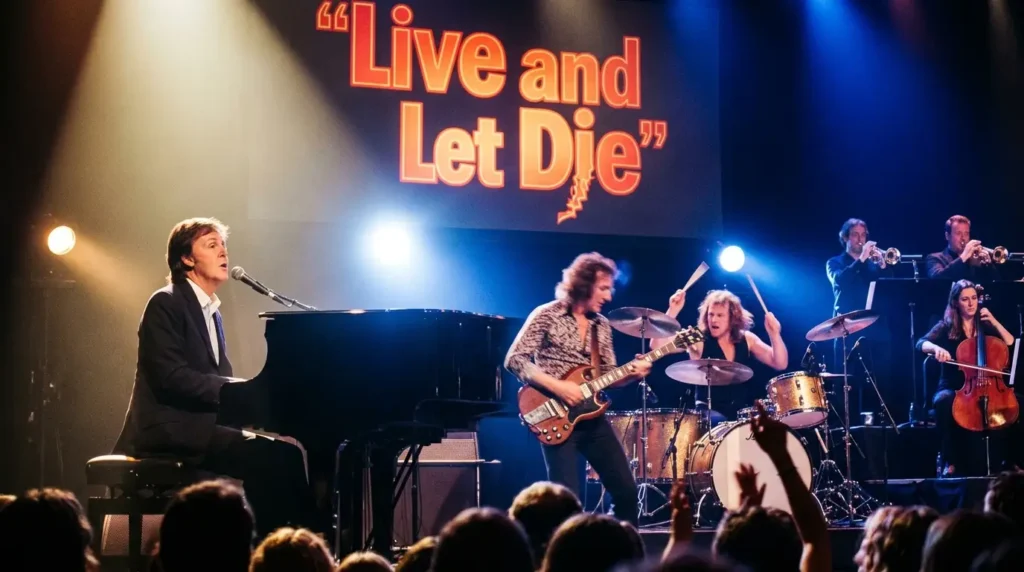
The power of this transition does not come from volume alone. The narrow sonic range of the opening suddenly expands, while the rhythm accelerates. The listener feels as though the ground has shifted without warning.
The Orchestra Takes the Place of the Screen
The sharp ascent of the brass, the restless movement of the strings, and the pounding percussion suggest pursuit, collision, and explosion. Even listeners who have not seen the film can imagine the action because the orchestra performs with a strong sense of physical motion.
Rather than blending rock and orchestral music into a smooth, unified surface, the arrangement brings them into direct confrontation. That collision gives the song its raw force and cinematic scale.
The Reggae-Flavored Rhythm in the Middle
After the intense orchestral and rock passages, the song moves into a lighter rhythm influenced by reggae. The section evokes the Caribbean setting of much of the film and contrasts sharply with the weight of the orchestral arrangement.
Yet this middle section offers no genuine sense of comfort. The relaxed vocal delivery and swaying rhythm make the atmosphere more unsettling rather than less. Although the surface sounds light, uncertainty remains over what may happen next.
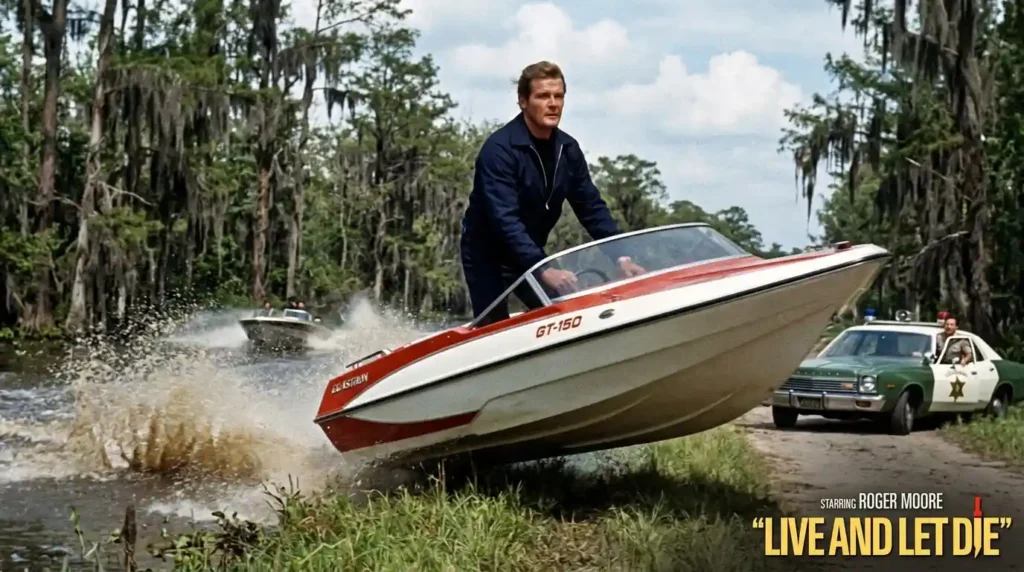
Quiet, explosion, lightness, and tension returning once again.
In “Live and Let Die,” the changes in musical character drive the story forward.
A Global Assignment Seized by Wings
By 1973, Wings had already taken “My Love” to No. 1 in the United States.At the same time, the band’s debut album, Wild Life, had received harsh criticism, and Wings were still building a body of work that could establish them as something distinct from the Beatles.
For that reason, the success of a James Bond theme at this stage carried considerable importance. The recording reached the world under the Wings name rather than relying solely on Paul’s reputation, and it continued to thrive as an independent hit long after the film’s initial release.
Bringing the Speed of Rock into a James Bond Theme
Earlier James Bond themes had often relied on lavish orchestration and commanding vocal performances. Paul retained that tradition while moving electric guitar, drums, and sudden tempo changes to the foreground.
By bringing the physical excitement of rock directly into a composition that still retained the scale of film music, “Live and Let Die” broadened the possibilities of the James Bond theme. It demonstrated that such a song could do more than open a film; it could also become the centerpiece of a major concert.
The First James Bond Theme Nominated for Best Original Song
“Live and Let Die” became the first theme in the James Bond series to receive an Academy Award nomination for Best Original Song.Although it did not win, the nomination showed that the composition written by Paul and Linda was being recognized for its musical achievement, not merely for its association with a popular film.
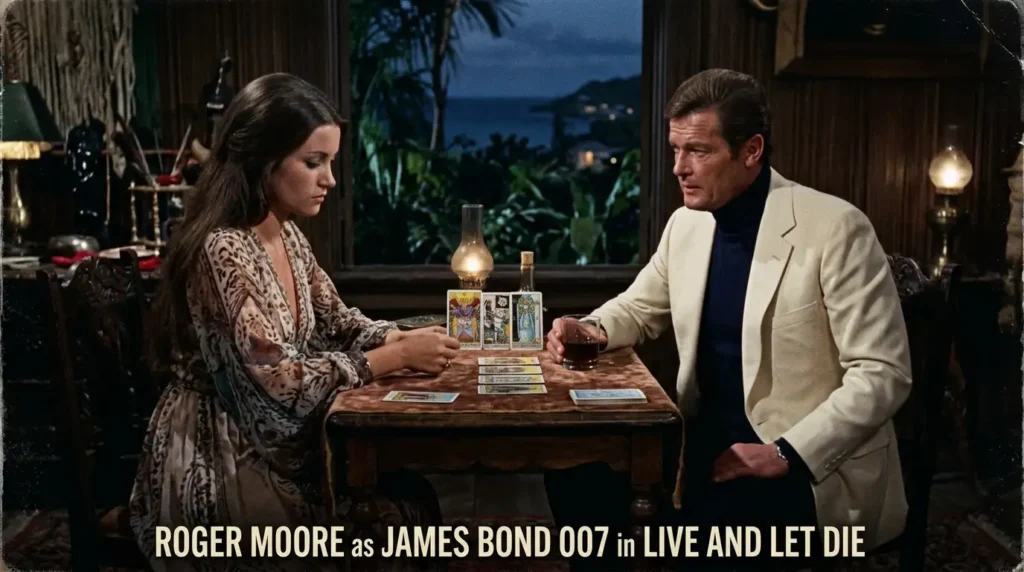
George Martin’s arrangement also won a Grammy Award. The result reflected the distinct contributions of Paul’s composition, Wings’ performance, and Martin’s orchestral writing.
A Signature Song Transformed in Concert
In the studio recording, changes in the music invite the listener to imagine danger and explosions. In concert, those ideas appear physically before the audience as flames, fireworks, flashes of light, and explosive sound effects.
Taken in isolation, such effects might seem like spectacle detached from the music. In “Live and Let Die,” however, the flames and explosions coincide with the song’s structural turning points. Because the visual production makes the movement already present in the recording visible, the staging does not overpower the music.
How the Studio Recording and Live Performance Differ
- The studio recording condenses the movement of a film into just over three minutes through precise editing and arrangement.
- The live performance absorbs the audience’s roar and the visual effects, turning the entire venue into part of the work.
- The essential feature shared by both is the sharpness of the moment when the quiet vocal passage gives way to the explosive arrangement.
The song also became one of the major highlights of Paul’s concerts at Citi Field in New York on July 17, 18, and 21, 2009. The official live release Good Evening New York City captures those performances together with the roar of the audience.
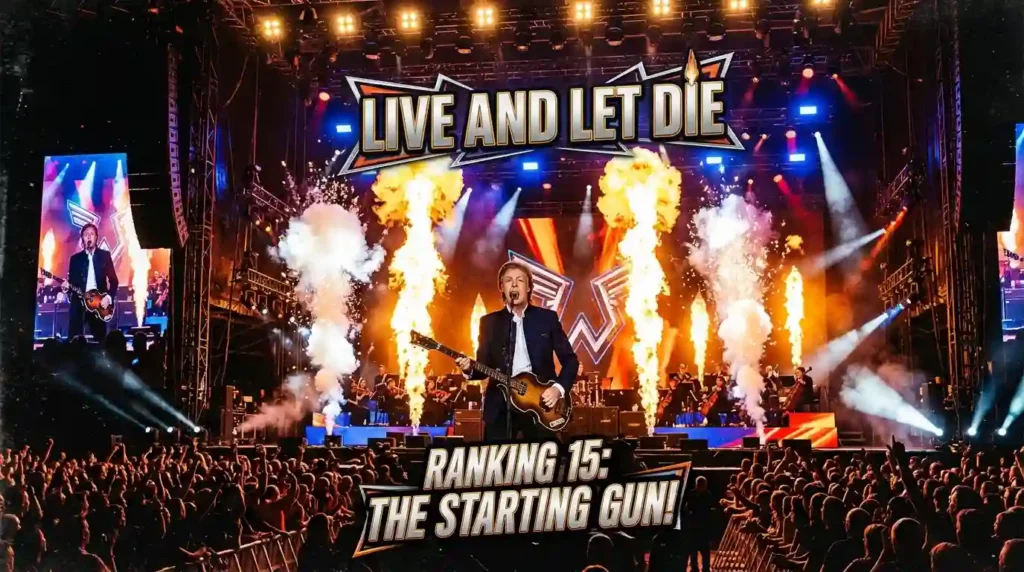
The Moment I Wait for Even Though I Know It Is Coming
Even though I know every turn in the song, the opening piano still makes me wait for the moment when the orchestra comes crashing in. The surprise of hearing it for the first time cannot be recreated, but the anticipation created by knowing what is about to happen never disappears.
I do not return to the song simply because I remember its melody. The music, held quietly in place, suddenly expands and changes the atmosphere of the entire venue. Experiencing that instant is one of the great pleasures of hearing “Live and Let Die” in concert.
Why I Chose It for No. 15
Considering its fame and enduring popularity in concert, “Live and Let Die” could easily have been placed higher. I chose No. 15 because I believed it would make the most vivid possible opening to my Paul McCartney Top 15.
The song brings together an accessible melody, the ability to unite several contrasting musical ideas, an understanding of orchestral writing, the forward momentum of a rock band, and an instinct for startling an audience. It allows Paul’s many-sided talent to emerge from the very first entry.
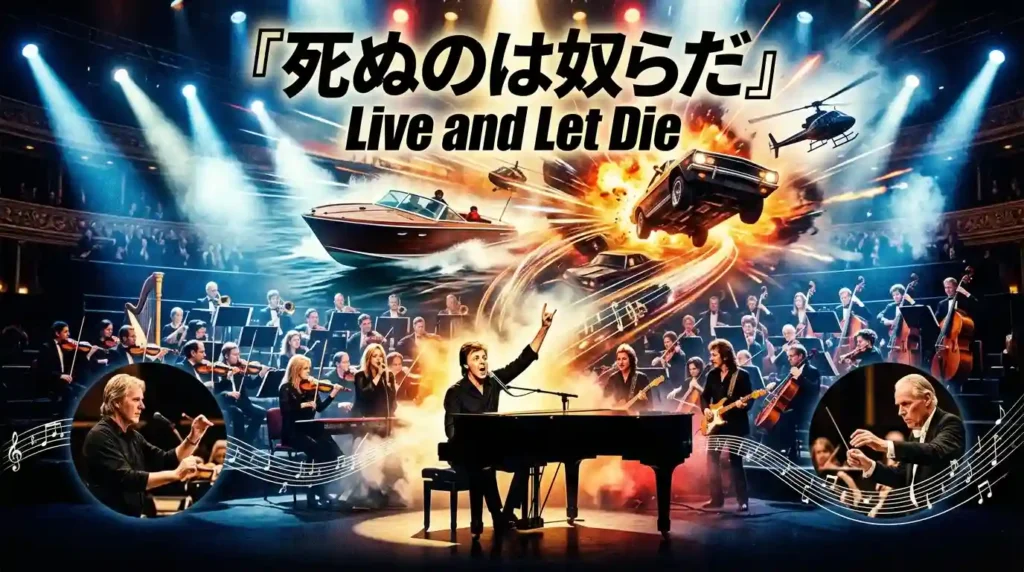
A Signature Song and an Unusual Work Born from a Film
At the same time, the song was created in response to the clearly defined subject of a James Bond film. Its starting point differs from songs drawn directly from Paul’s personal life and emotions, or from compositions written to define the character of an entire album.
In this ranking, I placed works that reveal Paul’s outlook on life more directly, or that determined the direction of a complete album, above it. That is why “Live and Let Die” stands at No. 15. I did not lower it because of a lack of quality; I positioned it here in recognition of its distinctive identity as a film theme.
The Perfect Force for the First Entry
Ahead lie love songs, rock performances, meticulously constructed pop, and works that confront the course of a human life. The song opening that sequence needed the power to seize the listener’s attention at once.
Beginning with a quiet piano and carrying the listener into a completely different landscape within seconds, “Live and Let Die” fulfills that role. No. 15 is not merely the lowest position in the ranking. It is the position that sets all fifteen songs in motion.
In Closing
Although “Live and Let Die” was written around a predetermined film title, Paul created a structure that exceeded the usual boundaries of a theme song. Rather than simply inserting the title into the lyrics, he extended its dangerous implications across the movement of the entire composition.
George Martin’s arrangement transforms the small world of piano and voice into a large-scale chase sequence within seconds. Wings, meanwhile, retain the force of a rock band without being overwhelmed by the power of the orchestra.
Born for a film, driven high on the charts, and transformed into one of the defining spectacles of Paul’s concerts, “Live and Let Die” has continued to grow far beyond its original assignment.
My Personal Top 15 Paul McCartney Songs begins with the first shock delivered by this extraordinary recording.
音楽ファン同士の交流・リクエストはこちら / Connect & Request Songs Here