
The history of Kobukuro is…Click here!
🎧 Listen to This Article
You can quickly explore the main points of this article through English and Japanese narration.
Listen before reading to understand the story of hometown, farewell, and a new beginning in “Koko ni Shika Sakanai Hana,” as well as the overall flow of the article.
🎵 English Narration
This audio introduces the article in English.
🎶 Japanese Narration
This audio introduces the article in Japanese.
Listening first makes it easier to understand the memories, sorrow, and determination to move forward expressed in “Koko ni Shika Sakanai Hana,” along with the main points of the article.
No. 3 Is “Koko ni Shika Sakanai Hana”
My Personal Top 10 Kobukuro Songs has now reached Number 3. From this point onward, I think the remaining songs will be close to what many longtime Kobukuro listeners would expect to find near the top.
My choice for Number 3 is “Koko ni Shika Sakanai Hana,” released on May 11, 2005. Written and composed by Kentaro Kobuchi, the song was created as the theme for the Nippon TV drama Ruri no Shima. It was later included on the album NAMELESS WORLD, released in December of the same year.

The song begins with affection for a remembered place, but it gradually moves toward the pain of farewell and the will to begin walking again. The sea, wind, rain, flowers, rainbow, and stars form a continuous sequence, transforming one person’s memories into an expansive landscape.
I chose the song for Number 3 because several interpretations coexist within it without competing with one another. It can be heard as a song about one’s hometown, a farewell, or a new beginning. Its emotional range allows listeners to connect the song with their own experiences.
A Free Interpretation
Even across a great distance, there are places and people the heart cannot forget.
The tears of farewell and the scars left along the road become proof of a life truly lived.
Beyond the muddy road after the rain, what was lost begins to take the form of a new light.
Believing that even tears may one day become stars, I begin to walk forward again.
💡 You might also like: View the original Japanese lyrics (External site)
If the lyrics are available only in Japanese, you can use your browser’s translation feature or an AI translation tool to understand their general meaning.
First, Listen on YouTube
Shared Credits
Title: Koko ni Shika Sakanai Hana
Artist: Kobukuro
Lyrics and Music: Kentaro Kobuchi
Arrangement: Kobukuro
Label: Warner Music Japan
Release Date: May 11, 2005
Album: NAMELESS WORLD
Media Tie-In: Theme song for the Nippon TV drama Ruri no Shima

“Koko ni Shika Sakanai Hana” was released as Kobukuro’s eleventh single. Through images of a deep-blue sea and an ocean breeze that recall the drama’s island setting, the song portrays affection for a distant place and the resolve to move beyond farewell.
1. Kobukuro “Koko ni Shika Sakanai Hana”
Video Credits
Format: Official video
Published: March 22, 2021

Two-Line Commentary
Images that evoke a deep-blue sea, together with the duo’s voices, convey affection for a faraway place.
Beginning quietly and expanding in scale, the official video expresses the determination to move forward after a farewell.
2. “Kokonishika Sakanaihana(Live)”
Video Credits
Format: Live audio video
Performance: KOBUKURO LIVE TOUR ’09 “CALLING” FINAL

Two-Line Commentary
From the restrained opening toward the final section, the voices gain enough weight to fill the venue.
This live recording shows how a story that begins as one person’s memory gradually becomes something shared by an entire audience.
More Than a Song About Home
Where Is “Here”?
The word “here” in the title will lead many listeners to imagine a hometown or a place filled with memories. It may be an island overlooking the sea, a familiar house, or somewhere once shared with a person who mattered. The scenery in the lyrics naturally encourages such an interpretation.
Yet the song’s “here” does not necessarily refer to one fixed point on a map. It can also mean a place where the heart can quietly set down its burden, or a memory whose value becomes clear only after one has left.
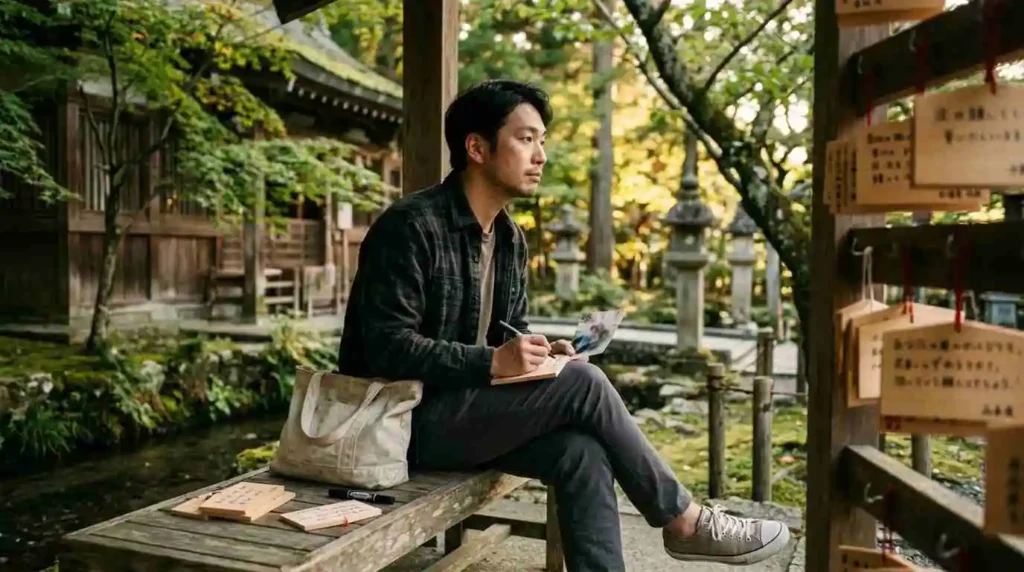
Everyone has a place they long to revisit but cannot easily return to. The streets may look unchanged, yet the people once found there may be gone, while we ourselves have continued along another path. Even a physical return cannot restore the time that has already passed.
Having a place you wish to return to
is not the same as truly being able to return.
“Koko ni Shika Sakanai Hana” understands that distance. It presents a remembered place beautifully, but it does not reduce the song to a wish to recover the past.
The Pain of Watching Someone Disappear
Within the song, a person continues to smile and repeatedly turns back while gradually moving farther away. The one who remains watches without being able to express everything held inside.

A farewell does not end at the moment of separation. Later, a laugh may return to the mind, and a familiar voice may seem to arrive from beyond the sound of the waves. Memory returns without waiting for permission.
The emotion here is not expressed through uncontrollable crying. Instead, the person holds back tears, watches the retreating figure, and bites their lip. Because the scene remains restrained, the weight of everything left unsaid becomes more pronounced.
The Light Beyond the Shadow
What Becomes Visible After Looking Up
The direction of the story changes when the meaning of a shadow changes. A shadow reveals the presence of darkness, but it cannot exist without light.
While looking down, a person’s gaze remains fixed on the ground. By lifting the head and looking back, however, one may discover a brightness beyond the road already travelled—a brightness that had previously gone unnoticed.
This is not a shallow instruction to think positively about everything. It means that the person who was lost will not return, and the pain will not disappear, yet there may still come a moment when we realize that darkness is not the whole world.
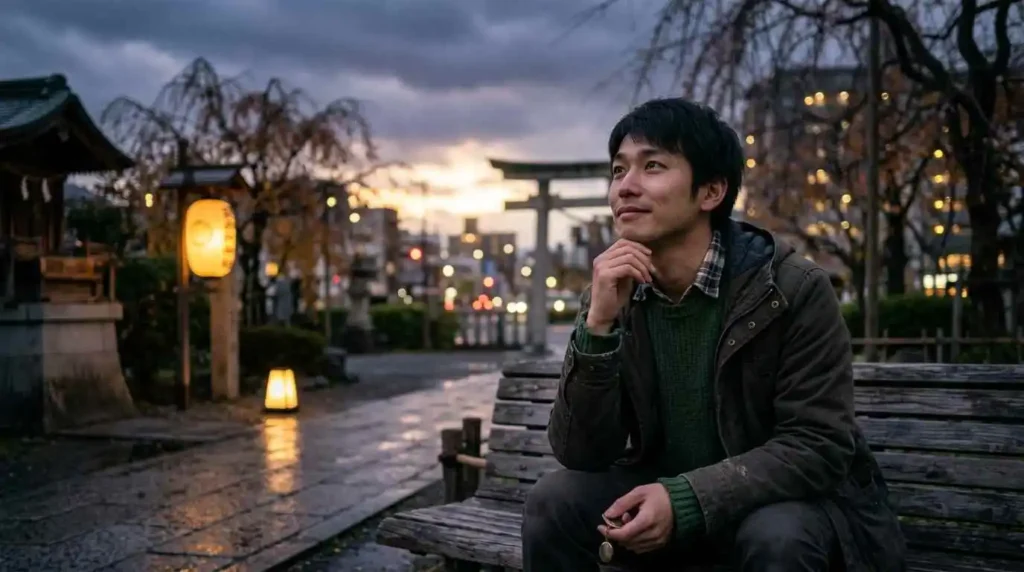
Tears as Proof of a Life Lived
Even after the rain stops, the road does not immediately become easy to walk. The sky may clear while the ground remains muddy and unsteady. In the same way, daily life does not return to normal the moment a painful experience has passed. The song does not overlook that reality.
Even so, a person can continue forward, leaving footprints in the mud. Because the road is uneven and the walker repeatedly loses balance, the marks left behind become evidence of a life genuinely lived.
Tears are not proof of weakness. They are a record of someone who lost a precious person or place and still chose to continue living.
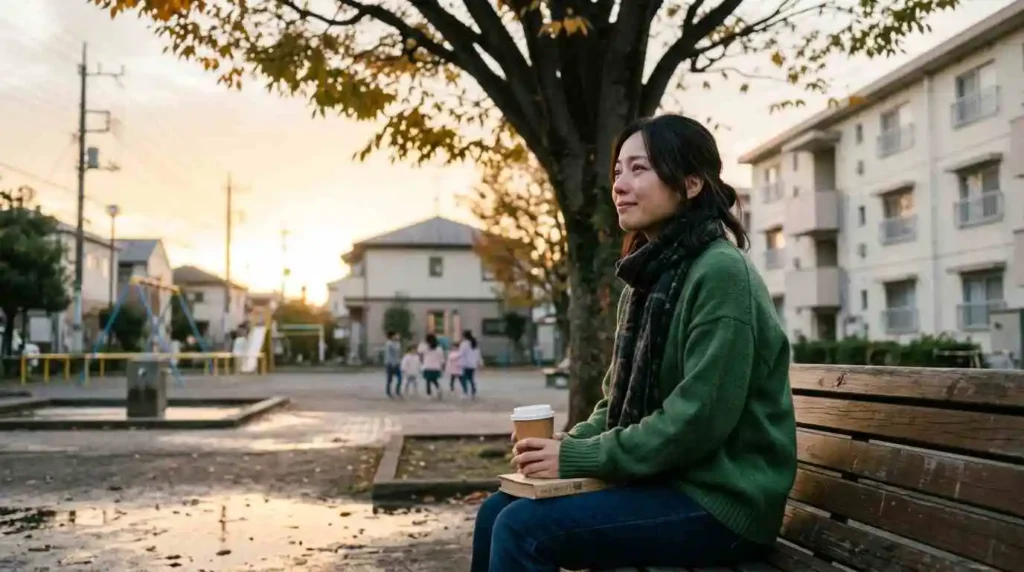
Those tears are portrayed as water that allows a fading flower to bloom again. Painful experiences can wound a person, but they may also reveal what that person has valued most deeply.
Nature Carries the Story Forward
The Sea, Wind, Flower, Rainbow, and Stars
“Koko ni Shika Sakanai Hana” contains many images drawn from nature. They do not serve as decoration. Each one carries a stage in the emotional movement of the song.
- The sea—a memory that distance cannot erase
- The wind—a wish carried toward somewhere far away
- The flower—something that can grow only in that place and in that heart
- The rainbow—a sign that appears beyond suffering
- The stars—the light into which tears and old scars are transformed

The viewpoint moves from the shore to a rain-soaked road, then across a rainbow and finally toward the stars. Through that movement, the island’s memory does not remain confined within one person. Even listeners unfamiliar with the drama can connect the story with their own hometown, family, or someone they once had to leave behind.
The Dawn Announced by “Akemodoro”
The word “akemodoro,” heard near the end of the song, is an old expression found in Omoro Soshi, a collection of ancient songs from Okinawa and the Amami Islands. It refers to the vivid light spreading across the eastern sky as the southern sun rises.
The night does not vanish in a single instant. Instead, the colour of morning emerges within the darkness. That sight mirrors the gradual change of a person who has stopped moving but eventually begins to face forward again. By placing this word near the end, the song moves beyond recollection and toward the time that is about to begin.

The View Opens with the Voices
Unspoken Feelings Held Within the Opening
In the first part of the song, the voice seems to sink inward rather than travel outward. It recalls a familiar person and place while carefully tracing the shape of what has been lost.
Calling a name does not mean that an answer will immediately come. Because the singer understands that distance, the emotion is not forced outward. A familiar laugh and the image of someone disappearing are recovered one by one from memory.
The Expanding View in the Second Half
As the song progresses, the viewpoint rises from the ground to the sea, from the sea to the sky, and then toward the rainbow and stars. The voices follow the same movement. What began inside one person’s heart grows large enough to include the memories of people who lived on that land and even wounds from an age in danger of being forgotten.

Kobukuro’s two singers are not taking turns to explain separate emotions. Their voices support a feeling that has grown too large for one person to carry alone.
What comes forward near the end is not the brightness of someone who has overcome everything. It is the weight of a person who continues to carry what cannot be erased and still chooses the next step. A song that begins with a private farewell becomes something each listener can carry back to a place of their own.
Why I Chose “Koko ni Shika Sakanai Hana” for Number 3
From Number 3 onward, my ranking probably does not differ greatly from what many listeners would predict. Considering its recognition, the depth of its words, the duo’s performance, and the strength of the composition as a whole, “Koko ni Shika Sakanai Hana” deserves its place among Kobukuro’s defining songs.
The song brings together hometown, farewell, loneliness, and a new beginning within a single landscape. Depending on the listener’s experience, it can become a song about a remembered place, a song about watching someone leave, or a song about beginning to walk again.
I placed it at Number 3 because of the breadth of those interpretations and its ability to transform pain into the strength required to continue living.
In Closing
A lost place or person cannot be recovered in exactly the same form. Even so, tears and loneliness can be accepted as part of the road we have travelled.
“Koko ni Shika Sakanai Hana” is not a song about forgetting pain. It is about a person who continues to leave new footprints, even while struggling through the mud.
Just as the colour of morning appears within a dark sky, there may come a time when the heart can face forward again. That is the hope carried by this song.

音楽ファン同士の交流・リクエストはこちら / Connect & Request Songs Here