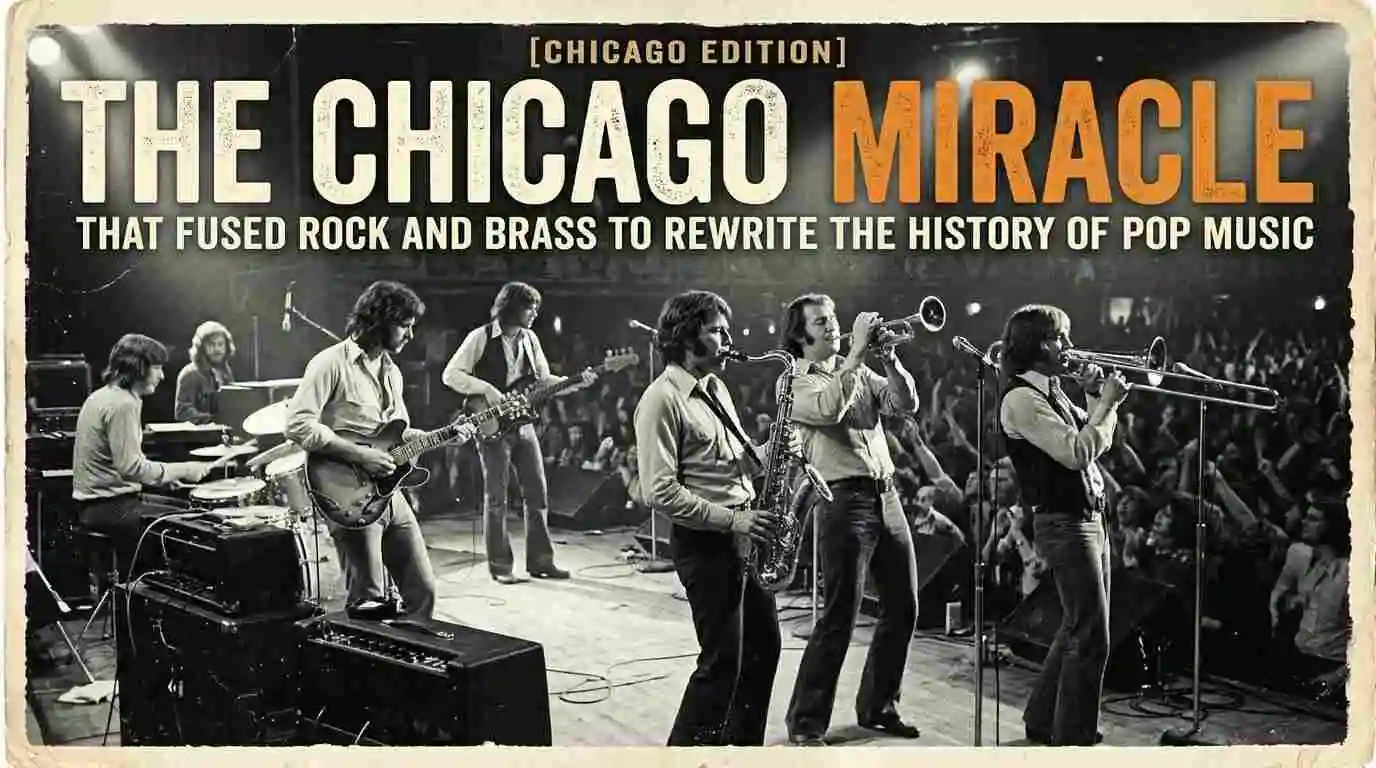
💛The “Miracle of Chicago,” which blended rock and brass to rewrite the history of pop music, can be found… right here!
- 🎧 Enjoy This Article in Audio
- Coming in at No. 7 is “If You Leave Me Now”
- First, please listen to the official YouTube audio
- The True Identity of the “Sweet Dissonance” Within This Monumental Ballad
- Deciphering a Man’s “Aesthetics of Lingering Attachment” Hidden Behind the Plea
- A Monologue of Attachment and Dependency Repeated at the Edge of a Breakup
- An Escape from Dialogue Revealed by Postponing to Tomorrow
- Looking from Brass to Strings: The “Architectural Beauty of Sound” on the Eve of David Foster
- Eternal Loneliness and “That Voice” That Lingers in the Heart
- Summary: Why I Placed It at No. 7 in My Personal Best 10
🎧 Enjoy This Article in Audio
You can quickly grasp the main points of this article through narration.
Recommended for those who want to catch the vibe of the music and the flow of the article before reading.
🎶 English Narration
An English audio introduction to the contents of this article.
⌛ Duration: Approx. 2.5 mins
🎵 Japanese Narration
A Japanese audio introduction to the contents of this article.
⌛ Duration: Approx. 2.5 mins
* Listening to the audio before reading helps you better understand the world of the music and the main points of the article.
Coming in at No. 7 is “If You Leave Me Now”
A Contemporary Ballad Spun by Peter Cetera, Following No. 8’s “Baby, What a Big Surprise”
In our previous look at No. 8, we introduced “Baby, What a Big Surprise” from the 1977 album Chicago XI, a track whose sweet yet bittersweet melody truly touches the heart.
The song taking the No. 7 spot this time, “If You Leave Me Now,” is a masterpiece steeped heavily in the atmosphere of the same era. It was released just the year before, featured on the 1976 album Chicago X.
These two songs share distinct commonalities. Both were written and composed by Peter Cetera, who also performed the lead vocals. It was an era when his signature “graceful melodies” and “high-tone vocals” vastly expanded Chicago’s pop appeal as a band.
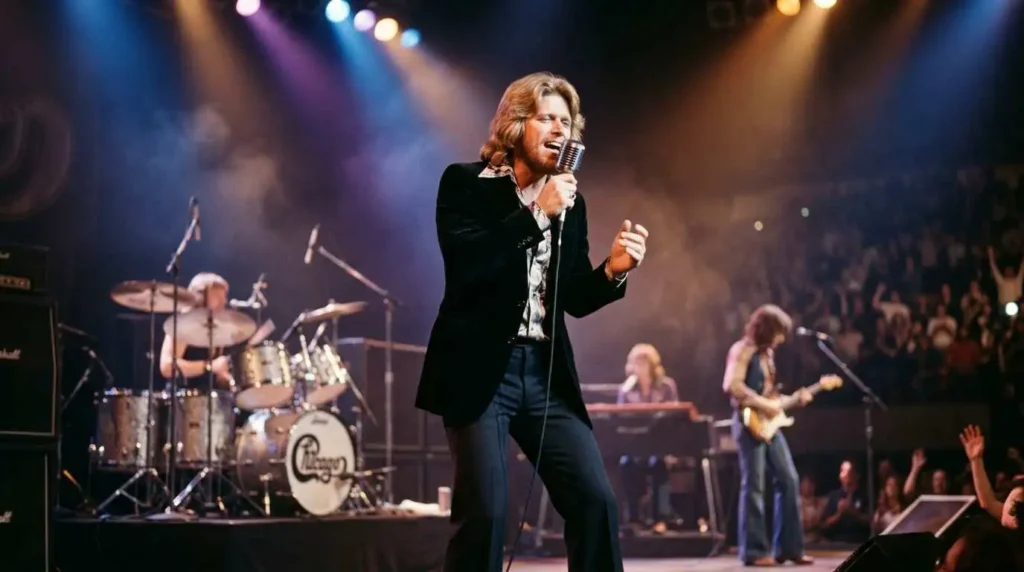
Re-listening to “If You Leave Me Now” while still feeling the lingering resonance of the fresh pop sensibility found in “Baby, What a Big Surprise” vividly reveals how the band transcended the boundaries of brass rock to arrive at a high-level “elegy for adults.”
Interpretation
If you leave, the biggest part of me and my very heart will be lost.
I do not want to destroy the love we have built together over pride or a misunderstanding.
When tomorrow comes, we will both regret the words spoken today, so please do not go.
Having you stay by my side is the only wish I have left right now.
First, please listen to the official YouTube audio
Credits
Official Audio: Chicago - If You Leave Me Now (Official Audio)
Written & Composed by: Peter Cetera
Produced by: James William Guercio
Album: Chicago X (1976)
Two-Line Review
This is one of Chicago's greatest ballads, where Peter Cetera's delicate vocals and a soft, string-laden sound pull tightly at your heartstrings. It is a track that etched a new expression leading toward soft rock and AOR onto a band heavily associated with brass rock.
The True Identity of the “Sweet Dissonance” Within This Monumental Ballad
A Bold Transition Chosen by the Giants of Brass Rock
For many music fans, Chicago was supposed to be a band of “motion.” Their sharp early messages and thrilling ensembles mixed with improvisation were their true essence—proof of their hard rock spirit. The sudden appearance of this soft track must have delivered quite a shock to enthusiastic listeners back then.
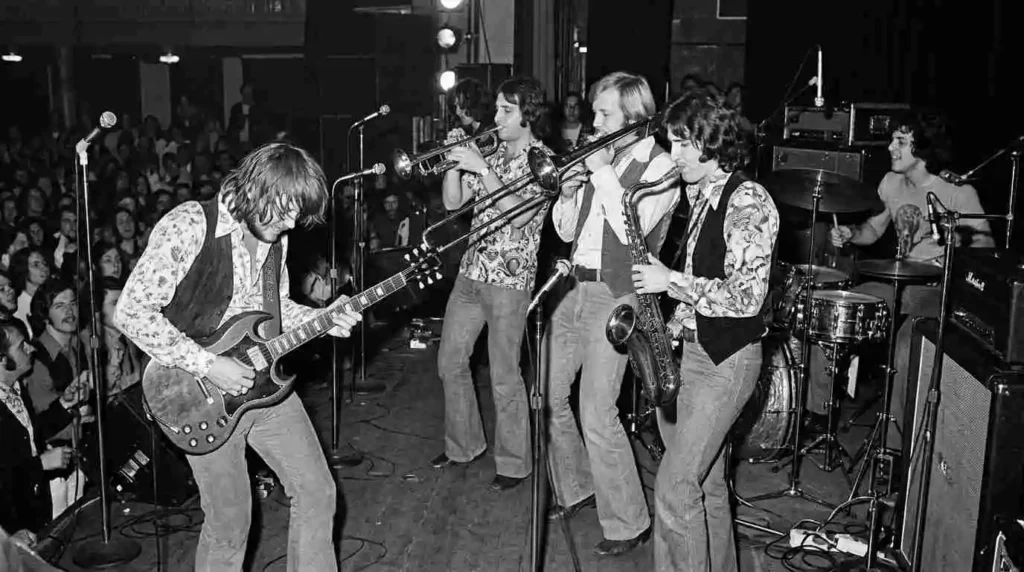
However, this transition was not a mere attempt to chase commercial hits. It was the result of redirecting the performance skills they possessed since their early days away from fierceness and toward restraint. With this song, Chicago drew listeners in not through the sheer power of brass rock, but through a composed structure with a scaled-back arrangement.
The Magic of a Soft Soundscape Woven by French Horns and Strings
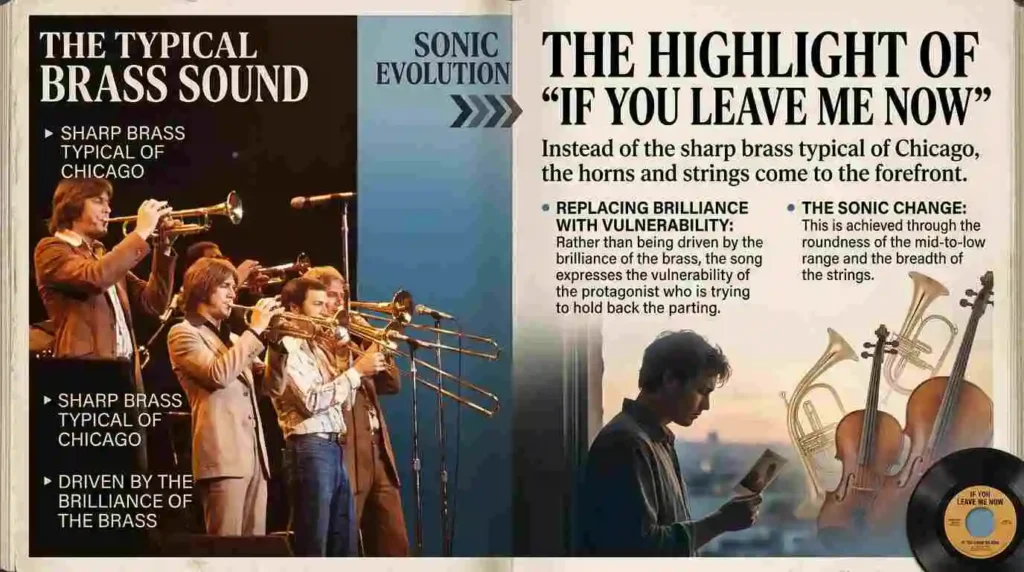
The highlight of this track is that instead of the sharp brass typical of standard Chicago songs, the French horn and strings take center stage. Rather than pushing forward with the brilliance of brass, the roundness of the lower-middle register and the expanse of the strings musically express the vulnerability of a protagonist trying to stop a breakup.
This meticulously calculated acoustic design serves as a premium stage setup that highlights Peter Cetera’s crystal-clear, high-tone vocals to the maximum extent. The skill to draw listeners in using only the gentle strumming of an acoustic guitar and the graceful swelling of string instruments—without relying on a flashy drum beat—speaks volumes about Chicago’s tremendous skill as a collective of musical craftsmen.
When listening to this song, paying particular attention to the following three elements makes it easier to see exactly what Chicago changed with this track:
- Introduction of the French Horn: Creates a classical, deep emotional texture that sets it apart from conventional brass rock.
- The Strings Approach: Prevents the song from becoming overly sugary while bringing a universal elegance and sense of scale to the entire track.
- Delicacy of the Bassline: Holds an exquisite position that never interferes with the vocals, yet gently supports the framework of the song.
Deciphering a Man’s “Aesthetics of Lingering Attachment” Hidden Behind the Plea
A Monologue of Attachment and Dependency Repeated at the Edge of a Breakup
As you read through the lyrics of this song carefully, you realize that contrary to the beauty of the brilliant melody, what is depicted is a highly raw and somewhat ungraceful side of human psychology.
What is being sung here is the exact image of a man clinging desperately to a lover who is trying to leave, simply crying out, “Don’t go.”

“If you leave me now, you’ll take away the biggest part of me”
At first glance, this incredibly straightforward line sounds like a pure confession of love. However, looking at it differently, it can also be interpreted as a painful monologue of a man who depends entirely on the other person for his reason to exist.
Precisely because it is sung over such a beautiful melody, the depth of that lingering attachment and the tremor of his heart hit our chests with even greater reality.
An Escape from Dialogue Revealed by Postponing to Tomorrow
What is even more interesting is the logic unfolded in the latter half of the lyrics: “A love like ours is love that’s hard to find / How could we let it slip away / We’ve come too far to leave we’ve two behind / Tomorrow we would both regret the things we said today.” It clearly portrays a psychological desire to look away from the critical rift right in front of him and the definitive difference in temperature that has arisen between them, choosing instead to postpone the conclusion.
Rather than an attitude of trying to solve the problem through sincere dialogue, this might be a manifestation of a human’s fragile self-preservation—fearing a violent clash of emotions and simply wishing to maintain the current relationship.
This worldview spun by Peter Cetera is not merely an ideal love song; it coldly scoops up the “dependency on love” that every human being possesses.

Looking from Brass to Strings: The “Architectural Beauty of Sound” on the Eve of David Foster
When thinking of Chicago, Terry Kath’s guitar, Robert Lamm’s songwriting, and the brass section led by James Pankow and others were huge elements of their identity. Within that context, “If You Leave Me Now” was a turning point that moved the band’s signature brass power to the background and brought Peter Cetera’s ballad quality to the foreground.
Producer James William Guercio oversaw the entire project, and the arrangement centered around strings and French horns by Jimmie Haskell maximized the amplification of Peter Cetera’s heartbreaking melody.
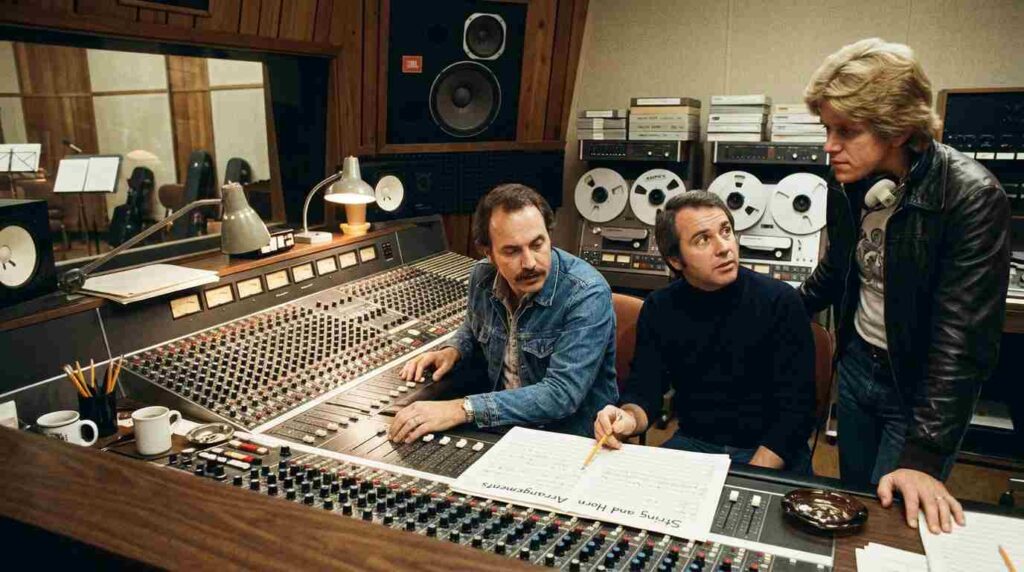
The bassline is kept intentionally simple, yet it lets a bass note resonate to pierce the chest at critical moments. This perfectly calculated “architectural beauty of sound” is precisely why it transcends the framework of a mere pop song, remaining completely unfaded even now, half a century later.
It can be said that the sophisticated AOR path of David Foster, who would later lead Chicago to global success in the 1980s, had already been brilliantly perfected as a grand prologue right here in this single track from 1976.
Eternal Loneliness and “That Voice” That Lingers in the Heart
“If you leave me now, you’ll take away the biggest part of me”
This all-too-honest phrase is a confession of love, but at the same time, it is a monologue of a man who cannot hide his fear of rejection. When Peter Cetera sings this in his high-tone voice, we cannot help but overlap the universal pain of “the end of love” onto it.
Everyone, at some point in life, must know the breathtaking loneliness of facing something they “do not want to lose” and sensing its impending end. The reason this song is called the “supreme elegy” is nothing less than its power to vividly awaken “the scene from that time” lying deep within the memories of each listener.

Summary: Why I Placed It at No. 7 in My Personal Best 10
In Chicago’s history, while this track was a monumental hit that brought them their first Billboard Hot 100 No. 1, it was also a fork in the road that significantly shook the band’s identity.
Fans who love their early, hard-edged brass rock sometimes speak of it critically as a ballad that leaned too far into pop. However, to me, this song is a miracle-like crystallization that they brought forth while enduring the kind of pain that accompanies “maturity.”

音楽ファン同士の交流・リクエストはこちら / Connect & Request Songs Here