
- 🎧 Enjoy This Article in Audio
- 🌈 The Siblings Who Changed the World with Gentleness — The Miracle of the Carpenters
- Talent Born in a California Garage
- An Encounter with A&M Guided by Setbacks
- “Close to You” — The Song That Embraced the World
- The Golden Era — The Resonance of Beauty and Precision
- A Voice That Turned Gentleness into Song
- Karen’s Final Days and Her Brother’s Vow
- The Reason the World Keeps Listening
- The Eternally Echoing “Legacy of Gentleness”
- 🌹 Onto “My Personal BEST 20” — The Beginning of Eternal Melodies
🎧 Enjoy This Article in Audio
You can quickly grasp the main points of this article through narration.
Recommended for those who want to catch the vibe of the music and the flow of the article before reading.
🎶 English Narration
An English audio introduction to the contents of this article.
⌛ Duration: Approx. 2 mins
🎵 Japanese Narration
A Japanese audio introduction to the contents of this article.
⌛ Duration: Approx. 2 mins
* Listening to the audio before reading helps you better understand the world of the music and the main points of the article.
🌈 The Siblings Who Changed the World with Gentleness — The Miracle of the Carpenters
The Era When Gentleness Rewrote the Mainstream

In the early 1970s, the world of pop music was engulfed in the heat of rock, funk, and soul.
Amidst all this, one brother and sister took a completely different path.
—The Carpenters.
There are no deafening sounds or flashy guitar solos in their music.
What exists are only crystal-clear melodies and profound sincerity.
The meticulous arrangements of her brother Richard, and the soul-stirring voice of his sister Karen.
This fusion brought a “new serenity” to the noise of the era.
“Gentleness can be the most powerful expression.”
The very proof of this is the path walked by the Carpenters.
Talent Born in a California Garage
Brother Richard’s Musical Foundation
Richard Carpenter was born in New Haven, Connecticut, in 1946.
He learned piano from a young age, absorbing classical, jazz, and film music.
After moving with his family to Downey, California, he had already immersed himself in composition and arrangement during high school, mastering music theory self-taught.

Sister Karen’s Unexpected Starting Point
His sister, Karen Carpenter (born in 1950), three years his junior, originally aspired to be a drummer.
Known for her flawless tempo, she was highly regarded even in local bands.
However, one day, the moment her brother Richard heard her singing voice, destiny changed.
“This voice will be the center of our music.”
Karen, who had previously stayed behind the drums, gradually began to stand at the front of the stage.
Eventually, the two began exploring a new form of sound centered around Richard’s keyboards and Karen’s voice.

An Encounter with A&M Guided by Setbacks
Early Trial and Error
The siblings formed “The Richard Carpenter Trio” and won the Hollywood Bowl Battle of the Bands in 1966.
However, this did not lead to commercial success.
Even with their subsequent band “Spectrum,” they failed to secure a record deal, hitting a wall.
The One Tape That Changed Everything
The turning point came in 1969.
A demo tape recorded by the siblings at home and in a small studio reached Herb Alpert, co-founder of A&M Records.
Those few minutes of recording would completely change the siblings’ lives.

The Songs Included
This demo included a cover of the Beatles’ “Ticket to Ride,”
along with “Your Wonderful Parade,” “Invocation,” and “Nowadays Clancy Can’t Even Sing.”
All of these tracks were later included in their debut album, Offering (later retitled Ticket to Ride).
Working with limited equipment and time, the then-unknown siblings carefully layered Richard’s arrangements and multi-tracked choruses with Karen’s vocals.
It is said that the “high degree of perfection” made it sound more like a professional production than a demo.
What Sealed the Deal Was the “Voice”
Herb Alpert later stated that he stopped in his tracks the moment he heard the demo.
“The songs were good, but more than anything, that female vocal—
I was captivated by a voice as deep and warm as a cello.”
That “voice” was none other than Karen Carpenter.
Her calm alto was said to feel like something from another world during the height of flashy psychedelic rock in the late 1960s.
As soon as Alpert finished listening to the demo, he made an immediate decision: “I want to nurture these siblings at A&M.”
An official contract was signed just days later.

The Impact That Followed
This tape led to the creation of their debut album, Offering.
And the following year, they achieved worldwide success with “(They Long to Be) Close to You.”
In other words—this “single tape” opened the doors to the entire golden era of the Carpenters that followed.
“Close to You” — The Song That Embraced the World
A Masterpiece That Changed the Era in an Instant
In 1970, their second album, Close to You, was released.
The title track, “(They Long to Be) Close to You,” topped the US charts for four consecutive weeks.
The entire world was captivated by its gentle and crystalline sound.

Richard’s Approach to Bacharach’s Work
The original song was written by Burt Bacharach and Hal David.
Richard maintained the beauty of its melody while delicately arranging piano and strings to envelop Karen’s voice.
In an era dominated by psychedelia and hard rock, this was the moment when “serenity became their greatest identity.”
The Honor of the Grammy Awards
At the 1971 Grammy Awards, they won “Best New Artist” and “Best Pop Performance by a Duo or Group.” Overnight, the siblings stood at the pinnacle of the American music industry.
However, that success was also the prelude to their next trials.
The Golden Era — The Resonance of Beauty and Precision
The Reason Masterpieces Were Born One After Another
From 1971 onwards, they produced a string of hits.
Masterpieces that are still sung by many artists today were born, such as “We’ve Only Just Begun,” “Rainy Days and Mondays,” and “Superstar.”

What they all have in common is the structural power to turn sorrow into beauty.
The intersection of Richard’s delicate chord progressions and Karen’s deep alto resulted in music that lights a quiet spark deep within the heart.
A Recording Style That Demanded Perfection
During recordings, they obsessed over the finest details, continuously layering the same phrases to pursue the best possible resonance.
In “Superstar,” multiple takes were layered, ultimately producing a “transparency where even the air seemed calculated.”
Its high level of perfection is still talked about today as the ideal form of studio recording.
The Shadows Deepening Behind the Glory
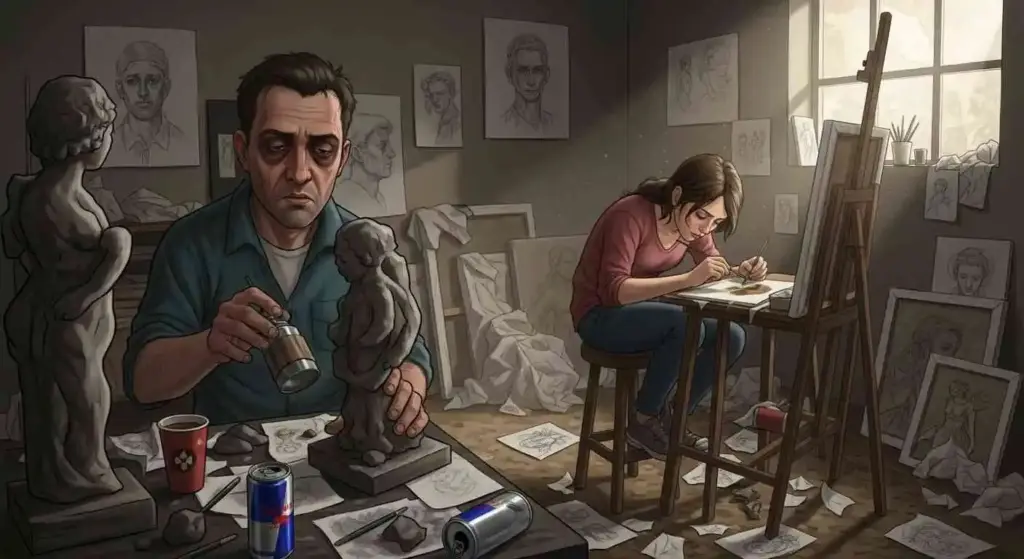
Although the Carpenters achieved global success, there were deep shadows behind their brilliance.
Tours became extremely demanding, and recording pressures grew by the day.
Richard and Karen’s delicate sensibilities gradually exhausted them as they relentlessly pursued perfection.
The “Invisible Illness” Undermining Karen
Karen was a consummate professional.
However, that perfection eventually became a curse that cornered her.
Anxieties about her figure and stage presence, the media’s gaze, and the pressure of “always having to be the ideal Karen.” These factors drove her into anorexia nervosa.
It was an era when even the name of the illness was not widely known, and those around her merely perceived her as being “too thin.”
Yet, Karen continued to stand on stage.
Behind her smile was a battle she showed no one.
Richard’s Struggle
Her brother Richard also suffered from an addiction to sedatives caused by pressure and fatigue.
While supporting each other, the two gradually drifted apart, caught between music and reality.
A Voice That Turned Gentleness into Song
The True Karen Reflected in “I Need to Be in Love”

Released in 1976, “I Need to Be in Love” was a song that Karen described as “most accurately expressing my feelings.”
It is said that lyricist John Bettis wrote the words while thinking of Karen’s state of mind.
"I know I need to be in love (I know—I cannot help but seek love)
I know I’ve wasted too much time..."
(And I have lost too much time, as if it slipped through my fingers.)
In this quiet phrase, we can glimpse her heart, enduring loneliness behind the success, yet wishing to “believe in someone.”
The Loneliness Dwelling in “Solitaire”
In another masterpiece, “Solitaire,” her low, soft voice dispassionately paints the lingering echoes of loneliness.
Emotional reality that transcends technique—.
That is the “essence of gentleness” that consistently flows through the Carpenters’ music.
Karen’s Final Days and Her Brother’s Vow
A Sudden Farewell

On February 4, 1983, Karen Carpenter collapsed at her family home in the Los Angeles suburbs and passed away due to heart failure.
She was 32 years old.
The tragedy brought about by anorexia nervosa delivered a profound shock to fans worldwide.
The news quickly spread across the globe, with television and newspapers reporting that “an era has ended.”
Her funeral was attended by fellow musicians and many fans, and it is said that the quiet sound of people humming “Close to You” echoed through the service.
The “Sister’s Voice” Richard Continued to Protect
In deep mourning, Richard temporarily suspended his activities.
However, a few years later, he completed the album Lovelines (1989), compiling unreleased tracks and bringing his sister’s remaining vocals to the world once again.
Since then, he has continued to oversee remastered and re-edited albums, dedicating himself to ensuring that the Carpenters’ music continues to be heard worldwide.
“Karen’s voice is still alive within me.”
These words from Richard say it all.
The Reason the World Keeps Listening
The Power of “Sincerity” in Music
The reason the Carpenters’ songs continue to be loved over half a century later is not mere nostalgia.
Their music harbors a “human sincerity” that transcends time.
Richard’s structural sound design, and the human warmth possessed by Karen’s voice.
At the moment those two intersect, listeners are forced to confront their “own emotions.”

Even in today’s digital-dominated age, that analog softness never grows old and continues to provide fresh surprises to younger generations.
The Eternally Echoing “Legacy of Gentleness”
A Remark Made by Richard
In a later interview, Richard said this:
“Our music is a hope that doesn’t deny sorrow.”
True to those words, the Carpenters’ music depicts “humanity’s sincere stance” of trying to find light even in disappointment.
Karen’s voice still delivers a quiet affirmation to many people that “it’s okay to be alive.”
What Gentleness Left Behind
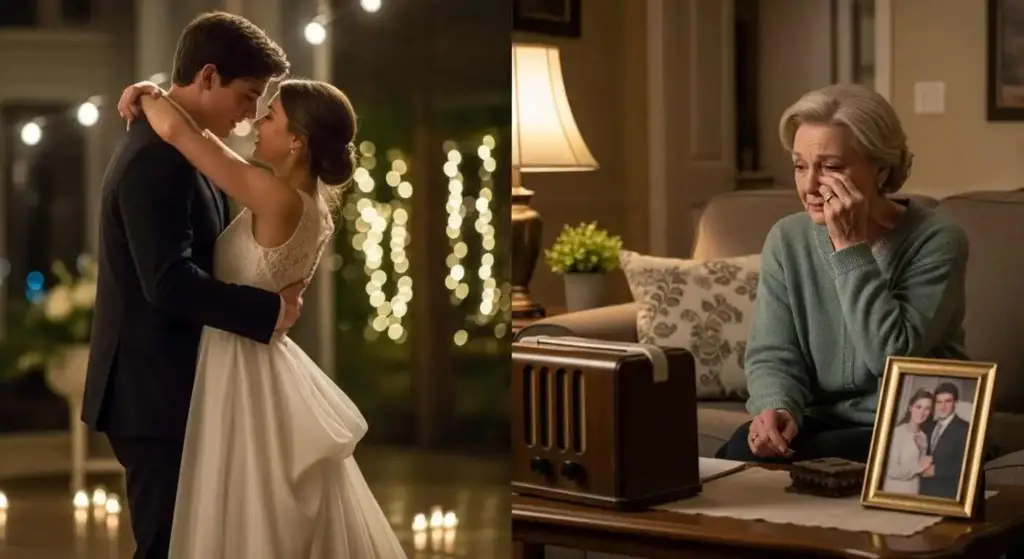
More than 40 years after her death, songs like “Close to You” and “Yesterday Once More” continue to be played in various settings, such as movies, dramas, and weddings.
They are not just nostalgic tunes, but live on across generations as “memories of gentleness deep within the heart.”
🌹 Onto “My Personal BEST 20” — The Beginning of Eternal Melodies
Tracing it like this, we understand that the story of the Carpenters is a “record of humanity itself” that transcends success and tragedy.
The bond between brother and sister, the quiet struggles, and the warmth that still remains.
In the upcoming “My Personal BEST 20” series, I will carefully delve into each of the 20 songs to explore how the “art of gentleness” has been preserved while changing its form.



音楽ファン同士の交流・リクエストはこちら / Connect & Request Songs Here