
◆ Explore the History of [Off Course] Here — A Prelude to Ultimate Sonic Refinement
- 🎧 Enjoy this article with audio
- No. 3 is “Sayonara” (Goodbye).
- First, please listen to the official audio
- Song Analysis: A Milestone That Changed the History of New Music
- Personal Memory: Youthful Arrogance and the Everyday Life I Put to the Test
- The Night Music Shouldered My “Pain”
- The Sublimation of Sorrow Taught by the “Falling and Piling Snow”
🎧 Enjoy this article with audio
You can easily grasp the main points of this article through audio first.
Recommended for those who want to quickly understand the key points before reading.
🎶 English Narration
This audio explains the content of this article in English.
⏳ Playback time: approx. 3 minutes
🎵 Japanese Narration
You can listen to the same content with a Japanese narration.
⏳ Playback time: approx. 3 minutes
* Listening to the audio before reading the text will help you understand the song’s worldview and the article’s key points more dimensionally.
No. 3 is “Sayonara” (Goodbye).
My personal Best 15 is finally entering the Top 3. Coming in at No. 3 is the monumental masterpiece “Sayonara,” released in 1979, which made their name known all over Japan.
When this song became a hit, its melody was playing on every street corner in Japan. Contrary to its crystal-clear, beautiful melody, an undeniably cold “reality of parting” lies hidden within it. This time, I would like to carefully unravel the multi-layered charm of this masterpiece, weaving in my own personal recollections.
Free Translation
Like the falling snow, the end quietly piles up.
Even though I really still want to hold you, you are already fading away.
Even if I tell myself we are free, my heart is left behind.
It is certain that you were the only one I loved; that alone will never disappear.
First, please listen to the official audio
■ Credits
Title: Sayonara
Artist: Off Course
Lyrics / Music: Kazumasa Oda
Album: "NEXT SOUND TRACK"
Release: 1979 (Original)
Label: EMI Music Japan
Produced by: Off Course
■ Two-line Commentary
Off Course's biggest hit released in 1979, a representative Japanese pop song that delicately depicts a scene of parting.
A masterpiece where Kazumasa Oda's transparent vocals and lyrical melody symbolize the sorrow and lingering emotions of winter.
Song Analysis: A Milestone That Changed the History of New Music
When discussing “Sayonara,” one cannot overlook Off Course’s unique position in the Japanese music scene at the time.
In the late 1970s, the unrefined, earthy feel of folk music was gradually fading, and a more sophisticated sound began to rise. However, despite possessing overwhelming musicality, they had long been a band “known only to those in the know” since their debut, until they finally achieved a massive breakthrough with this song.

What they presented was not just a trendy popular song, but an extremely Western-influenced sound full of structural beauty. Their beautiful chorus work and a melody honed to a cold perfection gave the youth of that era a sense of astonishment: “Does such sophisticated Japanese music exist?”
A Meticulously Calculated Ensemble of “Stillness” and “Motion”
The structure of the song itself is built on a truly miraculous balance.
The first thing that captures your ear when listening to “Sayonara” is the piano intro that rings out as if tearing through the tense winter air. With just a few notes, it completely expresses the coldness of the “farewell ritual” that is about to begin. Kazumasa Oda’s overlapping vocals are endlessly delicate, perfectly capturing the trembling fluctuations of the heart.

The “Passion” Spoken by Yasuhiro Suzuki’s Guitar
However, as the song heads toward the chorus and approaches its second half, the ensemble suddenly increases in thickness. What deserves special mention here is Yasuhiro Suzuki’s distorted guitar solo. In stark contrast to Oda’s “still” vocals, it rings out fiercely, as if speaking for an explosion of indescribable emotion and an overwhelming passion with nowhere to go.
This arrangement preserves an acoustic transparency while encompassing the dynamism of rock and AOR (Adult Oriented Rock). As they transitioned from a duo to a five-piece band, this sound proved the exact moment they completely transformed into an “unparalleled band.”
The Greatness of the Lyrics: The Gravity of “It’s Over Now”
And above all, what pushed this song into a national hit was the overwhelming reality and cruelty of its lyrics.
The opening phrase “It’s over now” is a word of rupture that allows for no excuses. And the phrase “We are free.” Behind rephrasing a breakup as “freedom” lies an unbearable loneliness. There is no other expression that so sharply captures a love quietly ending in a corner of the city, or a person’s emotions left behind amidst the changing seasons.
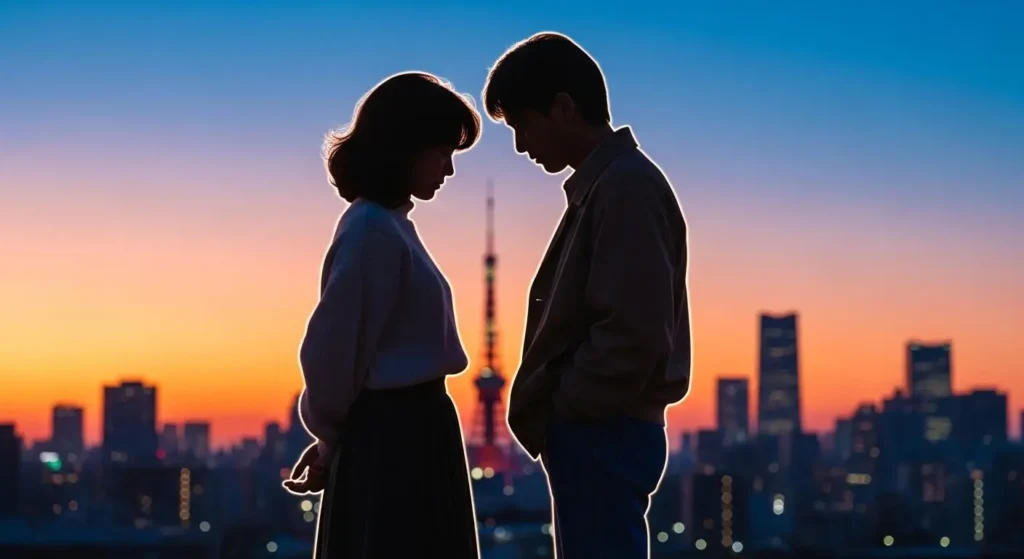
Everyone was able to superimpose their own sense of loss onto this song. However, for me as a single listener, “Sayonara” went beyond that “generational empathy,” carrying a much more poignant and raw scar.
Personal Memory: Youthful Arrogance and the Everyday Life I Put to the Test
From here on, please join me for a brief personal memory of how this sophisticated song echoed in my own life.
Once, out of my youthful arrogance, I carelessly hurt someone important to me and experienced an irrevocable breakup. During my university days, I lived in Higashi-Matsubara, Setagaya, and she lived in Nakano. Despite sharing fulfilling times under the same Tokyo sky, I grew conceited, thinking that our peaceful everyday life would last forever. To my shame, I uttered words of a “change of heart” that I didn’t even mean, testing her earnest devotion to me.

The Peace That Vanished in Just One Week
Her decision, taking my words at face value, was far swifter than I could have ever imagined. Having graduated from junior college and working a respectable job in Tokyo, she threw it all away in just one week and returned to her hometown of Matsumoto.
For the few days before she left, I maintained an indifferent attitude toward her as she sobbed and pleaded with me. Realizing the gravity of the situation only after losing her, and tormented by intense regret, I hurriedly contacted her, as if chasing after her.
Reunion in Kofu and an Irrevocable Sinfulness
A few months later, unable to give up, I reunited with her in “Kofu,” the halfway point between Tokyo and Matsumoto. However, the woman before my eyes was completely exhausted, capable only of hollow conversation.

Realizing the magnitude of what I had broken and understanding the cruel time I had forced upon her, I could no longer even speak words to stop her from leaving.
“My Own Song” Echoing on the Limited Express Train
I boarded the limited express train bound for Shinjuku alone. From the window of the moving train, I gazed at the fading winter scenery of Kofu. Trying to hide my flowing tears from those around me, I pressed the play button on my Walkman, which was just starting to become popular at the time, and what flowed through the headphones was this song, “Sayonara.”
The Night Music Shouldered My “Pain”
It’s over now
The moment Kazumasa Oda’s first note jumped into my ears, I received a shock that felt like my whole body froze. The phrase I had previously let slide by as mere background music on the street corners now echoed sharply, like a blade thrust at my throat, as the very landscape of the end for me and her at that exact moment.

The Thrust Reality of “It’s Certain You Were the Only One I Loved”
The words, “It’s certain you were the only one I loved,” cruelly highlighted the magnitude of what I had lost through my own selfishness. The fierce guitar solo in the second half raged as if turning my pathetic regret and self-hatred directly into sound.
In that train, a melody that should have been worn out rang out as “my own song” during the harshest moment of my life. That day, I was taught the true terror and salvation of music.
The Sublimation of Sorrow Taught by the “Falling and Piling Snow”
The phrase repeated toward the end of the song, “Outside it’s raining again today, eventually turning to snow,” leaves a deep lingering resonance. The fiercely flowing tears (rain) eventually turn cold, yet quietly pile up in the heart (snow). This transformation seems to depict the process by which the pain of parting turns into a “part of oneself” over time.
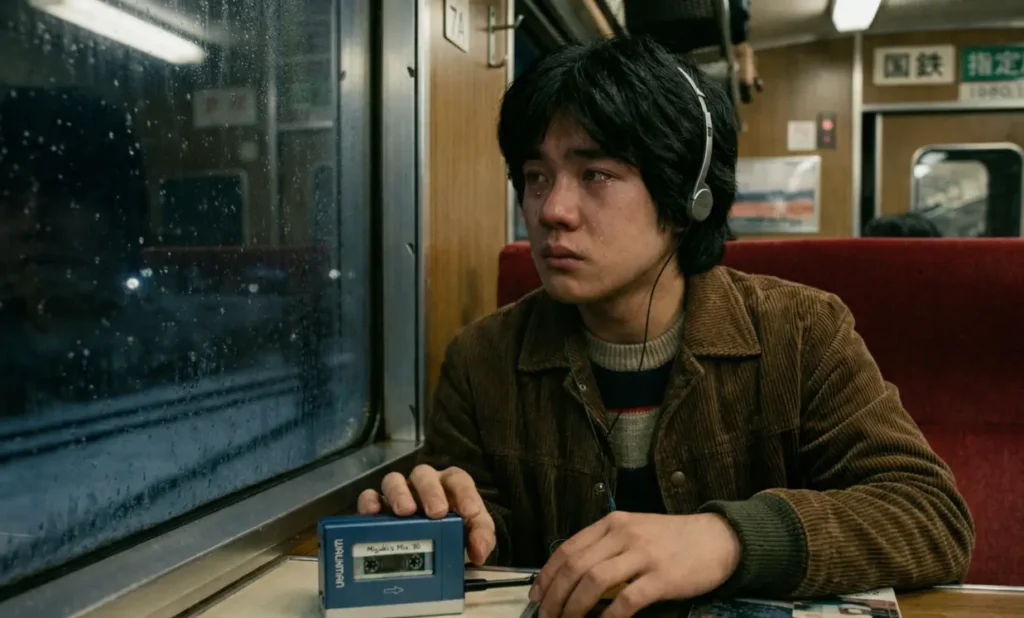
The tears I shed on that limited express train also eventually piled up like “snow” in my heart.
Why I Chose “Sayonara” for 3rd Place
Generally speaking, this is Off Course’s biggest hit, and many of you might have expected, “Naturally, this song will be 1st.” So, why is it 3rd in my ranking?
If you ask if there’s some dramatic reason… the truth is, there is no special reason (laughs).
As a Result of Pure “Comparative Listening”
Of course, as I have recounted so far, it is an irreplaceable masterpiece deeply engraved in my life. However, when it came time to make this Best 15 and I lined up the candidate songs to listen to and compare them over and over, this song naturally settled into 3rd place simply based on “my current pure preference.” That really is all there is to it.
Conversely, the fact that even a historical mega-hit so strongly tied to my life remains at 3rd place means that for the group Off Course, there are still many more masterpieces that capture my heart and won’t let go. Have you come to understand the terror (?) of my “Arbitrary Ranking”? !(^^)!


音楽ファン同士の交流・リクエストはこちら / Connect & Request Songs Here